The MAA is a visionary master program with an innovative and open structure, mixing diverse disciplines, shaping professionals capable of producing theoretical & practical solutions towards responsive cities, architecture & technology.


Filters
Course

Brick Flow

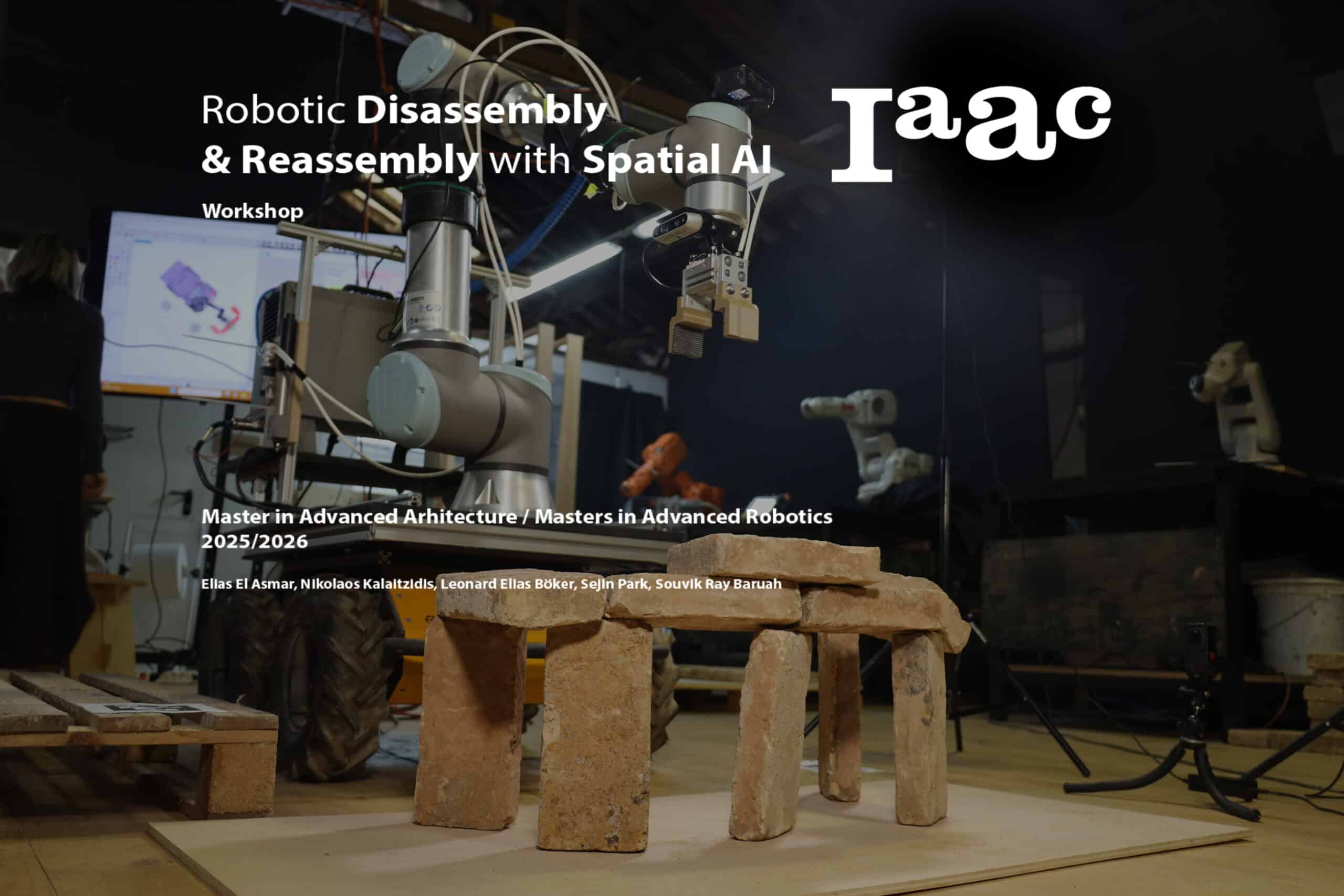
Robotic Disassembly & Reassembly with Spatial AI Abstract The project explores a circular construction workflow that integrates robotic systems with Spatial AI to automate the disassembly and reassembly of brick structures. Utilizing a Gemini Vision-Language Model (VLM) pipeline, the system performs autonomous material evaluation, identifying surface damages such as chipping, spalling, and staining, as well … Read more

Passadís d’ordinadors

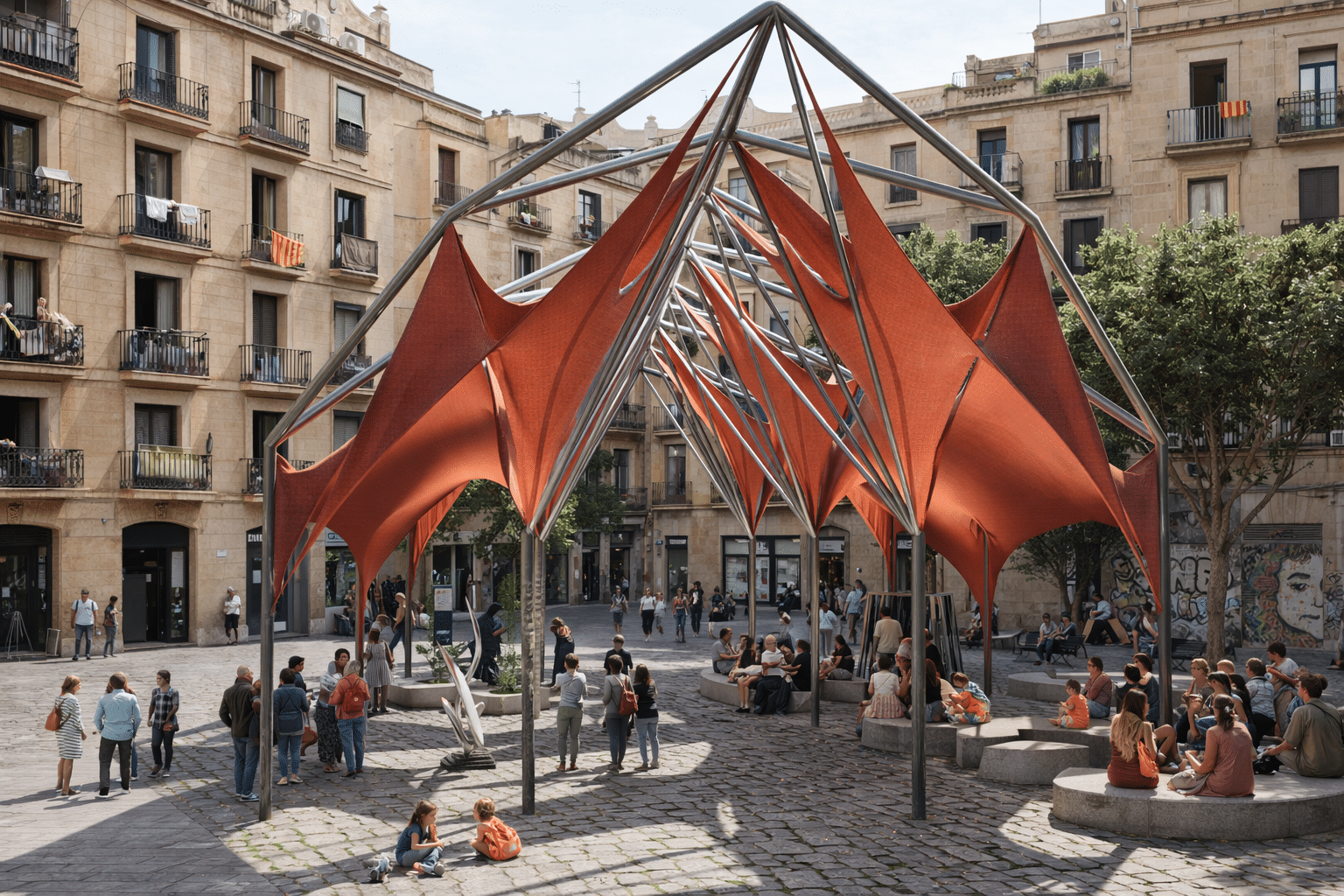
Concept Inspiration Creating a tensile pavilion structure based on Felix Candela‘s arch and aisle geometric logistics and diagrams. Iterative design approach based on ‘anchor points’ on a frame. Exploring scalable methodology for Kangaroo based computational design processes. ‘Iglesia de la Medalla Milagrosa‘ Felix Candela – photo by Lola Alvarez Bravo, 1954 Felix Candela Drawings and … Read more

Reciprocal Canopy

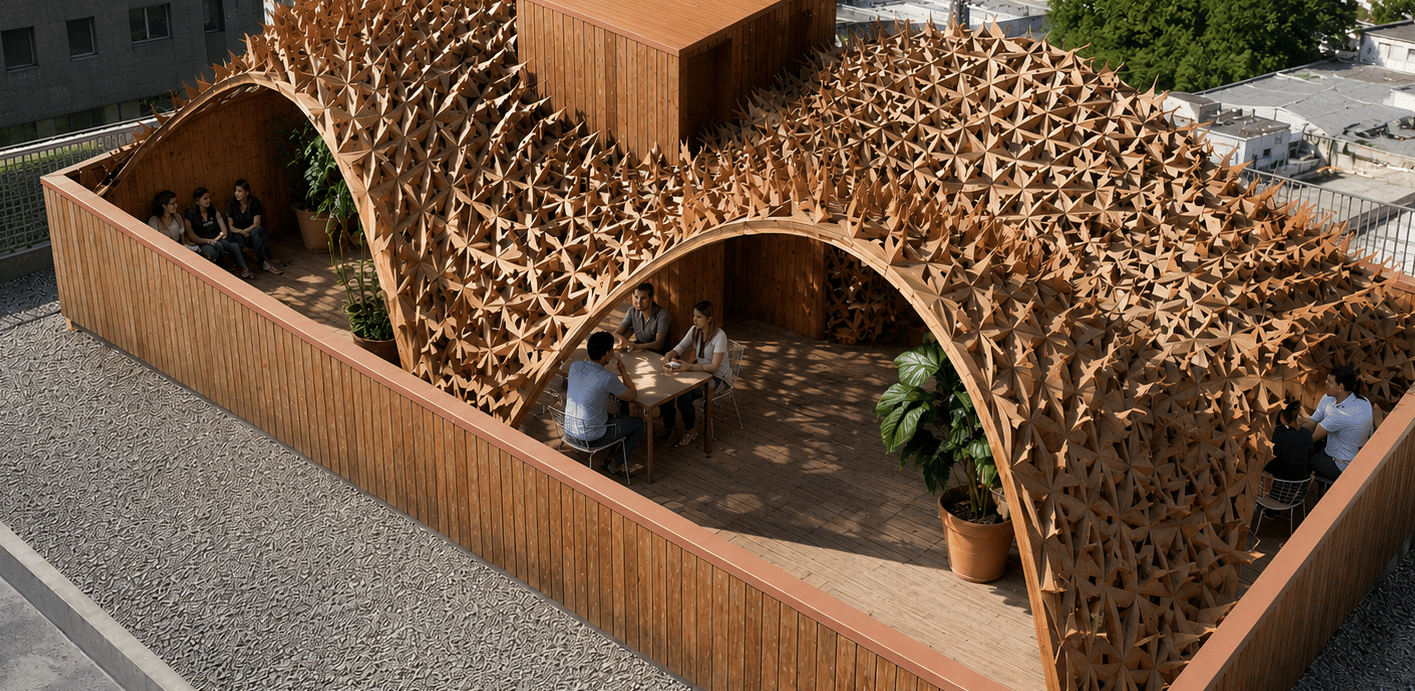
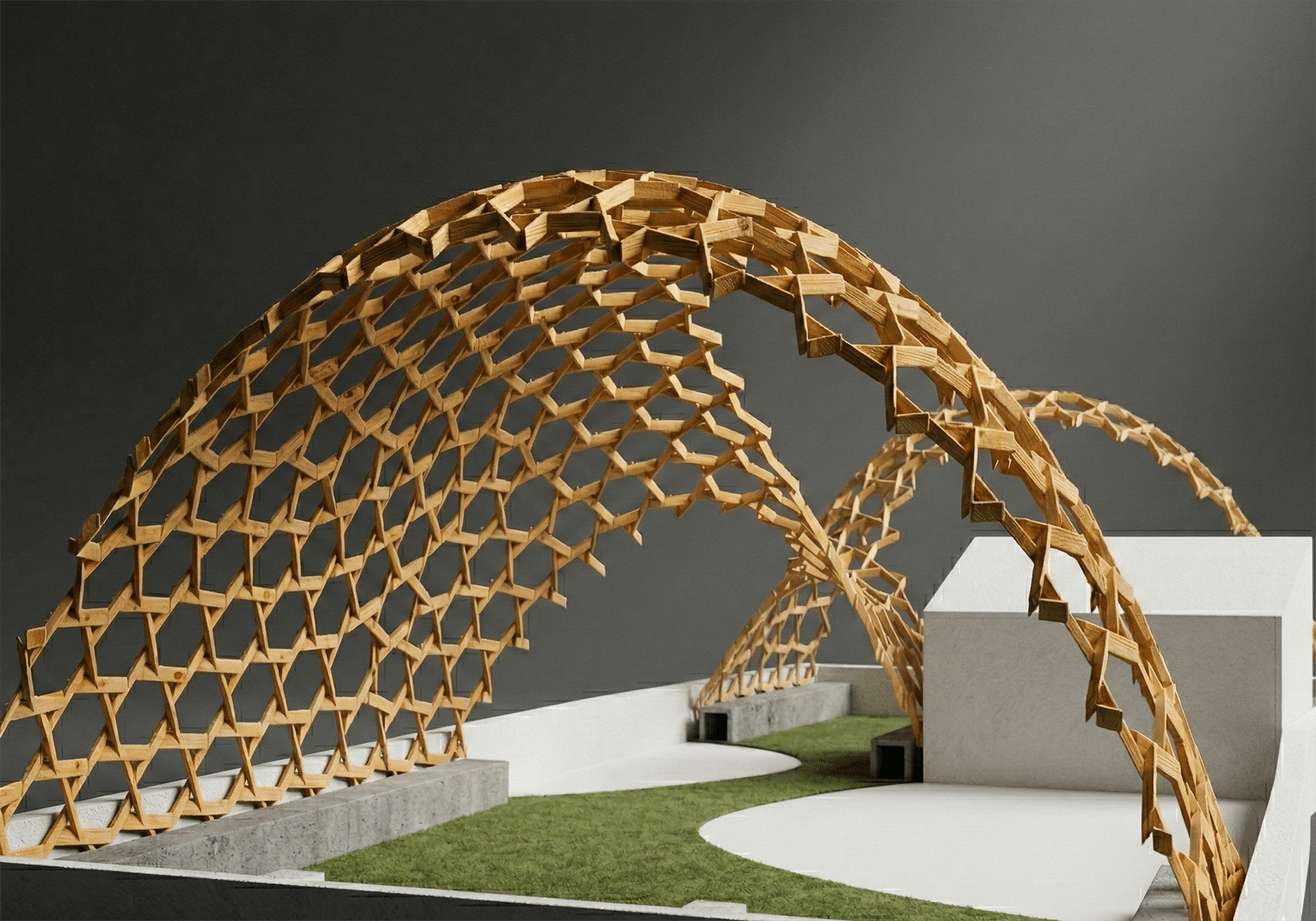
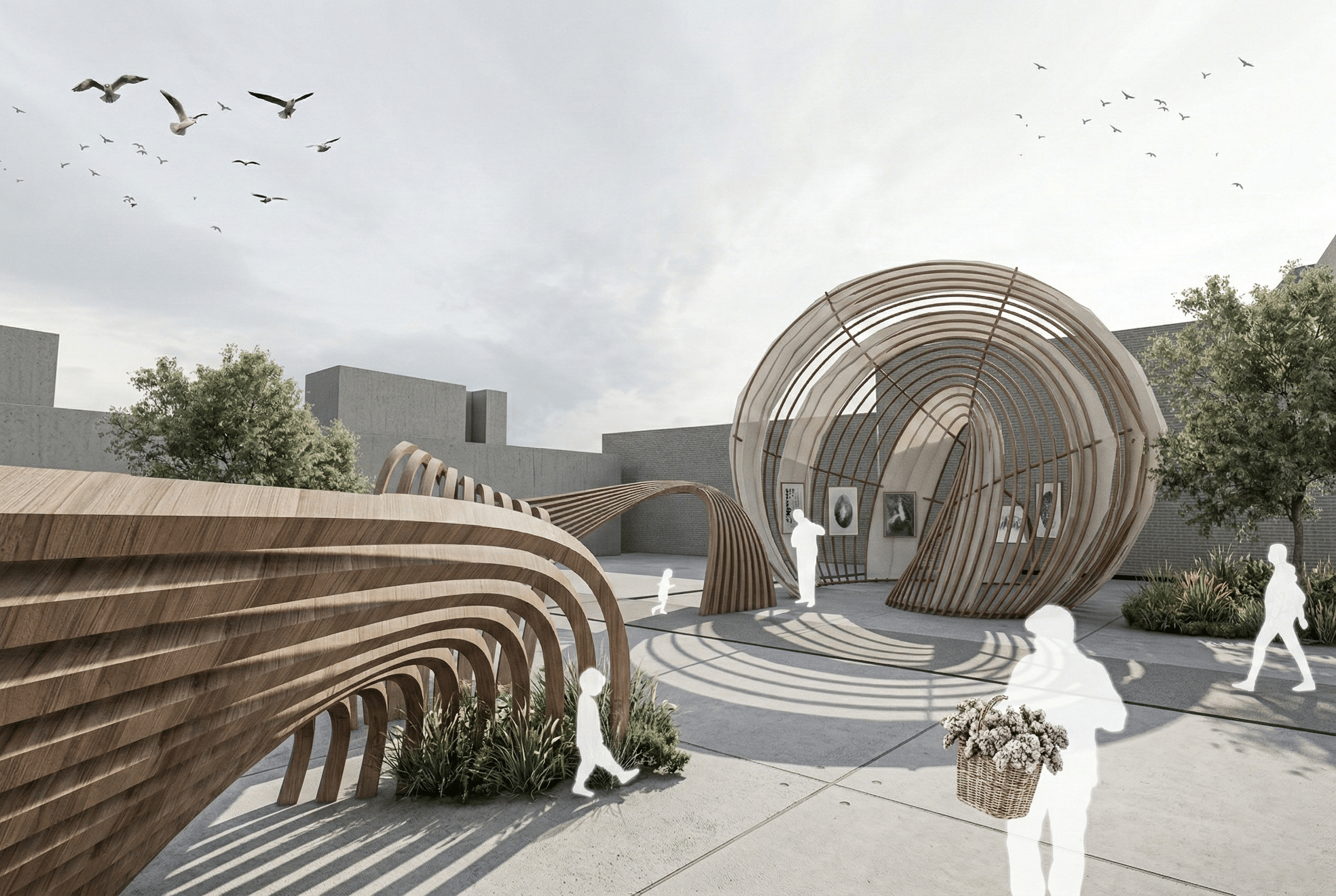
Designed for the IAAC rooftop, this pavilion merges computational design with advanced robotic fabrication. The geometry originates in Grasshopper, where a basic mesh is transformed into an optimized vault using Kangaroo’s physics-based dynamic relaxation. A reciprocal frame pattern is then applied, translating the continuous shell into short, mutually supporting timber pieces. Because every interlocking element … Read more

Arcada Viva

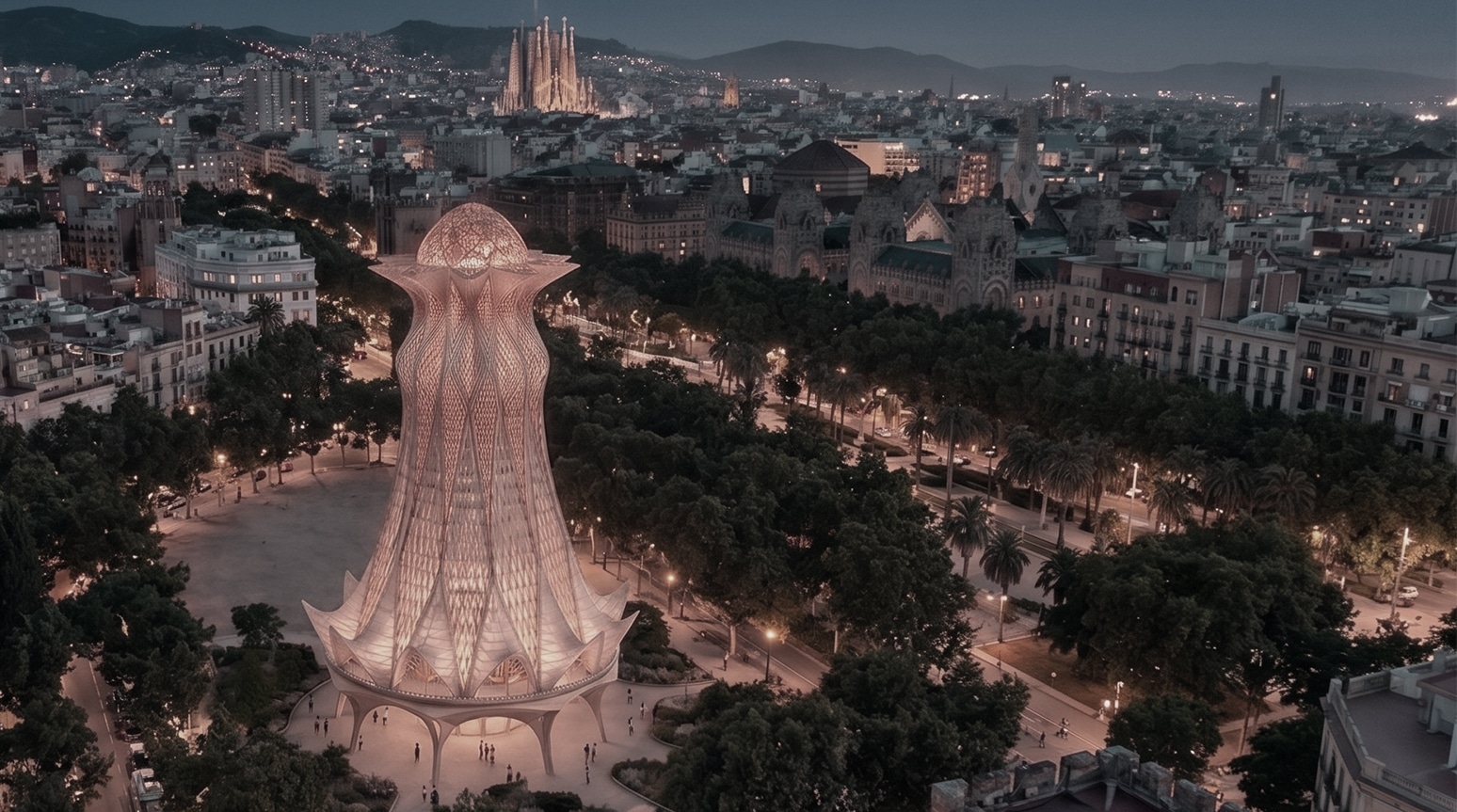
The project situates the pavilion within the urban fabric of Plaça Reial, accompanied by initial conceptual sketches that explore a shell-like structure emerging from the geometry and atmosphere of the square. SITE INSPIRATION WORKFLOW PSEUDO CODE RENDERS

Syntactic Assemblage

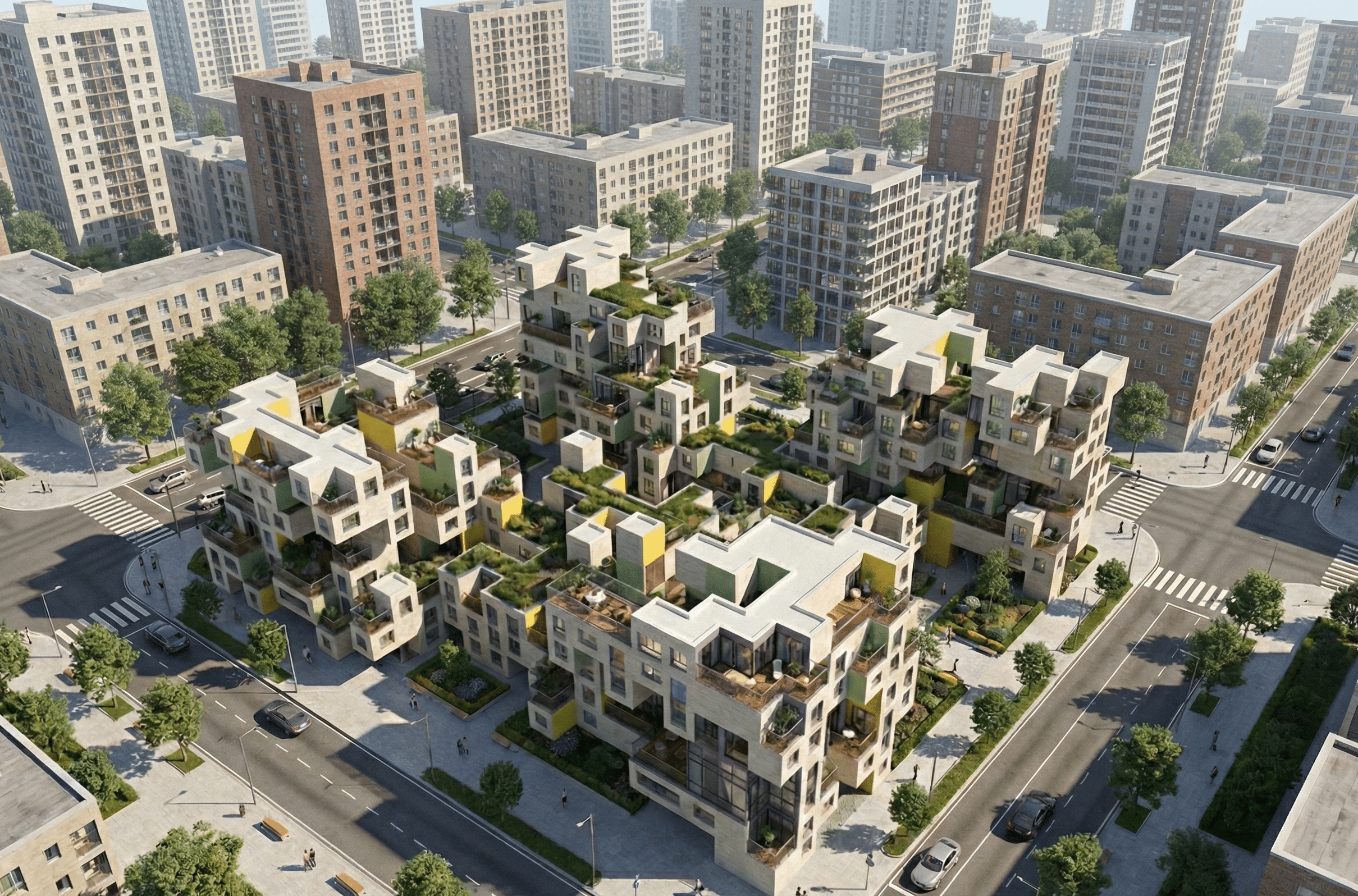
This project explores the computational assembly of components to form a multi-functional complex. By translating configurations into graphs, we applied Space Syntax logic to evaluate three key values : Depth, Integration, and Choice. The optimal architecture was selected based on the balanced symmetry of these indices. Finally, these analytical values directly guided the spatial programming, … Read more

Cerro Alegre

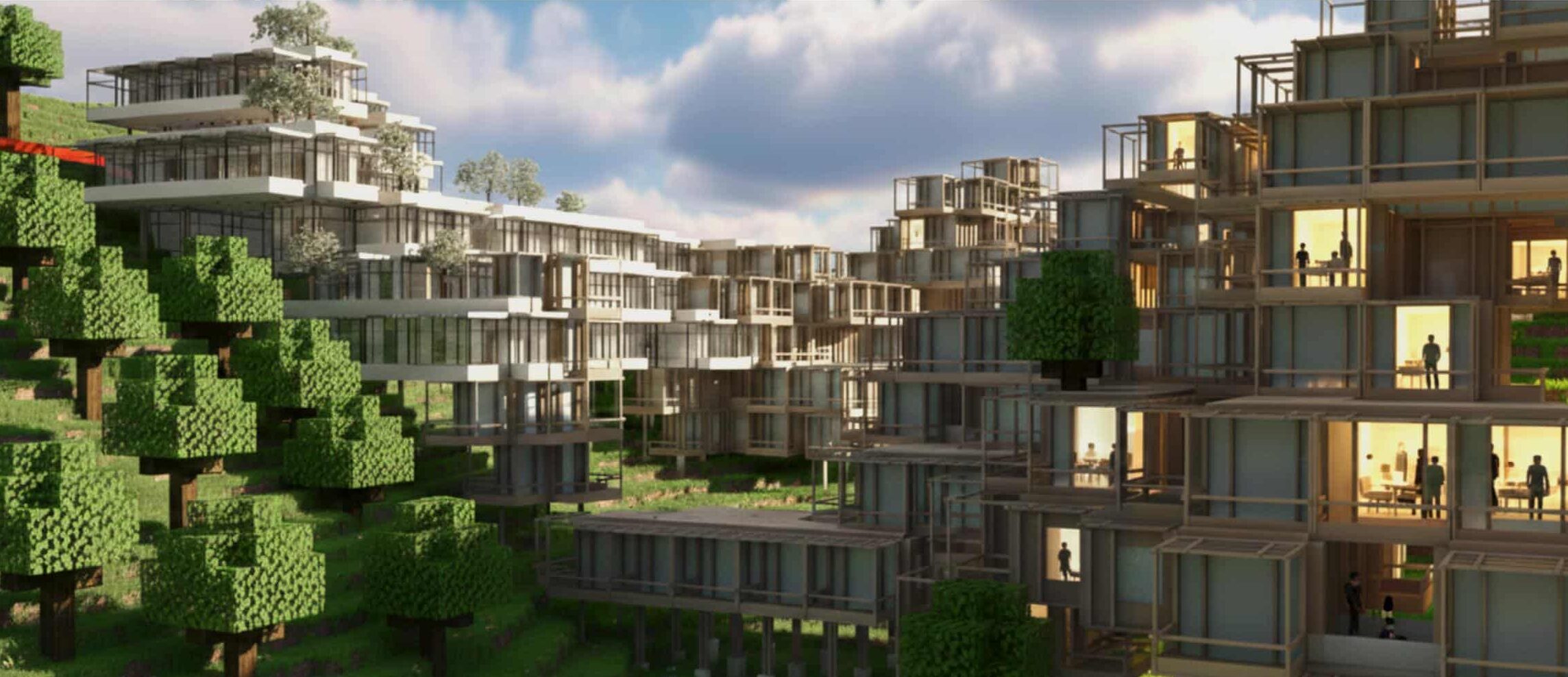
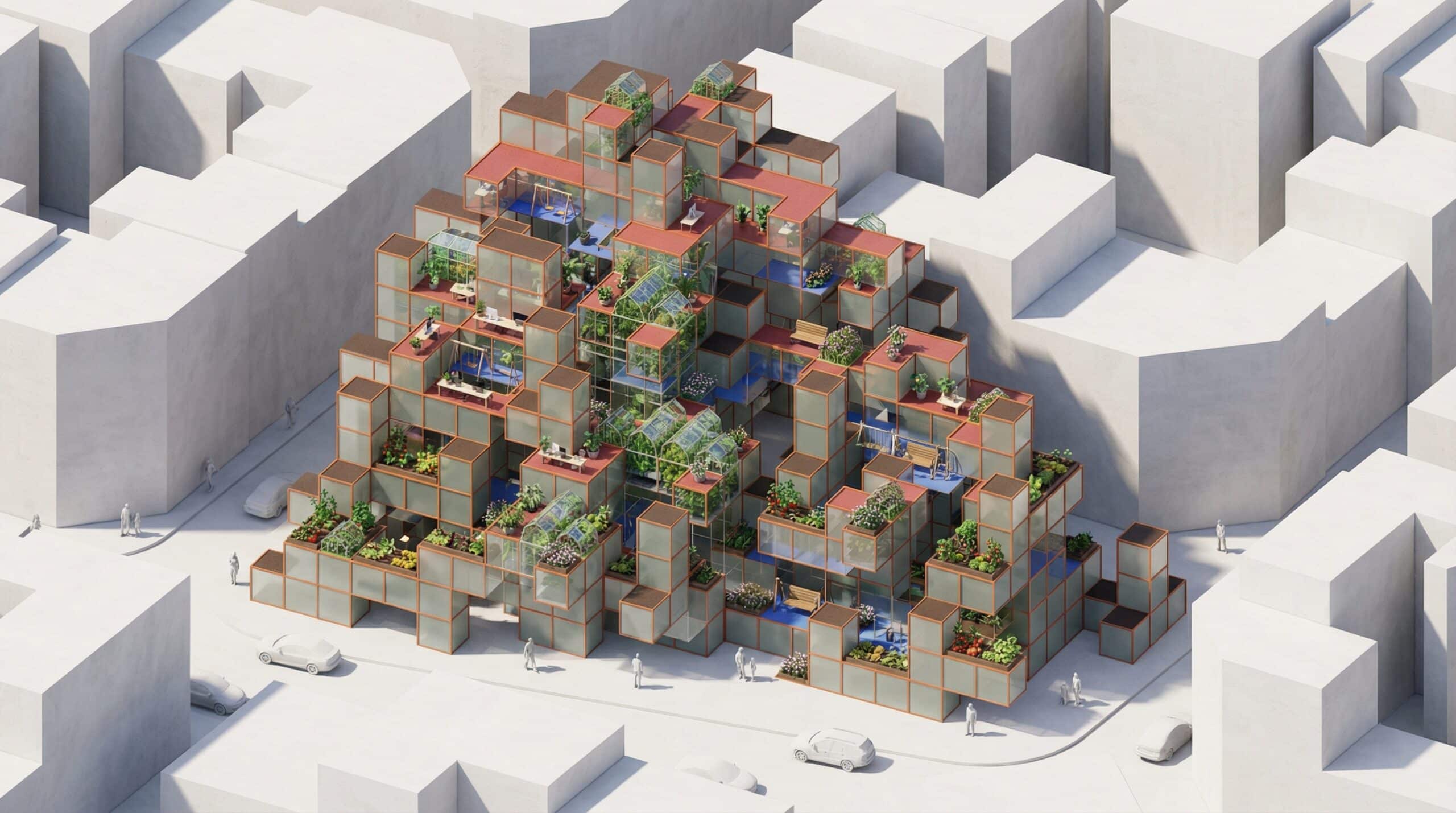
This project investigates modular construction through the iterative computational assemblage of four distinct components. Utilizing custom algorithmic methods—including curve following, slope evaluation, and proximity optimization—the project guides growth through thousands of permutations and handle rotations. The study achieves robust success rates in complex vertical stacking and terrace connectivity. The final architectural form integrates structural systems … Read more

Open to Sky

Component Design Component A -Pos_0-Rot_0 Amount of connectors: 3 Amount of combination: 9  Successful: 9 Unsuccessful: 0 Component A rotation of handles Variation of assemblage: rotation of handles by 90° step each time  Component B -Pos_0-Rot_0 Amount of connectors: 3 Amount of combination: 9  Successful: 9 Unsuccessful: 0 Component B – rotation of handles Variation … Read more

Fabricated Motion

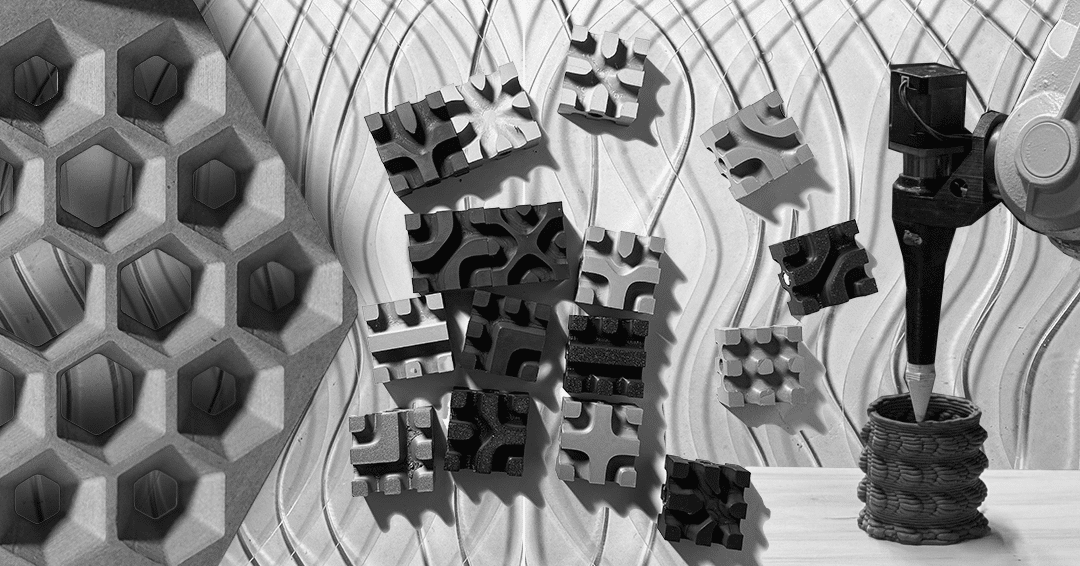
Introduction to Digital Fabrication In contemporary architectural practice, digital fabrication has opened new possibilities for designing and producing building components with precision, efficiency, and expressive complexity. Among the most widely used methods—laser cutting, CNC milling, 3D printing, and robotic fabrication, each offers unique material, geometric, and performative potentials. For this assignment, we explore these techniques … Read more

BAMBOO

Exploring Low-Tech, Sustainable Construction Methods and Manual Strategies for Community Empowerment The use of bamboo in construction is emblematic of an ongoing tension between traditional knowledge and the global imperatives of sustainable development. Despite its traditional use in many regions, the potential as a resilient, self-sustaining construction material remains largely underexplored in the contemporary architectural … Read more

TÀN 58

TÀN 58 is a seven-story student housing project located in Poblenou, an industrial district of Barcelona. The building’s form and orientation were shaped through computational studies that optimized daylight access and solar radiation across the site. This analysis led to the introduction of two central atriums, which act as vertical heat sources and organizational cores—spaces … Read more