During the second year of the Master in Advanced Architecture + Thesis Project (MAA02), students have the unique opportunity to work for a period of 1 year on an Individual Thesis Project, focused on the development of a research or pilot project based on the student’s interest, and the learnings of the first year. IAAC supports the student in selecting their Thesis Project topic in order to better orient them according to their future career interests and opportunities. Each student, according to their specific topic, is assigned one or more Thesis Advisors that follow the development of the work throughout the year.
In parallel to the development of the Individual Thesis Project, the second year of the MAA02 offers a series of seminars enhancing the theoretical, practical and computational skills of the students.
Bio-Receptive | Interfaces
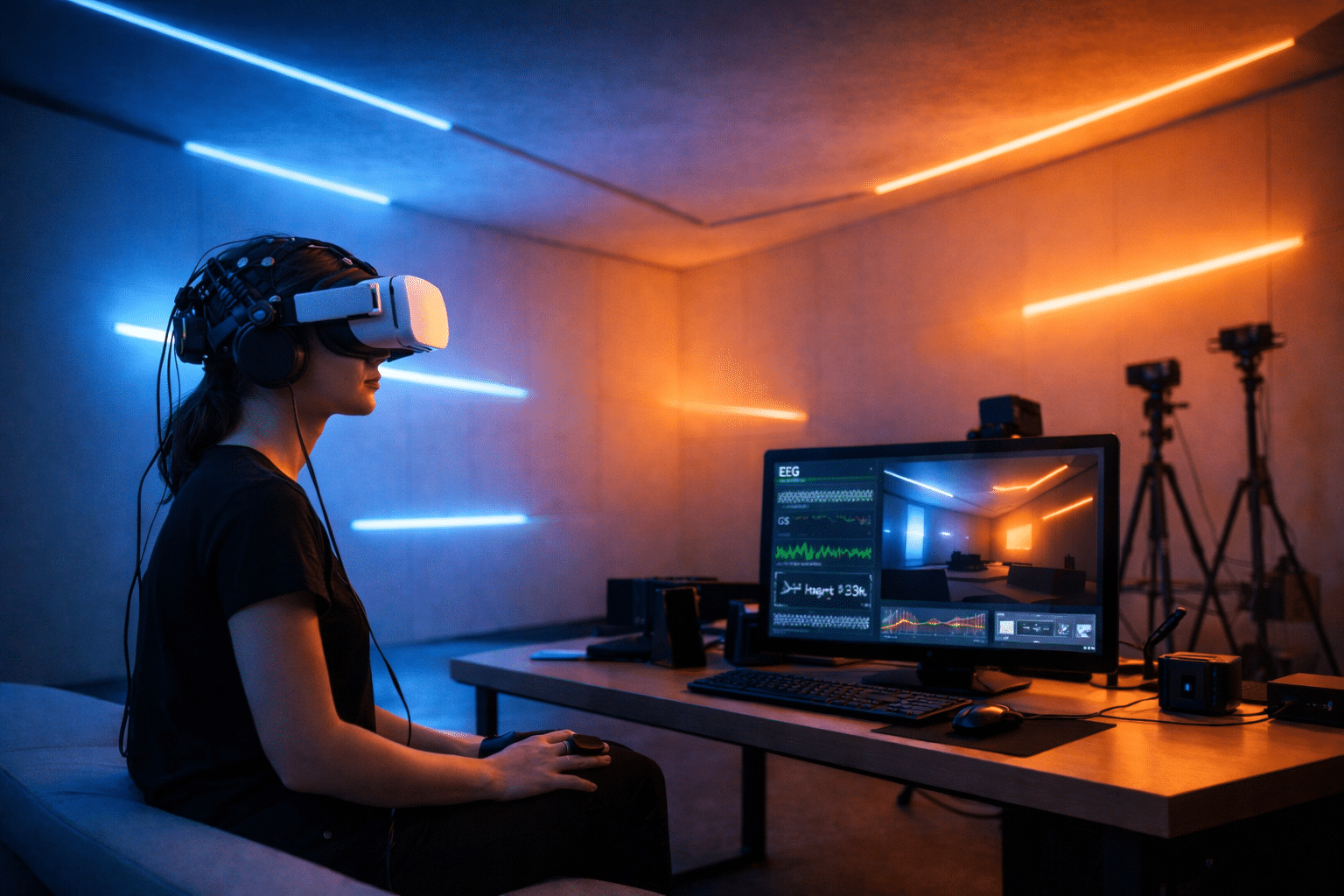
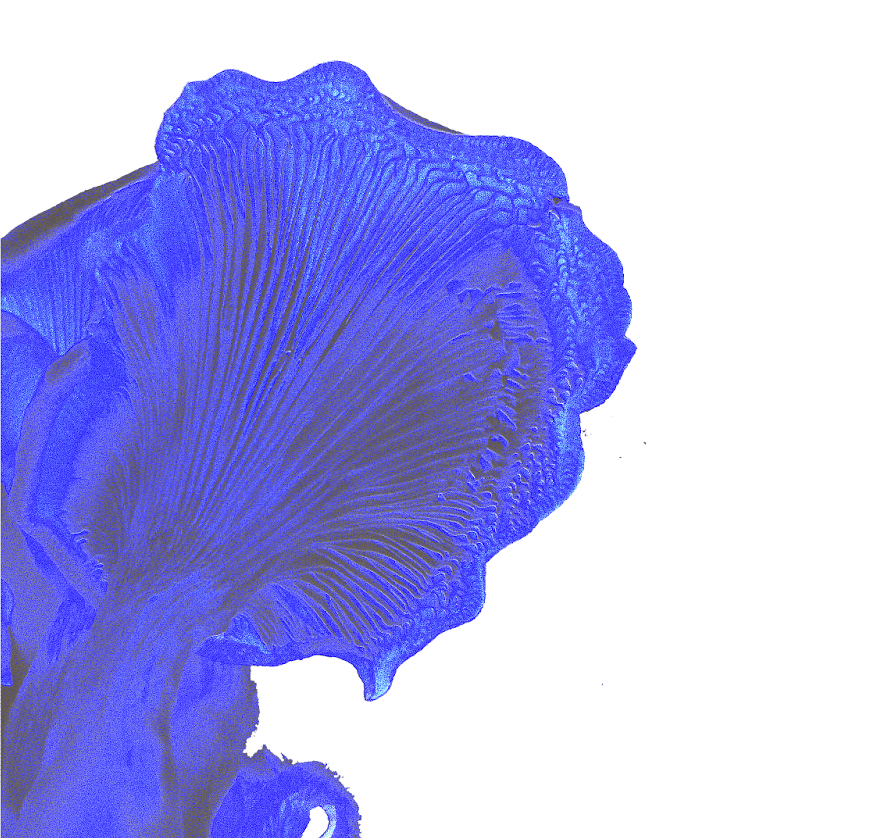
Bio-Receptive Interfaces is a performative multi-material clay-based system for indoor environments, integrating hydrogel vascularity to host an ecosystem of cryptogams and vascular plants. Fusing biological intelligence with embedded sensors and AI, it sustains a prolonged hydration cycle, purifies air, sequesters carbon, and reintroduces ecological presence into synthetic indoor worlds—transforming sealed spaces into living, responsive, multi-species … Read more
From Waste to Venus
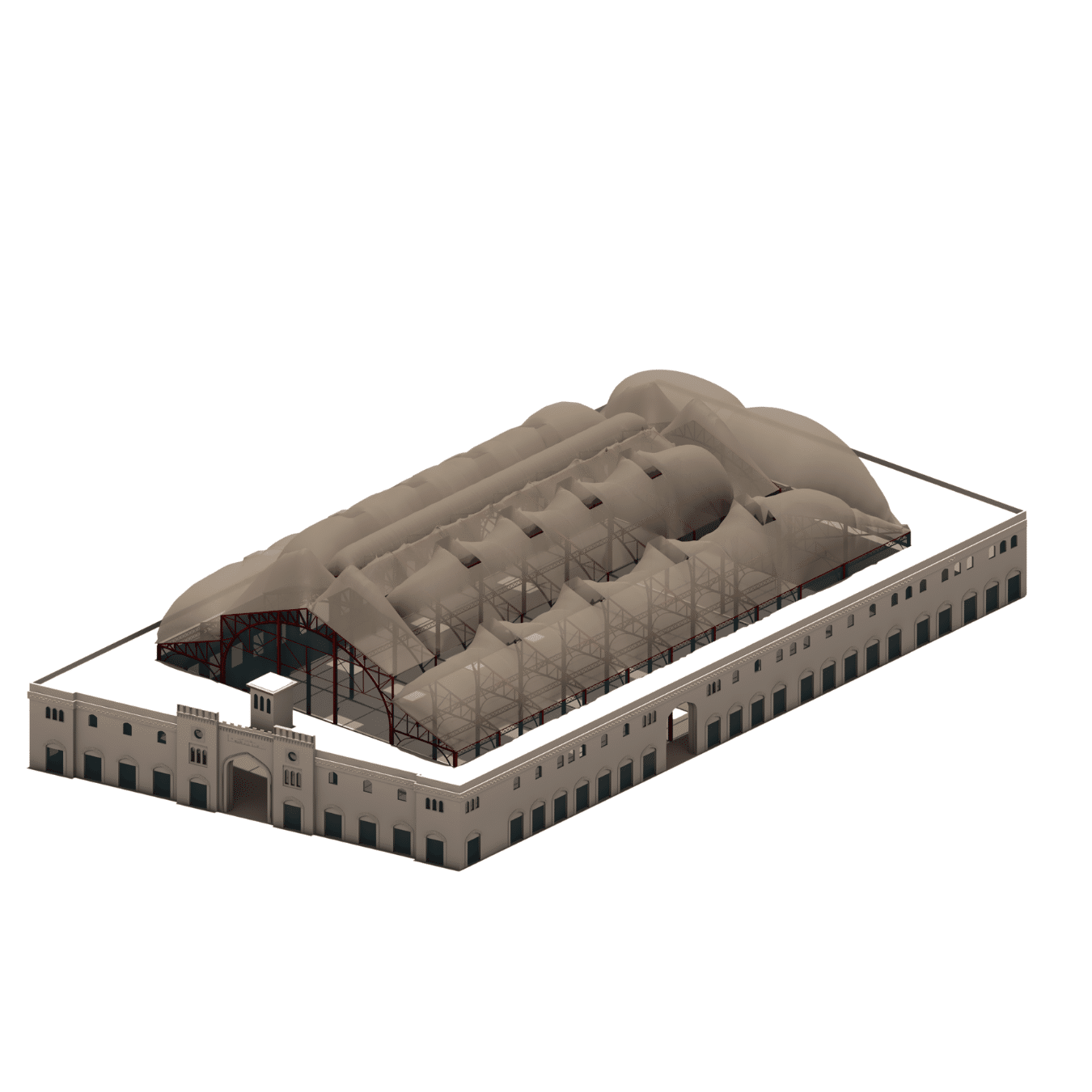
Upcycled Timber Retrofit Strategies for aClimate-Conscious Transformation of the VenusBuilding. Context Why Retrofitting MattersBuildings account for nearly 30% of global carbon emissions, with most of today’s housing stock expected to remain in use beyond 2050. In this context, the built environment becomes both a challenge and an opportunity for climate action. Retrofitting allows us to … Read more
SKYLOFT
MODULAR PODS VERTICAL EXTENSIONS To address urgent urban housing needs, this thesis explores modular rooftop pods using Digital Twins, CNC fabrication, kerfing, and timber joinery—enabling precise, low-waste, minimum tool required for assembling and sustainable expansion of aging urban buildings through scalable and prefabricated Modular systems Why Vertical extension required ? What’s the purpose of the … Read more
EcoNodes
EcoNodes is an AI-driven urban planning platform designed to identify and prioritize the city’s most heat-stressed and impervious junctions for strategic green interventions. By combining satellite imagery, street view segmentation, and environmental datasets, EcoNodes highlights the urban nodes that lack vegetation, suffer from poor air flow, or trap excessive heat. The tool empowers planners to … Read more
CONTEXEPT
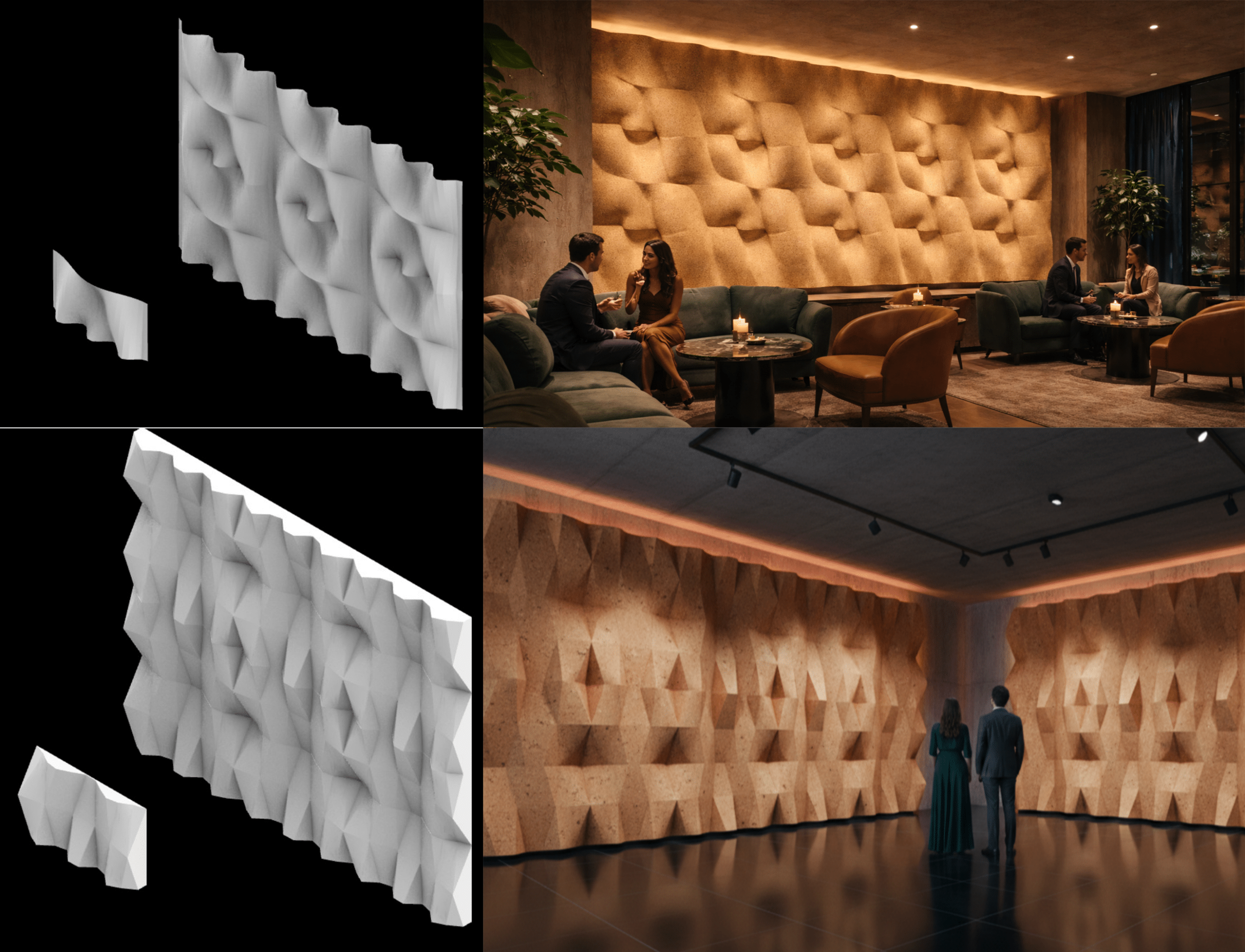
Contexept is a Context-to-Conceptualization framework integrating Generative AI and Additive Manufacturing to produce facades for specified architectural contexts in upscaled construction scenarios Architecture at the Edge of InnovationTechnological Breakthroughs that Reconfigured Design PossibilitiesTime// Architectural Style//Technology //Architecture has never been static it continuously absorbs and reflects the technologies of its time. From Industrial Revolution, prefabrication and … Read more
Go With The Flow
Computational Fluid Dynamics for Natural Ventilated Systems primarily located within the United States The Problem within Context: Sears Catalogue from 1930s to 1950s United States. The American Dream is a phrase that has taken meaning in the ownership of a home with a white picket fence. The phrase was popularized in the 1930s after WWI … Read more
BEASTIE: How 1m² of Care Can Change a City
When we think of biodiversity restoration, we often imagine vast forests or national parks. But what if it could begin on a balcony? A window ledge? A planter box? This question shaped my thesis project, BEASTIE – the Biodiversity Engagement and Action Simulator for Thriving Inclusive Ecosystems. It is a data-driven simulator that helps citizens, … Read more
WOLF
“What if you could speak your design ideas and watch them transform into complete parametric scripts in real-time?”
Flow – SIGHT: De- coding urban mobility
Introduction Urban traffic congestion is more than just an inconvenience—it’s a global challenge tied to pollution, stress, and wasted time. While cities are turning to AI-driven systems to ease the gridlock, the question remains: Do these technologies actually perform better than traditional methods?Flow – SIGHT is a comparative research project that investigates traffic systems across … Read more
Play Mumbai
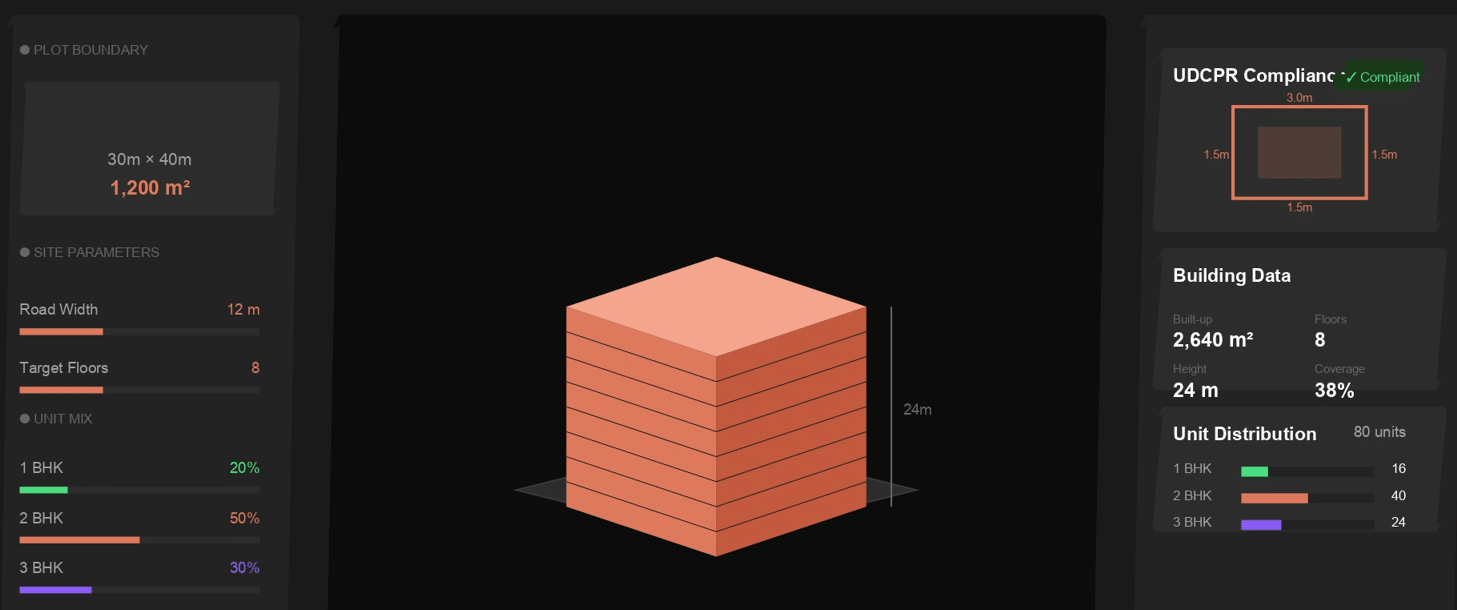
“A Digital Tool that facilitates Self-Redevelopment in Mumbai through the Participatory Development Method [PDM] and Decentralized Autonomous Organizations [DAOs] to Reduce Ecological Footprint[EP]. ”
Alkrete
Chitosan-Based Geopolymers for Acid Neutralization in Urban and Coastal Ecosystems Acidity shows up in our environment in different ways: as acid rain in cities and forests, acidified soils near industrial and agricultural areas, and even in the oceans due to rising CO₂ absorption. These are often treated as separate problems, however they’re not isolated phenomena. … Read more