The MaCAD is a unique online programme training a new generation of architects, engineers and designers ready to develop skills into the latest softwares, computational tools, BIM technologies and AI towards innovation for the Architecture, Engineering and Construction (AEC) industry.

Filters
Course

MERIHAUS – Sea Urban Escapes for Seasonal Living

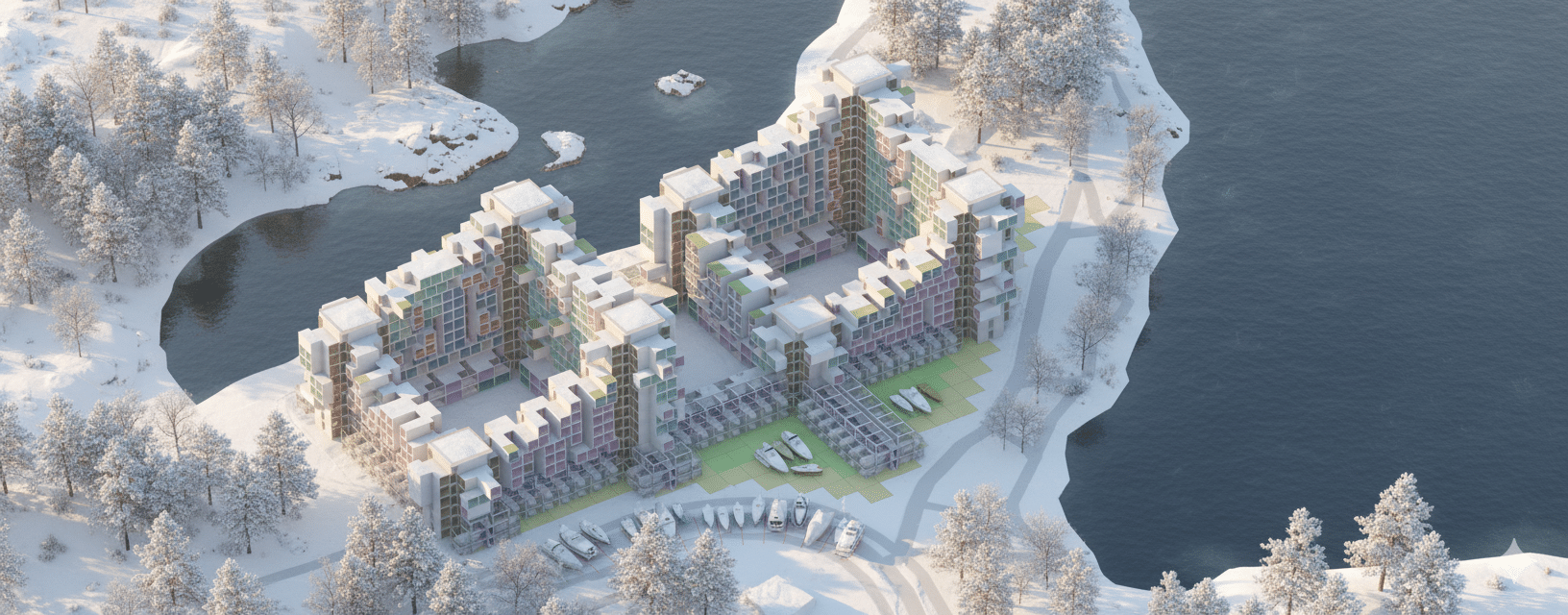
The project explores a contemporary reinterpretation of Finnish cabins, combining seasonal water living, public wellness, and boating storage. The core idea is that small modular units — cabins, saunas and workspaces — can aggregate into larger urban and social systems. Helsinki has a harsh Nordic climate, with long winters ranging from –10°C to +25°C, high … Read more

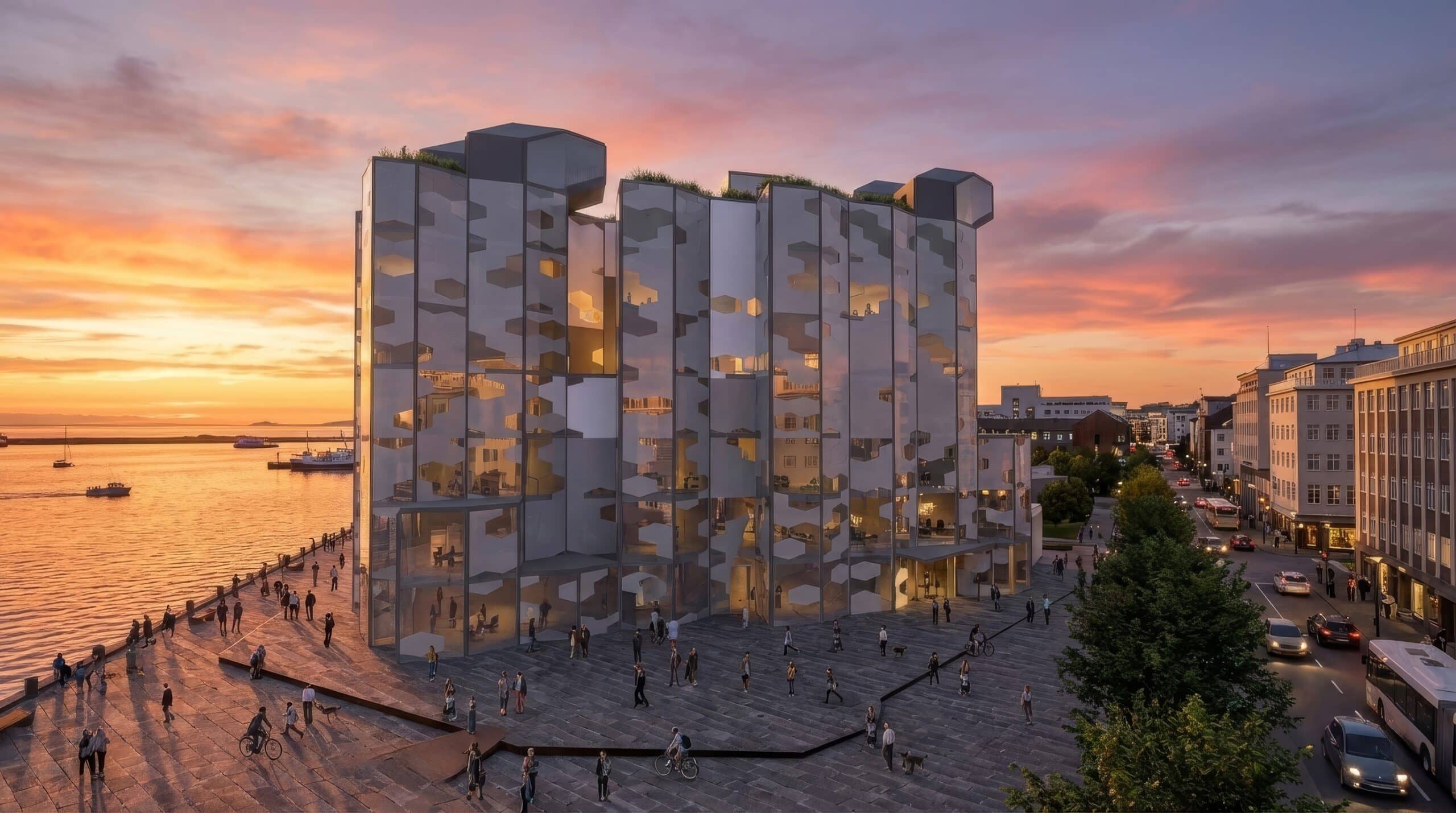
Tectonic Hub: Climate-Adaptive Recipe for Cultural Hubs in Reykjavik

Ingredients Climate Reykjavík’s climate shapes the entire project. The site is exposed to strong, multi-directional winds reaching 27 m/s, with a prevailing direction around 135°. Daylight conditions are equally extreme, shifting from long summer days to very short winter ones. The system therefore needs to adapt, protect, and still create comfortable public spaces. Form Our formal … Read more

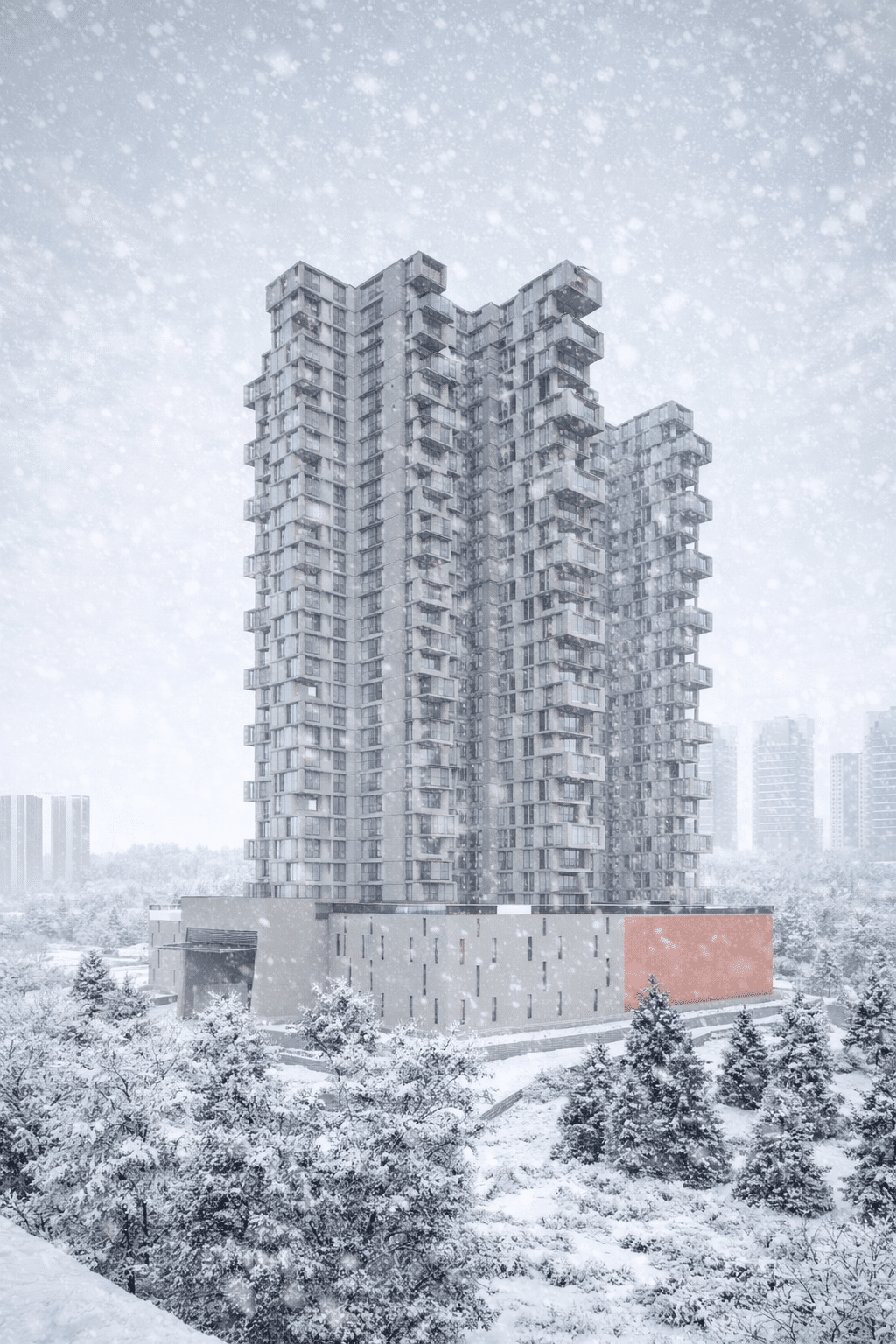
THE HARBIN CODE

“The Harbin Code“, designed by Muhammed Senin and Sushmitha Ravi, explores housing as a system-driven response to extreme cold climates. The project treats environmental performance, social interaction, and spatial flexibility as equally important design parameters, and is structured as a ‘building recipe’ that allows repeatable yet adaptable outcomes across the site. BUILDING RECIEP DESIGN STRATEGY … Read more

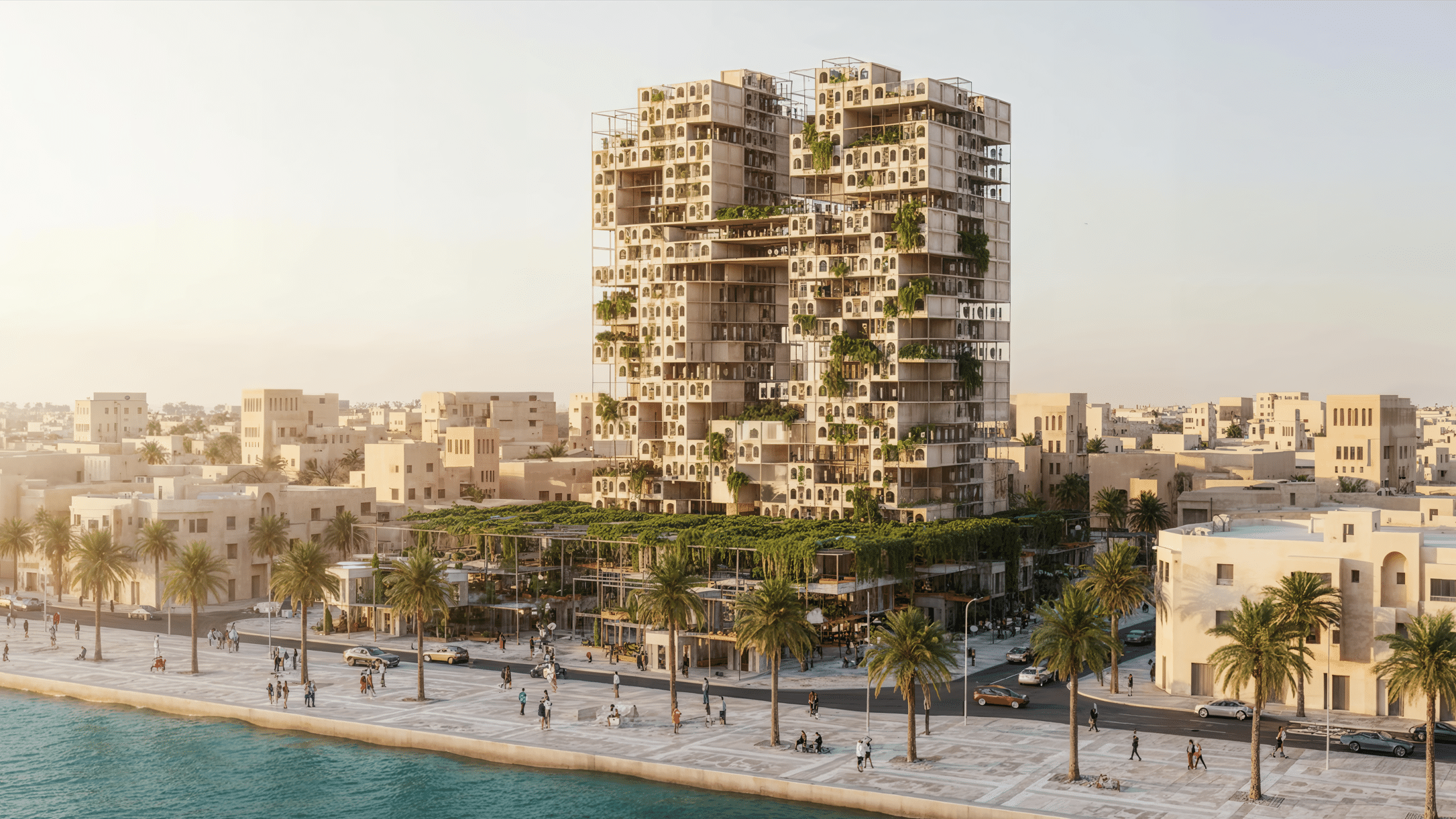
Morphing Sands

Morphing Sands is a climate-responsive mixed-use architectural system developed for Jeddah, Saudi Arabia, addressing urban densification in a hot–humid coastal environment. Inspired by the historic fabric of Al-Balad, the project reinterprets Hijazi principles—such as courtyards, shaded streets, and layered façades—through a modular and computational design approach. The project organizes commercial functions horizontally at the lower … Read more

Never Ending Cairo Market

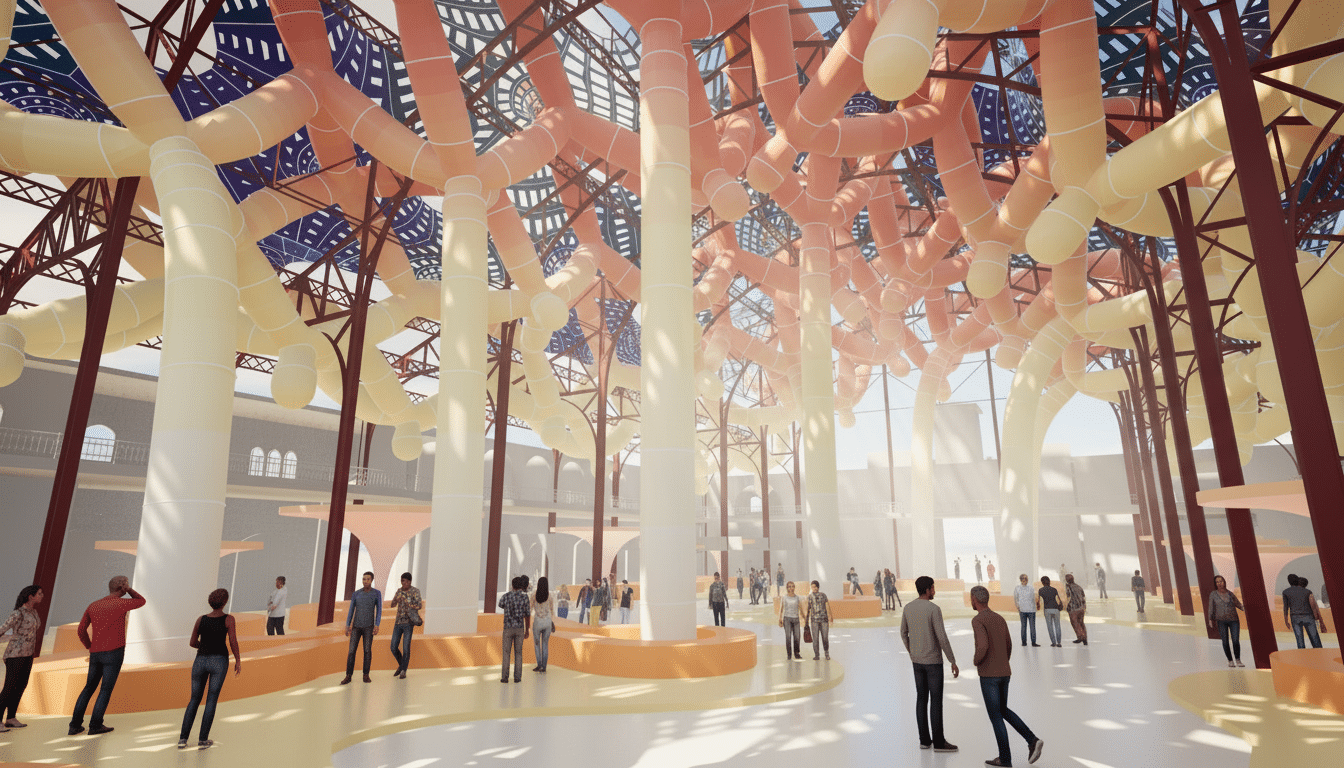
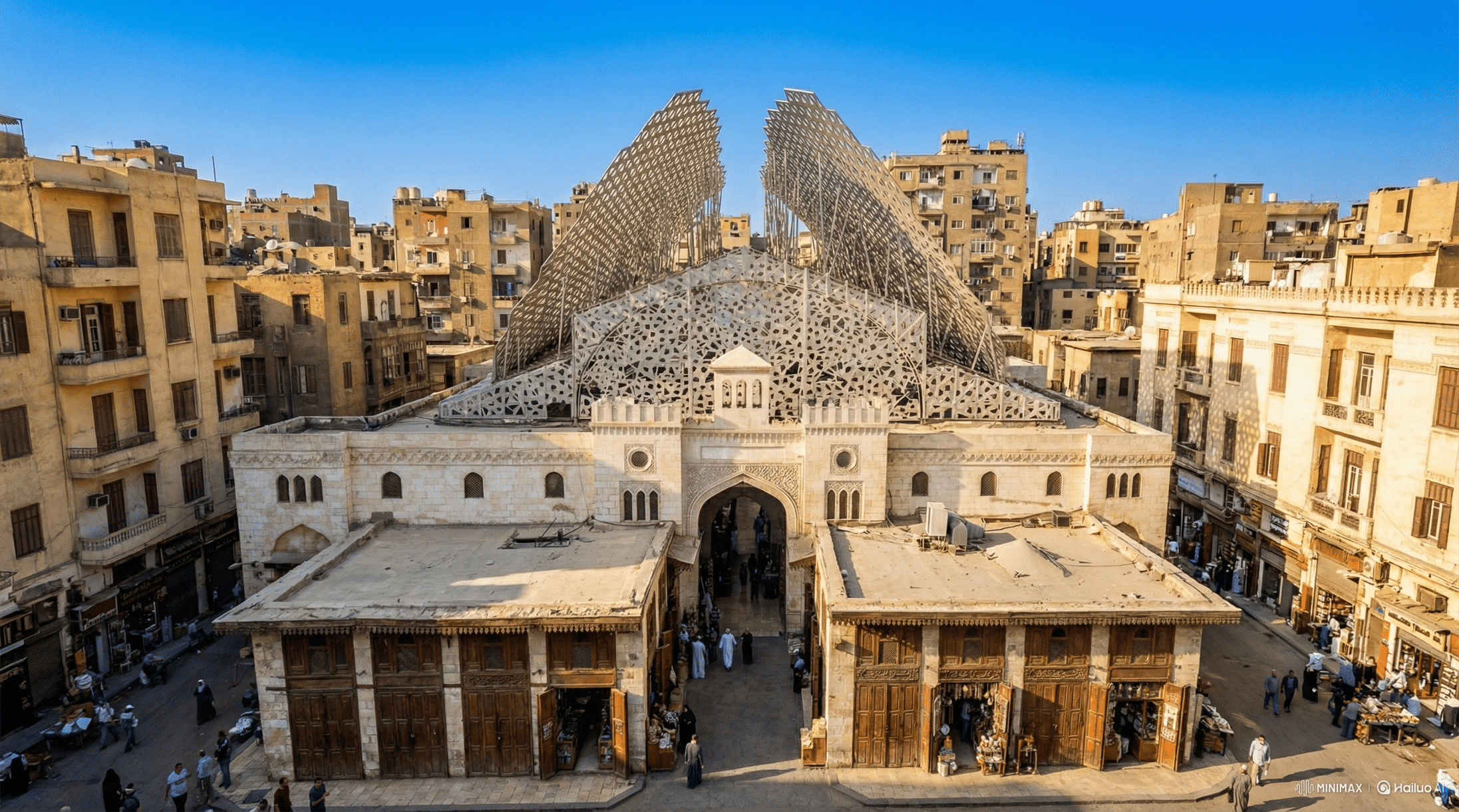
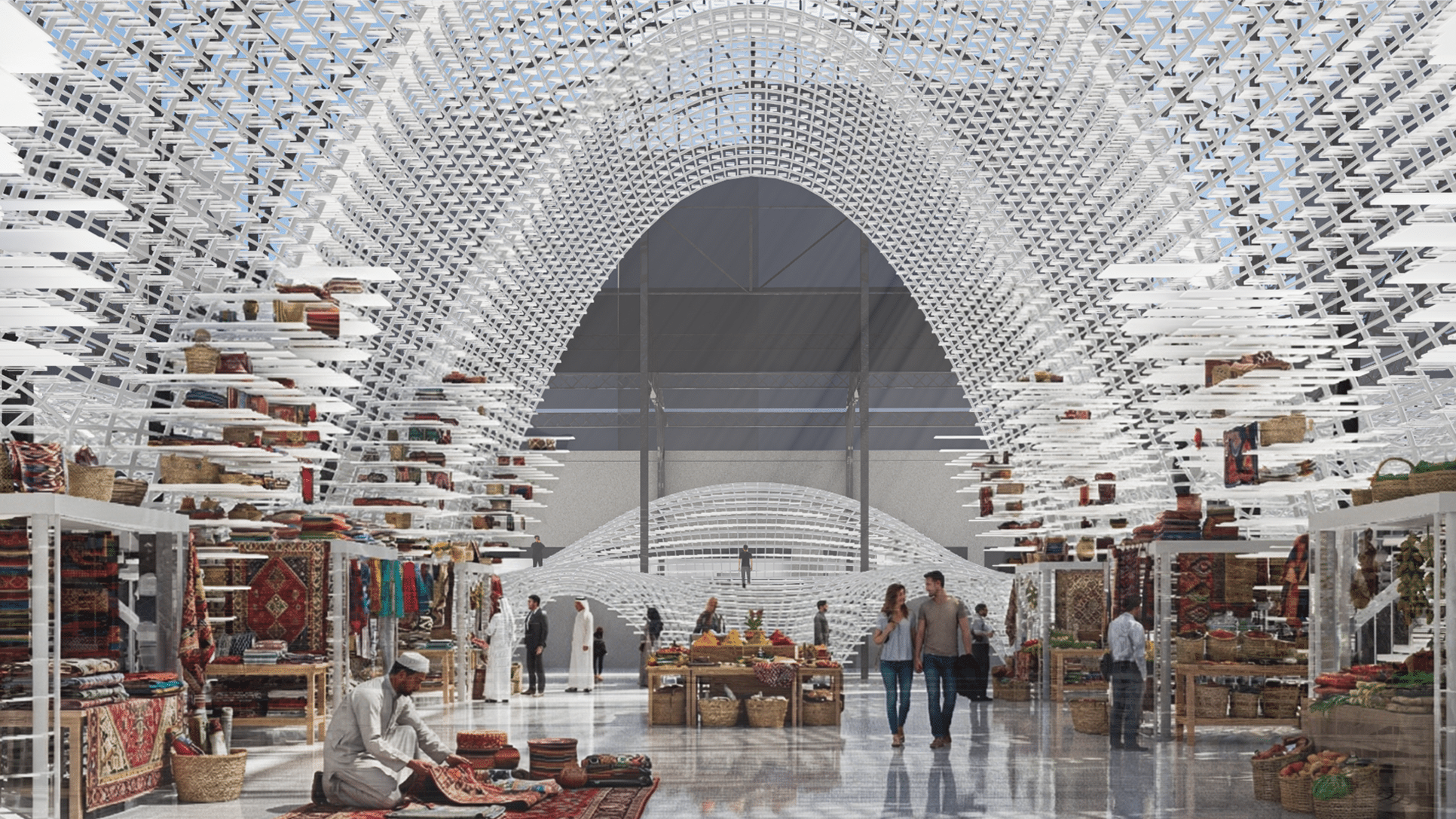
The project focuses on the transformation of the historic Bab al-Luq Market in Cairo, Egypt. Built in 1912 and inspired by Paris’ Les Halles, the market was distinguished by its accessibility, natural light, hygiene, and spatial organization. Despite continuous use, decades of deterioration have reduced its architectural and spatial potential. The project aims to reactivate … Read more

INTERPOROUS OVERGROWTH

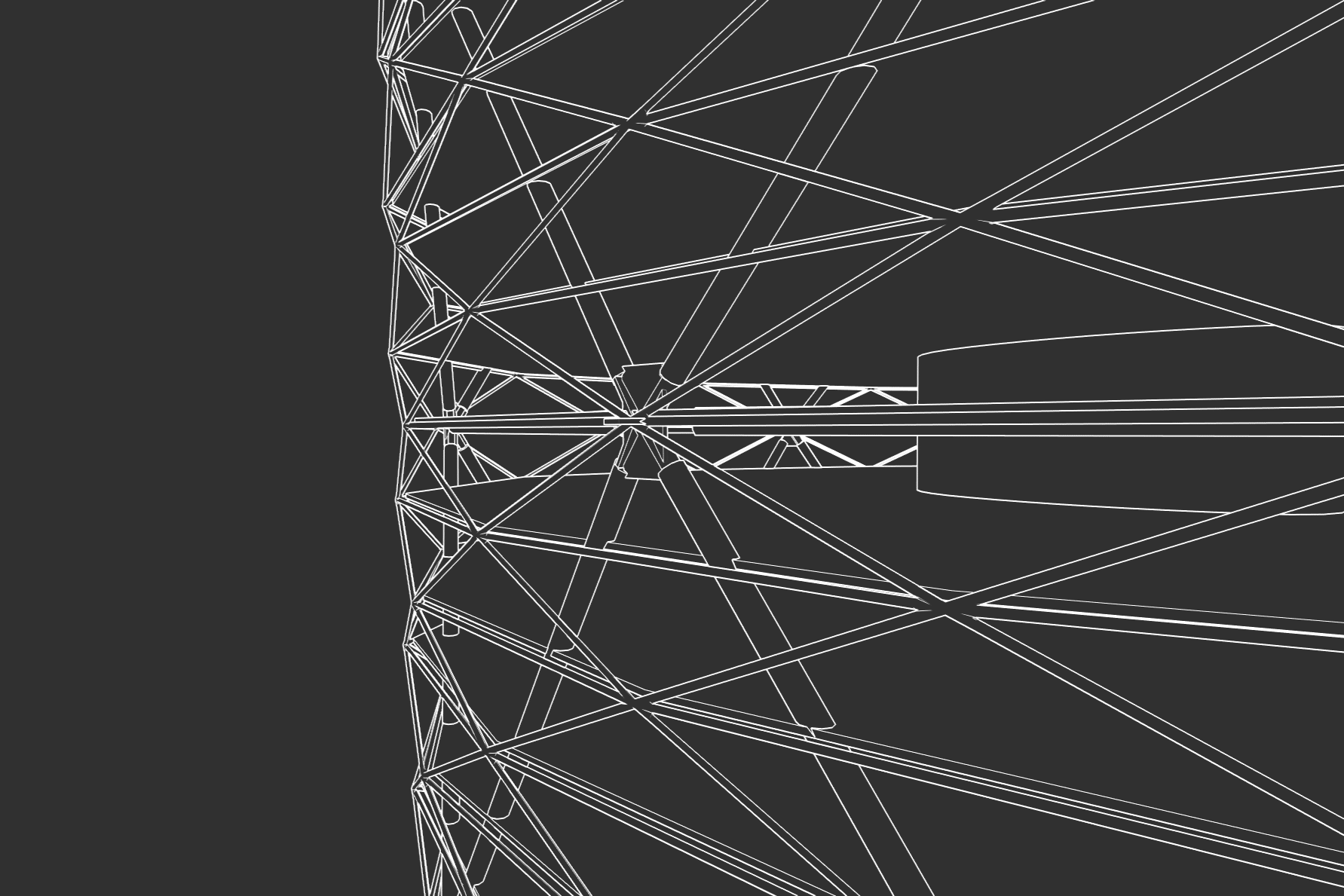
Conceptual Framework The Project explores a contemporary dialogue between past and present by enveloping a historic steel truss within a soft, inflated architectural skin. Inspired by the playful curves and buoyancy of balloon art, the installation introduces a layer of translucent, geometric “bubble wrap” forms that gently overgrow the rigid industrial structure beneath. Rather than … Read more

The Luminous Stratum

The “sedimented light” effect created by the lattice, filtering sunlight into the market below . Introduction – More Than Just a Roof In the dense historic fabric of Cairo, light is both a blessing and a burden. The Luminous Stratum proposes a new architectural language that negotiates this relationship – a “volume of sedimented light” … Read more

Verdant – Bringing Nature to Urban Rooftops

Verdant evokes lush greenery and vitality, capturing the essence of this parametric roof redesign that transforms a mundane urban building into an organic canopy. Inspired by the delicate structure of bamboo leaves, the project employs randomly oriented gold-anodized louvres to create a dynamic interplay of light and shadow, mimicking sunlight filtering through foliage. This modern … Read more

THE PNEUMATICAL ⤰ INCRUSTATION

Solid vs. Soft How can an object low in inherent solidity still be structurally present and define architectural space? This question lies at the heart of The Pneumatical Incrustation. Developed for the Complex Forming Seminar, this project explores the fundamental contrast between the solid and the soft. The goal was to investigate how “soft” forms … Read more

Mind vs Machine: MENTOR

A Multi-Agent, Socratic, Cognitive-Preserving Tutoring System for Architectural Education The Silent Crisis Picture this: A design student faces a challenging architectural problem. They need to create a sustainable community center that harmonizes with its urban context while meeting complex programmatic requirements. In 2023, they would likely turn to ChatGPT, type their question, and receive a … Read more

A.I. Morphogenesis

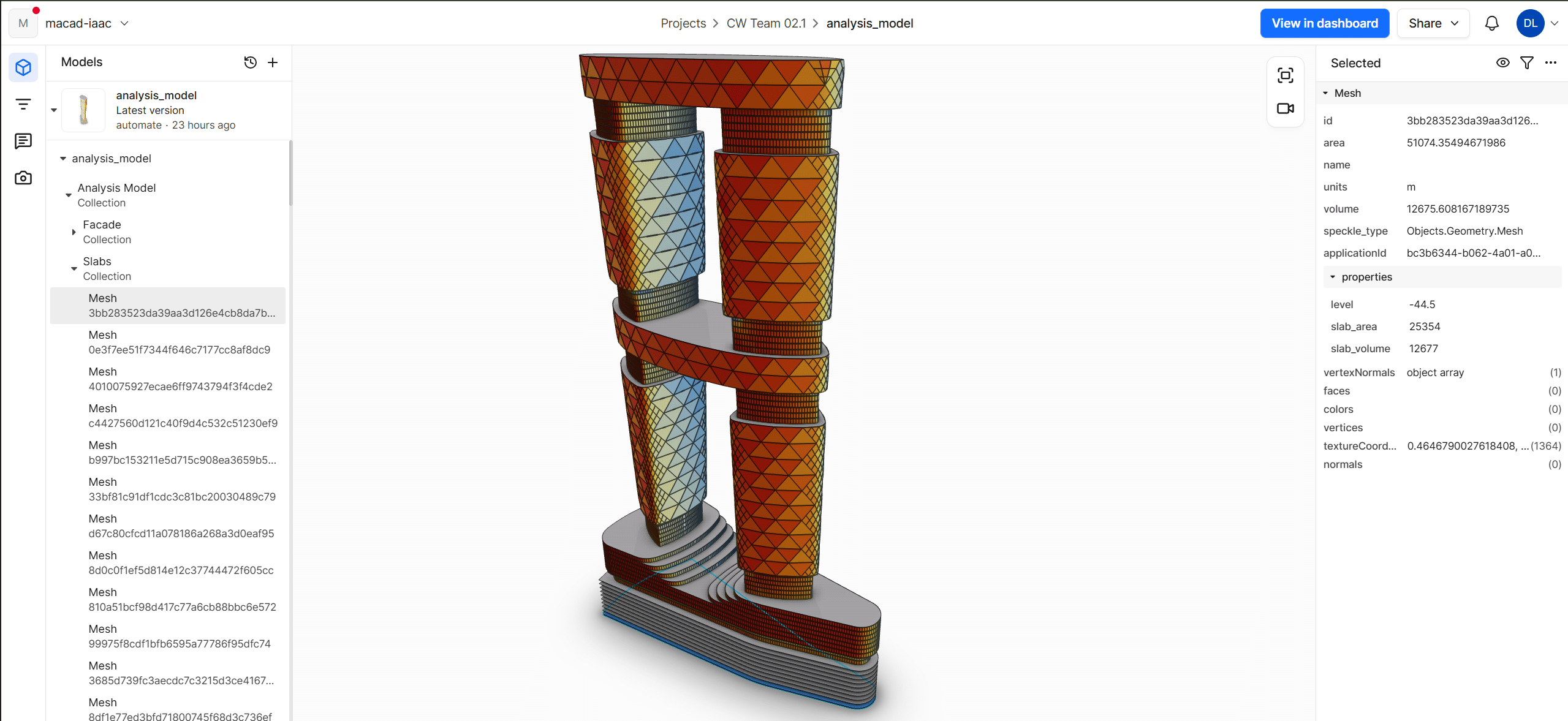
Toward Net-Positive Architecture MASTER IN ADVANCED COMPUTATION FOR ARCHITECTURE & DESIGN  2024/2025 Anji, Christina & Will Thesis – Supervisor: Gabriella Rossi We are facing an urgent climate crisis, one that demands architecture to move beyond conventional sustainability toward regenerative, net-positive approaches. Current design practices often struggle to integrate environmental and context-aware analysis seamlessly because they … Read more

ThinkSpaceAI

Turning Natural Language into Architecture Designing a house is never just about walls and windows—it’s about translating human stories into spaces that feel alive. Clients describe routines, aspirations, and cultural practices. Architects then face the challenge of turning those narratives into coherent layouts that also respond to site, climate, and context. Most computational tools fall … Read more

Hyper B – Residential Team

Hyper B Residential

A Balance of living in a Hyper scale Concept Hyper-Buildings Have become a symbol of Dark and Dystopian living, where residences are in low living standards & disconnected from the world. Residential living in a hyper-building must balance high-density living with comfort, health, and amenities that can support and sustain inhabitants. The Residential Team aims … Read more

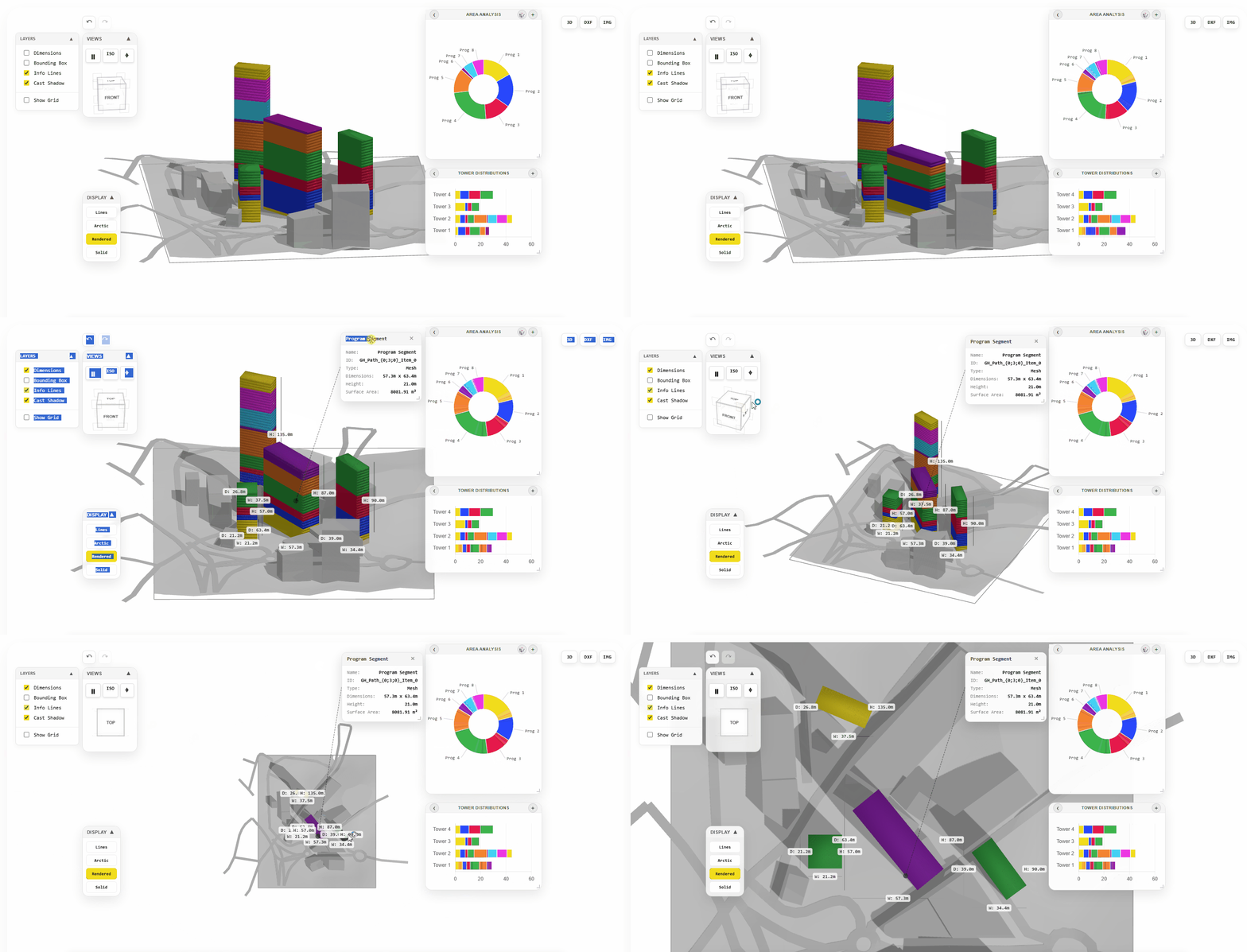
Hyper B: Industrial Strategies for Urban Farming through Data

Industrial team dedicated to rethinking how we approach urban farming, renewable energy, and multifunctional infrastructure, is leading the charge. Their integrated workflow uses parametric modeling, automated data exchange, and business intelligence (Power BI dashboard) to optimize space usage and resource allocation in urban environments. In this post, we dive into a series of visuals that … Read more