The MaCAD is a unique online programme training a new generation of architects, engineers and designers ready to develop skills into the latest softwares, computational tools, BIM technologies and AI towards innovation for the Architecture, Engineering and Construction (AEC) industry.

Filters
Course

Digital to Physical: An Interview with Melike Altınışık on Bridging the Geometric Gap

In contemporary architecture, designing a visually stunning, non-standard building envelope is only half the battle. The true test lies in the translation: how do we ensure that the mathematical precision of a parametric model survives the chaotic reality of a construction site? This exact challenge is the driving force behind our ongoing research proposal at … Read more

Breaking the Desktop Barrier: A Real-Time Parametric Pavilion

In the traditional architectural workflow, parametric models are often “trapped” inside heavy desktop software like Rhino and Grasshopper. My latest project, the Parametric Brick Pavilion, aims to bridge this gap by moving high-level structural computation directly into a web-based interface. The Challenge: Accessibility in Complexity Parametric design is a powerful tool for iteration, but it … Read more

Automated workflow to extract KPIs from versioned models in Speckle

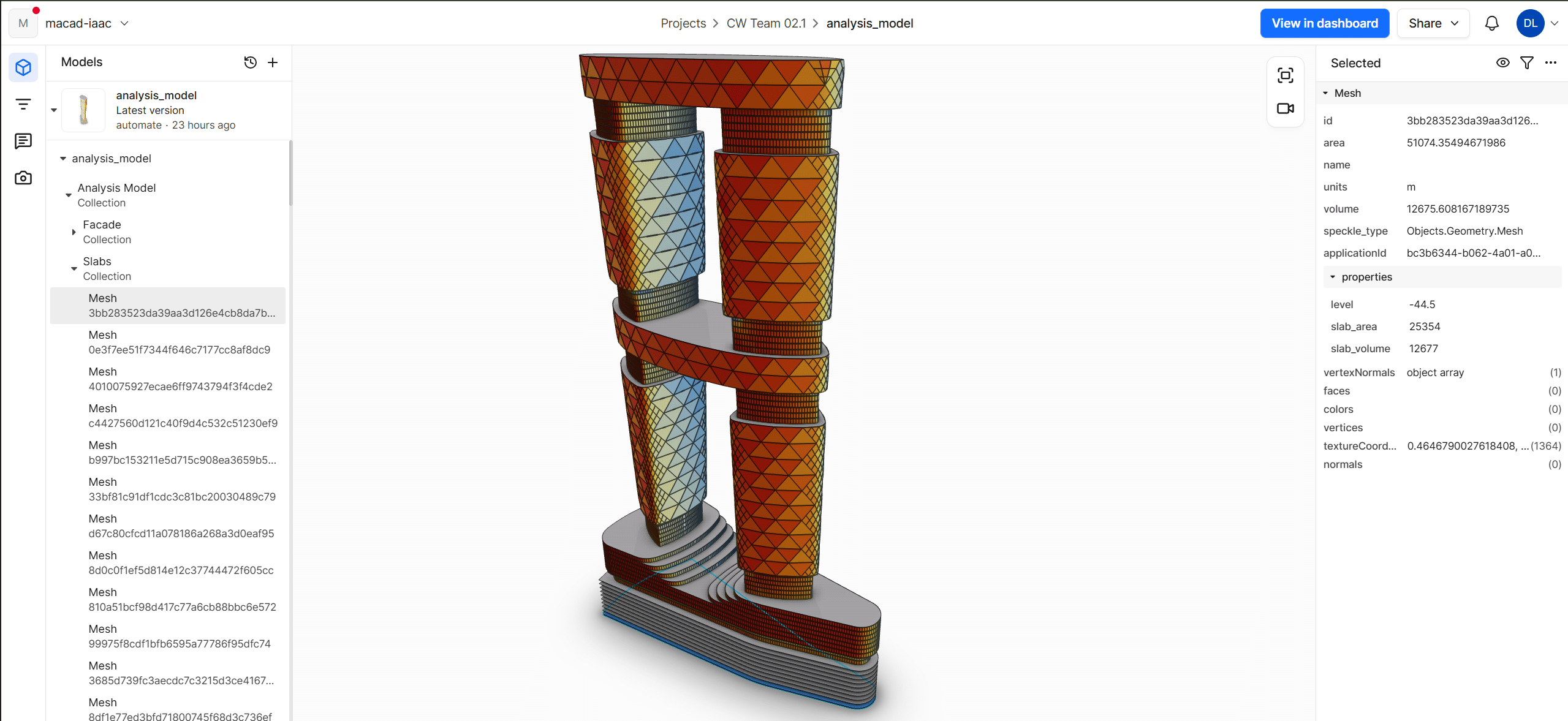
Automated Workflow for KPI Extraction from Versioned Models in Speckle Why KPI Tracking Breaks Down During Iterative Design In the current studio workflow, KPI extraction and performance evaluation depend on repeated manual operations across design iterations. This slows down feedback, introduces version mismatch risks, and disconnects analytical outputs from the model itself. This tool was … Read more

Parametric Engineering: Collaborate with Structural Data on the Cloud

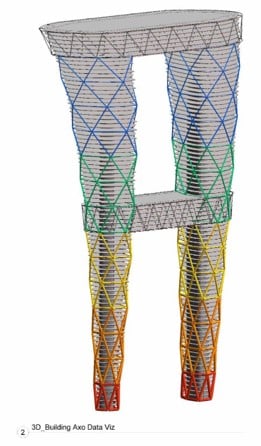
Topic brief In the AEC industry, building analysis workflows often operate in isolated software environments, causing structural data to lose meaning once it leaves its original authoring tool. This study argues that the value of structural analysis depends not only on computational accuracy, but on the ability of its outputs to remain consistent as they … Read more

BIM in Ongoing Heritage Construction: The case of the Sagrada Família

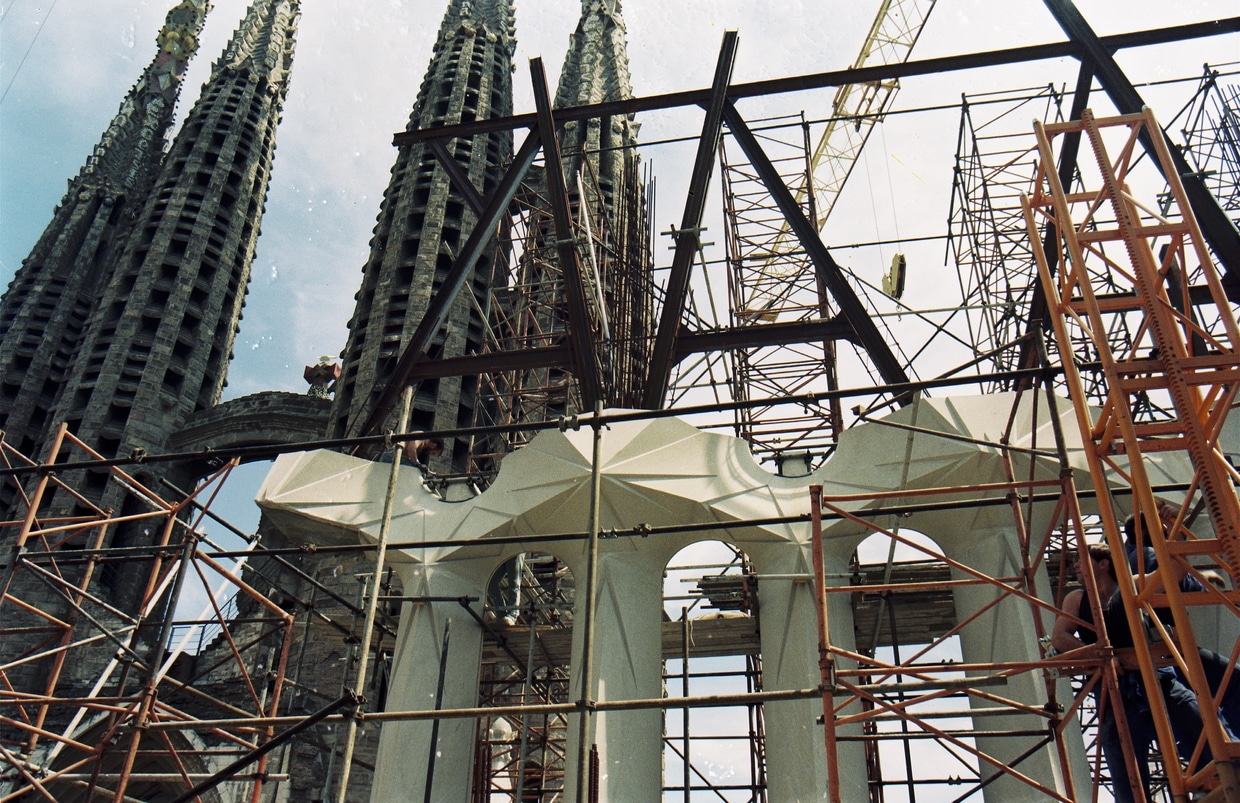
Computational Workflows at the Sagrada Família The Sagrada Família in Barcelona is one of the most complex and long-running architectural projects in the world. Begun in 1882 and still under construction today, the basilica sits at the intersection of historical heritage, evolving design intent, and contemporary digital technology. To understand how digital tools support such … Read more

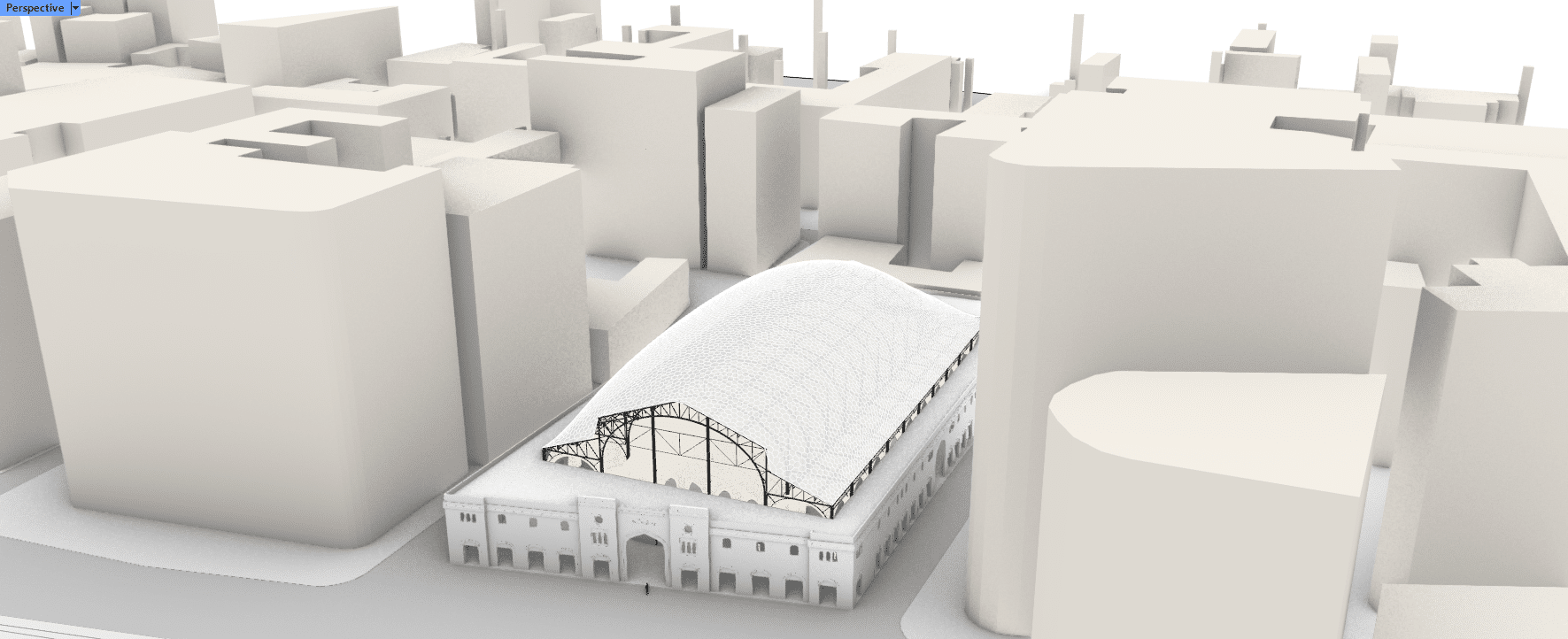
Bab al-Luq Market: A Shell That Finds Light and Guides People

Bab al-Luq Market in Cairo was designed to be bright, legible, and hygienic—then decades of add-ons and wear turned it into a dim, confusing interior. This proposal makes one clear move: a parametric double-skin roof that diffuses daylight and defines a readable circulation spine. Location: Cairo, Egypt Climate: Hot, dry, sunny Typology: Historic market hall … Read more

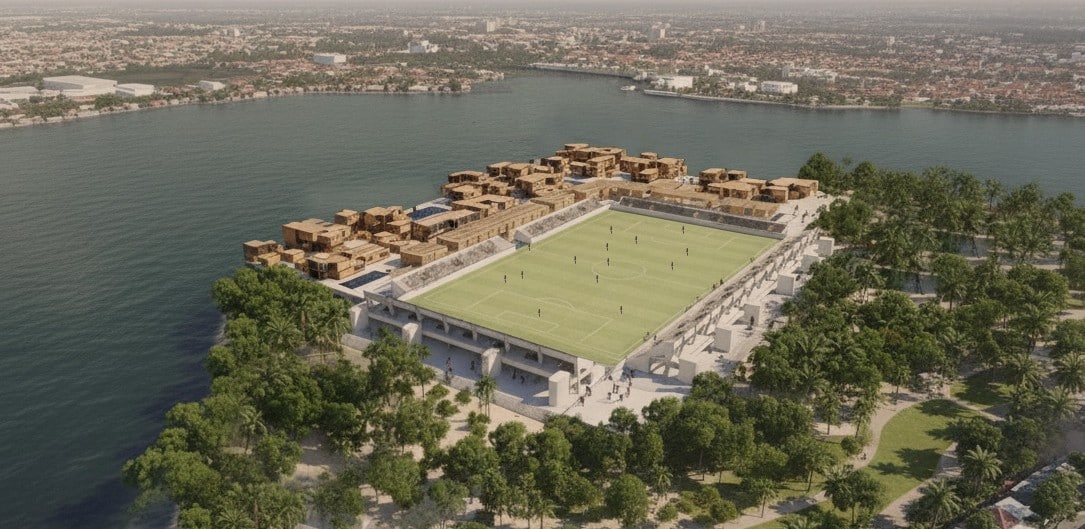
Floating Grounds-Rethinking Resilience in Jakarta

Introduction Floating Grounds proposes a flood-resilient urban model for Jakarta that merges housing, public programs, and a stadium into a single floating system. Instead of resisting water, the project accepts it as a permanent condition and uses it as an organizing element. The work explores how large-scale infrastructure can support community life while addressing land … Read more

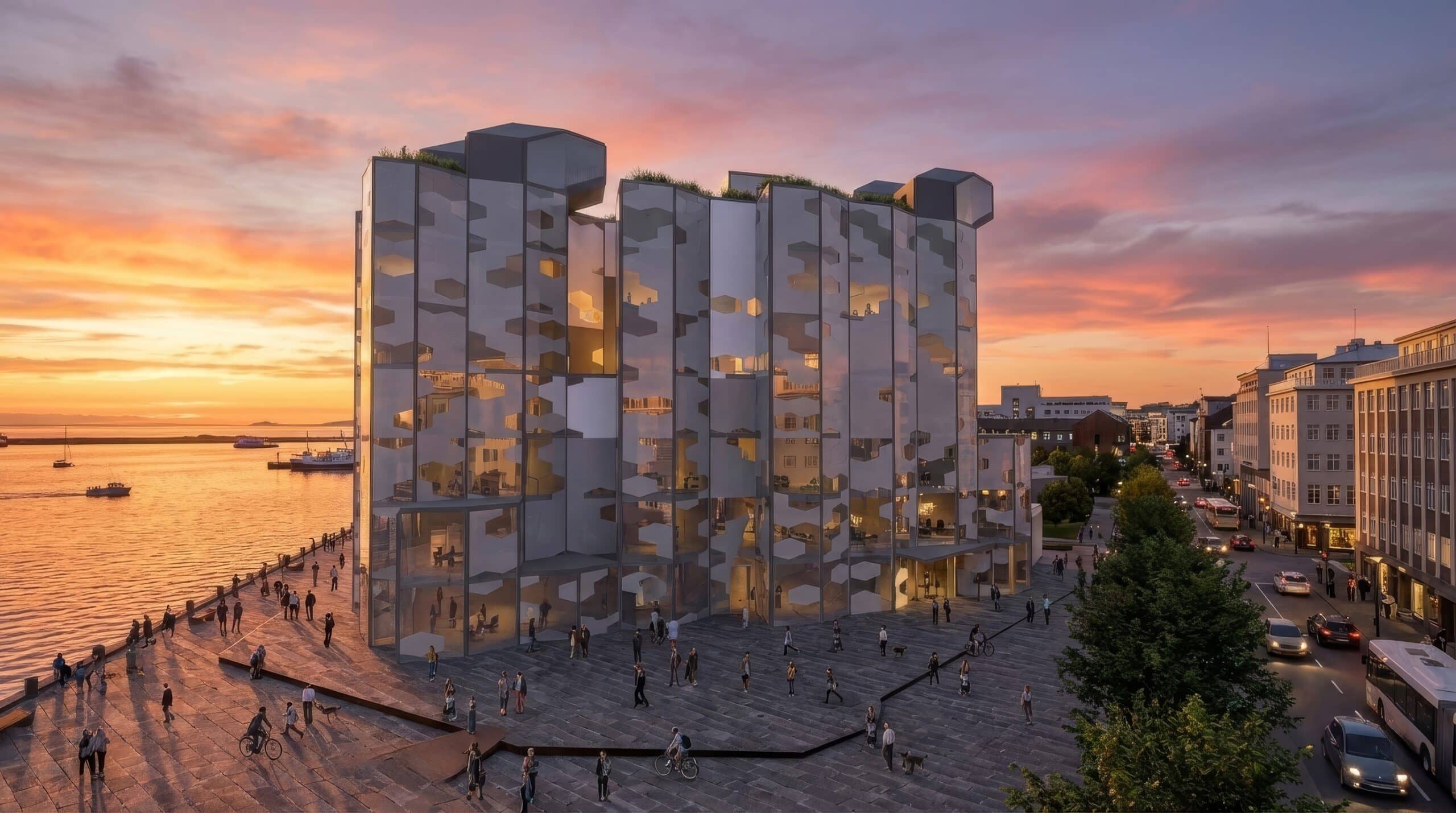
Tectonic Hub: Climate-Adaptive Recipe for Cultural Hubs in Reykjavik

Ingredients Climate Reykjavík’s climate shapes the entire project. The site is exposed to strong, multi-directional winds reaching 27 m/s, with a prevailing direction around 135°. Daylight conditions are equally extreme, shifting from long summer days to very short winter ones. The system therefore needs to adapt, protect, and still create comfortable public spaces. Form Our formal … Read more

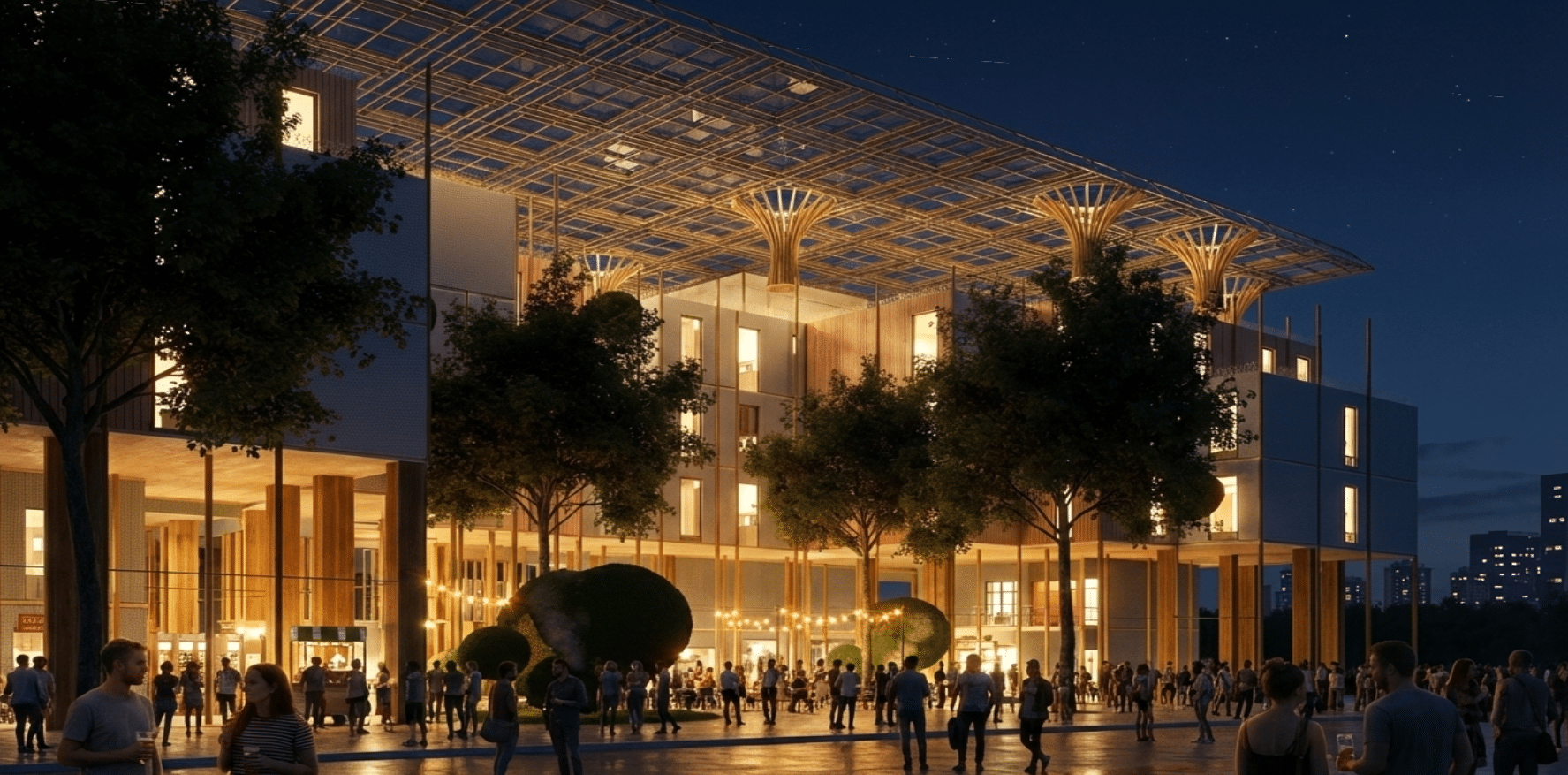
Monsoon Nest: Living Between Flood and Sky

Monsoon Nest is a modular housing proposal for Bangkok that responds to monsoon rainfall, flooding, and high-density urban conditions. The project explores adaptable modules, elevated structures, and passive climate strategies to create resilient, community-oriented living environments in a tropical context. The design of Monsoon Nest is informed by four primary parameters: contextual environmental data, parametric … Read more

Catenary Field

Glass fibre 3D printed temporary pavilion A structural and topological investigation into voxelised lattice systems, combining catenary form-finding with performance-driven optimisation to explore emergent spatial order and material efficiency. The Idea This project explores how a rigid, modular voxel system can define and enclose a pavilion, while an internally generated catenary geometry shapes circulation and … Read more

Temporary Pavilion

Pavillion Lattice Structure Render

From Dense Lattice to Optimized 3D-Printed Structure 1. Project Overview This project explores the design and structural optimization of a temporary pavilion using computational design tools and lattice-based construction logic. The pavilion is conceived as a porous, walkable structure designed for large-scale 3D printing using glass-fiber reinforced recycled PET. The main objective is to investigate … Read more

Algorithmic Optimization and Fabrication of a Lattice Coral Pavilion

This technical report details the computational workflow developed for our final structural optimization assignment. The project methodology follows a rigorous sequence: initial form-finding, stress-line analysis, lattice topology selection, and cross-section optimization, culminating in a robotic fabrication strategy. General Workflow Overview The design process is structured around a linear algorithmic pipeline. It begins with form-finding utilizing … Read more

The Clebsch Pavilion

The Concept The pavilion’s striking, organic form isn’t just aesthetic; it is rooted in the Clebsch diagonal cubic, a cubic algebraic surface defined by the equation: x03+x13+x23+x33+x43=0x sub 0 cubed plus x sub 1 cubed plus x sub 2 cubed plus x sub 3 cubed plus x sub 4 cubed equals 0 subject to the … Read more