The MaCAD is a unique online programme training a new generation of architects, engineers and designers ready to develop skills into the latest softwares, computational tools, BIM technologies and AI towards innovation for the Architecture, Engineering and Construction (AEC) industry.

Filters
Course

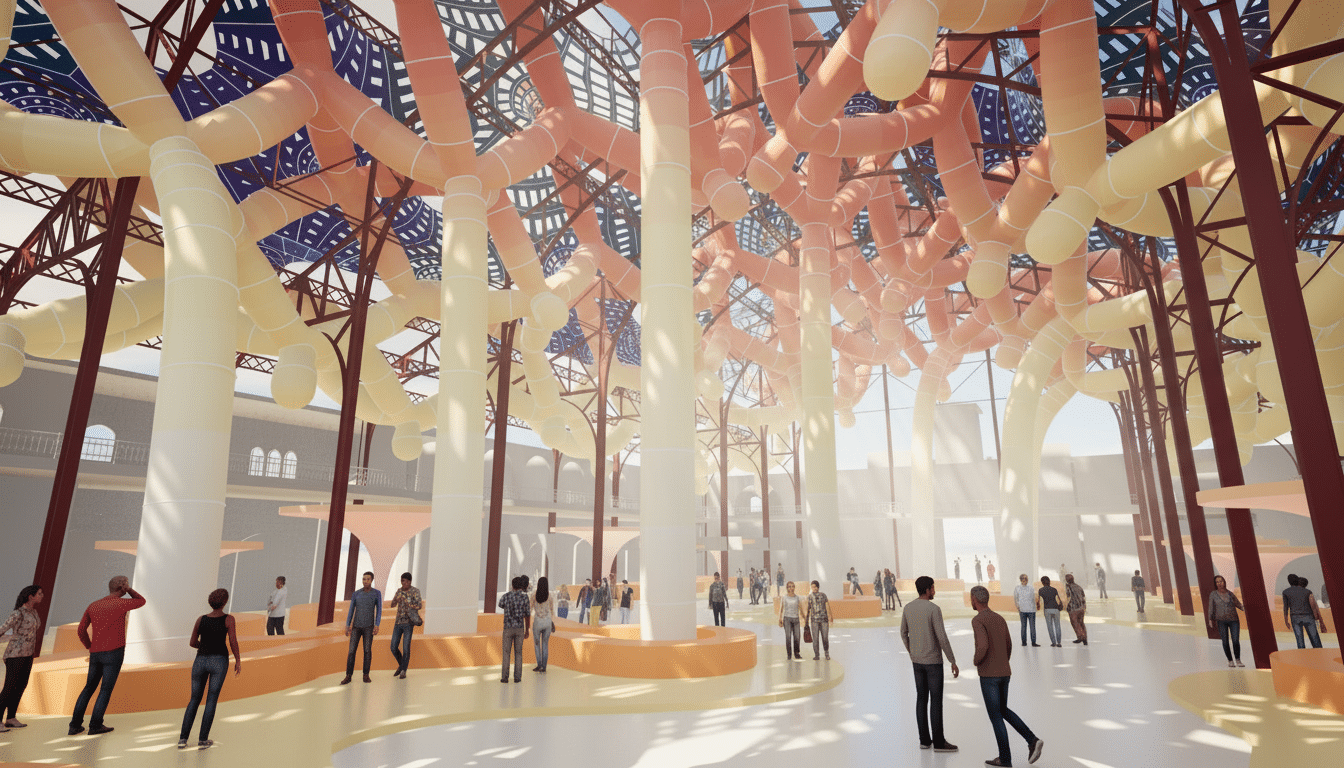
INTERPOROUS OVERGROWTH

Conceptual Framework The Project explores a contemporary dialogue between past and present by enveloping a historic steel truss within a soft, inflated architectural skin. Inspired by the playful curves and buoyancy of balloon art, the installation introduces a layer of translucent, geometric “bubble wrap” forms that gently overgrow the rigid industrial structure beneath. Rather than … Read more

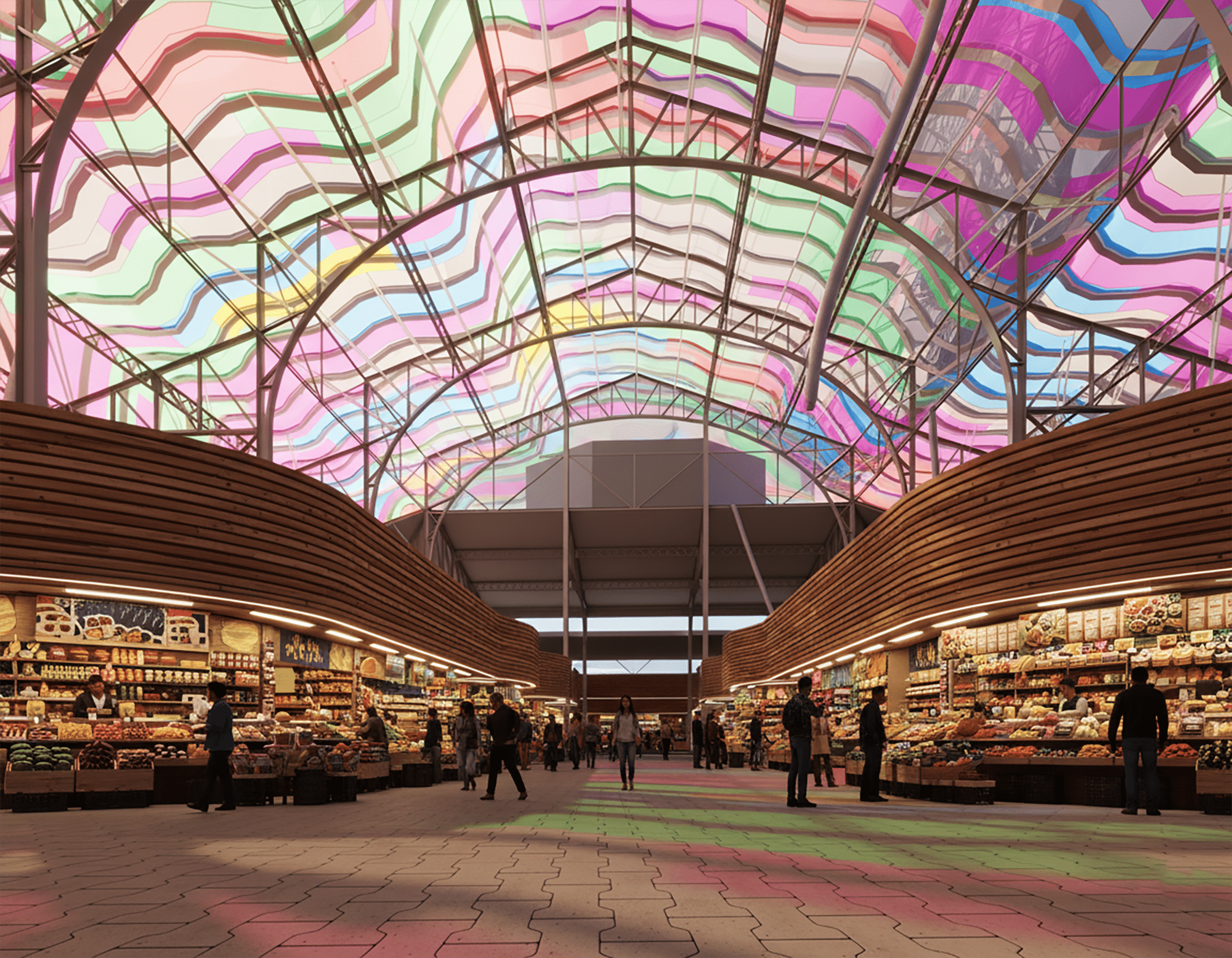
A Computational Interpretation of Cairene Tradition

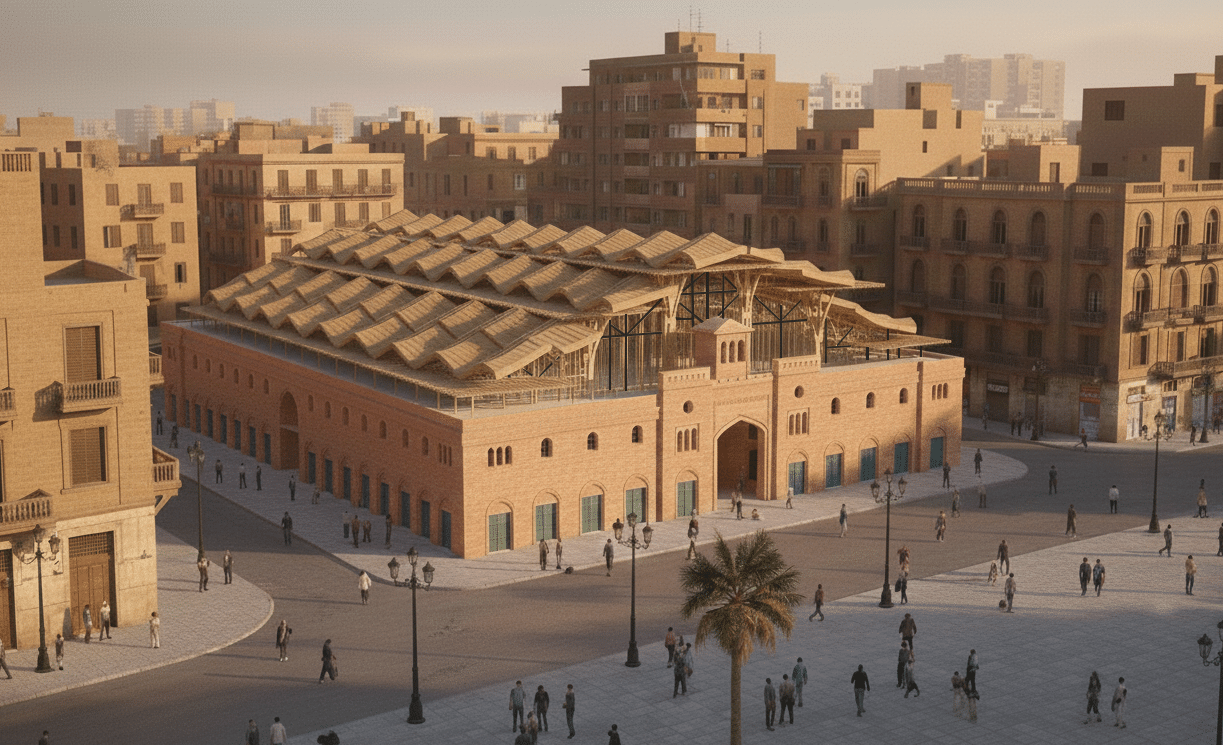
Bab al-Luq Reimagined: Computation, Climate, and Cultural Memory This project approaches the Bab al-Luq Market not as a blank surface for formal experimentation, but as a site layered with climatic intelligence and symbolic meaning. Its proposal is rooted in two elements deeply embedded in Cairene architectural and cultural memory: the malqaf and the lotus flower. … Read more

Verdant – Bringing Nature to Urban Rooftops

Verdant evokes lush greenery and vitality, capturing the essence of this parametric roof redesign that transforms a mundane urban building into an organic canopy. Inspired by the delicate structure of bamboo leaves, the project employs randomly oriented gold-anodized louvres to create a dynamic interplay of light and shadow, mimicking sunlight filtering through foliage. This modern … Read more

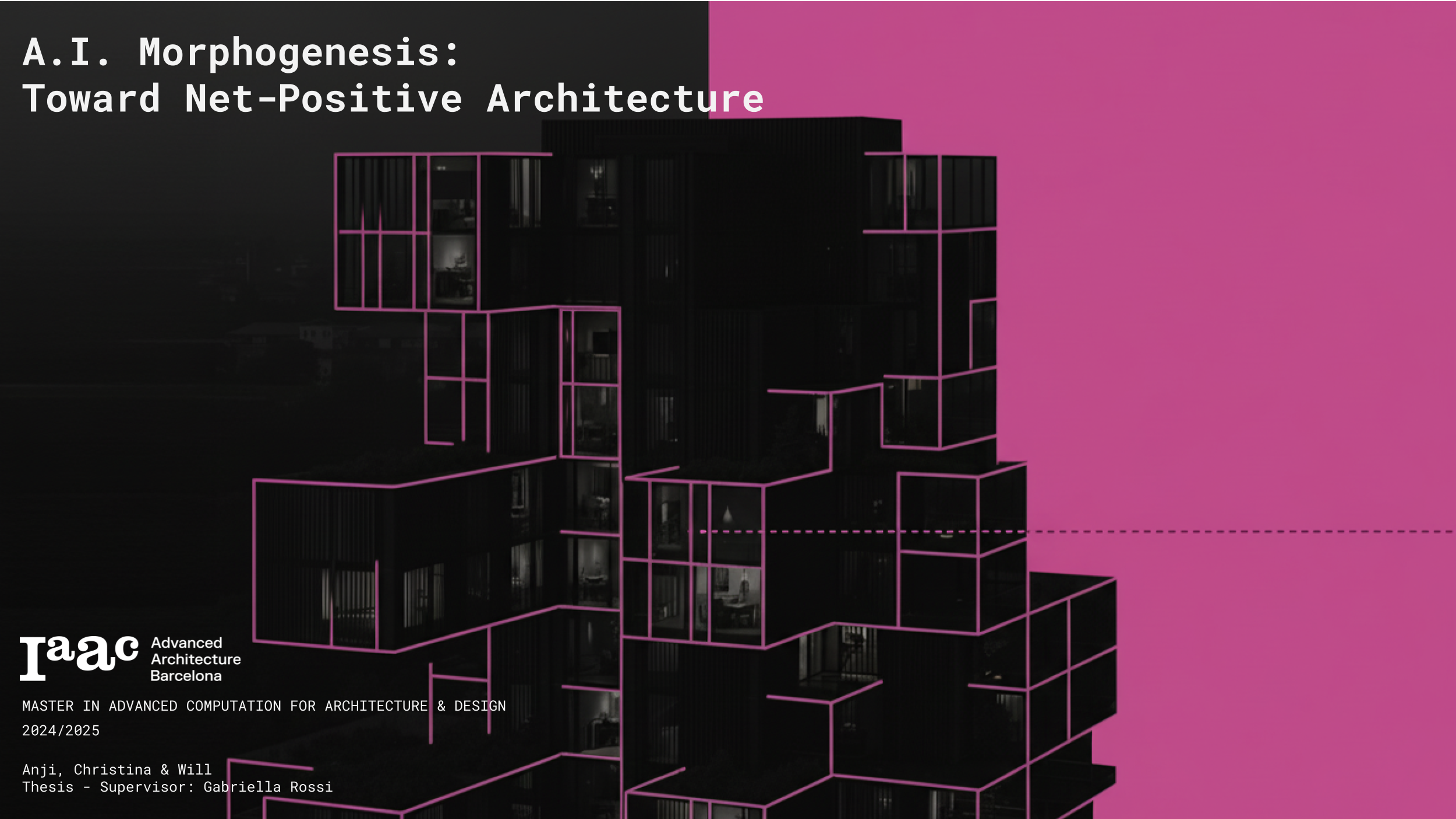
A.I. Morphogenesis

Toward Net-Positive Architecture MASTER IN ADVANCED COMPUTATION FOR ARCHITECTURE & DESIGN  2024/2025 Anji, Christina & Will Thesis – Supervisor: Gabriella Rossi We are facing an urgent climate crisis, one that demands architecture to move beyond conventional sustainability toward regenerative, net-positive approaches. Current design practices often struggle to integrate environmental and context-aware analysis seamlessly because they … Read more

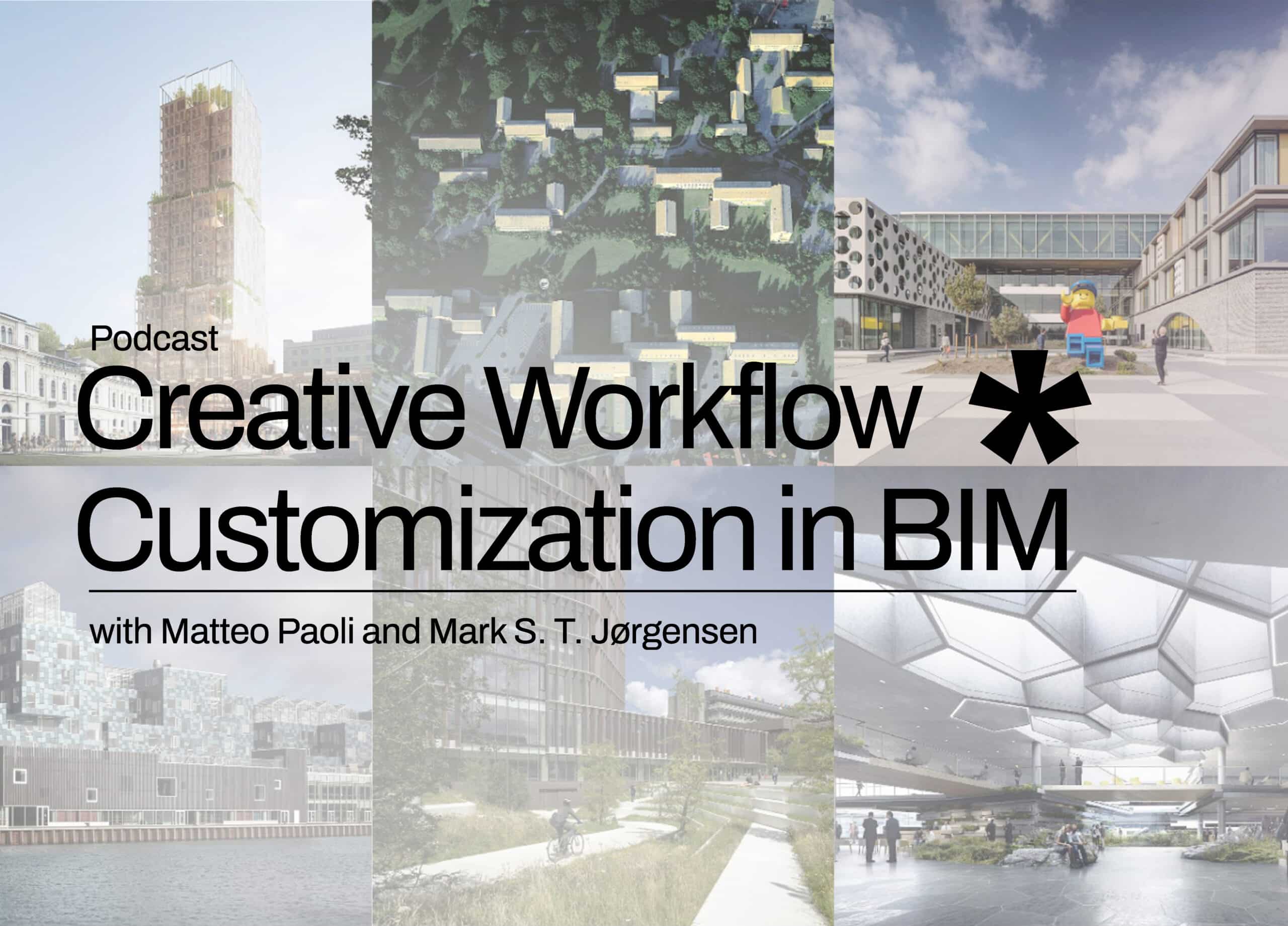
Creative Workflow Customization in BIM

Leveraging Advanced BIM Strategies for Complex Architectural Realization Contextual Framework – Traditional BIM workflows often struggle to accommodate the complex, fluid geometries characteristic of avant-garde architectural designs, creating a gap between conceptual vision and buildable reality. Key Insight – Customized BIM workflows incorporating AI, computational design, and bespoke coding can enable the realization of complex … Read more

Hyperbuilding B: A Structural Evolution

Introduction Welcome to an exploration of Hyperbuilding B’s structural innovations, brought to life by our dedicated structural team—Erva, Renuka, and Ernesto. Our journey was guided by Japanese design philosophies, advanced structural strategies, and meticulous collaboration with the design teams. This blog delves into our approach, workflow, and key performance metrics that shaped the Hyperbuilding B’s … Read more

Integrative Structural Modelling

The Structural Innovation Behind Hyper-Building B As cities continue to grow vertically, the need for adaptive, resilient, and expressive structural systems becomes increasingly vital. The Hyper-Building B project, developed as part of the Integrative Modeling Seminar at MaCAD, embraces a forward-thinking approach that integrates Japanese aesthetics, parametric design, and high-performance structural engineering. The structural team … Read more

TRAVELNA / Structural Optimization

00 / Architectural Concept TRAVELNA is an innovative architectural design concept merging the subscription model of services like Netflix with Airbnb’s global accommodation network, tailored for solo travelers frequently moving across major cities worldwide. The strategy was to create a building recipe that could optimize five (5) key performance indicators.1. Unit Efficiency Ratio.2. Flexibility & Modularity … Read more

AdaptiveFlow Carbon Emission

3D Concrete Printing (3DCP) is reshaping the construction industry by combining innovation and sustainability. This cutting-edge technology involves the automated layering of concrete through robotic systems to create durable, customized structures efficiently. The process integrates components like robotic arms, nozzle systems, and advanced computational control to deliver unparalleled precision and speed. How Does It Work? … Read more

Energy Consumption for Interchangeable Units in a Mixed Use Building Typology

For our MaCAD Studio project, we wanted to explore the idea of circularity during the assembling/disassembling stage of the various programmatic functions housed by the building structure. The main materials employed are CLT and Reinforced Steel, of which we picked the first to be the focus of our study since it is the primary material … Read more

The Energy Behind Your Data

Abstract By the year 2025, there will be 200+ zettabytes of data in cloud storage. The servers handling this cloud storage space live in data centers. Since we live in the era of data, demand is surging, in fact, a 50% growth is expected by 2030. Data centers are energy consuming monsters, hence their lifecycle … Read more

The Perch – A Generative Building Typology

Introduction In our studio project, we use a combined bottom up and top down approach to develop a mixed use building; designed to integrate multiple functions, including residential, recreational, and commercial, within a single structure. Our goal is to feature a flexible layout, using modular construction techniques and clear circulation patterns, with well-designed junctions. Programmatic … Read more

System on a chip: Data Center modular aggregation structural optimization

Concept The architectural concept is based on creating a data center that expands over time, following a Design for Manufacturing and Assembly (DfMA) approach. At the core of the design is a superstructure, populated by smaller modular data halls. These are supported by a service program that includes operational spaces, storage, and MEP systems, particularly … Read more

Apex Structural Optimization

Computational Structural Optimization: A Case Study of High-Rise Integration Through Parametric Design When approaching the structural design of complex high-rise buildings, computational optimization becomes an invaluable tool in achieving both efficiency and architectural vision. In this post, I’ll walk you through a fascinating case study of how we utilized Karamba and Grasshopper to optimize a … Read more