The MaCAD is a unique online programme training a new generation of architects, engineers and designers ready to develop skills into the latest softwares, computational tools, BIM technologies and AI towards innovation for the Architecture, Engineering and Construction (AEC) industry.

Filters
Course

LEGO Set: A Generative AI Approach

Abstract The project explores the implementation of machine learning models to generate LEGO building instructions manuals and providing a detailed description of the set. We employee diffusion models along with LLM (Large Language Model) to generate both the images of the Lego set and its description. LoRA (Low-Rank Adaptation) we train a stable diffusion model … Read more

Architecture Inspired Furniture

Artificial Inspiration – Dissecting the Creative Process Creativity is often viewed as a uniquely human trait, emerging from the processes of study, interpretation, replication, and mixing variables to create new combinations and results. This project explores whether it is possible to develop a framework based on these principles that AI can reproduce and whether this … Read more

Metro Station Prediction in Stockholm

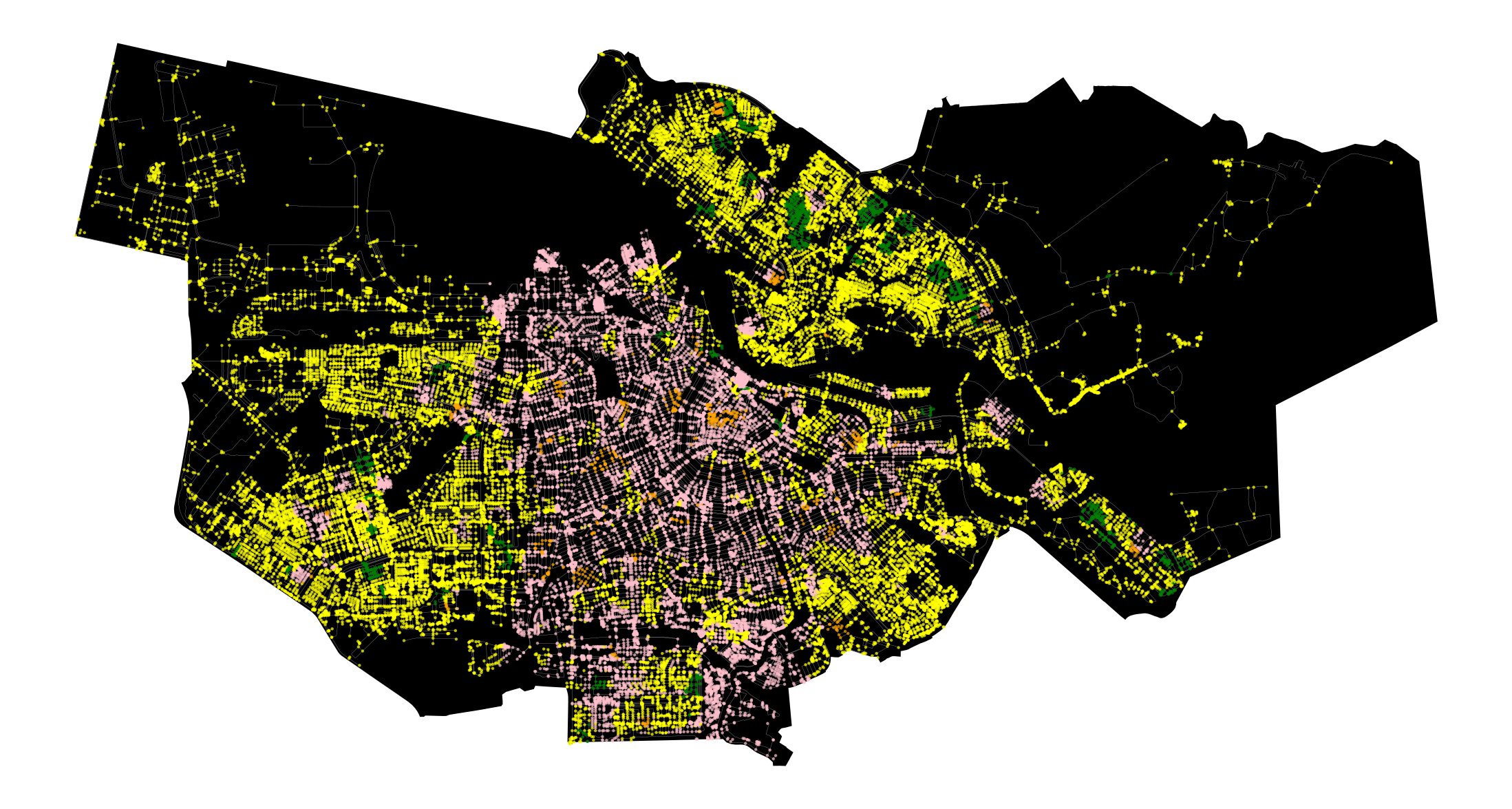
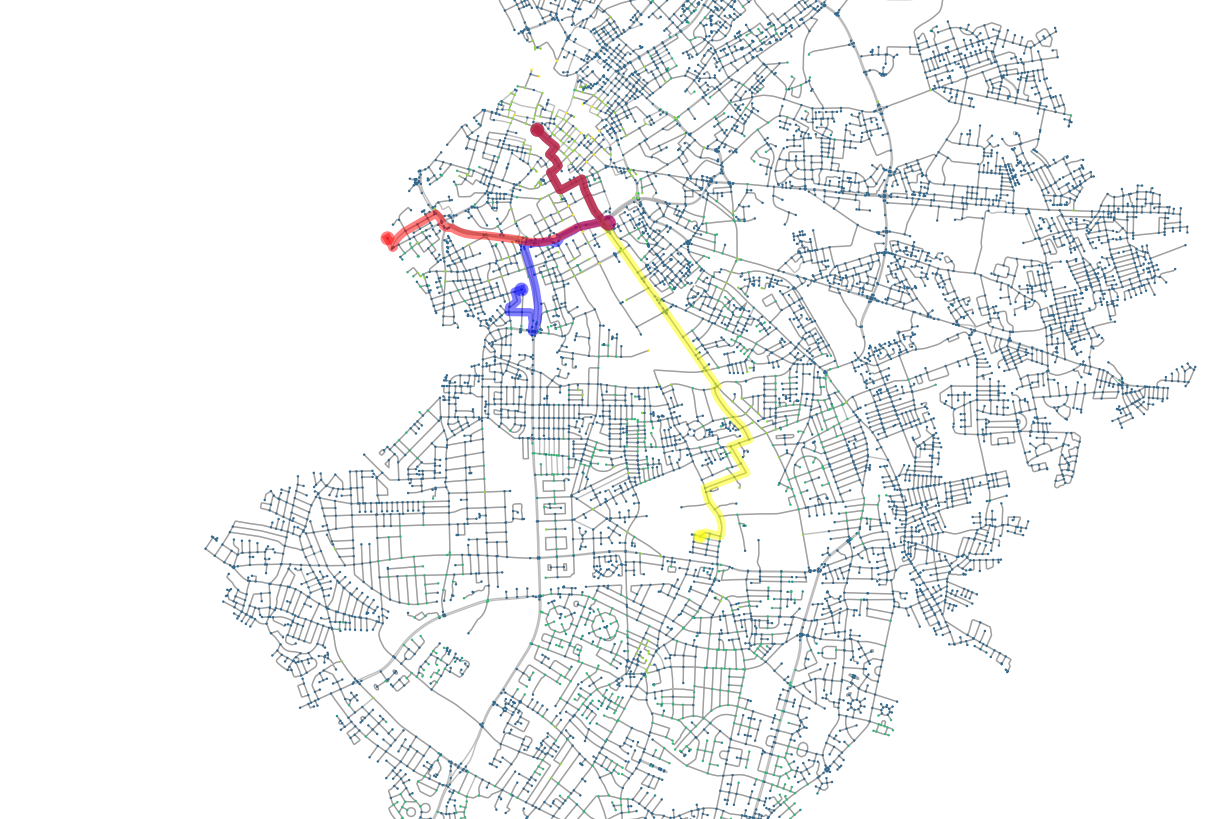
This post describes the development of a method to predict metro station locations using Graph Neural Networks (GNNs). Our journey began with a challenge familiar to urban planners: how to strategically place new metro stations to optimize transportation networks. In this case the city of Stockholm was used as testbed. The Challenge of Data Imbalance: … Read more

100-Year Flood Risk Road Intersection Classification

Flood Risk Classification

Beginnings Our project’s concept is to develop a classification model that identifies street intersections (graph nodes) in Stockholm, Sweden, susceptible to flooding during a 100-year flood event. Based on our initial research, we found that graph machine learning operates at three levels: the graph, its edges, and its nodes. With access to a 100-year flood … Read more

Alfafa Colony: BIM & Smart Construction

Project Concept Establishing a Martian food colony around a Mohole, designed based on growth morphology of alfalfa for efficient organization and development using L-systems. These terminologies are further explained below. Moholes Moholes on Mars are massive cylindrical excavations in the regolith, reaching up to 1 km in diameter and 7 km in depth. With temperatures … Read more

Alfafa Colony: Integrative Modelling

Project Concept Establishing a Martian food colony around a Mohole, designed based on growth morphology of alfalfa for efficient organization and development using L-systems. These terminologies are further explained below. Moholes Moholes on Mars are massive cylindrical excavations in the regolith, reaching up to 1 km in diameter and 7 km in depth. With temperatures … Read more

Genius Loci

View some of the collected data here: Street Types and Property Information Genius Loci was inspired by the work the of Sarah Williams in her book ‘Data action – Using data for public good’. In today’s data-driven world, the use of data has become increasingly pervasive, shaping various aspects of our lives from policymaking to … Read more

Drop by Drop – Simulate erosion

Introduction Fascinated by the formation of landscapes through geological processes, I wanted to develop an interactive tool that simulates the effects of erosion on a virtual terrain. The goal was to both illustrate how erosion works and to create an experimental playground for designing one’s own landscape forms. The development utilized VUE, ThreeJS, and Rhino.Compute. … Read more

Planter by Libny Pacheco

The Pains of Being a Computational Designer and Having Landscape Design Colleagues Planter came about as a response to my landscape architect colleagues. Seeing them working bidimensionally and having a 3D model typically disassociated from those 2D drawings pains me. In a world of data, why not quantify the consequences of plant choices in a … Read more

Eco – Construction

What is Eco-Construction? “Eco-Construct” is a web-based app designed for architects, urban planners, and environmentalists. It assists in creating sustainable and efficient building designs by leveraging environmental data and urban context. Why Eco-Construction? Economical building construction is not just about reducing costs—it’s about optimizing resources, enhancing efficiency, and ensuring value for every square foot of … Read more

Machine Learning in Architectural Practice and BIM

We’ve witnessed a fascinating shift from conventional to computational approaches, responsive designs, and the era of automation. Machine Learning, a term buzzing everywhere these days, has made its mark in our industry as well. In architecture, ML, a subset of artificial intelligence, utilizes data to tackle challenges in computer-aided design by simulating various design alternatives … Read more

The Aural Amplifier

Nestled within the crater of Agnano in Naples, Italy, this museum lies at the base of a dormant volcano. Spanning multiple floors, the collection unfolds the captivating narrative of the native species of Naples. Our project germinates from three distinct mathematical equations: A cartesian equation that produces a Clebsch diagonal cubic surface, a parametric equation … Read more

Spatial.Revelations

Abstract This study delves into the innovative fusion of graph theory with architectural design and planning, facilitated by a structured BIM to Graph workflow. By conceptualizing architectural elements as nodes and their interconnections as edges within a graph, architects gain an adaptable and multifunctional tool for representation, analysis, and strategic planning. The graph’s inherent scalability … Read more