IAAC’s Master in City & Technology (1 or 2-year program) is a unique program oriented towards redefining the analysis, planning, and design of twenty-first-century cities and beyond. The program offers expertise in the design of digitally enhanced, ecological and human-centered urban environments by intersecting the disciplines of urbanism and data science. Taking place in Barcelona, the capital of urbanism, the Master in City & Technology is training the professionals that city administrations, governments, industries, and communities need, to transform the urban environment in the era of big data.


Filters
Course

En la calle

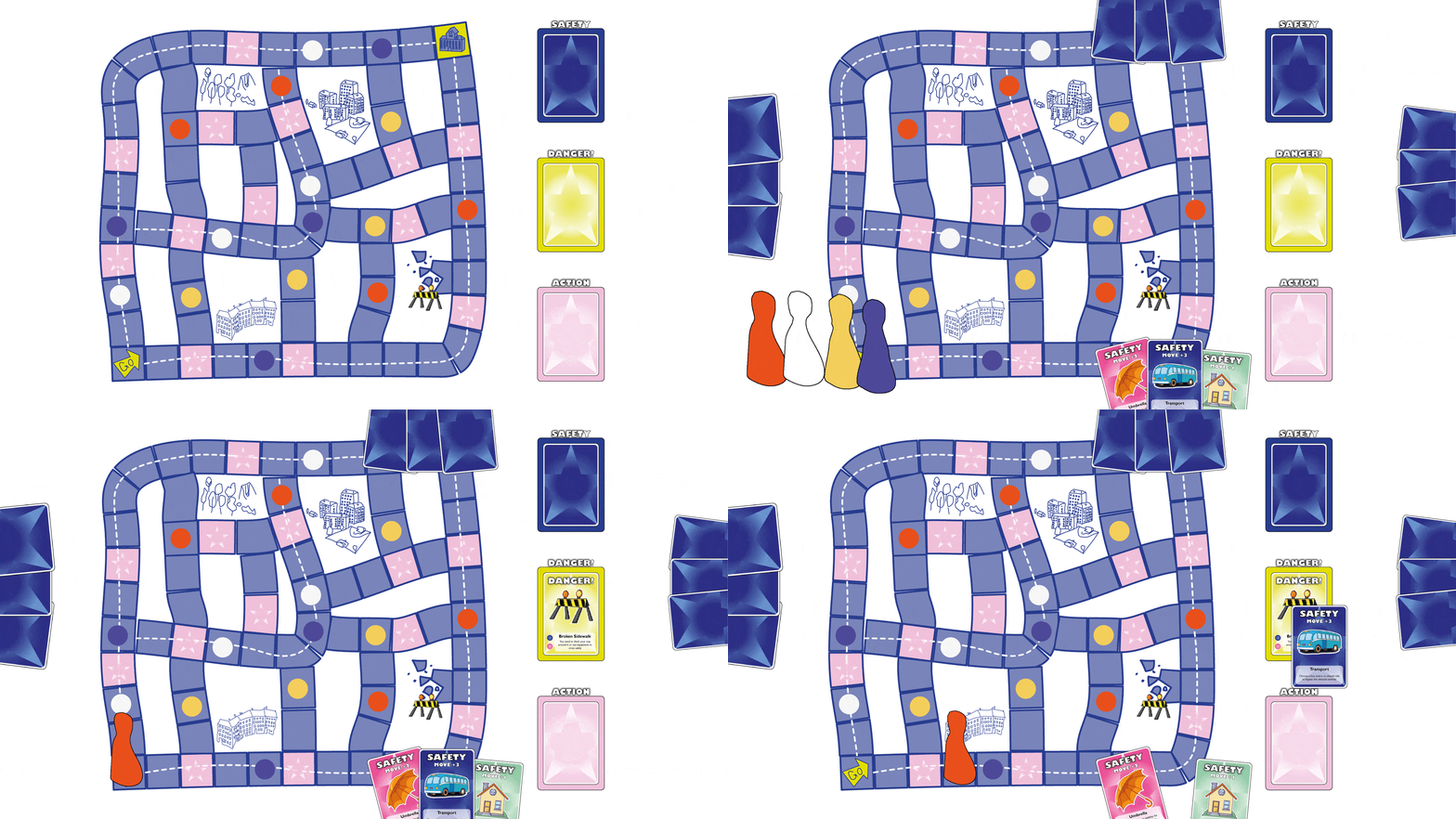
En La Calle is a board game for 2–4 players aged 8 and above, set in the streets of Bosa-Apogeo, Bogotá — a neighbourhood home to some of the highest school density in the city and the largest school in Bogotá by enrolled students, yet streets that were never designed with children in mind. En … Read more

Bee Careful


A Bee Survival Game Context – Bee-Careful starts in Lisbon, Portugal. Where social (vulnerable young community), environmental (ecological unbalance and fragmentation), and mobility (elderly retired community) problematics are adressed through one common medium; greenery. Greenery forms the binder in which the previous elderly community of Lisbon convverges with a new and young community across a … Read more

Sand Mining – from Afar

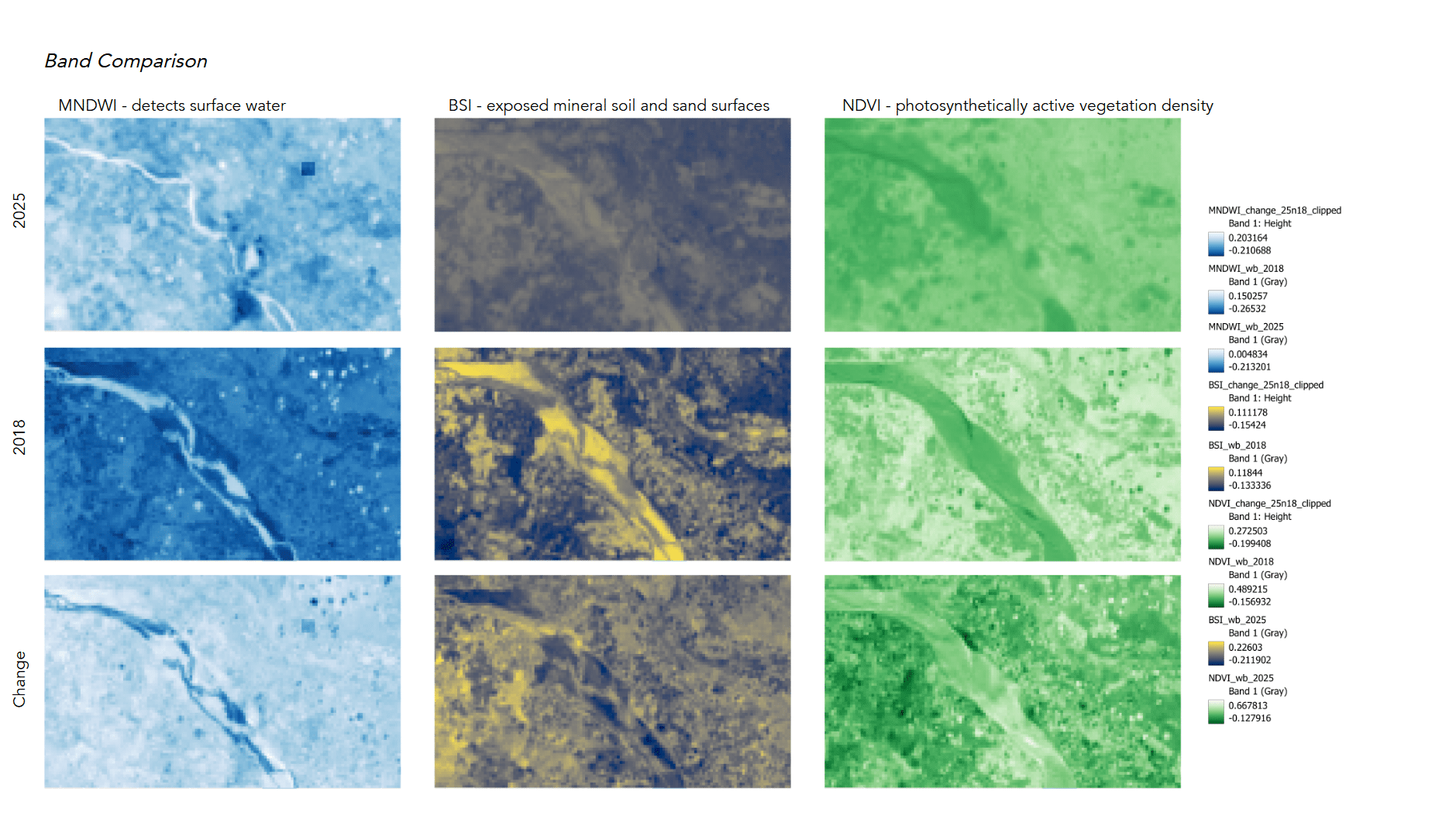
DETECTING SAND MINING USING MULTI-TEMPORAL SATELLITE IMAGERY Introduction Sand is ubiquitous in the modern world. It is the second-most extracted material on Earth after water, driven principally by the global demand for concrete, infrastructure, and urban expansion. Estimates place global sand and gravel extraction at 40–50 billion tonnes per year, a scale that outstrips many … Read more

Renewable, but at Whose Cost?

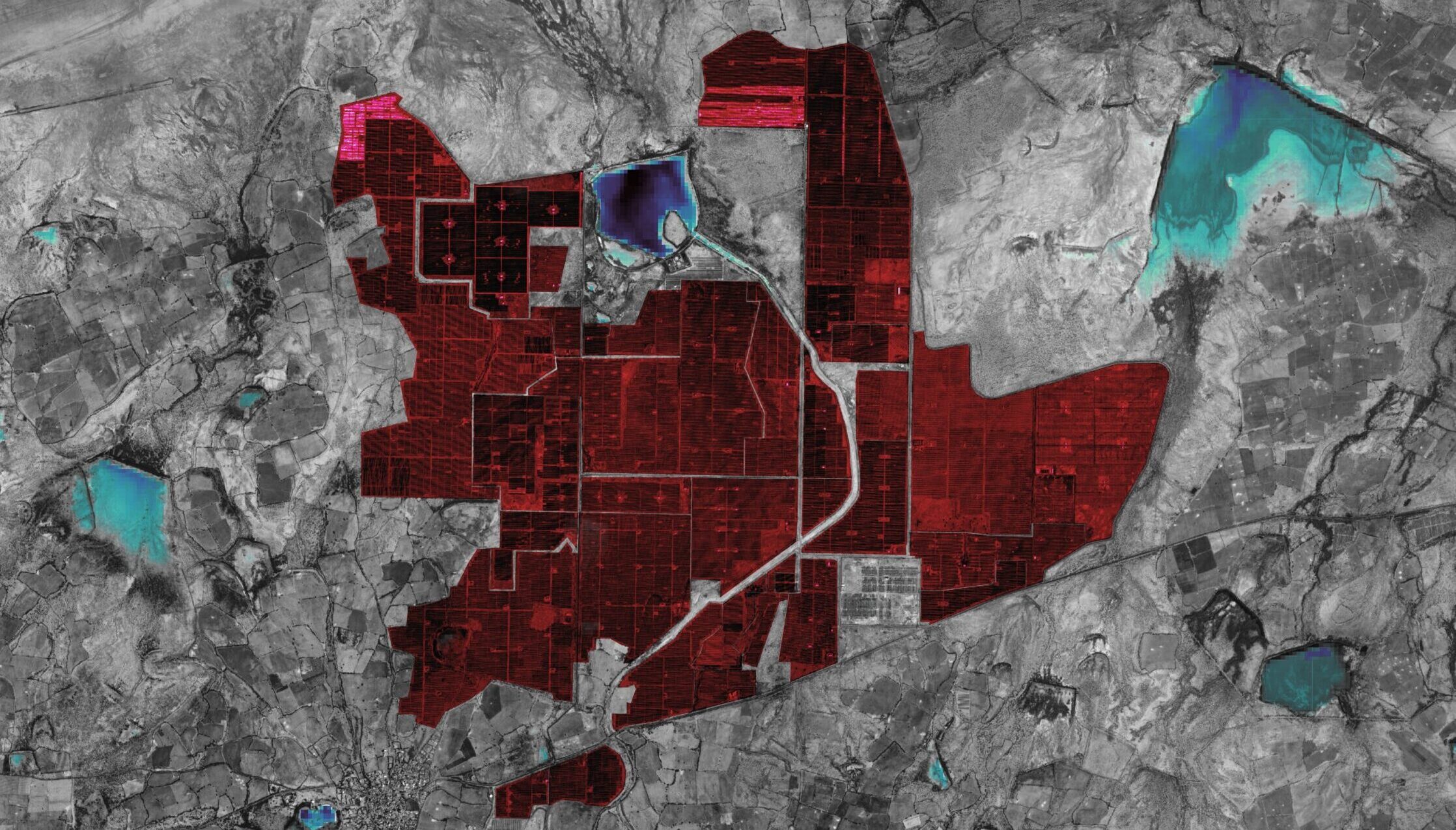
India’s solar ambition is written into its landscape. Since the launch of the Jawaharlal Nehru National Solar Mission in 2010, the country has pursued one of the most aggressive renewable energy expansions in history —targeting 500GW of solar capacity by 2030. But the geography of that expansion follows a troubling logic. The regions chosen for … Read more

Who else lives here?

Urban space is conventionally conceptualized as an anthropocentric construct. However, non-human species continuously appropriate architectural surfaces, infrastructural voids, and vegetated fragments. Birds occupy ledges and canopy layers, insects colonize engineered soils, bats navigate nocturnal corridors along tree lines, and plants root within pavement fissures. These presences are not incidental; they reflect how spatial design either … Read more

How does Power operate spatially in Poblenou?

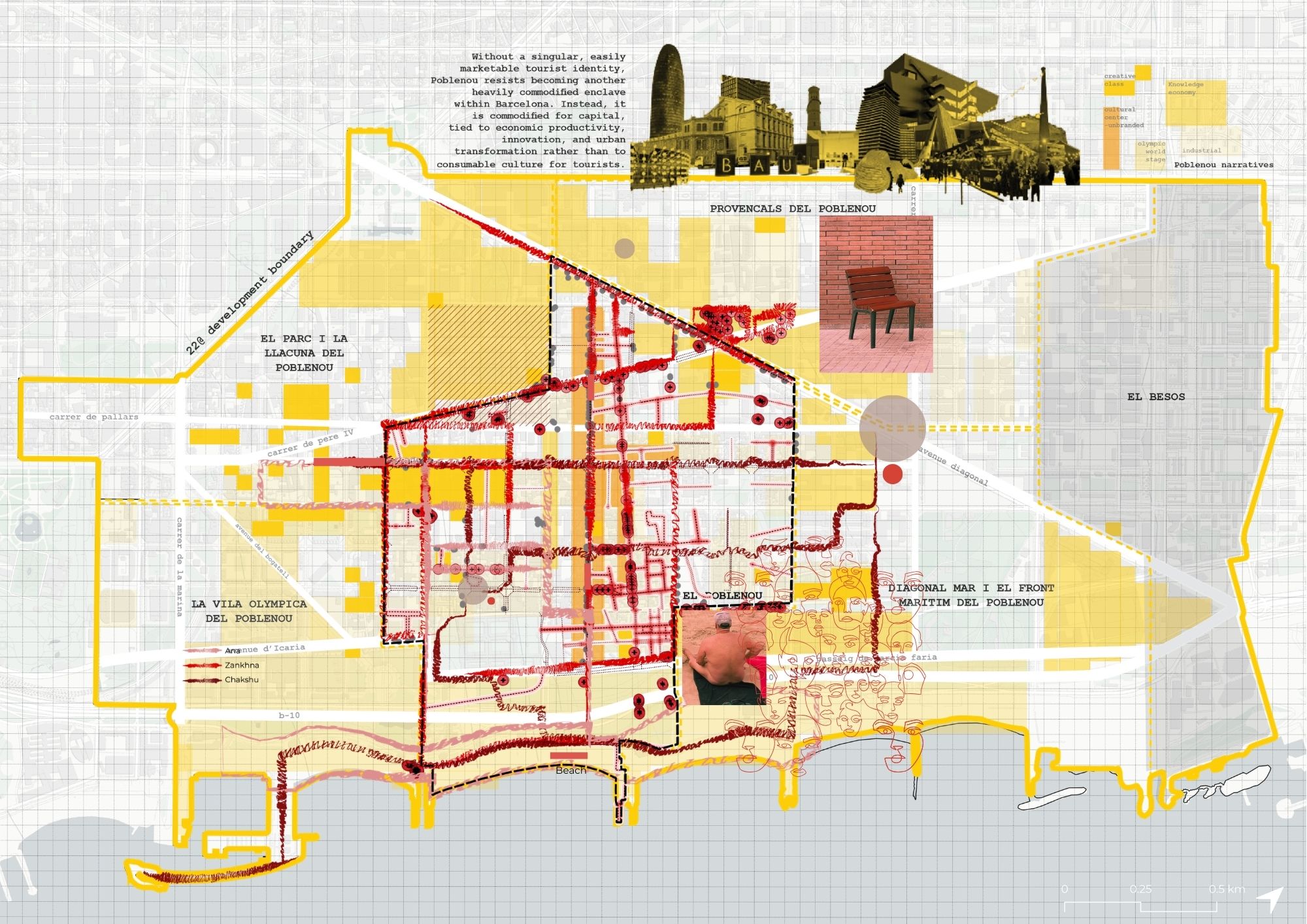
This project explores how power operates spatially through counter-cartography and autoethnography in Poblenou, Barcelona. Combining observation, mapping, and self-tracking, the research examines how infrastructure, urban objects, rules, and rhythms shape behavior, movement, and perception. Benches, pedestrian streets, and smoking practices reveal how freedom, restriction, and permission are unevenly distributed. Findings show that movement is widely … Read more

VISUALISING VISIBILITY OF WOMEN+ SAFETY

Overview Visualizing Visibility of Women+ Safety is a research initiative aimed at evaluating how the design of public spaces influences perceptions of safety for women+ in India, particularly in Delhi. The central question driving this study is: “How can we assess the current paradigms of urban design to better understand and improve perceptions of safety … Read more

Democratizing Credit: Diving Deeper

City

Diving deeper into building a reliable rating algorithm The Importance & Significance of the F&B establishments in the City Food and Beverage (F&B) service outlets are significant indicators of urban progress as they reflect evolving consumer preferences, economic vitality, and the integration of social spaces within urban landscapes. These establishments act as hubs for community … Read more

Learning From Sants

When we locate Sants within Barcelona, it appears to be on the city’s edge. However, when considering the metropolitan area as a whole, Sants is actually closer to the center. Historically, Sants was one of the towns surrounding Barcelona until its annexation in 1897. Its agricultural and industrial roots contribute to a unique neighborhood identity—one … Read more

Literary Landscapes &AI-Driven Urban Design

tres tombs

A speculative approach to Design through data, literature, and participatory AI in Sant Antoni Our urban issue: The Lack of Narrative-Driven Urban Design in a Data-Driven City Contemporary urban design increasingly relies on AI and big data, often sidelining human stories, cultural narratives, and historical context in shaping urban spaces. While data-driven design optimizes efficiency, … Read more

Sounds of Gràcia

An alternative ways of exploring the sounds that make up Gràcia This project investigates alternative ways of engaging with the sounds of Gràcia and how they can empower communities by fostering a deeper connection to place, memory, and identity. Sound functions as both a sensory experience and a cultural artifact, carrying layers of emotion, history, … Read more

Agent-Based Collaborative Design

FETCH.AI Design

Designing an Inclusive and Functional Bench Through the Lens of Iconic Visionaries Urban design has always required balancing complex social, cultural, and environmental factors. In this project, we explored the potential of AI in shaping public spaces. Specifically, designing a bench that serves the needs of both homeless individuals and daily users. We developed a … Read more

Questioning ‘Mixed-Use’ Space

What defines a mixed-use space? How do we visually recognise the coexistence of residential, commercial, and public spaces in a city? Can AI perceive these complex urban conditions as we do? This workshop explores how Visual Language Models (VLMs) interact with urban imagery, using street view images to assess land-use patterns. By comparing Barcelona and … Read more

Container City

Developed as part of a Workshop hosted by IAAC and conducted by Buro Happold representatives, the project envisions the transformation of Barcelona’s Zona Franca waterfront into a mobility-driven, mixed-use district that balances industry, nature, and urban life. The master plan prioritizes seamless connectivity, enhancing public transport, pedestrian networks, and micromobility infrastructure to overcome the area’s … Read more

Stadium District

Perched at the top of Montjuïc hill, in the heart of the Sants-Montjuïc district, stands the Lluís Companys Olympic Stadium, a place where history, sport, and culture come together. From hosting the unforgettable 1992 Olympic Games to becoming a stage for world-class events, this stadium has witnessed some of the greatest moments in Barcelona’s history. … Read more