
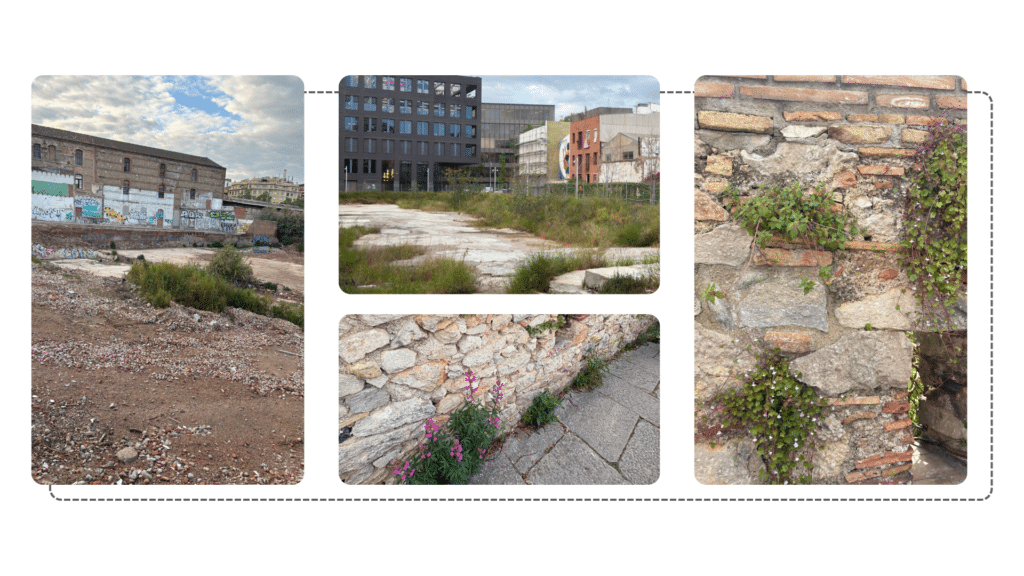
Across cities, certain spaces resist categorization. They are the unmaintained verges between a planter and a curb, the smooth underside of a bench, the patch of ground that no plan ever claimed. These residual spaces are not accidents — they are the structural byproduct of deliberate spatial organization. Wherever land is planned and programmed with precision, the spaces left behind accumulate in the gaps: construction remnants, cracked pavements colonized by opportunistic growth, abandoned corridors too narrow for human use. This project takes those overlooked spaces seriously, examining them through the design philosophy of French landscape architect Gilles Clément — the Third Landscape.
Gilles Clément’s Third Landscape
Clément first articulated the Third Landscape in his 2004 Manifeste du Tiers Paysage, a text as much polemical as ecological. The title borrows deliberately from Emmanuel-Joseph Sieyès’s revolutionary pamphlet What is the Third Estate? — a rhetorical move that positions overlooked land not merely as an ecological phenomenon but as a political one. If the First and Second Landscapes correspond to the intensively managed territories of agriculture, industry, and urban planning, then the Third Landscape is everything that falls outside those systems of control: roadsides, embankments, abandoned lots, field margins, urban wastelands, the forgotten edges of institutional grounds. These are spaces no one tends, no one claims, and no one particularly notices — and Clément argues that this is precisely what makes them valuable.
What accumulates in unmanaged space, he observes, is not disorder but diversity. Freed from the homogenizing logic of cultivation and maintenance, Third Landscape spaces become reservoirs of biological variety — refuges for species displaced from managed land, corridors through which ecological processes continue to move across otherwise fragmented territories. Clément calls these spaces the genetic reservoir of the planet: not the dramatic wilderness of protected nature reserves, but the quiet, distributed, unheroic margins that together sustain much of what remains of urban and peri-urban biodiversity.
Crucially, Clément does not romanticize neglect. He does not argue that all unmanaged space is inherently good, nor that human presence is inherently harmful. His argument is more precise: that the absence of intent — the withdrawal of the human compulsion to organize, improve, and assign purpose — creates conditions under which ecological complexity can assert itself. The Third Landscape is not a design strategy so much as a disposition: an attentiveness to what already exists in the margins, and a willingness to let it persist.
Our definitions of neglect
Before applying Clément’s framework to a site, the project required a working definition of neglect itself. Drawing on Clément’s writings alongside Mithal and Gijjar’s Living Together, the team turned inward — discussing what neglected space actually looks and feels like in an urban context, and how perception of neglect shifts depending on who, or what, is doing the looking.
There is no true “neglected space” in our site in the way Clement prescribes it.
We see neglected spaces as areas that are a institutional oversight, leftover spaces from anthropocentric-design that remain underutilized and has the opportunity to better host non-human environments.
Site background
The project is situated within a hypothetical green superilla in Barcelona, focusing on a park area selected for its demonstrable but understated instances of neglect. The team conducted multiple site visits following a close reading of Clément’s work, arriving at a nuanced understanding: true Third Landscape conditions — such as a long-fenced vacant lot — may not exist here in their most recognizable form. Instead, neglect in this park manifests as underutilization: space that has not been explicitly claimed for human use, and which therefore presents an opportunity to be returned to, or shared with, non-human species.
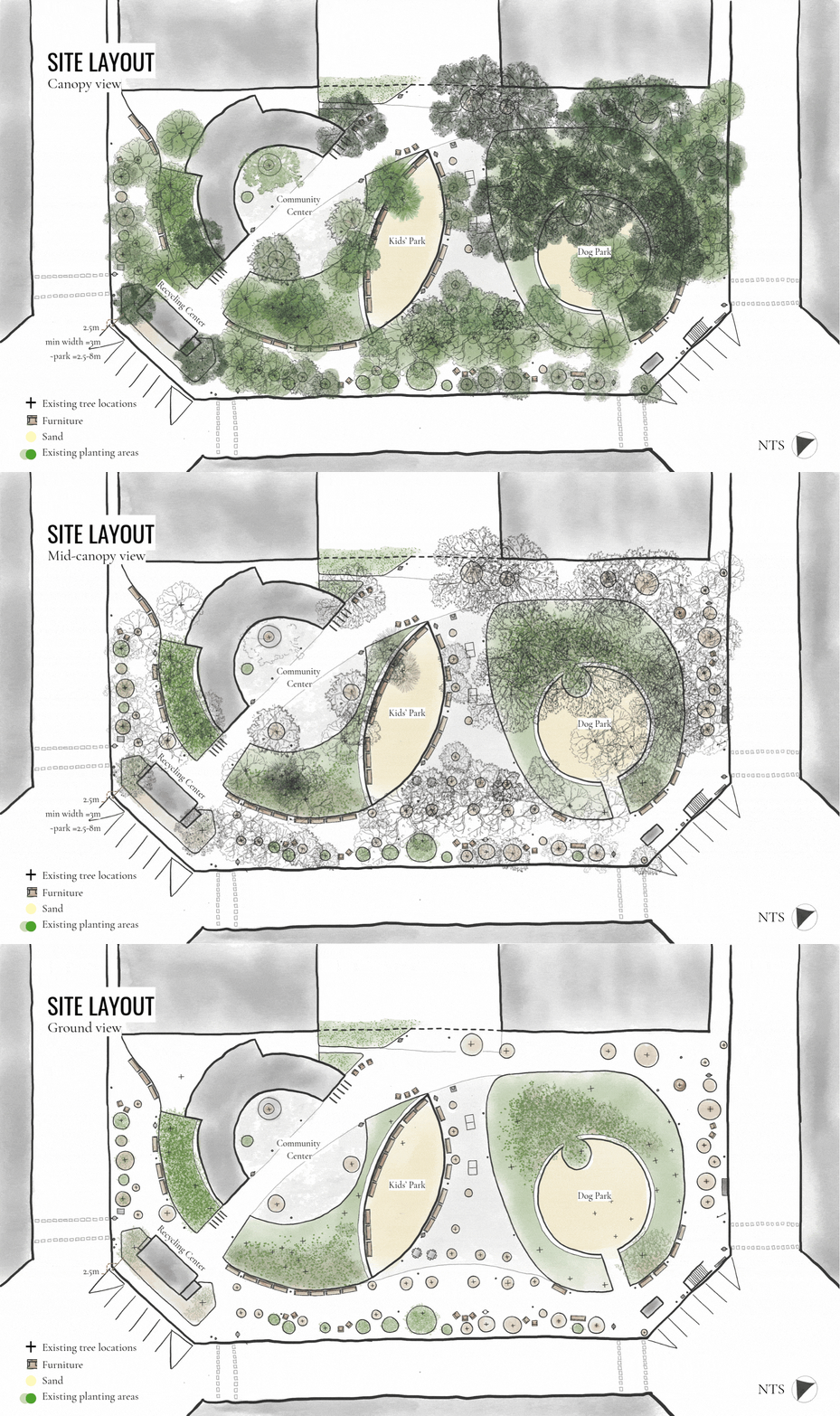
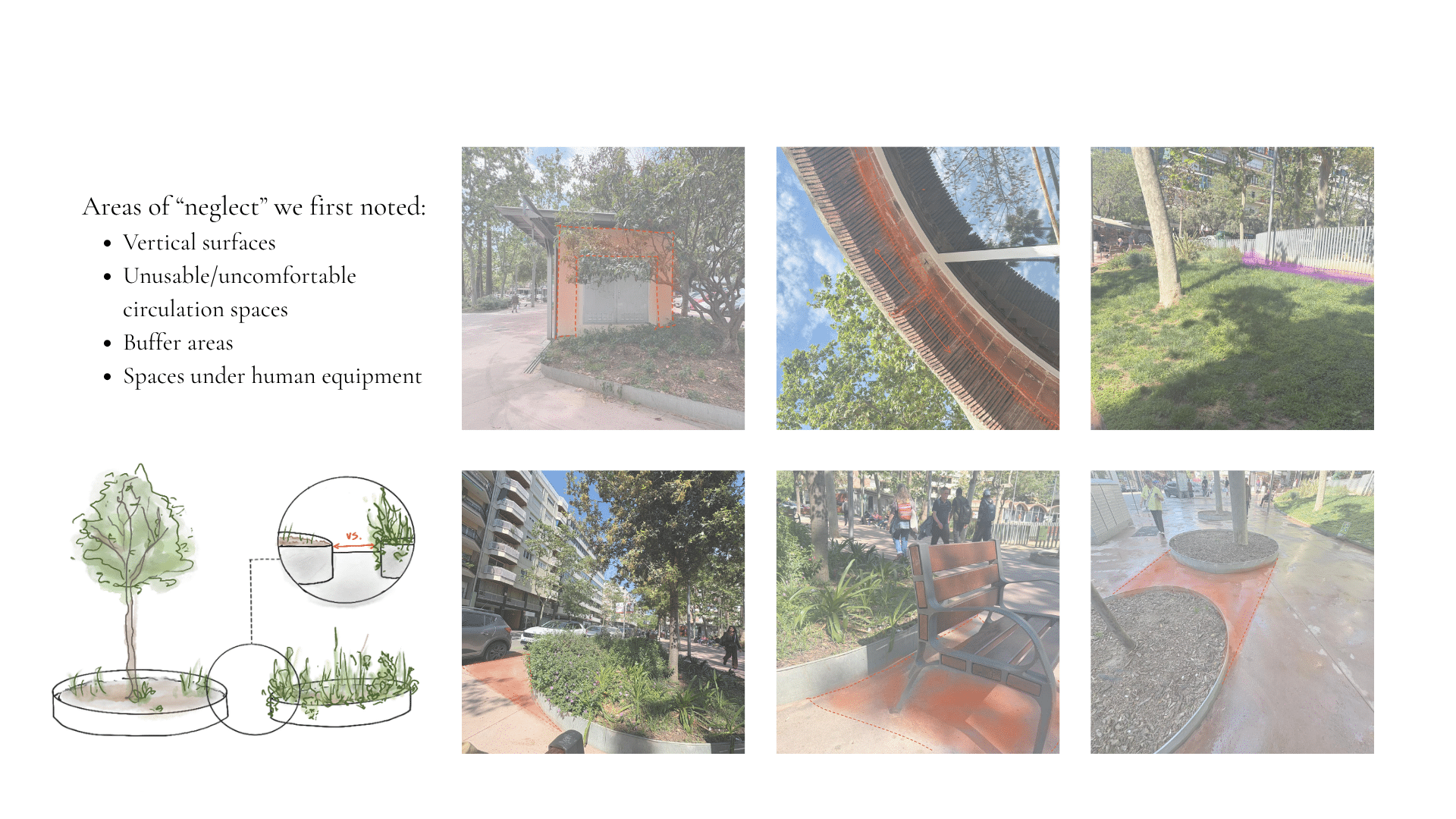
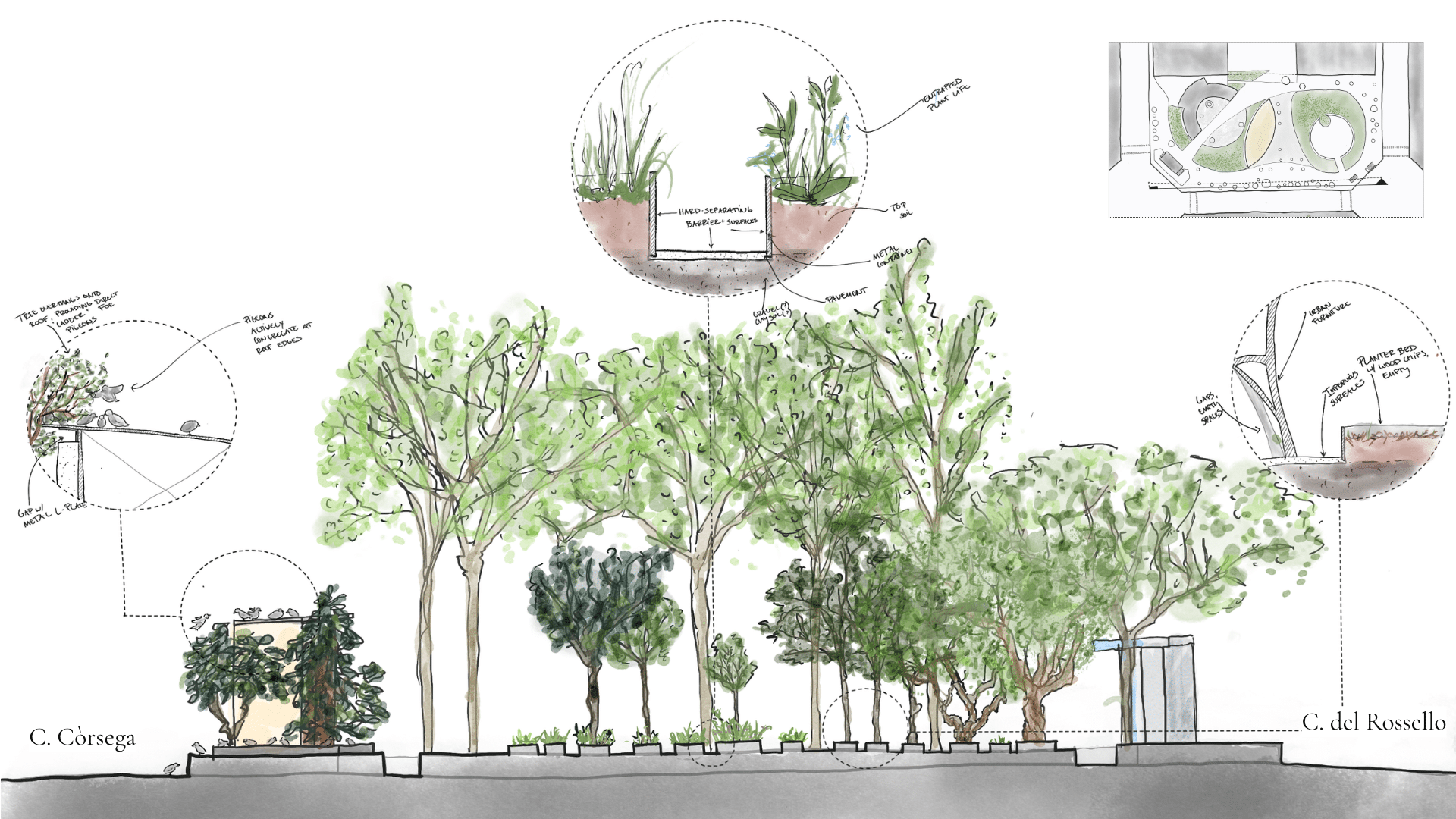
Specific conditions the team identified include smooth vertical building surfaces, inaccessible rooftops, uncomfortable circulation spaces (planters positioned too close together for passage, yet fully paved), buffer zones between planters and curbs, and the space beneath and between seating. The tree canopy also emerged as a potential site of neglect — trees at the park’s interior appeared less intensively managed than those along the street edge — though this condition was ultimately set aside due to the complexity and inaccessibility of the canopy ecosystem.
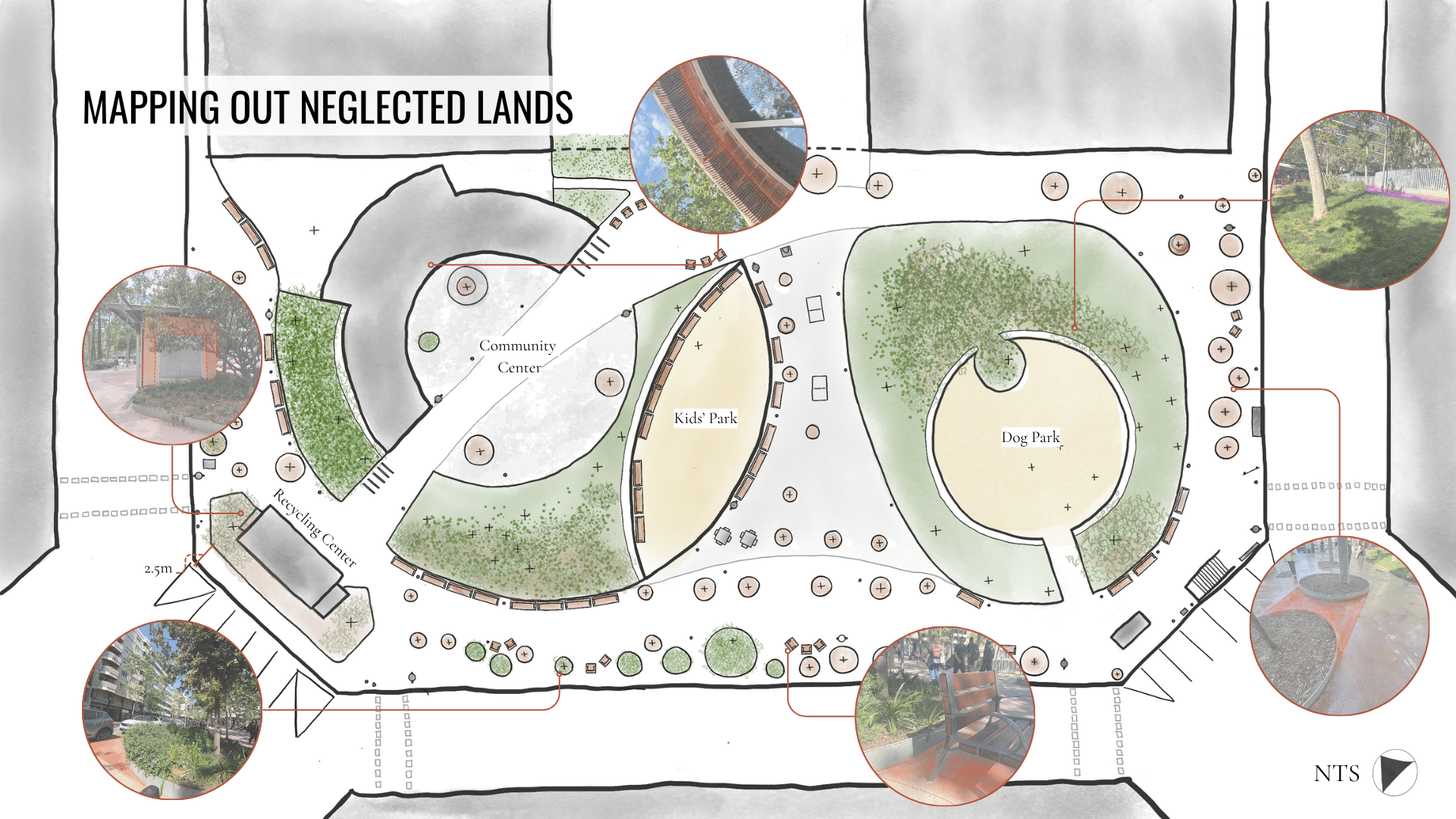
Through plan and section drawings, the team mapped how these neglected zones are spatially related, and began to understand them as a distributed but connected system.
Site section
Research question
The central question guiding the project is: how can we curate neglected spaces to host greater non-human environments?
Design intentions
This project designs neglected urban spaces as biodiversity-rich systems, treating residual conditions as ecological opportunities rather than deficiencies to be corrected. The approach reduces human control in targeted areas to allow natural succession, while planting strategies focus on Mediterranean species organized as interconnected ecological guilds — assemblages that collectively support multiple habitats and species across vertical layers.
Crucially, the project does not design only for people. Its non-human stakeholders — pollinators, birds, mammals, reptiles, butterflies — are treated as legitimate occupants of the site, with layered habitats, food sources, shelter, and ecological connectivity designed around their needs. Human presence is retained, but recast: rather than dominant users, people become spectators and participants in an evolving ecological process. Pathways, seating, and moments of designed encounter invite observation and engagement, fostering an understanding of what it means to genuinely share urban space with other species.
The landscape is also envisioned as pedagogical — a living demonstration of coexistence that moves beyond the rhetoric of green urbanism into its practice.
Design process
The design process operated in three stages. First, neglected zones were mapped and organized into a replicable framework that the municipality could apply across other Barcelona sites. Second, the realities of designing with time were examined — both in terms of ecological succession and the behavior of introduced plant species. Finally, once the design proposals were applied, the team quantified the area returned to non-human use in the park’s projected end-state, and assessed how fragmented ecological zones could be reconnected.
Spectrums of Neglect
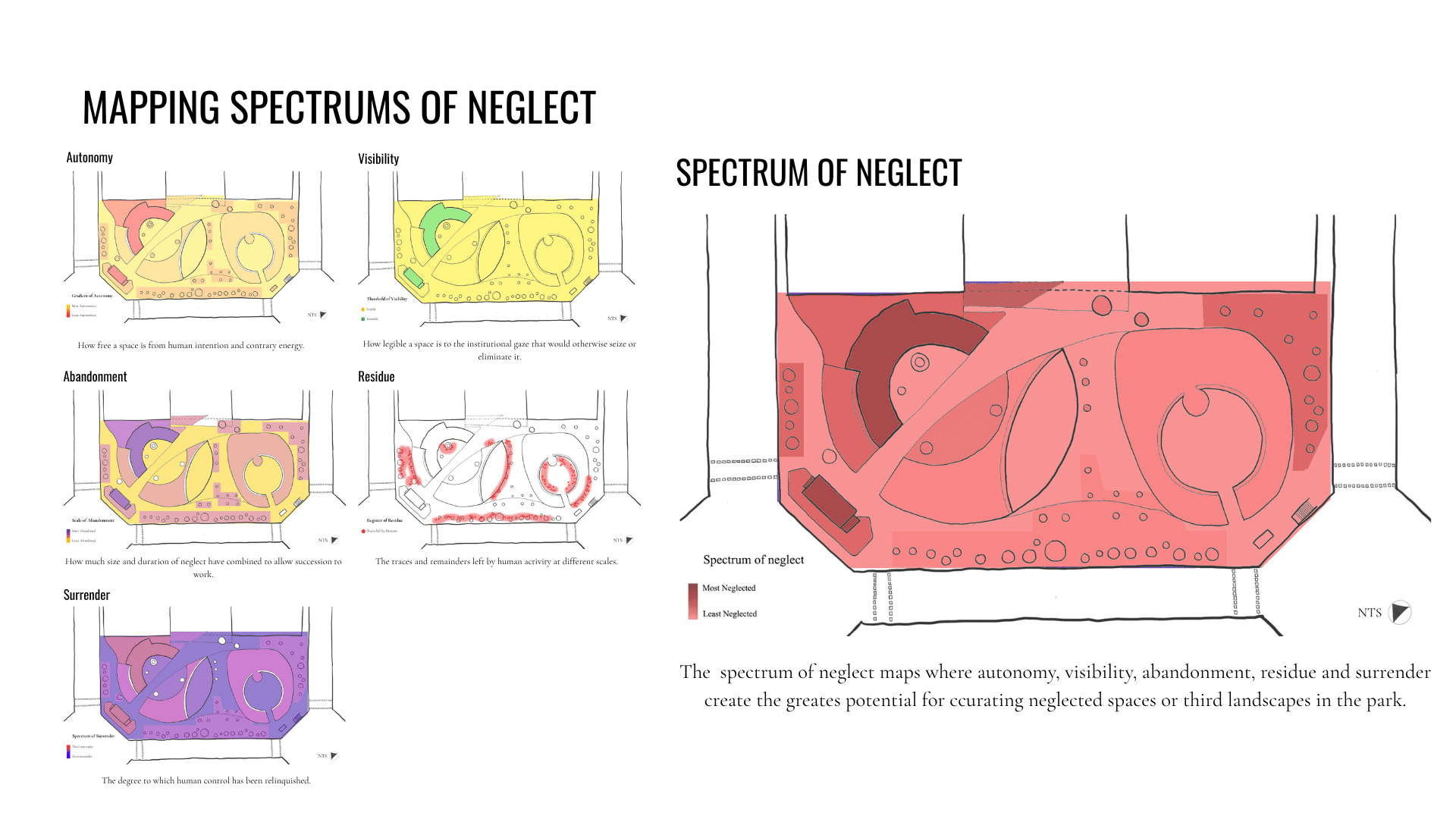
To read the park’s spaces through Clément’s lens, the team developed a perceptive mapping exercise organized around five conditions:
- Autonomy — freedom from human control
- Abandon — time allowed for ecological succession to occur
- Visibility — the degree to which a space is hidden from institutional oversight
- Residue — physical traces of former use or presence
- Surrender — the loss of control through neglect of systems or maintenance
Together, these form the Spectrum of Neglect map, which identifies latent zones where ecological processes and spontaneous forms of life are most likely to take hold when curated for.
Design framework
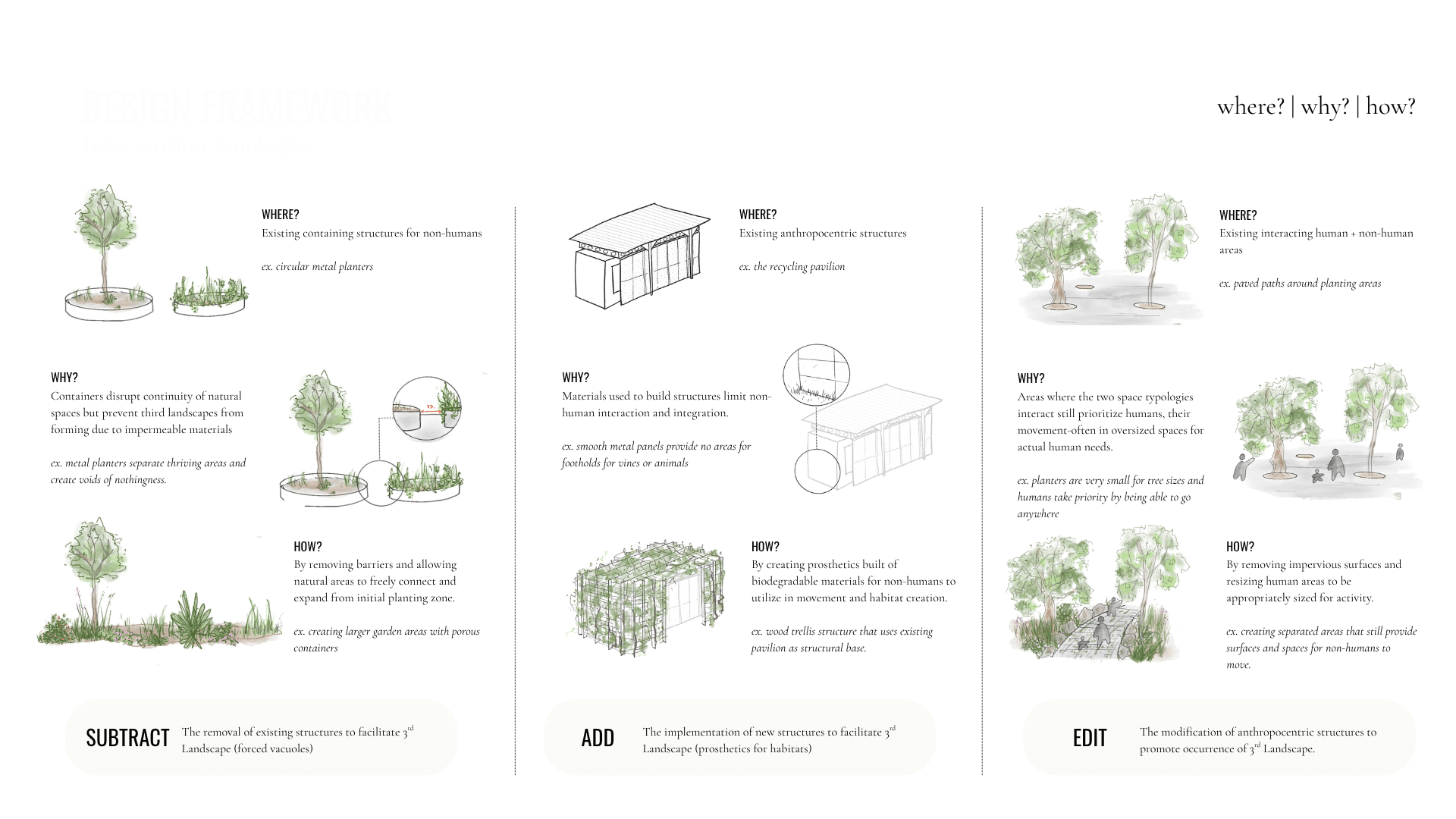
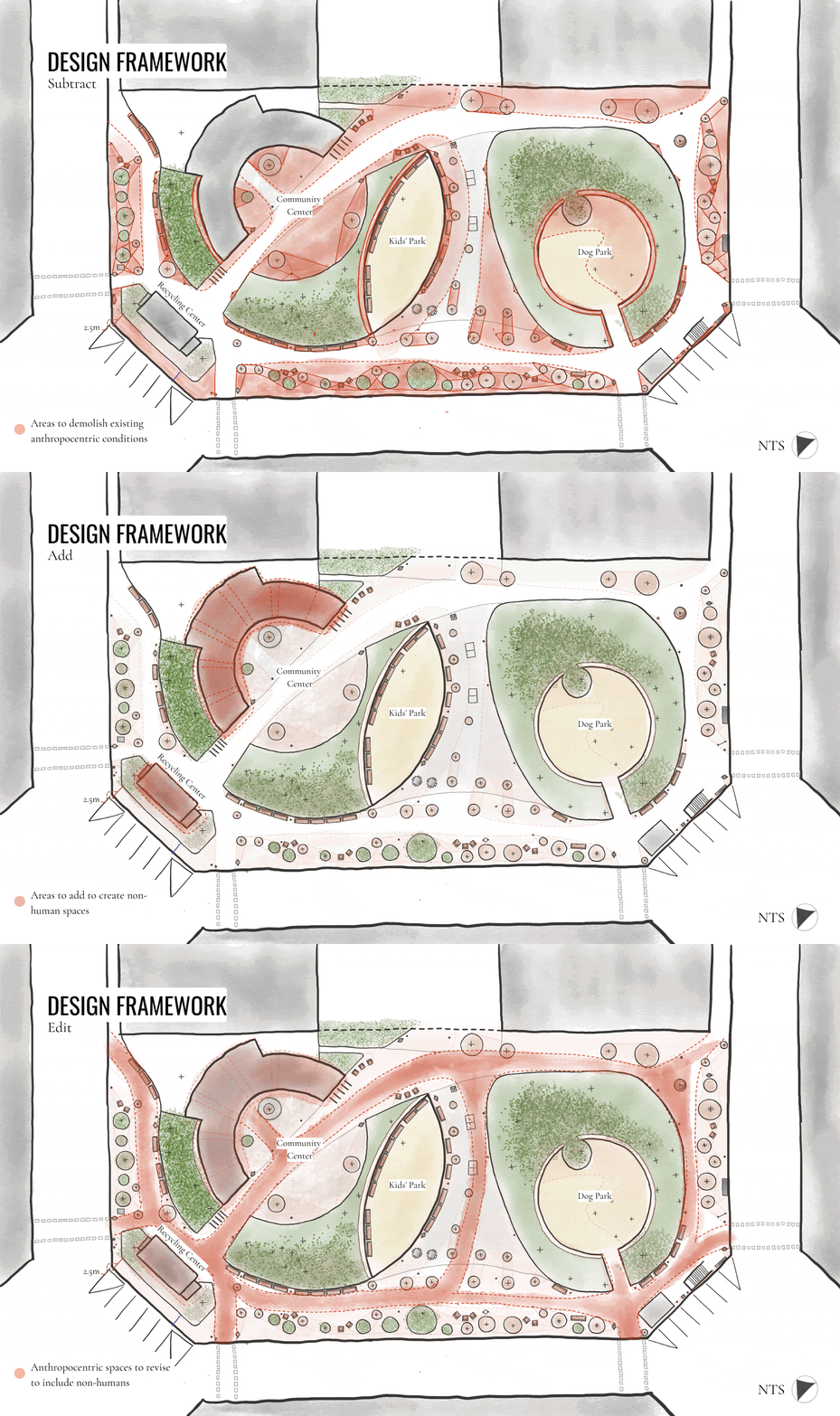
To make the process replicable across Barcelona, the team developed a three-part design framework for municipal review of individual sites. It operates through three actions:
- Subtract — remove existing structures that inhibit the formation of Third Landscape conditions, particularly underutilized anthropocentric spaces
- Add — introduce minimal, natural structures that facilitate Third Landscape environments, functioning as prosthetics for habitat creation
- Edit — modify existing anthropocentric structures to promote the sharing of space between human and non-human occupants.
Temporality of design
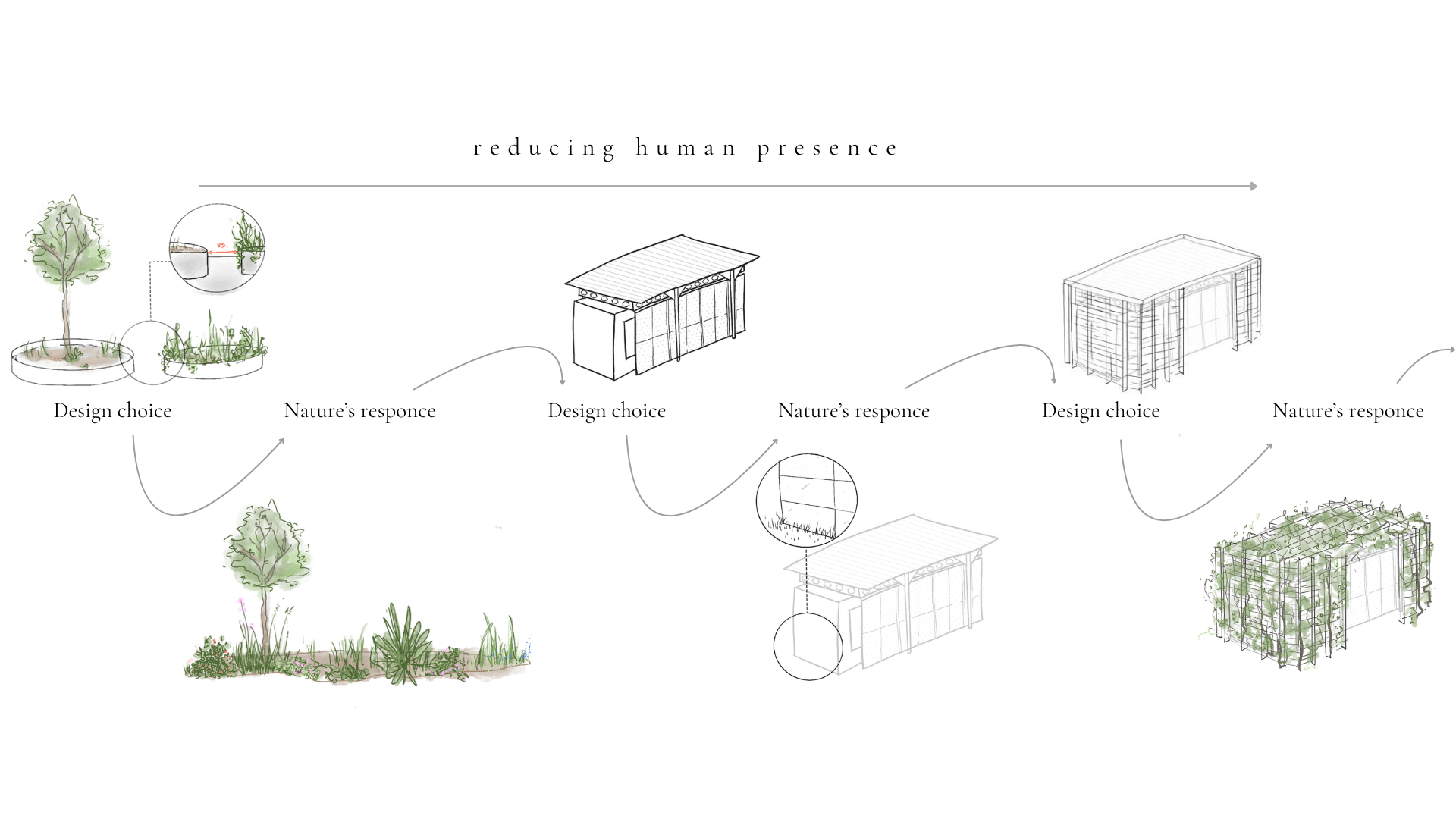
Reducing human presence and returning the space to the ecology is a process that takes time. This project is based on an iterative process of design, where a rhythmic cycle moves between design choices and nature’s response. Design here is a tool to assist nature in the process of taking over a space once dominated by humans.
Ecological succession
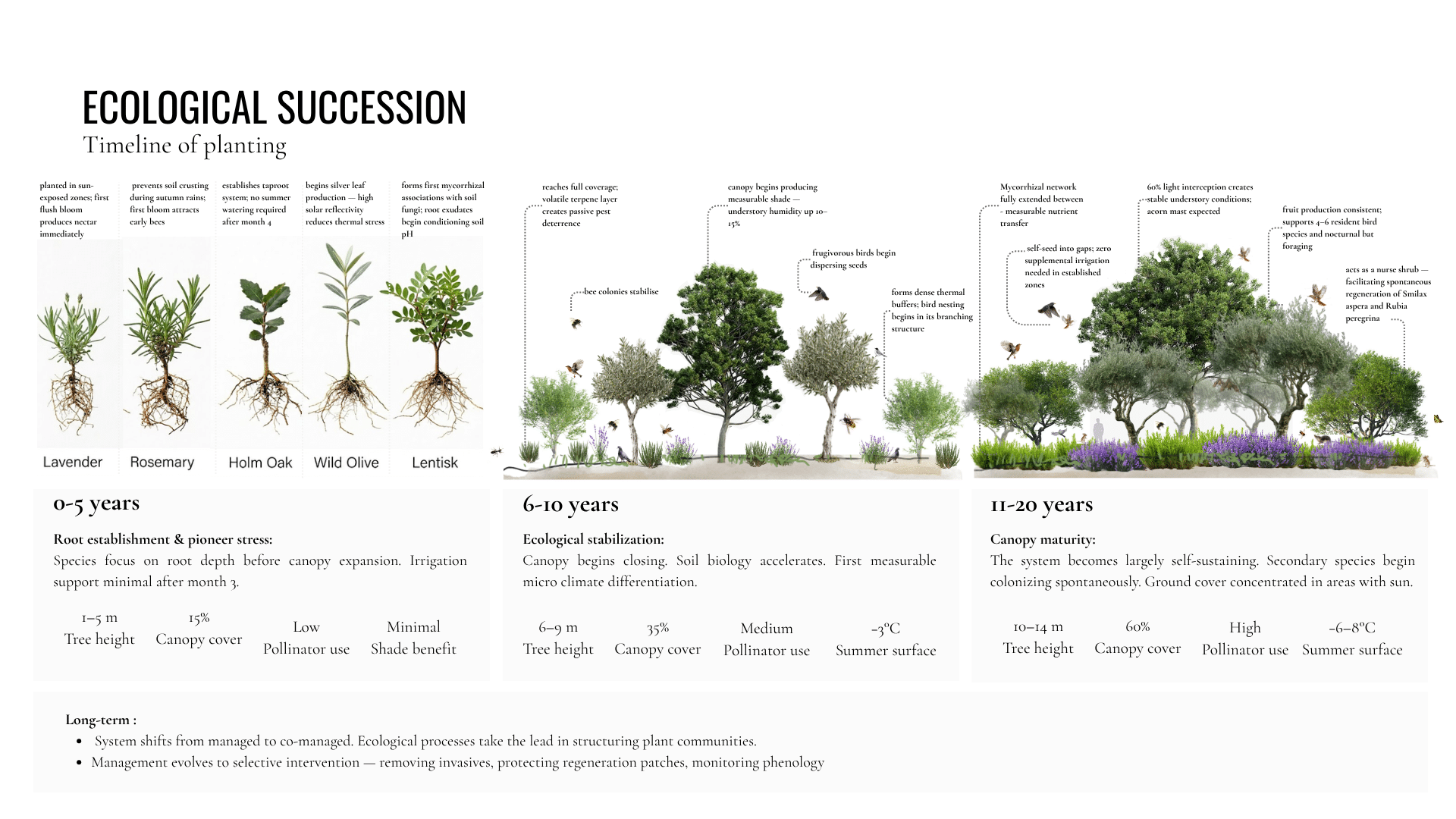
Field identification using the SEEK app revealed at least 24 species of groundcover and 18 species of trees currently present in the park — a degree of existing biodiversity that both validates the site’s ecological potential and informs the succession-based planting strategy.
Design proposal
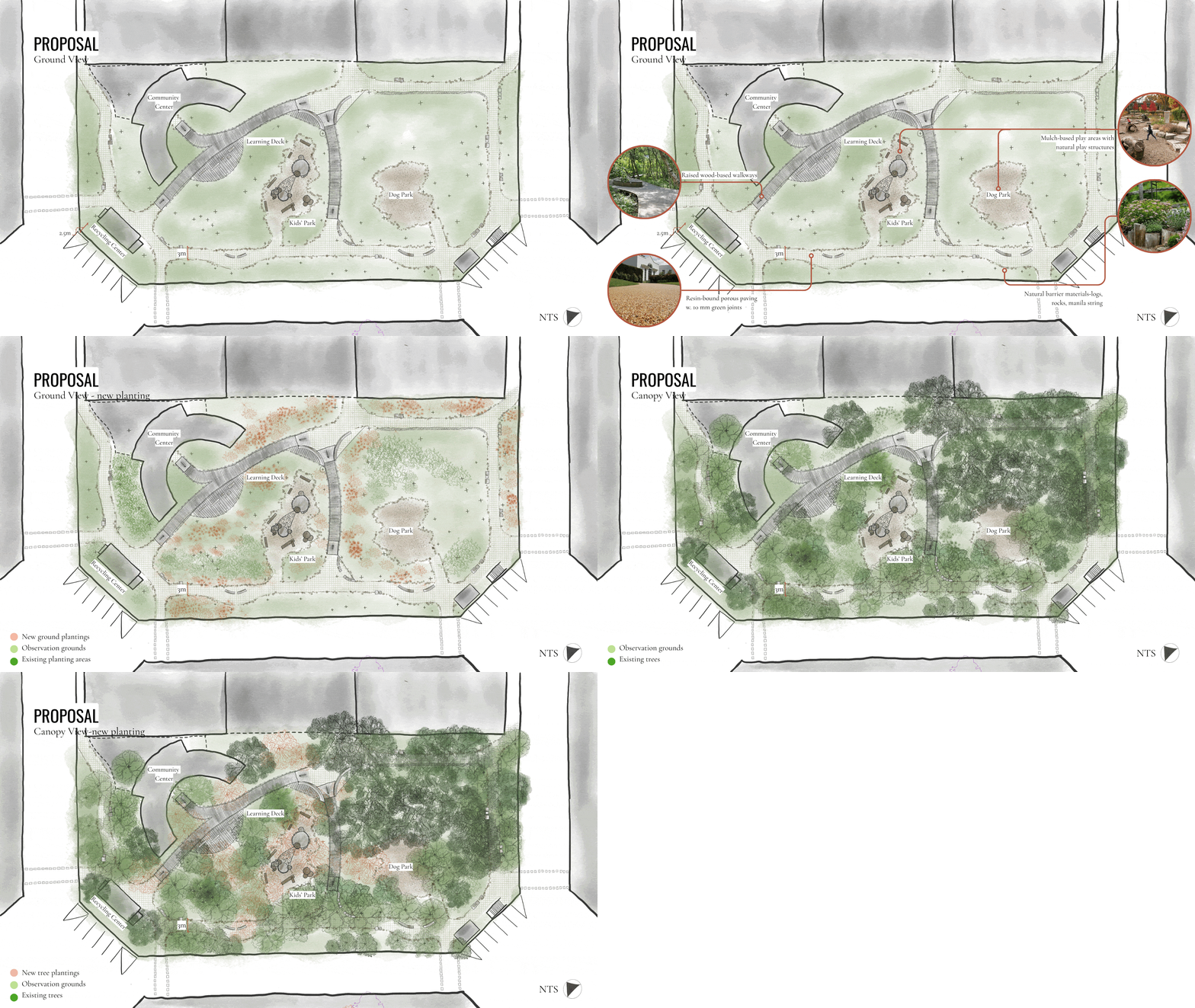
Applying the design framework through subtraction, addition, and selective editing, a proposal for a third landscape park begins to take shape.
The aim is to preserve the park’s existing program so that regular visitors can continue using it as they always have, while actively observing how each design intervention gradually transforms the space. Familiar paths remain familiar. Rather than signaling destruction and rebuilding, the changes are meant to translate the park’s evolution as an accumulation of small shifts rather than a rupture.
The most significant intervention concerns the paths themselves. Paved surfaces are reduced to the minimum width required by the city for passage (approximately 3 meters), and everything outside those corridors is replanted. The remaining paths are redesigned as two distinct types:
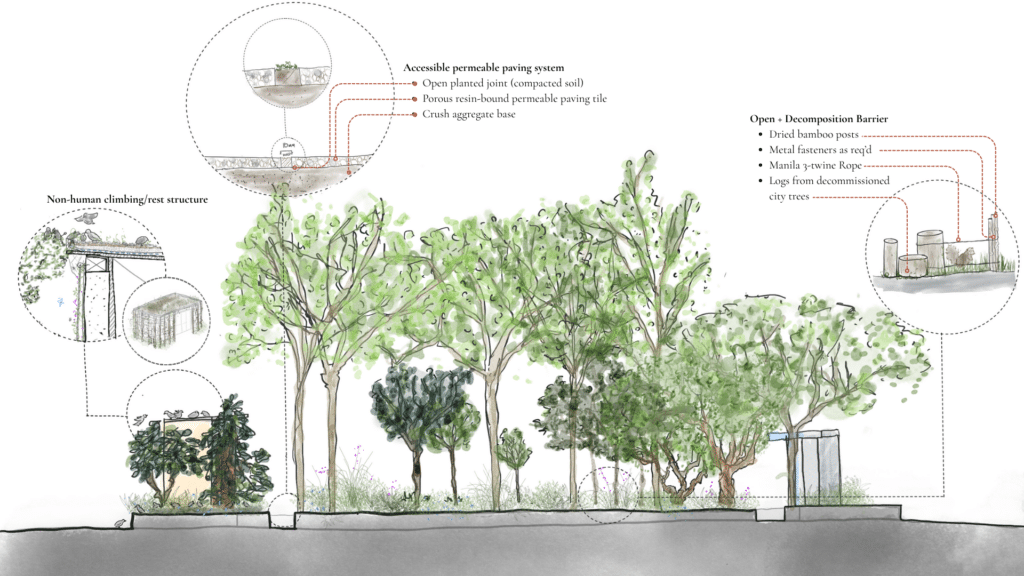
- Main pedestrian routes: replace conventional pavement with resin-bound porous tiles set at a 10mm offset. The gaps between tiles create microconditions for small plants and insects to take hold, move through, and inhabit.
- Raised wooden walkways: elevated roughly 30.5 cm above ground, allow plants and creatures to freely occupy the space beneath. Wood is also an invitation to non-human life, as lichen and moss colonize its surfaces over time, making the material itself a living substrate.
Where paths are no longer active, they are closed off using natural barriers: tree stumps, rocks, logs, and bamboo sticks tied with decomposing manila string. These materials serve a dual purpose, keeping humans out of areas where new ecologies are establishing themselves while simultaneously offering habitats that hard fencing materials never could.
Human-programmed areas are retained but reconfigured. Trees are no longer marooned inside isolated paved platforms but integrated into a more continuous ground. Equipment and furnishings are redesigned to co-host non-human occupants alongside people.
The one new program element added to the park is a learning deck, a vantage point where visitors can observe rewilding zones in progress and engage with the ideas behind them.
Planting strategy
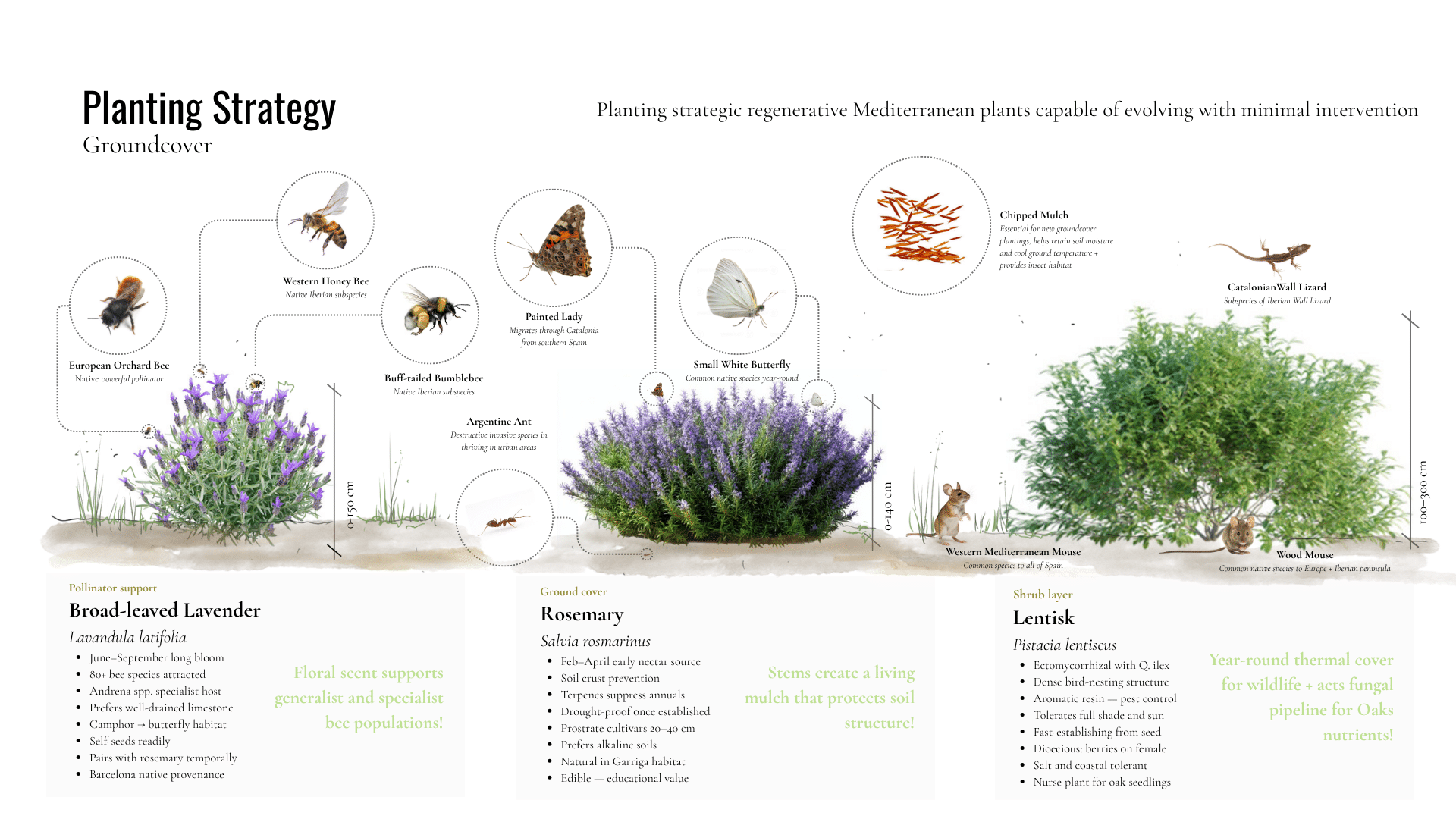
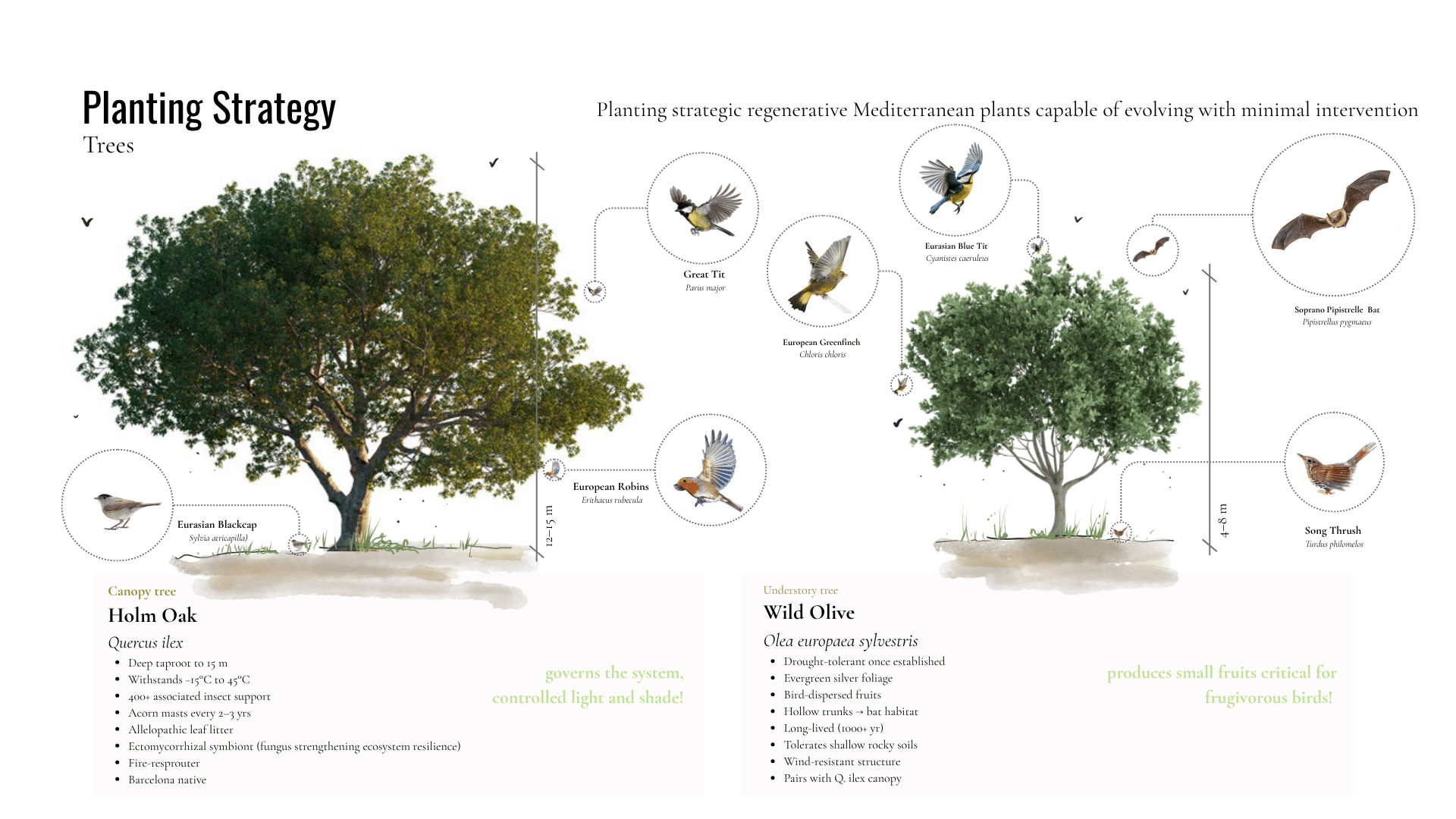
Five species form the backbone of the proposal: Holm Oak (Quercus ilex), Wild Olive (Olea europaea), Lentisk (Pistacia lentiscus), Rosemary (Salvia rosmarinus), and Lavender (Lavandula angustifolia). Together, they constitute a vertically integrated ecological guild mirroring the natural structure of the Catalan garriga and alzinar (holm oak woodland).
The Holm Oak governs the light regime below — filtering 60–80% of direct solar radiation, reducing summer soil surface temperature by up to 8°C, and producing the deep leaf litter that feeds the mycorrhizal network shared with Pistacia lentiscus. The Wild Olive occupies the thermal gap at mid-canopy. Rosemary functions as a living mulch, suppressing evaporation at ground level. Lavender’s extended bloom season acts as a seasonal pollination anchor, supporting the fruiting of both Olive and Lentisk.
These five species are selected for their capacity to operate within an ecological network with minimal ongoing maintenance — and, eventually, to actively recruit successional species without further planting intervention. Over time, the landscape evolves from a managed planting scheme into a layered, adaptive environment capable of natural regeneration, habitat creation, and long-term environmental resilience.
Quantification of space
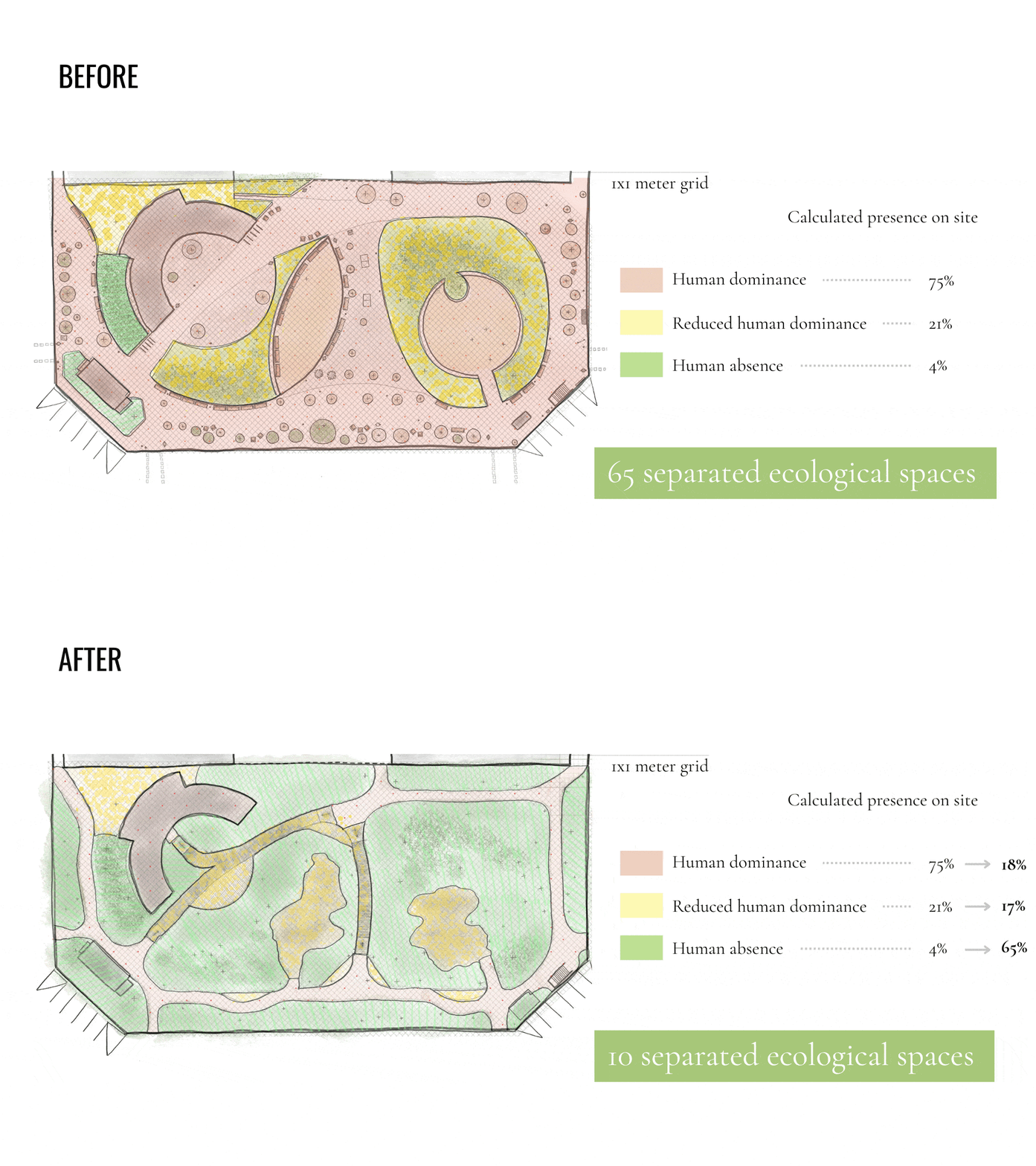
The ecological retribution of space was calculated using a quantification tool. Spaces designed for humans, paved with impermeable surfaces leaving no space for nature, dominated 75% of the park. Following our design implementation, human dominance was reduced to 18%, allowing nature to occupy 65% of the park. Moreover, ecological disconnection was reduced from 65 to only 10 separated ecological spaces.
Designing with the city
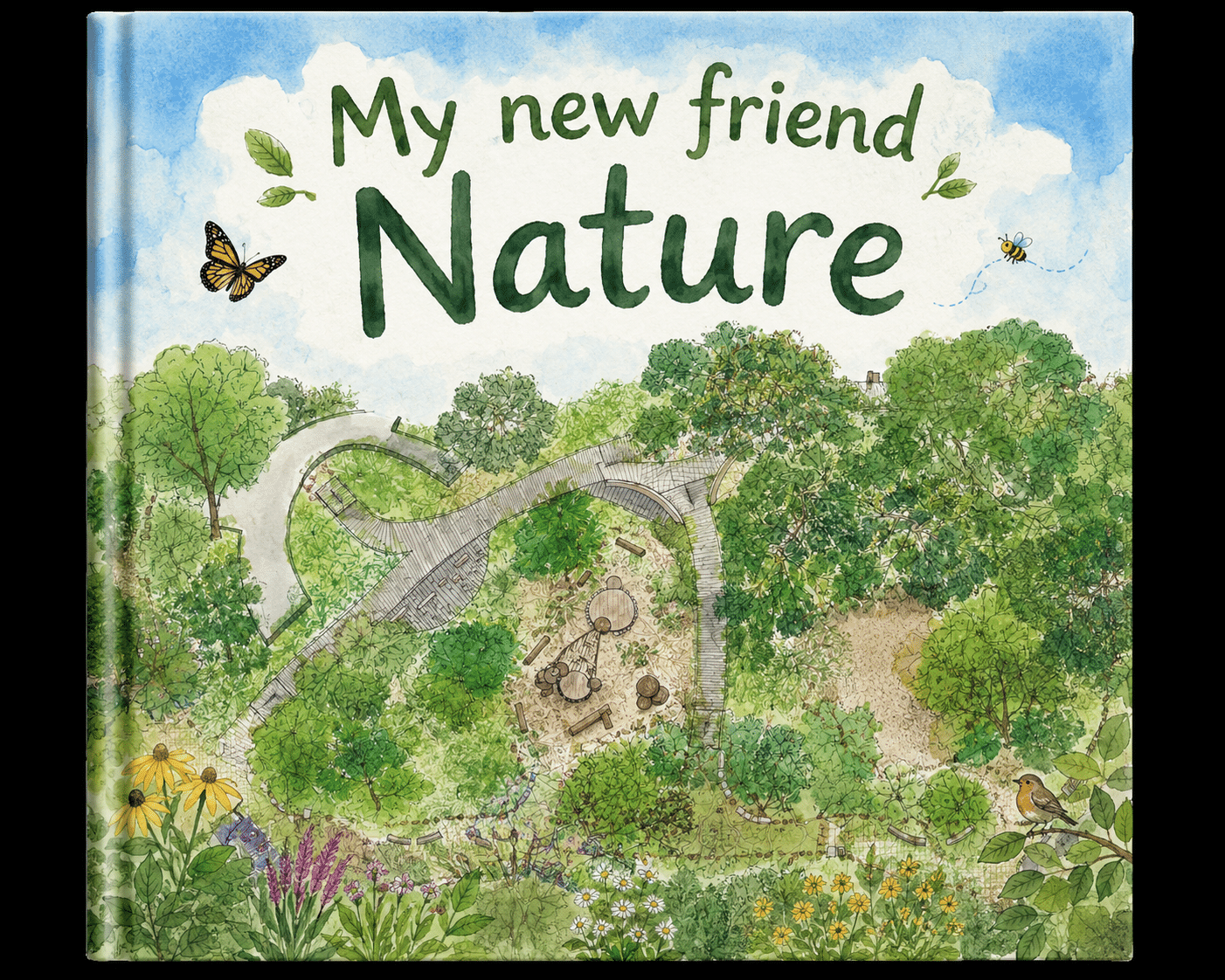
By reimagining the city as a place where nature and people can thrive together, this project demonstrates how urban design can restore ecological balance while creating healthier environments for future generations. The transformation of the park from a predominantly human-dominated space into a connected ecological landscape highlights the potential of designing cities with nature at their core. Complementing this vision, the accompanying children’s book encourages young readers to see nature not as something separate from daily life, but as a friend, fostering curiosity, care, and a lasting connection with the natural world.
