The Master in City & Technology’s academic structure is based on IAAC’s innovative, learn-by-doing and design-through-research methodology which focuses on the development of interdisciplinary skills. During the Master in City & Technology students will have the opportunity to be part of a highly international group, including faculty members, researchers, and lecturers, in which they are encouraged to develop collective decision-making processes and materialize their project ideas.

Filters
Course

Bee Careful


A Bee Survival Game Context – Bee-Careful starts in Lisbon, Portugal. Where social (vulnerable young community), environmental (ecological unbalance and fragmentation), and mobility (elderly retired community) problematics are adressed through one common medium; greenery. Greenery forms the binder in which the previous elderly community of Lisbon convverges with a new and young community across a … Read more

Fish Tail Park, Nanchang – Case Study

Case Study of Ecological Restoration, Human Presence and Design of Co-Existence Introduction Fish Tail Park is located in the center of Nanchang City, a historic city in southeastern China with approximately 6.6 million residents, has experienced rapid urban growth and high-tech industrial expansion along the Gan River. Is a large-scale ecological restoration project designed by … Read more

Parc del Centre del Poblenou

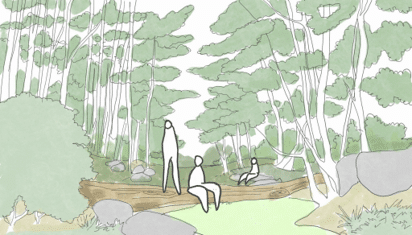
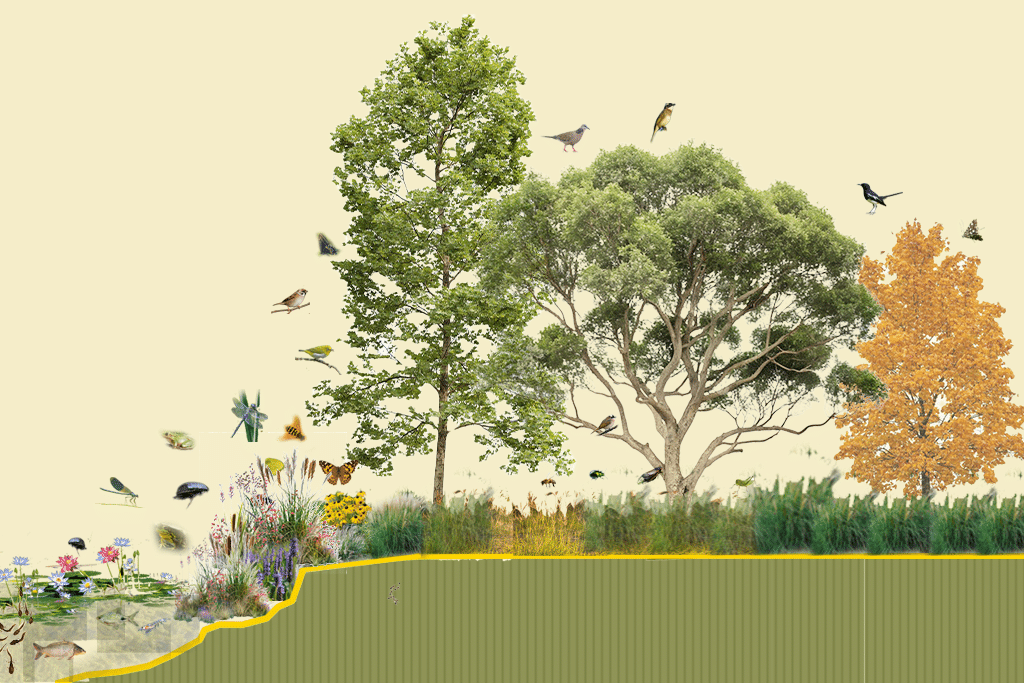
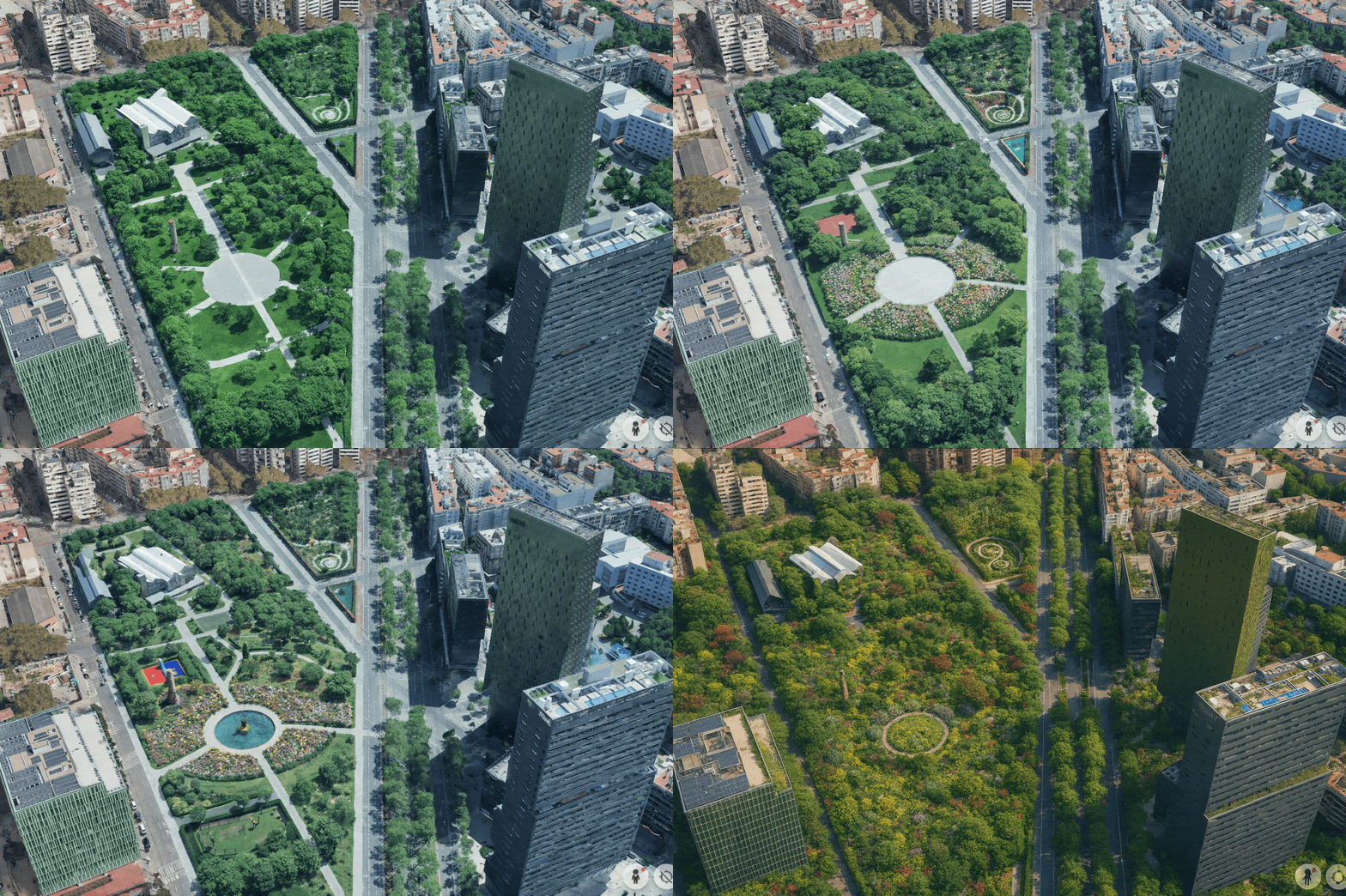
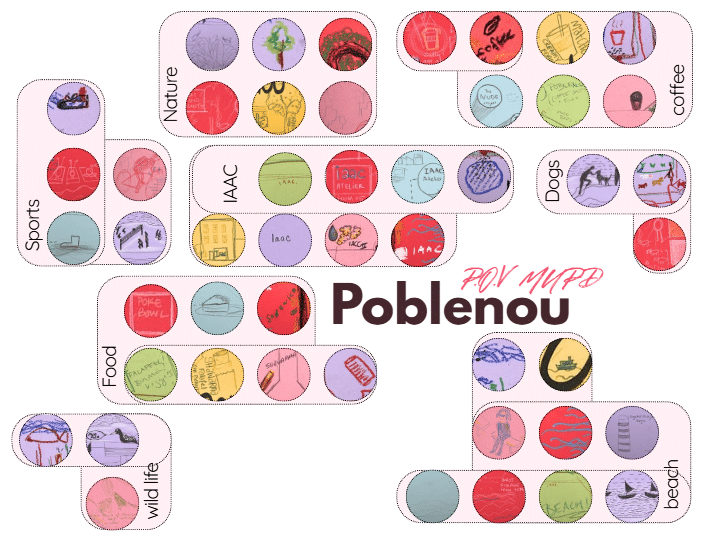
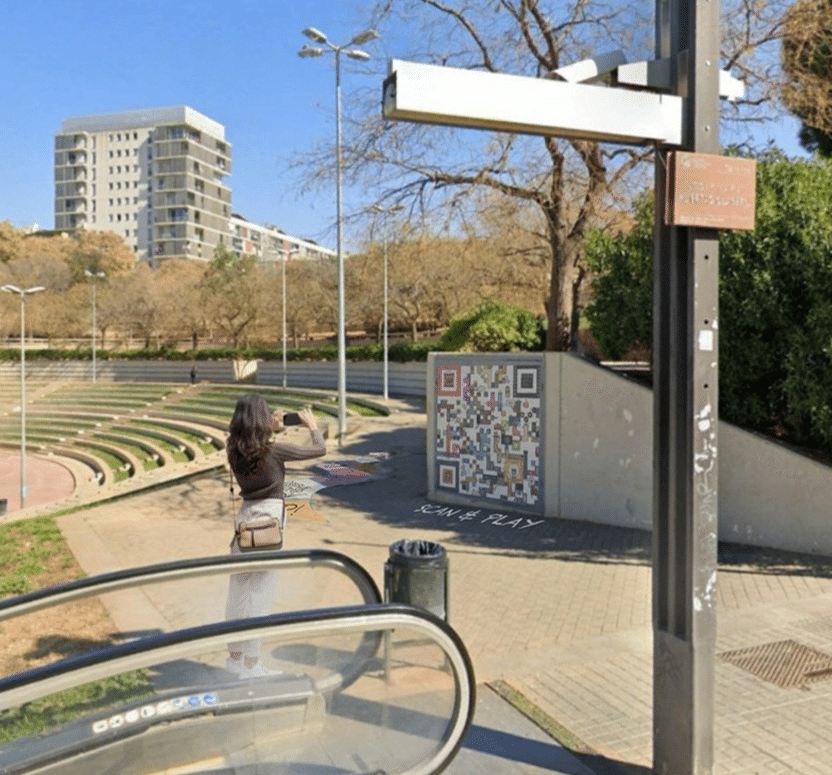
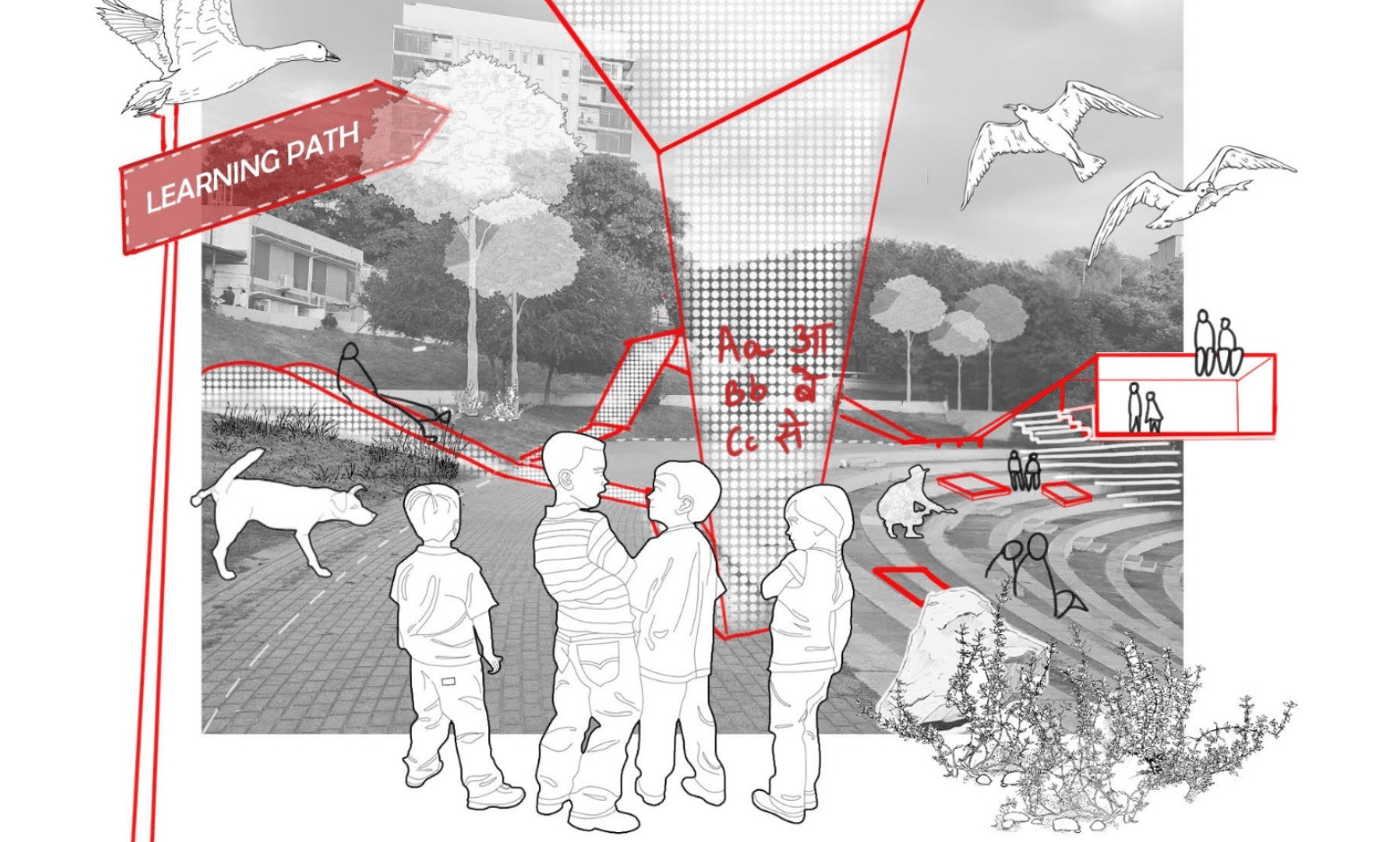
This project investigates Parc del Centre del Poblenou through the lens of Designing for More than Humans. The park, although permeable and vegetated, is spatially structured around human circulation and programmed activity. As a result, human occupation is continuous and dominant, while non-human life remains fragmented and residual. Through rule-based speculation, the project tests how … Read more

The Wooded Circle

entrance image Started off in 1504 as a Renaissance-era fortification system, designed to resist cannon warfare. Over the years, it has undergone many reconstructions, with the latest turning it into a managed heritage park in the early 2000s (Planted rows of trees) . Ecology has played an important role in each of its eras, as … Read more

How does Power operate spatially in Poblenou?

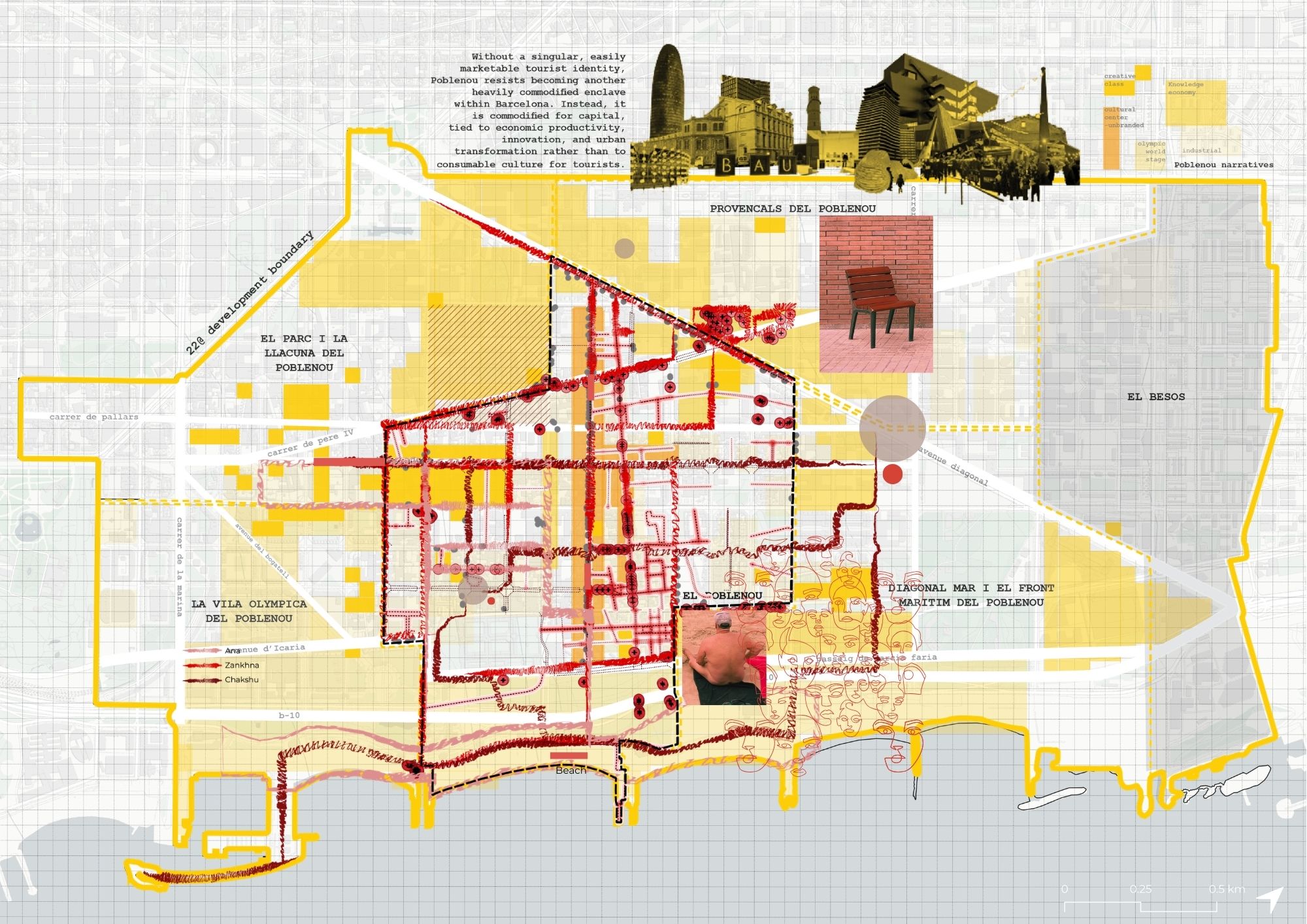
This project explores how power operates spatially through counter-cartography and autoethnography in Poblenou, Barcelona. Combining observation, mapping, and self-tracking, the research examines how infrastructure, urban objects, rules, and rhythms shape behavior, movement, and perception. Benches, pedestrian streets, and smoking practices reveal how freedom, restriction, and permission are unevenly distributed. Findings show that movement is widely … Read more

Poblenou as Lived Space

Cities are often described in terms of movement. We often tend to move through them in familiar loops – leaving home to catch the metro, commuting to work, coming back in the evening, running errands, going to appointments. Over time, these repeated paths shape how we think about urban space and can seem to define … Read more

Connexió (Connection)

Santa Coloma de Gramenet, located to the north of Barcelona, is bordered by the Besòs River on the west and the Marina Mountain Range on the north. The city’s terrain features an irregular relief that rises to 303 meters at Mount Castellar, its highest point, a topographical character also visible within Parc dels Pins. The … Read more

Urban Legibility beyond Vision

An exploration how to enhance independent mobility for blind individuals by addressing psychological and systemic barriers. Using a participatory design approach, it goes beyond assistive tech to build an ecosystem of tools, behaviors, and spatial strategies that support confident navigation. A taxonomy with blind participants organise emotional, spatial, and user insights into a practical design … Read more

UrbanSight – Agent-based Pedestrian Environment Analysis

Project Introduction Urban environments are constantly evolving, shaped by the movement of people, the flow of traffic, and the presence of infrastructure. Yet, understanding these patterns at the street level — especially across an entire neighborhood — can be difficult, time-consuming, and highly subjective. In this project, we present a computer vision–based visual audit of … Read more

DreamMyStreet

Abstract Building upon the knowledge acquired in the Agent-Based Design & Machine Learning course, we developed a bot designed to collect data from the population of Rundu, the city we are focusing on for our project within the Vulnerability Studio: Computer-Aided Mobility Justice. We face the challenge of accessing qualitative insights that could help us … Read more

Learning From Sants

When we locate Sants within Barcelona, it appears to be on the city’s edge. However, when considering the metropolitan area as a whole, Sants is actually closer to the center. Historically, Sants was one of the towns surrounding Barcelona until its annexation in 1897. Its agricultural and industrial roots contribute to a unique neighborhood identity—one … Read more

Layers of Besòs: Unfolding Barrio’s Identities

Introduction: Understanding Besòs Beyond the Surface The El Besòs i el Maresme area in Barcelona carries a complex history—one shaped by migration, exclusion, and resilience. Often perceived through the lenses of insecurity and economic struggle, the neighborhood is in fact a vibrant intersection of identities, cultures, and urban transformations. Layers of Besòs is a research-driven … Read more

Literary Landscapes &AI-Driven Urban Design

tres tombs

A speculative approach to Design through data, literature, and participatory AI in Sant Antoni Our urban issue: The Lack of Narrative-Driven Urban Design in a Data-Driven City Contemporary urban design increasingly relies on AI and big data, often sidelining human stories, cultural narratives, and historical context in shaping urban spaces. While data-driven design optimizes efficiency, … Read more

Agent-Based Collaborative Design

FETCH.AI Design

Designing an Inclusive and Functional Bench Through the Lens of Iconic Visionaries Urban design has always required balancing complex social, cultural, and environmental factors. In this project, we explored the potential of AI in shaping public spaces. Specifically, designing a bench that serves the needs of both homeless individuals and daily users. We developed a … Read more

Container City

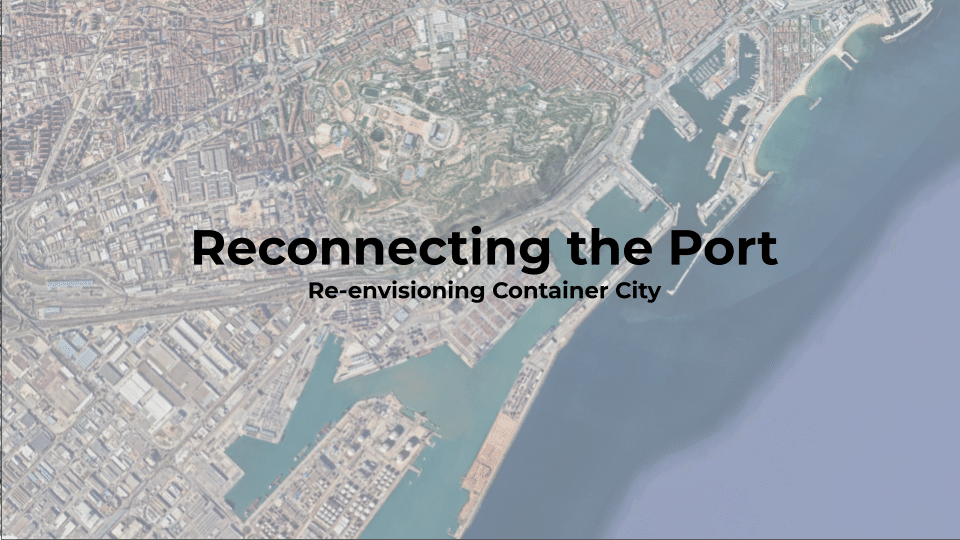
Developed as part of a Workshop hosted by IAAC and conducted by Buro Happold representatives, the project envisions the transformation of Barcelona’s Zona Franca waterfront into a mobility-driven, mixed-use district that balances industry, nature, and urban life. The master plan prioritizes seamless connectivity, enhancing public transport, pedestrian networks, and micromobility infrastructure to overcome the area’s … Read more