– A satellite based platform for detecting sand mining across India
Sand is the most extracted solid material on Earth, yet it remains one of the least regulated. In India, where rapid urbanisation drives relentless construction demand, river sand extraction has escalated into a crisis of ecological damage, governance failure, and organised crime. Riverbeds are being stripped faster than natural replenishment cycles allow, causing channel incision, groundwater depletion, bank collapse, and the destruction of riparian habitats.
WHAT IS SAND MINING? – SAND MINING AND ITS TYPES
Sand mining is the extraction of sand, mainly though an open pit but sometimes mined from beaches and inland dunes or dredged from ocean and river beds. River mining – River sand is specifically prized because it’s fine-grained, cheap, and ideal for concrete.
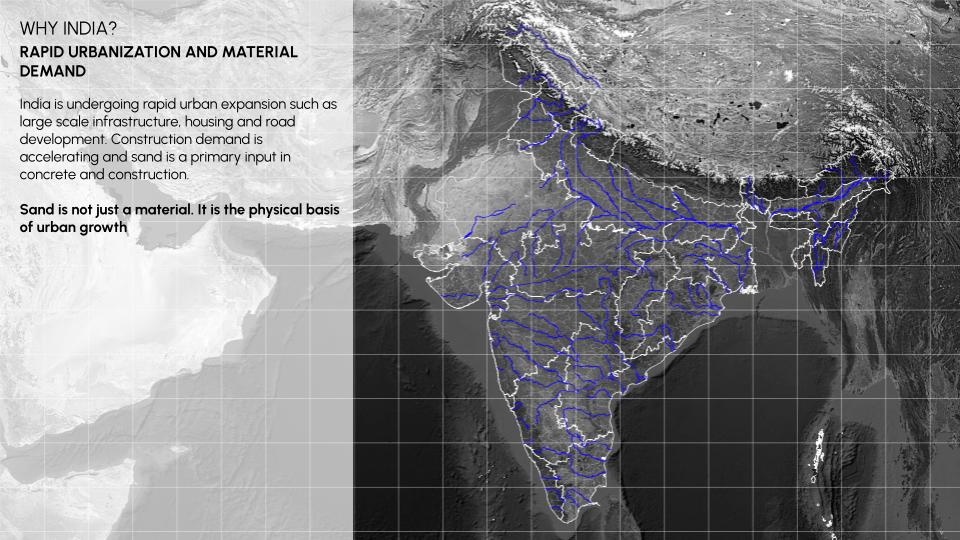
Sand is the silent material underneath every city India is building. Roads, bridges, housing blocks, and large-scale infrastructure all run on concrete, and concrete runs on sand. As urbanisation accelerates across the country, so does the pressure on the one material holding it all together.
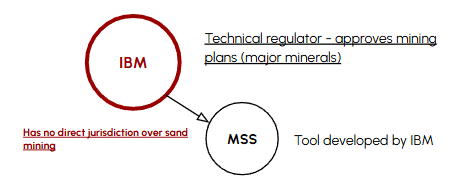
MSS(MINING SURVEILLANCE SYSTEM ) is a satellite-based monitoring system developed by the Ministry of Mines through the Indian Bureau of Mines (IBM), in coordination with BISAG (Gandhinagar) and MEITY.
It uses automatic remote sensing detection technology and also has a citizen-facing mobile app for reporting unusual mining activity.
The MSS was developed to detect illegal mining of “major” minerals such as coal, iron and copper. But sand is considered a minor mineral.
Sand Matters is a research project that builds the methodology for exactly that gap.
CASE STUDIES
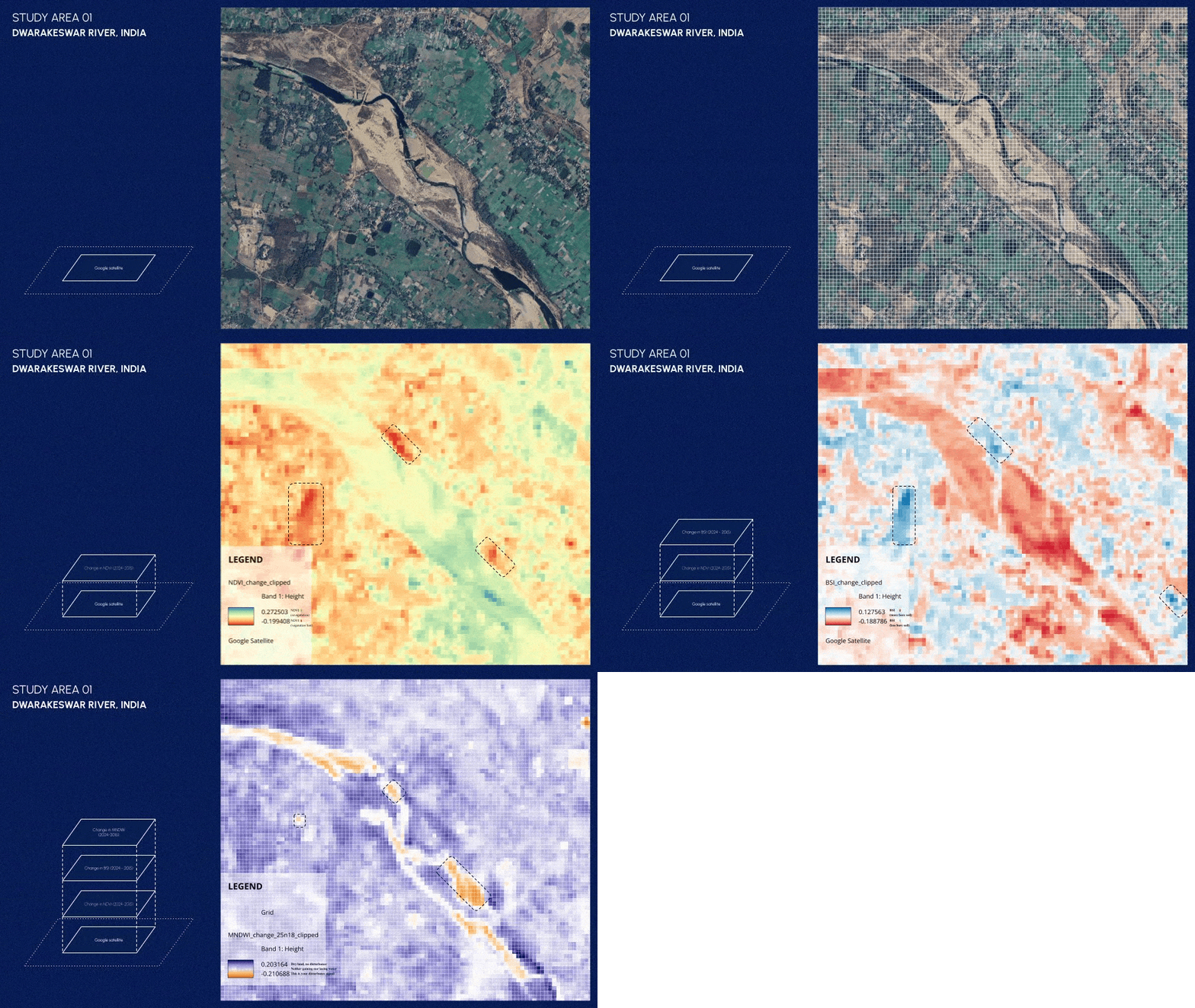
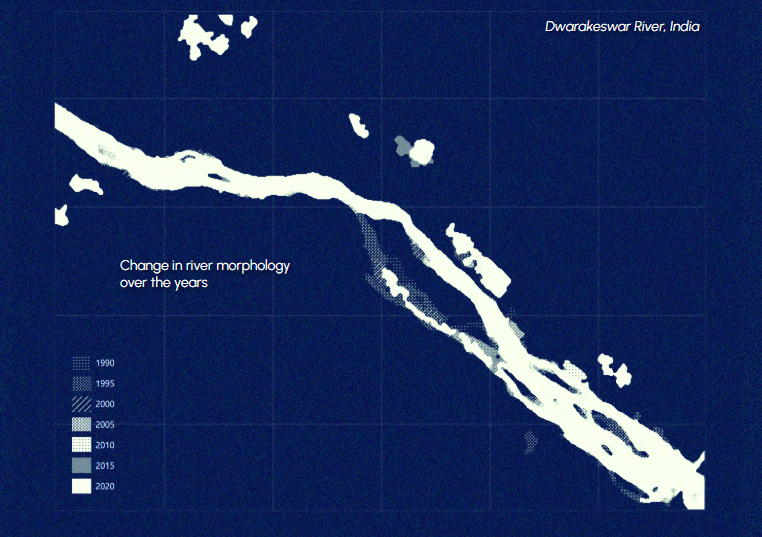
STUDY AREA 01 – DWARAKESWAR RIVER, INDIA
The Dwarakeshwar River is a significant river within the Western Ganga-Brahmaputra Delta (GBD), encompassing a basin area of 4,225 km² and extending between 22°40′ N to 23°31′ N latitudes and 86°30′ E to 87°48′ E longitudes. Sand mining in the Dwarakeshwar River, is a significant minor mineral activity driven primarily by local construction demand.
The Dwarakeshwar river operates under the state’s regulated sand mining framework, with designated ghats, royalty collection, and periodic environmental clearances, making it one of the more documented legal extraction corridors in eastern India and a tractable site for studying what compliance looks like in practice.