
Thaumetopoea pityocampa

During a field walk conducted on the slopes of Turó de Roquetes, a notably high population density of Thaumetopoea pityocampa (pine processionary moth) caterpillars was observed. Within a short observation period, a total of 85 individual records were documented, with the population appearing to increase progressively throughout the survey.
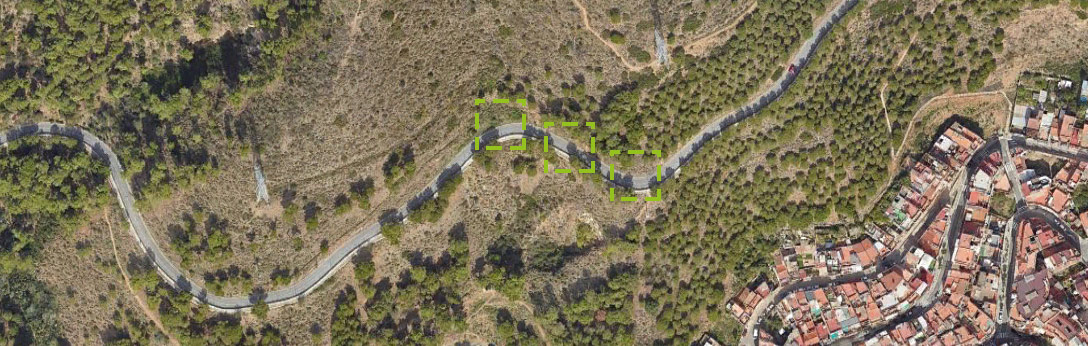

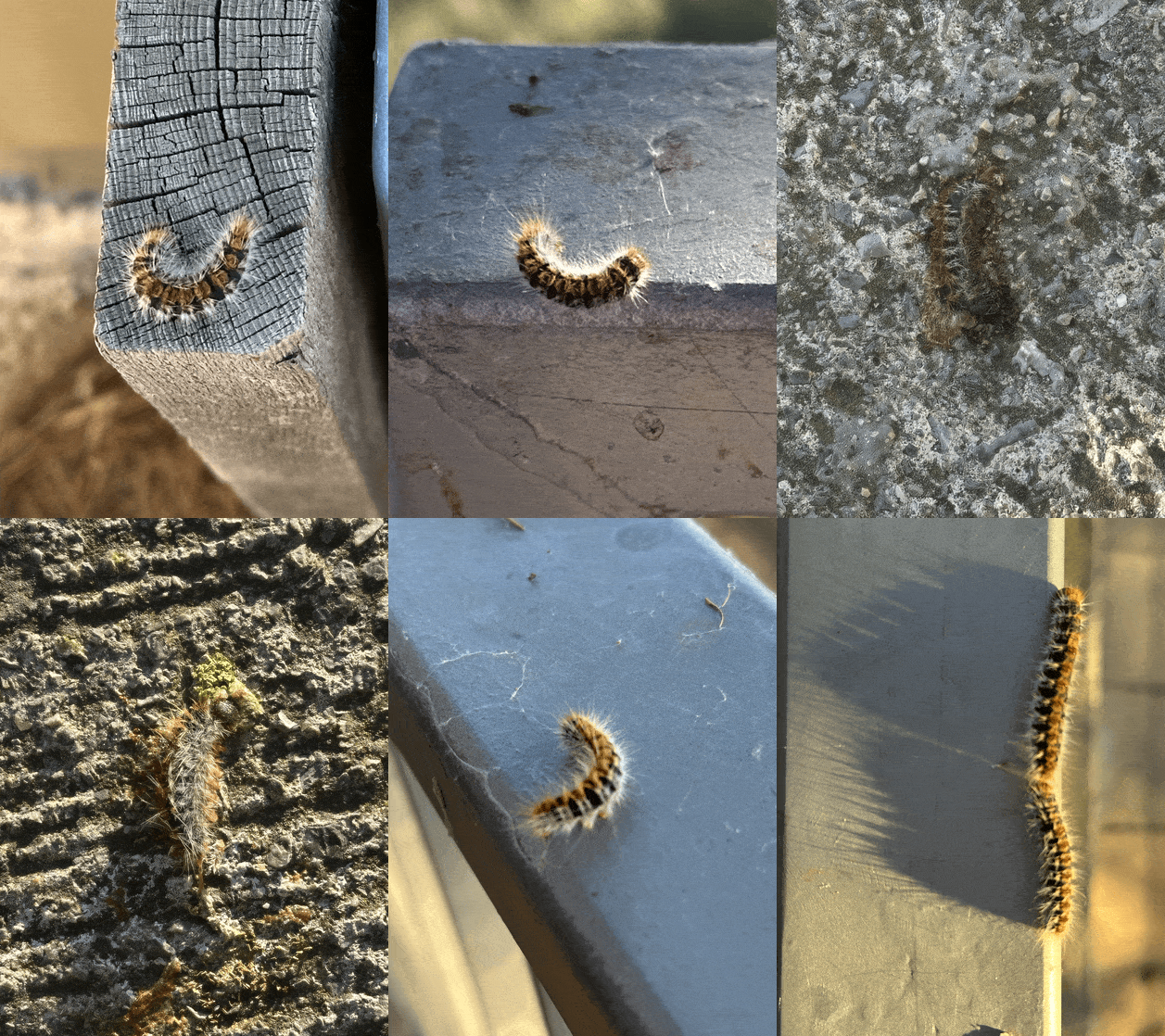

Situated between the densely populated urban matrix of Barcelona to the south and the forested landscapes of Serra de Collserola to the north, the site represents a significant example of an ecotone, characterized by the transitional interface between urban and natural ecosystems.
1-TIMELINE
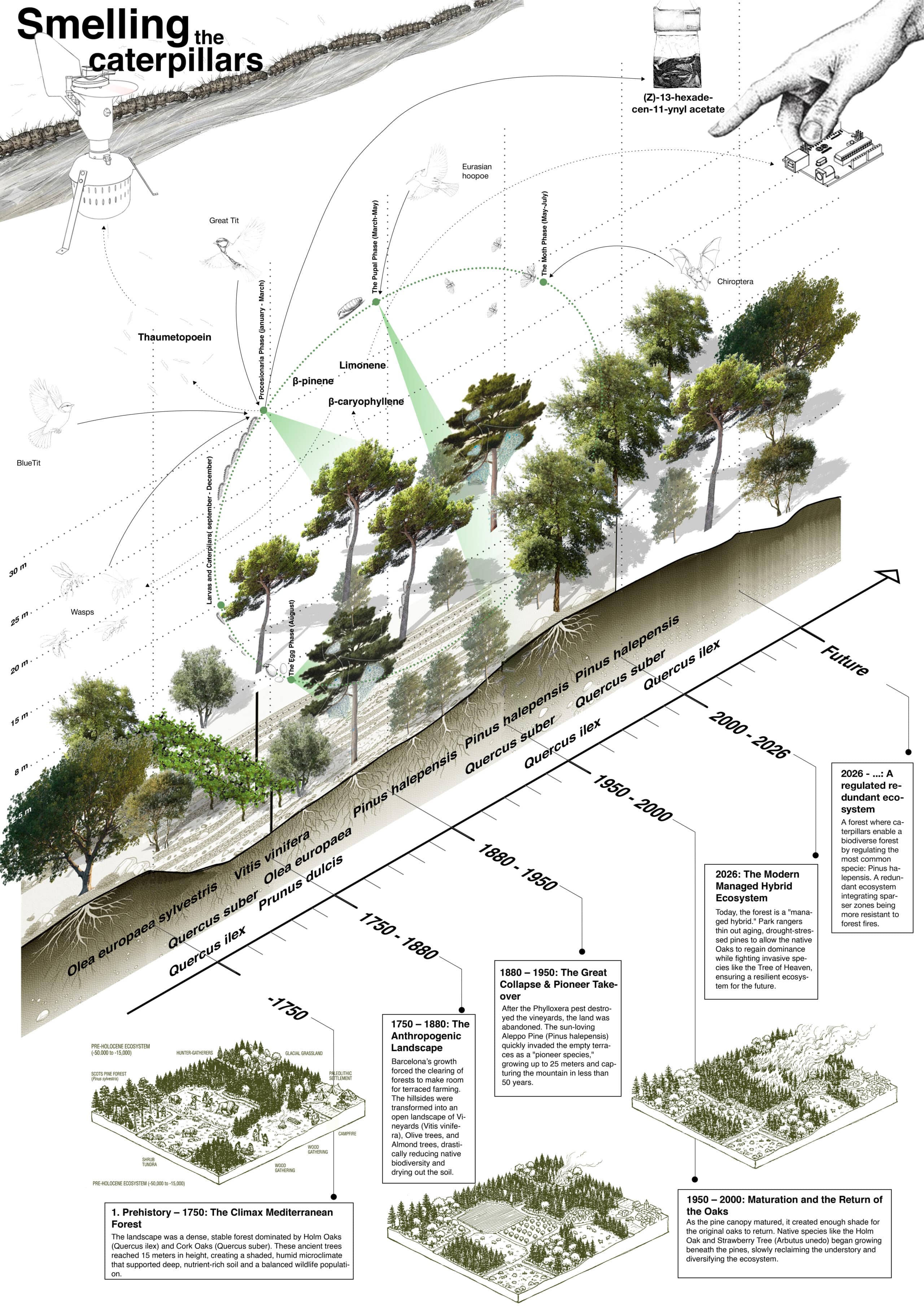
The landscape has undergone a dramatic transformation, beginning with the Virgin Oak Era, where deep-rooted, ancient forests dominated a stable and rich ecosystem. This wilderness eventually gave way to the Agricultural Era, characterized by the intensive cultivation of vineyards and olive groves that reshaped the soil structure through terracing and man-made interventions. Following the decline and eventual abandonment of these vineyards, the land entered a Pine Takeover and Mixed Transition phase, where pioneer species and dense shrubs reclaimed the untended ground. This movement, exacerbated by the rural exodus, has lead to an increasing surface of young pine forest ecosystems around Barcelona particularly vulnerable to forest fires. From 1960 to 2018, the total surface of Catalunya occupied by forest has climbed from 40% to 60%. Today, the Managed Restoration Era seeks to balance ecological recovery with modern landscape stewardship.
2-LIFE CYCLE OF CATERPILLARS
The life cycle of Thaumetopoea pityocampa begins in late summer when adult moths lay eggs in silvery, cylindrical batches wrapped around pine needles in the upper canopy, where they are primarily targeted by specialized parasitoid wasps like Baryscapus servadeii. Once the larvae hatch and enter the “processionaria” phase, they build dense, white silk nests on sunny, south-facing branches; during this stage, they are hunted by predators such as various species of tits (Paridae) and cuckoos, which are uniquely adapted to handle their stinging hairs. In late winter, the caterpillars leave the tree in their signature head-to-tail procession to burrow underground; throughout this pupal stage, the hoopoe becomes their most significant predator, using its long, curved beak to dig the cocoons out of the soil. Finally, the short-lived adult moths emerge from the earth to hide in the tree bark and foliage for camouflage, where they are frequently eaten by bats and nightjars before restarting the cycle.
3-BIO-CUES
The biological communication of Thaumetopoea pityocampa and its host trees relies on a complex chemical dialogue of defense and attraction. During the “processionaria” phase, the caterpillars produce thaumetopoein, an urticating protein found in their specialized hairs that serves as a potent deterrent against most generalist predators. However, the pine tree does not remain a passive victim. These stress-induced terpenes, such as limonene, ß-pinene, and ß-caryophyllene, act as chemical beacons that specifically attract wasps. These wasps follow the scent trail to locate the caterpillars, effectively acting as the tree’s bodyguards by laying eggs inside the larvae. Finally, in the moth phase, synthetic versions of the female sex pheromone, specifically (Z)-13-hexadecen-11-ynyl acetate, are used in pheromone traps to disrupt mating and capture males, providing a targeted method to reduce the caterpillar population and protect the forest.
REGULATING FUTURE
The system is specifically designed to target the caterpillar stage of the processionary moth. In line with the species’ biological rhythm, the detection method operates from January to March. Although this species is a predator of pine trees and has long been considered a pest, it is now understood as a potential regulator species, capable of indirectly controlling pine populations through ecological balance.
By leveraging this role, the system supports forest regeneration closer to a natural baseline. More biodiverse and less vulnerable to wildfires. As pine density is reduced in targeted areas, space is freed for the growth of other tree species, lowering overall stand density and improving ecosystem resilience.
To monitor fluctuations in caterpillar populations, two types of biocues are tracked. The first consists of the urticating hairs released by the caterpillars, captured using a dedicated Hirst-type trap. The second biocue is terpene emissions: volatile distress signals produced by trees, which can be measured using an Arduino-based electronic nose.
Finally, the sexual pheromones released by adult moths provide the missing component, enabling the attraction of caterpillars toward specific target zones for intervention.
