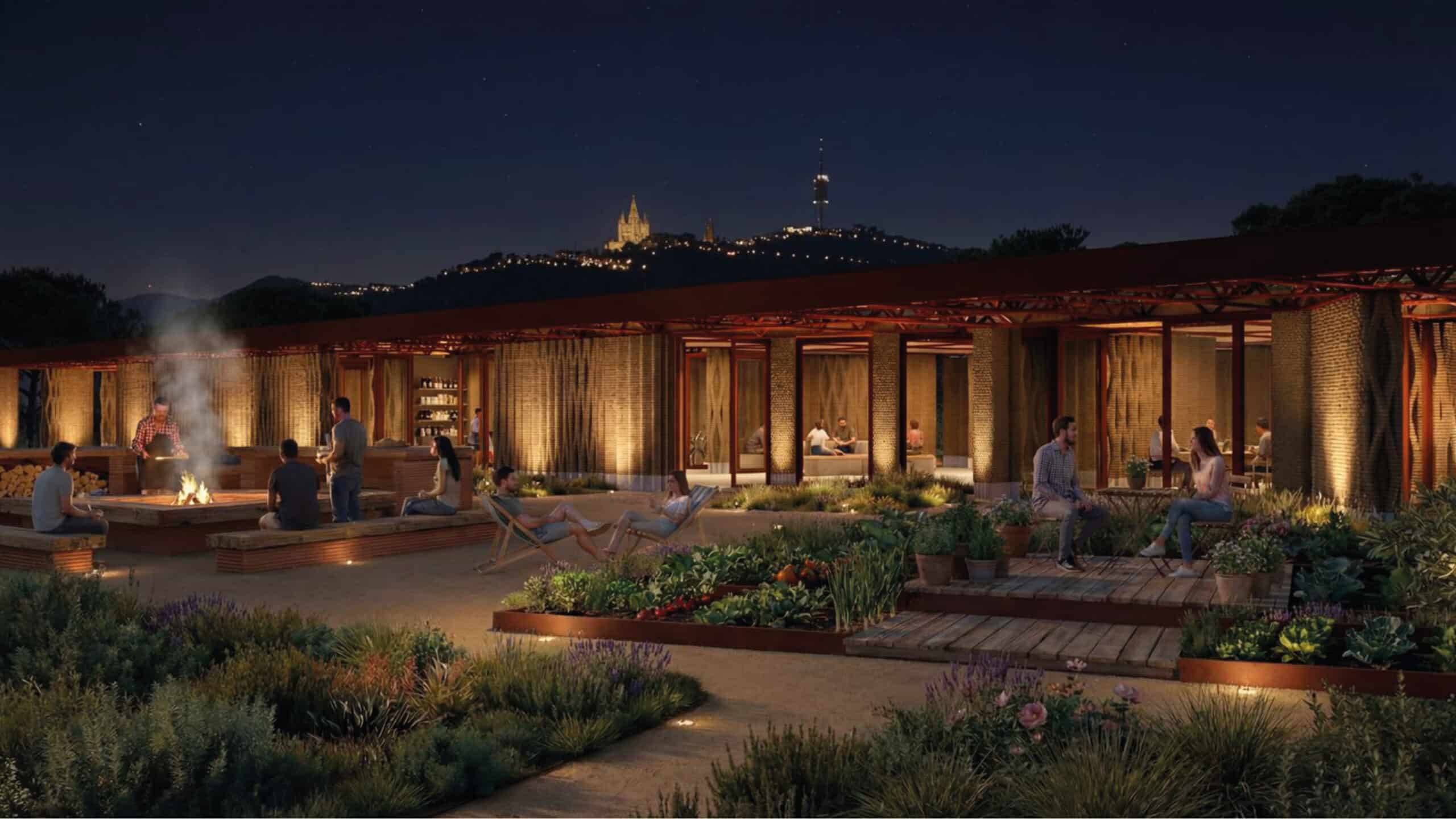
Digital Fabrication Library

In today’s architectural landscape, digital fabrication has significantly expanded the way we design and construct building elements—offering unprecedented accuracy, efficiency, and formal freedom. Techniques such as laser cutting, CNC milling, 3D printing, and robotic manufacturing each bring distinct advantages in terms of material behavior, geometric complexity, and performance potential. RE:CELL Concept The Re:Cell is a … Read more

Tectonics of Digital Craft

Digital fabrication enables designers to explore geometries that go beyond traditional construction constraints. The exercise focuses on translating complex geometries into constructible systems that integrate material behaviour, joinery logic, and mass customisation. Each technique allows experimentation with unique fabrication constraints, informing the evolution of the vertical element design. The outputs serve as material and geometric … Read more

Machine Thinking

Introduction to Digital Fabrication Team : Sejin Park & Hasan Hirji CNC Milling During the CNC Milling process, RhinoCAM software automatically creates bridges; a necessary milling process outside of commands that one might use to manipulate material. We began with the idea of testing the frequency and depth of 2-axis bridging path movement presets to … Read more

Silent Light

Introduction to Programming and Physical Computing Seminar Faculty: Daniel Mateos, Adai Suriñach, Antoine Jaunard Group Members: Amalia Anna Korgiala, Camilo Hernán Contreras Concept The project aims to design a sensor that can work with light or sound sensors, inspired by a library luminaire. The sensor can be placed in various areas and scales, such as … Read more

Performative Wall Textures

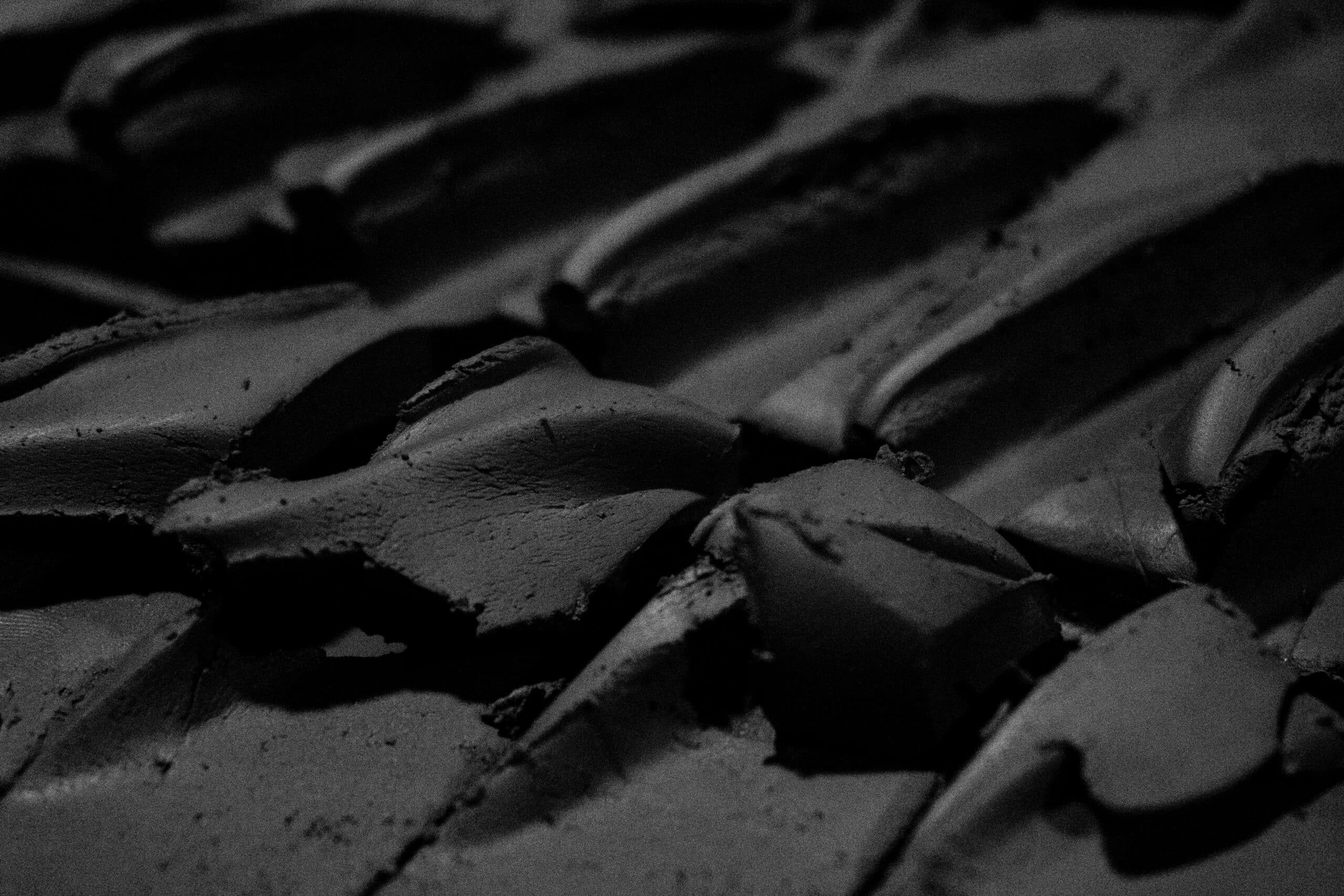
Introduction & Problem Statement Earthen 3D printing offers a low-carbon, recyclable, and locally sourced alternative to conventional construction materials. However, its architectural use remains limited by a critical issue: wet-state instability during printing. Freshly extruded clay has very low strength and stiffness, so walls usually reach only 15–20 cm per day. Beyond this height, the … Read more

Research _ BUILD – UP

This research focuses on one of the main limitations of 3D printing with earth: low stability in the wet state. Today, the maximum daily printing height is around 20 cm, which limits construction efficiency. This project explores how to improve wet-state stability to enable taller, faster, and more consistent earthen walls. STATE OF THE ART … Read more

The Massage Chair

Top angle view

The massage chair is an experiment in digital fabrication and hybrid workflows, using computational design, CNC milling, 6-axis robotic milling, and human assembly and finishing, to understand how different subtractive manufacturing processes can be combined to balance speed, precision, and material expression in digital fabrication. Materials Tools Used Early Designs Early explorations of designs in … Read more

Nidra chair – MRAC & MAEB Workshop 1.1

Nidra chair

The Nidra Chair was developed within the framework of Workshop 1.1, where we explored robotic milling using the KUKA robotic arm. The design process was guided by a set of conceptual ideas—texture, nest, wings, and storage—which shaped the formal and tactile language of the piece. Inspired by notions of protection, warmth, and well-being, Nidra seeks … Read more

Robotic Milling and Design for Subtractive Manufacturing — Elephant Chair

Abstract: The Elephant Chair project was developed during the workshop “Robotic Milling and Design for Subtractive Manufacturing Workflows.”This workshop explored hybrid fabrication methods combining 3-axis CNC milling and 6-axis robotic milling to translate digital geometries into precise wooden prototypes. Our team designed and fabricated a furniture piece inspired by organic anatomy, robust yet flexible, mirroring the mechanical elegance of the machines used … Read more

BAMBOO

Exploring Low-Tech, Sustainable Construction Methods and Manual Strategies for Community Empowerment The use of bamboo in construction is emblematic of an ongoing tension between traditional knowledge and the global imperatives of sustainable development. Despite its traditional use in many regions, the potential as a resilient, self-sustaining construction material remains largely underexplored in the contemporary architectural … Read more

Fail Forward: A Chair Undone is a Chair Well Done

Lessons from Workshop 1.1 – Robotic milling and design for subtractive manufacturing This workshop focused on advanced subtractive manufacturing techniques, exploring the integration of 2-axis CNC milling and 6-axis robotic milling within a hybrid digital fabrication workflow. The process emphasized computational design-to-production strategies, including toolpath generation, material optimization, and robotic calibration. Through sequential stages of … Read more

Sunflower

An intelligent system inspired by the Sunflower.

A sun-chasing system is a mechanism that automatically tracks the movement of the sun across the sky to maintain the optimal angle for capturing sunlight. When applied to solar panels, this technology can increase energy efficiency by up to 30–40% compared to fixed panels, as it maximizes exposure throughout the day. Beyond energy generation, the … Read more

Prototipo de fachada inteligente

Concept This project features a dynamic façade that responds to joystick movements, allowing users to control the orientation of its panels toward the north, south, east, or west. Each direction activates a different sound and colored light, providing both auditory and visual feedback that complements the tactile control. For example, a high-pitched tone and red … Read more