ReSkin

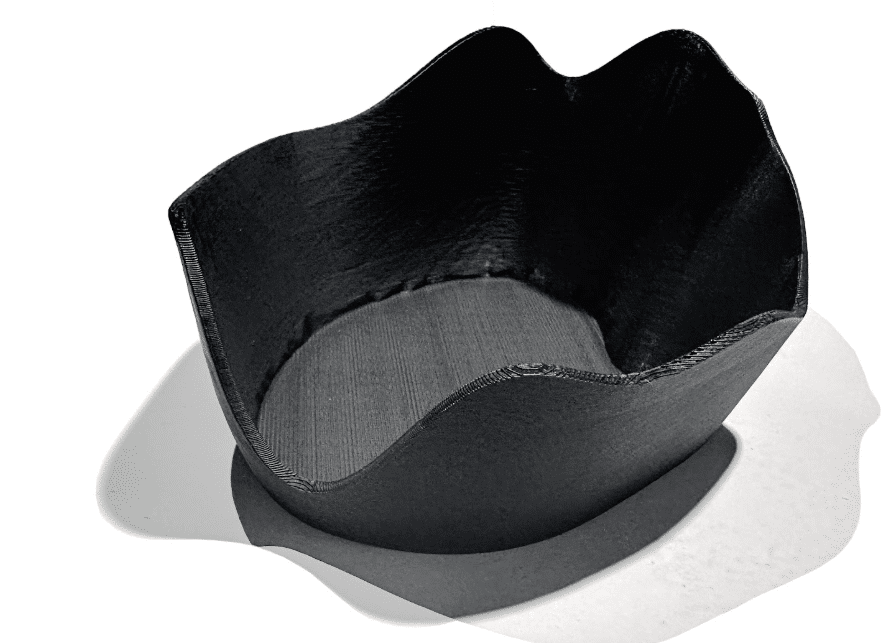
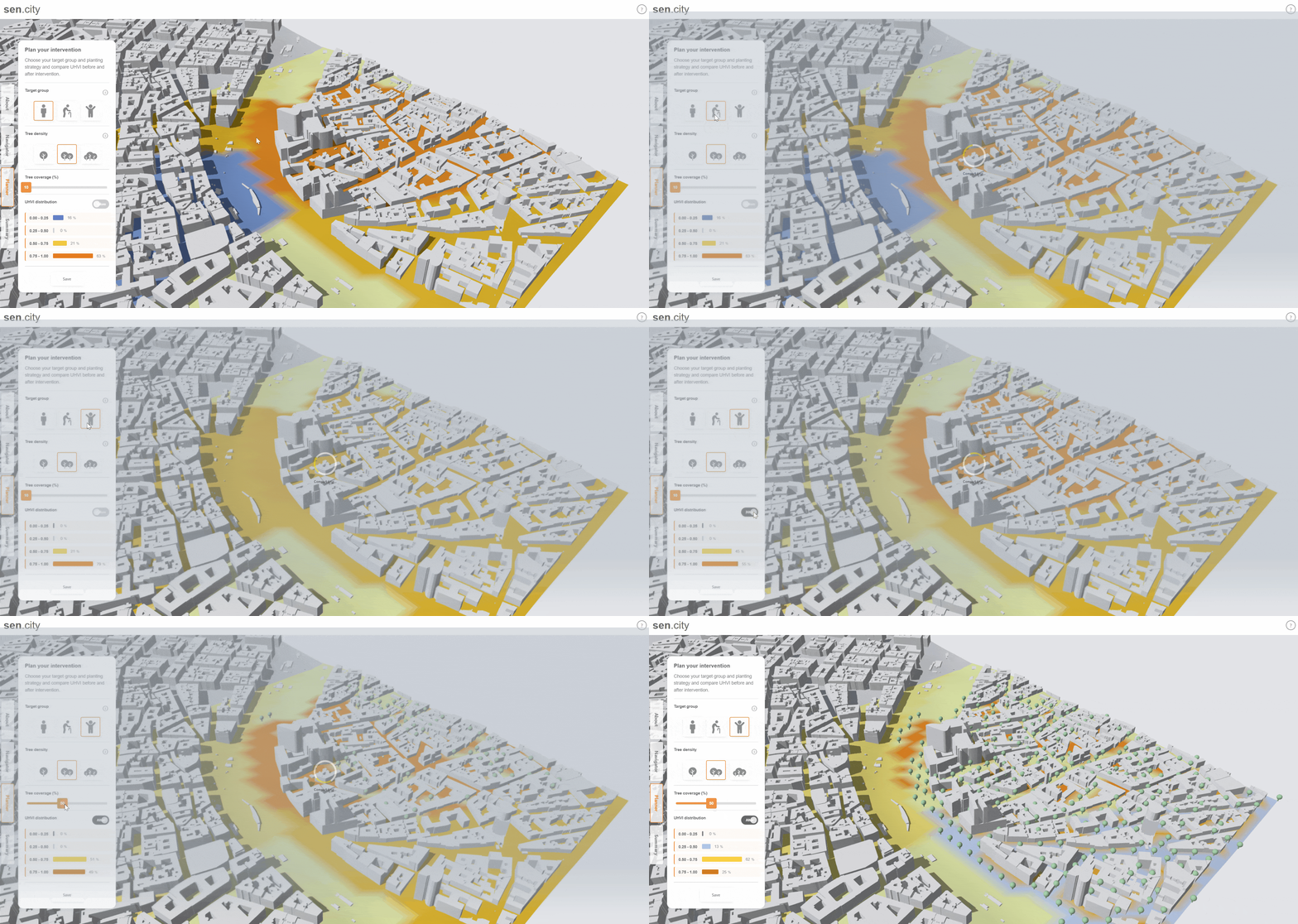
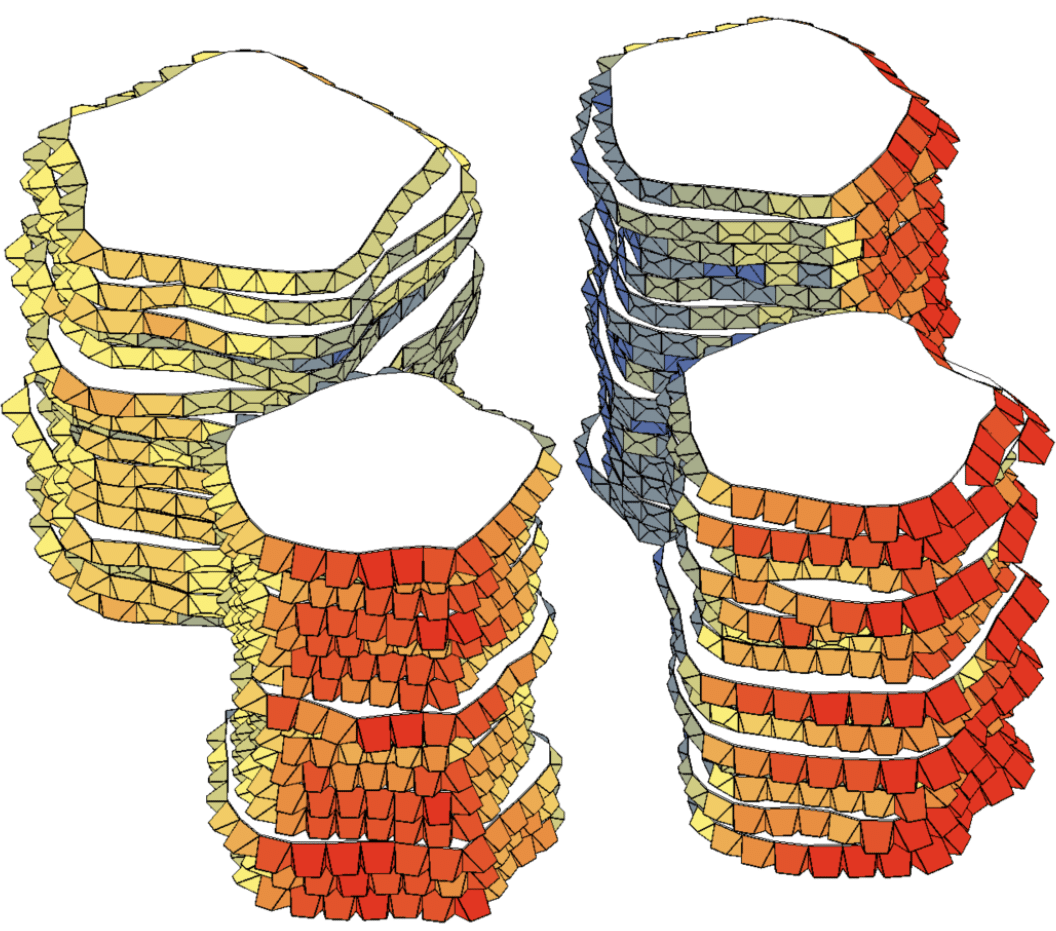
whilst global temperatures are rising towards +4°c, building facades are a main contributors to the urban heat island effect within cities.2050 about 70 % of the world’s population will live in cities.The building sector globally consumes a significant amount of energy for heating and cooling. In fact, about half of the global cooling load is … Read more

Urban Matrix

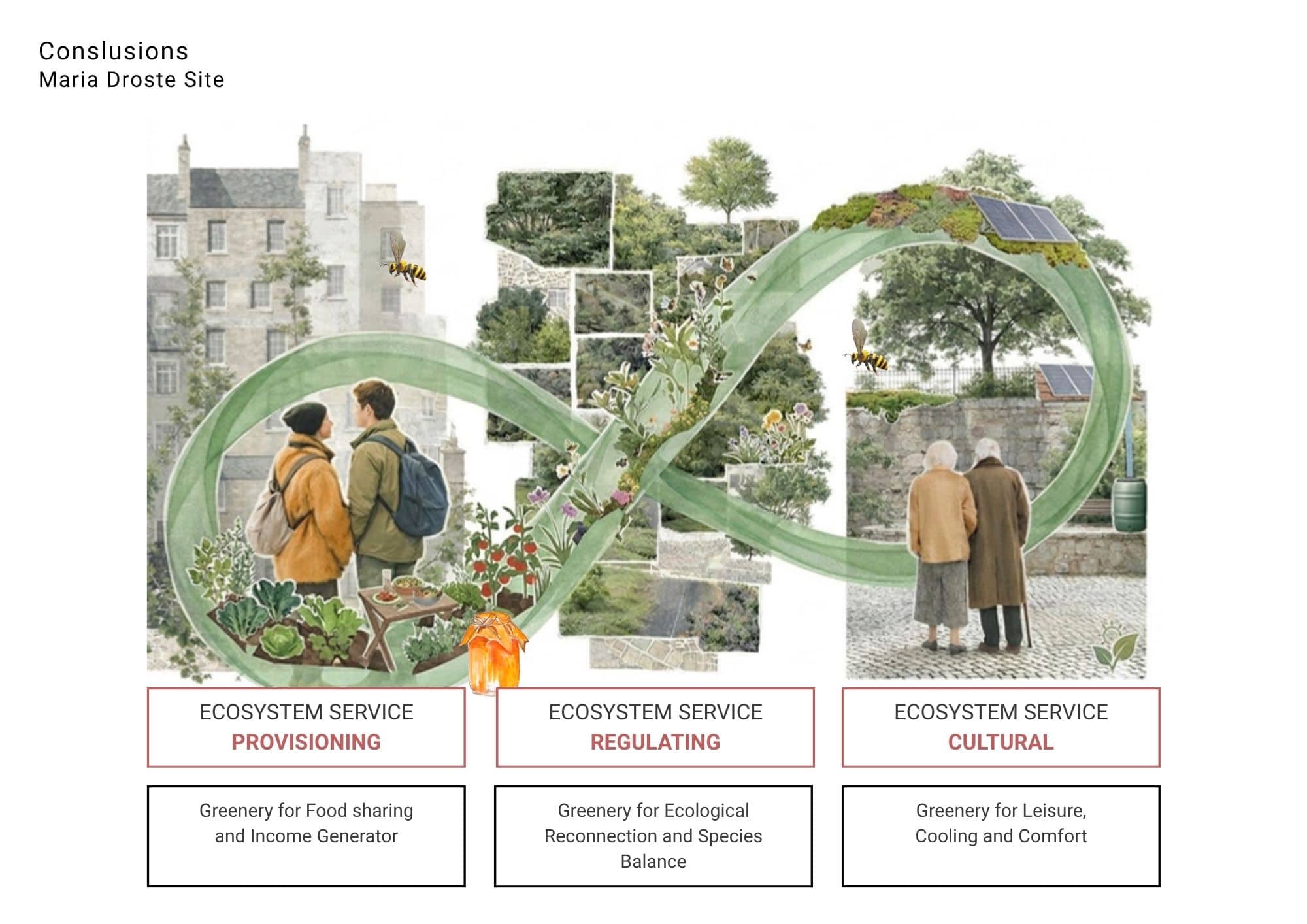
Abstract Our project, addresses the need for Productive Justice for Self-Sufficiency in Mesquita, a municipality in Rio de Janeiro marked by socio-economic challenges such as food insecurity, water scarcity, infrastructure deficiencies, and a strong dependence on government subsidies. Our strategy transforms residual urban spaces-abandoned plots, unused corners, canal edges-into a Productive Web of interconnected hubs … Read more

AIA25 Studio – HaBiCoM

HaBiCoM is an AI-powered copilot designed to assist architects, designers, and users in shaping smarter, more responsive interior spaces. At its core, HaBiCoM redefines the way we approach furniture placement within residential environments by aligning each design decision with the user’s unique daily habits, lifestyle rhythms, and thermal comfort needs. Unlike traditional layout tools, HaBiCoM … Read more

Computing Risk and Planning Resilience from Afar

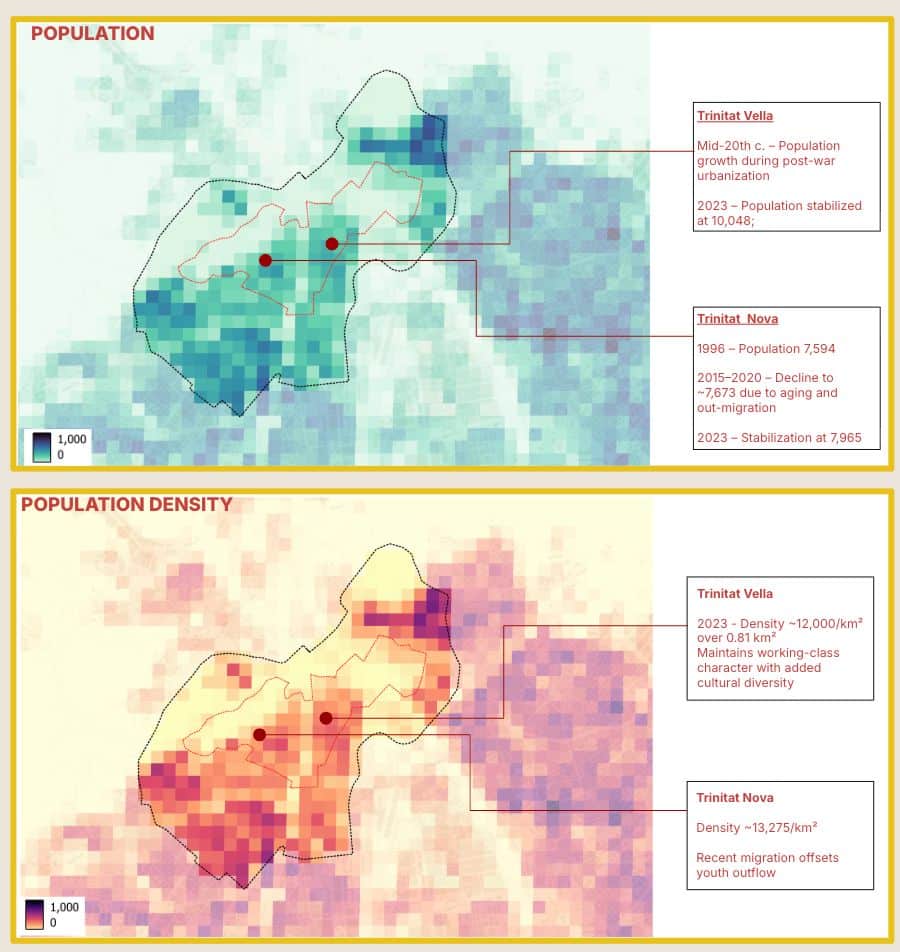
Computing Risk & Planning Resilience from Afar is a remote-sensing–driven investigative study to read, identify and address underlying vulnerabilities associated with landslide risk in urban India. The project aims to develop replicable analysis workflows for compounded risk calculation—making visible what often remains hidden enabling actionable insights in places where institutional data is frequently outdated or … Read more

Flow – SIGHT: De- coding urban mobility

Introduction Urban traffic congestion is more than just an inconvenience—it’s a global challenge tied to pollution, stress, and wasted time. While cities are turning to AI-driven systems to ease the gridlock, the question remains: Do these technologies actually perform better than traditional methods?Flow – SIGHT is a comparative research project that investigates traffic systems across … Read more

Urban Legibility beyond Vision

An exploration how to enhance independent mobility for blind individuals by addressing psychological and systemic barriers. Using a participatory design approach, it goes beyond assistive tech to build an ecosystem of tools, behaviors, and spatial strategies that support confident navigation. A taxonomy with blind participants organise emotional, spatial, and user insights into a practical design … Read more

Reclaiming Public [Space] – the decolonial future through the ideologies of the First Nations people of Australia. 

About This project investigates how colonial patterns of urban design in Footscray have historically shaped and continue to shape the experiences of mobility, vulnerability, and belonging among First Nations people. By tracing the spatial legacies of dispossession and infrastructural violence, the work critically maps how extractive logics have severed Indigenous connections to place. In response, … Read more

The Palace of Trash

This project reclaims abandoned silos in Rio de Janeiro as neighborhood-scale infrastructures for ecological justice. It builds a circular system where waste is not only recycled, but revalued through community collaboration. Organic and material waste become part of urban greening and pollination strategies, empowering catadores and youth as co-creators. Through reuse, education, and biodiversity enhancement, … Read more

ReGen.Ai

ReGen.Ai is a data-driven design project that reconnects fragmented urban green spaces in Bangalore through multifunctional green corridors, using AI tools to guide nature-based, regenerative urban transformation.

The Construction Graph: Rethinking how we build, one Node at a Time

Abstract In this project, we explore how graph-based thinking can reshape construction planning by bridging design data and scheduling logic. Drawing inspiration from modular architecture and network theory, we investigate new ways to visualize, analyze, and optimize the sequencing of building elements. By combining insights from BIM, parametric modeling, and graph analysis, the work aims … Read more

AQUA.NEST

AQUA.NEST: An AI-Powered Decision Support Toolbox for Adaptive Urban Design Using Nature-Based Solutions in Flood-Exposed Coastal Cities Coastal urban flooding is emerging as one of the most urgent climate challenges of our time. Without strong adaptation, annual flood damages could reach €930 billion globally by 2050, even with improved infrastructure (OECD, 2020). Rising sea levels and … Read more

THERMAL COMFORT_A predictive model for PMV index

Thermal Comfort Index Prediction // Definition OBJECTIVE: predicting thermal comfort in air-conditioned residential buildings using machine learning algorithms. What is indoor thermal comfort? Thermal comfort is “That condition of mind that expresses satisfaction with the thermal environment” (ISO 7730) People may feel that their surroundings are warm, cold or simply comfortable depending on the thermal state … Read more

The Carbon Blueprint

GWP-data enriched graphs Imagine being able to see the carbon footprint of a building, not after it’s built, but while it’s still a sketch. What if architects and engineers could get real-time sustainability feedback the moment they decide on a material or tweak a wall layout? That’s the vision behind Visual GWP. We combined Graph … Read more

Investigating [Grain Farming] – Deforestation, and Political Conflict in the Amazon

“The Amazon rainforest, often called the ‘lungs of the Earth,’ is rapidly disappearing. But this isn’t just an environmental crisis—it’s a geopolitical and economic issue. In the heart of this transformation lies [Mato Grosso], Brazil’s largest soy-producing state. Its key location fuels both economic growth and ecological destruction, leading to tensions over land use, trade policies, and environmental governance.” … Read more

Workshop 3.2 – HearMeOut

The Challenge Traditional industrial robot software emphasizes reliability, precision, and repeatability. This approach can make the human-robot collaborations feel uncreative and non-engaging. Robots must by dynamic and engaging to thrive in a human-centered environment. The Solution The Overview Inverse Kinematics Using Inverse kinematics to orchestrate joint rotations, and constructing smooth mathematical functions that are composed … Read more

Paraísos artificiales

Hacia un modelo territorial para ciudades balnearias La tesis propone explorar el turismo en la Costa Este del Uruguay, con énfasis en las franjas litorales de los departamentos de Canelones y Maldonado. Aquí, el turismo no es entendido únicamente como una actividad económica o cultural, sino como una infraestructura compleja que incide sobre el territorio: … Read more