How does Power operate spatially in Poblenou?
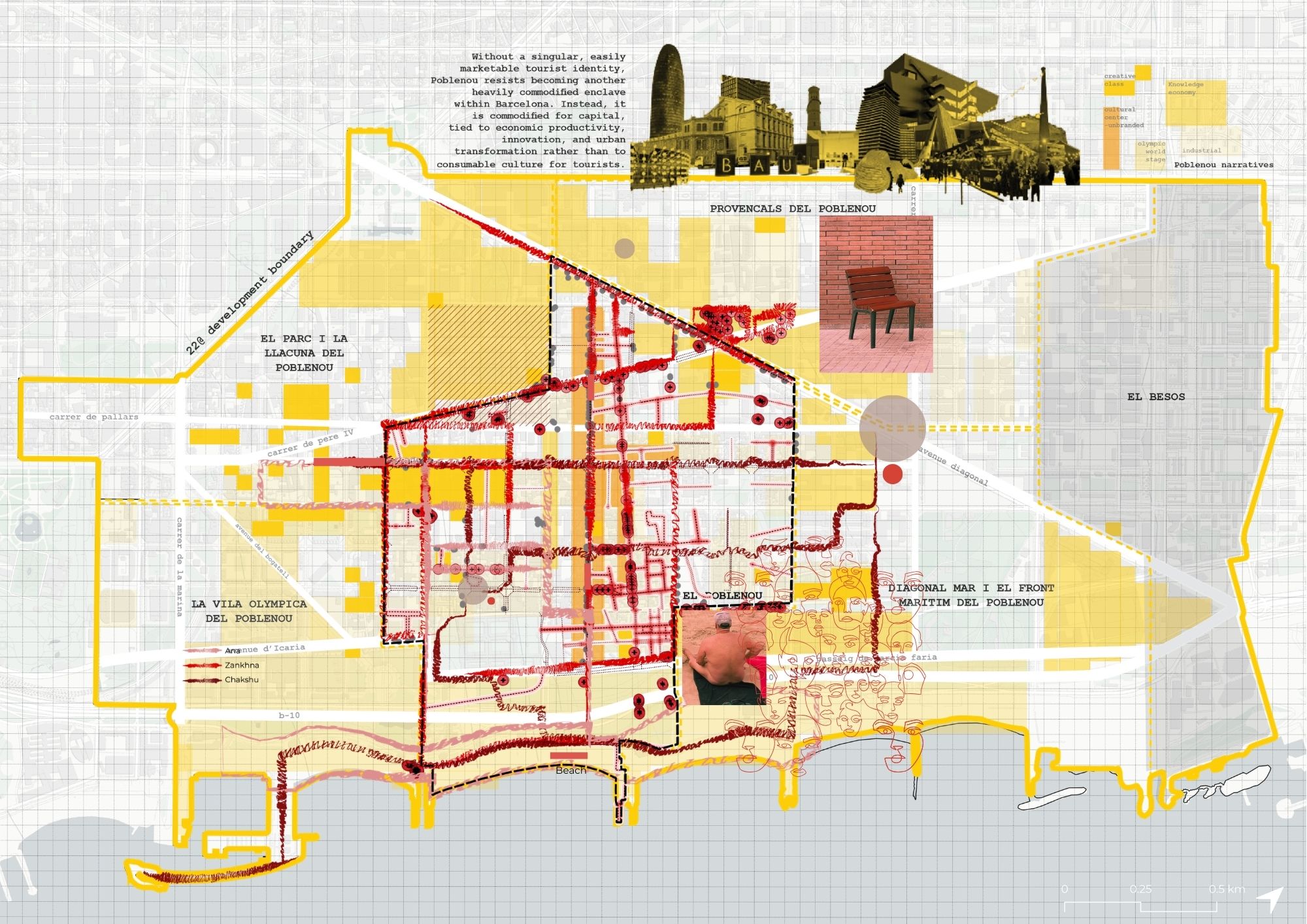
This project explores how power operates spatially through counter-cartography and autoethnography in Poblenou, Barcelona. Combining observation, mapping, and self-tracking, the research examines how infrastructure, urban objects, rules, and rhythms shape behavior, movement, and perception. Benches, pedestrian streets, and smoking practices reveal how freedom, restriction, and permission are unevenly distributed. Findings show that movement is widely … Read more

ARCHAI – COMPLIANCE CHECKER

How AI Can Transform Compliance Checking in Architecture Compliance checking is one of the most essential parts of architectural design, yet it is also one of the most tedious and time-consuming. Research confirms this reality: The Foundation Before developing ARCHAI, we conducted a rigorous Proof of Concept to verify the feasibility of our vision. We … Read more

Urban Amenities Accessibility in Istanbul

How accessible is the city we live in? Beyond iconic landmarks and infrastructure, everyday life is shaped by small but essential places: schools, parks, shops, and services. Urban Amenities Accessibility in Istanbul is a computational design project that explores how these everyday amenities are distributed across Istanbul’s historical center and how easily they can be … Read more

Calle Donceles 47, Departamento 6A

In what ways can homeliness manifest within temporary, automated, and plural domesticities? ______________________________________________ CHARACTERS AlexaAlexaTalaEzgiLucienFranciscoBaba ______________________________________________ – FIRST ACT – ALEXA: Good morning, Ezgi. Listing work schedule. (1) At 09:00 – téléconsultation with Médecins Sans Frontières. At 11:00 – follow-up with patient Carlos in Hospital San Marcos At 19:00 – Zoom meeting with Dr. Frank. … Read more

Beyond Efficiency

The Purpose of AI in the Age of Resource Scarcity Introduction: Redefining the Question The question “What is the purpose of AI in AEC?” often elicits a predictable response focused on speed. For years the industry has viewed Artificial Intelligence primarily as a mechanism for automation. It is seen as a faster way to produce … Read more

THE ARTHROPOD PAVILLION

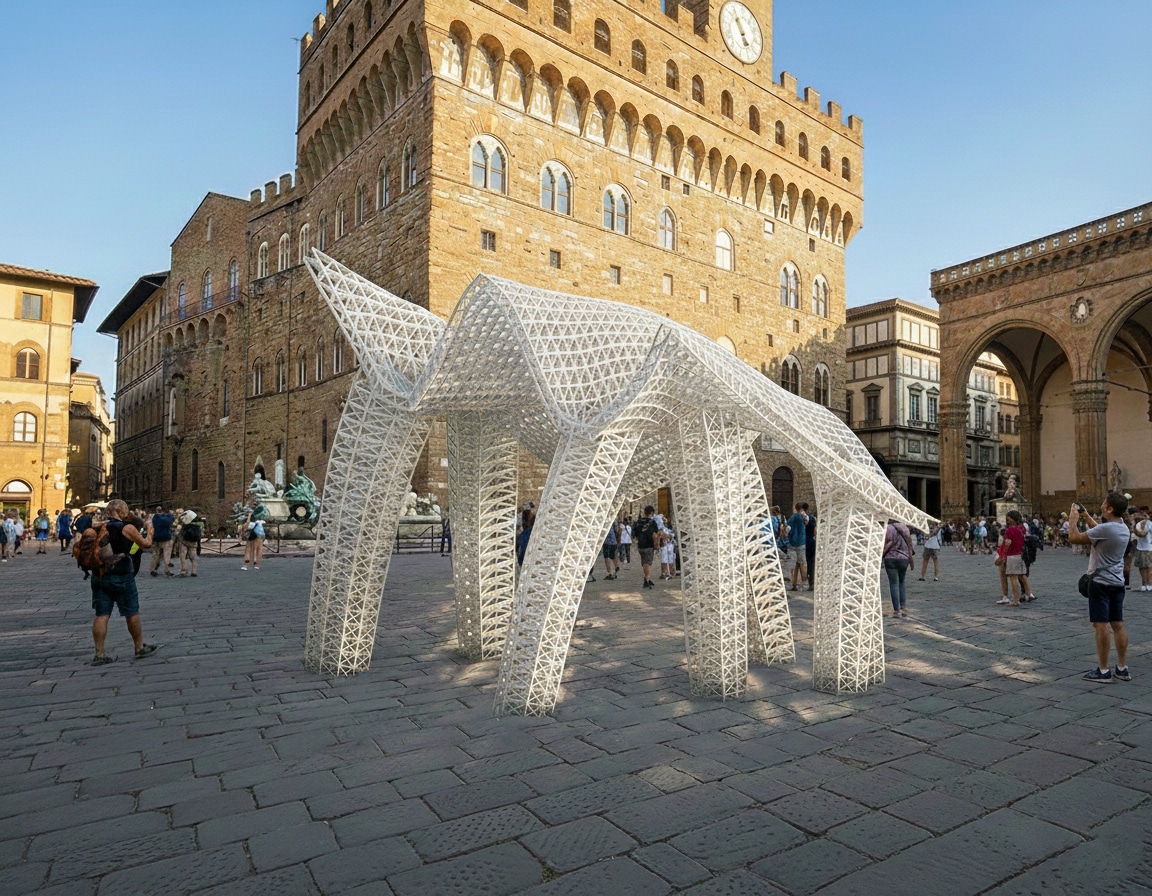
Design Concept | Horseshoe Crab–Inspired Lattice Structure Inspired by the exoskeleton of horseshoe crabs and the ITECH Research Pavilion 2024, this project explores a biomimetic lattice shell structure supported by discrete legs.A continuous mesh distributes loads efficiently across its surface, transferring forces to the ground through optimized supports.The parametrically generated lattice expresses structural performance, integrating … Read more

Light Responsive Kinetic façade…

The kinetic façade dynamically responds to natural light through adaptive panels that modulate openness and shading, creating a living skin that breathes with the environment. As daylight fades, the integrated buzzer activates, signaling the transition from day to night transforming the façade into an expressive architectural interface between nature and technology.   Pin-mount suspension system The … Read more

Skate {able} city


Redefinir el espacio público desde el skateboarding: hacia una Integr{able} City En las ciudades contemporáneas, el diseño del espacio público tiende a responder a lógicas de especialización funcional, segmentando sus usos y trazando bordes rígidos entre actividades. Esta fragmentación limita la convivencia, reduce la espontaneidad y empobrece la diversidad de apropiaciones que constituyen la esencia de … Read more

SKYLOFT

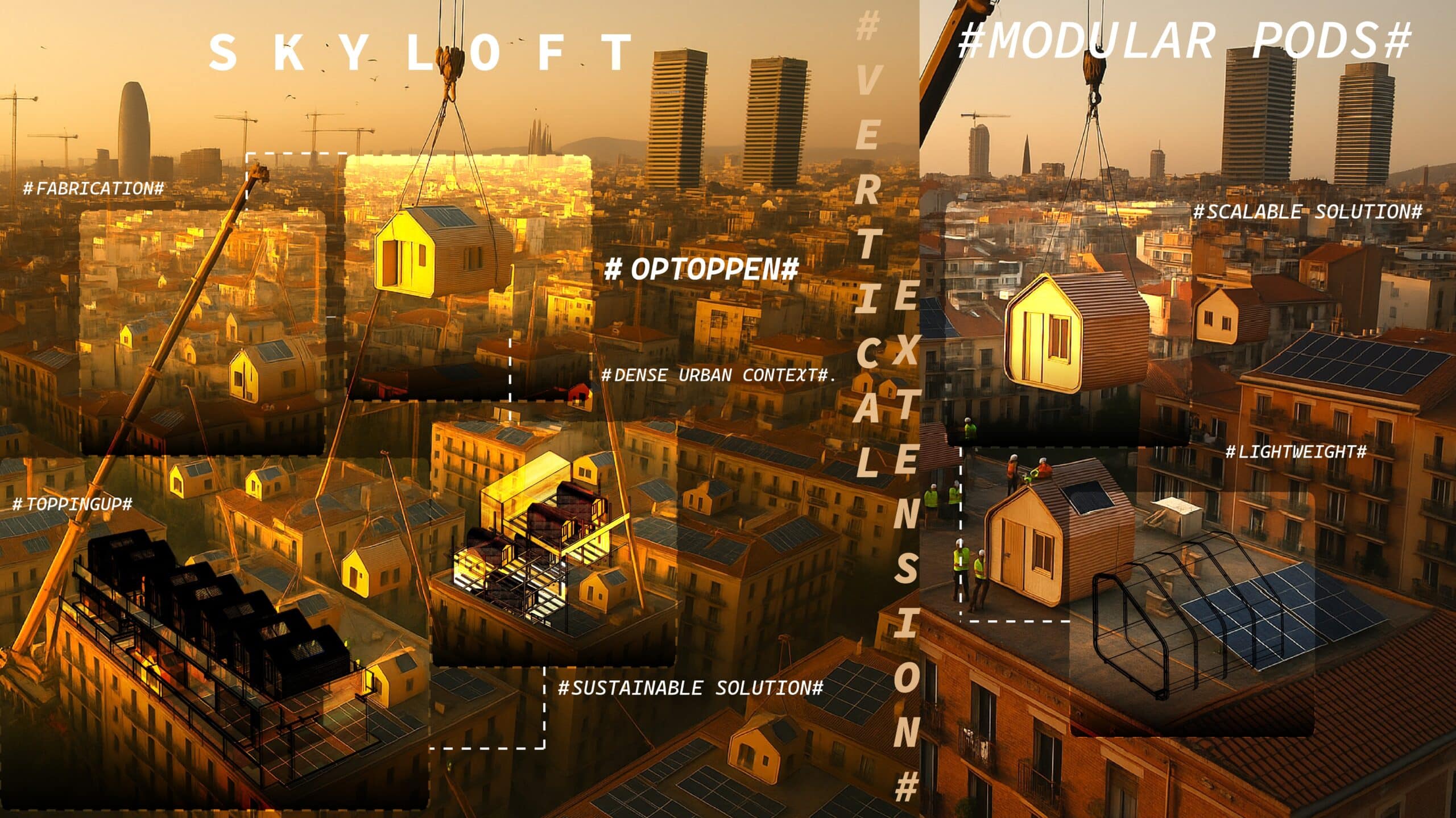
MODULAR PODS VERTICAL EXTENSIONS To address urgent urban housing needs, this thesis explores modular rooftop pods using Digital Twins, CNC fabrication, kerfing, and timber joinery—enabling precise, low-waste, minimum tool required for assembling and sustainable expansion of aging urban buildings through scalable and prefabricated Modular systems Why Vertical extension required ? What’s the purpose of the … Read more

TÀN 58

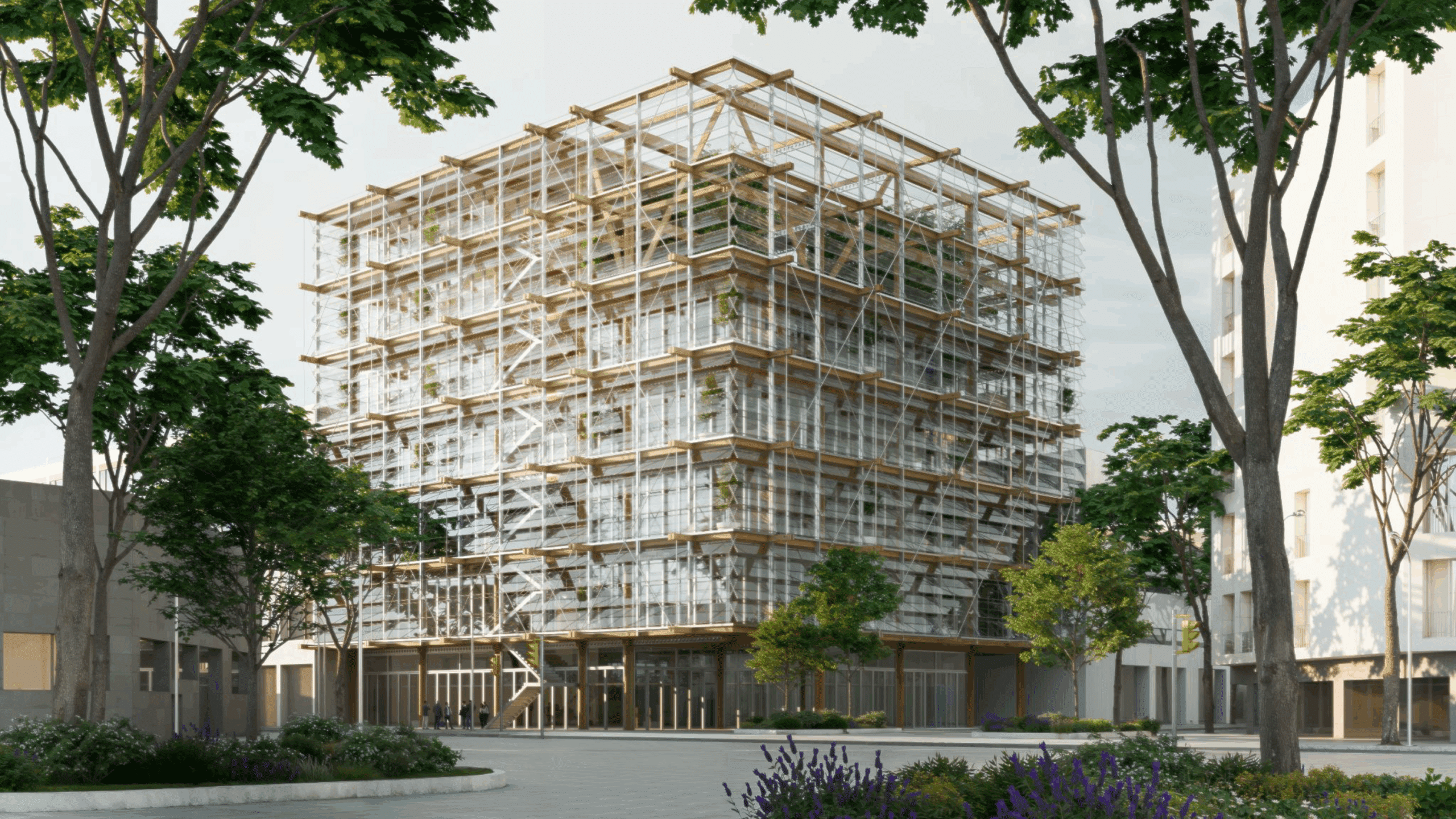
TÀN 58 is a seven-story student housing project located in Poblenou, an industrial district of Barcelona. The building’s form and orientation were shaped through computational studies that optimized daylight access and solar radiation across the site. This analysis led to the introduction of two central atriums, which act as vertical heat sources and organizational cores—spaces … Read more

Flow – SIGHT: De- coding urban mobility

Introduction Urban traffic congestion is more than just an inconvenience—it’s a global challenge tied to pollution, stress, and wasted time. While cities are turning to AI-driven systems to ease the gridlock, the question remains: Do these technologies actually perform better than traditional methods?Flow – SIGHT is a comparative research project that investigates traffic systems across … Read more

Urban Legibility beyond Vision

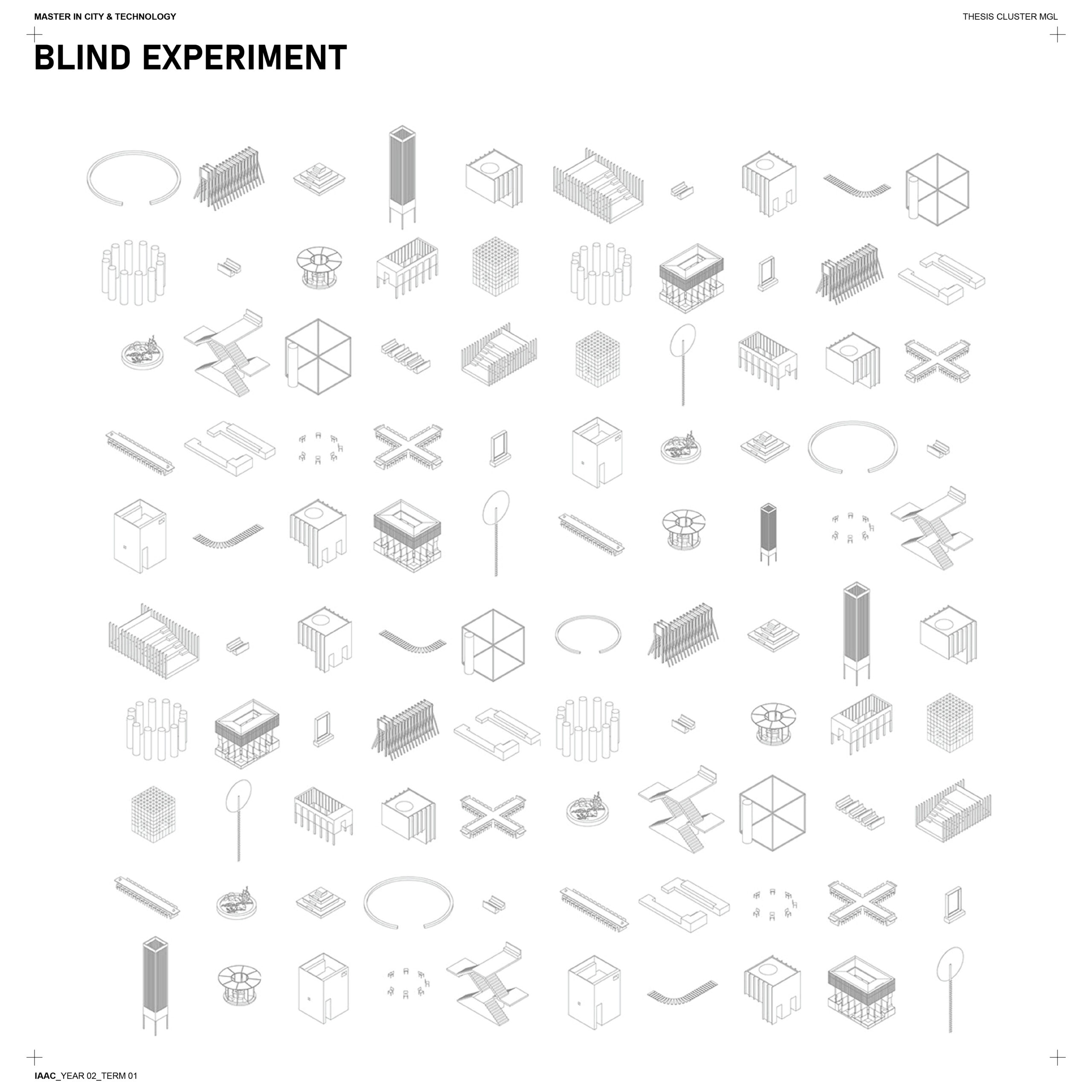
An exploration how to enhance independent mobility for blind individuals by addressing psychological and systemic barriers. Using a participatory design approach, it goes beyond assistive tech to build an ecosystem of tools, behaviors, and spatial strategies that support confident navigation. A taxonomy with blind participants organise emotional, spatial, and user insights into a practical design … Read more

Quito | in Transition

Quito is located in the north-central part of the Andean region of Ecuador, in south america. Given its high elevation, it is one of the highest capitals in the world. With a population of 1.9M people, it is the second-largest city of Ecuador. It is located in the province of Pichincha in the canton of … Read more

Reclaiming Public [Space] – the decolonial future through the ideologies of the First Nations people of Australia. 

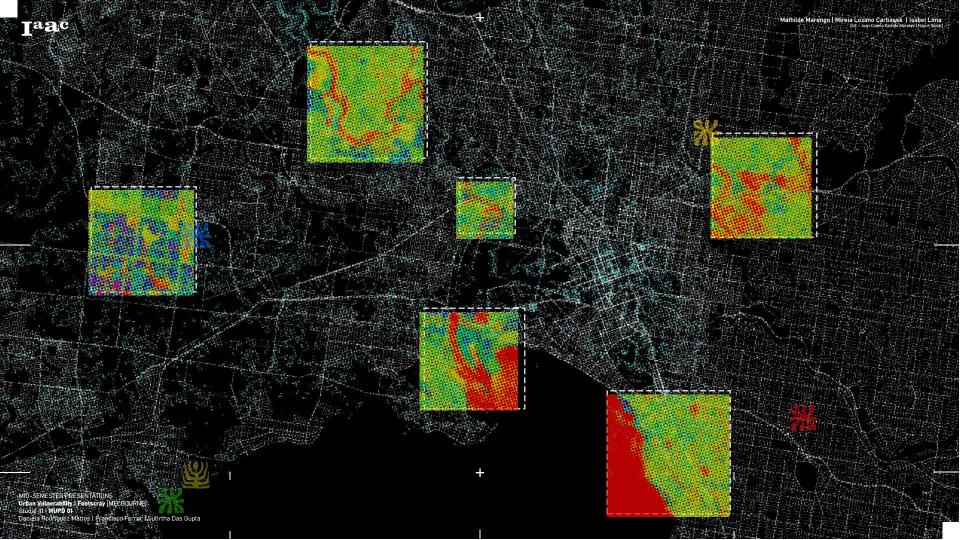
About This project investigates how colonial patterns of urban design in Footscray have historically shaped and continue to shape the experiences of mobility, vulnerability, and belonging among First Nations people. By tracing the spatial legacies of dispossession and infrastructural violence, the work critically maps how extractive logics have severed Indigenous connections to place. In response, … Read more

Re- Rio Infrastructural Justice

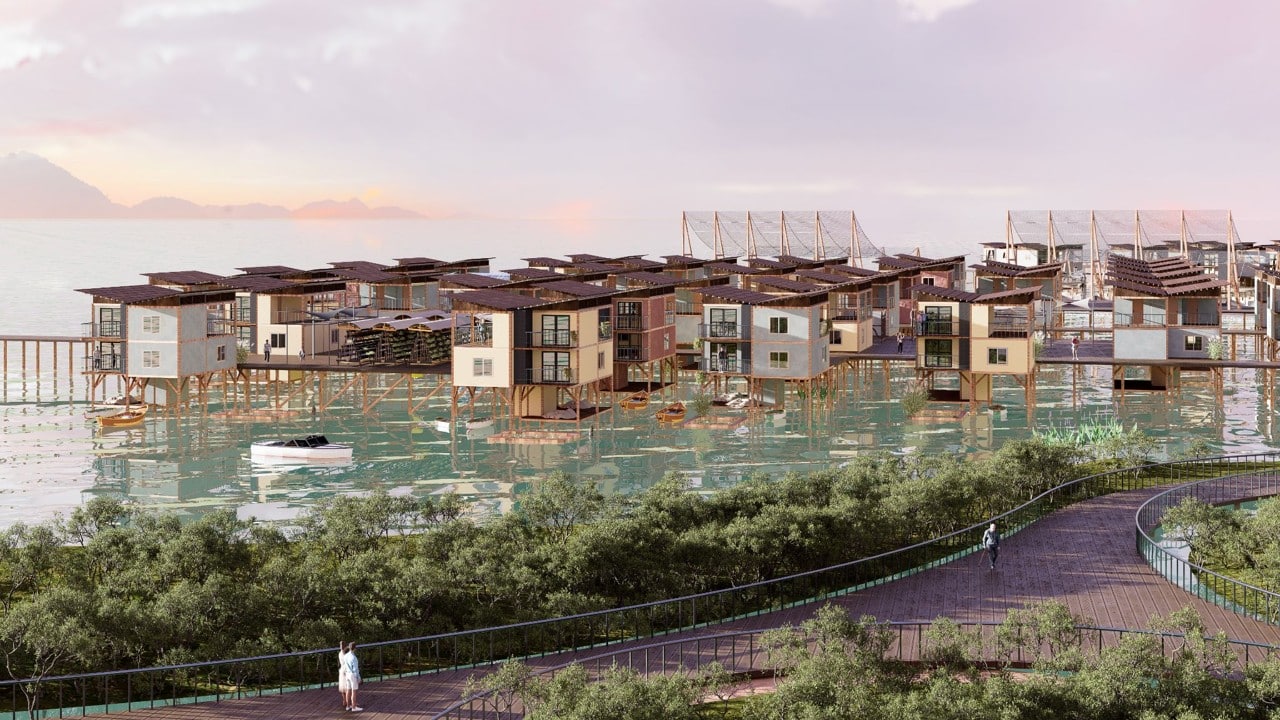
Re-Rio is a vision to bring dignity, connection, and opportunity to the Gradim fishing community in Rio de Janeiro. Faced with poor infrastructure and social neglect, this project reimagines housing and public space through sustainable, affordable, and flexible design. It creates cool, breathable homes, shared learning spaces, and eco-tourism paths that celebrate local culture. By … Read more

Jakarta

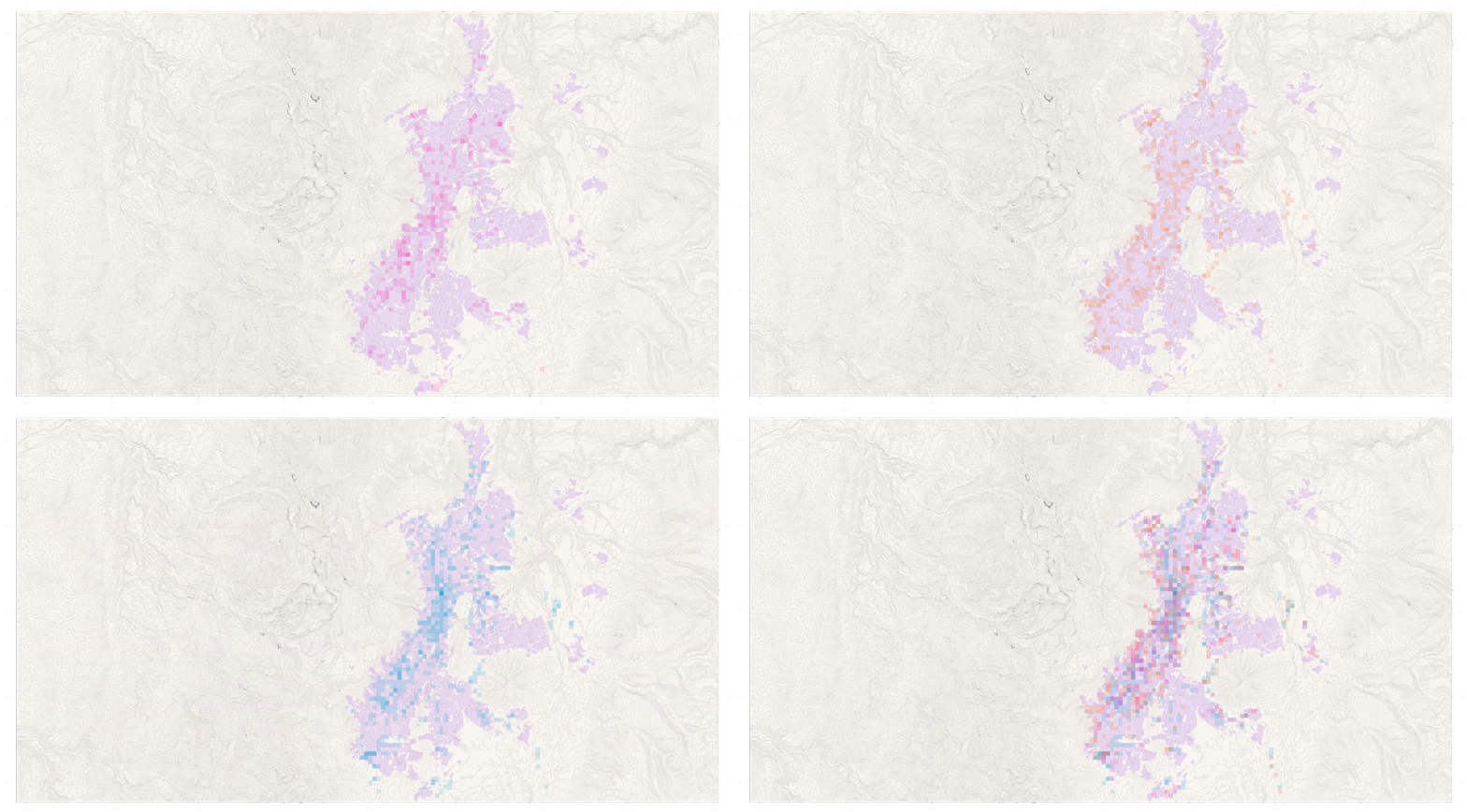
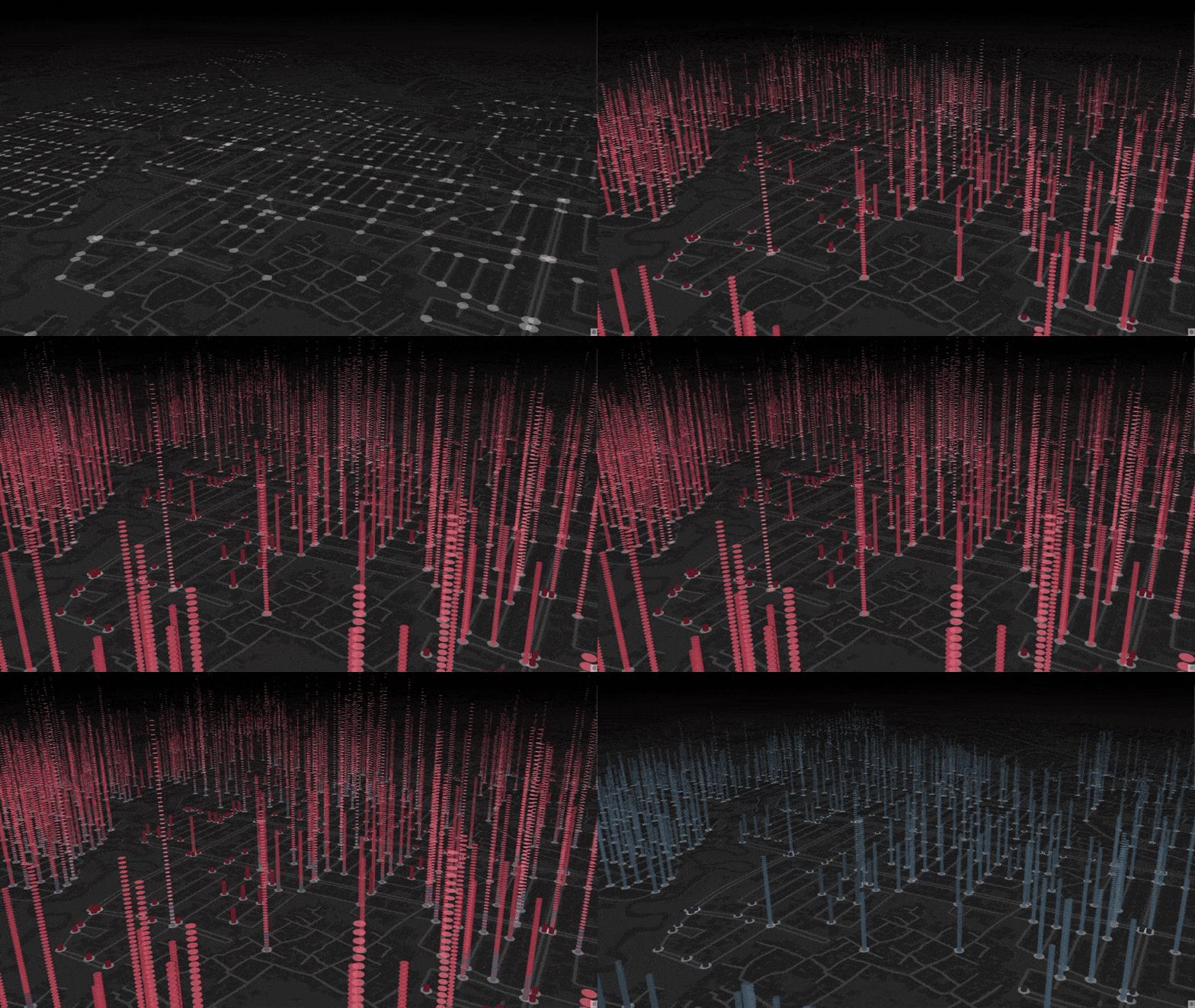
Jakarta’s rapid urbanization has outpaced the development of equitable mobility infrastructure, exacerbating safety disparities, particularly for low-income women navigating the city at night. While formal policies fall short, informal transport networks like Angkot fill critical gaps, despite exposing riders to physical and psychological risks. This study explores how machine learning can be used to fill … Read more