Abstract –
This project introduces a crown-shaped stepped pavilion on the periphery of Plaça de Catalunya, serving as both an event gateway and an everyday public platform. Inspired by the geometry of a crown, the looping form rises in stepped layers to create vantage points, circulation, and sculptural presence. Developed through a parametric Grasshopper workflow, the design controls curvature, elevation, and perforation with precision. A perforated ribbon skin filters light and air, giving the pavilion a lightweight, adaptable character suitable for Barcelona’s climate. Overall, the pavilion functions as a landmark and social connector, enhancing arrival and gathering experiences in the plaza.
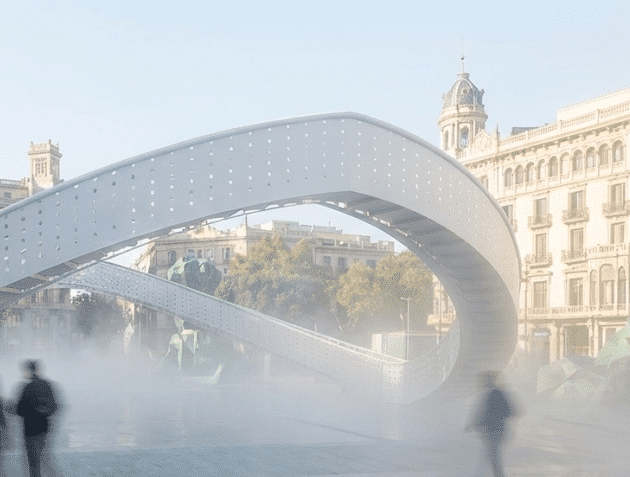
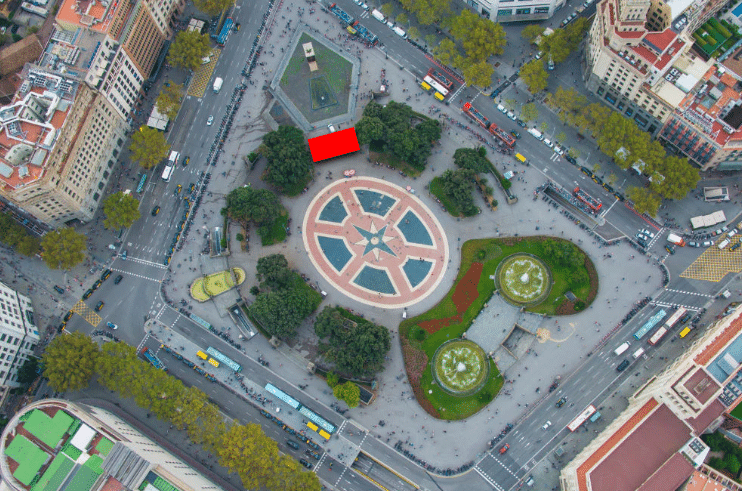
LOCATION – Plaça de Catalunya
Plaça de Catalunya is the central urban heart of Barcelona, functioning as both a major transportation hub and a cultural gathering point.
CONCEPT
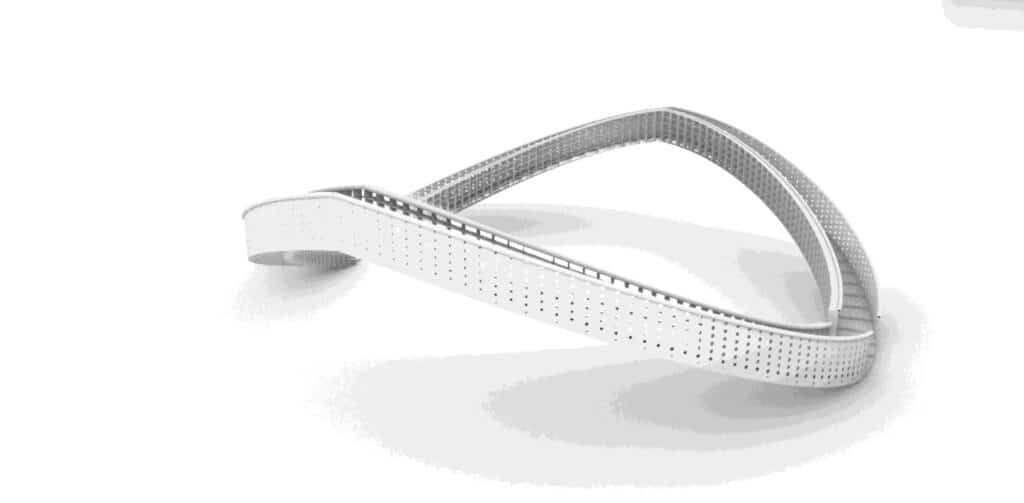
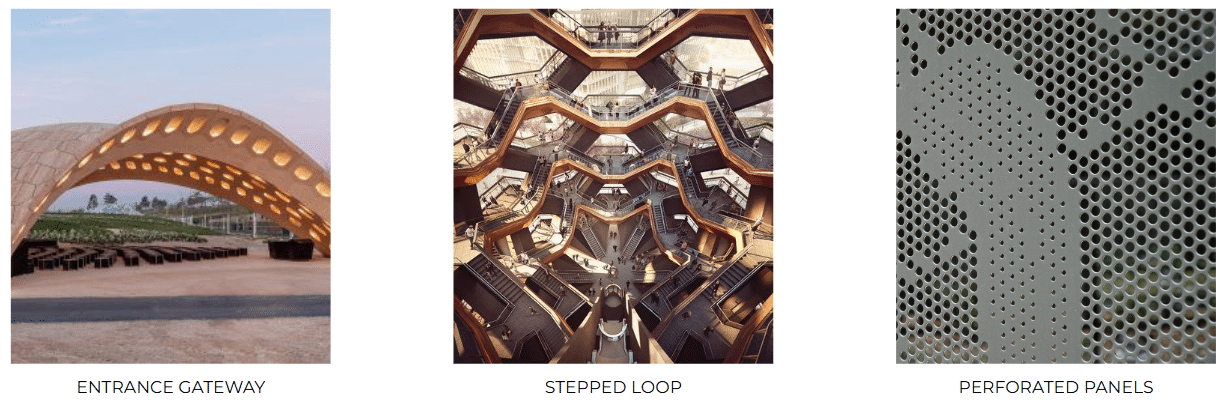
The form is inspired by the shape of a crown, a symbol of importance and celebration. Its looping structure and raised edges mimic the rising points of a crown, creating a sculptural gateway that marks the plaza during major events.
FORM FINDING
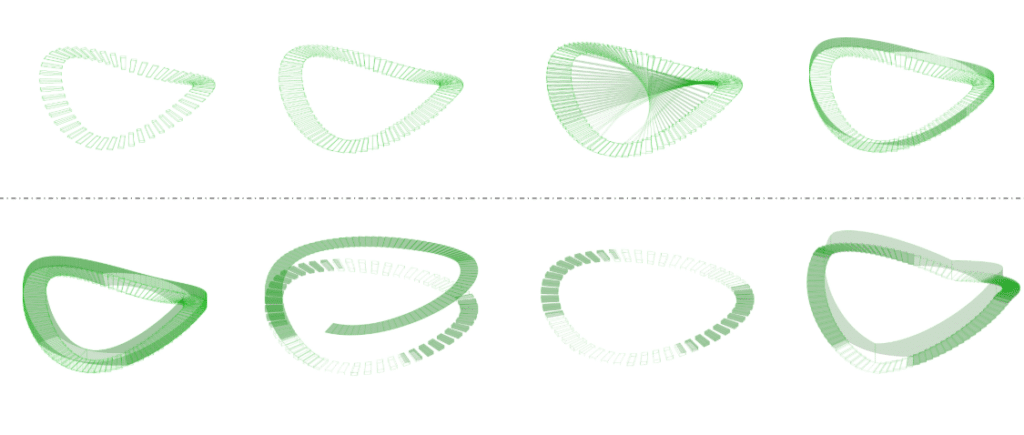
The form was developed by sampling a base loop curve and generating section frames using Range and Series components.
By shifting and pairing these frames through Relative Items, we tested variations in twisting, stepping, and spatial flow.
Iterative rotation, scaling, and elevation adjustments produced multiple geometric possibilities.
From these explorations, we finalized the configuration that formed a balanced, crown-like stepped loop for the final pavilion.
PSEUDO CODING

FINAL FORM
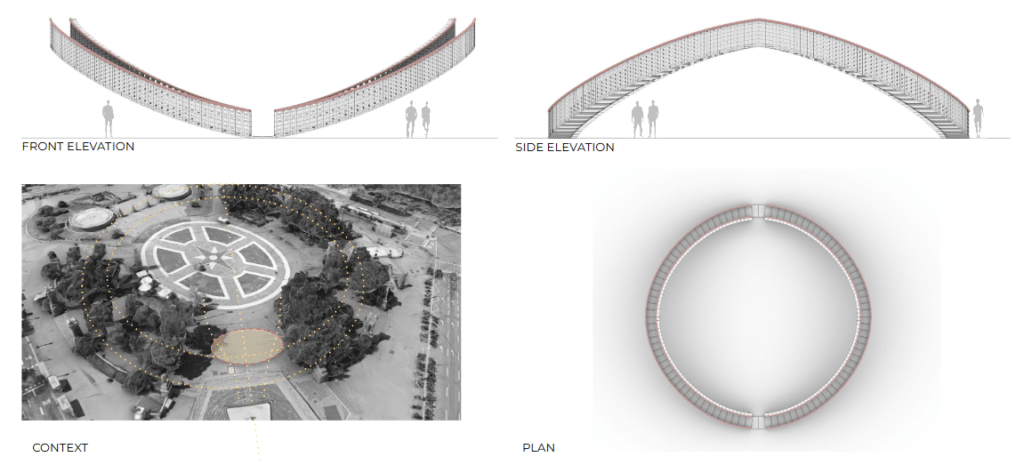
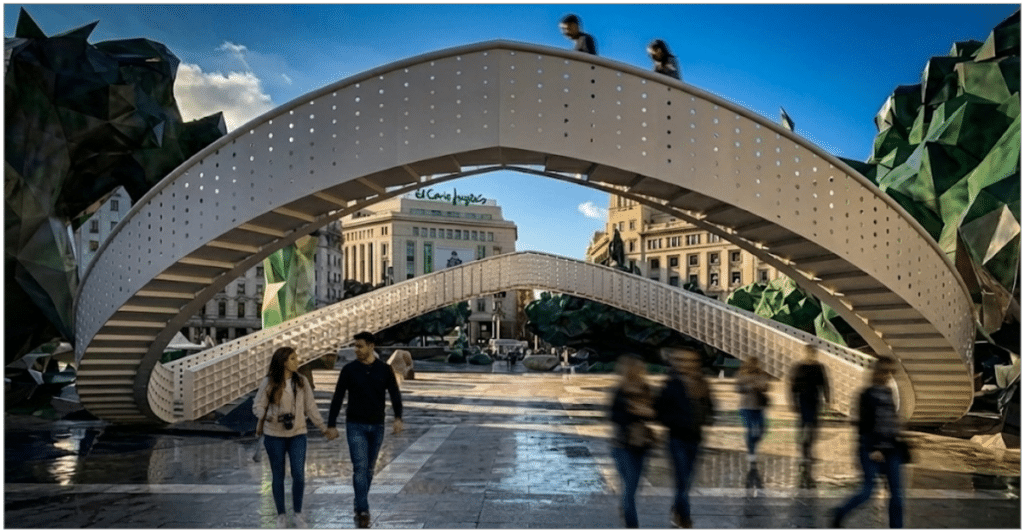
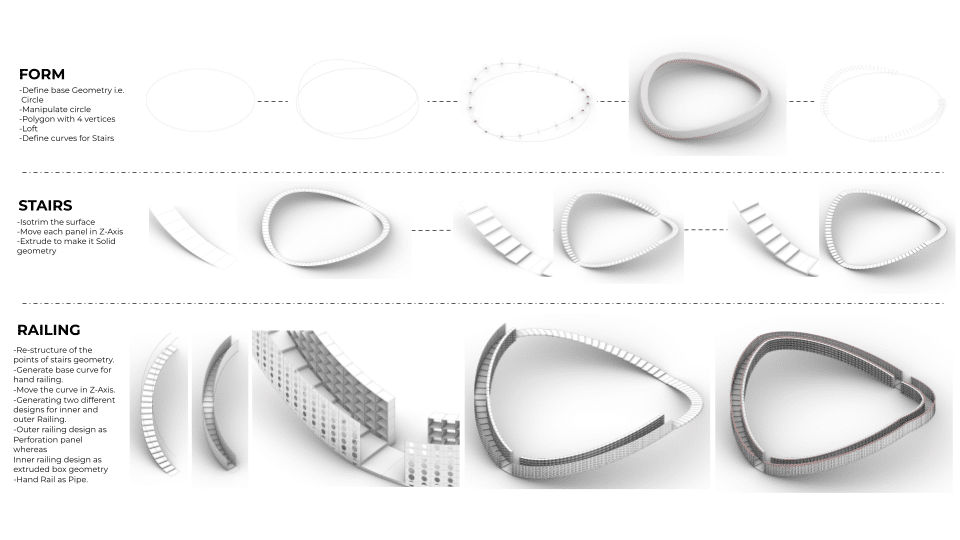
The pavilion forms a precise, crown-like loop that defines a clear architectural presence in Plaça de Catalunya.
Its stepped geometry and perforated surface create measured spaces for movement, viewing, and shade.
As a gateway and platform, it strengthens the plaza’s spatial identity and enhances public experience.