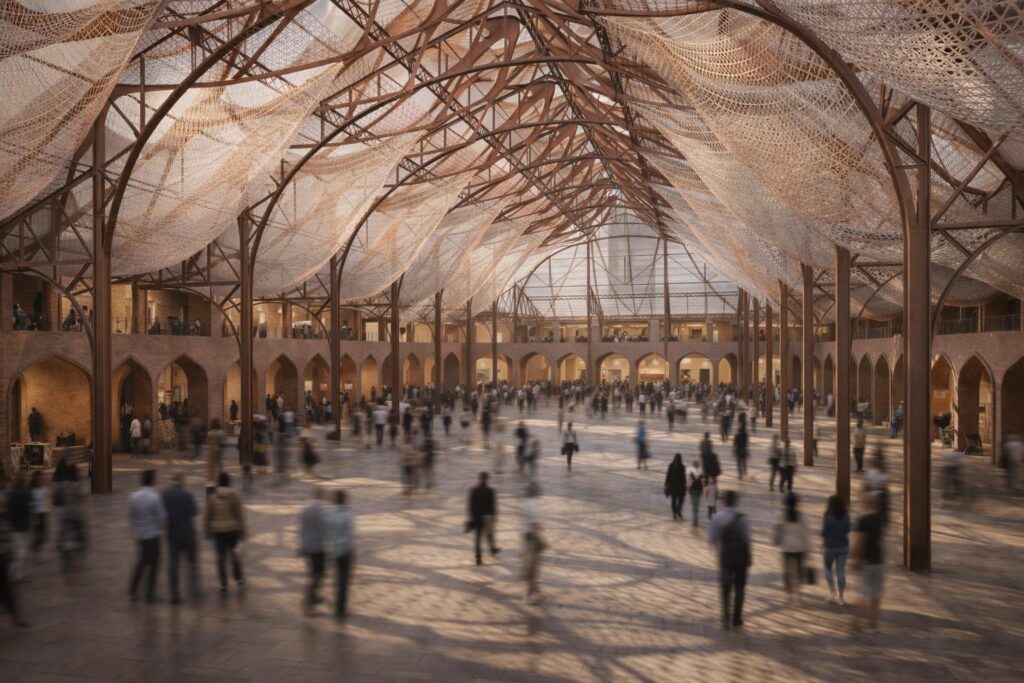
This project aims to revive and appreciate the beauty of the historical Bab al-Luq Market and to give it it’s former glory.
This project explores the historic Bab al-Luq Market, aiming to celebrate its architectural beauty and restore its presence within the city. The proposal focuses on revealing the original steel structure, reconnecting it to the urban context, and giving it new spatial life while respecting its historical significance.
Historical Context & Design Intent
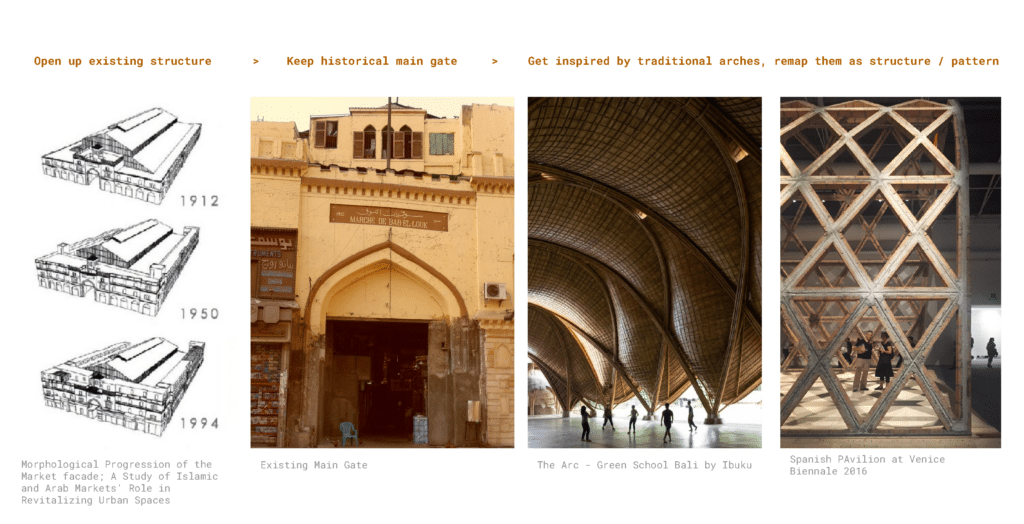
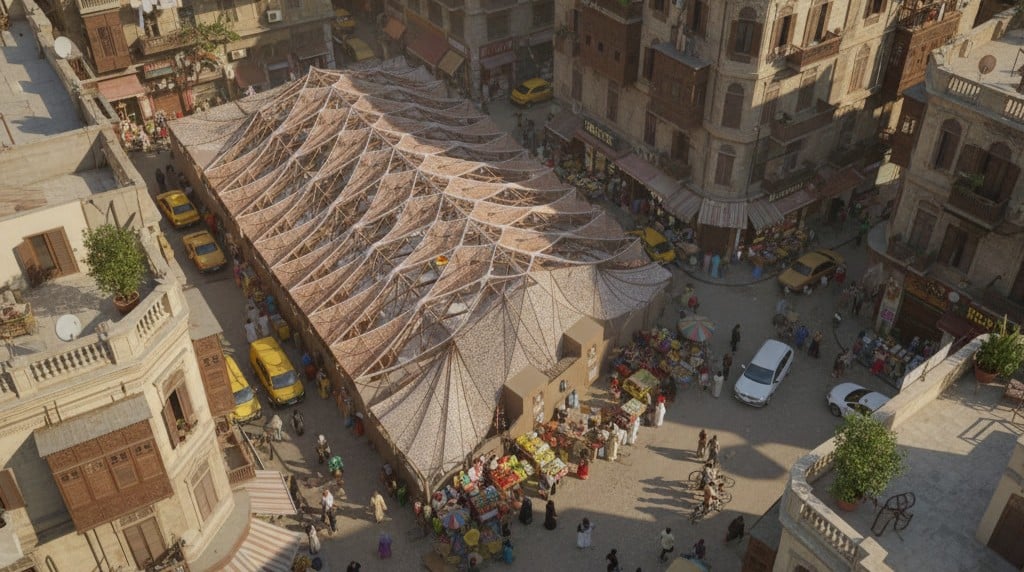
The market was originally framed by two-storey shopfronts, allowing the central steel structure to be visually read from street level. Today, four-storey additions largely obscure the building, hiding it behind rising shop towers.
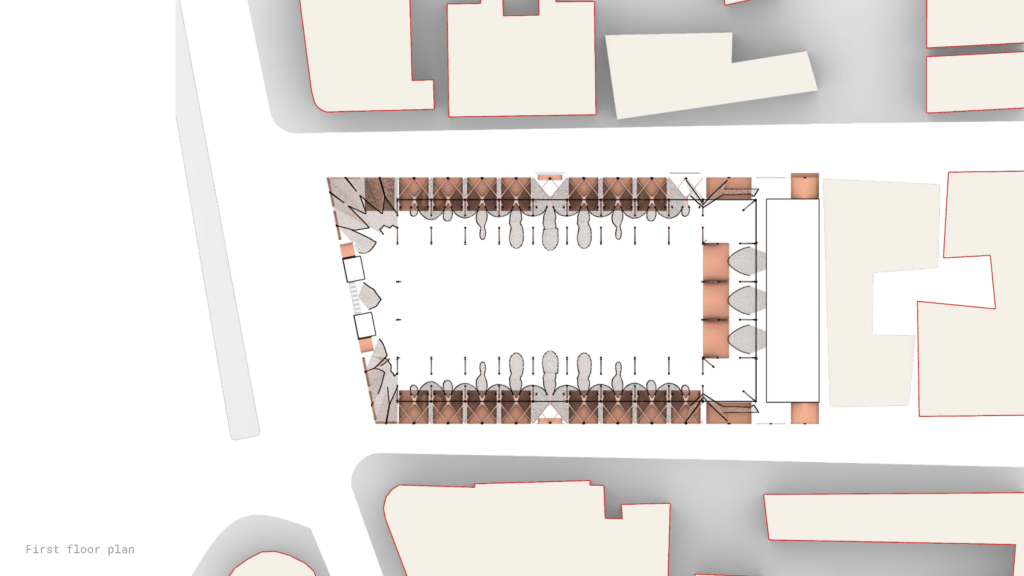
Initially, all surrounding buildings were considered for preservation. Upon closer study, however, the main gates emerged as the most historically significant elements. The design retains these gates and opens up the market to provide breathing space, making it visible and legible to pedestrians.
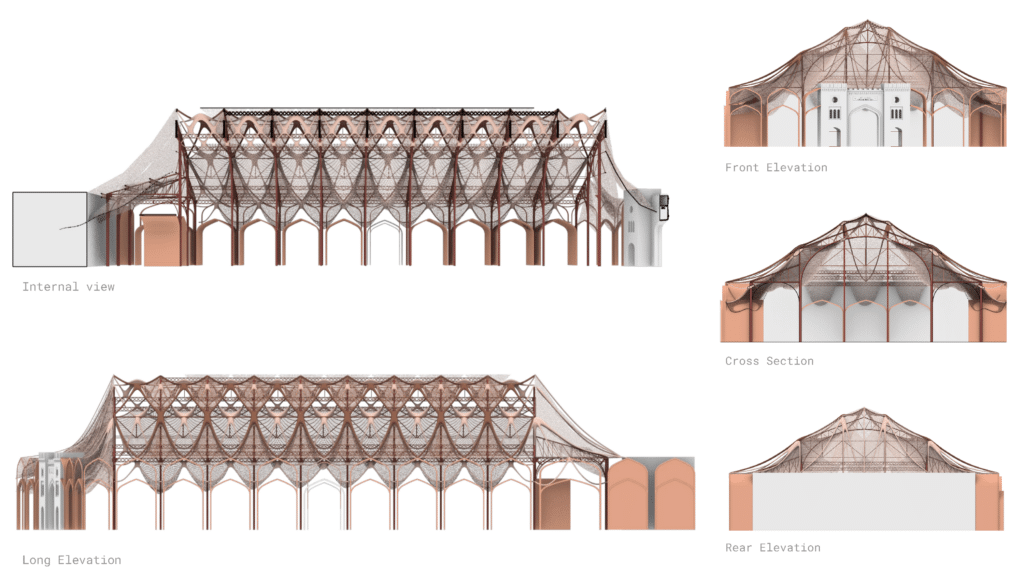
Although the market’s original design was inspired by Les Halles in Paris, this project aims to reconnect the architecture to its local context. The traditional arches of the gates became a guiding motif, extended across the new roof and throughout the design, sometimes intertwining to create dynamic patterns.
Opening up the Market
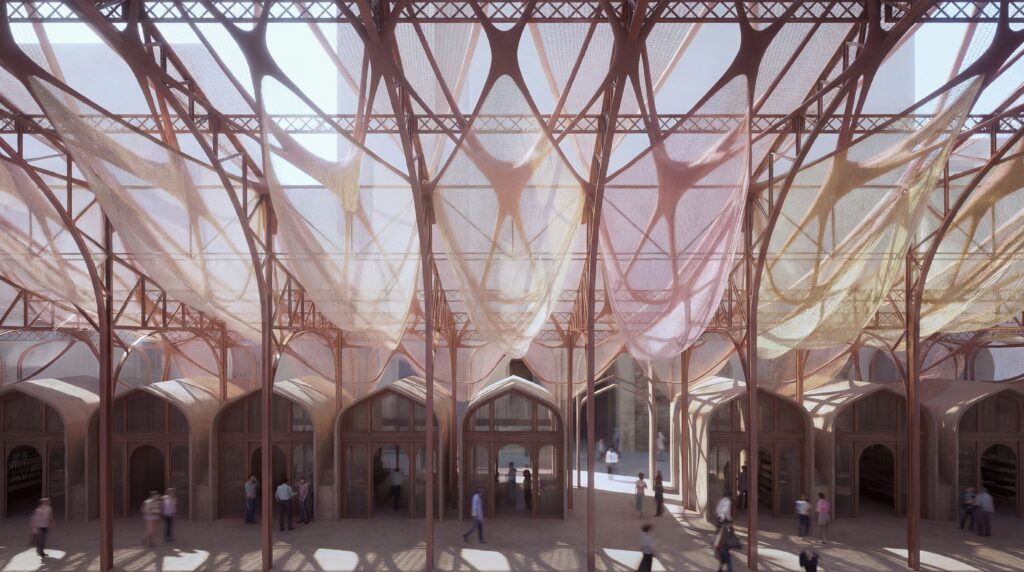
To enhance the visibility of the historic steel structure, the surrounding walls are removed and replaced with a rhythm of double storey arched shopfronts along the market perimeter.
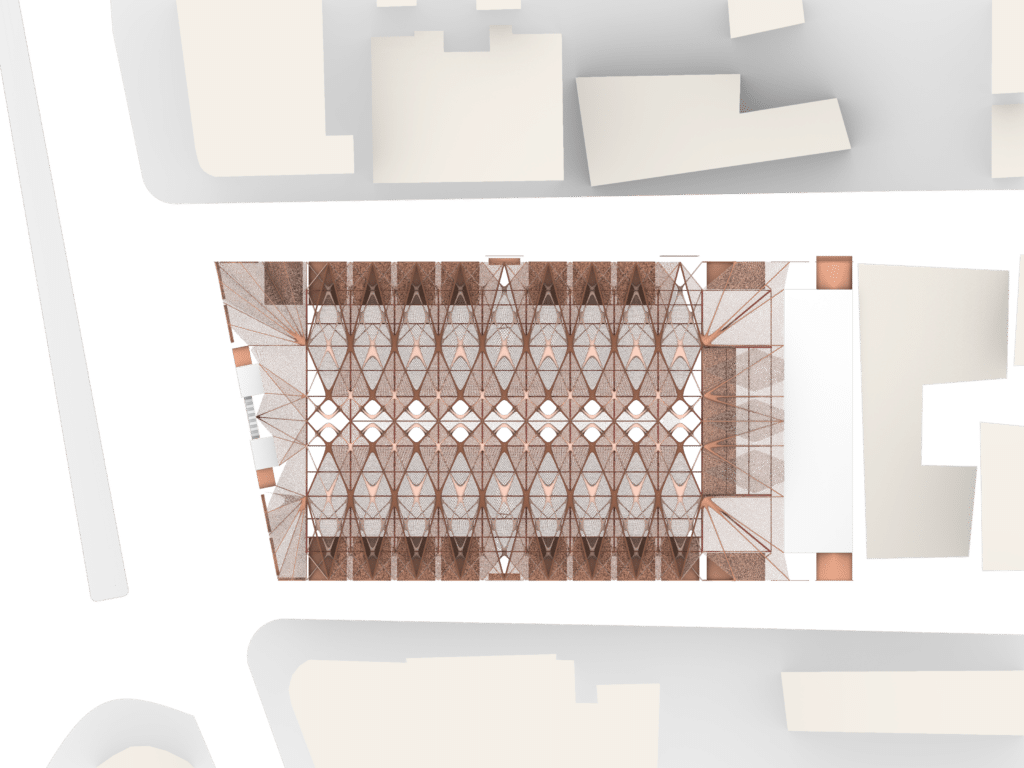
The arches intertwine and extend upward, connecting to the top of the existing steel frame, generating a new roof typology.
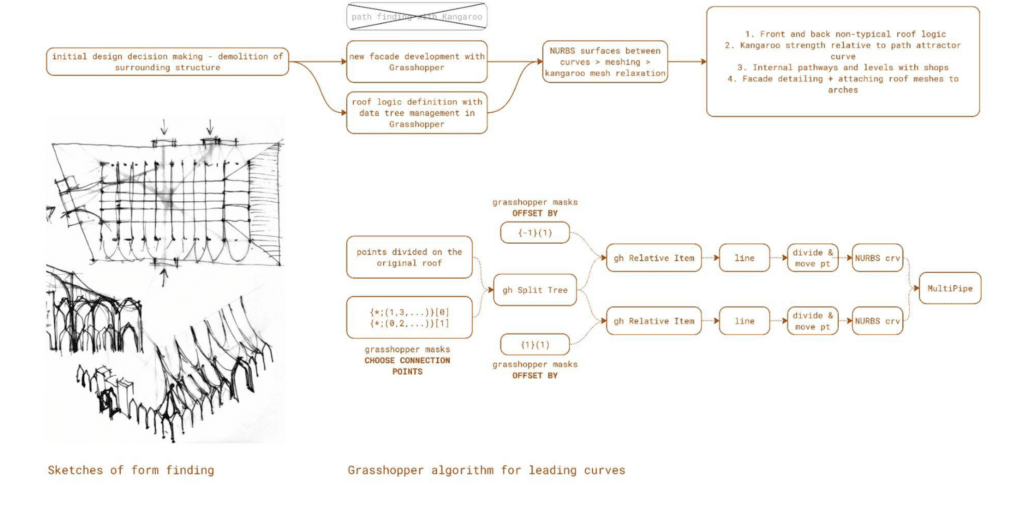
From a computational perspective, Grasshopper masks were used to manage complex curve connections efficiently. While the logic became complex, this method allowed fast iteration and control over the intricate geometry.
Modular Form Finding
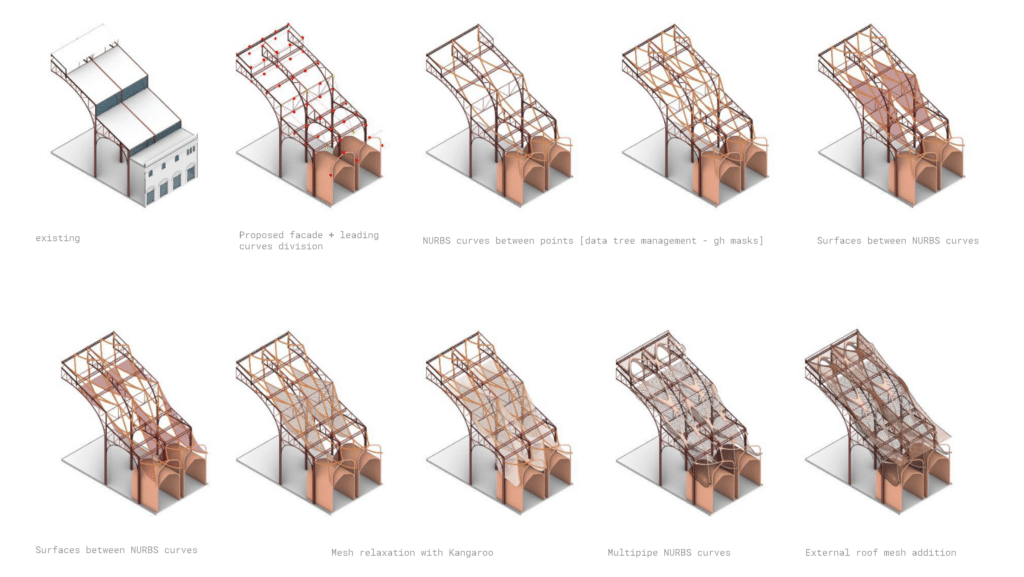
The following image illustrates the step-by-step form finding process for a modular bay:
- Guiding horizontal lines are placed along the existing structure and divided into points matching structural nodes;
- A Split Tree with masks selects which points connect to which;
- Offsetting point connections vertically with relative item, the lines are formed between the chosen vertices and are then turned into NURBS curves for a greater control;
- Curves are lofted horizontally, then subdivided and joined vertically;
- Mesh relaxation is applied to the lofted surfaces, with intensity depending on proximity to ground-level pathways;
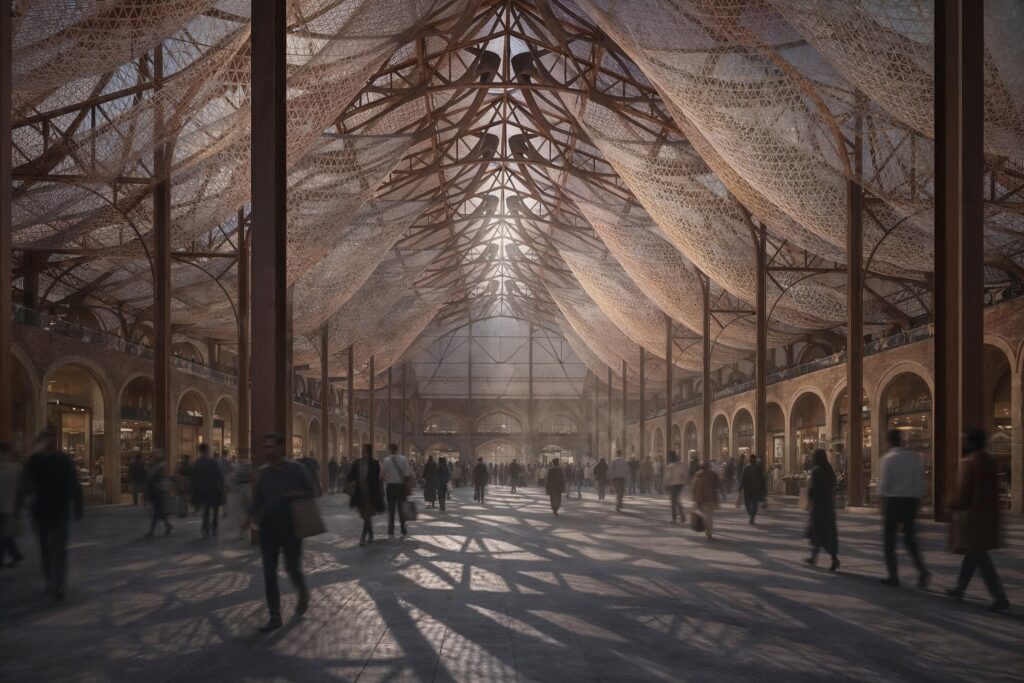
- The roof meshes are added on top, while the relaxed meshes hang below the steel frame, creating a checkerboard-like pattern that modulates light and shadow while keeping the original structure visible.
Drawings
The Result
By reopening the Bab al-Luq Market and reworking its architectural language through a contemporary arched and meshed roof system, the project restores the visibility, spatial clarity, and civic presence of this historic structure.