
After years in which machines have served humans, supported them, and simplified their lives, we have finally created something different. Designed not to help, but to deceive humans (oh, how stupid they can be!) and annoy them with technological mischief.
My personal reflection:
Throughout the two weeks of Unpacking Tech Systems, I went through a very rigorous and practical learning process. Computers, vacuum cleaners, and even a 3D printer were among the many broken and discarded electronics that our instructors gave us during the first week. We first decided on a damaged television as a group, but it was beyond repair. Rather, we turned our attention to a tower of reusable electronics.
I started out primarily working with the buzzer, attempting to learn how to operate it, test tones, and investigate how it might be useful as a component of a bigger system. I started drawing my own system diagram while I was thinking carefully about the kind of interaction system we could create.
During the second week, I focused on integrating all the materials together into one working component. I learned that some materials require higher or lower voltages, how to properly power and work with them safely, and how to connect various components (for example, buzzers, ultrasonic sensors, and even CD-player motors) into one unit. Previously I had experience with Arduino, but this was the first time I had used physical parts from everyday consumer devices (such as hard disk motors and CD players) to create a fully-functioning prototype. Additionally, instead of just copying code from online sources, I challenged myself to fully understand what it did, which allowed me to more intentionally connect programming to actions taken in the real world.
Of course, the process wasn’t always smooth. There were many moments where I got lost in endless online tutorials while trying to fix a tiny issue in my circuit. I also realized how impatient I can be, I always want things to work right away. Debugging and waiting for results sometimes made me feel frustrated and stuck. At one point, we even burned the motor driver board of a hard disk because we miscalculated the voltage. It was a bit scary, but also a very real reminder of why electrical safety matters.
Even so, these moments ended up being some of the most valuable parts of the learning experience. They pushed me to think beyond simply “making something work,” and instead to understand how technology could actually become part of an architectural experience. I kept wondering: How could systems like these blend into buildings?, How can interaction, sound, or motion create more responsive spaces?
By the end of the module, I felt a significant shift in myself. I became more confident in seeing electronics not as a separate domain, but as a creative tool I can actively use in my designs. Now I can imagine how tactile, audible, and kinetic responses could help people engage with architecture in new and playful ways.
This course didn’t just teach me components, it opened possibilities I never considered before.
Zine:
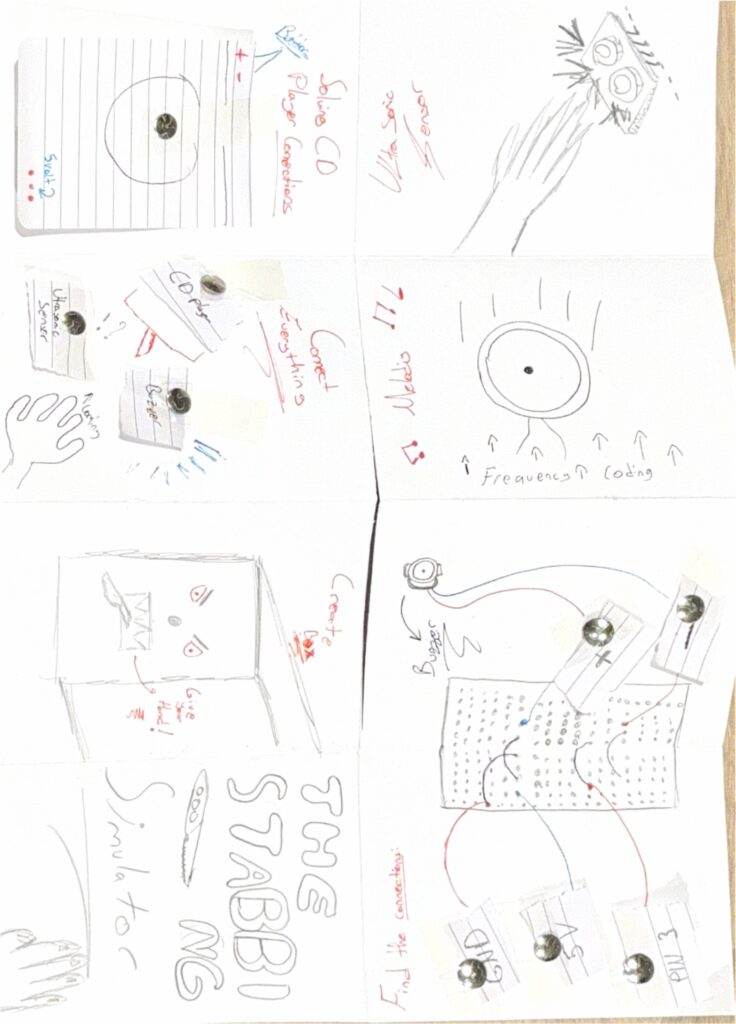
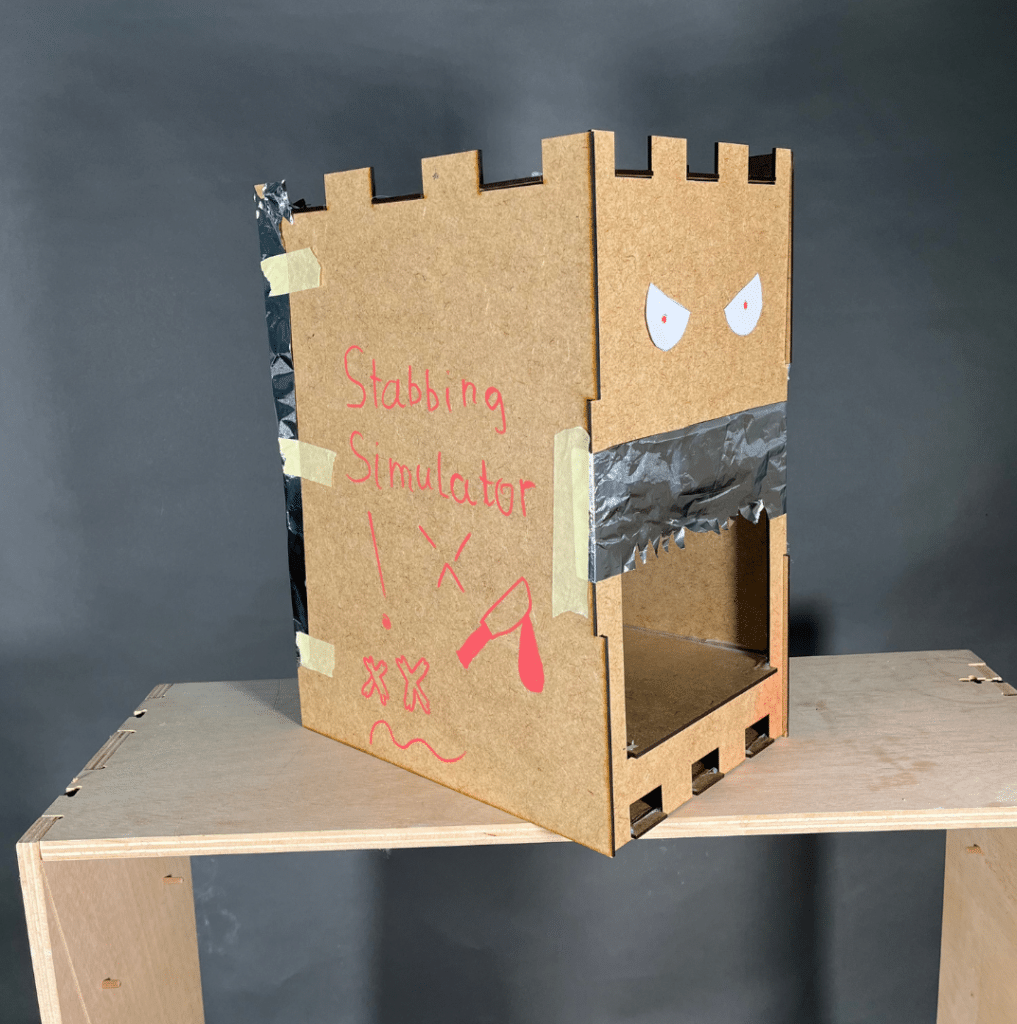
Prototype:
Video:
Preseantation Link: https://www.canva.com/design/DAG54SfgFoo/qJn11unktG8hQAF2RHcZ0Q/edit?utm_content=DAG54SfgFoo&utm_campaign=designshare&utm_medium=link2&utm_source=sharebutton
The Forensic Report Link: https://hackmd.io/@ONMlfi0uRUKCp9riNcqrqw/rkvIoBsebl/edit
The Inventory Link: https://hackmd.io/@Exu-s2ucRkKy-xkK_meJKQ/S1RBwFnlZg
