COMPUTATIONAL DESIGN I SEMINAR25/26 MAA01 (Level2)
Abstract:
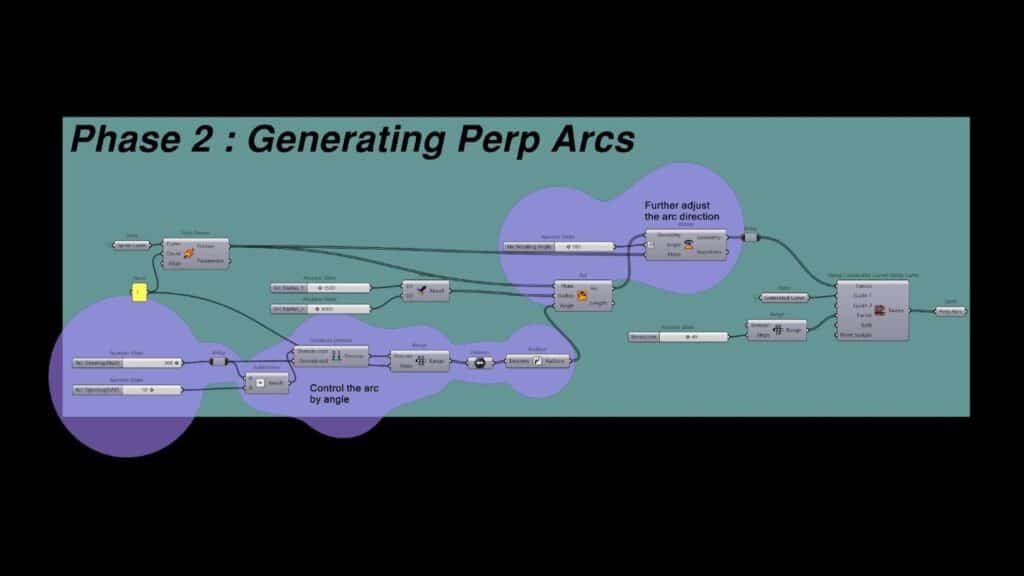
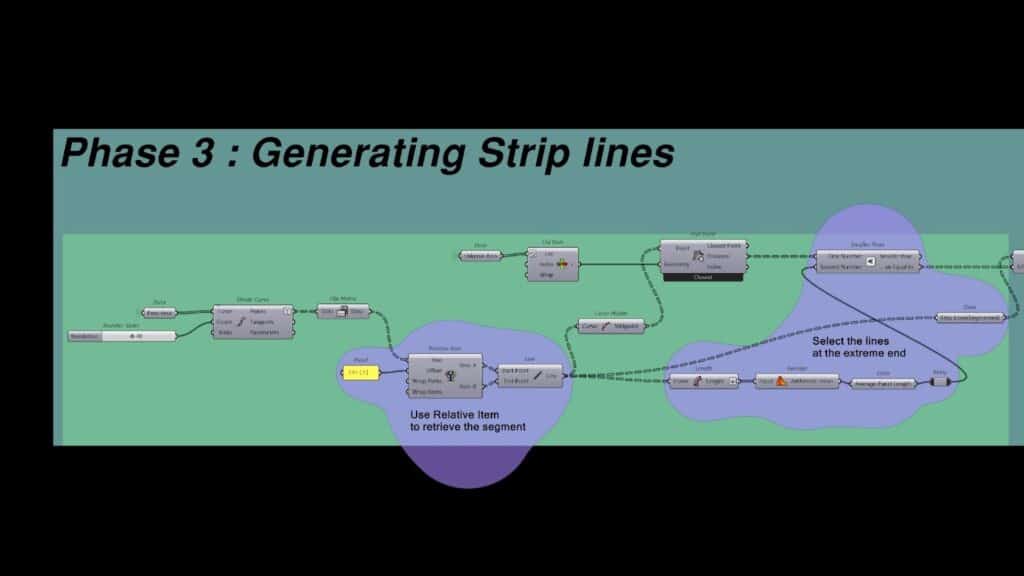
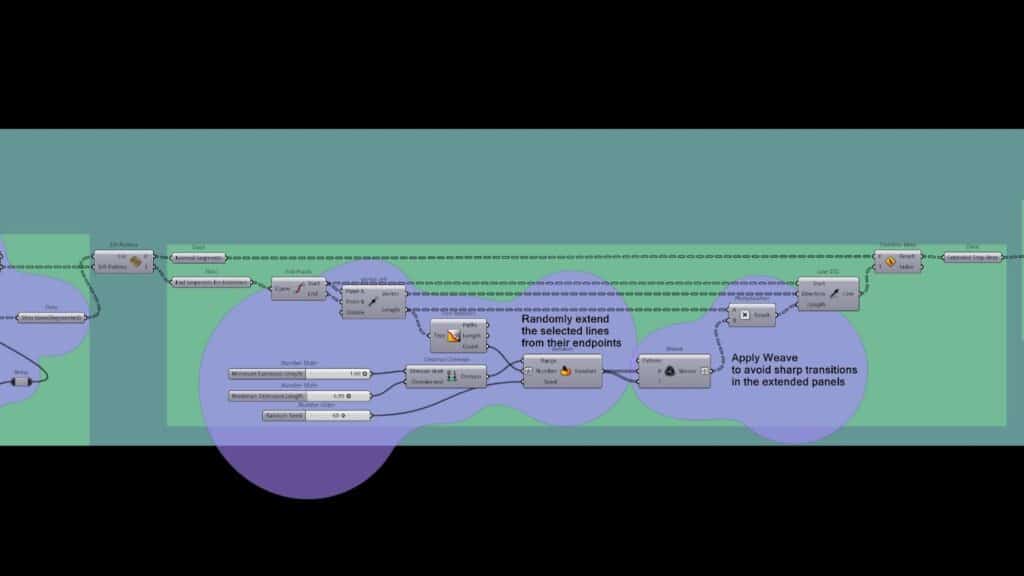
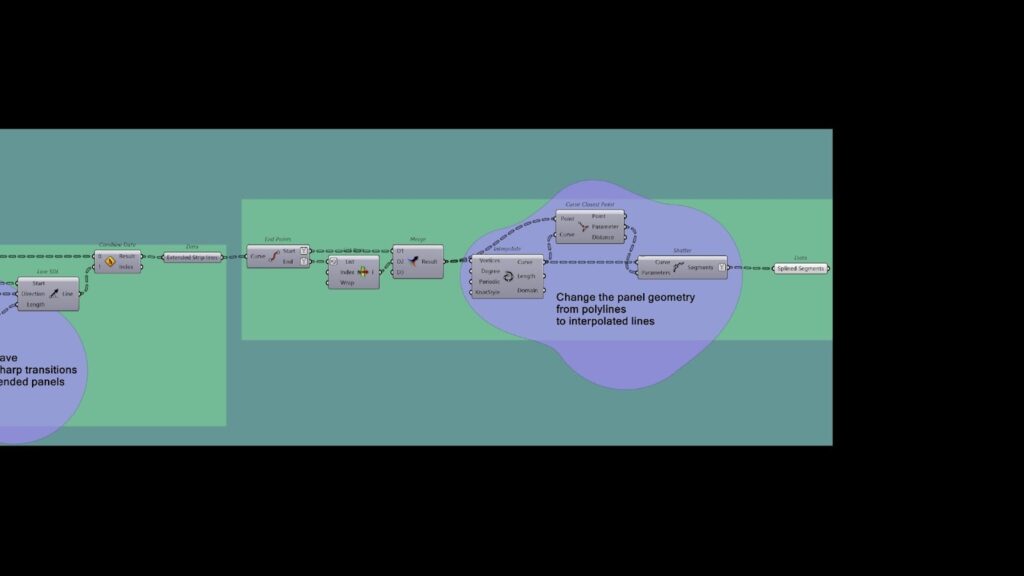
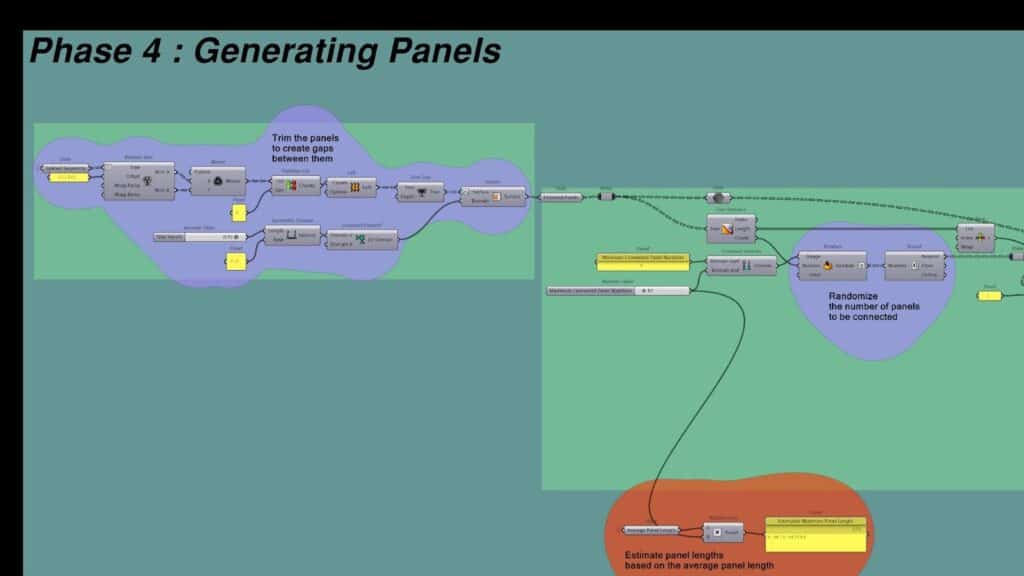
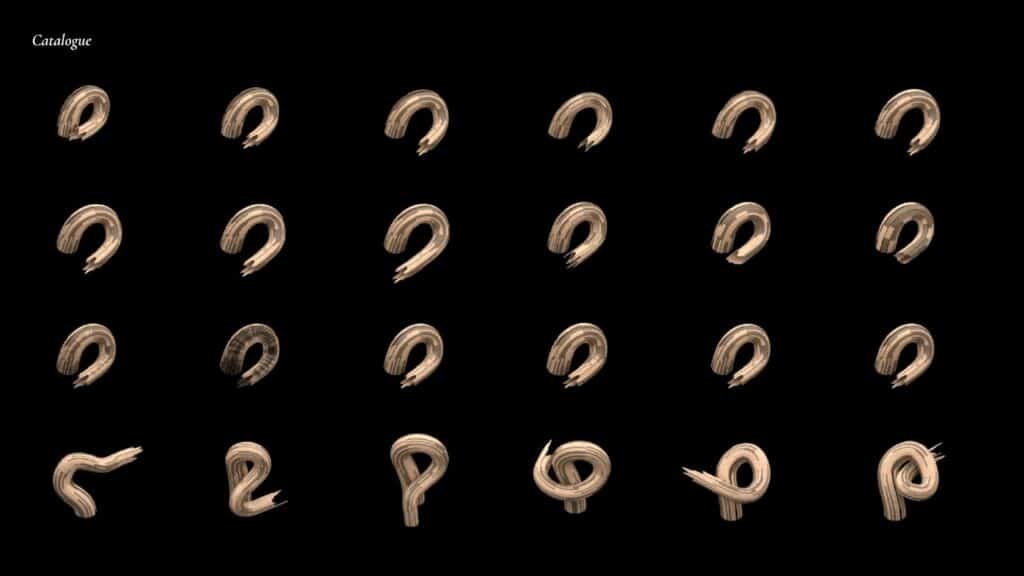
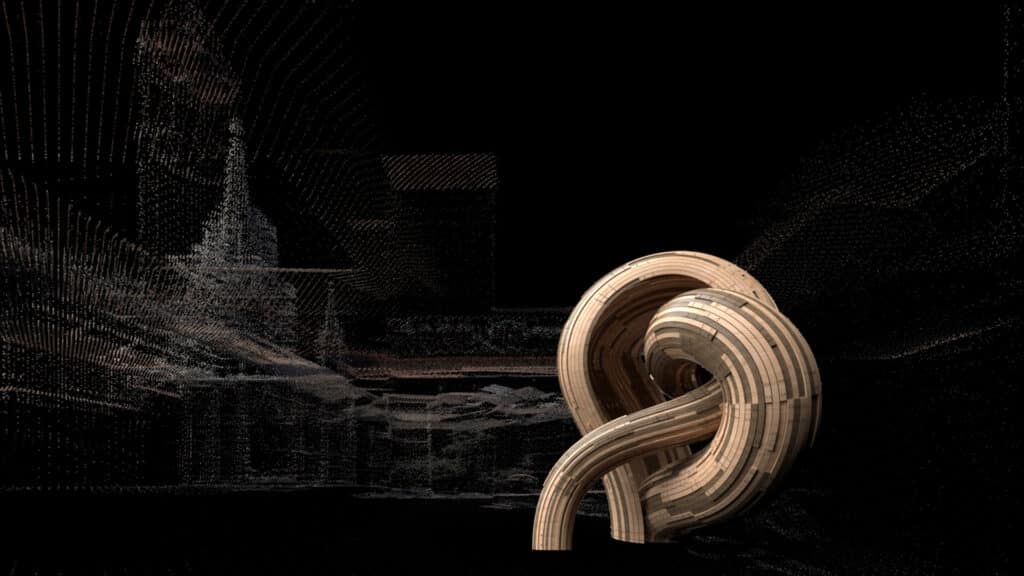
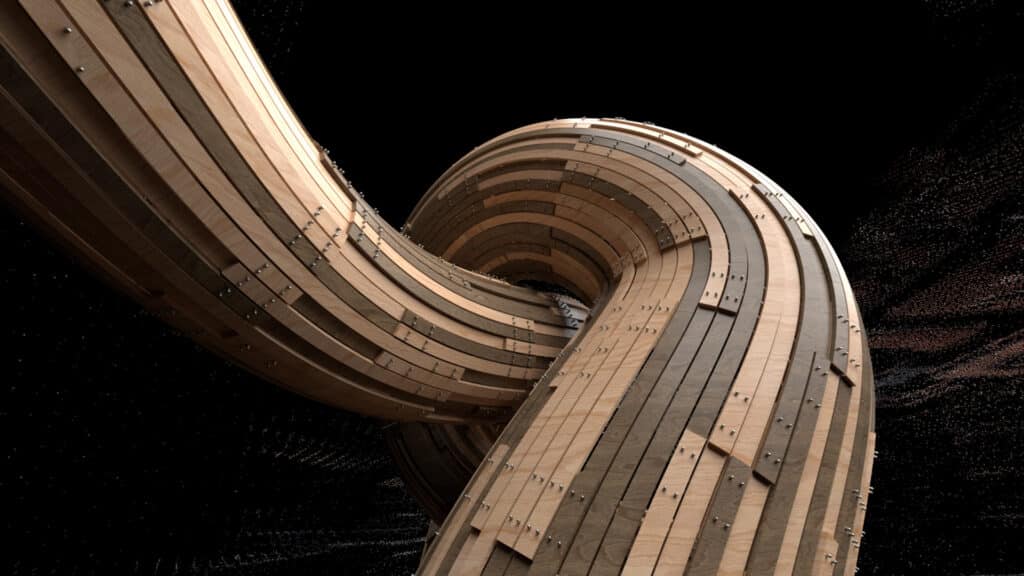
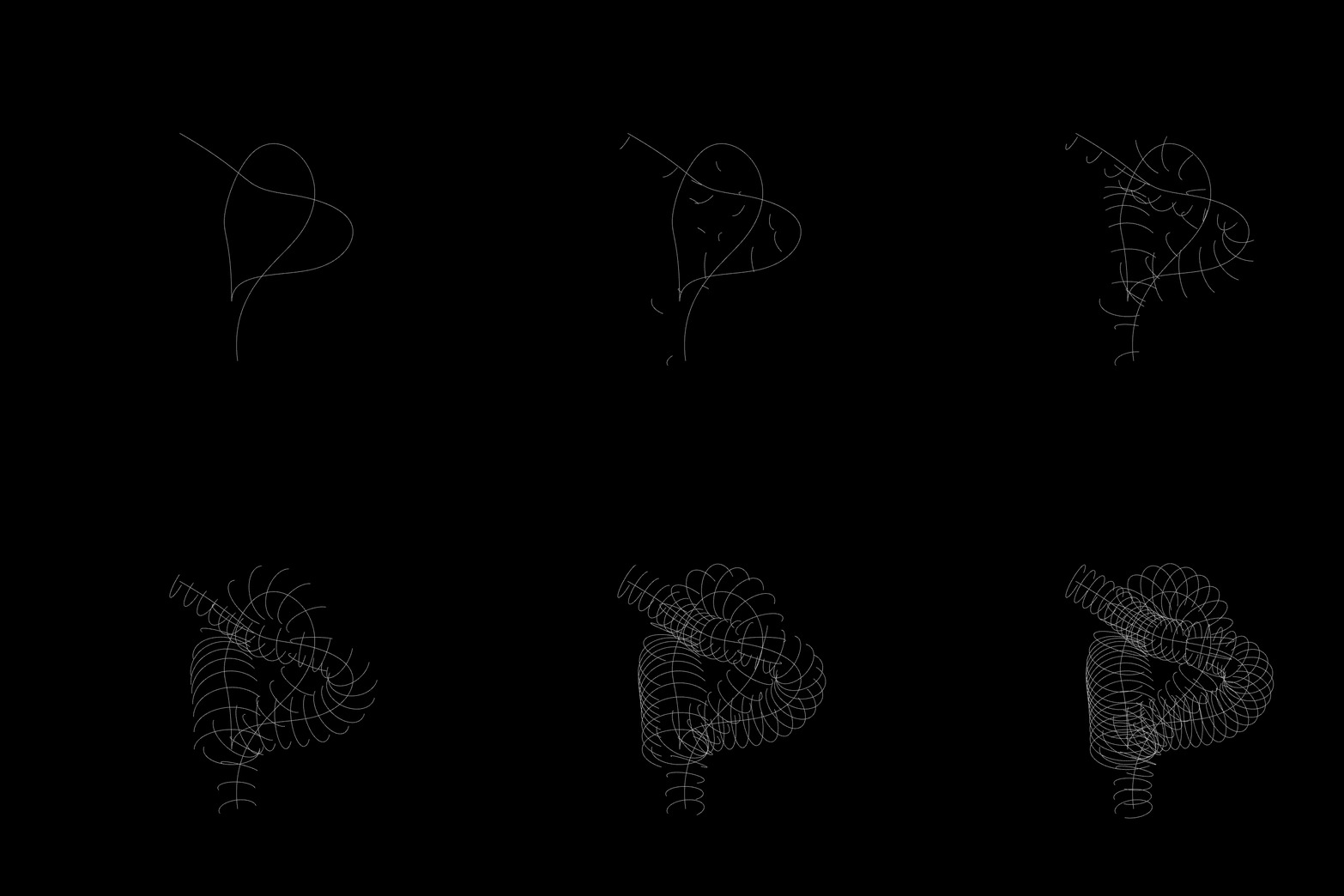
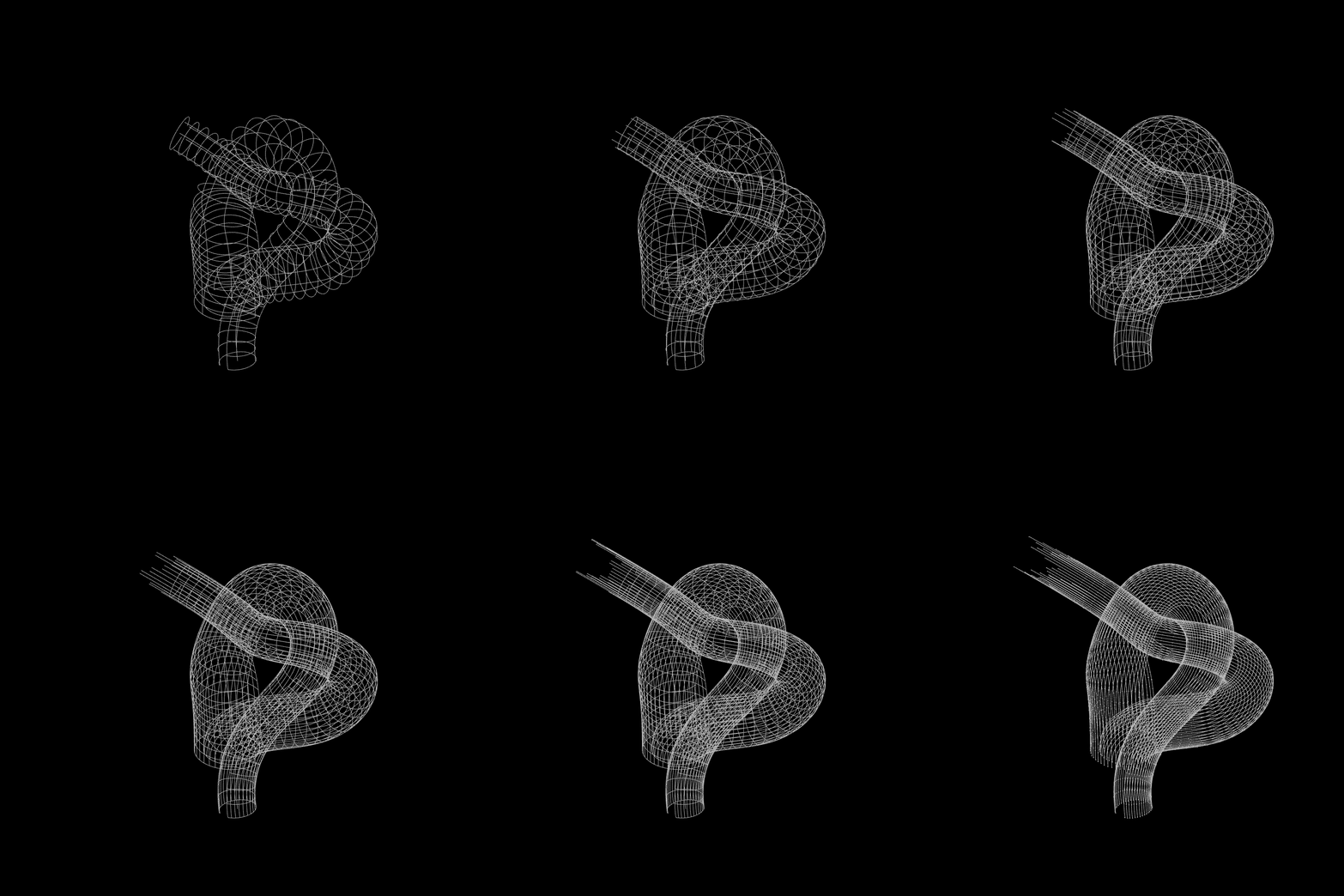
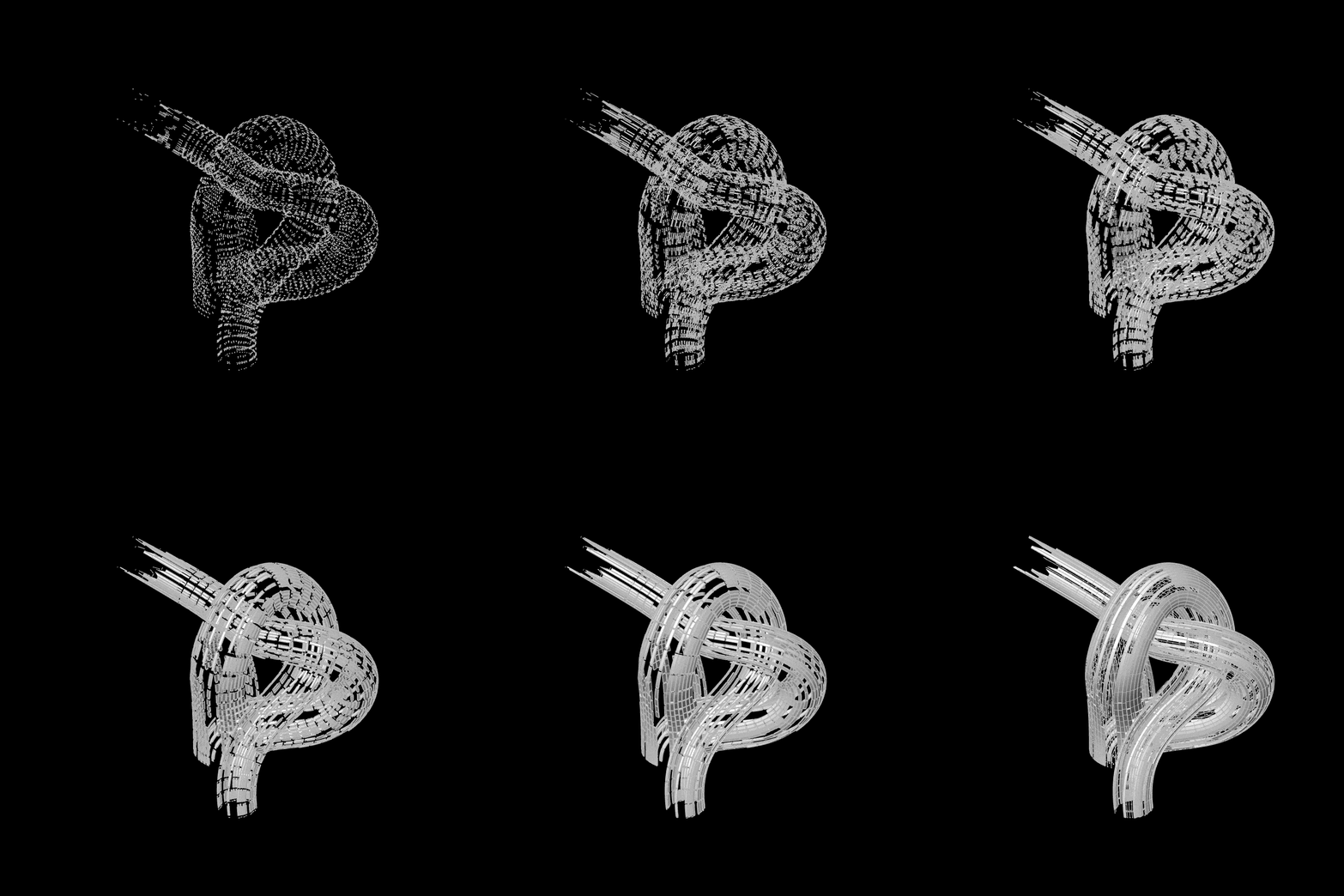
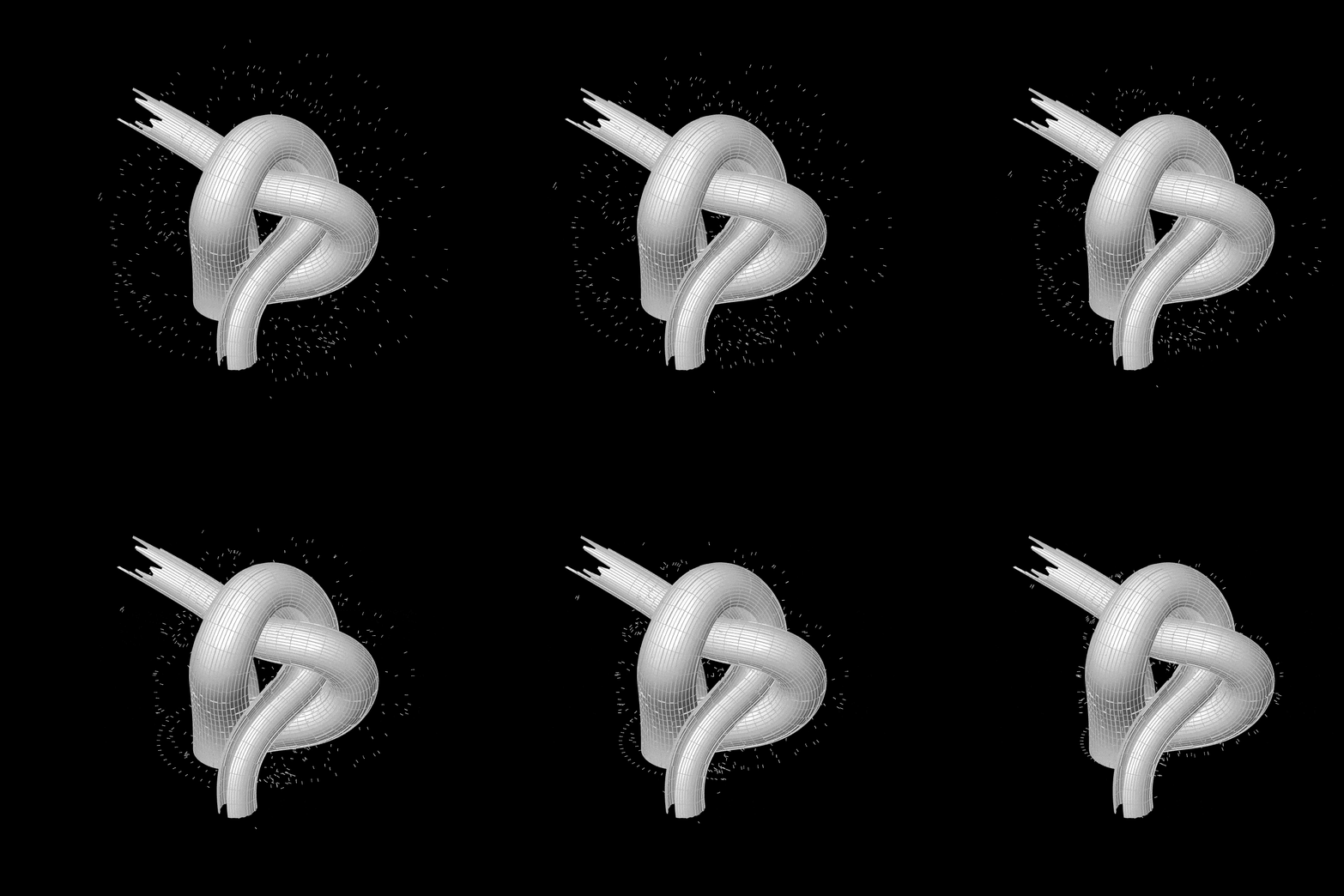
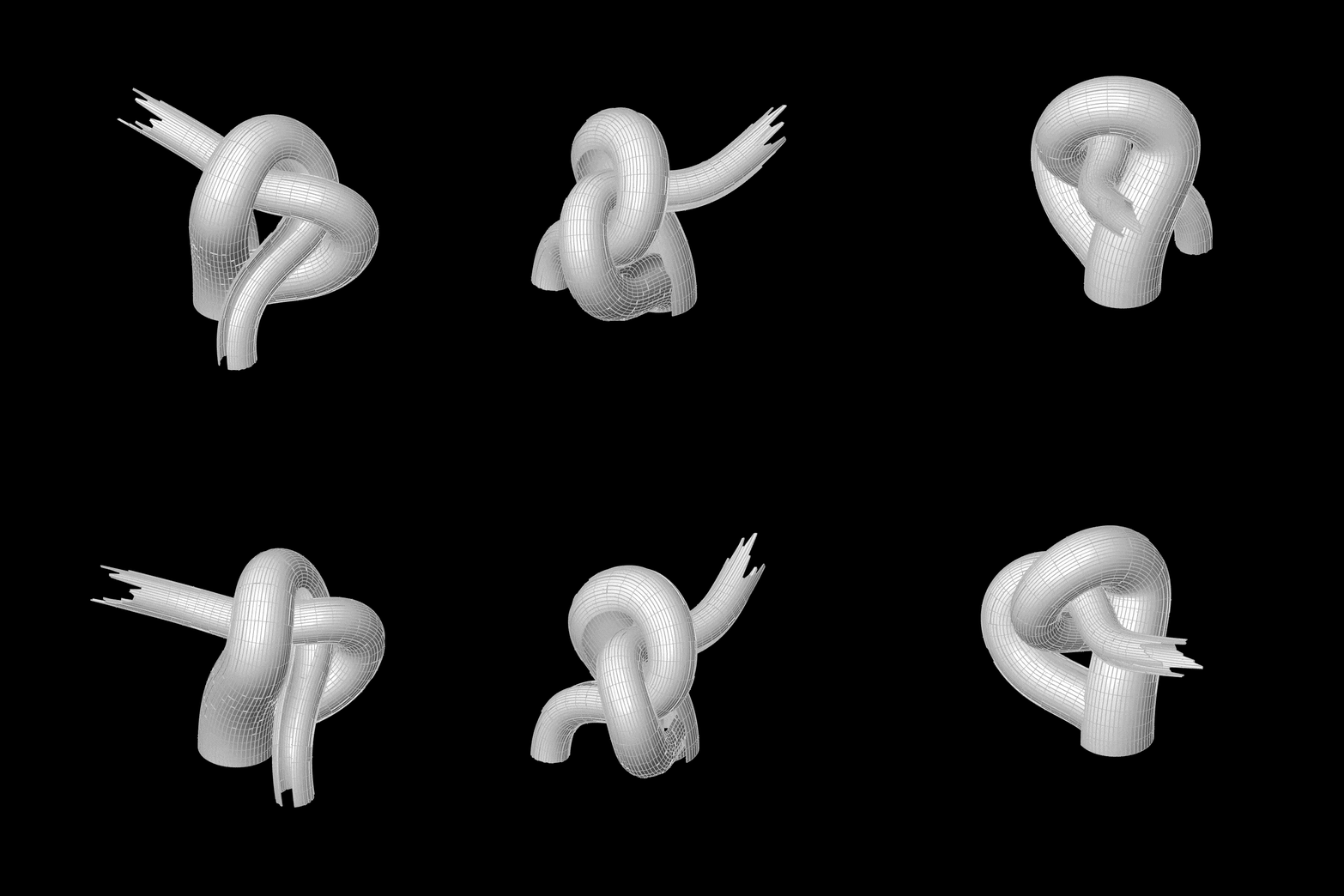
Computational Weaving. This project, developed for the Computational Design I Seminar, explores the algorithmic generation of complex, recursive geometries through the logic of “Digital Craft”. Inspired by the material constraints of steam-bent timber, the design creates a “volumetric weave” rather than a simple surface. The computational workflow is structured in five distinct phases: generating a spinal curve, distributing perpendicular arcs, creating strip lines, panelization, and joinery detailing.
A key technical challenge was managing data trees to create seamless continuity in the winding strips. We utilized “Relative Item” components to retrieve specific segments and “Weave” logic to avoid sharp transitions, ensuring the geometry behaves like a continuous material flow. The final script transitions panel geometry from polylines to interpolated lines, resulting in a fluid, knot-like structure that demonstrates advanced control over parametric arrays and geometric data.

Reference Analysis
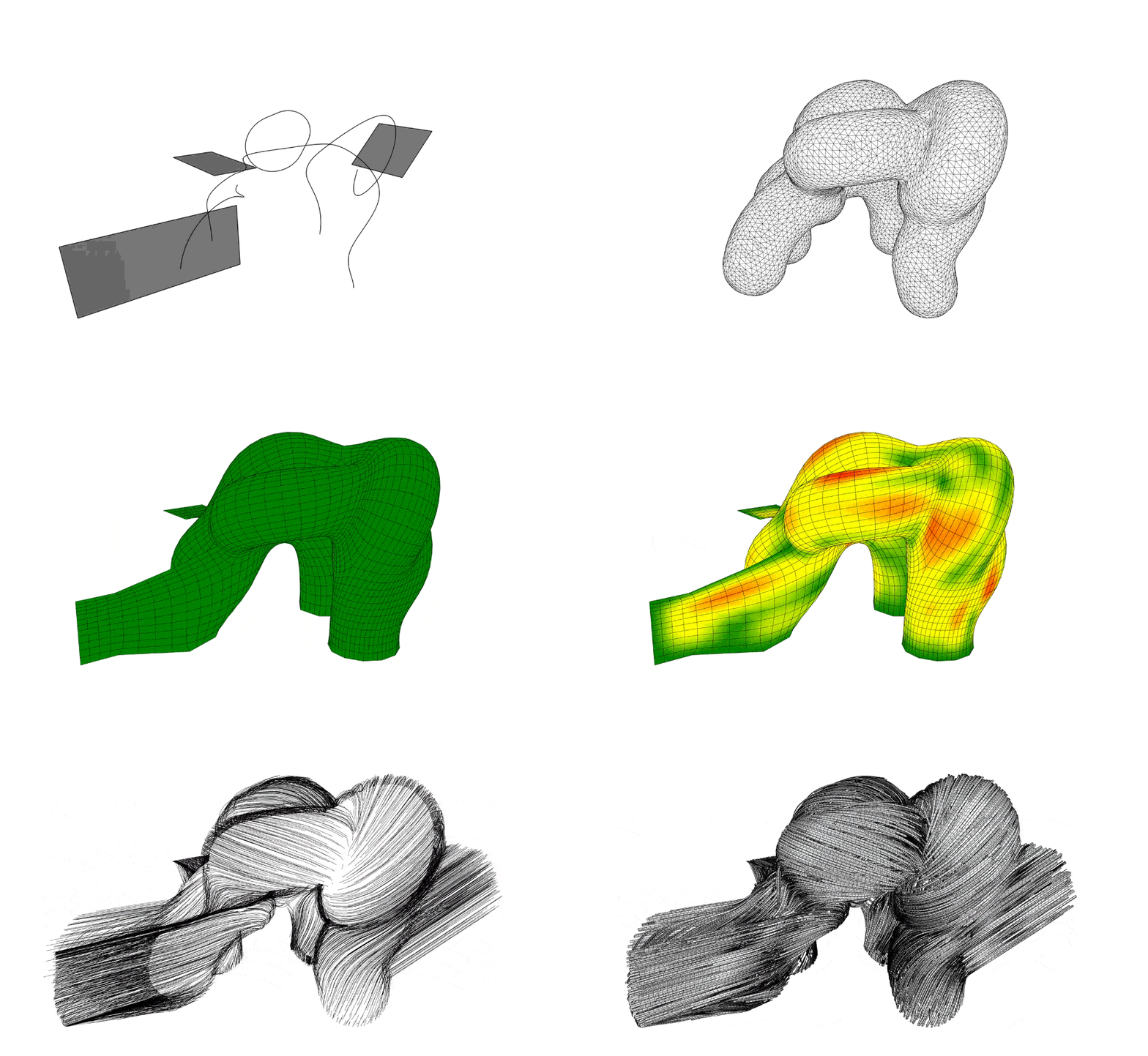
The Steampunk Pavilion by Igor Pantic, Fologram, Soomeen Hahm Design, Gwyllim Jahn & Cameron Newnham, is a seminal example of Digital Craft, bridging advanced computation with analogue fabrication. Its core feature is the creation of a structurally rigid, twisted and woven shell from steam-bent Ash timber guided by Augmented Reality (HoloLens) headsets. The Pavilion demonstrates that intricate, complex geometries can be achieved without traditional CNC machining, relying instead on human intuition and material intelligence precisely guided by digital projection. This concept of using high-tech guidance for analogue assembly serves as a foundational reference for your “Woven Contrast” project, especially regarding the fabrication and aesthetic complexity of your own steam-bent timber structure.

Structural Logic: The “Knot”
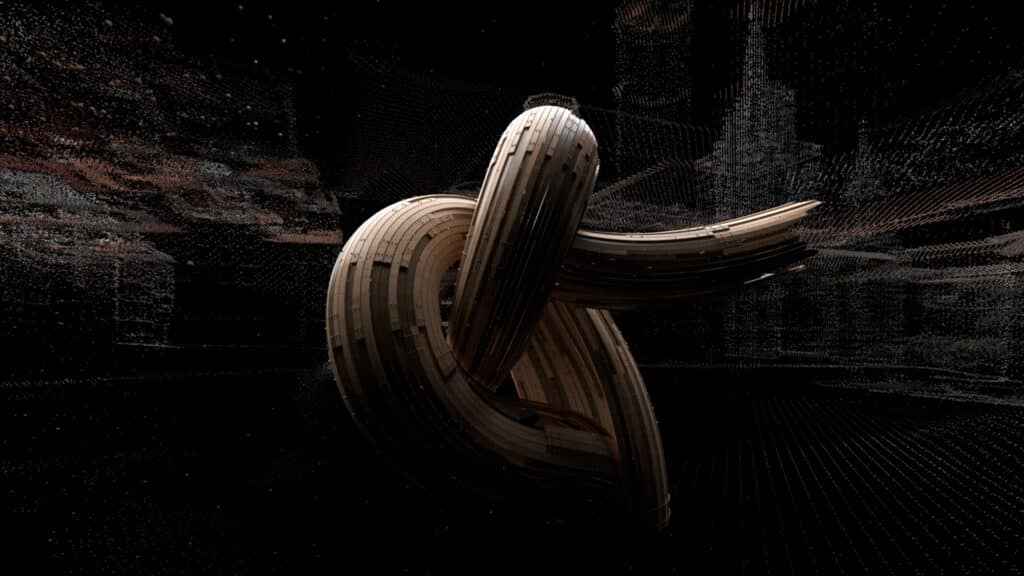
Geometry: The pavilion is not a surface; it is a volumetric weave.
The Twist: The wood is not just bent; it is twisted along its axis. This twisting adds significant structural stiffness to the shell.
Form Finding: The shape is an “ambiguous knot” that blurs the line between inside and outside, creating a “massive poche” (thick, hollow walls).
Site Analysis
The Rigid Container
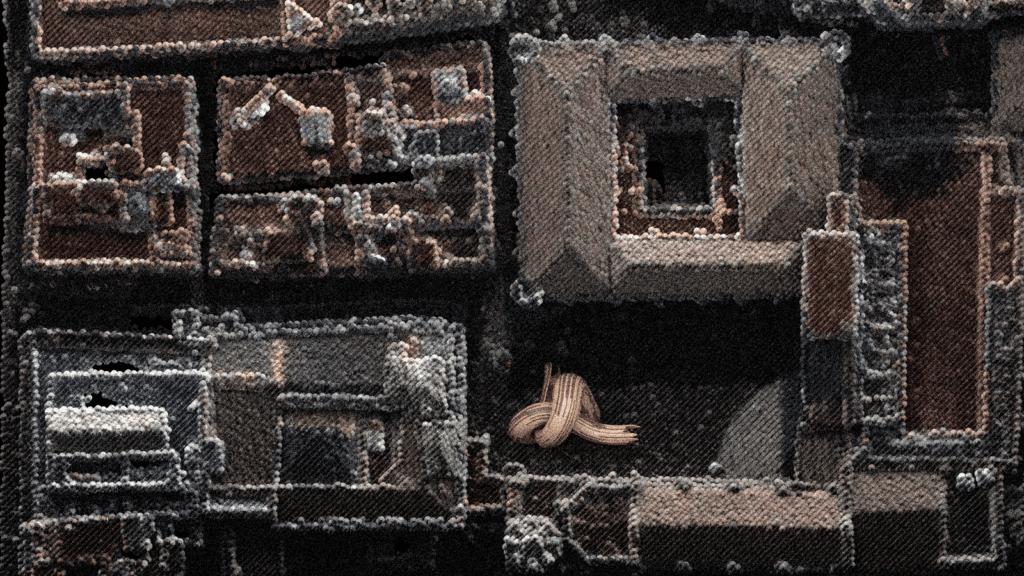
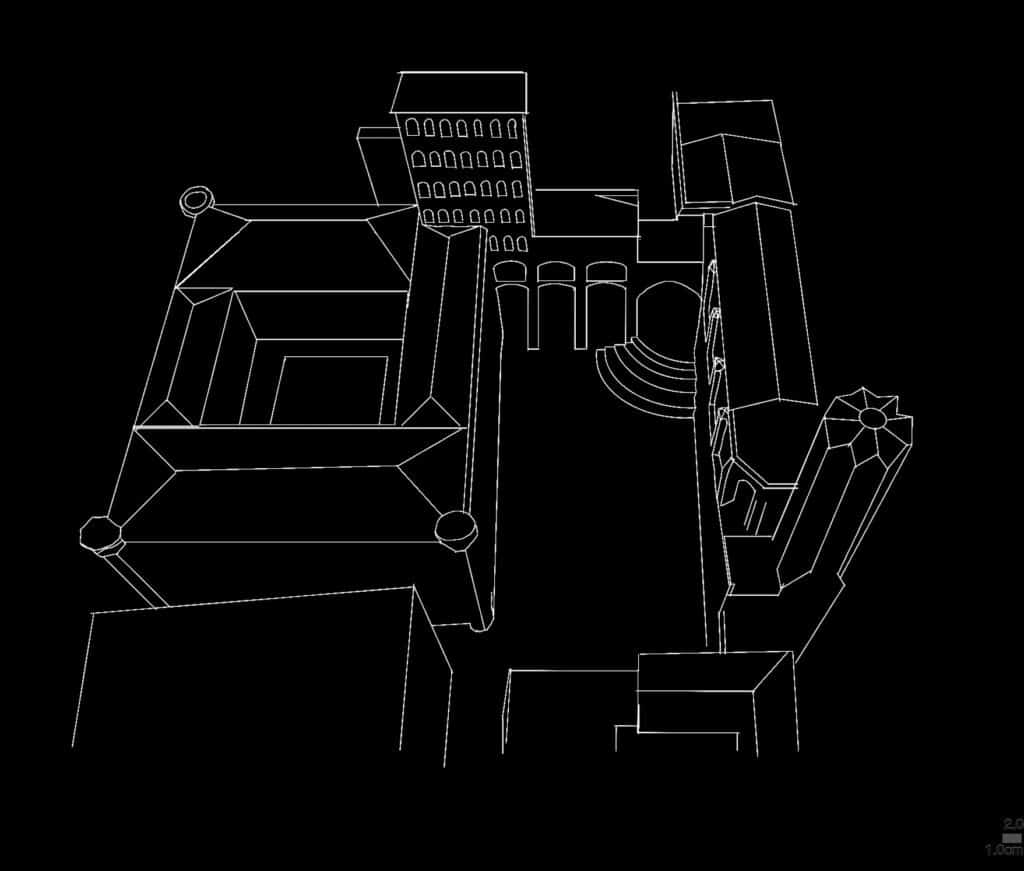
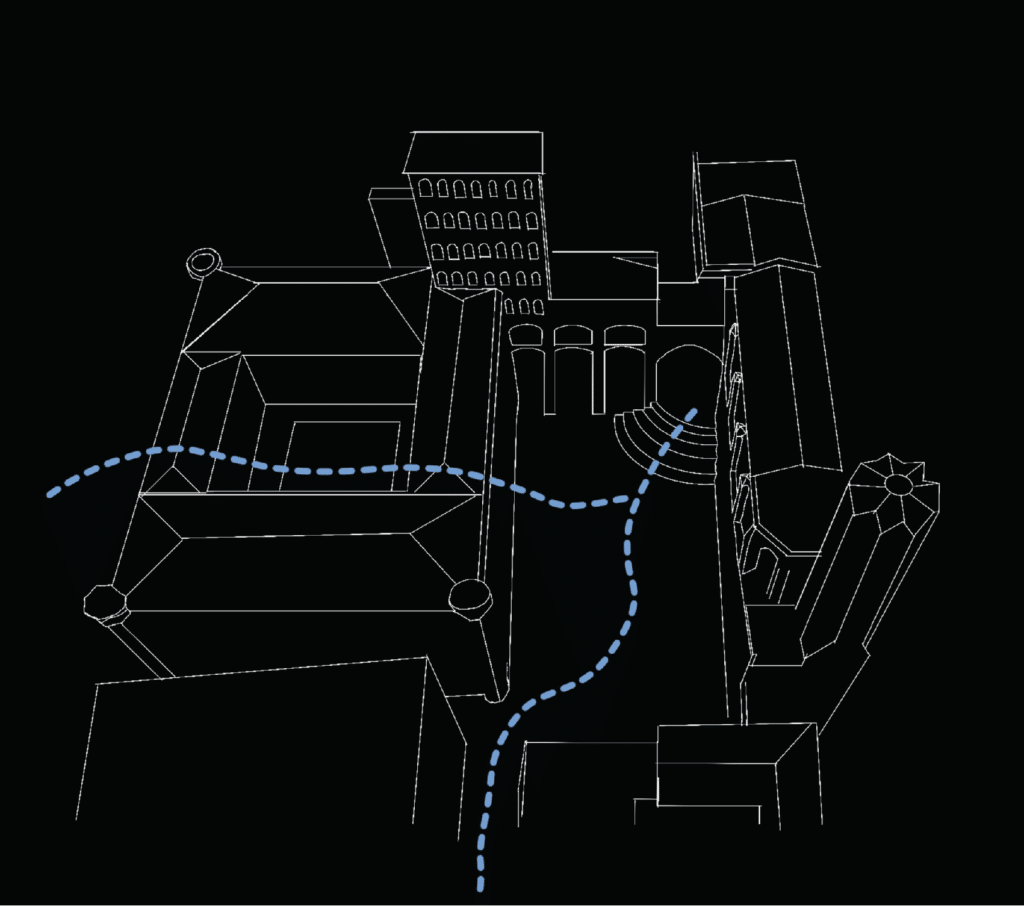
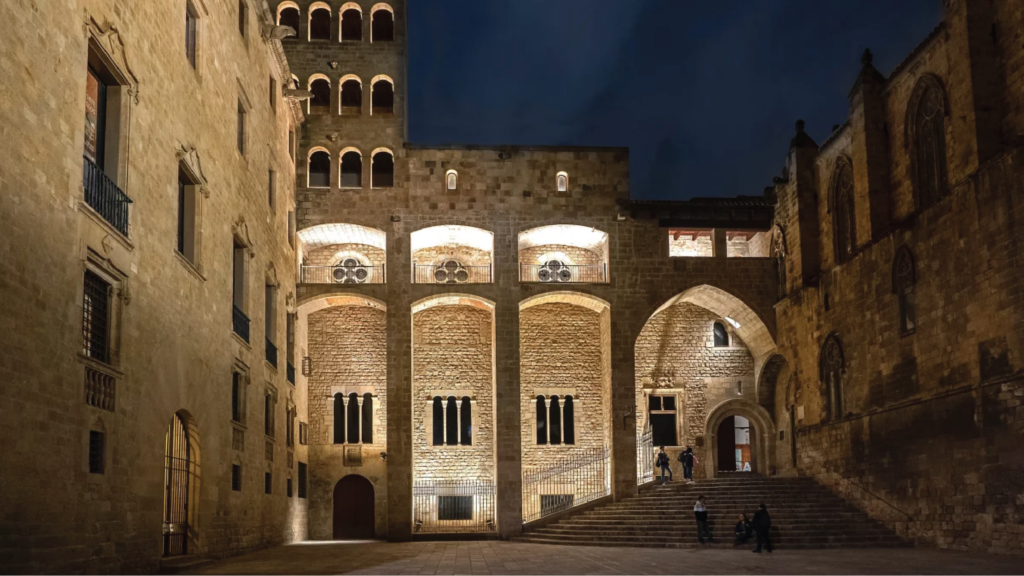
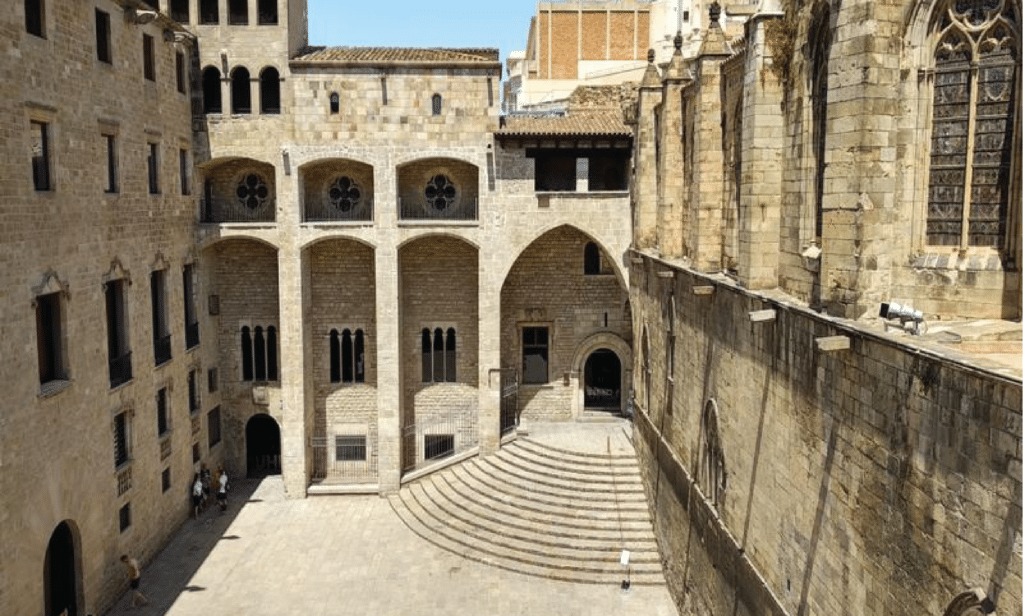
Spatial Morphology: The Plaça del Rei functions as a rigid, orthogonal “stone box,” defined vertically by King Martin’s Watchtower and the walls of the Saló del Tinell. Our intervention acts as a fluid counterpoint to this static canyon. The pavilion’s generative spine navigates the void, breaking the strict Cartesian grid of the medieval square without touching the historical boundaries.
Material Tension
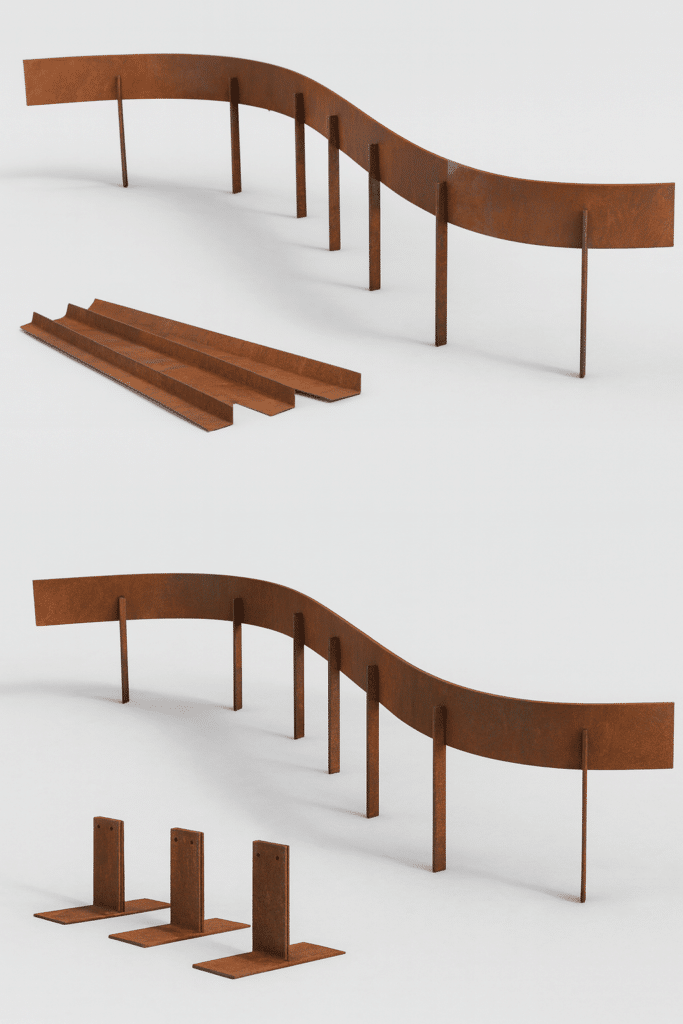
Stone vs. Timber: The existing context is heavy, monochromatic, and cold a silent expanse of Gothic masonry. The pavilion introduces a “parasitic” warmth through steam-bent Ash timber and Corten steel. This creates a tactile dialogue: the ephemeral, woven biological skin of the structure highlights the enduring permanence and weight of the surrounding stone.

Activating Stillness
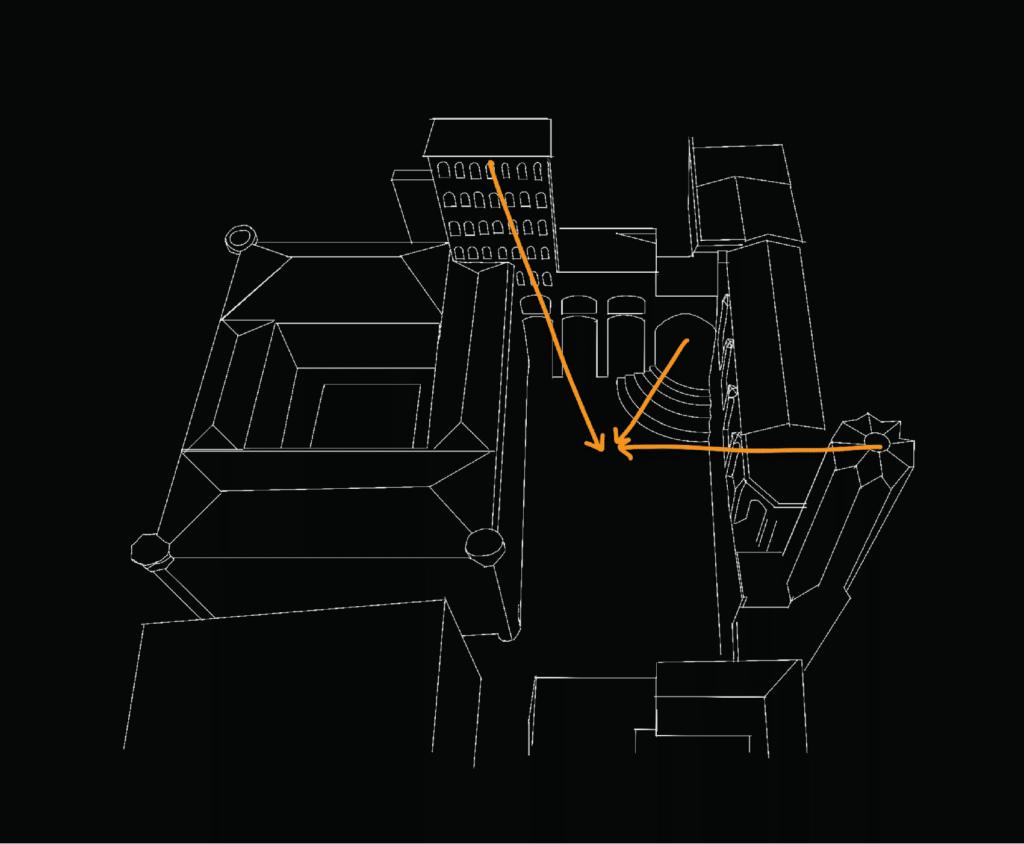
The Historical Knot: Historically a place of gathering and silence, the square is currently a static dead-end. The structure re-activates this space by introducing a dynamic path a “knot” of memory. The form captures the invisible flows of the past, guiding visitors through the columns and directing their gaze upward toward the Watchtower, turning a passive void into an active journey.
Design Phases



The Script