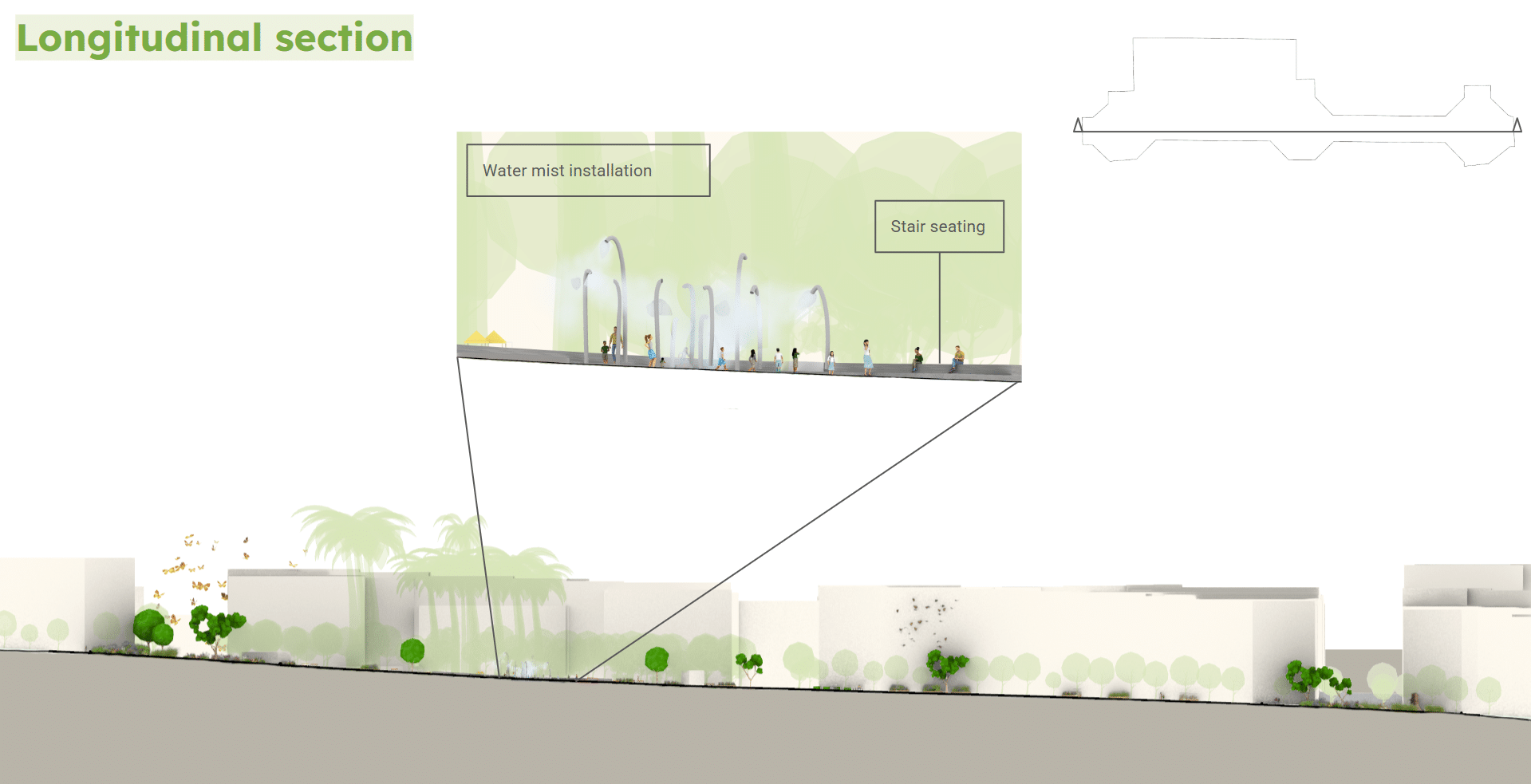
Microclimatic Corridor is a proposal for the transformation of Carrer de Rocafort into a climate shelter for non-human urban life. Responding to rising temperatures, biodiversity decline, and the urban heat island effect in Barcelona, the project extends the ecological and microclimatic performance of Jardins de Montserrat into the surrounding street network
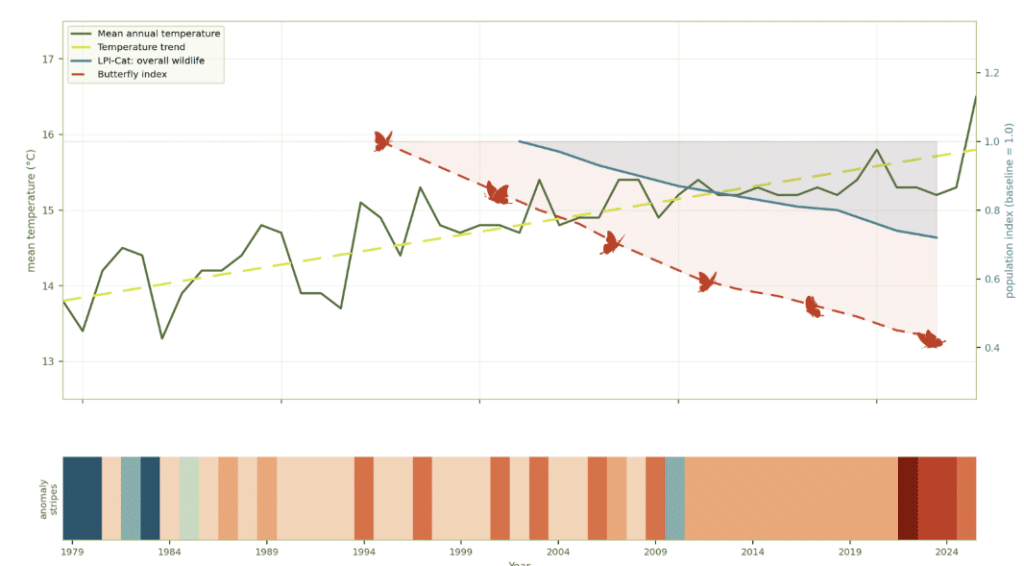

Climate change as a driver for biodiversity loss
The trend is clear: cities are getting hotter while biodiversity is rapidly declining. The diagram shows both rising temperature anomalies and a sharp decrease in wildlife populations over time. Butterflies are especially affected — not only are species disappearing, but the number of individual butterflies has dropped by 57% since 1995. Their decline began even earlier than the broader wildlife decline, making them an important indicator species for environmental stress.
RESEARCH QUESTION
How can streets be transformed into a climate shelter that supports the survival and movement of climate-sensitive species such as butterflies?
What is a climate shelter?
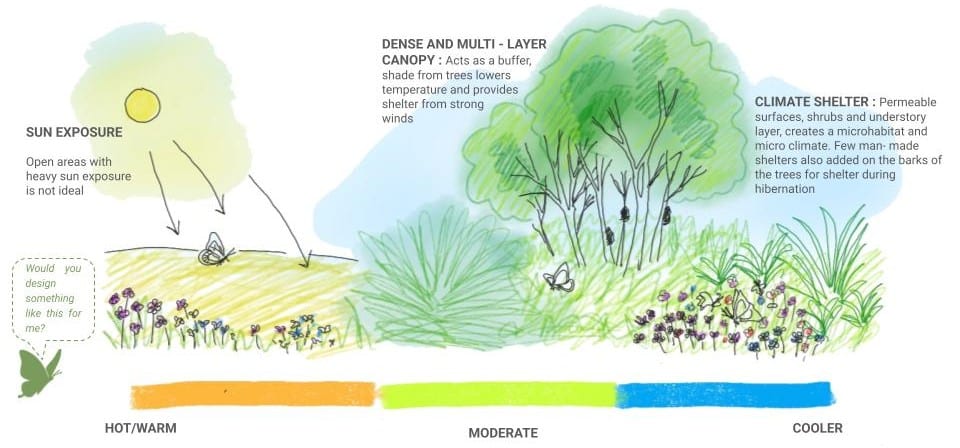
A climate shelter is a spatial intervention designed to protect living beings from extreme climatic conditions—particularly heat—through shade, vegetation, ventilation, water retention, and other cooling strategies.
For butterflies, the gradient moves from hot open areas with heavy sun exposure, through a moderate transitional zone with dense multi-layer canopy acting as buffer, to a cooler core: permeable surfaces, shrubs and understory layers creating a microhabitat and microclimate, with minimal man-made shelter elements added to tree bark for hibernation support.
Stakeholders and Conflicting Needs
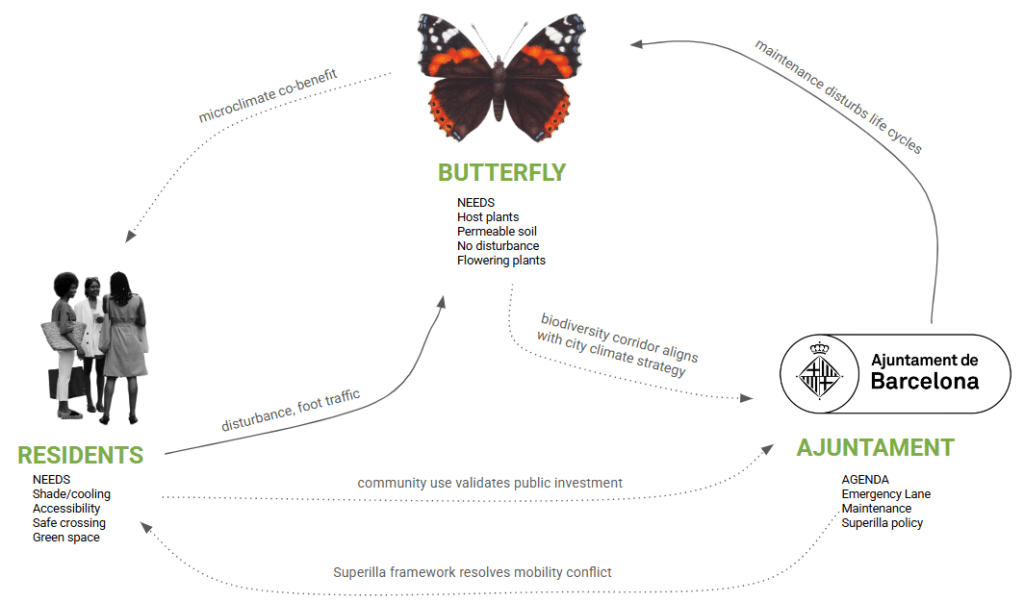
Three stakeholders structure the design problem:
The Butterfly requires host plants for larval feeding, permeable soil, undisturbed ground, and flowering nectar plants for adult feeding.
Residents need shade and cooling, accessibility, safe crossings, and green space.
The Ajuntament de Barcelona operates within an agenda that includes emergency lane access, maintenance schedules, and the Superilla policy framework.
The tensions between these stakeholders are the design drivers. Resident foot traffic and municipal maintenance regimes disturb butterfly life cycles. The butterfly’s need for microclimate co-benefit and habitat continuity aligns with the city’s climate strategy. The Superilla framework resolves the mobility conflict. Community use validates public investment.
Site: Jardins de Montserrat and Adjacent Streets
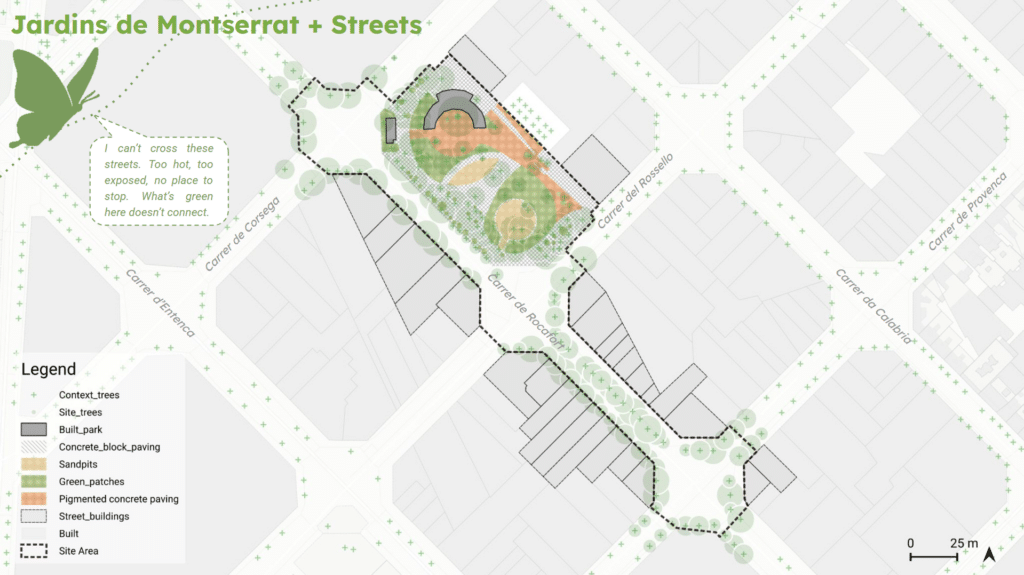
The site covers Jardins de Montserrat and the adjacent street network including Carrer de Rocafort, Carrer d’Entença, Carrer del Rosselló, Carrer de Còrsega, Carrer de Calabria, and Carrer de Provença. It sits within the Barcelona Superilles framework, which reorganizes urban mobility to reclaim street space for pedestrians, greenery, and ecological function.
The site currently hosts a horticulture centre, youth centre, recycling centre, children’s park, dog park, and cycle paths. From a butterfly’s perspective, the diagnosis was blunt: there are flowers here, but no place to lay eggs. Too much sun, too much exposure.
A place to pass through, not to belong.
Site Analysis
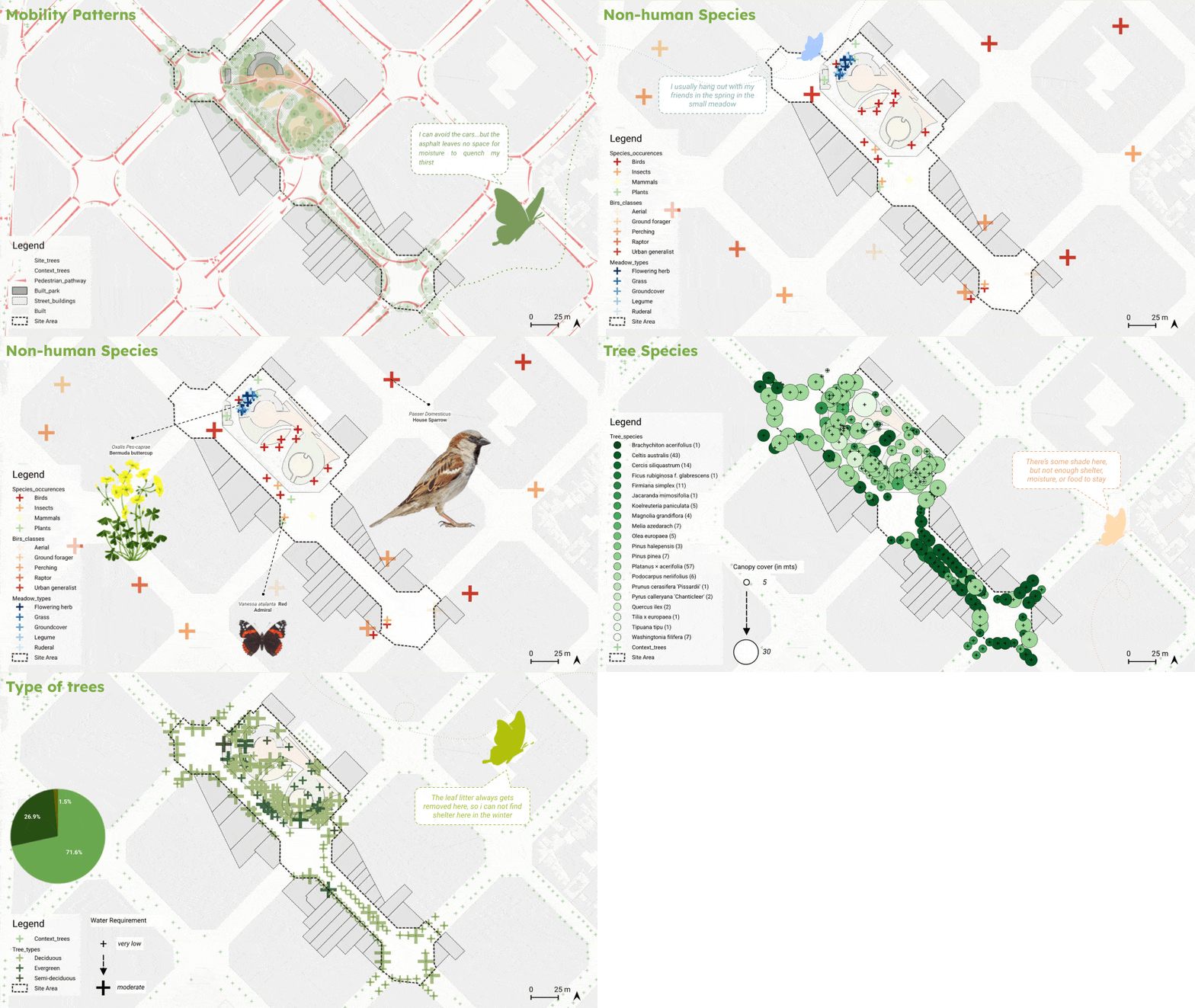
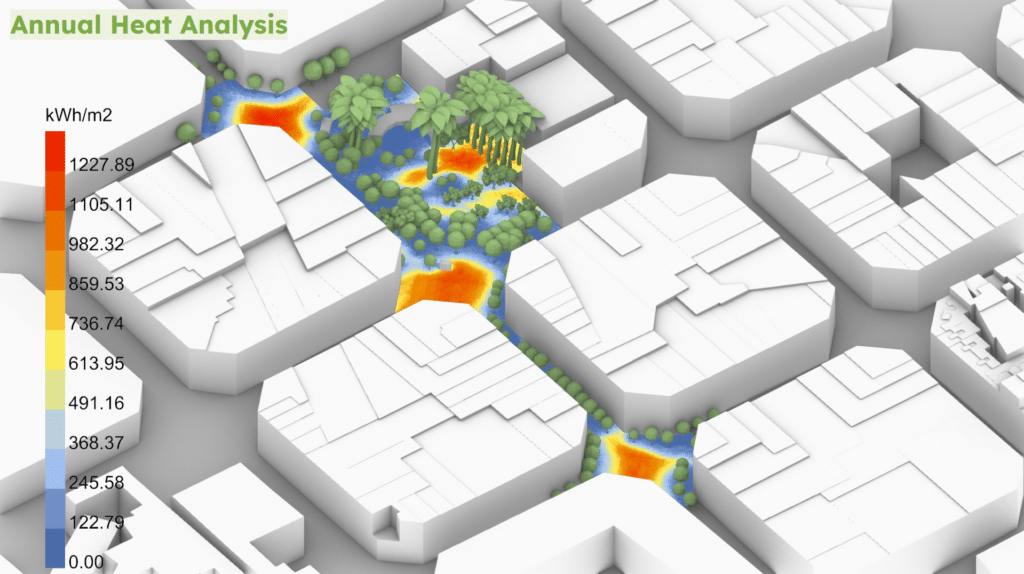
Through the analysis of vegetation, species occurrence, permeability, and urban heat, the site was evaluated as an ecological system rather than solely as public space. The findings reveal a fragmented landscape where existing green areas provide localized refuge, while extensive impermeable surfaces contribute to heat accumulation and habitat limitations, informing the design of a connected microclimatic corridor.
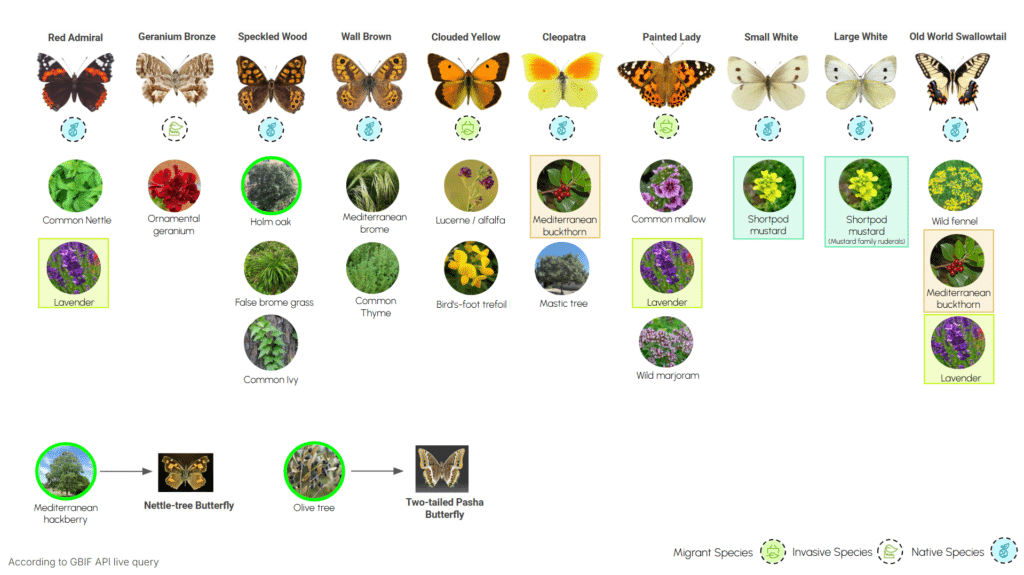
Butterfly Needs > Design Strategies
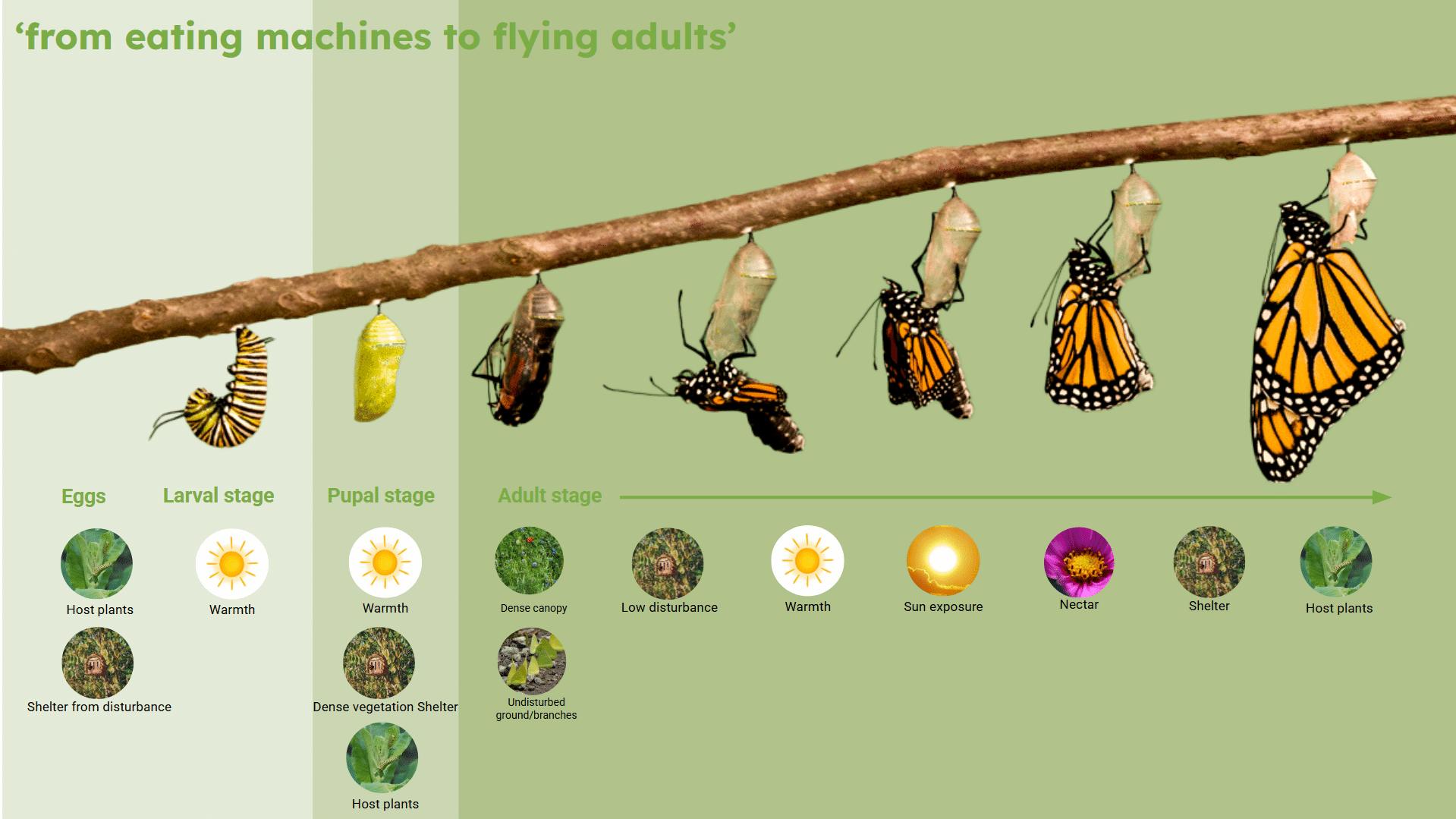
Butterflies depend on a combination of food sources, suitable microclimatic conditions, and protected habitats throughout their life cycle. They require nectar plants for feeding, host plants for reproduction, and sheltered areas that provide shade, moisture, and protection from extreme temperatures.
Fragmented habitats, excessive heat, and limited vegetation reduce their ability to feed, reproduce, and overwinter. Creating connected microclimatic refuges therefore supports not only butterfly movement, but also the completion of their entire life cycle within the city.
Design Strategies
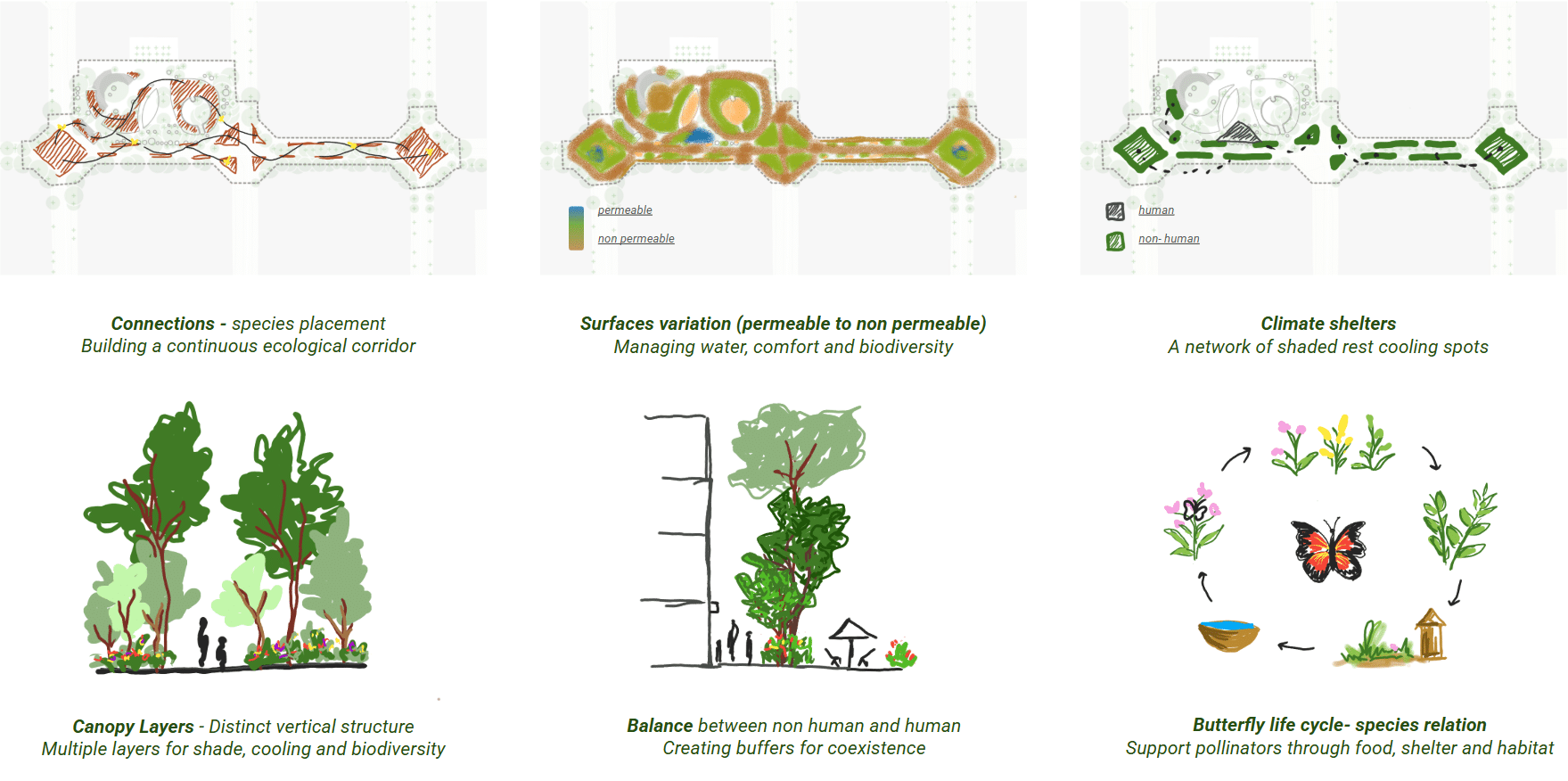
Design Process
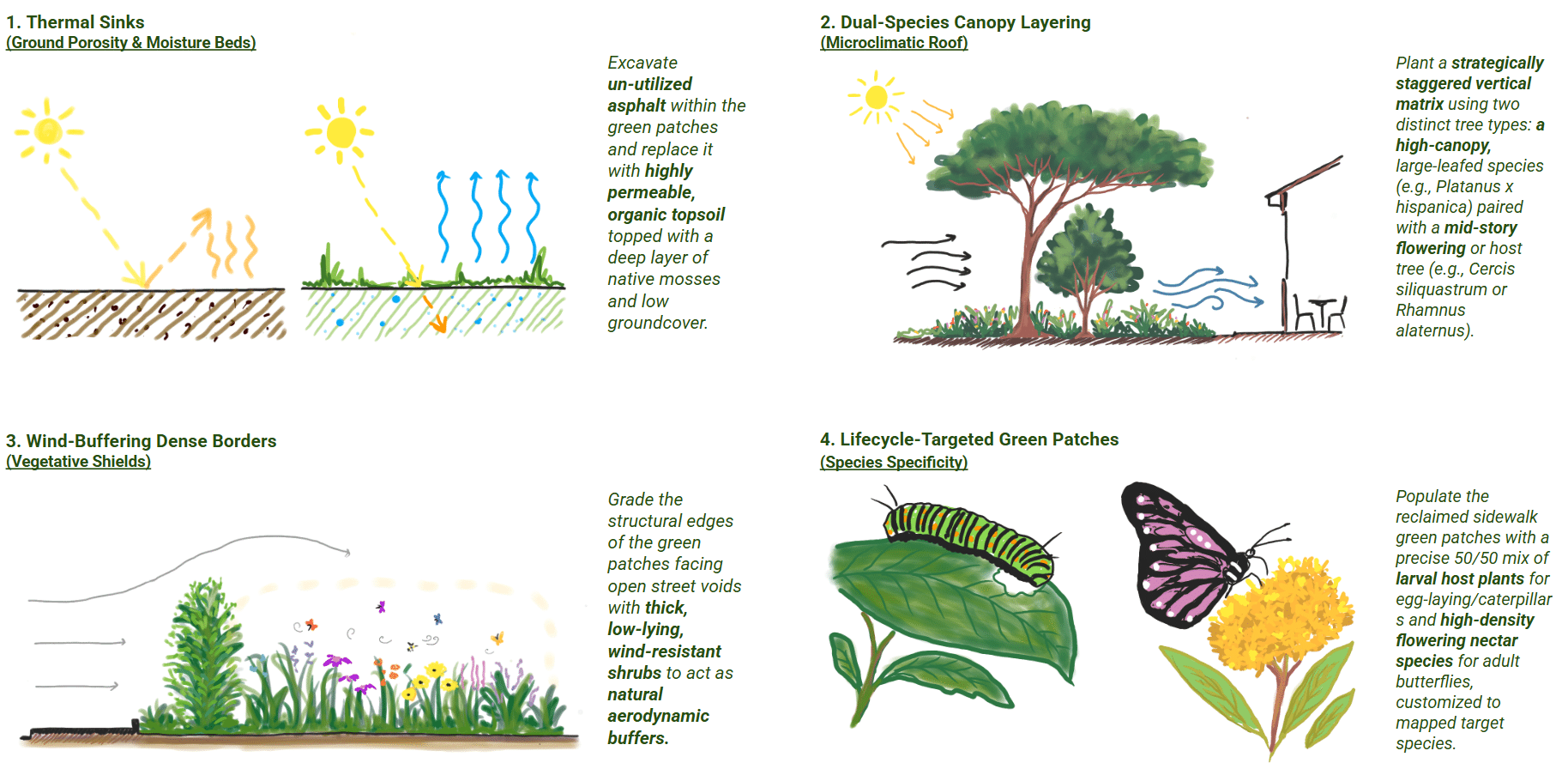
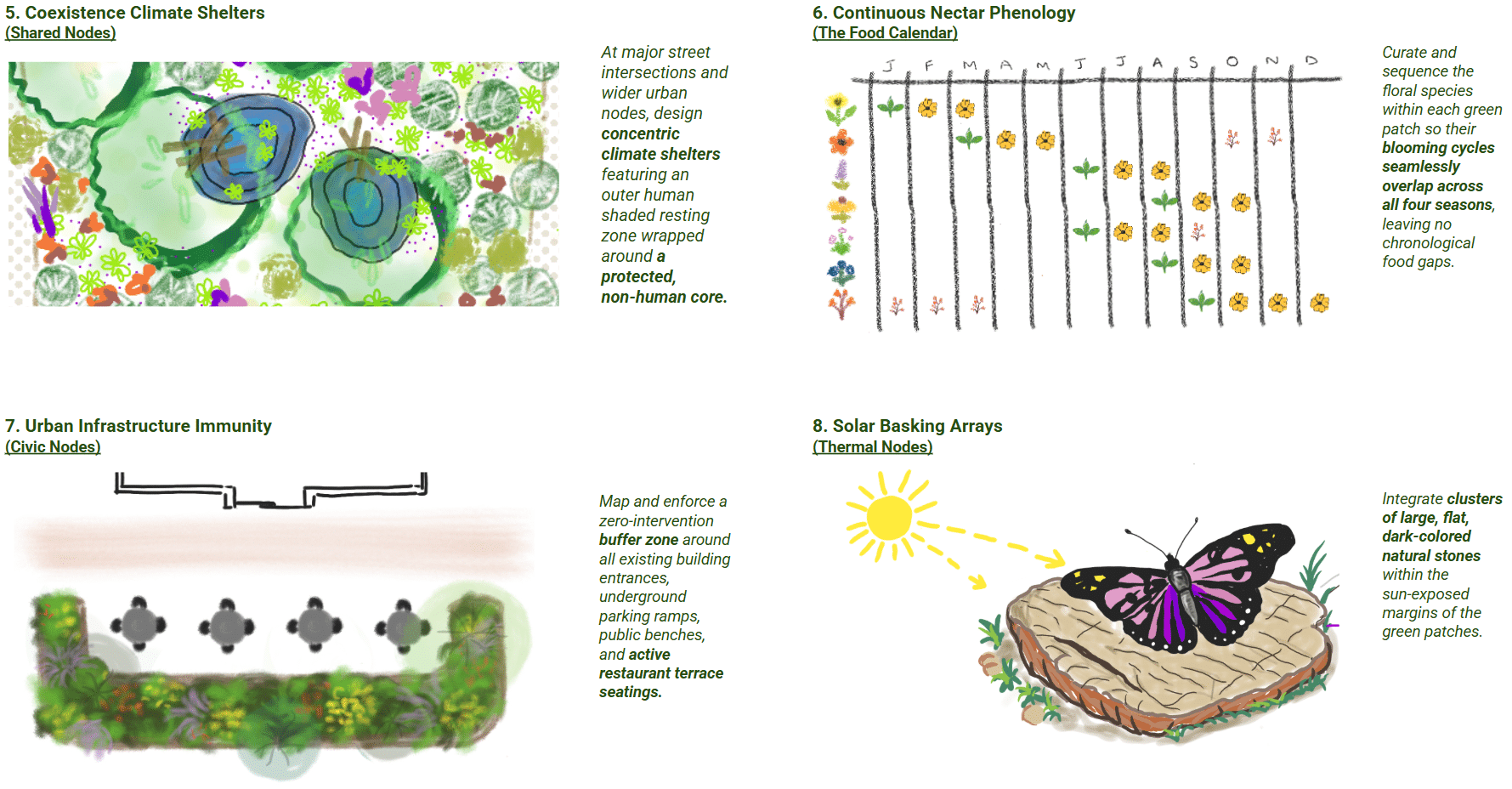
Design Guidelines
Design Proposal
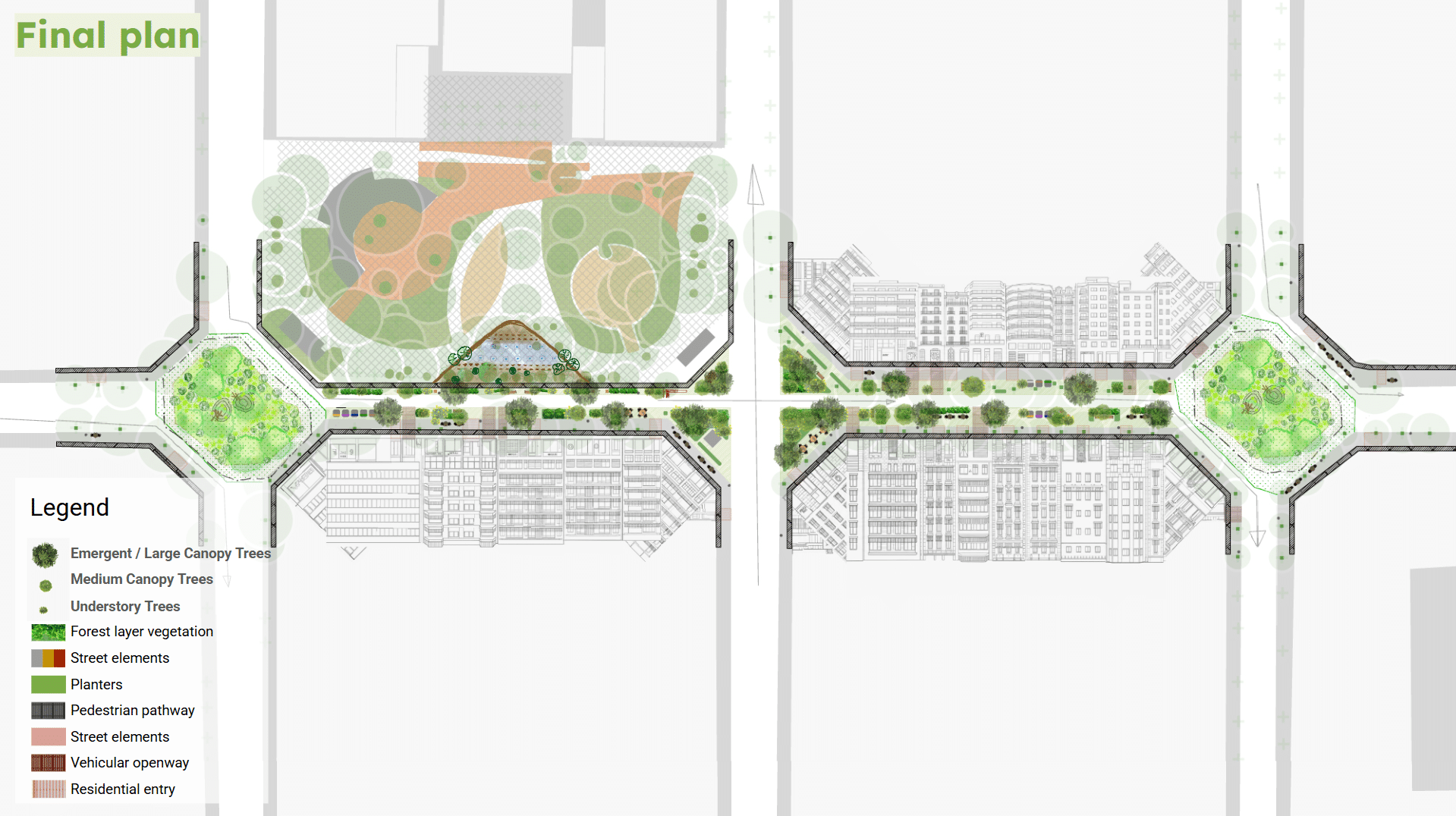
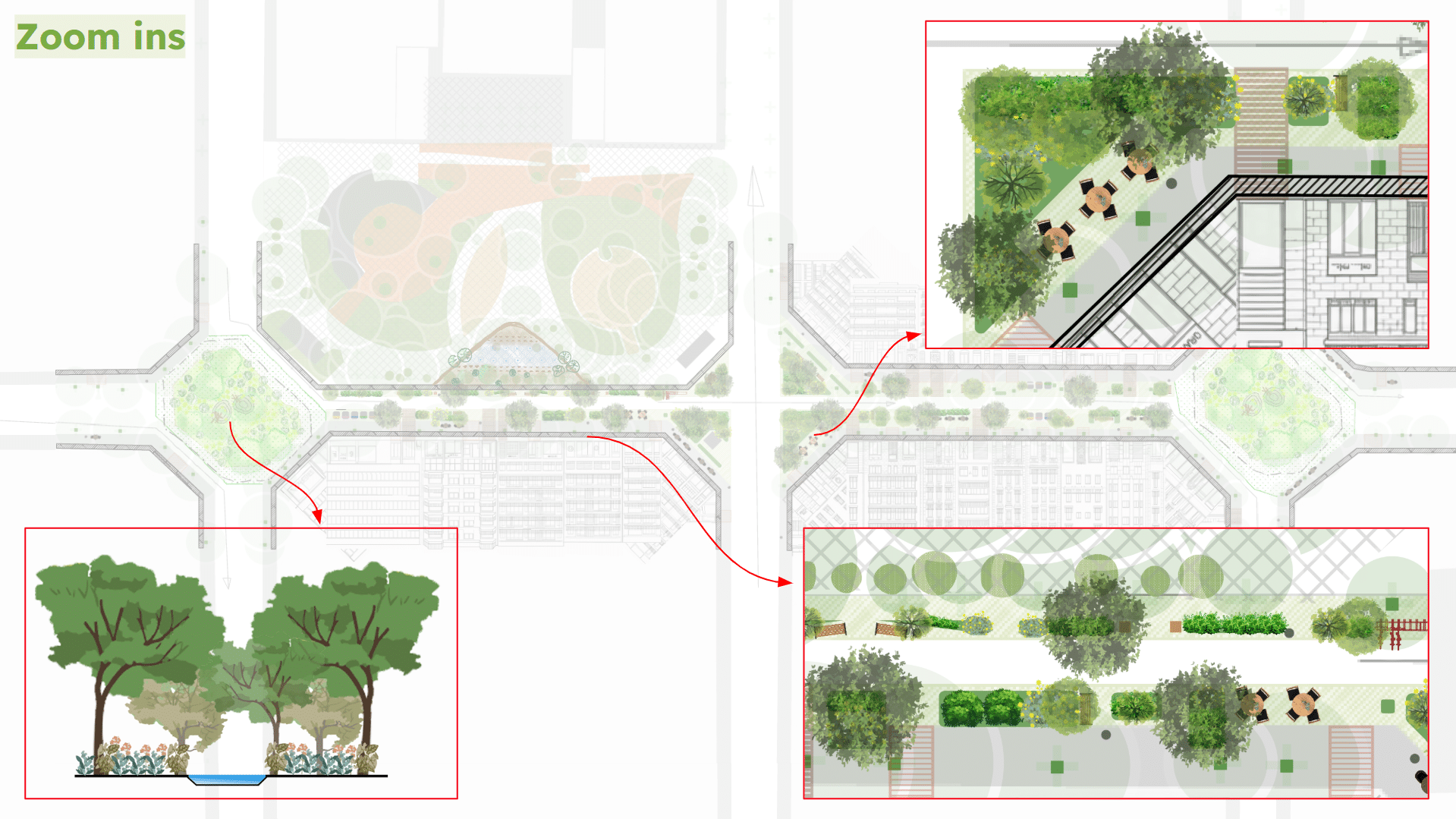
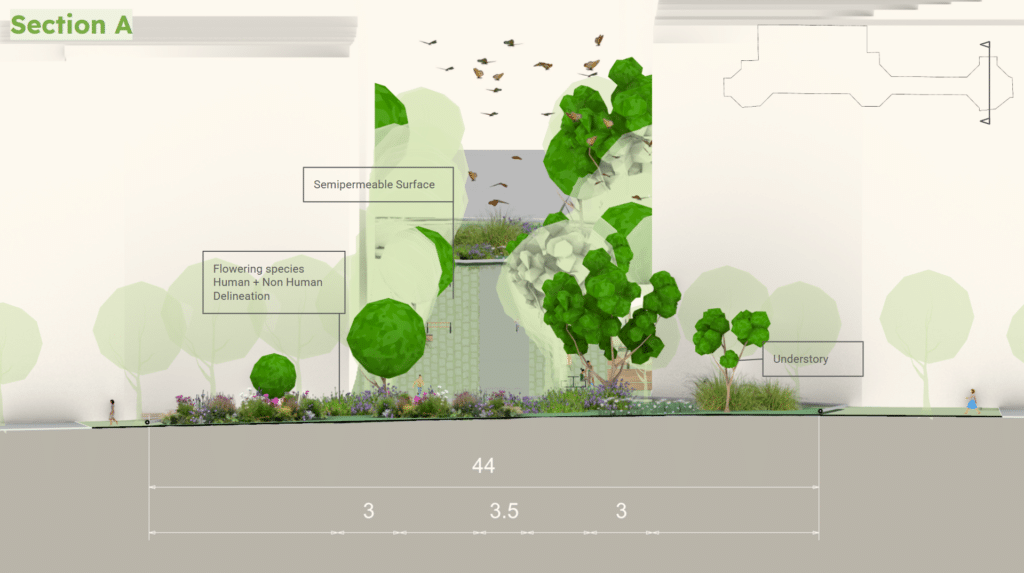
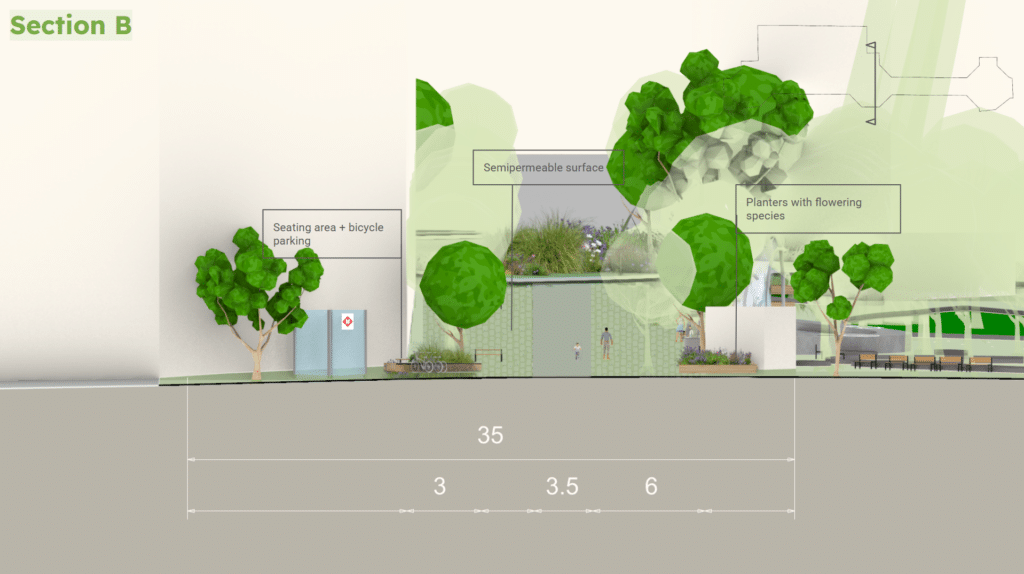
The design extends the ecological and microclimatic conditions of Jardins de Montserrat into Carrer de Rocafort through permeable surfaces, layered vegetation, and habitat-focused planting. Butterfly-supporting tree, shrub, and flowering species are introduced to provide food, shelter, and breeding conditions throughout their life cycle. Protected habitat islands at key junctions create low-disturbance refuges, while pedestrianized public space, seating, and canopy layering improve environmental comfort. Together, these interventions transform the street from a movement corridor into a climate shelter that supports biodiversity and ecological continuity.
Proposed plan & zoom ins