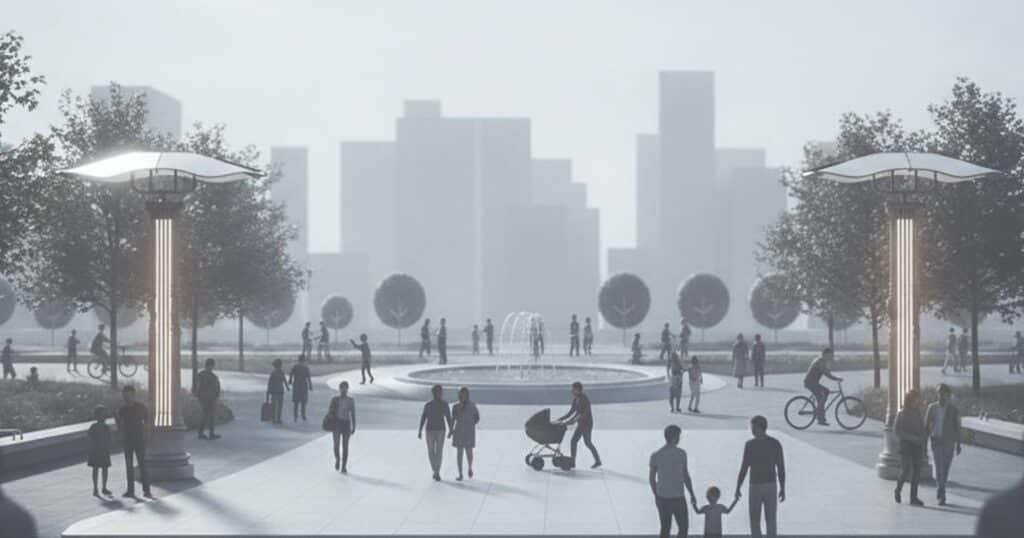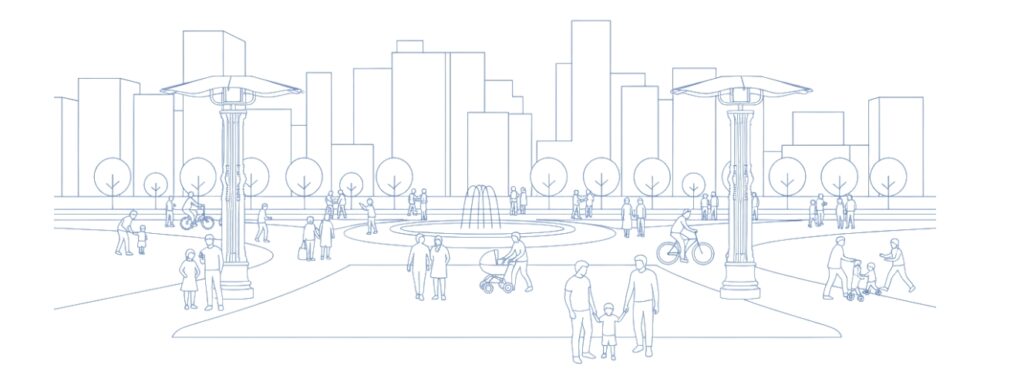
‘Urban Sensing Begins: The City Meets Its Beacons’
PLACEMENT — The Sensing Ground
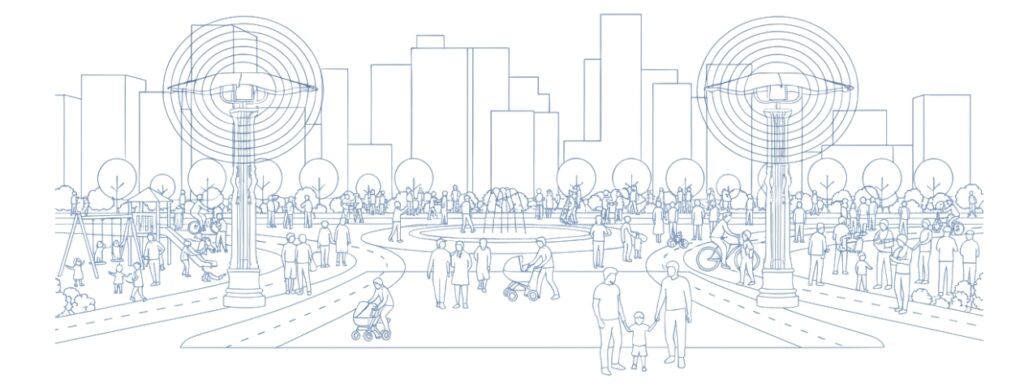
The first beacons are placed along the park’s circulation spine silent observers that begin listening to the city’s rhythm. Sound, motion, and presence data start forming an invisible map of human interaction.At this stage, the system is not reactive, it’s learning.It introduces itself to the public as a new urban organism, quietly sensing the behavior of its surroundings.
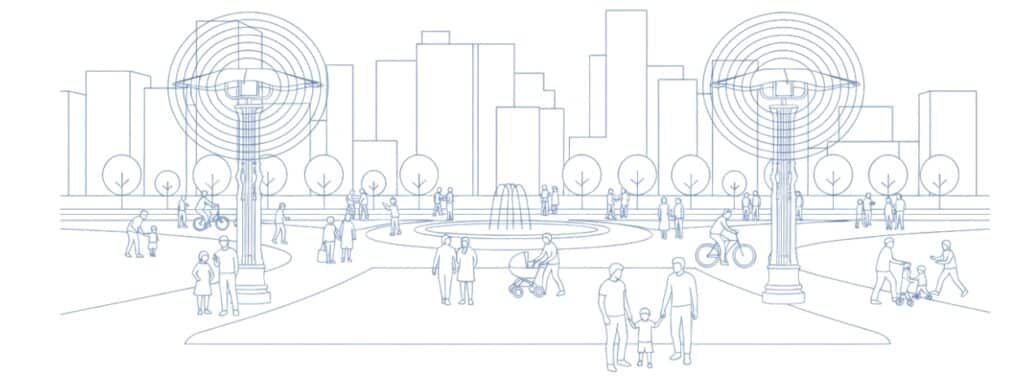
‘Distributed Awareness: Beacons Start to Communicate’
FIRST INTERACTION — The Network Learns
As the data accumulates, each beacon begins to build a behavioral profile of its environment translating raw sound and motion signals into “mood scenarios.”Through Wi-Fi communication, these units share insights with developers and with one another,creating a decentralized intelligence across the park.The system starts to understand where the city is calm, where it’s tense, where people dwell or pass through..
‘Responsive Atmospheres: The Environment Evolves’
CHANGE — The City Adapts
In the final phase, City Pulse stops being a prototype it becomes part of the ecosystem. Using accumulated data, each beacon adjusts its light behavior and kinetic response to create optimal micro-atmospheres. Pathways glow softer when crowded, petals calm the soundscape when noise peaks. The installation subtly reshapes how people move, rest, and interact transforming public space from static to self-aware.
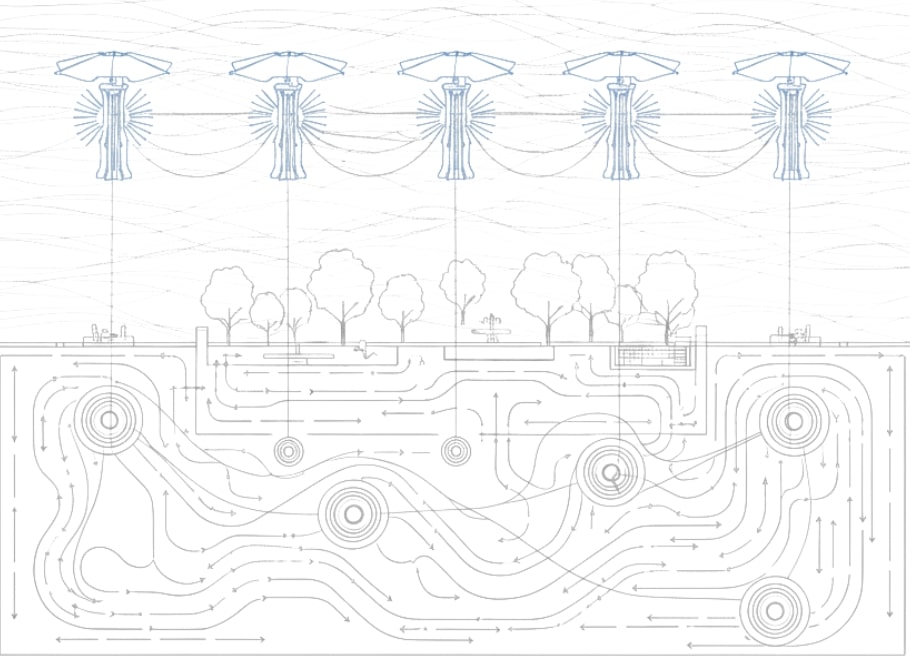
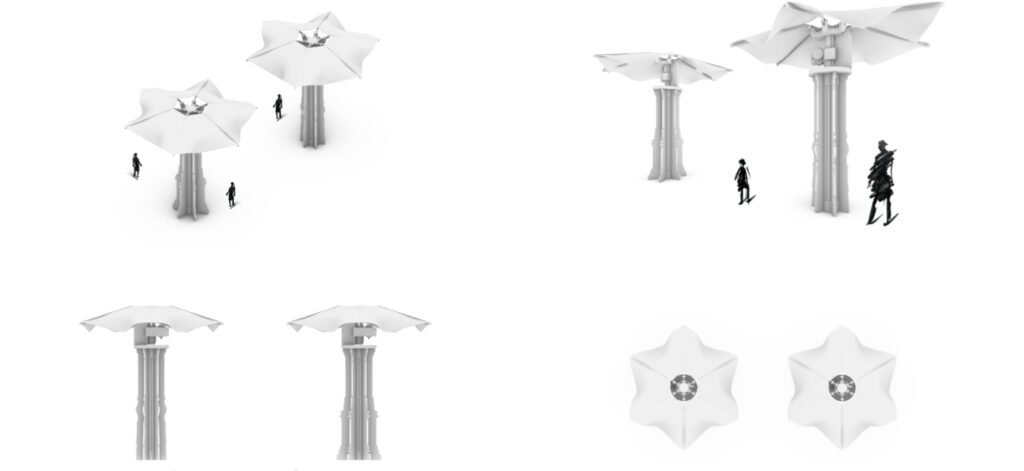
City Pulse is an interactive urban installation that expresses the invisible energy of public space through light and kinetic motion.Each unit behaves like a living pulse that listens to its surroundings and responds with subtle physical changes.
Prototype
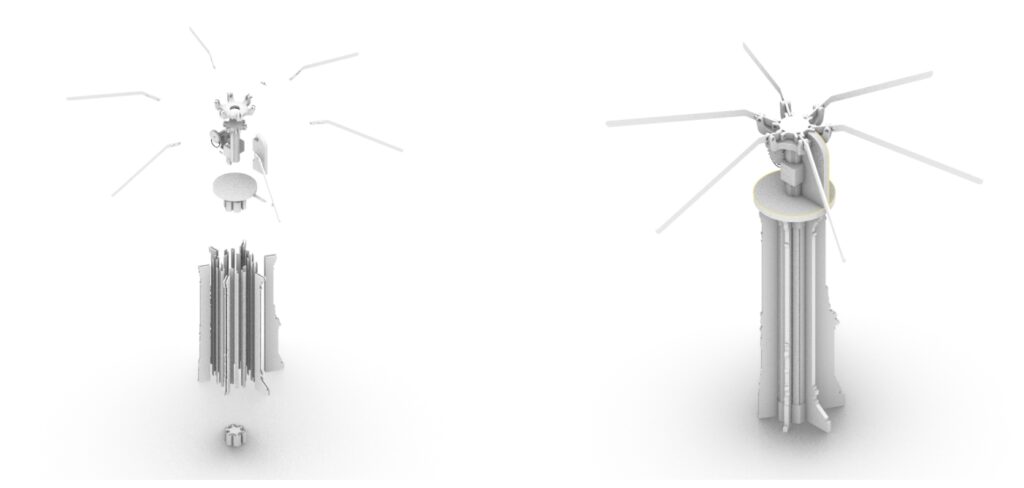
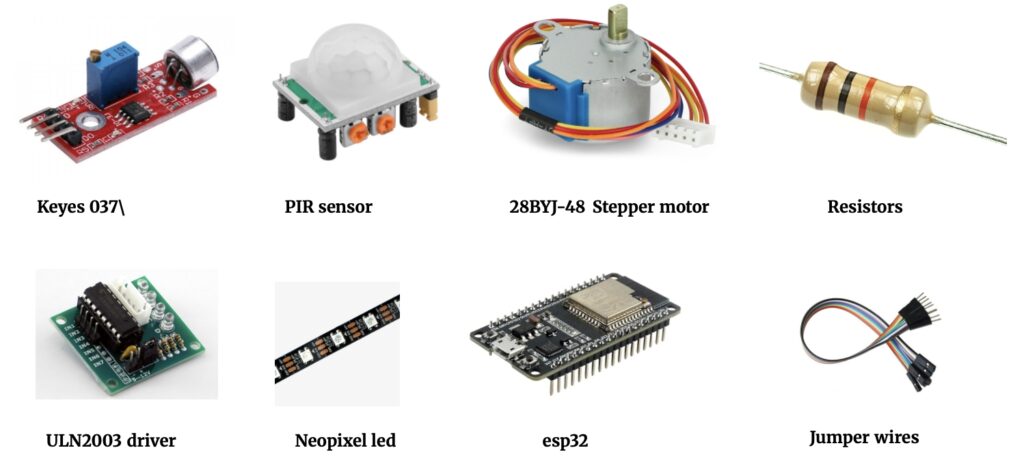
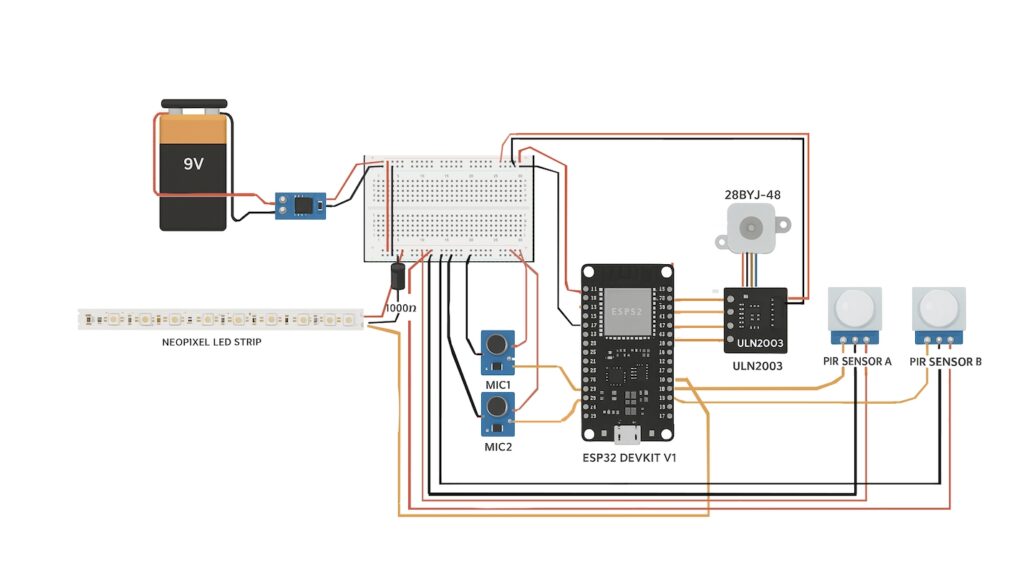
What Arduino tools we used
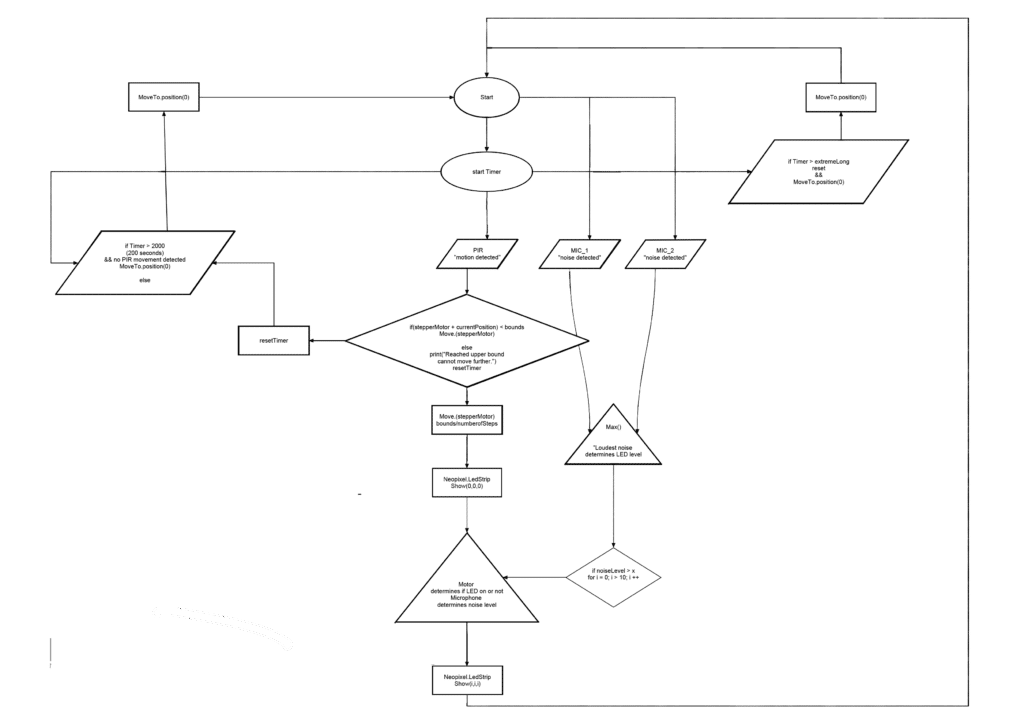
We use Arduino sensors to detect when people approach the installation.
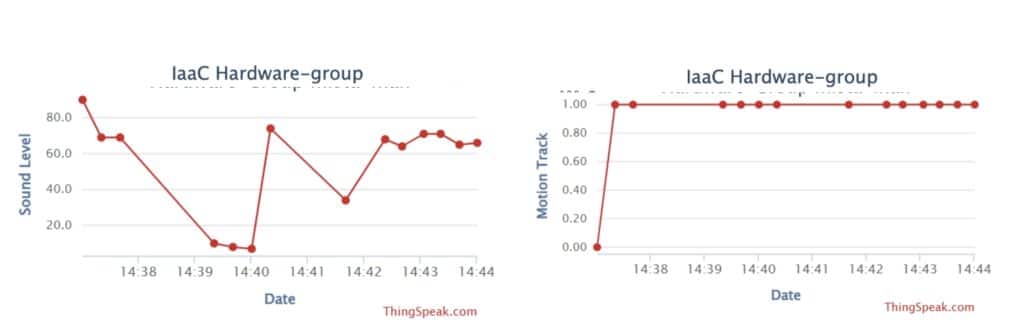
This triggers interactions, and we record these processes and behaviors to generate and present different sets of data.
Sound level and Motion track Date