The objective was to transform the existing historic roof market of Bab El-Louk in Cairo through parametric roof design and optimized user circulation while maintaining the existing steel frames.
DESIGN CONCEPT & EARLY EXPLORATIONS
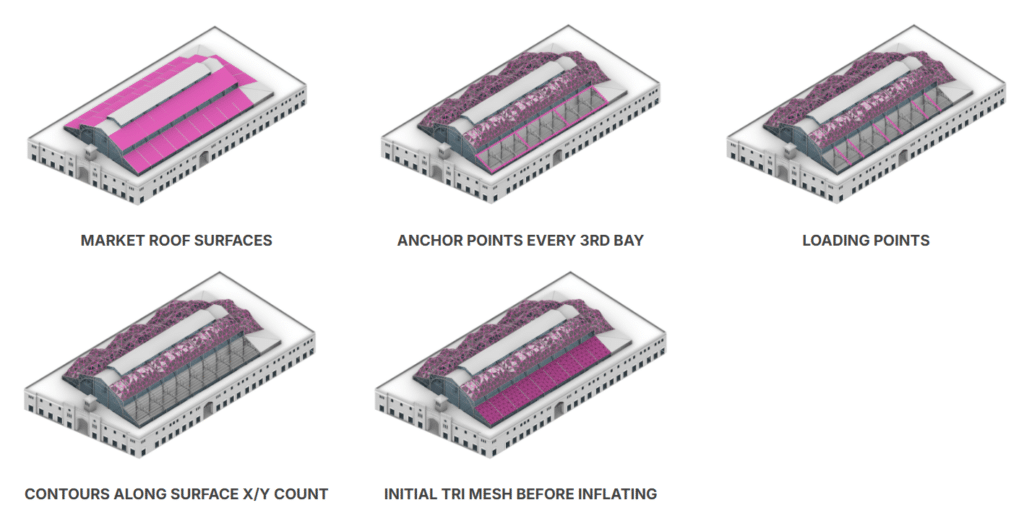
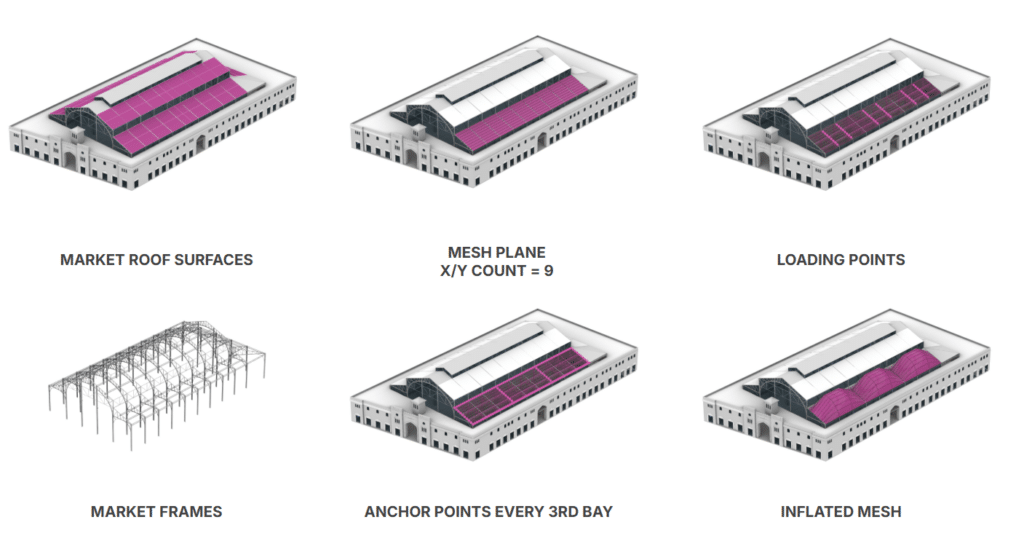
At the beginning, the goal was to find the roof form by using the existing roof surfaces shown in pink. Starting anchoring certain points on the surface and applying loading forces to others, gave an initial inflated shape. Some issues arose:
- mesh control points didn’t behave consistently when using triangulated mesh before inflating process
- the mesh resolution changed the form (curvature) more than expected
- when using every panel as a window, instead of improving the space, it created an interior that was too bright
- there was still no plan on how to integrate with existing frames that had to be preserved.
COMPUTATIONAL DESIGN METHODOLOGY
These observations made it clear that both the mesh control points strategy and the balance between solid and transparent panels needed to be adjusted to achieve better results.
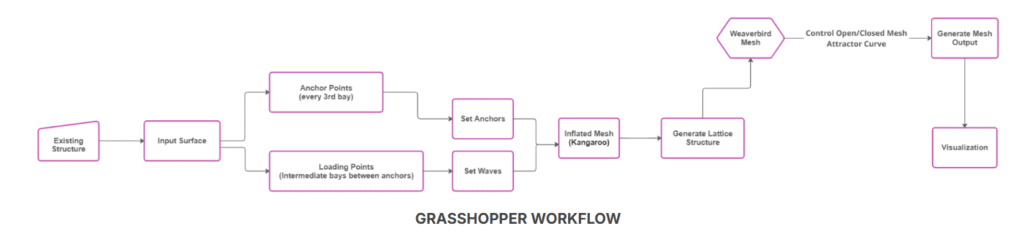
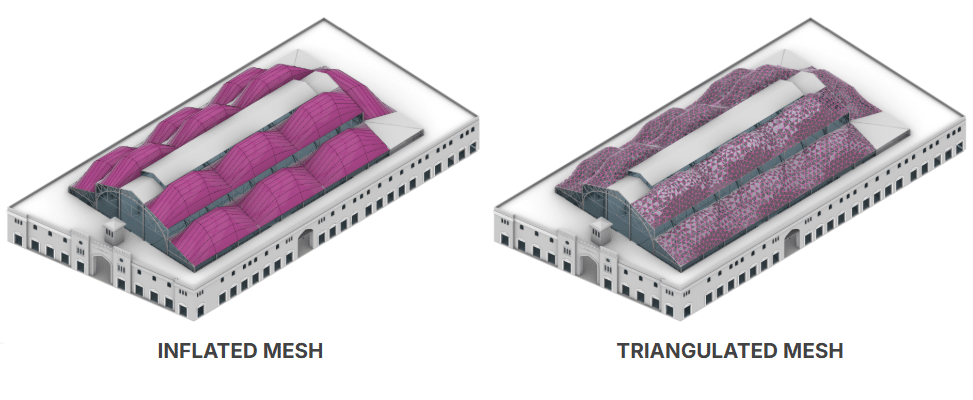
In the Grasshopper workflow, a flat mesh is inflated and anchored along specific bays. Then the mesh is triangulated in the post processing. Then finally a system is created for open vs closed mesh panels to control the light inside the market.
FORM FINDING PROCESS
By manipulating anchor density and loading forces, curvature could be controlled.
This workflow allowed the form to evolve naturally based on both structural and daylight intentions, which became a main influence in the project.
FORM ITERATIONS
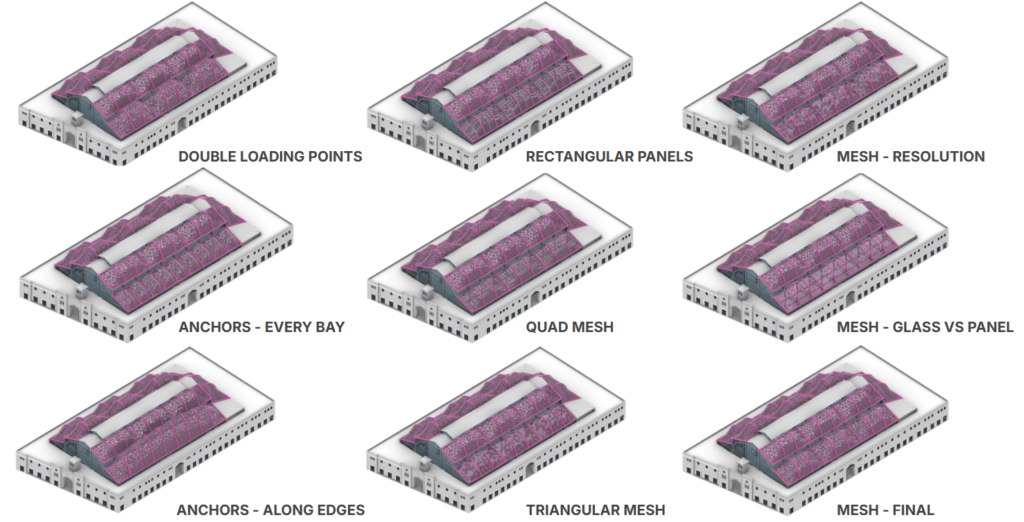
Through several iterations, comparisons were made between different mesh types as well as void and solid panel configurations. Each option produced a distinct pattern of light and shadow within the market.
STRUCTURE
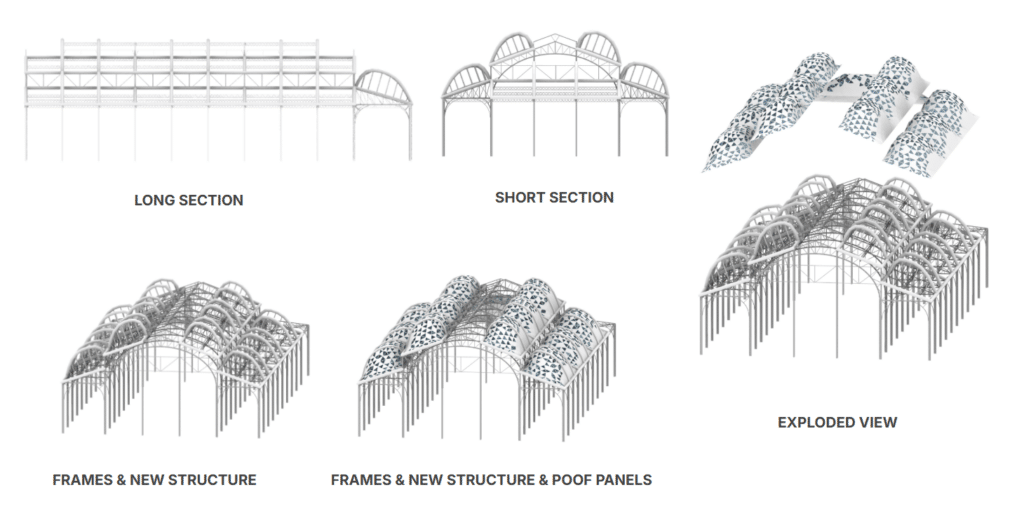
Below, we can see how the new roof system sits within the existing steel frame. The exploded view illustrates the relationship between old and new: the new pipe structure follows the curvature of the roof, and each pipe connects back to the existing steel frames through a secondary network of smaller connector pipes.
3D VIEWS & CIRCULATION
To understand how the roof performs throughout the day, a sunlight study was carried out from 6am to 6pm. The results show clear patterns: the east side is brightest in the morning, the center is dominant at noon, and the west side lights up in the afternoon. These changing conditions became the key generator for the internal zoning and circulation strategy.
Based on the sunlight behavior:
• In the morning, the east side receives strong, direct light, which is ideal for produce, flowers, and breakfast-related vendors.
• At noon, the central spine becomes the brightest area, so I placed more active, high-visibility programs there such as prepared food and artisan stalls.
• In the afternoon, the west warms up with slower, softer light, which suits textiles, ceramics and art.
Circulation naturally follows these lighting shifts -people tend to move toward the brightest zone at each moment of the day – creating a continuous loop through the market.

SECTIONS AND INTERIOR VIEWS
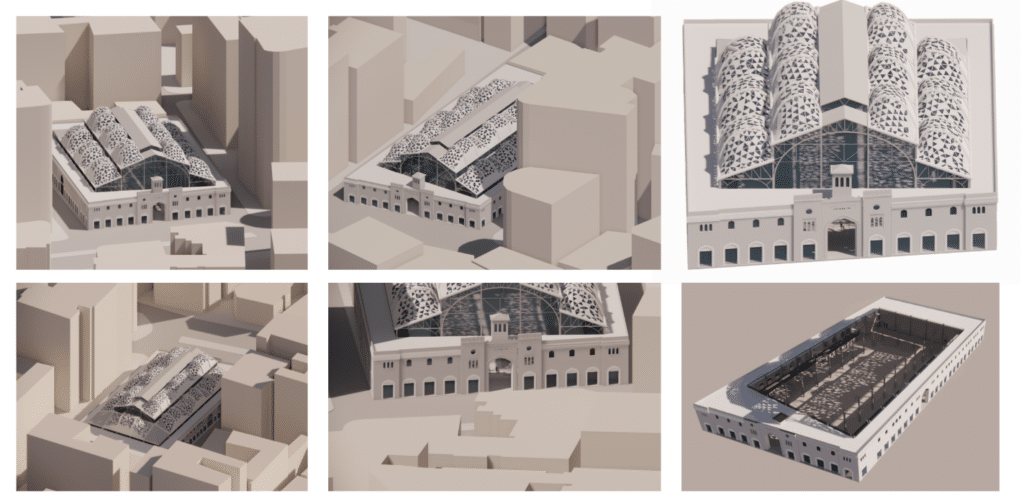
The sections and the 3d view below showcase again how the new roof is integrated with the existing frames.
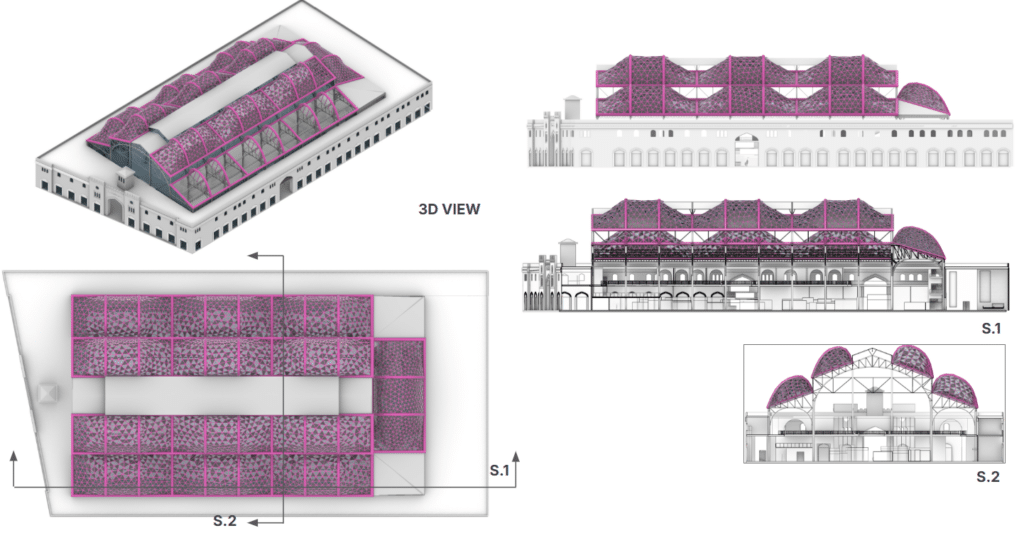
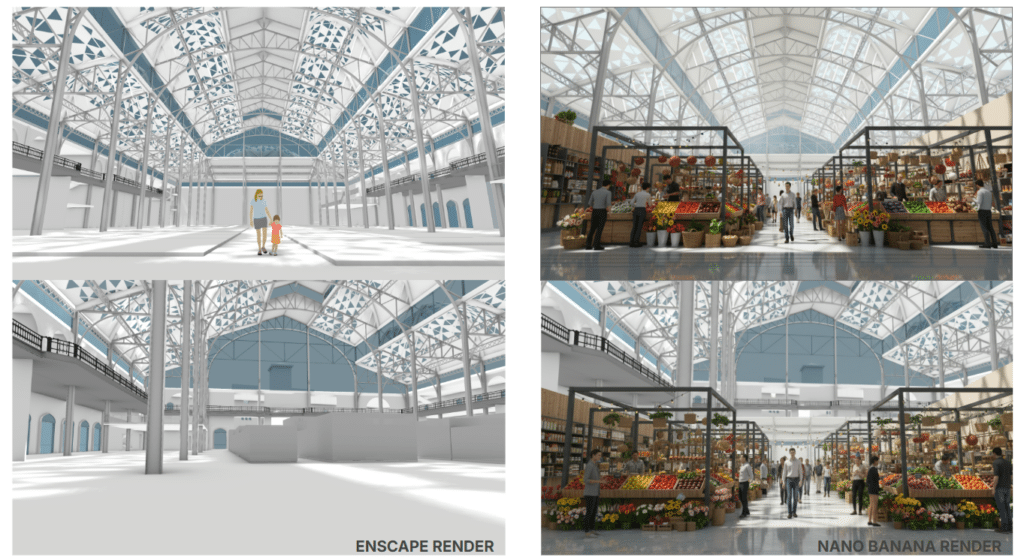
These views below show the market interior (the right side with the help on nano banana) where daylight enters through patterned triangulated openings in the roof, creating a play of soft shadows and illuminated zones across the floor.