A comprehensive environmental assessment and design optimization process was developed for a proposed residential development located in Palermo, Italy. This study integrates climate analysis, massing optimization, outdoor thermal comfort assessment and the development of a final design proposal informed by performance-based criteria.
Introduction
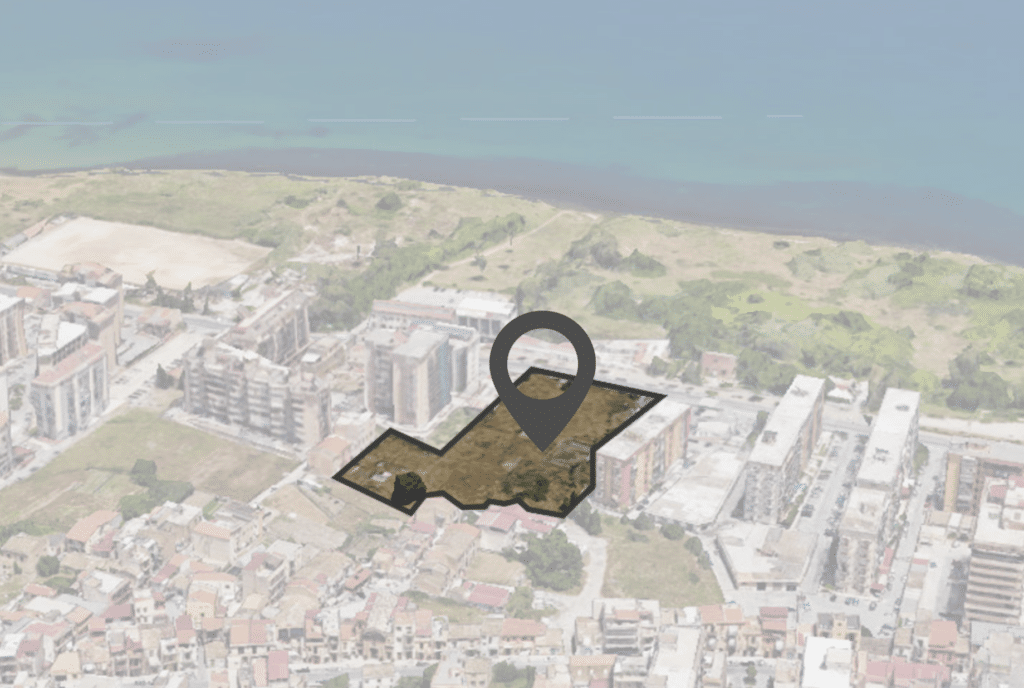
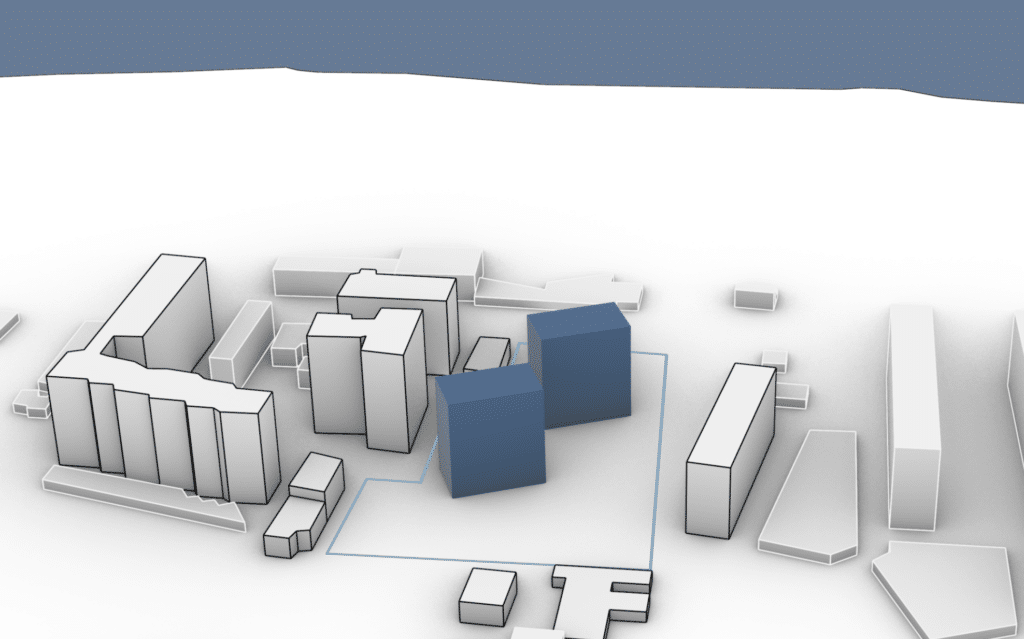
The project area covers approximately 6,500 m2 within a dense and flat residential district. The proposed development consists of two residential blocks positioned along the northern, sea-facing edge and a public park bordering the southern side.
Climate Analysis
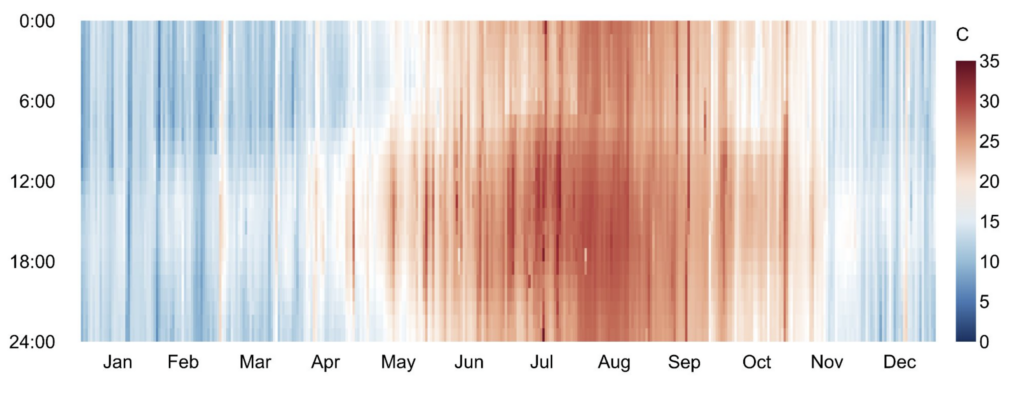
Palermo exhibits a Mediterranean coastal climate characterized by hot, dry summers and mild, humid winters. Althought sea breezes help regulate temperatures throughout the year, humidity remains high in winter, and heatwaves are increasingly common in summer.
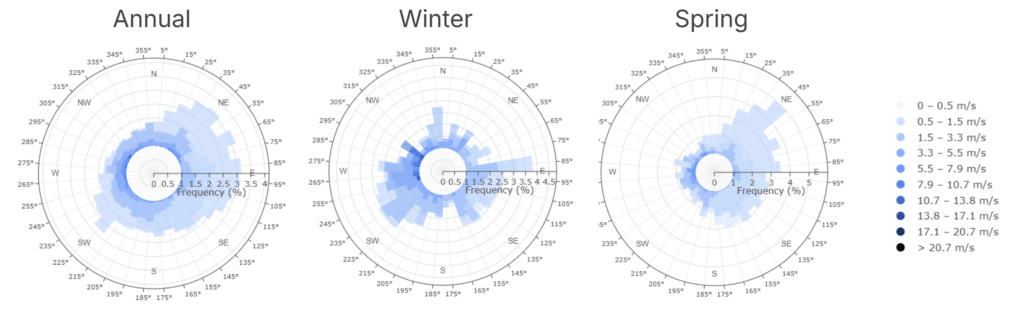
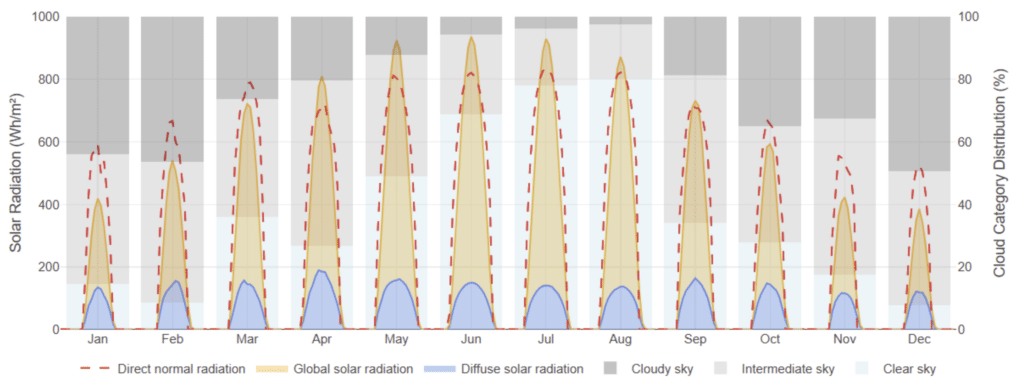
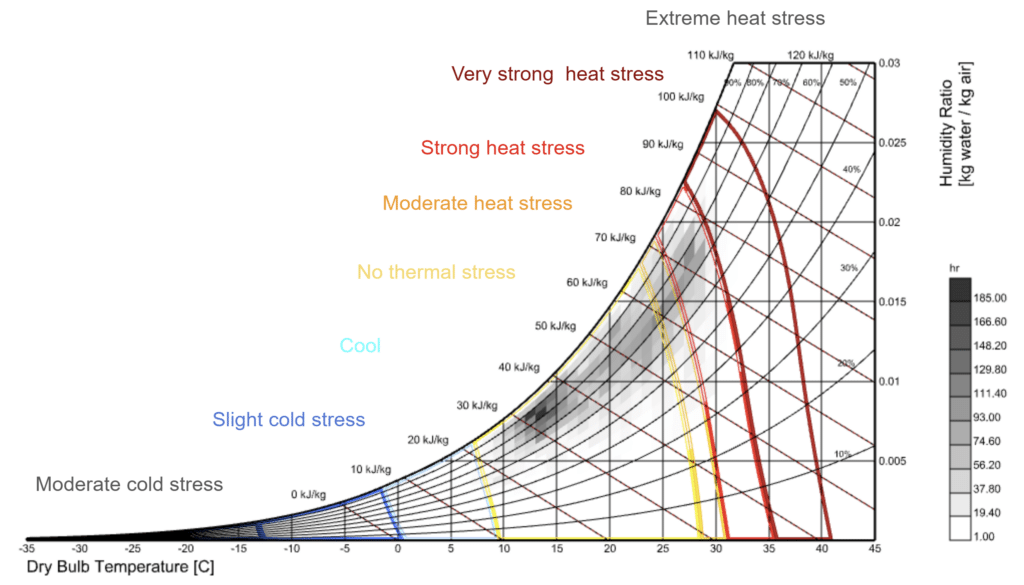
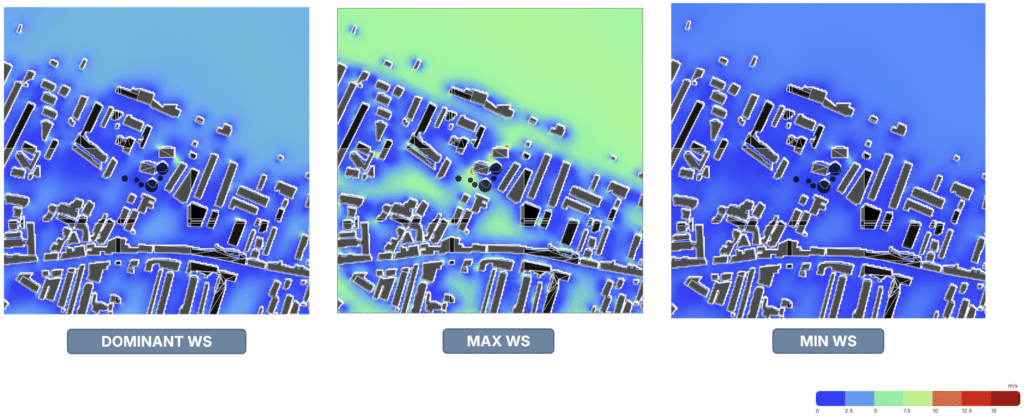
Temperature records show annual extremes ranging from 4.8°C to 34°C. The Universal Thermal Climate Index (UTCI) comfort threshold of 32°C (moderate heat stress) is frequently exceeded between June and September, corresponding with the period of highest solar radiation. Wind analysis indicates consistently mild wind speeds across all seasons, with a dominant easterly flow between 115° and 45°. Even though occasional winter peaks up to 15 m/s occur, wind conditions play a secondary role in the environmental design strategy.
Massing Placement Optimization
Solar Radiation
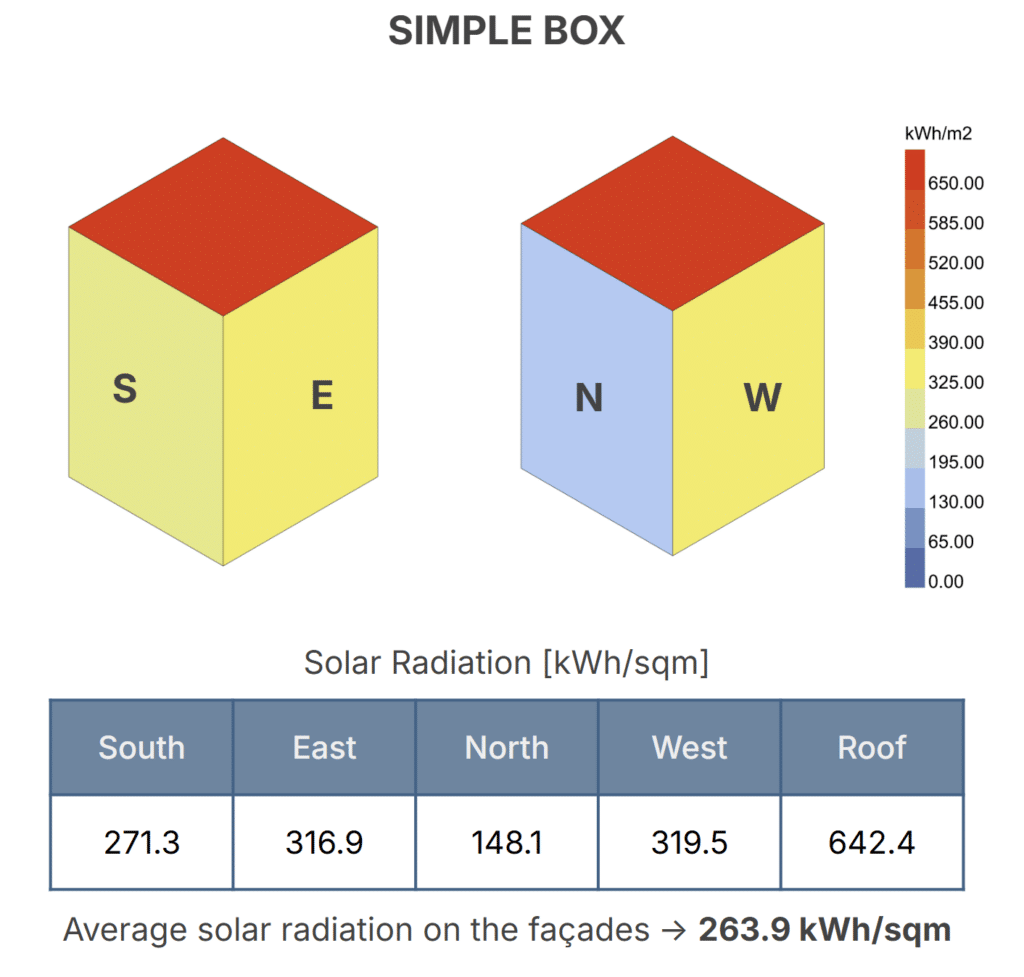
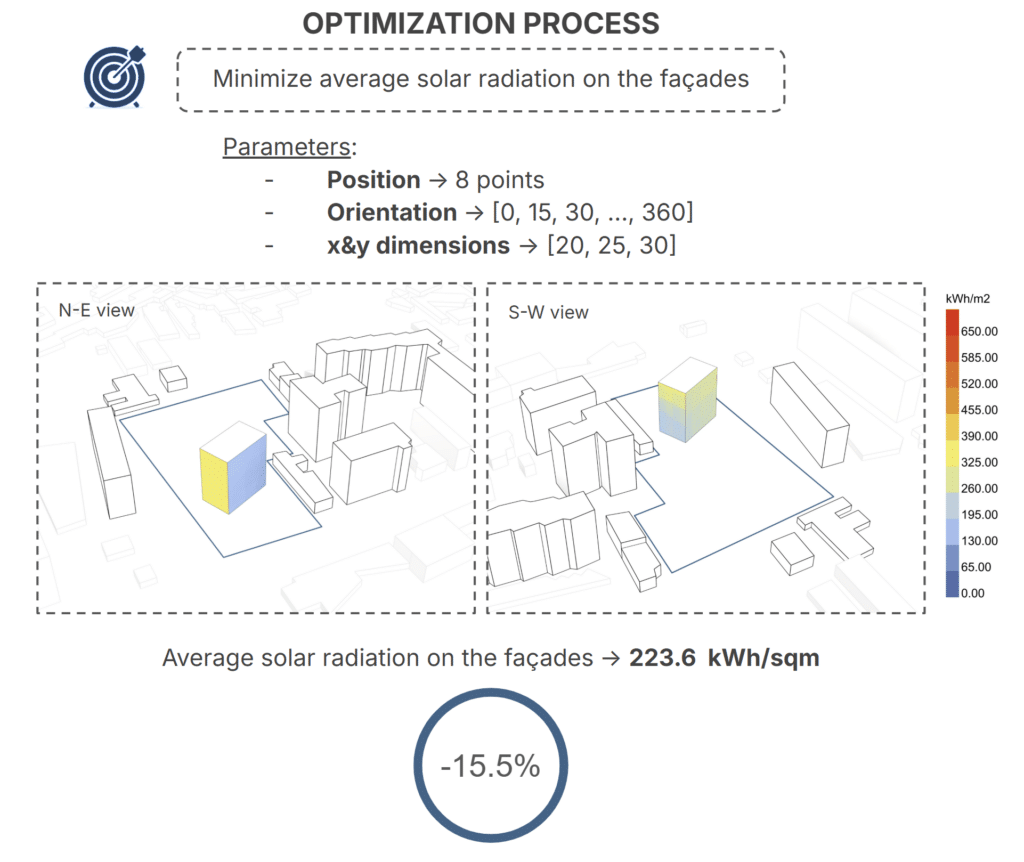
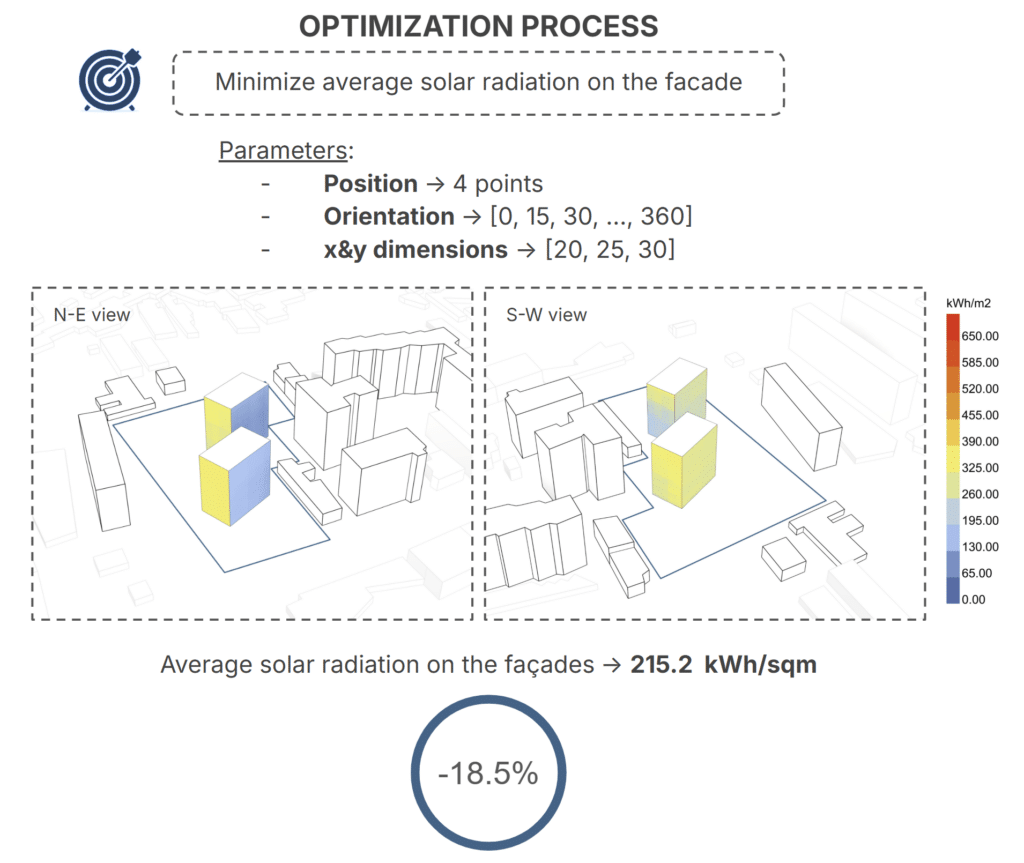
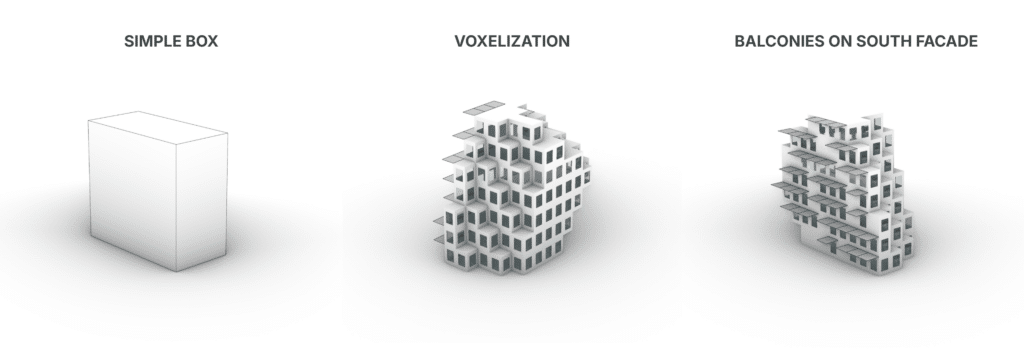
To minimize the average solar radiation on the façades during the hottest months (June, July and August), the analysis was conducted with a simple box by changing the orientation, position and building dimensions. By adjusting these variables, the optimization process, using Galapagos as evolutionary solver, achieved a 15.5% reduction in solar radiation for the first building mass compared to the base case. Similarly, the second building mass followed the same optimization approach, resulting in an average façade radiation of 215.2 kWh/m2 and a 18.5% reduction. Solar radiation is minimized by orienting the long façade toward the north, as the highest exposure occurs on the east and west sides.
Sun Hours and Visibility Analysis
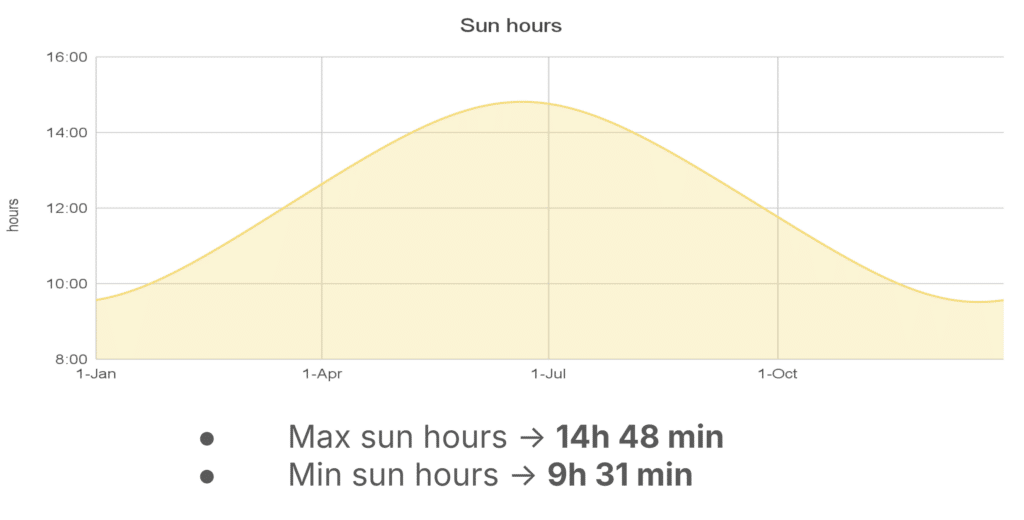
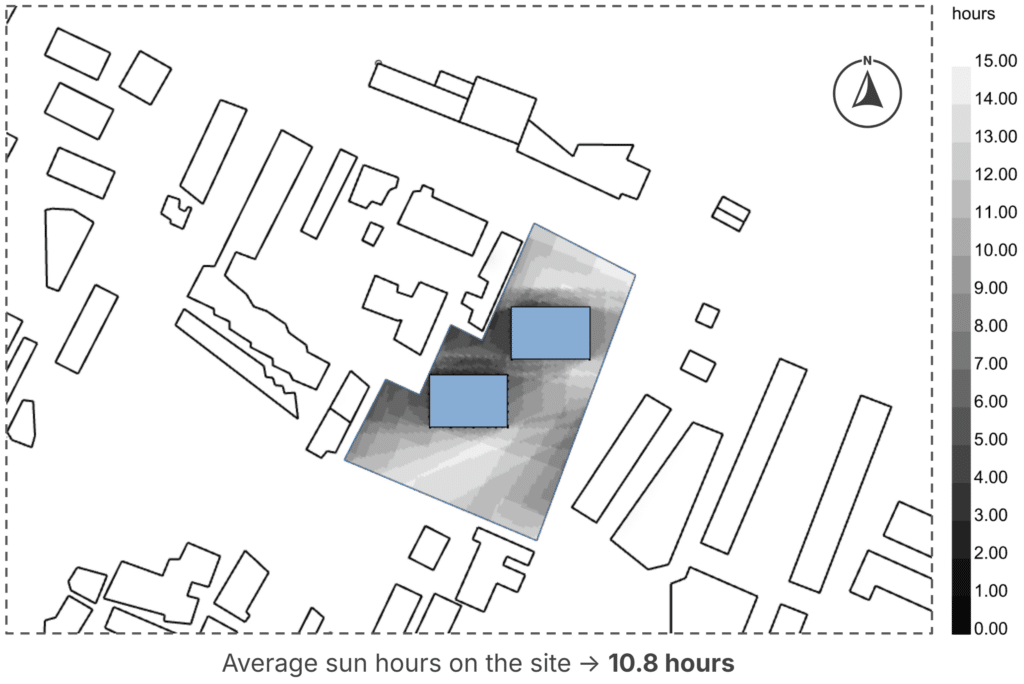
The sun-hour analysis, performed on 21 June, shows that the site receives an average of 10.8 hours of direct sunlight.
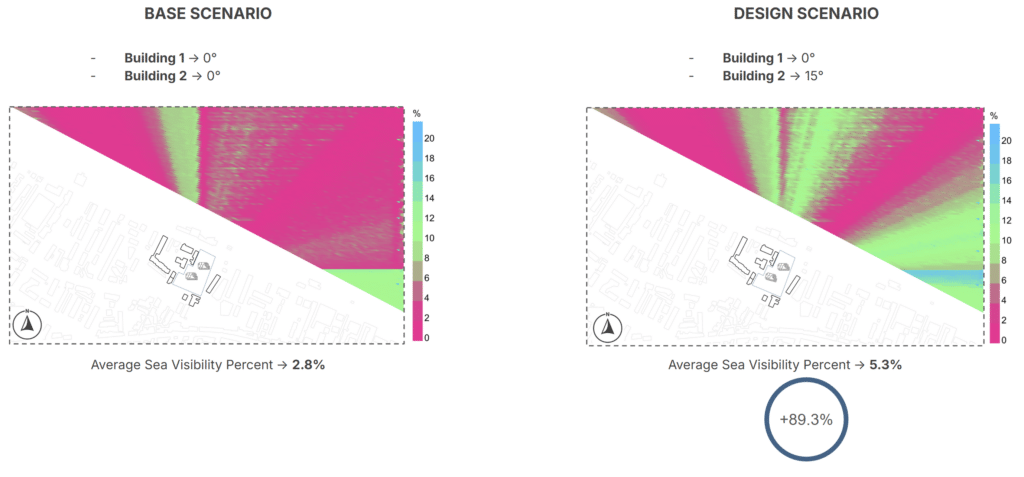
The study also examines sea visibility from the buildings. In the baseline massing configuration, avreage sea visibility measures 2.8%. By rotating the second building by 15°, sea visibility increases to 5.3%, nearly doubling view access without increasing the building footprint.
Outdoor Comfort Strategies
UTCI Evaluation
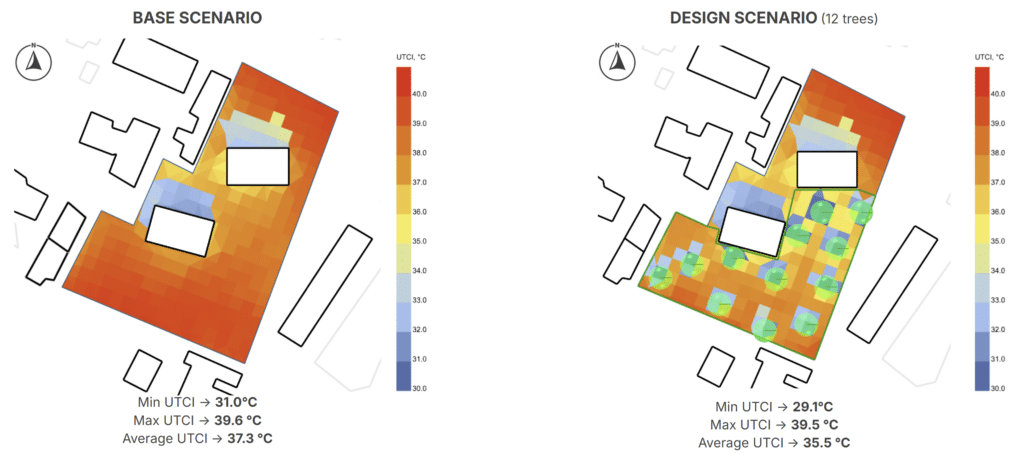
The base UTCI scenario, considering the site without trees, simulated for 21 August noon (cooling design day), records an average outdoor thermal index of 37.3°C, indicating high thermal stress. To mitigate heat, the introduction of 12 trees reduces the UTCI to 35.5°C. However, more than 20 trees would be required to reach the target average UTCI of 32.5°C.
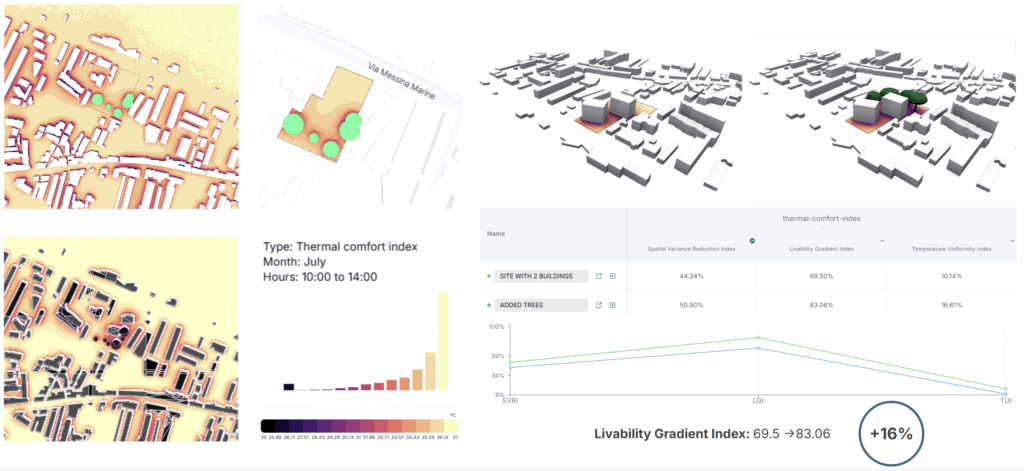
Moreover, the comparison platform provided by Infrared.city makes it possible to compare the improvement due to the trees by analyzing KPIs, such as the Liveability Gradient Index, which rises by 16%.
Ground Material Comparison
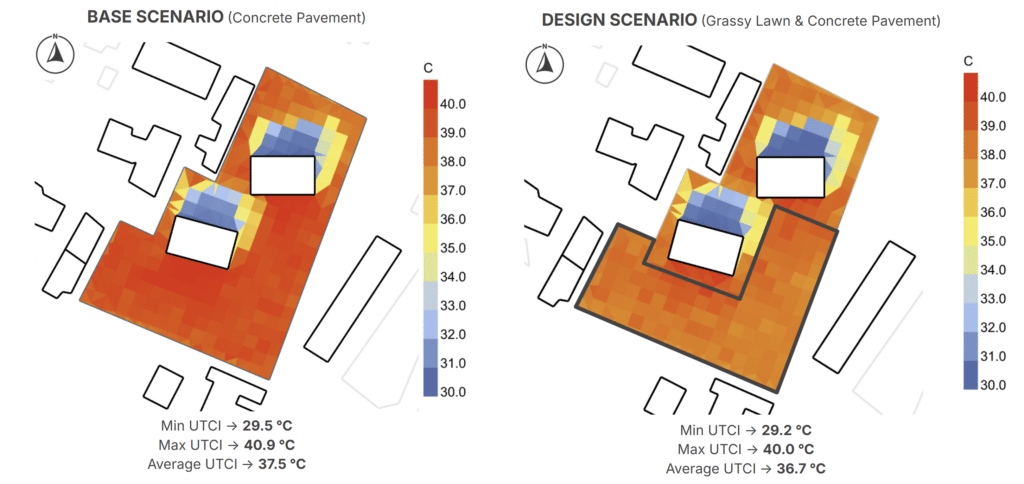
Simulations comparing concrete paving with grassy lawn demonstate that replacing hard surfaces with vegetation further reduces UTCI values. Specifically, the average UTCI drops from 37.5°C to 36.7°C.
Wind Analysis
Wind analyses conducted in Infrared.city confirm Palermo’s mild wind conditions and show that wind does not significantly affect the final design.
Design Exploration
Design Concept
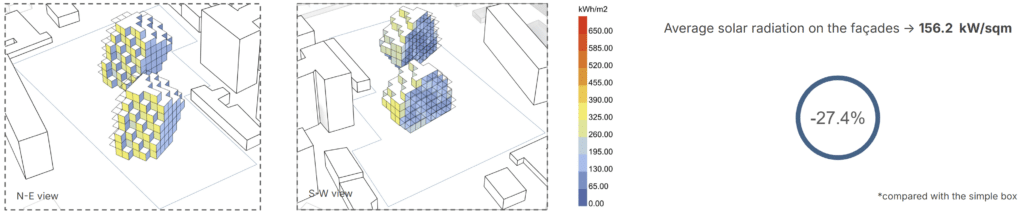
The design process begins with a simple geometric mass used to evaluate the outcomes of the initial environmental analyses. After deriving preliminary conclusions, voxelization technique is applied to the base volume and balconies are introduced along the southern façade to enhance shading performance.
Parameters & KPIs
Modifying the plan dimensions (X-Y) and height of the bounding box allows the exploration of different voxel-based geometries.
The primary key perfomance indicators (KPIs) informing the selection process are:
- total volume and gross floor area (GFA);
- minimization of façade solar radiation (kWh/sqm);
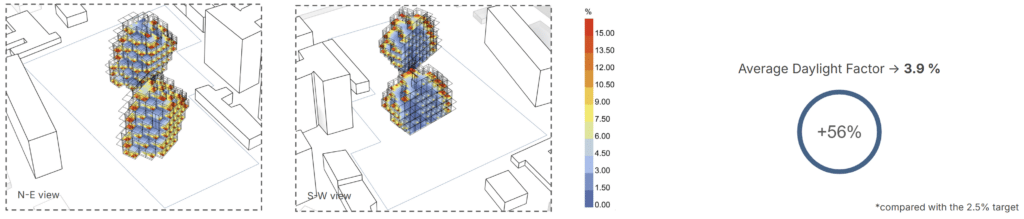
- maximization of daylight factor (%);
- enhancement of sea visibility from the windows (%).
Final Proposal
The ParCoor platform is used to compare the geometries trough a parallel coordinate chart and to select the optimal proposal.
The final configuration results in:
- ≈30% reduction in solar radiation on façades comperared;
- ≈4% daylight factor, surpassing the initial performance target of 2.5%;
- 5.3% visibility percent.