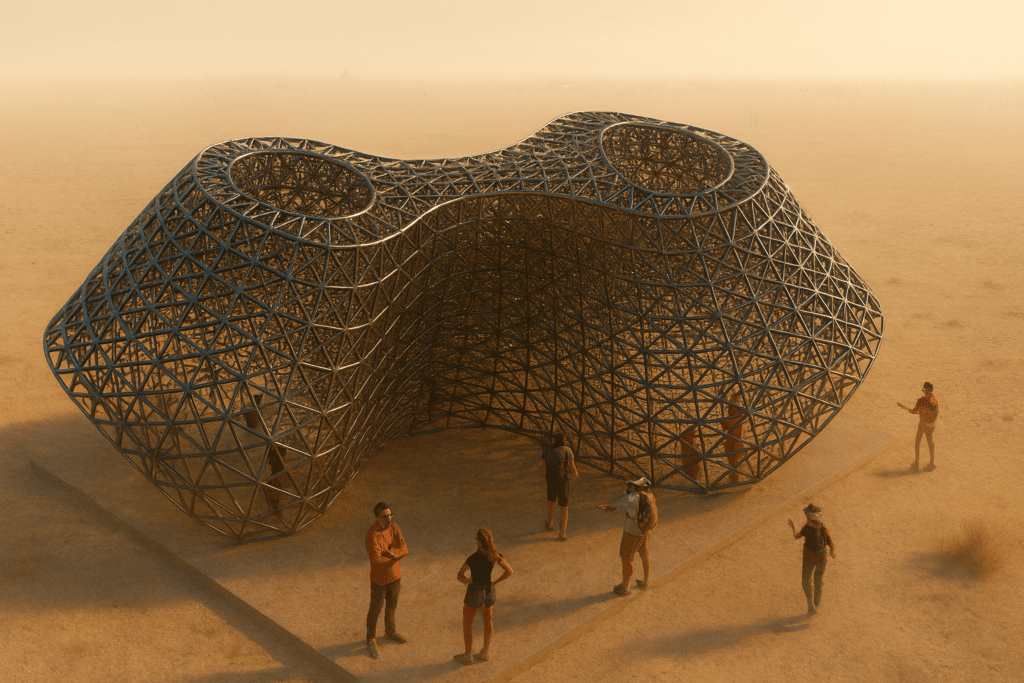
From Dense Lattice to Optimized 3D-Printed Structure
1. Project Overview
This project explores the design and structural optimization of a temporary pavilion using computational design tools and lattice-based construction logic.
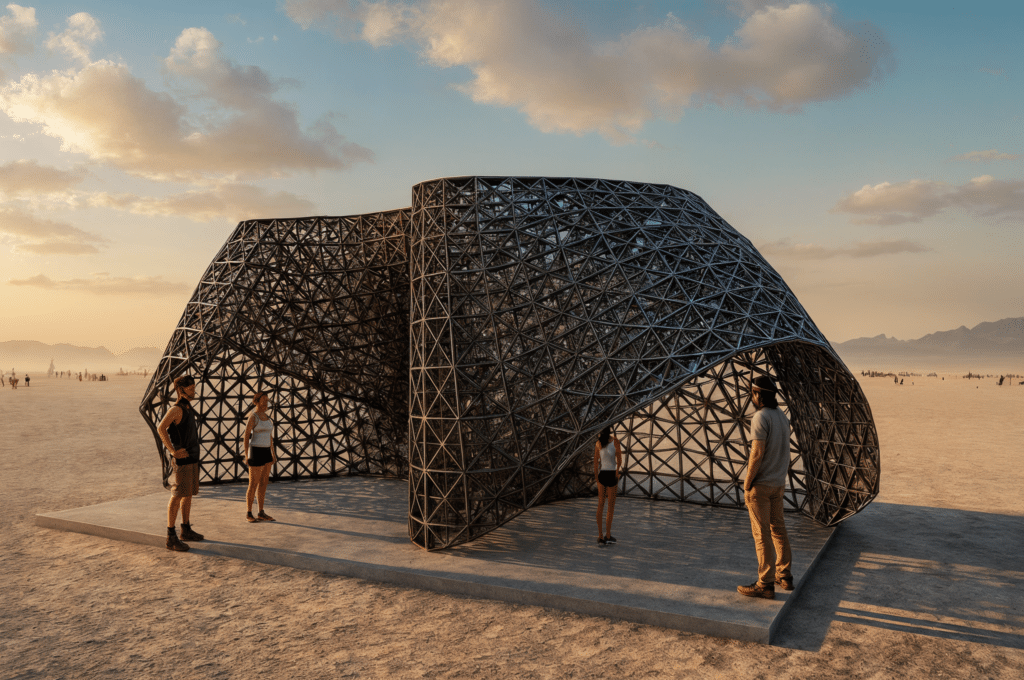
The pavilion is conceived as a porous, walkable structure designed for large-scale 3D printing using glass-fiber reinforced recycled PET.
The main objective is to investigate how geometry, voxelization, and structural simulation interact under computational and material constraints.
2. Design Constraints and Brief
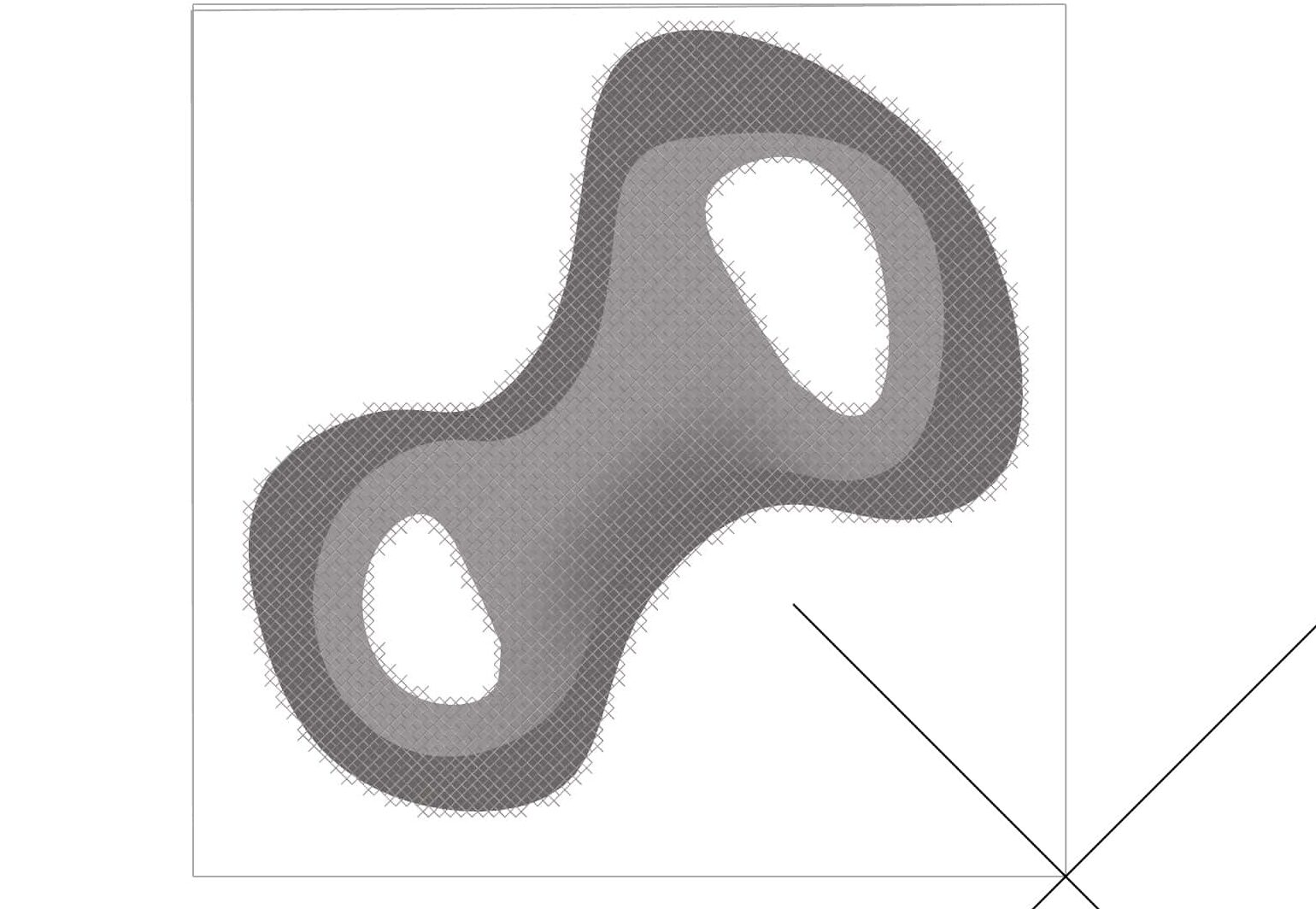
The pavilion is developed within a strict bounding box of eight by eight meters in plan and a maximum height of six meters in its initial version.
Key constraints include:
- Structural stability under gravity loads
- A deflection target close to span divided by one hundred
- Material efficiency suitable for 3D printing
- Spatial continuity with clear entry, path, and exit
3. Initial Geometry and SubD Exploration
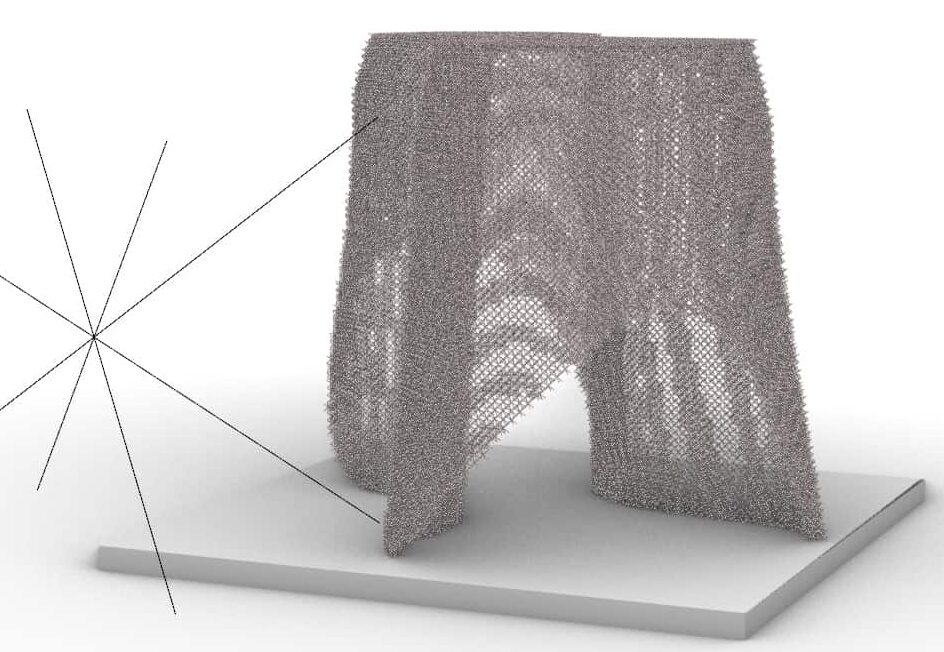
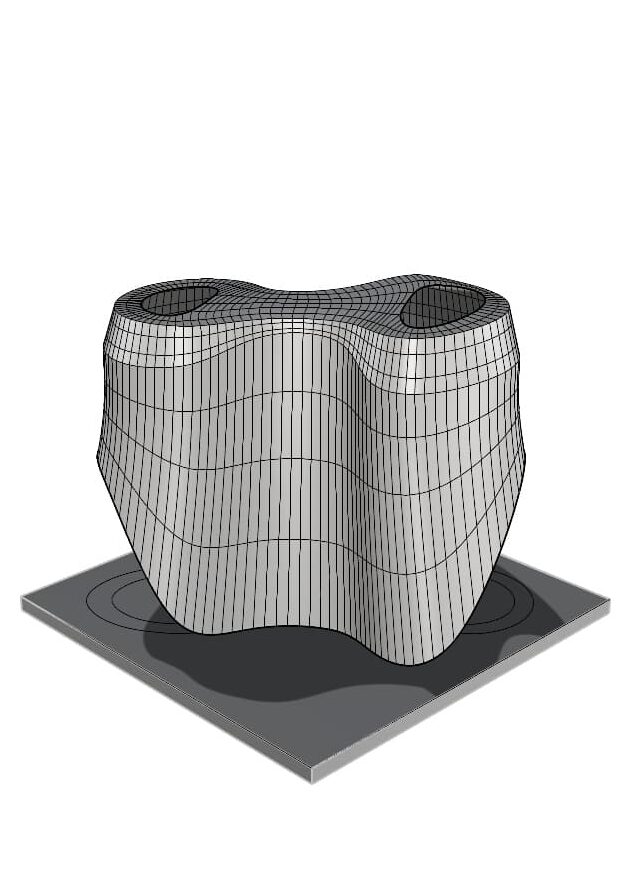
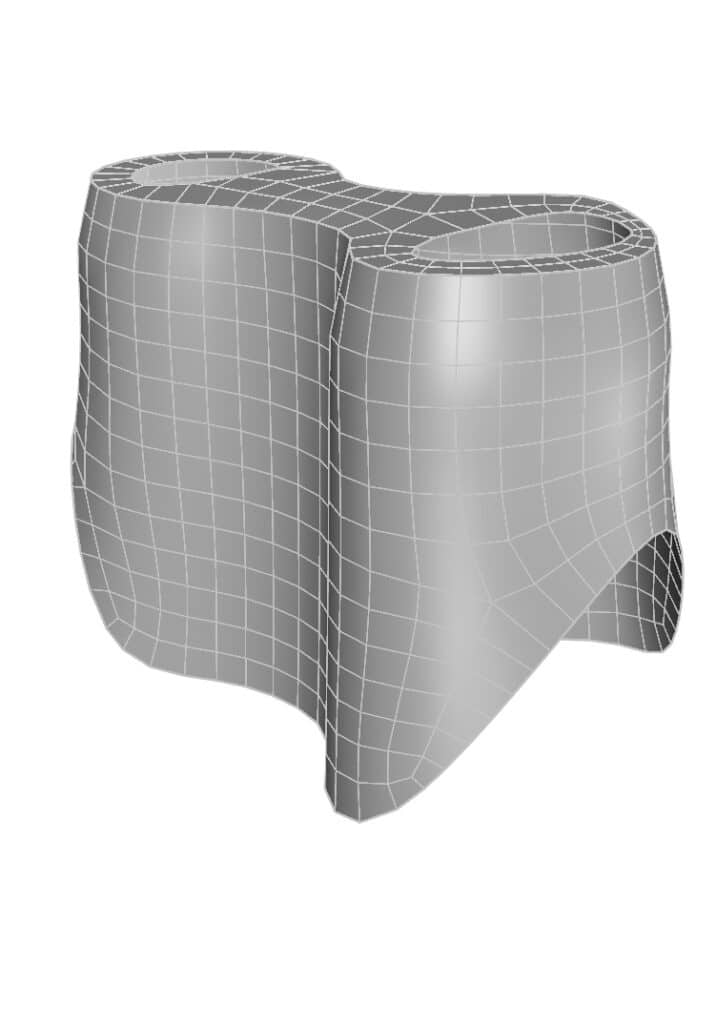
The base geometry was generated using SubD modeling in Rhino, allowing smooth curvature and continuous surfaces.
This approach enabled rapid exploration of form while maintaining topological continuity, which later became essential for voxelization and lattice generation.
4. Voxelization and Lattice Experiments
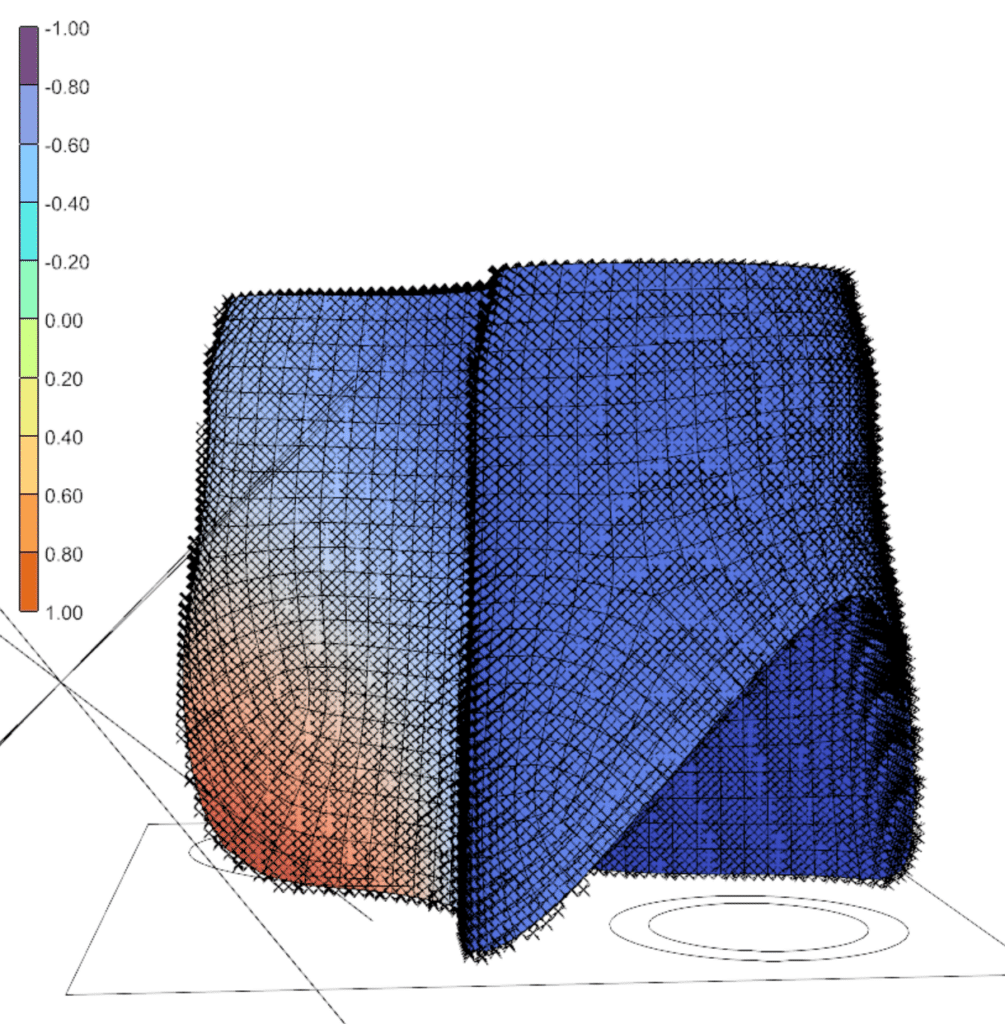
The geometry was transformed into a volumetric system using Crystallon V Two.
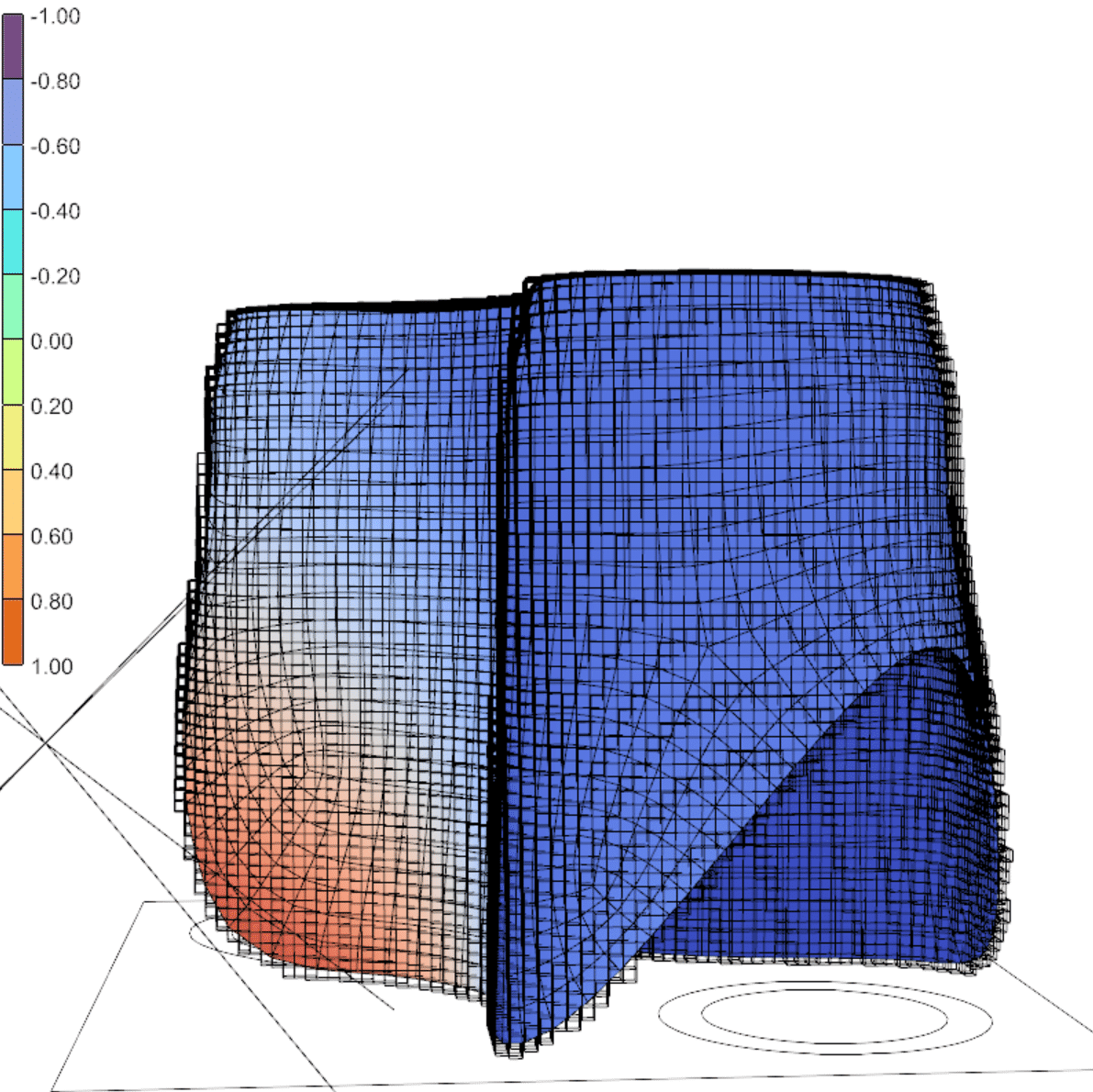
Multiple cell selectors were tested, producing dense lattice configurations with high geometric resolution.
While visually rich, these early lattice models generated hundreds of thousands of bars and nodes, making direct structural analysis computationally unfeasible.
5. Cell Selector Edge Octahedron
At this stage, structural analysis repeatedly failed due to excessive degrees of freedom.
The attempt to analyze the full lattice directly in Alpaca resulted in crashes and unstable simulations.
This revealed a critical insight: increasing geometric complexity does not necessarily improve structural performance. Instead, complexity must be strategically controlled.
6. Optimization Strategy: From Lattice to Equivalent Models
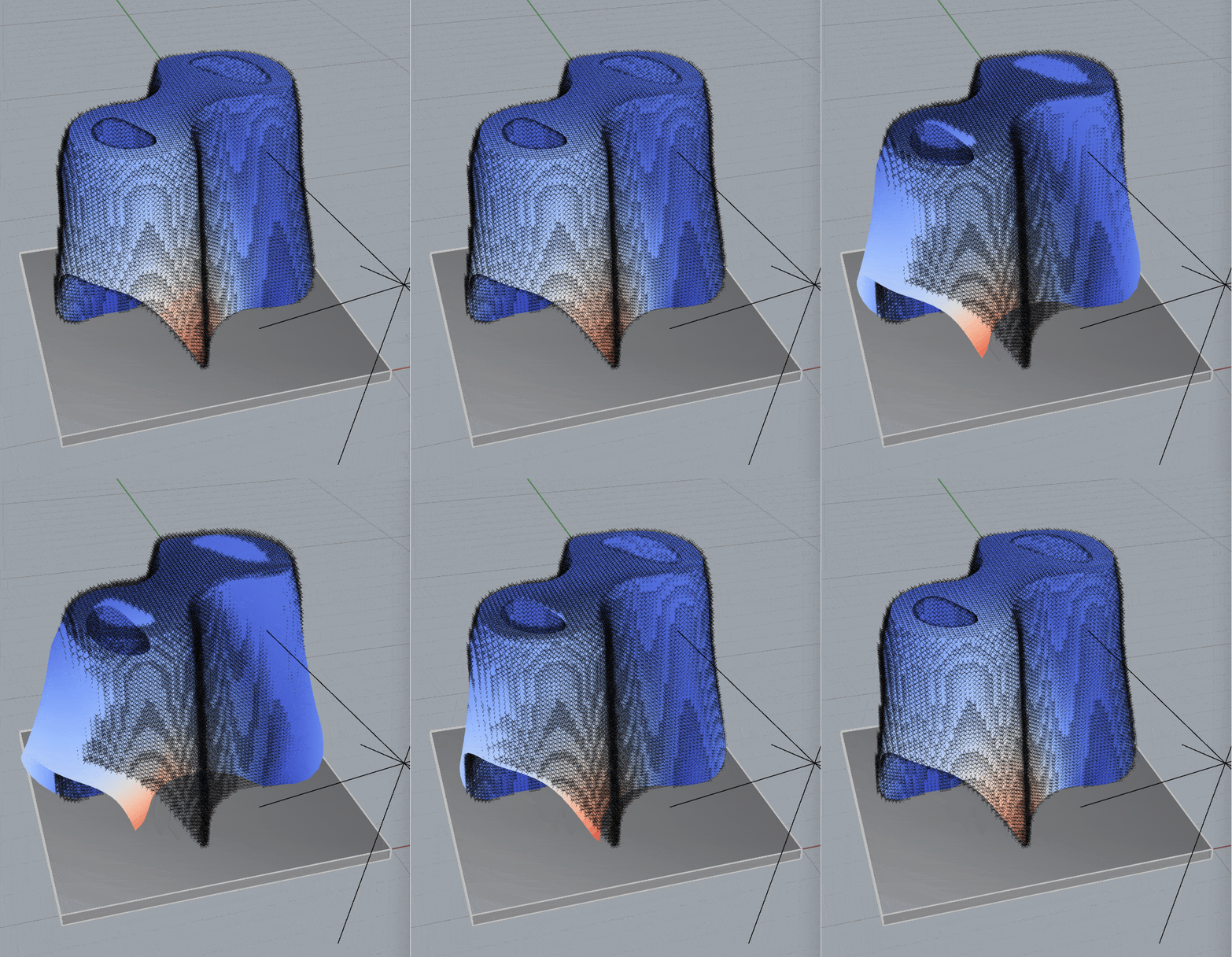
To overcome these limitations, the workflow shifted toward an equivalent structural strategy.
The lattice geometry was approximated through simplified models, allowing global structural behavior to be evaluated before reintroducing geometric detail.
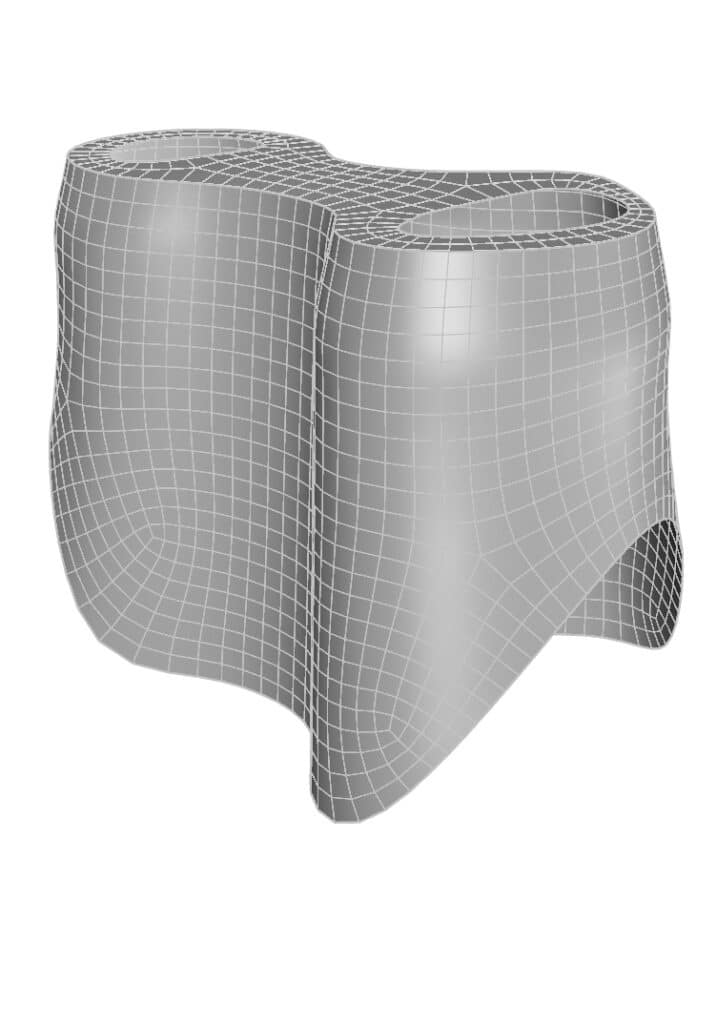
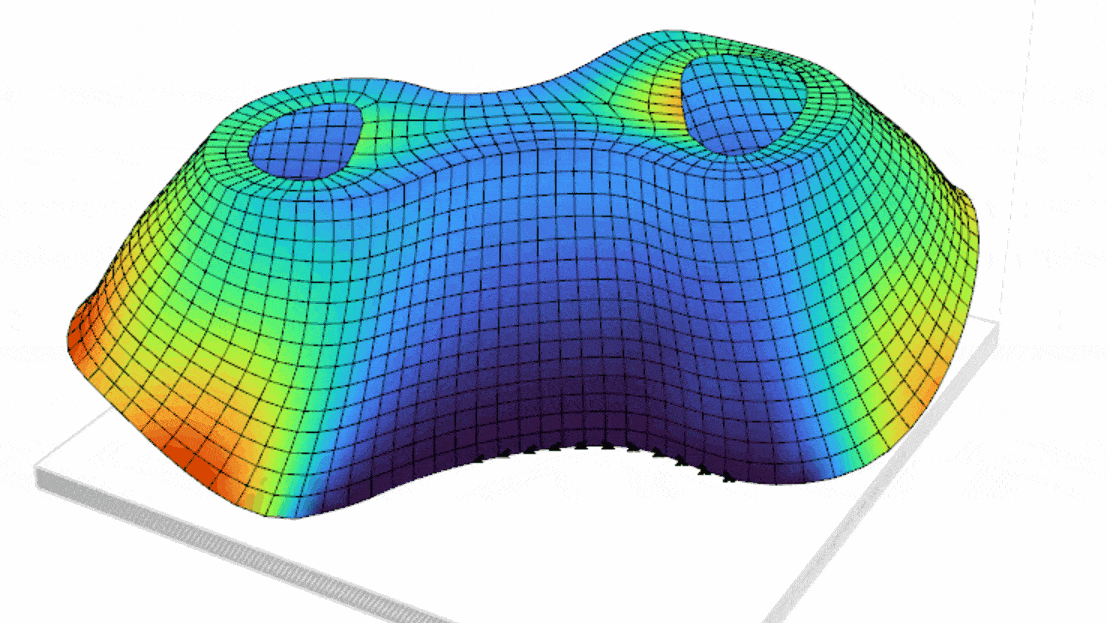
At this stage, QuadRemesh was applied to reduce the number of quads in the base geometry, significantly improving mesh quality and computation time in Alpaca.
7. Structural Analysis with Alpaca4D
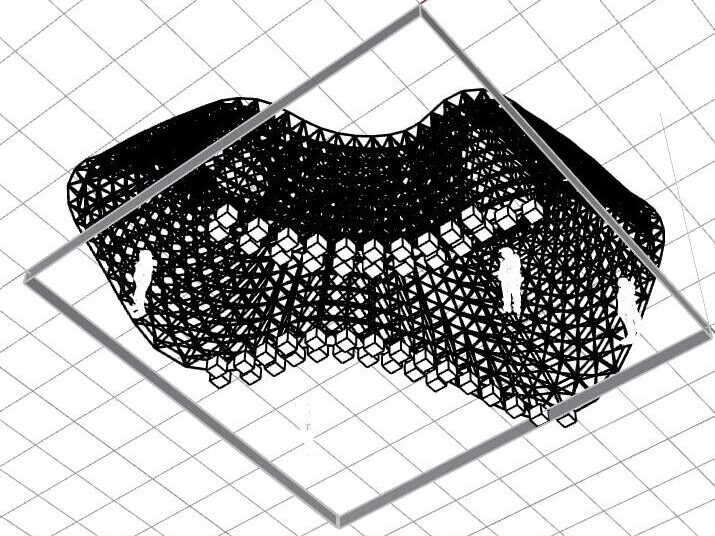
Initial simulations were performed using plate fiber sections, which provided limited insight into the true behavior of the lattice.
Following faculty feedback, the structural system was redefined using force beam column elements, better representing the behavior of discrete lattice members.
This transition resulted in more reliable values for mass and displacement.
8. Final Structural Results
The final configuration produced a structurally coherent and computationally stable model.
The system reached:
- Approximately two thousand one hundred nodes
- A total mass of roughly three hundred seventy kilograms
- Maximum displacement close to the defined serviceability limit
Compared to earlier iterations, this represents a mass reduction of more than ninety-eight percent while maintaining acceptable deformation.
9. Final Structural Results
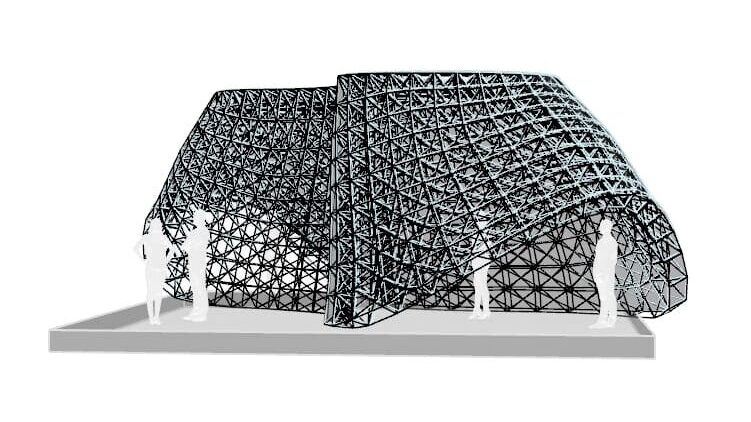
The final configuration produced a structurally coherent and computationally stable model.
The system reached:
- Approximately two thousand one hundred nodes
- A total mass of roughly three hundred seventy kilograms
- Maximum displacement close to the defined serviceability limit
Compared to earlier iterations, this represents a mass reduction of more than ninety-eight percent while maintaining acceptable deformation.
10. Spatial Experience, Conclusions, and Future Work
Two upper openings allow daylight to penetrate the interior, while the porous lattice filters light, frames views, and defines a continuous spatial experience.
The project demonstrates that optimization is not only numerical but also conceptual. Reducing height, simplifying the lattice logic, and aligning geometry with structural behavior produced more effective results than increasing geometric resolution.
Visualizations place the pavilion in a desert environment inspired by Burning Man, reinforcing its temporary, experimental character and emphasizing human interaction with the structure.