
Bab al-Luq Market in Cairo was designed to be bright, legible, and hygienic—then decades of add-ons and wear turned it into a dim, confusing interior. This proposal makes one clear move: a parametric double-skin roof that diffuses daylight and defines a readable circulation spine.
Location: Cairo, Egypt
Climate: Hot, dry, sunny
Typology: Historic market hall + new single-level shopping route & double-skin shell
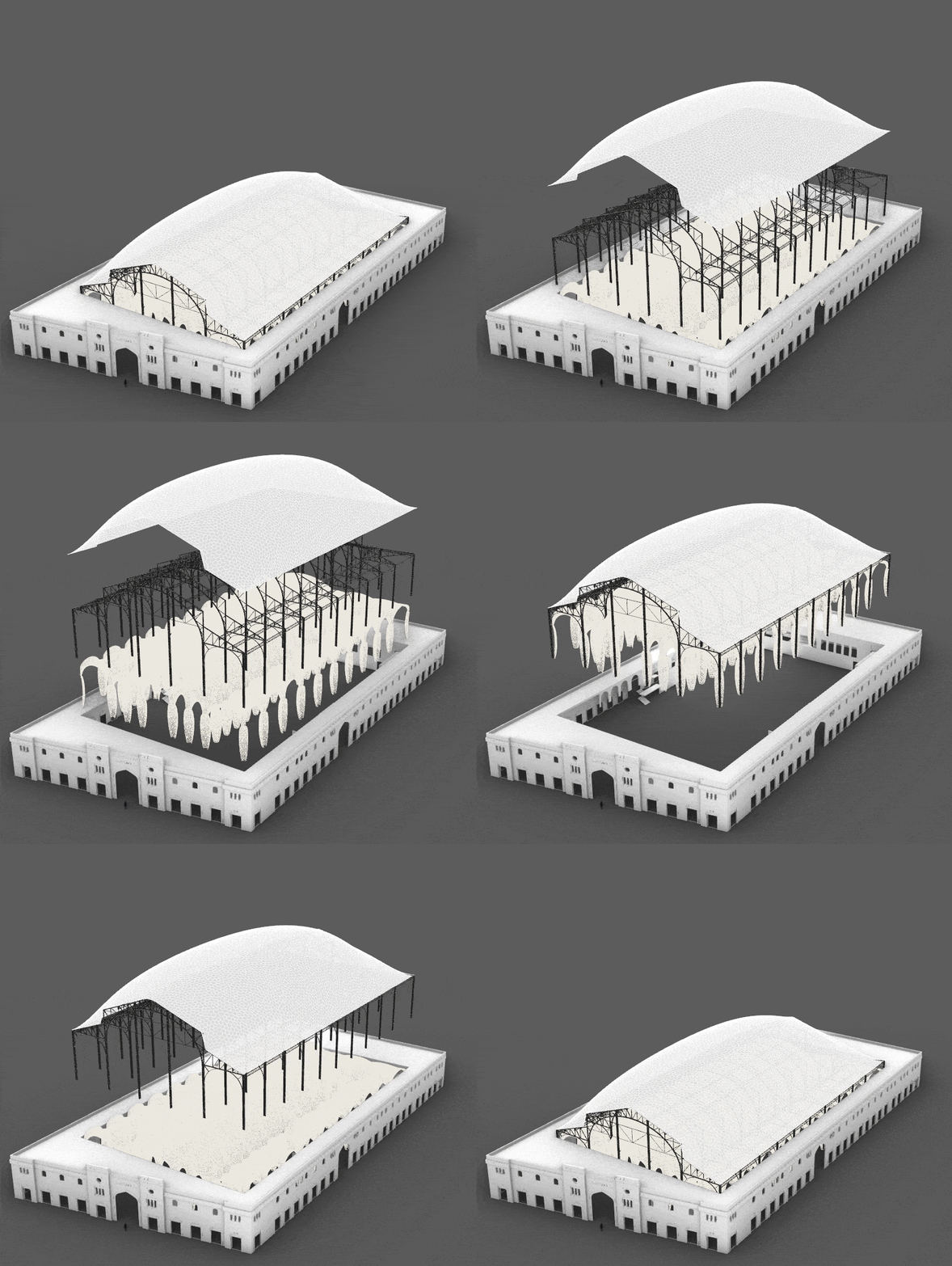
Bab al-Luq is a 1912 market hall with a strong structural rhythm—steel trusses, repeated bays, and one big central volume. But the interior no longer reads clearly. Daylight is uneven, stalls block sightlines, and circulation feels improvised. The intervention must restore comfort and wayfinding while respecting the heritage fabric and the limits of the existing steel structure.
In Cairo’s sun, more glass would only add glare and heat. The real task is to collect usable daylight without overheating, and to organize movement without turning the market into a generic mall.

A Clear Move
The core strategy is a roof that does two jobs at once: it anchors the route and shapes the light. The plan connects the market’s three main entry points with one continuous spine—wide enough for two-way flow, readable from the ground, and reinforced by repeated moments of brightness above.
Instead of scattering small interventions everywhere, the project concentrates change along this path. Wayfinding becomes intuitive: follow the brighter ceiling, reach your destination faster, and re-enter the market floor with a clear sense of orientation. The existing bays stop feeling like a maze and start working like a simple address system.
Material & Light
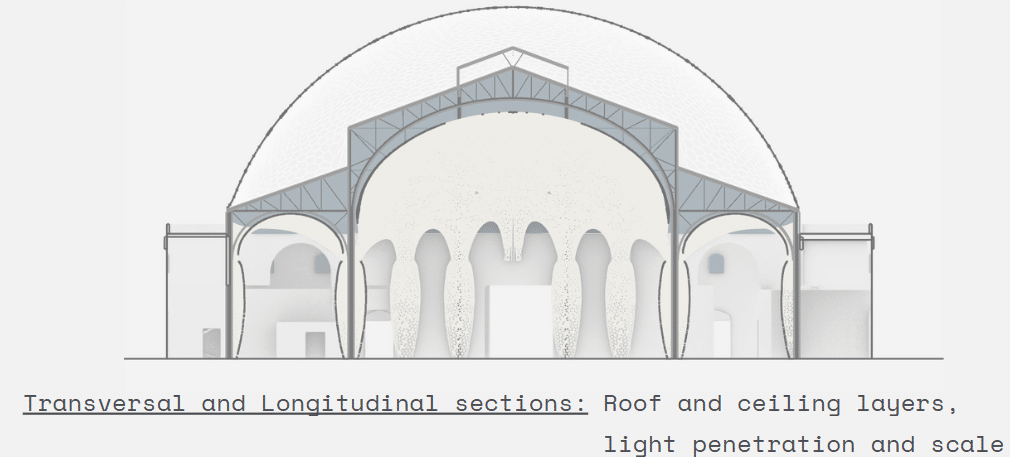
The roof is designed as a daylight instrument with two layers that turn harsh sun into soft, working light.
The outer skin is made of hexagonal ETFE pillows that capture sky light and reduce direct sun. Beneath it, an inner GFRTP layer in an earthy tone filters brightness and limits upward glare. This inner surface is perforated, and the perforation rate is calibrated: openings tighten at high points and expand as the shell approaches the ground—about 10% open above, up to 90% near touchpoints—so light intensifies where people actually walk, pause, and shop.
The result is a calmer interior: fewer sharp beams, a more even glow, and a ceiling that visually “breathes” with the market’s activity.
Performance
By diffusing light instead of punching skylights, the roof reduces glare and supports longer usable hours with less reliance on artificial lighting. High-level openings support warm-air exhaust, while shaded edges improve comfort along the circulation spine and reduce heat build-up in the busiest zones.
Accessibility is treated as a baseline. The route is conceived as step-free and legible, with daylight acting as a guide. Consistent lighting also improves signage visibility and supports clearer wayfinding.
People
Before, shoppers navigate by memory, stall owners claim territory, and the hall feels visually noisy. After, the circulation spine guides movement, daylight marks key junctions, and the repeated structural bays become an easy mental map. As the inner skin lowers and perforations grow, brightness frames the path—helping people choose a direction without stopping to “figure out” the building.
A single roof move restores daylight, clarity, and a calmer market experience.
