Tetuán Lattice Canopy
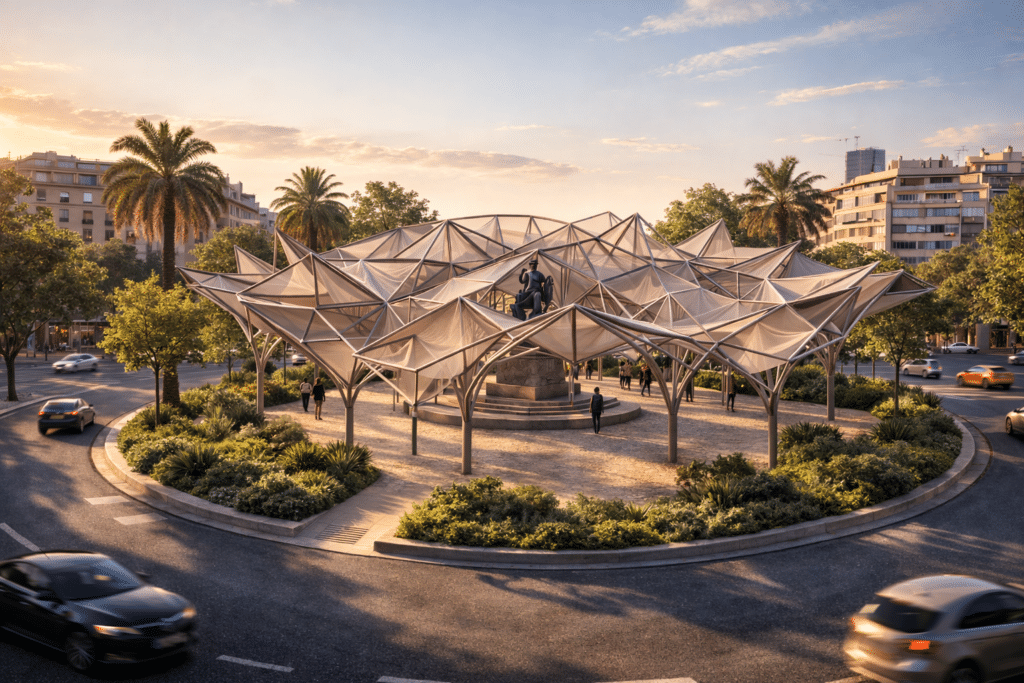
Tetuán Lattice Canopy is a lightweight tensile pavilion proposed for Plaça de Tetuan. Inspired by the plaza’s circular geometry, the project uses a hexagonal lattice to organize a structural field around the central monument.
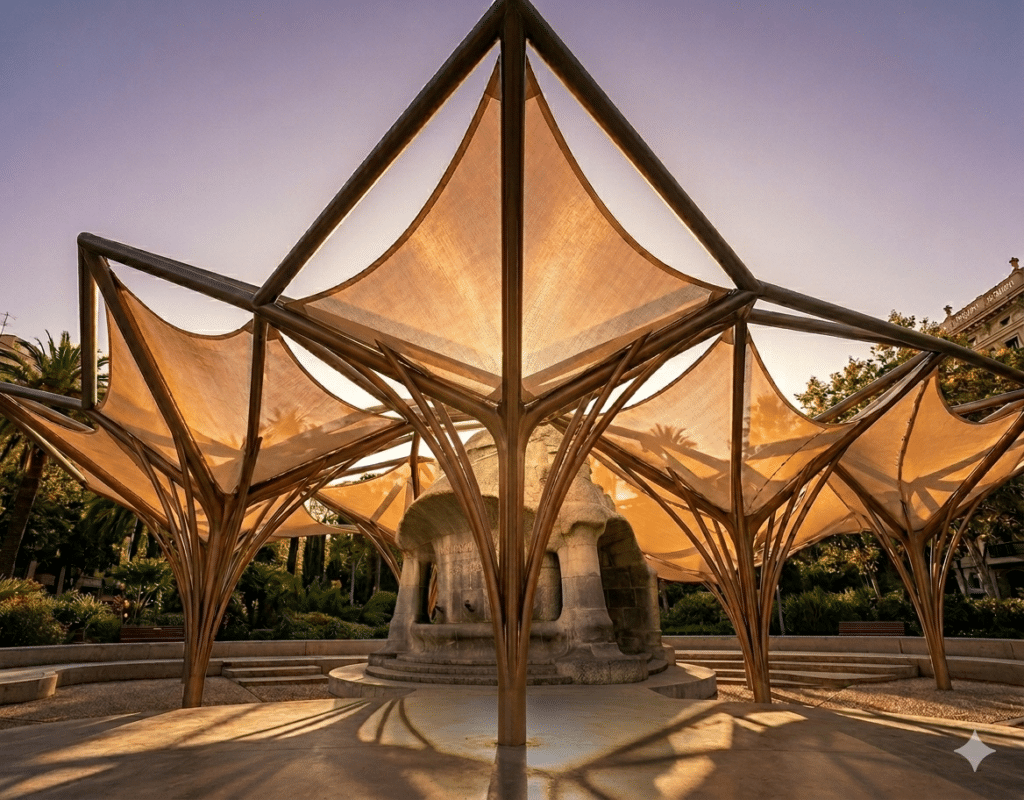
Hexagons are transformed into a three-dimensional network supported by branching columns. Fabric-like meshes are tensioned between the segments of each hexagon, forming a porous canopy that filters light and creates a shaded public space within plaça Tetuán.
The canopy acts as an adaptive structure that frames the monument while preserving the character of the plaza.
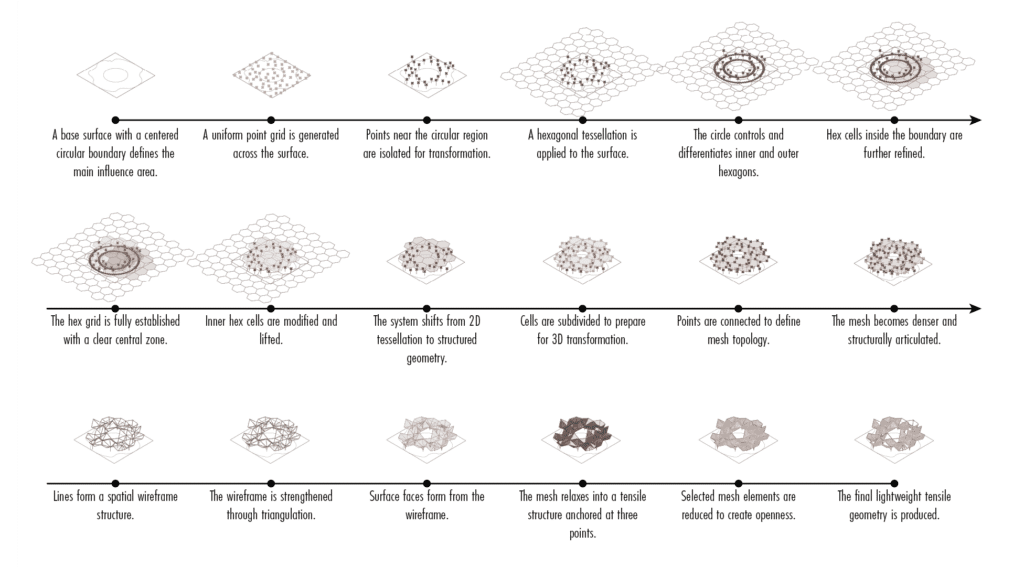
The process begins by defining a circular boundary that establishes the main area of influence. A uniform point grid is generated and transformed into a hexagonal tessellation across the surface. Cells within the circular region are differentiated, refined, and lifted, transitioning the system from a two-dimensional pattern into structured three-dimensional geometry.
The hex network is then converted into a connected wireframe and meshed to create a coherent structural topology. Through dynamic relaxation, the mesh evolves into a tensile surface anchored at fixed points. Finally, selected elements are reduced to increase porosity, resulting in a lightweight, articulated canopy structure.
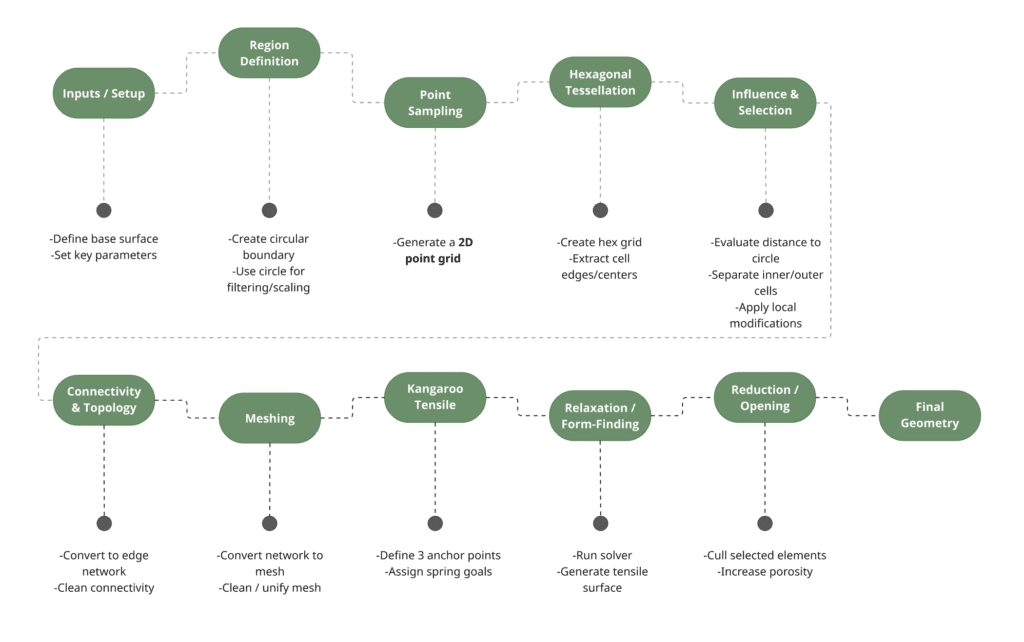
Grasshopper Definition
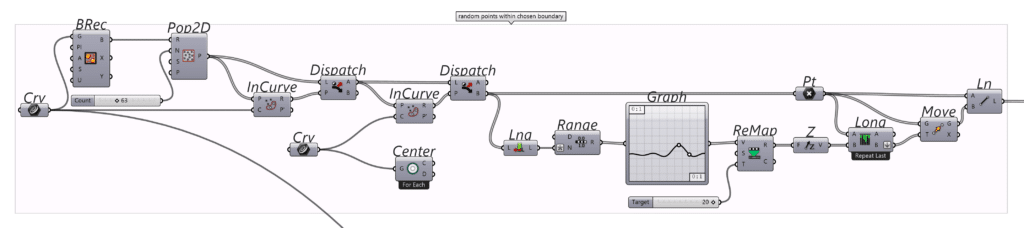
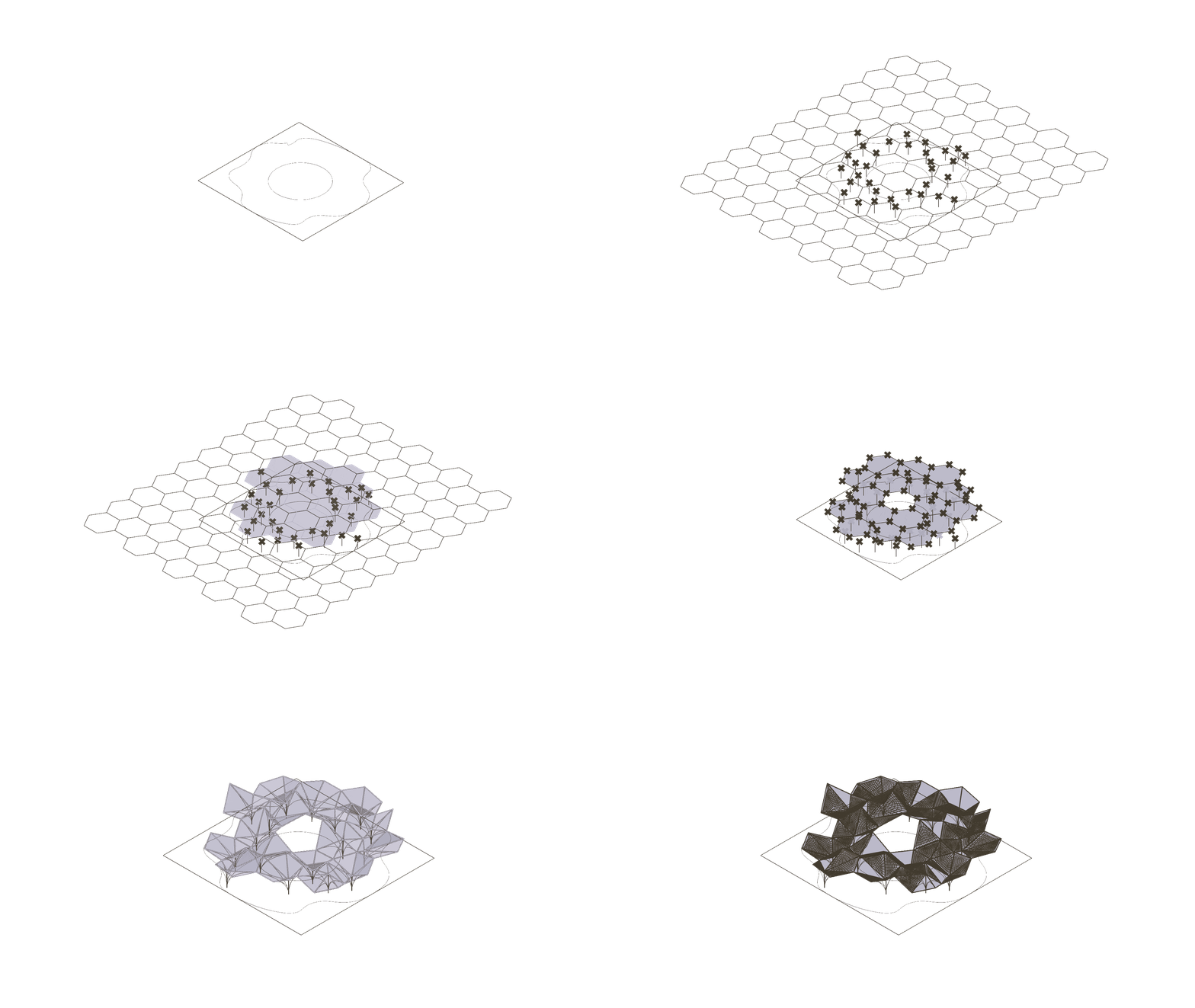
Random points are generated within a defined boundary and remapped to create controlled variation across the base surface.
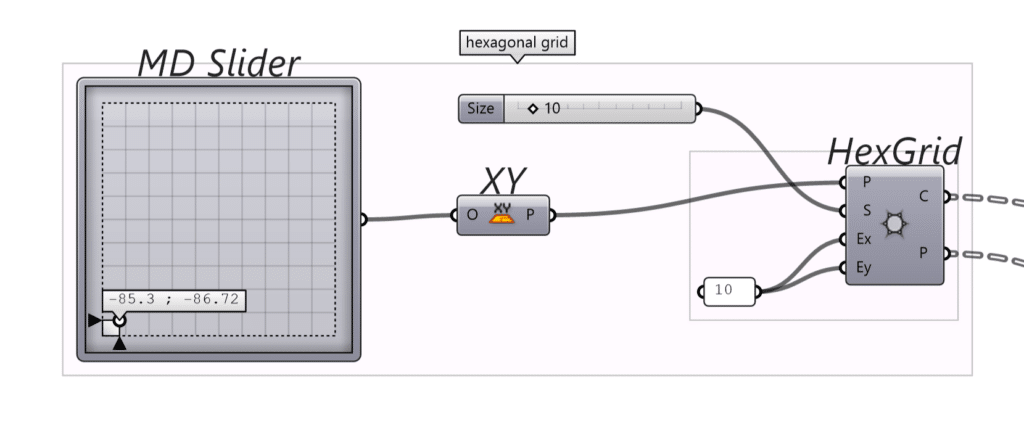
A parametric hexagonal grid is created using an MD slider to control position and cell size.
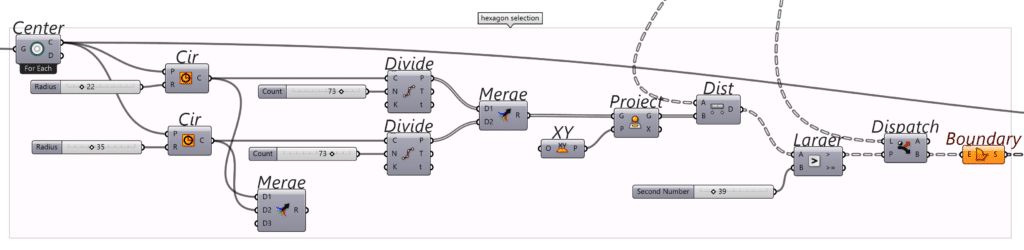
Two concentric circles define a selection area, and hexagons are filtered based on distance from the center.
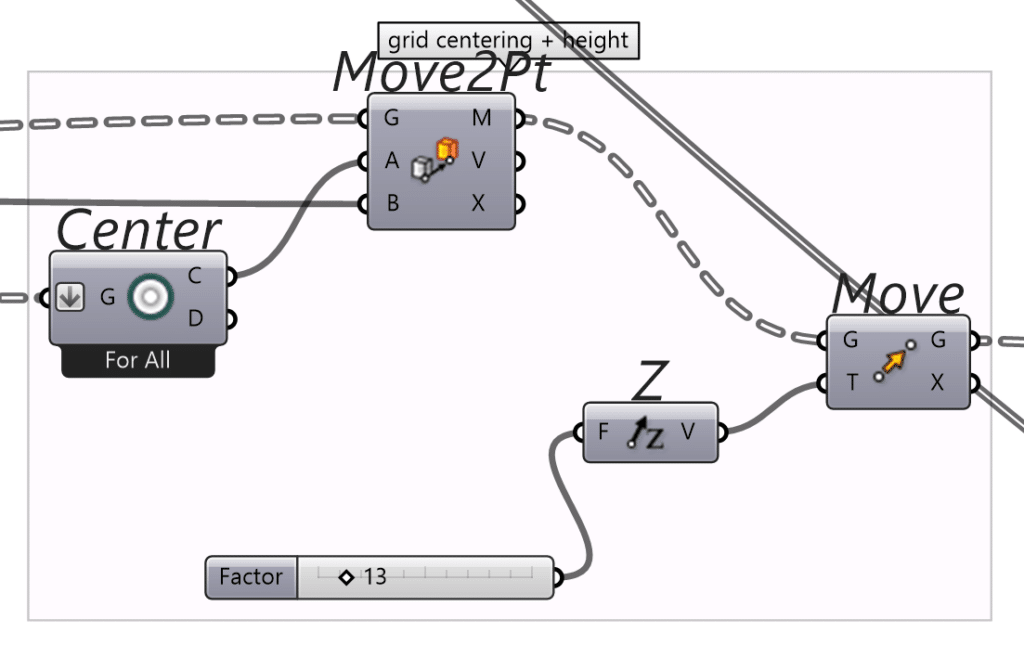
The grid is centered and vertically moved along the Z-axis to introduce initial height variation.
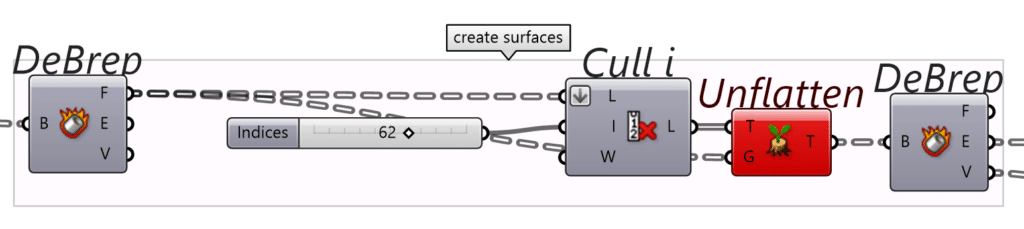
Selected hexagonal surfaces are culled, unflattened, and converted into clean Breps for further processing.
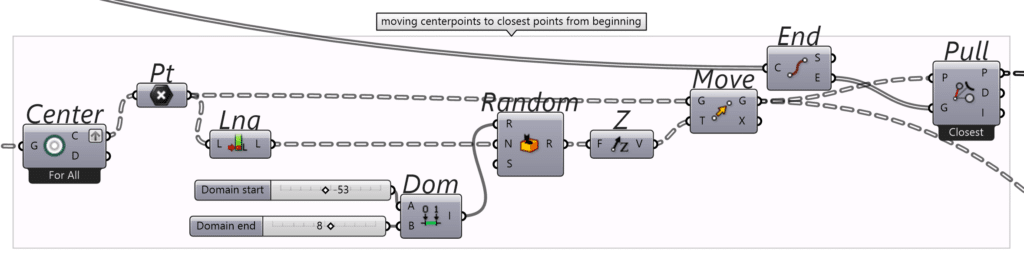
Center points are randomly moved within a defined domain and pulled toward reference geometry to create variation.
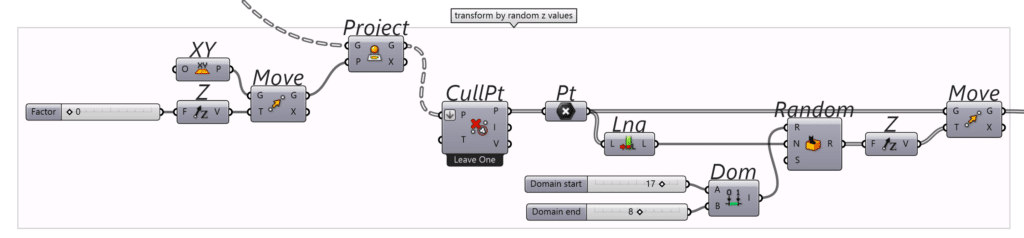
Points are projected and randomly displaced in the Z-direction to introduce three-dimensional deformation.
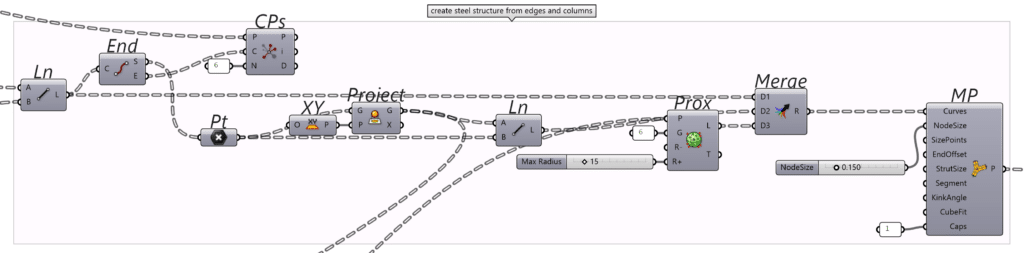
Edges and columns are generated from projected points, forming a primary structural network.
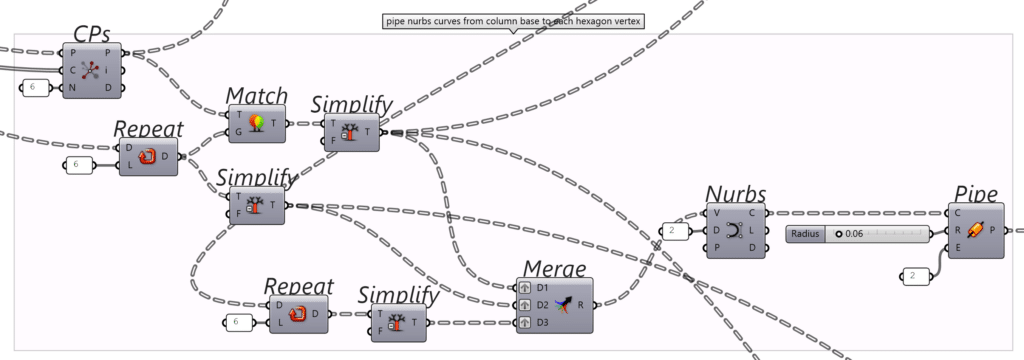
Connections between base and hex vertices are converted into NURBS curves and piped to create structural members.
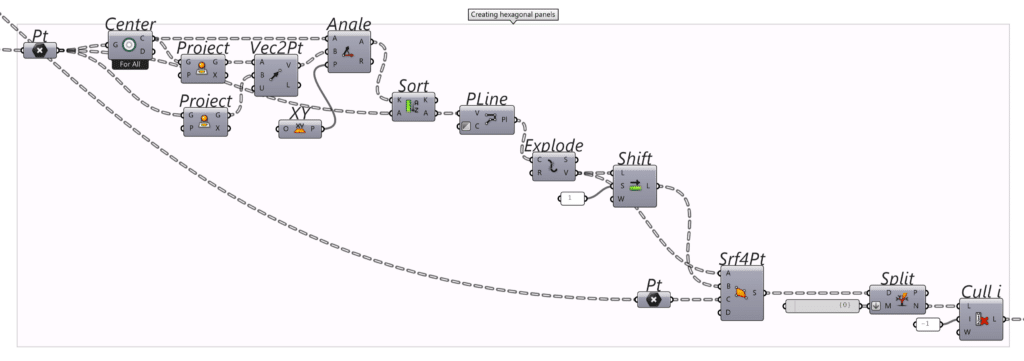
Points are sorted by angle to form closed polylines, which are converted into hexagonal panels.
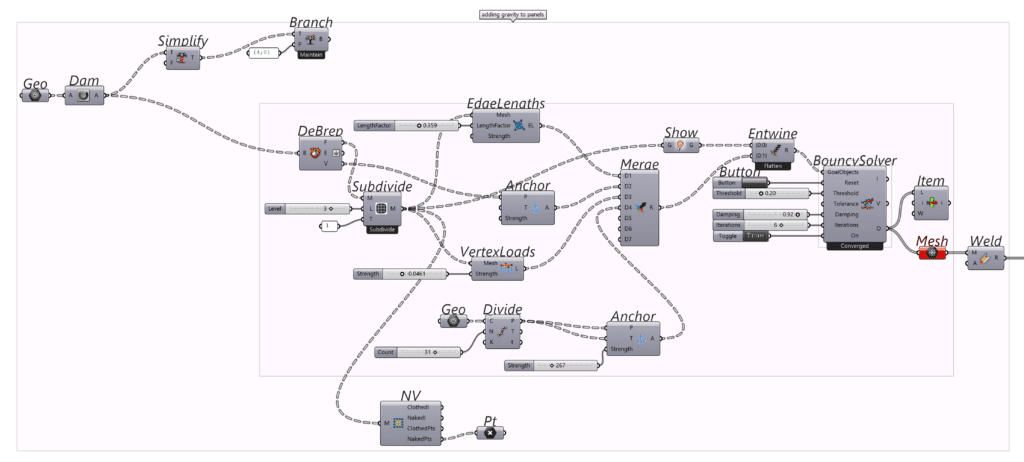
Panels are subdivided and relaxed using Kangaroo physics, anchored at fixed points to create a tent-like tensile structure.
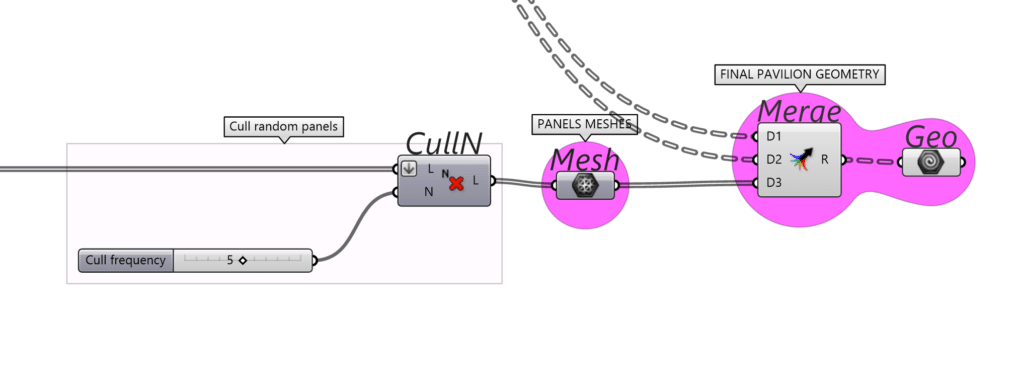
12. Panel Reduction & Final Geometry
Random panels are culled to create openness, and all elements are merged into the final pavilion geometry.
Iterations Catalogue
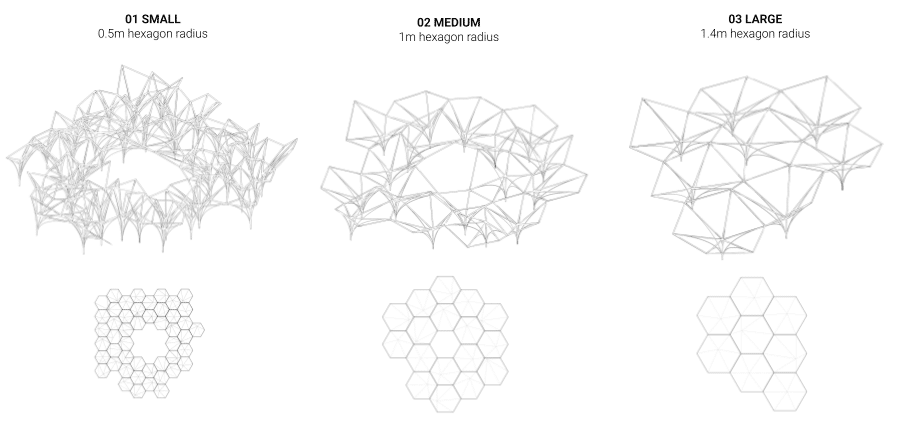
Size
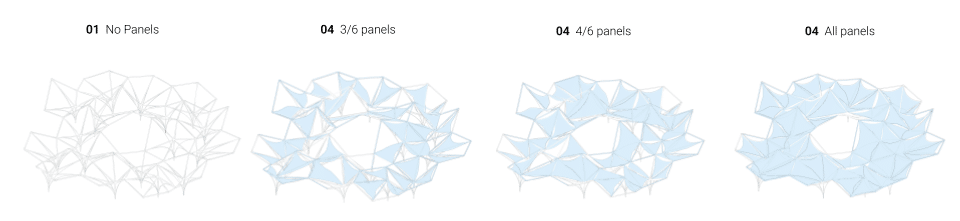
Panel density
Fabrication details
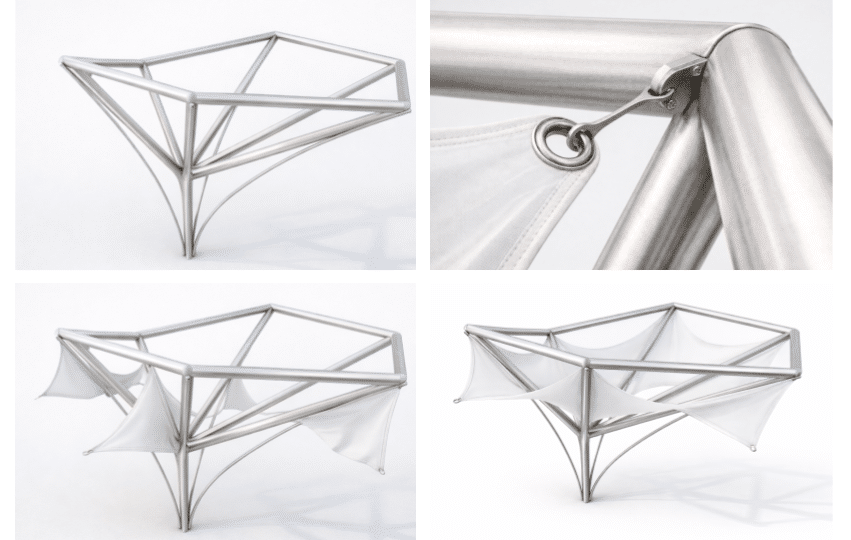
The fabrication process begins with assembling the primary steel frame, creating a rigid triangulated support geometry that defines the final membrane surface. Fabric triangles are then unrolled from large industrial rolls, cut to size, and prepared with reinforced vertices where grommets are inserted. Each textile panel is first hooked to the structure at a single vertex, allowing it to hang freely and naturally align under gravity. Once positioned, the membrane is secured at all three corners, gradually forming its intended geometric shape before undergoing final tensioning to achieve the completed structural surface.
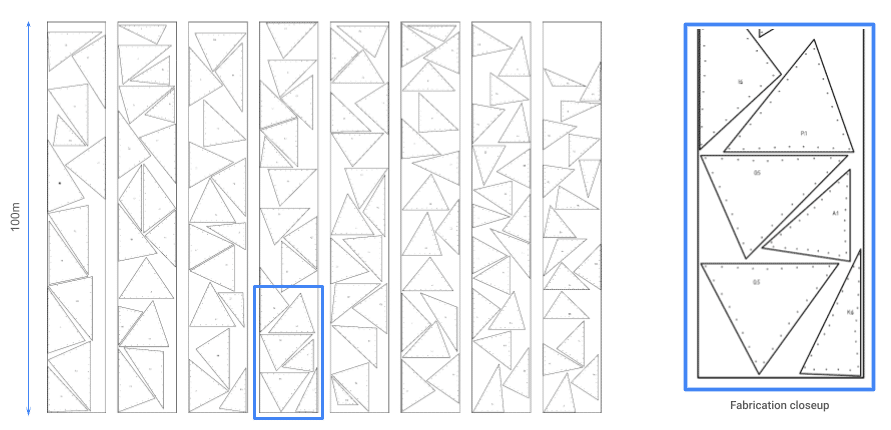
The layout shows the fabrication arrangement for all tensile membrane elements. The triangular panels are digitally nested onto full-width fabric rolls to optimize material use before cutting. Each triangle is precisely cut according to its defined geometry, and the marked perimeter points indicate the locations where holes are punched for grommets. These perforations correspond to the fixation points that connect the membrane pieces to the steel frame. The drawing therefore outlines the complete preparation phase, including both the cutting of the individual fabric elements and the pre-punching of all holes required for their structural attachment.