
In the Augmented & Mixed Reality class learnt how to work with unity game engine to create an individual projects that would support our thesis investigations in an interactive way.
This project explores how digital tools can reintroduce play, creativity, and spontaneity into the contemporary city. Developed as part of my urban play thesis, the app acts both as a design experiment and future feedback mechanism, testing how people engage with playful urban interventions. An app you would take with you on your daily walks.
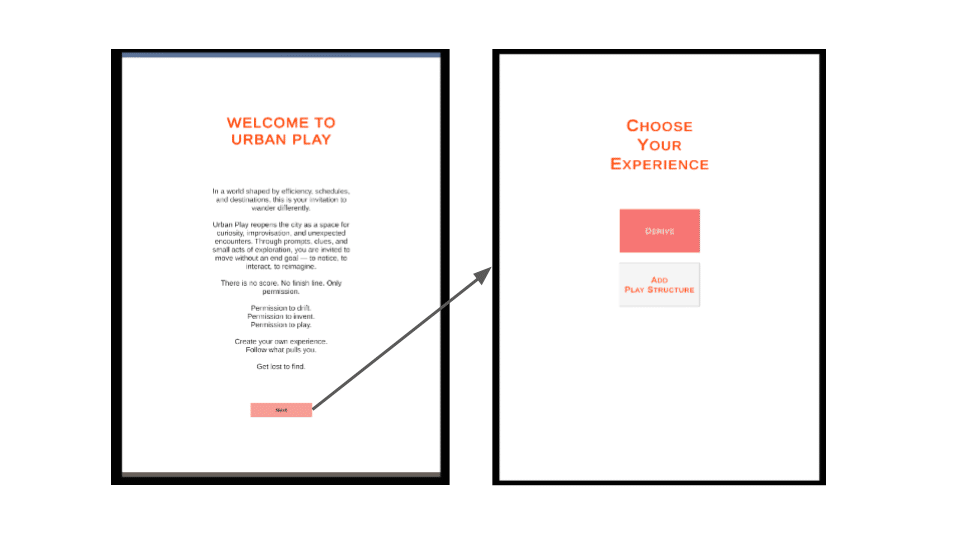
The app operates through two primary features.
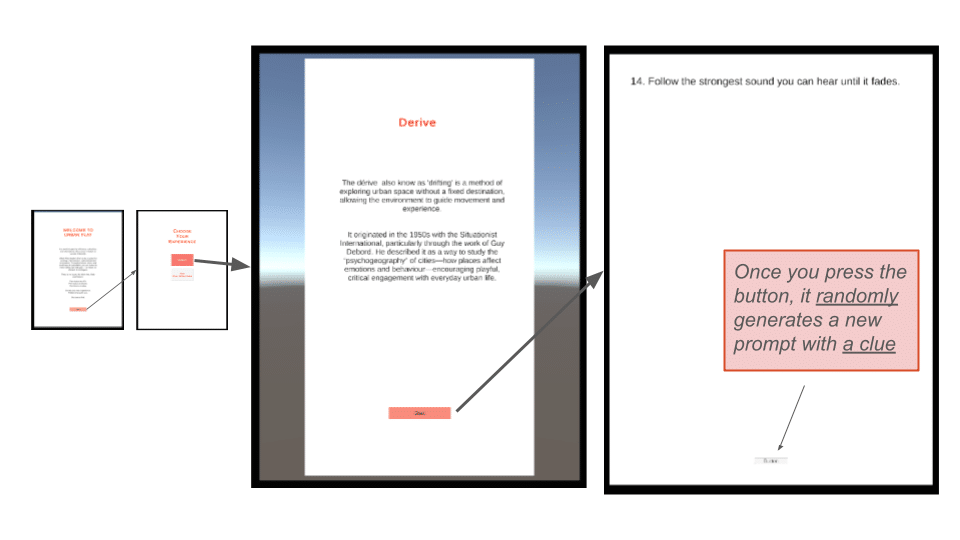
The first – DERIVE is inspired by the Situationist concept of the dérive (Debord, 1958): a guided yet unpredictable journey through the city. Users receive randomly generated prompts that direct movement and decision-making, encouraging them to relinquish control and engage with the urban environment in an intuitive, improvised way. Rather than navigating efficiently, the user drifts—discovering overlooked spaces and alternative urban rhythms.
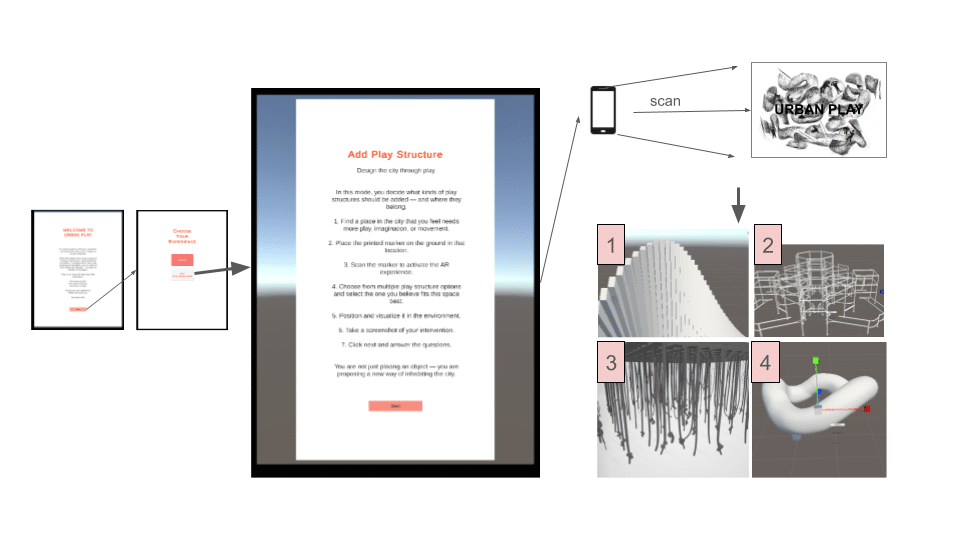
The second feature – ADD PLAY STRUCTURE introduces an abstract play interface. As users encounter markers embedded in the urban landscape, they can scan them to access digital representations of speculative play structures though an AR experience. Through their device, users can explore how these elements might be experienced in real space. There is 4 play structures to choose from.
Future use thoughts:
Over time, the app could collects data on user engagement, mapping which locations and play elements generate the most interaction and which locations are favoured. This would create a feedback loop between digital exploration and physical design, informing future interventions in the outdoor public spaces.
