Reciprocal Frames
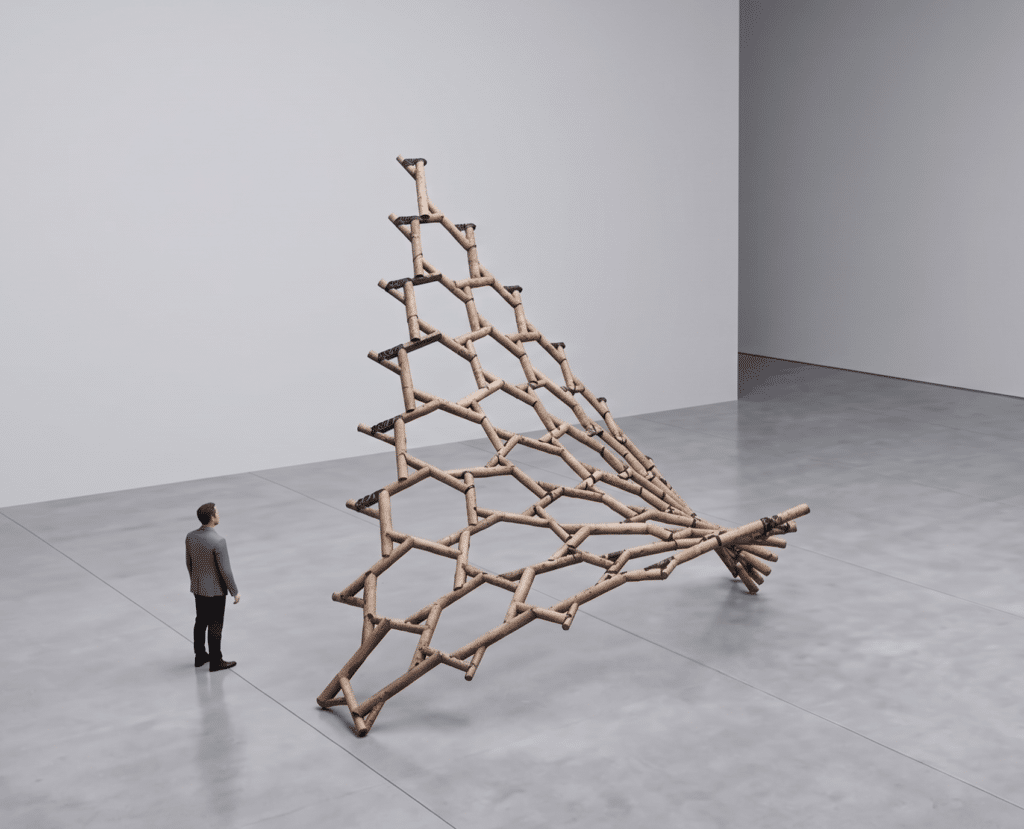
Reciprocal frames are self-supporting 3D structures. They consist of three or more sloping beams arranged in a closed circuit. Each beam rests on the preceding one and supports the next, creating a completely interdependent grid. This design eliminates the need for a central pillar or column. Traditionally these frames were made of wood, the most readily available linear building material. They were used in buildings and bridges for permanent and temporary structures. They offer architectural opportunities through their expressive form and structural advantages due to their specific configuration.
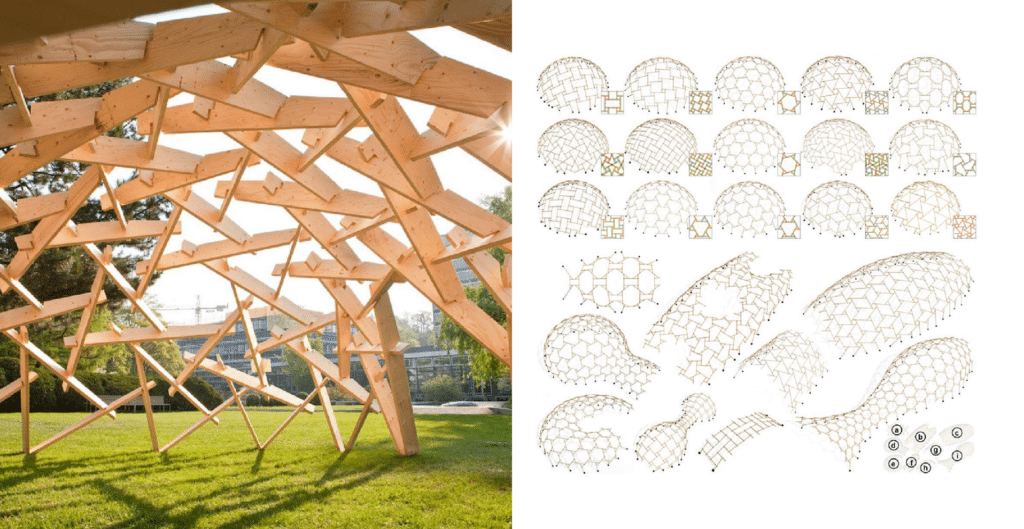
Optimization Objectives
What if a structure could be designed around the materials we already have, instead of forcing raw material to fit a predetermined design? We start with a bank of organic, irregular timber pieces that each differ in size, in both length and radius and ask how to build with them as they are, rather than milling everything down to uniform sections. The answer is a reciprocal frame grown in Grasshopper: a self-supporting weave where each member leans on the next, with every crossing resolved as a V-notch joint so two timbers interlock halfway through one another.
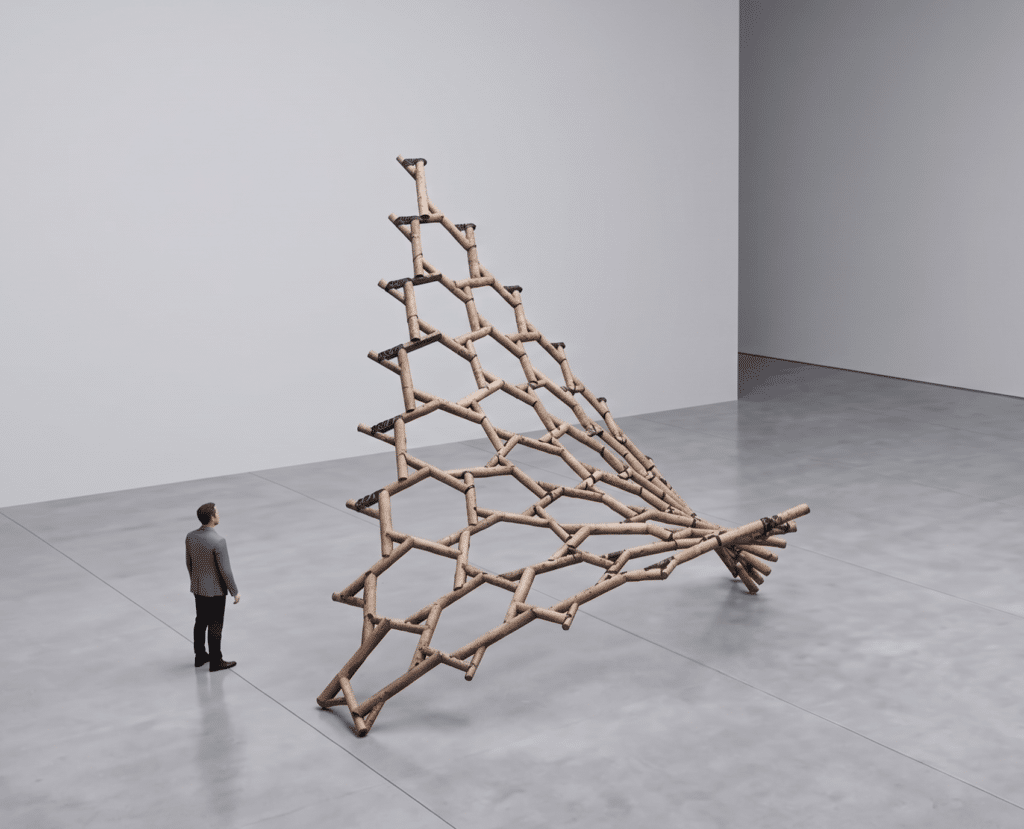
The intelligence lies in how the material is assigned rather than choosing pieces by hand, we encode the entire inventory-to-structure assignment as a genome and run a multi-objective optimization that searches thousands of possibilities, each candidate scored on three competing goals: minimizing offcut waste by fitting every segment to its nearest-length piece, minimizing the structure’s overall weight, and matching each timber’s thickness to the structural stress of the segment it fills, so the strongest members carry the most demanding loads. Because these objectives pull against each other, the process returns not a single answer but a family of balanced trade-offs turning a pile of non-standard, almost-found material from a problem to be discarded into a design constraint to be optimized, and letting the structure emerge from exactly what we already have.
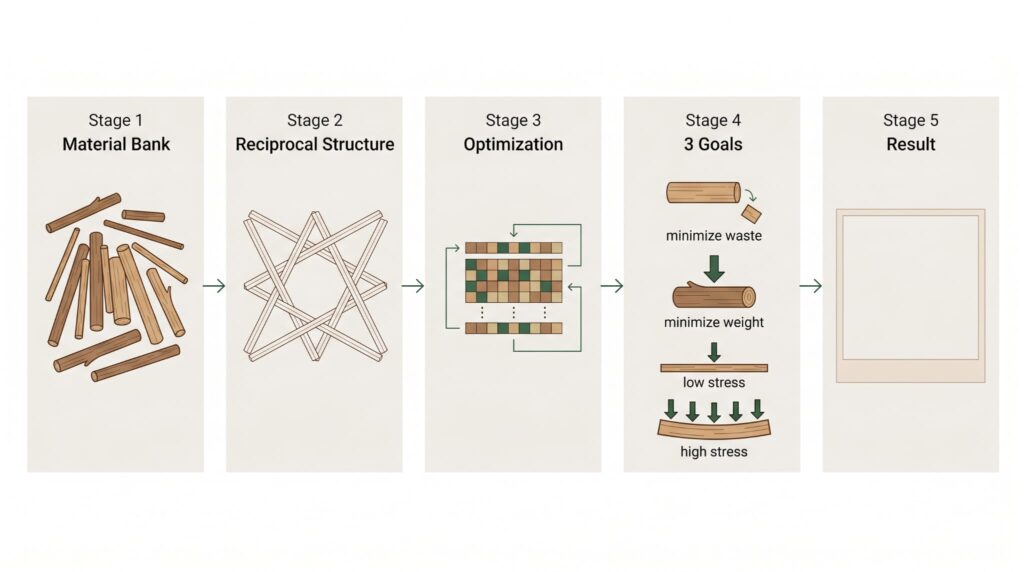
Multi-Objective Optimization Through wallacei
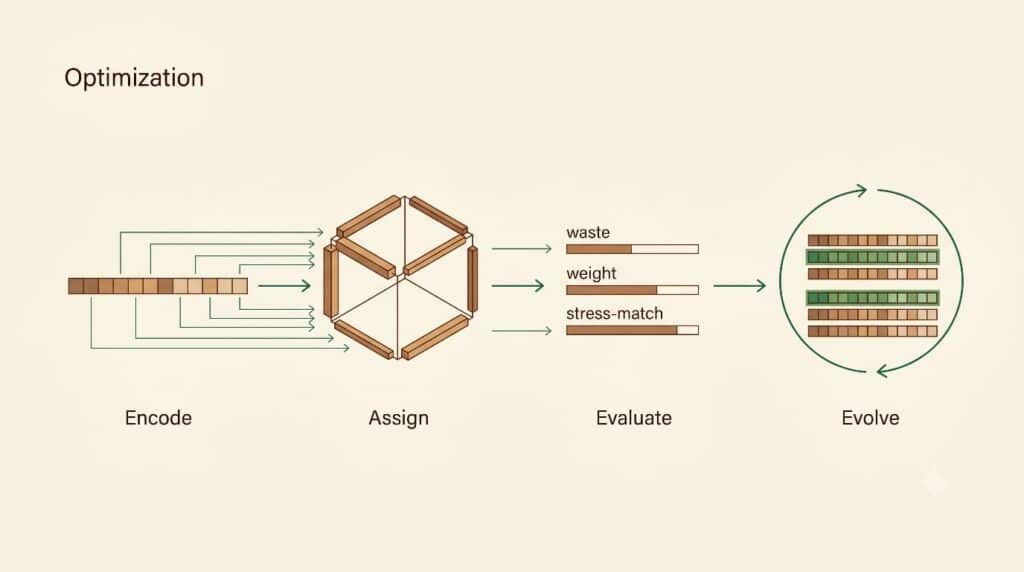
We have used wallacei https://www.wallacei.com/about to achieve the aforementioned optimization objectives.
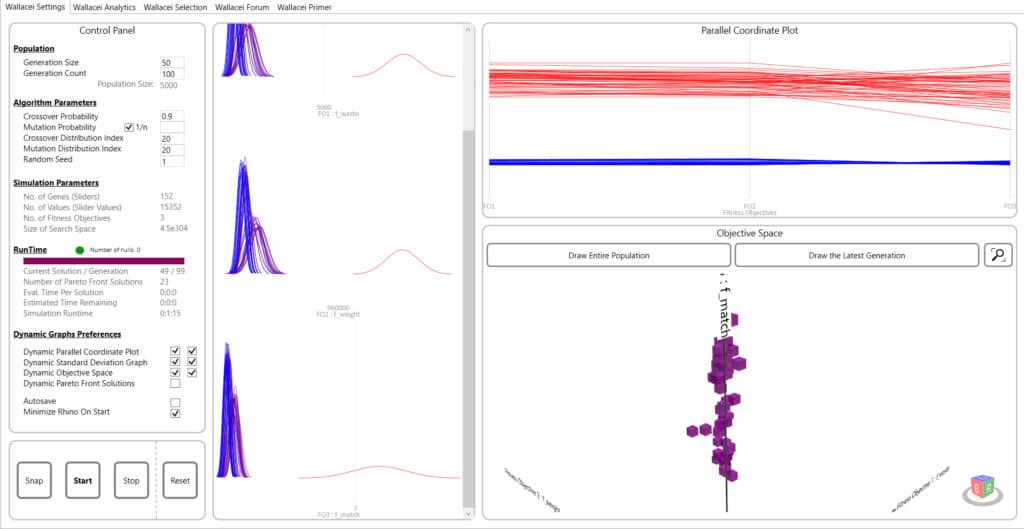
23 Pareto Front Solutions have been recorded and visualized.
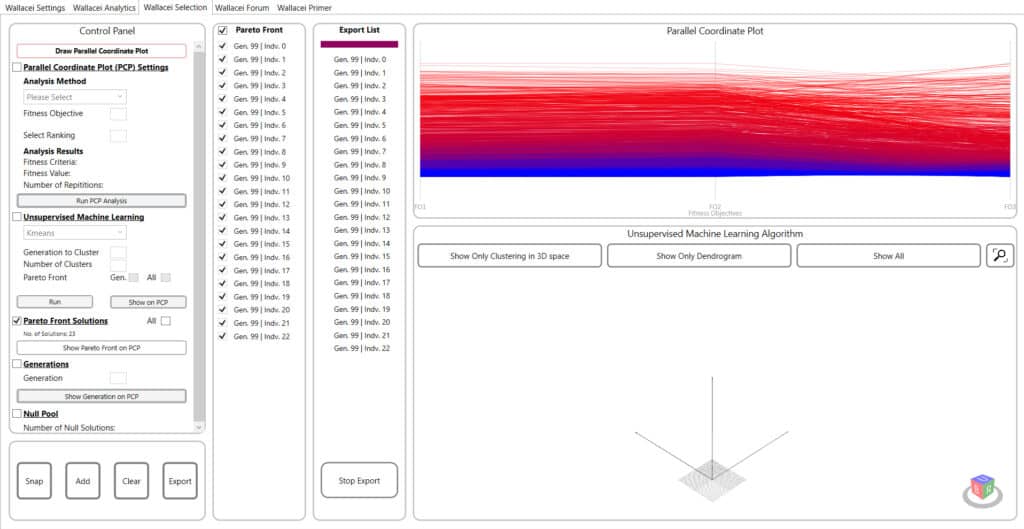
Recorded Phenotypes
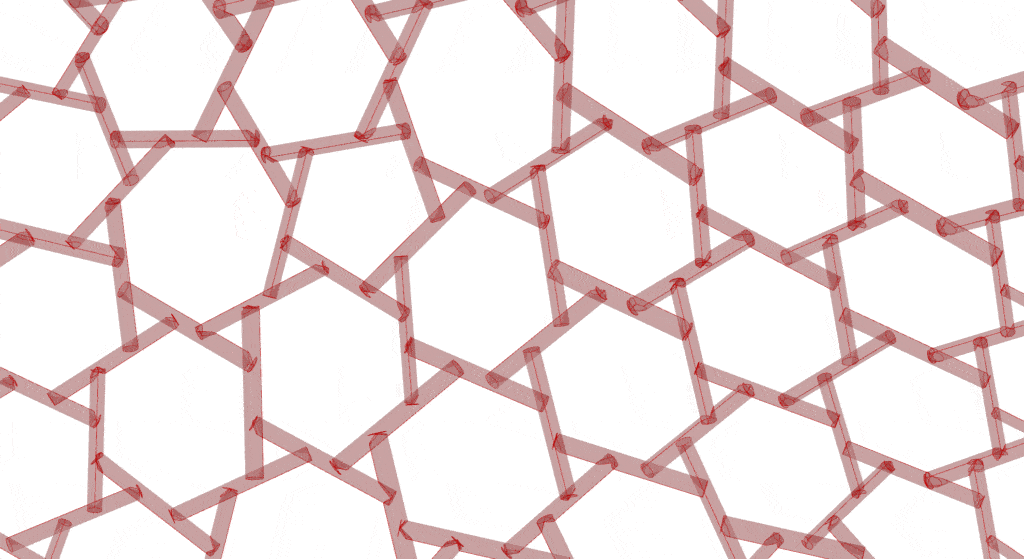
Visualization