
_Concept
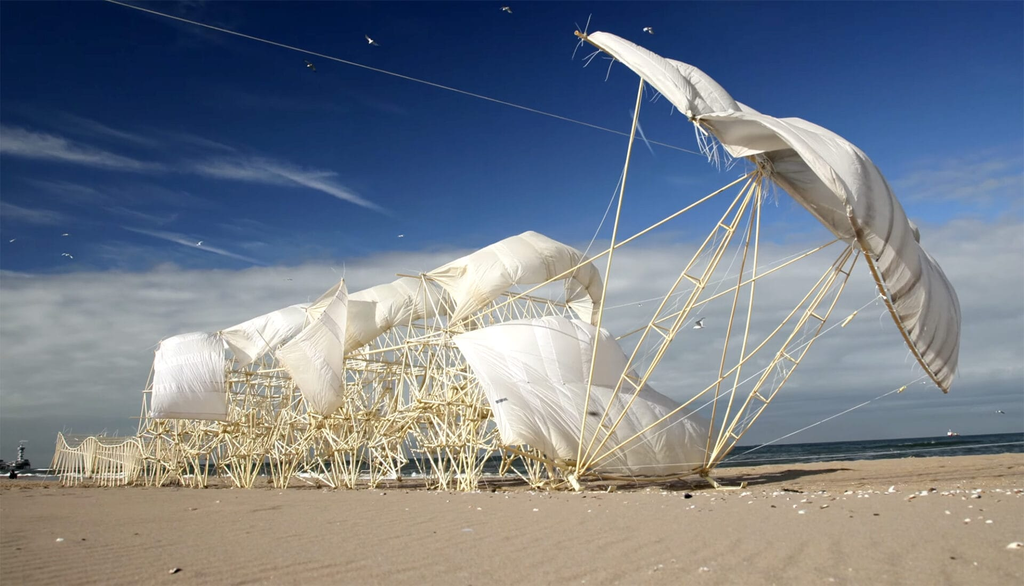
Inspired by Theo Jansen’s kinetic creatures, the project explores how movement can give electronic objects a sense of life and emotion. We investigate how machines might respond to their surroundings in ways that resemble human behaviour such as, moving slowly in quiet spaces or twitching with anxiety in loud spaces. In this sense, digital-physical machines can be introverted or extroverted, much like the humans that make them.
_Direction
Rather than pursuing a single outcome, the exploration developed through multiple experiments with sensors, motors, and materials. Two kinetic studies emerged through a common theme called, Primitive Creatures. Both projects explore the relationship between environmental stimuli, movement, and emotional self-expression.
_Prototype Images // Articulating Primitive Creature
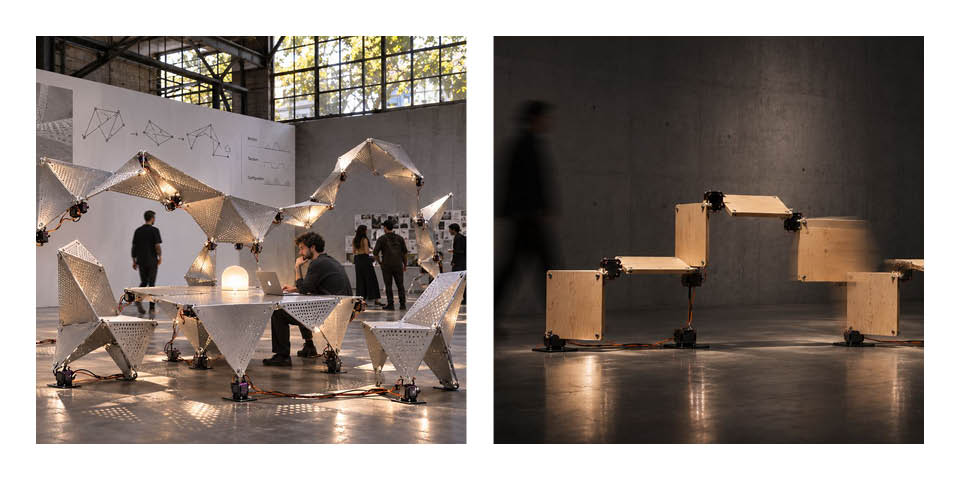
The first, “Articulated Primitive Creature”, is a kinetic and artistic exploration of how simple geometric planes and volumes, interconnected by servo motors, can generate new shapes, spatial configurations, and life-like robotic creatures. By experimenting with different combinations of forms, angles, rhythms, and movements, the project investigates the emergence of organic behaviors from simple mechanical systems, exploring the intersections of sculpture, movement, choreography, dance, and artificial life.
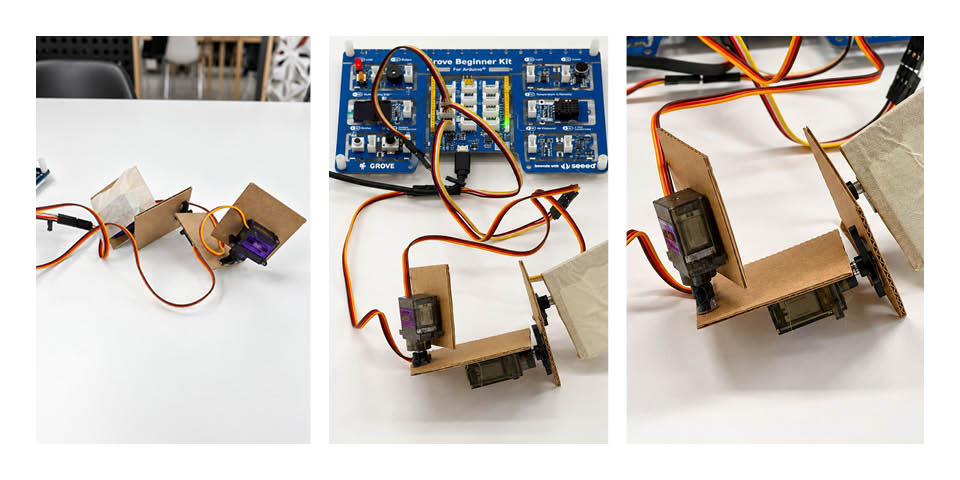
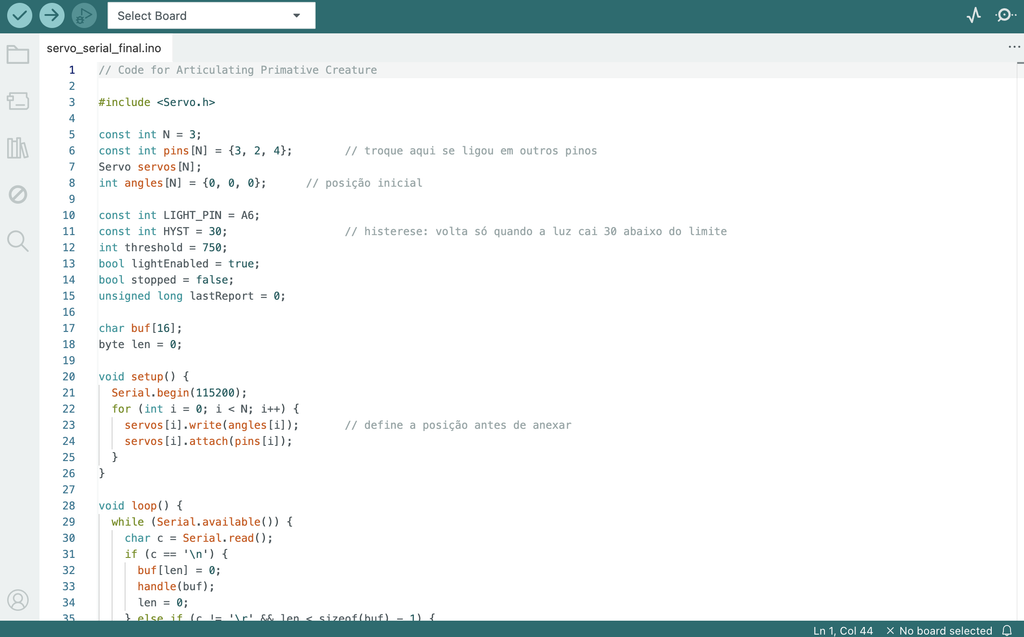
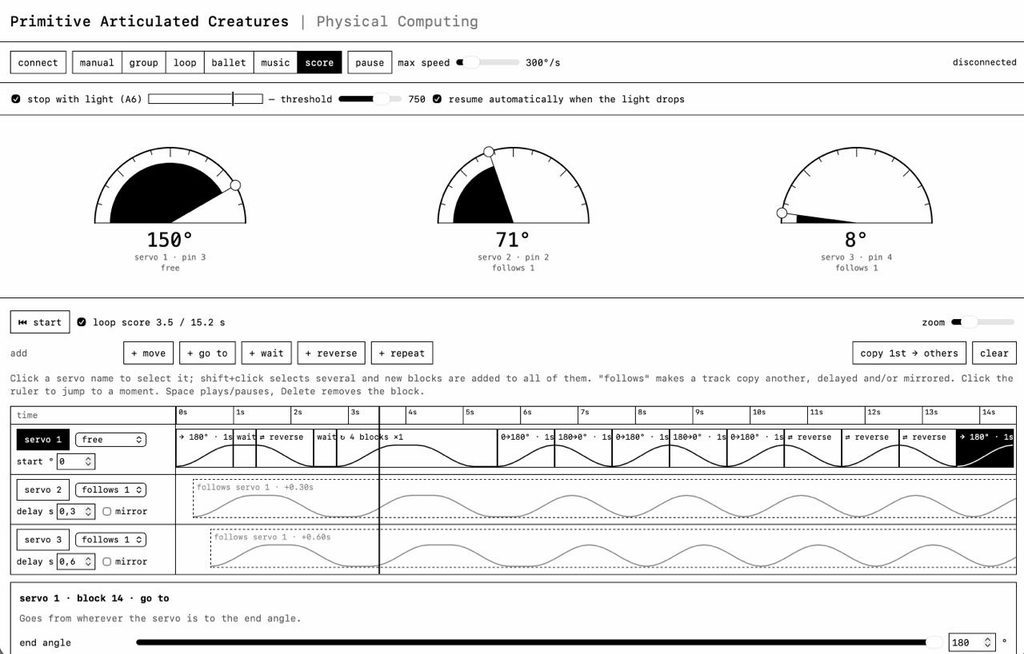
A custom HTML interface was built to test different movement parameters and synchronization patterns in real-time. The servos could be controlled one by one, or together. A light sensor works as the physical input. When the light passes an adjustable threshold, all motion stops. If someone points a flashlight at it, the creature freezes and starts moving again when the light is removed. Like a startled animal, it reacts to bright light with a freeze response.
_Prototype Images // Tensile Primitive Creature
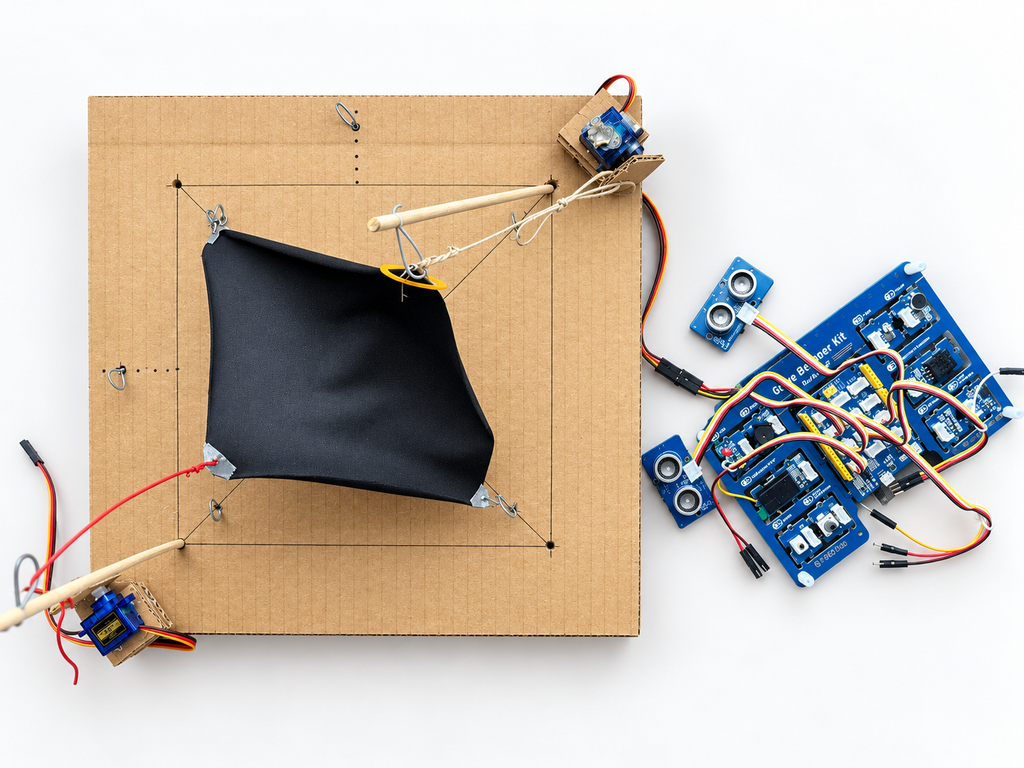
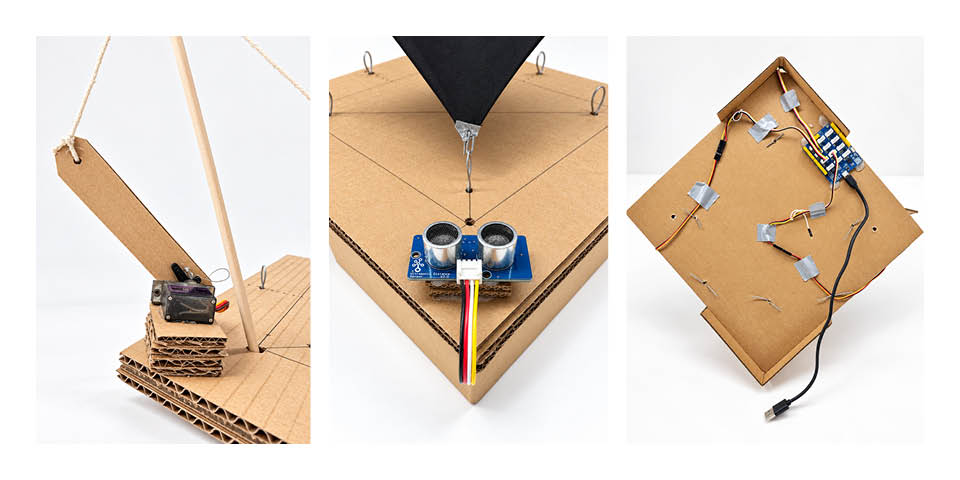
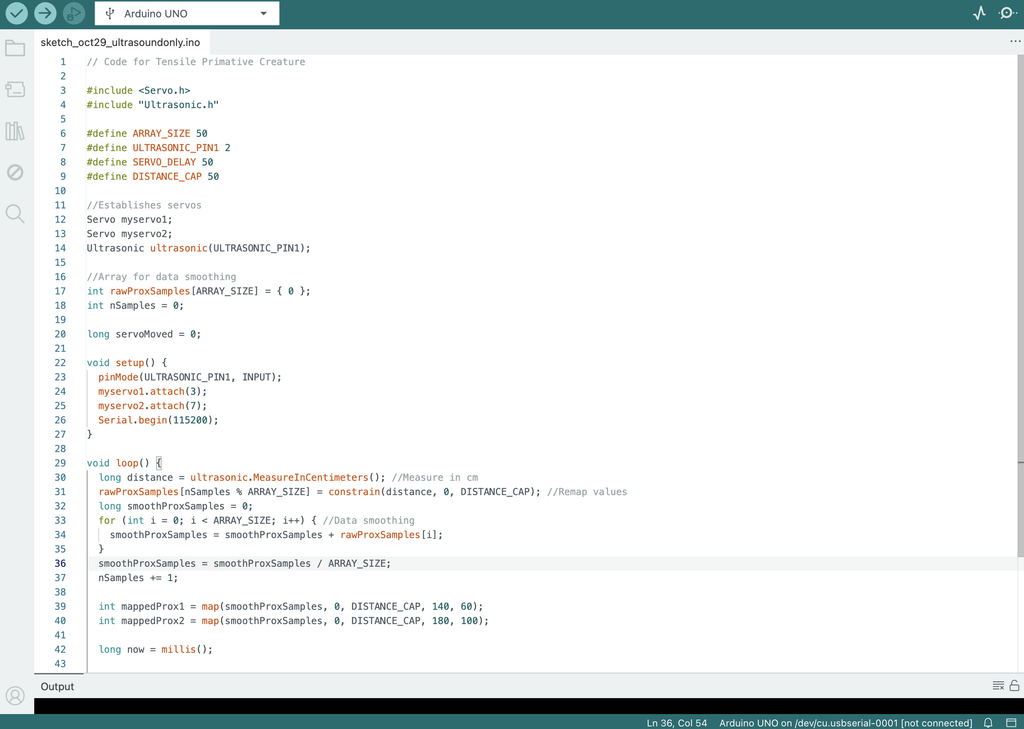
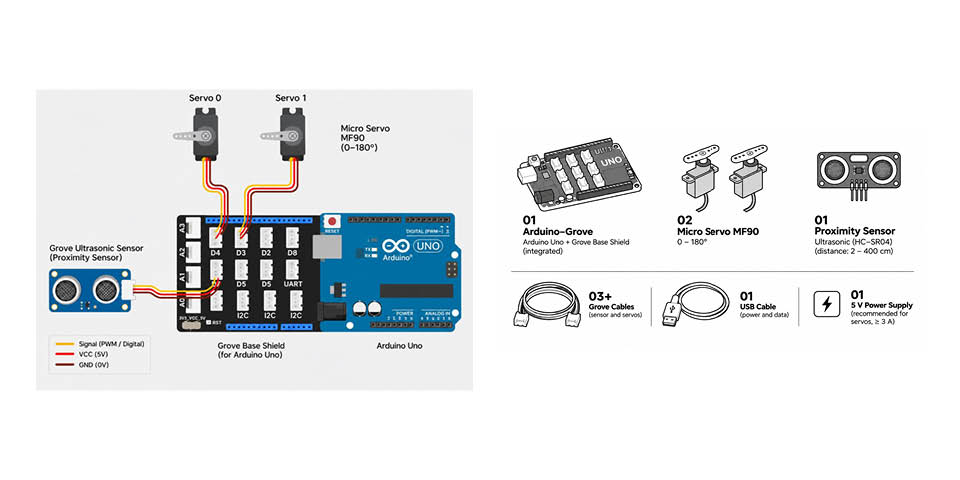
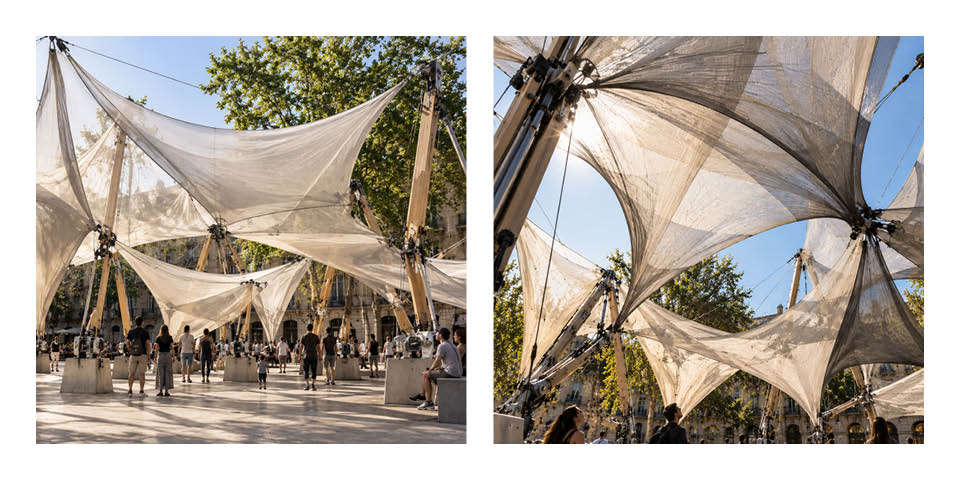
The second, “Tensile Primitive Creature”, explored the use of elastic fabric suspended between two fixed and two non-fixed attachment points. A single ultrasonic proximity sensor detected human presence within 50 cm of the creature. Without human presence, the creature opens to stretch it’s fabric, like a flower to the sun. When a presence is detected, the fabric closes. This mechanism is achieved through two server motors on pivoting lever arms. This behavior mimics the same fear response felt by humans – opening when spaces feel safe (trusting), or closing when they do not (protecting).
_ BOM + Electronics Schematic // Adaptive Primitive Creature
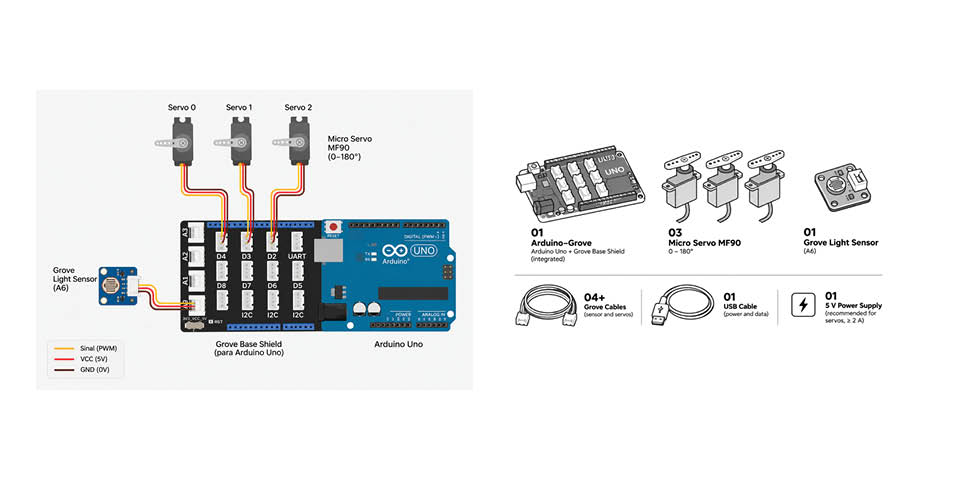
MATERIALS LIST
- 01 × Arduino Grove Beginner Kit: €25–35
- 03 × Micro Servo MF90 / MG90S (180°): €10.50–15
- 01 × Grove Light Sensor: Included
- 04 × Grove Cables: Included
- 01 × USB Cable: Included
- 01 × External Power Supply (5V / 3A): €7–15
Total Estimated Cost: €42.50–65
_ BOM + Electronics Schematic // Tensile Primitive Creature
MATERIALS LIST
- 01 × Arduino Grove Beginner Kit: €25–35
- 04 × Micro Servo MF90 / MG90S (180°): €16.24
- 01 × Ultrasonic Proximity Sensor (HC-SR04): €2–4
- 01 × Cables & Connectors Set: €3–5
- 01 × USB Cable: Included
- 01 × External Power Supply (5V / 3A): €8–15
Total Estimated Cost: €54–75 per prototype
_ Renders
_ Next Steps
As a possible future development, these projects could extend into architecture, exploring the potential of mutable architectural materials capable of continuously reconfiguring themselves into different spatial arrangements and functions. By combining simple elements and electronic components, the systems could evolve into new kinds of adaptive structural material, analogous to stem cells in living organisms or a material capable of differentiating into multiple forms and functions according to changing needs. A wall could transform into a chair, a table, a staircase, or even an art installation, challenging conventional architectural boundaries and exploring not simply computation in architecture, but computation as architecture.
Materials & Scale: Experiment with different materials, such as metal, and explore larger-scale structures and alternative geometries.
Motor Exploration: Test different types of motors, including continuous-rotation servos, to expand the possibilities of movement and articulation.
Modular Configurations: Increase the number of servos and interconnected modules to explore more complex configurations.
Machine Learning & Evolution: Integrate machine learning algorithms to explore the concept of a living creature capable of learning, adapting, and evolving its movements and forms autonomously.
Sensor Exploration: Explore use of other sensors such as, heart rate, temperature, touch, and associated data filtering and smoothing.
Integration of Both Creatures: Explore the integration of the primitive creatures, combining motor-driven mechanisms with tension-based structures to create more organic, adaptive, and fluid movements and transformations.
_ Authors
Kailey Allan (8230)
Lucas Cypriaino (8274)
