
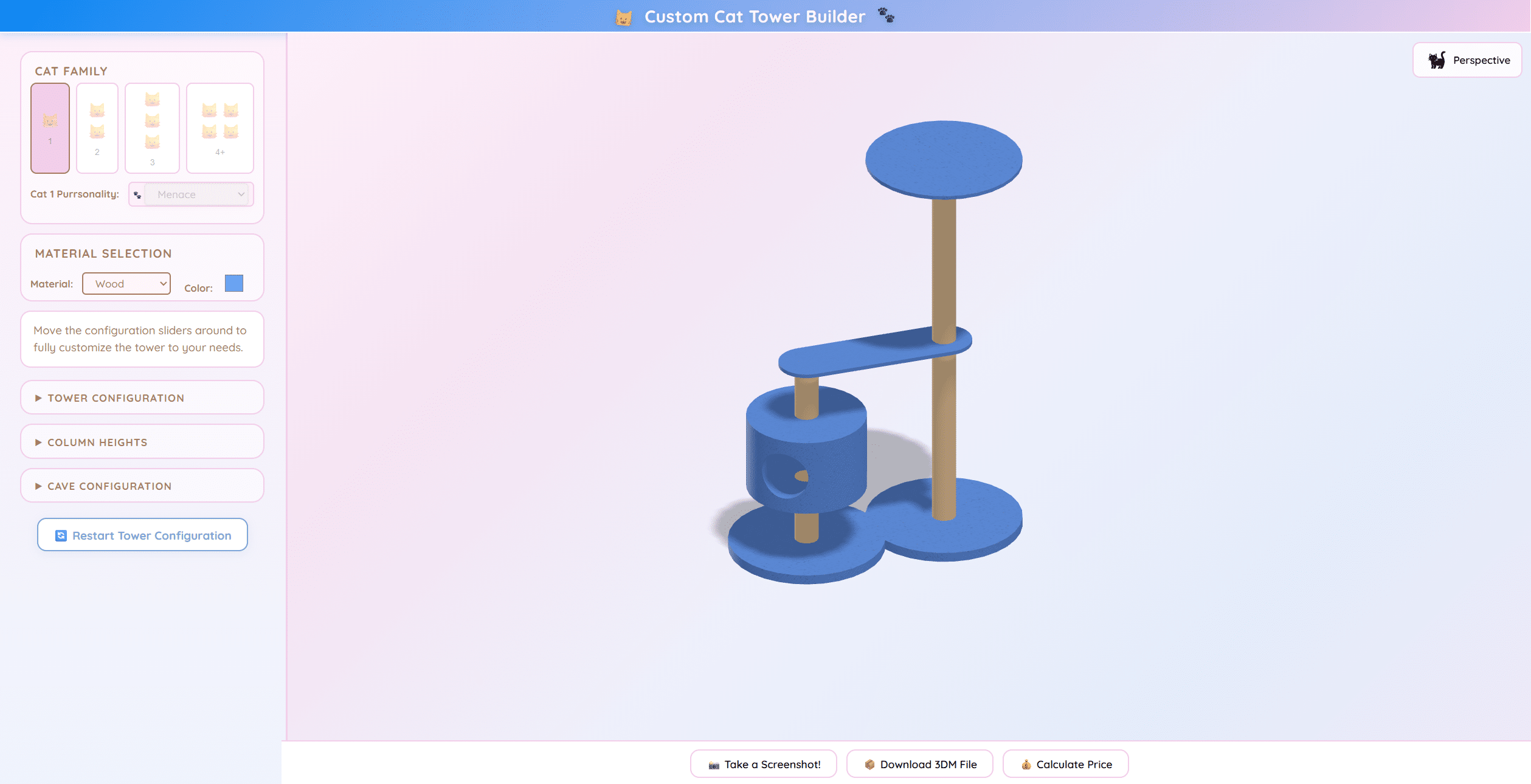
Concept
After long periods working within architectural systems—parametric models, BIM workflows, data coordination—there is value in stepping sideways. Not away from design, but into a different scale and context.
This project explores exactly that: applying computational design logic to something deliberately lighter—a customizable modular cat tower.
From Grasshopper to Web Interface

The application is a web-based configurator derived from a Grasshopper definition, translating a parametric system into an accessible, user-facing tool.
Through the interface, users can:
- Define and adjust the spatial layout of the tower
- Select materials and colors
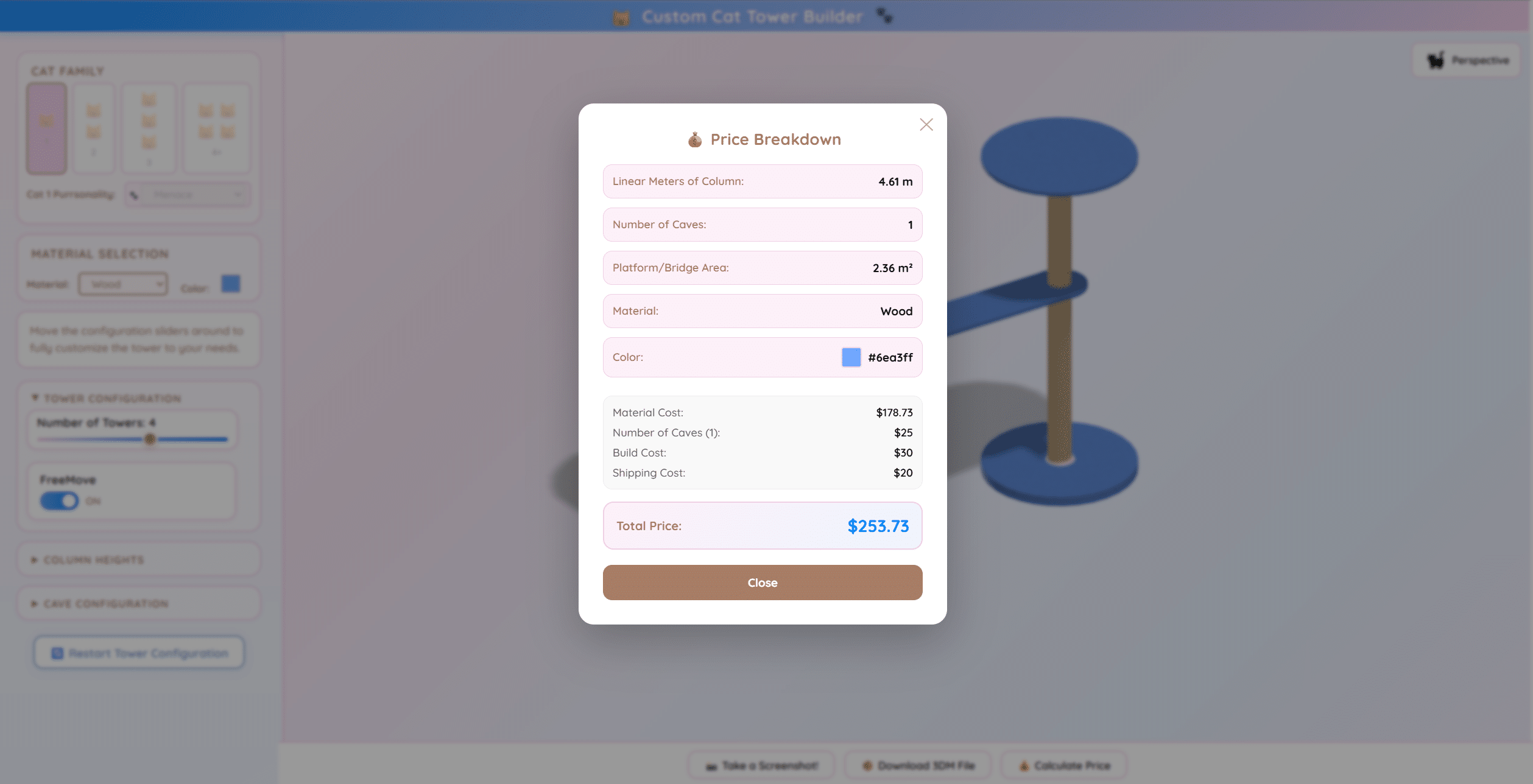
- Receive a real-time price calculation based on their configuration
What typically exists within a design environment becomes interactive and intuitive, without requiring any prior knowledge of parametric tools.
Technical Framework
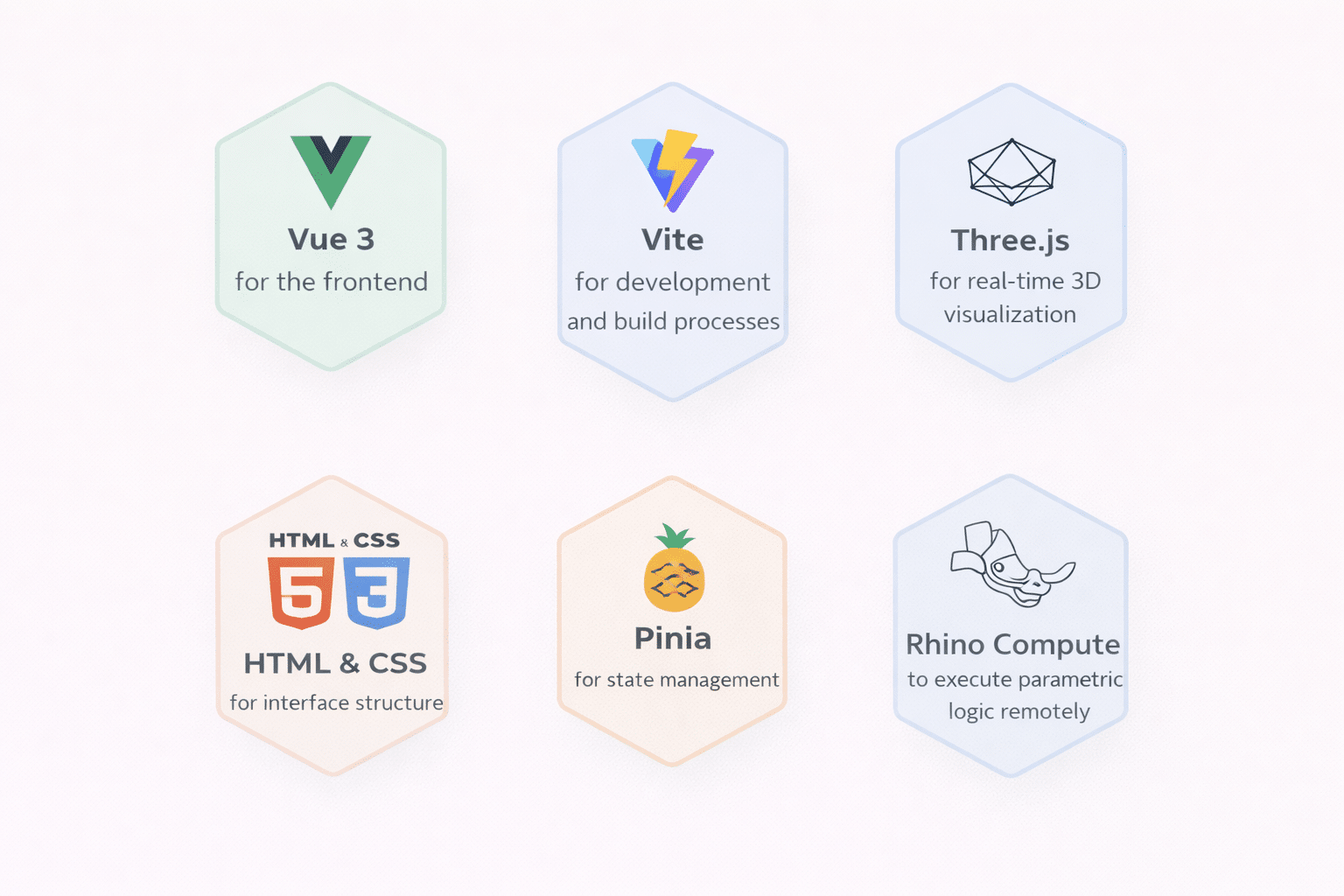
Behind the simplicity of the interface sits a fairly robust stack:
- Vue 3 for the frontend
- Vite for development and build processes
- Three.js for real-time 3D visualization
- Pinia for state management
- Rhino Compute to execute parametric logic remotely
- HTML and CSS for interface structure
Together, these components translate a parametric definition into a responsive, browser-based experience.
User Experience
Configuring the Tower
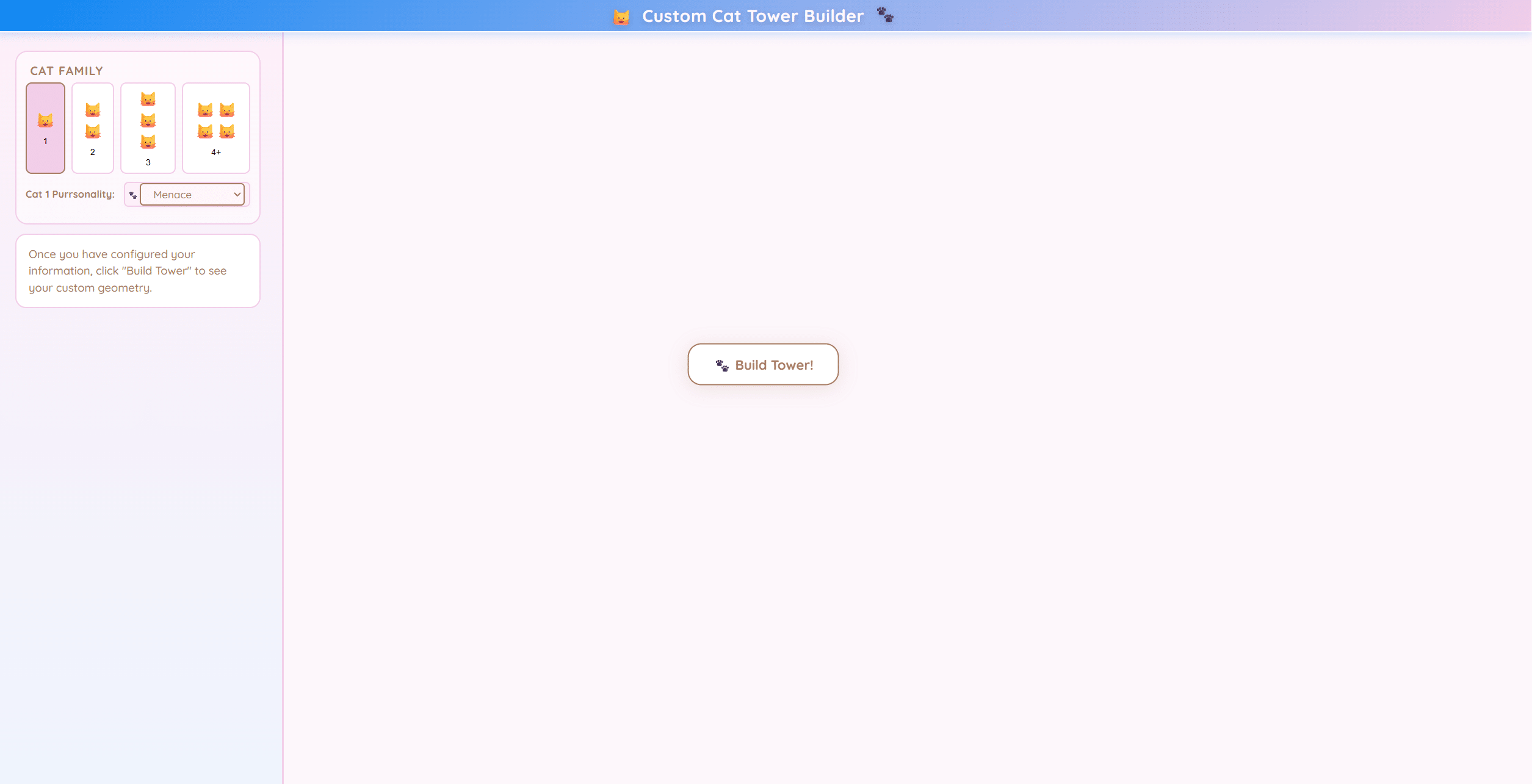
The interaction begins with defining the number of cats (up to four), along with their general behavioral profiles. These inputs inform an initial tower configuration, generated automatically.
From there, users can:
- Navigate the model through different camera modes
- Adjust materials and colors
- Modify the structural layout, including adding or removing columns
- Change column heights, with platforms updating accordingly
The system maintains internal consistency while allowing for meaningful customization.
Flexibility with Boundaries
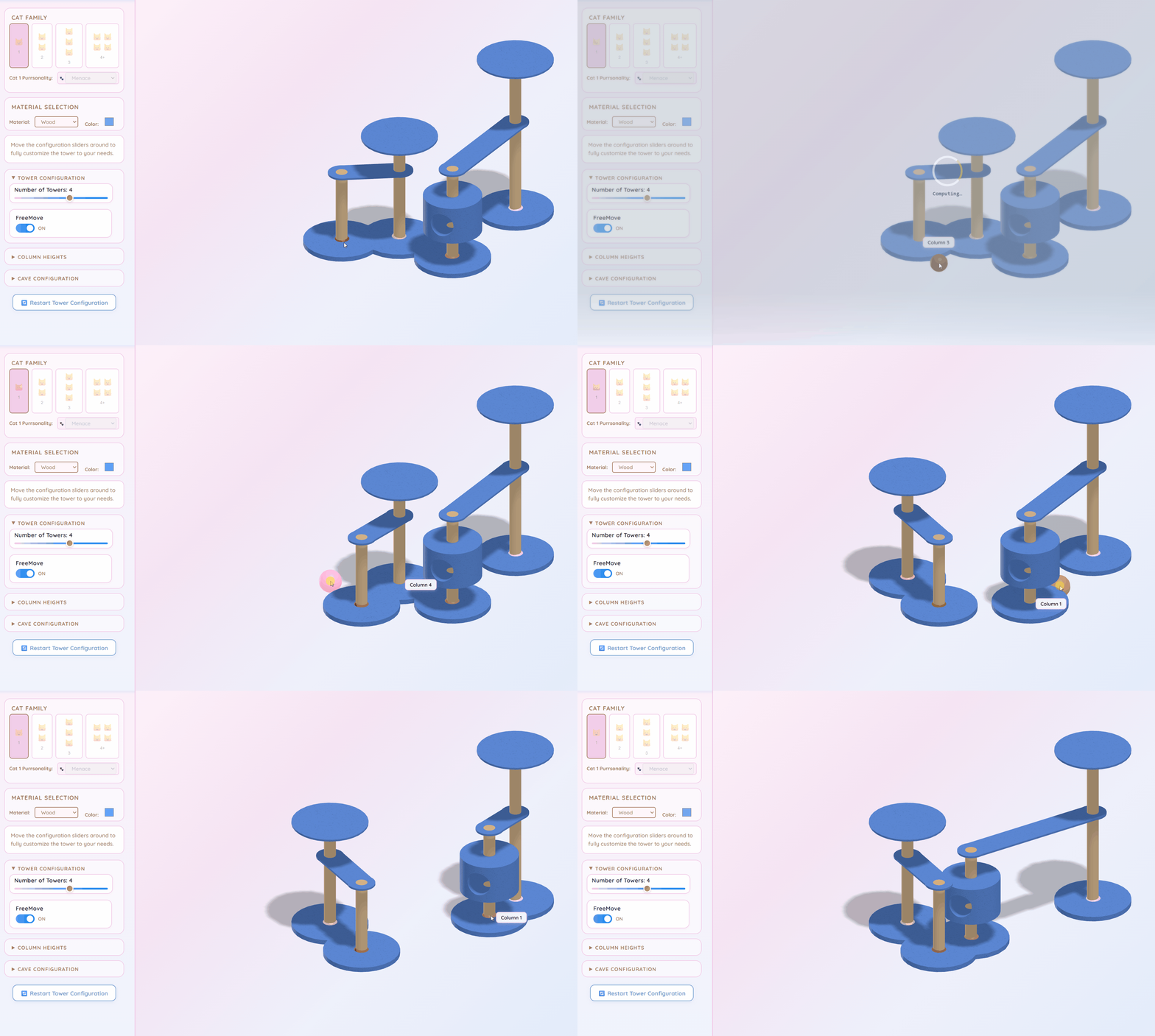
More detailed adjustments are also possible:
- Repositioning elements freely within the layout
- Rotating or adjusting the elevation of cave beds
- Adding additional resting modules
To support this flexibility, the interface includes warning systems that flag collisions or incompatible configurations, ensuring the design remains viable.
Output and Next Steps
Once a configuration is complete, users can:
- Capture a snapshot of the design
- Download the corresponding .3dm file
- Or generate a final price estimate
This closes the loop between parametric design, user interaction, and tangible output.
Beyond the Object
While the result is a cat tower, the project operates as a small-scale prototype for a broader idea:
how parametric design systems can move beyond specialist environments and become interactive tools for non-expert users.
It’s a shift from designing objects to designing systems that others can design through—even if, in this case, the end users happen to have four legs and very strong opinions.
