
“Power is not something you possess, it is something you exercise”
– Michel Foucault
With this phrase by Michel Foucault, I would like to invite you, reader, to adopt a lens focused on power relations as you move through this blog post.
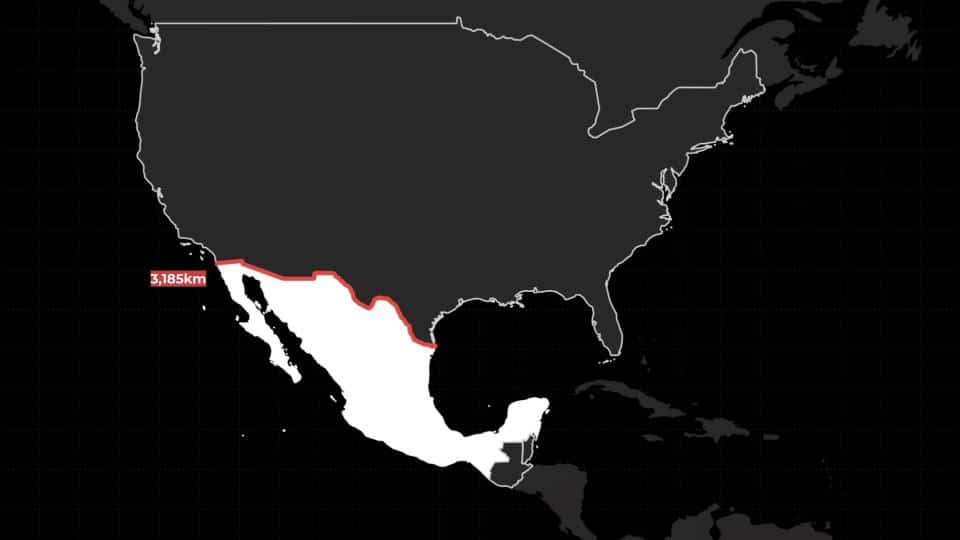
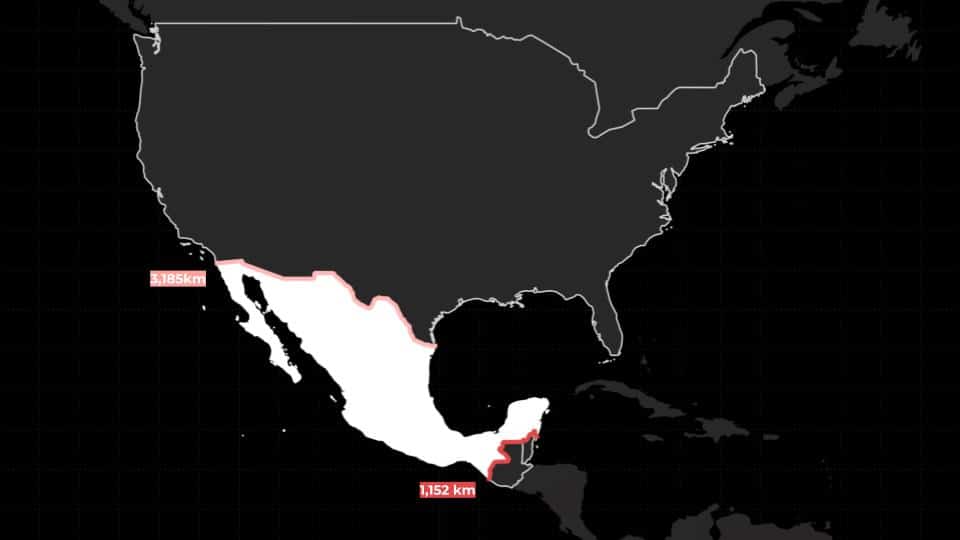
The first power dynamic I would like to highlight is the asymmetrical relationship between Mexico and the United States. Approximately 80% of Mexico’s exports are destined for the U.S. market, creating a situation in which negotiations are often shaped by a significant imbalance of power. As a result, Mexico frequently finds itself adapting to the agenda and anti-immigration policies of U.S. administrations. One consequence of this dynamic has been the increasing militarization of the U.S.–Mexico border.
For more than fifteen years, Mexico has functioned as a major global migration corridor. According to Francisco Garduño, Commissioner of the National Migration Institute (INM), approximately 16 million people have transited through Mexican territory over the past sixteen years, and 10.5 million of them ultimately crossed into the United States (Rojas 2025).
This process of border enforcement did not remain confined to the northern border. Because migration flows primarily enter Mexico through its southern frontier, the United States has progressively externalized its border control policies, contributing to the militarization of the Mexico–Guatemala–Belize border region. These efforts have been supported, at least in part, through U.S. funding and the deployment of surveillance technologies developed in both the United States and Israel.
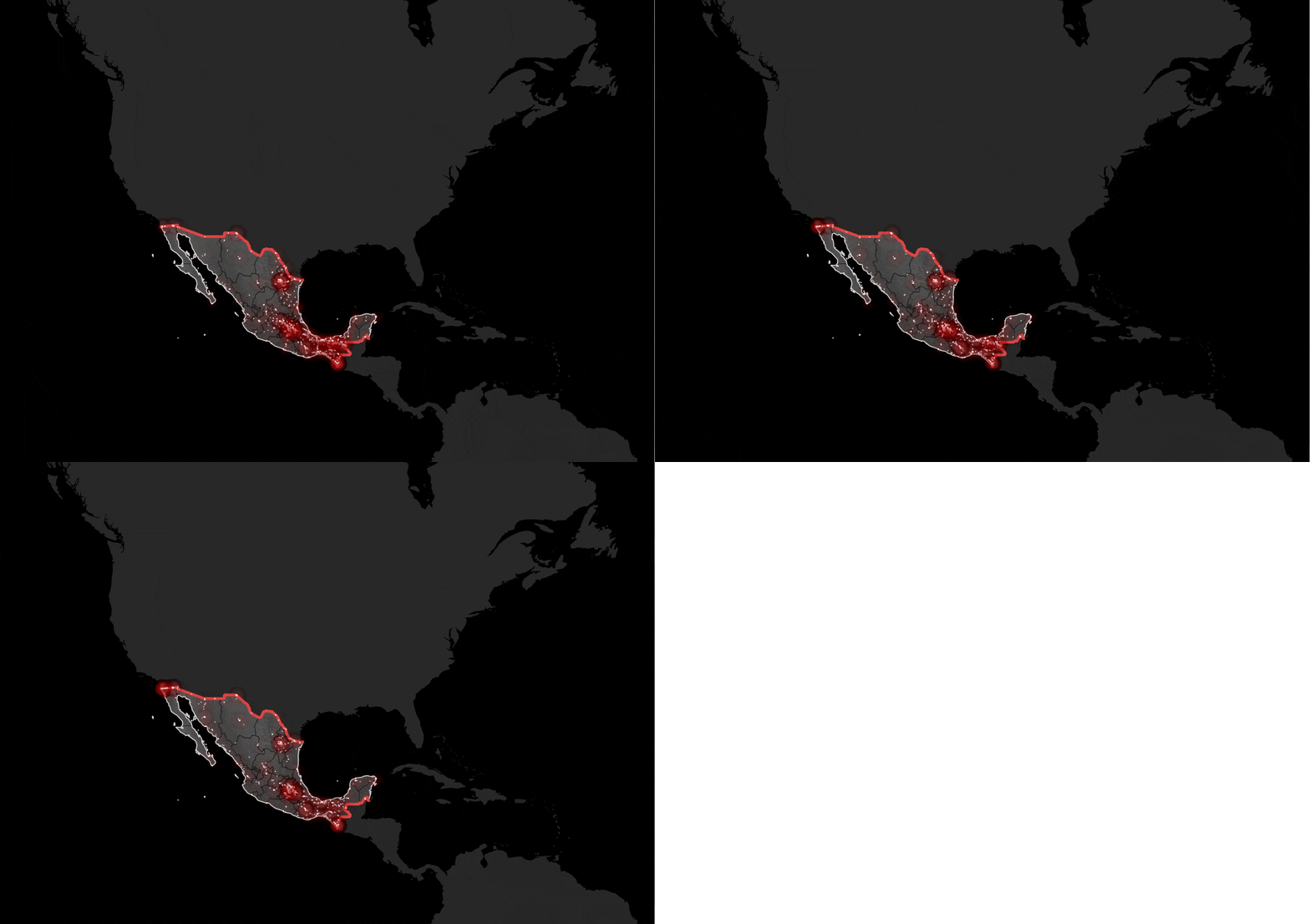
And it did not stop there. It expanded throughout Mexican territory, contributing to the creation of what has been called the Vertical Border: a control structure that is no longer limited to the country’s geographical borders, but extends throughout the national territory, activating in a mobile, selective, and discriminatory way towards racialized bodies.
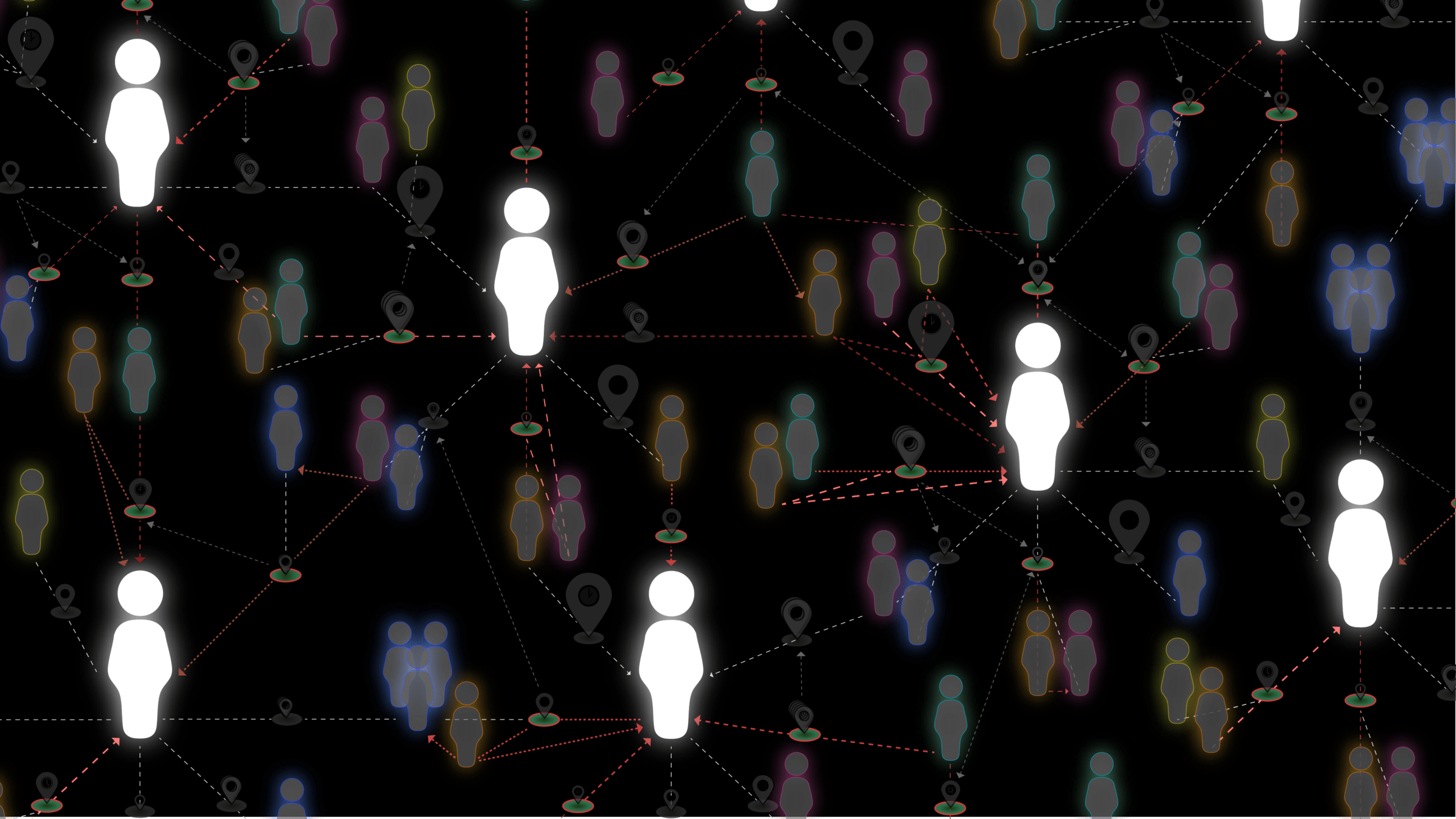
And this is relevant because power is a network of relationships and infrastructures. It exists in interaction; it circulates and is exercised relationally through territory.
Behind these checkpoints and detentions lies a broader assemblage of strategies, institutions, and actors. What appears on the map to the right is only a partial representation of a much wider system of control and governance.
But power is not static, and collectivity plays a huge role on resistance
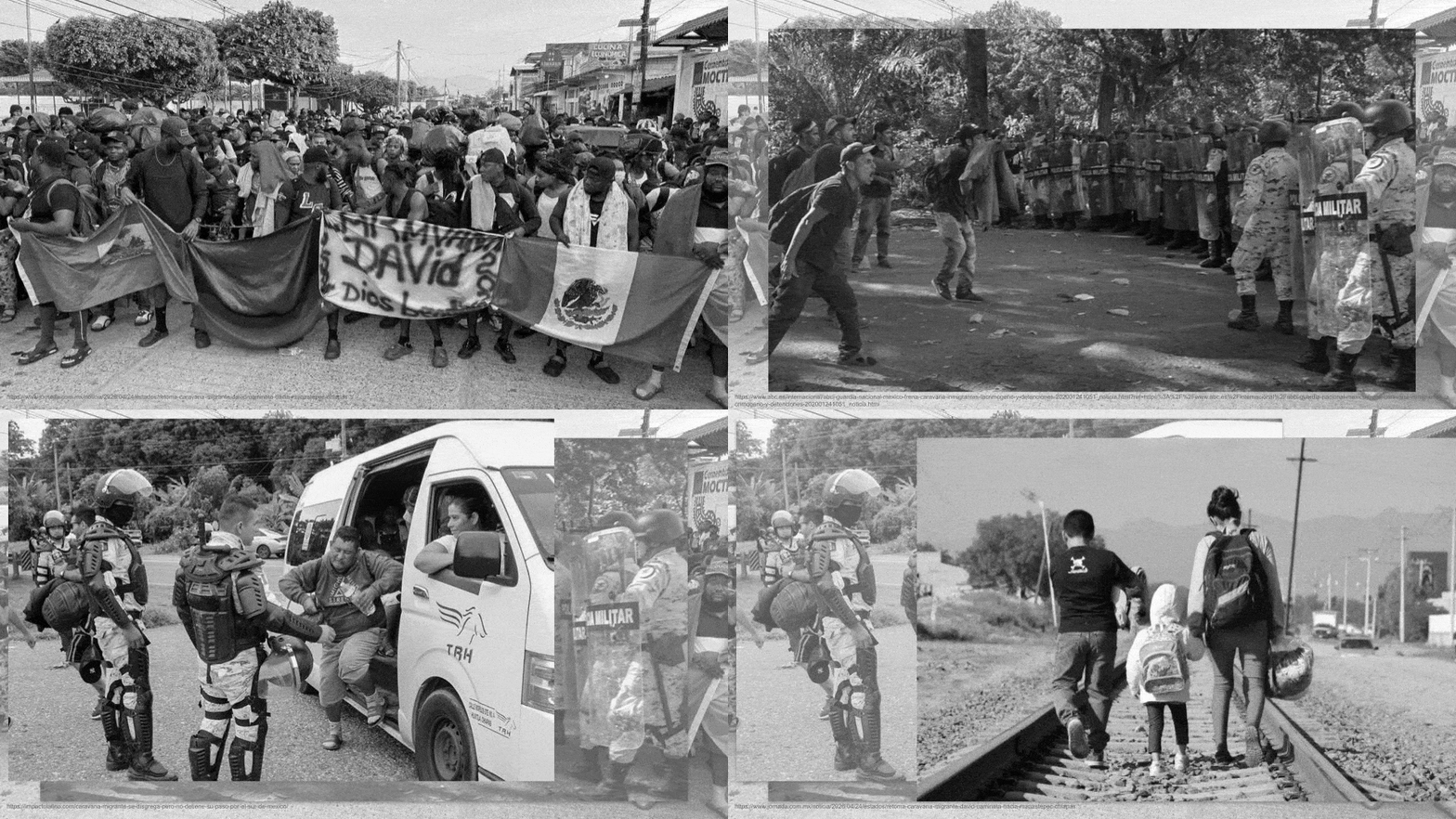
There are migrant caravans, a form of collective travel that provides greater safety and protection through strength.
In the pictures, we see one called David, a reference to David and Goliath. Traveling alone along highways is very different from traveling as part of a group, just as encountering the military, with all its resources and equipment, differs from dealing with local police forces. Furthermore, the experience of migration varies significantly according to age and gender, whether one is a woman, a child, an adolescent, or an elderly person.
Power is exercised not only through physical violence and repression, but also through systems of surveillance, regulation and fragmentation, as well as narratives that push the experiences of people on the move into the shadows
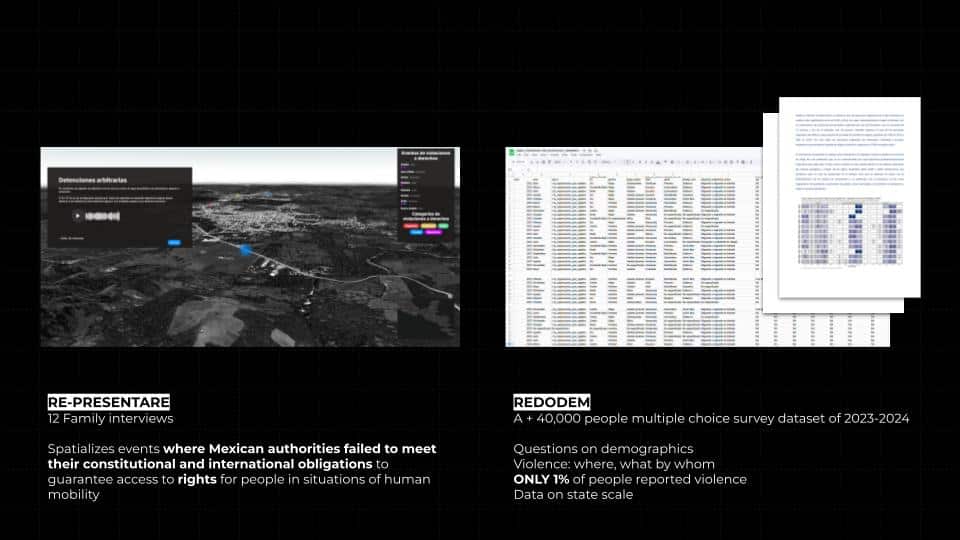
Two projects that attempt to make these experiences visible are done by representare and REDODEM
Representare’s work is based on 12 family interviews. In which they spatialize events where Mexican authorities failed to meet their constitutional and international obligations to guarantee access to rights for people in situations of human mobility. This is a non scalable method.
And the second project by REDODEM, an NGO that is has a network of shelters consists on collecting data on demographics as well as violence experienced on people’s journeys. The insight while looking at these data is that only 1% of people reported violence, which can mean that while answering a survey, there is no time to build any trust for people to actually share that they have experienced. Additionally the survey seems to be multiple choice, leaving behind complex qualitative data that could have a huge relevance.
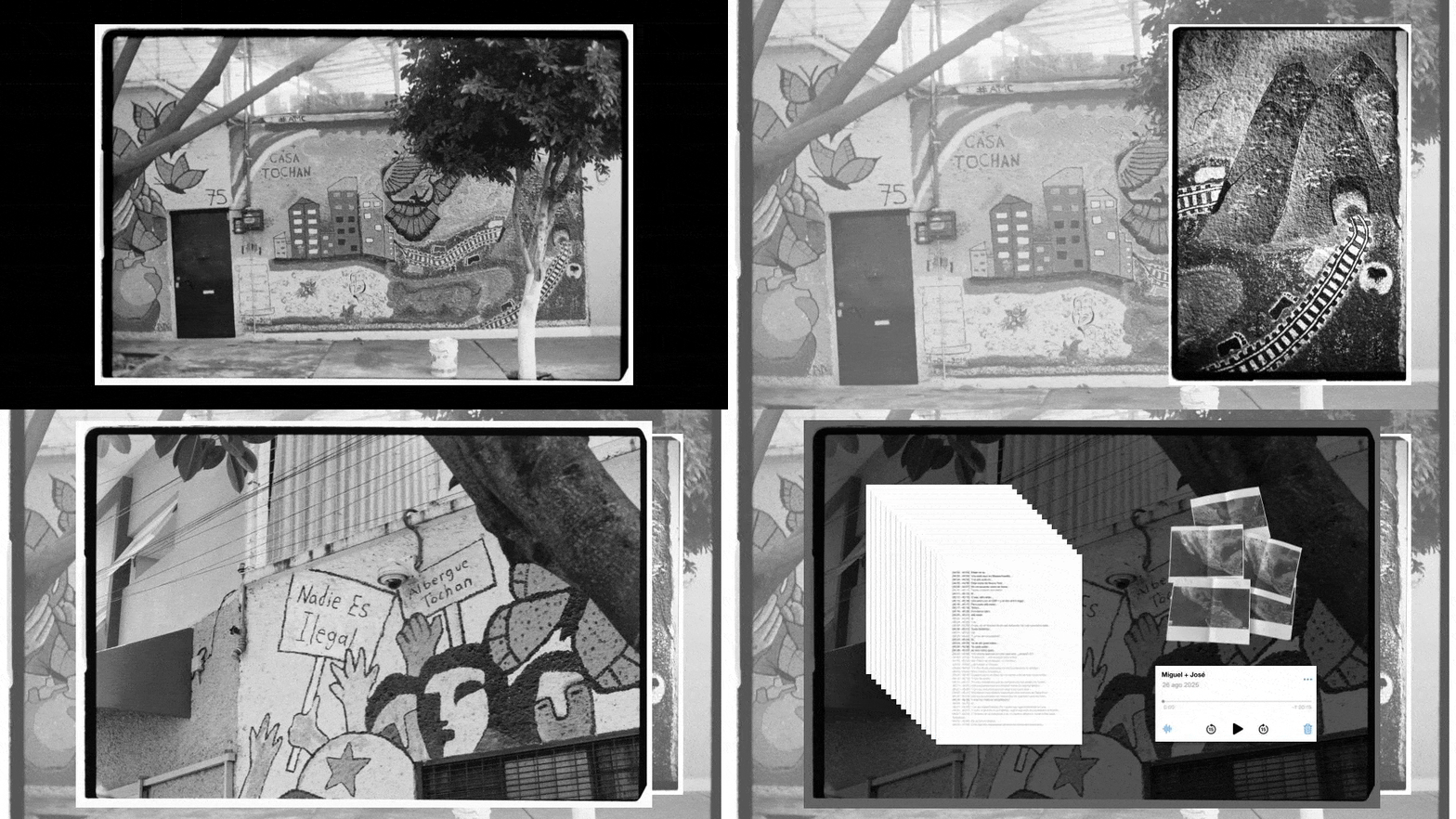
To illustrate that qualitative data, its complexity and relevance if found no better way than to play two pieces of an interview conducted by me in the summer of 2025 in Mexico City. You’ll listen to a 18 year old nicaraguan teenager. The voice was distorted for privacy reasons.
Often the most consecuencial barriers are relational
And relations are complex, dynamics are complex, and yet, despite this complexity, there is still no adequate way to systematically analyze these dynamics.
Problem Statement
Distributed and relational system of violence systematically targets people on the move with impunity, while current methods fail to make its spatial and relational patterns visible.
Research Question
How can stranded migrant testimonies be spatialized through an LLM-based pipeline, while critically accounting for structural bias, to reveal patterns of violence within Mexico’s militarized vertical border?
Objective
The goal is to develop a counter-mapping methodology that transforms migrant testimonies into spatial and relational forms of knowledge, revealing hidden patterns of violence while enhancing the collective visibility and voice of people on the move and supporting NGOs’ investigative, documentation, and legal advocacy efforts.
As my case study I took the interview conducted in september 2025 by myself in Mexico City in Casa Tochán, a shelter that is part of REDODEM.
There I interviewd two men, whose names are sustituted by fake ones for privacy reasons. One of them is a young adult, from El Salvador, and the other is a tennager from Nicaragua. The intervew is one hour and a half long.
How do we approach this complexity?
What can we know with this qualitative data?
- Every person goes through events, which take place in a location or a serie of locations. This locations can be categorized by habitants; town, village, city, metroploy… or by a smaller scale type of place such as train tracks, natural space, checkpoint, etc. It is possible to know as well if one event lead to another.
- Then, it can also be known which actors where part of each event, and for them to be categorized as well; speaker, other people on the move, organizations, authorities, organized crime, smugglers, etc. Each one of this categorpies has more granularity inside of them. Additionally, it is posible to know if there was a violent act in the event, and if so whi was the perpetrator and who was the perpetrated; wether it was the speaker or if they were witnesses of an agression to others.
The idea is that by combining different experiences and testimonies, patterns can emerge on actors, places, types of violences, to be able to understand the who, what, where, and most importantly the how; the interactions.
So… exactly how?
The methodology consists on having an interview as an input, new one or content already published on the internet. Then the audio is turned into a transcript which later is converted into a csv, where each row is a speakers turn.
The next step is to break down the entire interview into smaller segments. This is necessary because of the limitations of large language models (LLMs) when interpreting long texts and generating coherent responses from them. In essence, it is a token limitation issue.
To address this, I divide the interview into narrative episodes. Each episode may contain multiple events and locations, as long as they belong to the same broader story or narrative thread.
Once the interview is already broken doen, using Claude Opus 4.7, we extract the information described in the previous section. The process is dynamic and relies on a cumulative record that is updated as the analysis progresses.
One of the key factors behind its success was the incorporation of a human rights lens. Rather than relying solely on standard instructions such as “You are an assistant specializing in the analysis of testimonies from migrant people,” the model was explicitly instructed to identify potential human rights violations.
Importantly, this information was not used in the subsequent stages of the analysis, as accurately categorizing human rights violations remains a complex and challenging task for AI systems. However, including this perspective significantly influenced how the model approached the testimonies. It encouraged a more attentive reading of vulnerability, power asymmetries, risks, and forms of abuse, ultimately improving the quality and depth of the extracted information.
Later on, each location was geolocated using OSM (Open Street Maps), having claude as a fallback (only 3.4% were geolocated by Claude). Then all mexican locations were enriched with the census data from 2020 to categorize them by amount of inhabitants.
Additionally, the catgeories where grouped by taxonomy, for the moment tha there is a high amount of categories, to have the option visualize the data in less granularity to spot patterns. And almost at the end there was a narrative consolidation, to put together each person’s intervetions all together and spot if one event lead to another.
The final step is a verification tool. Through this interface, we can better understand the AI’s decision-making process and review the outputs it has generated. This second verification stage allows us to analyze, validate, correct, and refine the relationships identified by the AI, ensuring that the final representation is both accurate and consistent with the original testimony.
An finally the webmap, the final output is seen here below. It consists of four main panels; one to see the relational conections, one to see the spatialized data, one with the demographics, and the fourth to be able to see the statistics and patterns. This forth one has a heatmap with perpetrators and type of violence. The whole interface is dynamic in a way that when we click on the heatmap, we see the data reflected on the map and the nodal graph. In this same way, once you click on the demographics, you can see who is more prone to experience what, as well as seeing it on the map adn being able to read the text from from the nodes that get selected. The data can also be visualized by state, to be able to see in a wider scale. Pushbacks turned out to be a very frequent type of violence, and there we see spatialized how people on the move are sent to the south of Mexico.
Using this type of visualization, by blending qualitative and quantitative data in the same space, we can render the relational networks to visualize these different power relationships. We see clearly how power is not centralized, but distributed and circulating along a social network.
By shedding light to this experiences, which are not isolated cases, we can reveal patterns of violence, who is affected by them, where they occur, and most importantly, how they operate. I believe that this approach can foster collective understanding and strengthen practices of documenting and exposing complex systems of violence that often operate with impunity.
The challenge is not only to map where violence happens, but to reveal the relationships through which it is exercised.
