
Design for More Than Humans Seminar | IAAC
Understanding Local Habitats, Native and Exotic Species
What is a Local Habitat?
“A place where plants or animals normally live, characterized primarily by its physical features such as topography, plant or animal , soil characteristics, climate, water quality etc and secondarily by the species of plants and animals that live there. Habitats change over time. Changes can be slow or rapid, natural or human-induced”
Data source: European Environment Agency (EEA). (2023). An introduction to habitats. EEA Publications
What is Native?
“Native or indigenous species: the one existing within its area of distribution and natural dispersal.”
Data source: Estudi d’Espècies Invasores (Study of Invasive Species), 2010.
Generalitat of Catalonia..
What is Exotic?
“Exotic or alien species are all those foreign species that humans have introduced from the six areas of origin to a determinate territory.”
Data source: EXOCAT 2012 – The exotic species of Catalonia. Andreu, J., Pino, J., Basnou, C., Guardiola, M., & Ordóñez, J.L. (2012). CREAF.
Geographic and Historical Context
Catalonia, located in northeastern Spain, contains three major ecosystem types shaped by geography and climate: the Pyrenees, the Inland region, and the Mediterranean Coastal zone. Barcelona belongs to this coastal ecosystem, characterized by a mild Mediterranean climate and a long history as a port city connected to global trade routes.
Catalonia Three Ecosystem Types
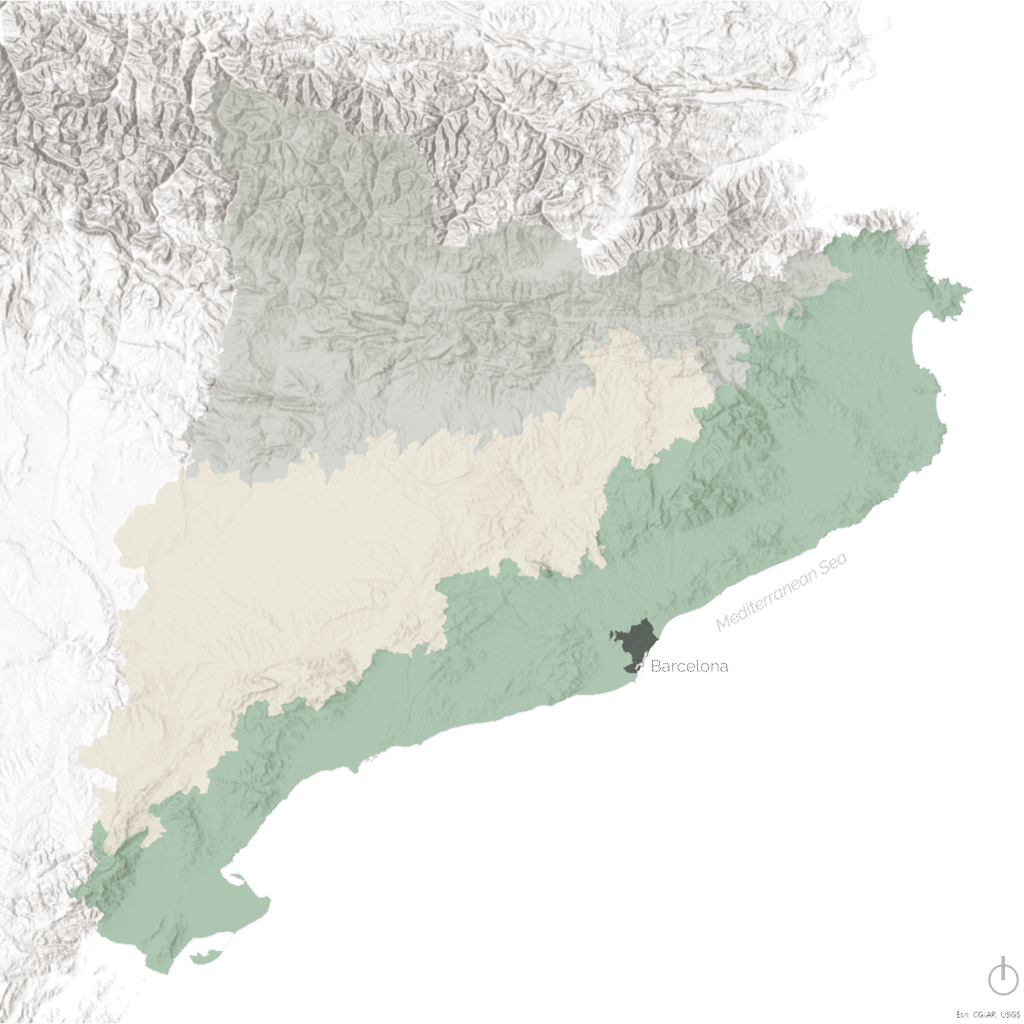
Exotic species distribution Map
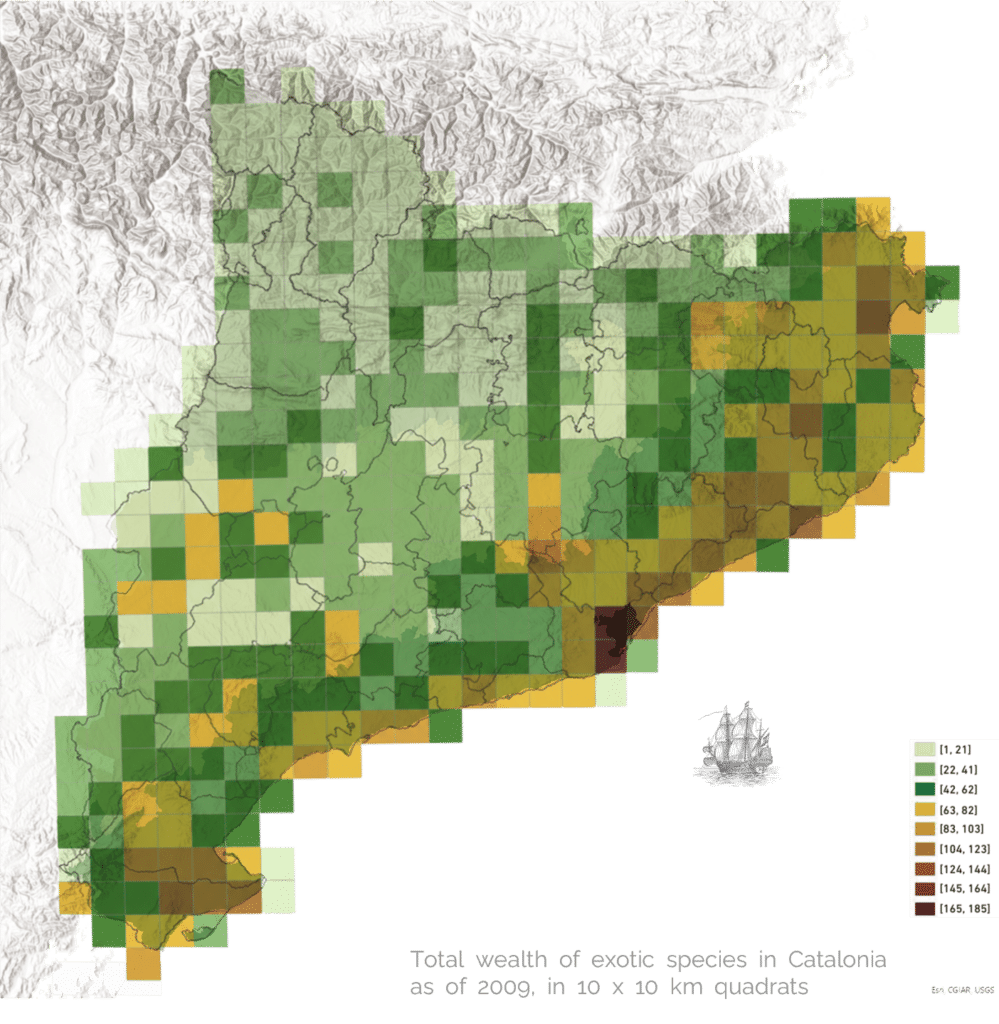
This map shows that exotic species in Catalonia are unevenly distributed, with higher concentrations along the coast and around major urban areas, especially near Barcelona. Their spread is supported by mild climate, human disturbance, and diverse habitats with high water and nutrient availability.
Barcelona – A major port city, historically known as a hub for trade and navigation. It has also served as an entry point for exotic species, especially during the period of European exploration.
The origins of these species reflect centuries of global exchange, with introductions arriving from the Americas, Asia, Africa, Oceania, and other parts of Europe.
Introduction to the Issue
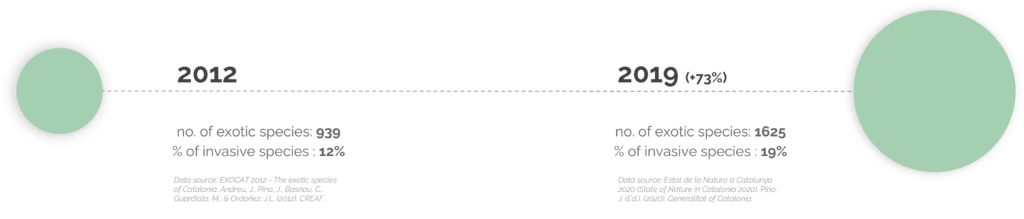
The presence of exotic species in Catalonia has increased significantly over the last decade. In 2012, Catalonia recorded 939 exotic species, with 12% classified as invasive. By 2019, this number had increased to 1,625 species, of which 19% were invasive, representing a growth of approximately 73%.
This trend is also visible in Barcelona’s Tree Distribution Analysis: The distribution across the city reveals a strong predominance of exotic species, as Plàtan (London Platanus). While these species have become deeply integrated into the urban landscape, their ecological role and compatibility with local habitats remain open questions.
Spatial Distribution of Predominant Tree Species in Barcelona
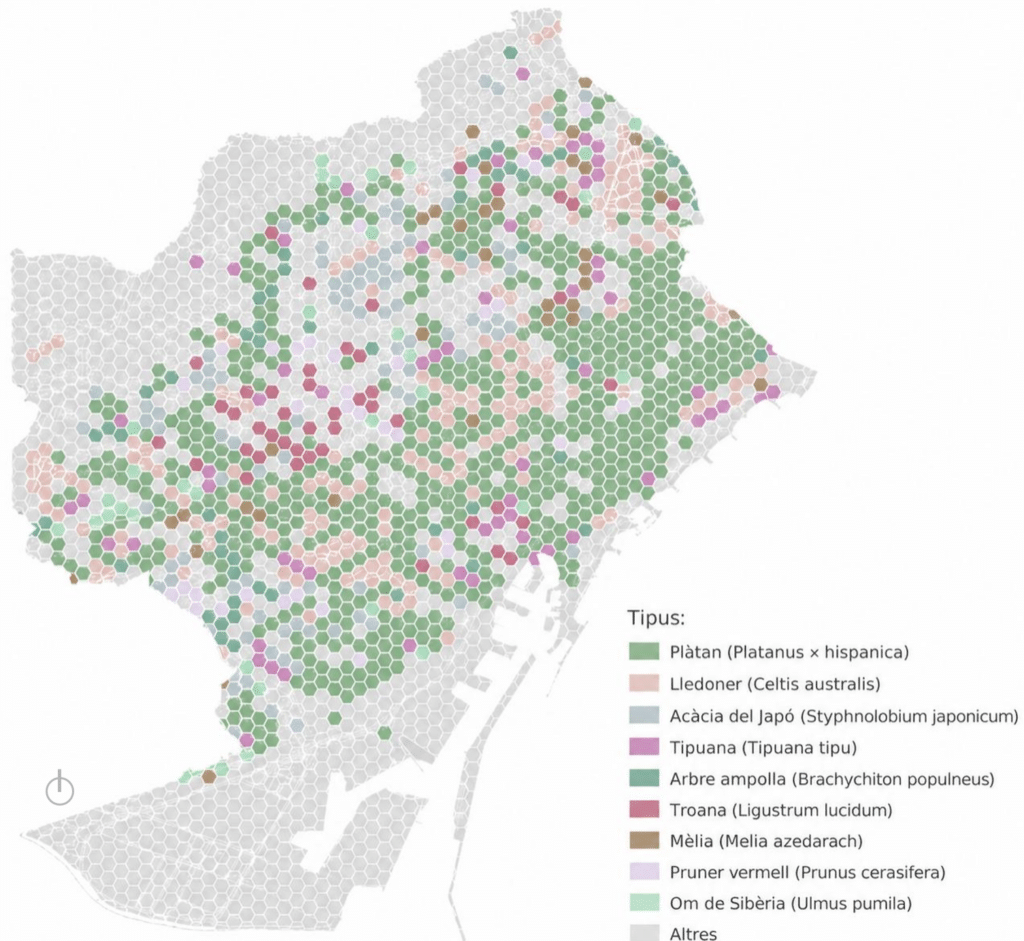
The purpose of this visualization is to compare the presence of native and non-native species across the city, analyzing their proportion and spatial concentration.
Case Studies
4 Landscapes – Catalonia Litoral
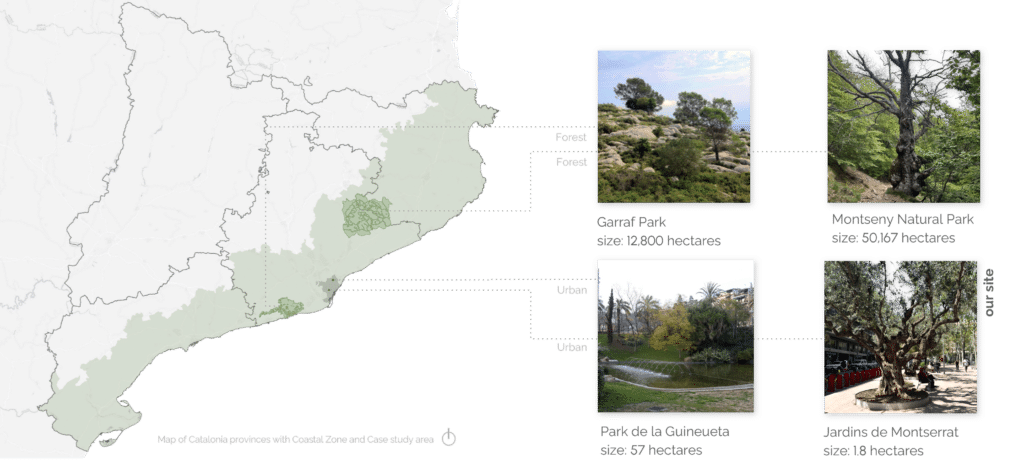
To better understand how native and exotic species coexist, four reference landscapes within Catalonia’s coastal region were studied: Jardins de Montserrat, Parc de la Guineueta, Montseny Natural Park, and Garraf Natural Park.
The comparison revealed a clear relationship between urbanization and species composition.
Percentage of native vs. exotic species
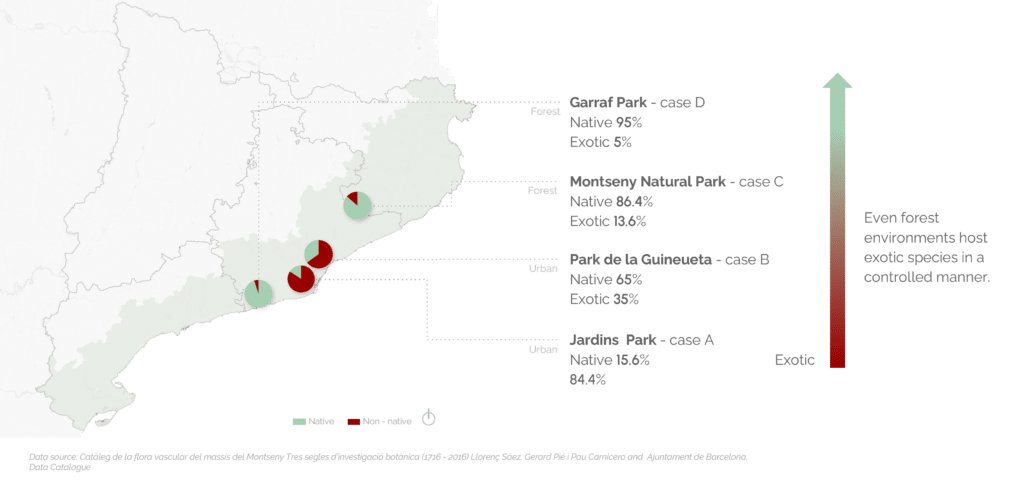
These observations suggest a spatial gradient where native biodiversity increases with distance from the urban center.
However, even highly natural forest environments still contain a small percentage of exotic species, demonstrating that the relationship between native and non-native vegetation is more complex than a simple opposition.
Natural Barriers vs Human Barriers
In natural environments, trees rarely grow in isolation. Shrubs, herbs, and other vegetation form a protective layer around trunks and root systems, creating natural barriers that prevent humans and animals from fully occupying the space around them. This diverse vegetation helps protect the soil, retain moisture, reduce disturbance, and support healthy root development, while also creating favorable conditions for local biodiversity and habitat formation.
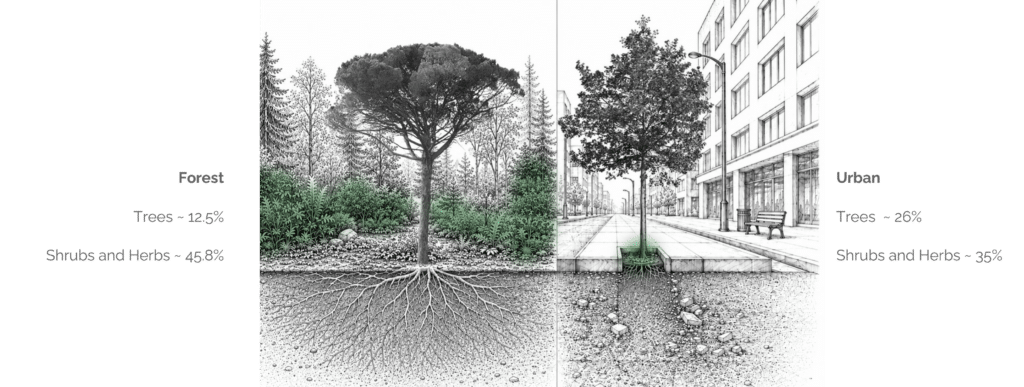
In urban environments, this natural dynamic is often disrupted. Tree root zones are frequently covered by concrete, asphalt, or other impervious surfaces, limiting water infiltration and restricting root expansion. In addition, underground infrastructure such as water, sewage, drainage, and utility networks further reduces the available space for root growth. These constraints make it more difficult for trees to thrive and diminish their ability to support local habitats and ecological functions compared to natural ecosystems.
Three conclusions emerged from this analysis:
01. Spatial Gradient: Native dominance correlates with distance from city
Distance from urban center is relational to native/exotic species ratio. As parks move closer to the city, they shift toward exotic dominance.
02. Ecological Paradox: Even forest landscapes accommodate exotic species
A 95% native forest (Garraf) still retains 5% exotics suggesting even Mediterranean forest landscapes incorporate non-native species at low levels.
03. Urban dependency on managed exotics
The closer a landscape is to the city center, the more it depends on non-native species and artificial inputs. They’re controlled alternatives to unmanaged nature.
These findings contribute to a broader understanding of local habitats as spaces where native and exotic species can coexist, leading us to the following position
Position:
We do not approach exotic species as inherently negative; rather, understand their ecological role as dependent on context, management, and their compatibility with native species within urban environments.
Objective:
Develop an urban park in Barcelona as a living natural laboratory for assessing the compatibility between native and exotic species and producing evidence-based guidelines for urban biodiversity planning and management.
Site Selection: Prototyping an Urban Ecology Lab
The selected site is located at the intersection of Carrer de Rosselló, Carrer de Rocafort, and Carrer de Còrsega, within Barcelona’s Superilles (superblocks) program. The site currently hosts Jardins de Montserrat, a neighborhood green space that serves as an important public amenity within the superblock network.
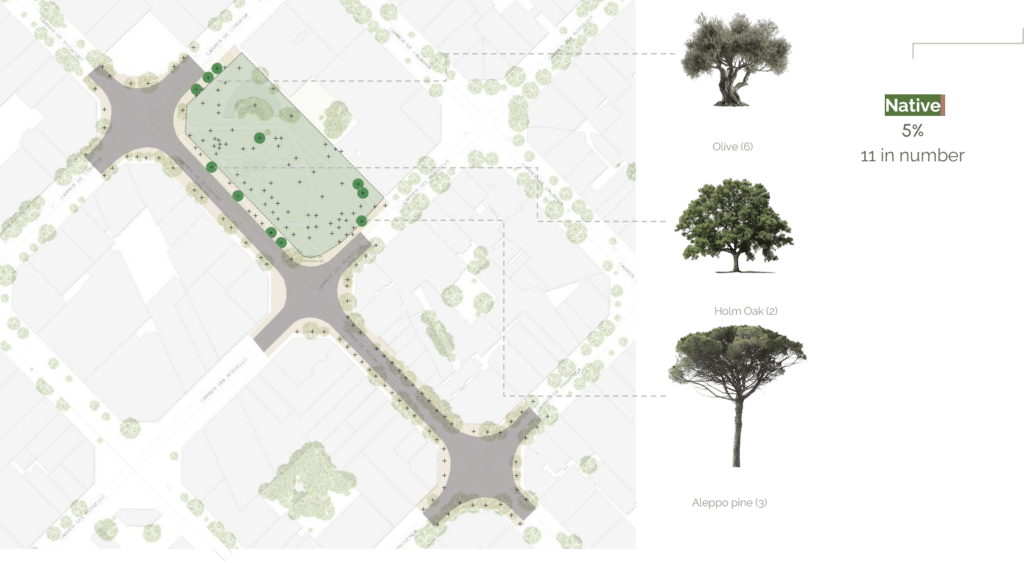
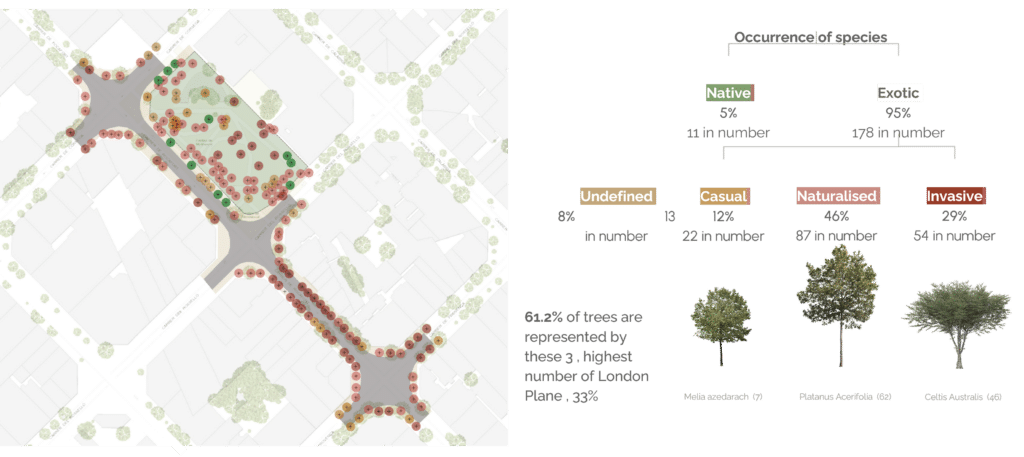
The current tree inventory reveals a significant ecological imbalance. Only 5% of the existing trees are native species, represented by Aleppo Pine, Olive, and Holm Oak. The remaining 95% are exotic species, of which 46% are naturalized, 29% are invasive, and 12% are classified as casual species.
Just three species account for more than 60% of all trees on site, indicating low ecological diversity and a strong dependence on a limited number of species. This composition reduces habitat quality and ecological resilience, highlighting the potential for the site to become a living laboratory for urban biodiversity within the Superilles network.
From Diversity to Ecological Performance
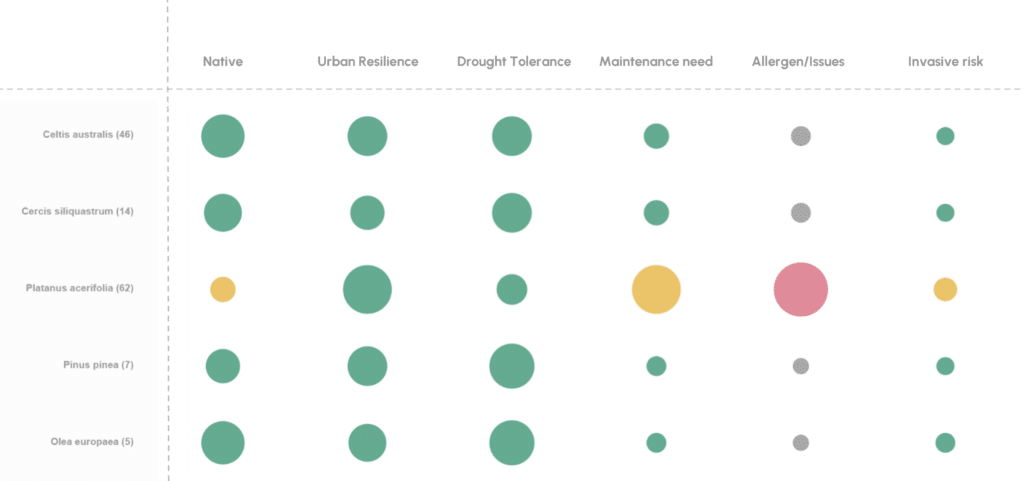
To identify opportunities for improvement, the site’s most representative tree species were evaluated according to biodiversity value, urban resilience, drought tolerance, maintenance needs, allergenic impacts, and invasive risk.
This assessment reveals both strengths and vulnerabilities within the current tree population, providing a basis for selecting species that can enhance biodiversity, support climate adaptation, and reduce long-term maintenance requirements within the Superilles ecological network.
Species Selection Methodology: Classification and Compatibility
Barcelona’s Tree Management Plan (2011) serves as a guide for species selection through a combination of climatic and management criteria. Beyond biodiversity targets, the framework considers drought resilience, disease vulnerability, maintenance demands, allergenic impacts, rooting behavior, and adaptability to urban conditions.
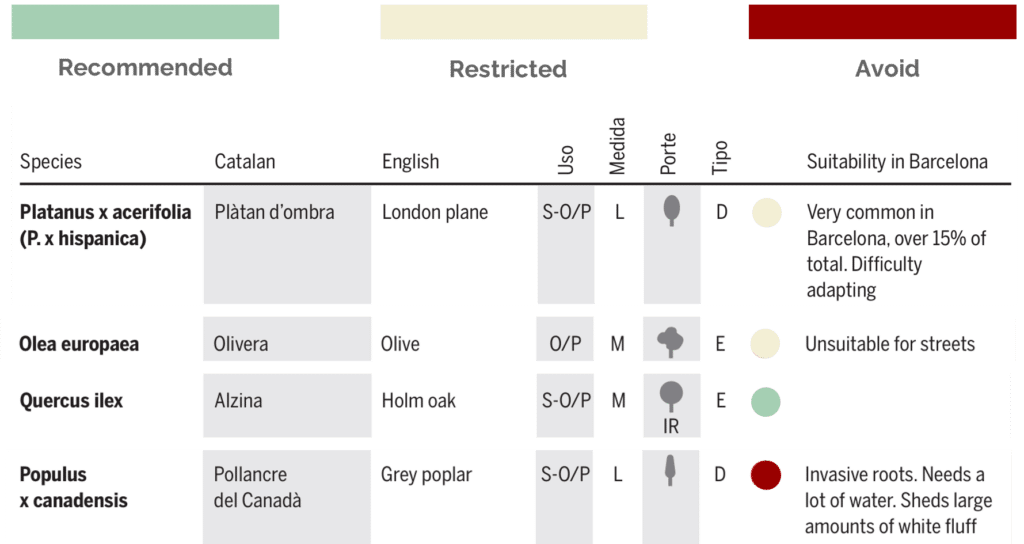
While the Barcelona Tree Management Plan provides the technical framework for species selection based management criteria, the academic perspective expands the analysis by examining the ecological origin and establishment dynamics of each species.
The Checklist of the Vascular Plants of Catalonia (2021), species are classified as either native or exotic. Exotic species are further categorized according to their degree of establishment and ecological impact: casual species are unable to maintain self-sustaining populations, naturalised species establish persistent populations in human-modified environments, and invasive species spread into semi-natural or natural habitats, potentially threatening local biodiversity.
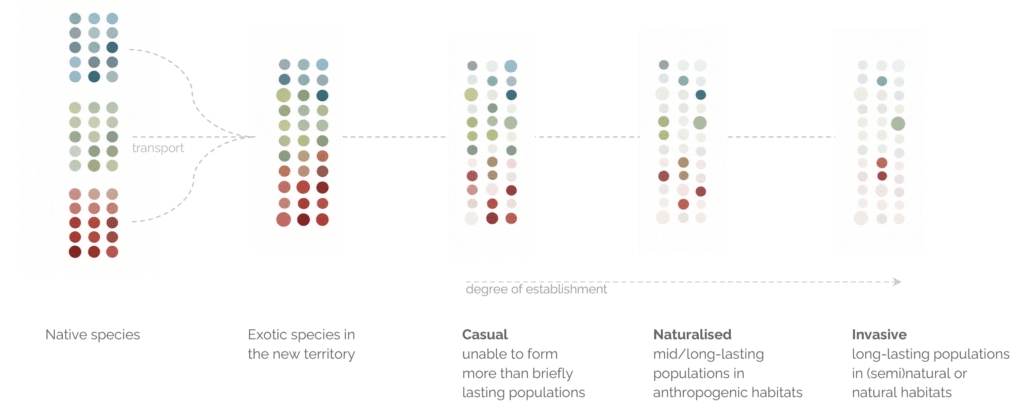
Together, these two frameworks provide a more comprehensive basis for species selection, combining urban performance criteria with ecological considerations related to biodiversity conservation, habitat quality, and invasive risk.
Methodology:
To support species selection, an Analytic Hierarchy Process (AHP) was applied to evaluate the ecological performance of each species through a weighted multicriteria assessment.
The analysis combined technical criteria derived from the Barcelona Tree Management Plan with ecological indicators from the Catalan vascular plant classification framework. Each species was assessed according to:
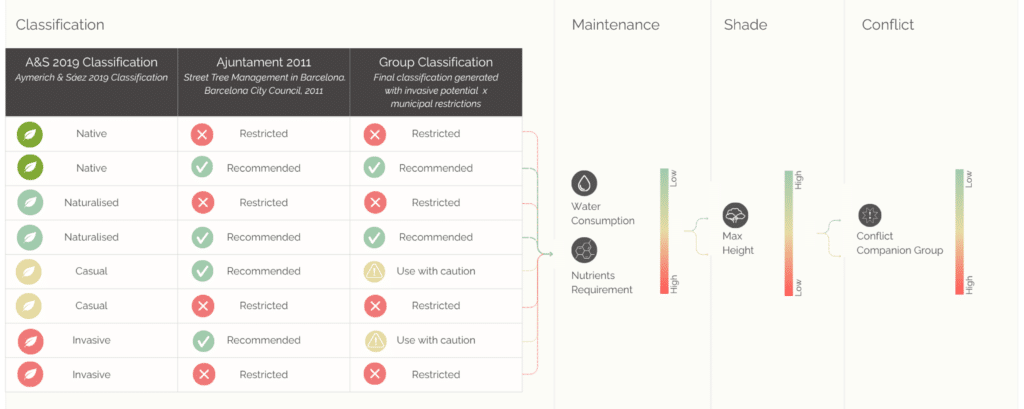
Using the AHP methodology, criteria were weighted according to their relative importance for the development of a resilient and biodiverse urban habitat. The resulting ecological score enabled the classification of species into five performance groups:
A – Ideal Regenerative Species
Species with high ecological value, strong biodiversity contribution, low maintenance requirements, and high adaptability to future climate conditions.
B – Compatible Species
Well-performing species that provide ecosystem services and can be integrated with limited management requirements.
C – Transitional Species
Species that remain compatible with the site but may require periodic monitoring or specific management actions.
D – High-Maintenance Species
Species associated with higher resource consumption, greater maintenance demands, or lower ecological performance.
E – Problematic and Potentially Invasive Species
Species presenting significant ecological risks, including invasive behavior, limited biodiversity benefits, or the potential to negatively affect surrounding ecological communities.
This methodology provides a transparent and evidence-based framework for prioritizing species that contribute to biodiversity enhancement, climate resilience, and long-term ecological stability within the Superilles network.
Beyond evaluating existing trees, the methodology also identifies optimal planting opportunities. For areas without tree cover, the ecological engine recommends species that maximize biodiversity, ecological compatibility, climate resilience, and ecosystem services, supporting the gradual transformation of the site into a more diverse and interconnected urban habitat.
Design Strategy
Human activity functions as a form of ecological pressure because patterns of movement, occupation and urban comfort directly influence environmental stress, maintenance intensity and the viability of native and non-native ecological systems. For this reason, human occupancy, circulation patterns, temperature, air pollution, and watershed conditions were incorporated into the design process.
Human activity, urban pressures and environmental pressures functions as a form of ecological pressure in an urban area that shapes how urban landscapes are planted, maintained and sustained.
Each pixel was assigned environmental values, allowing us to understand the site as a gradient of urban stress rather than as fixed zones. Based on these layers, the site is organized into four test zones inspired by the case studies:
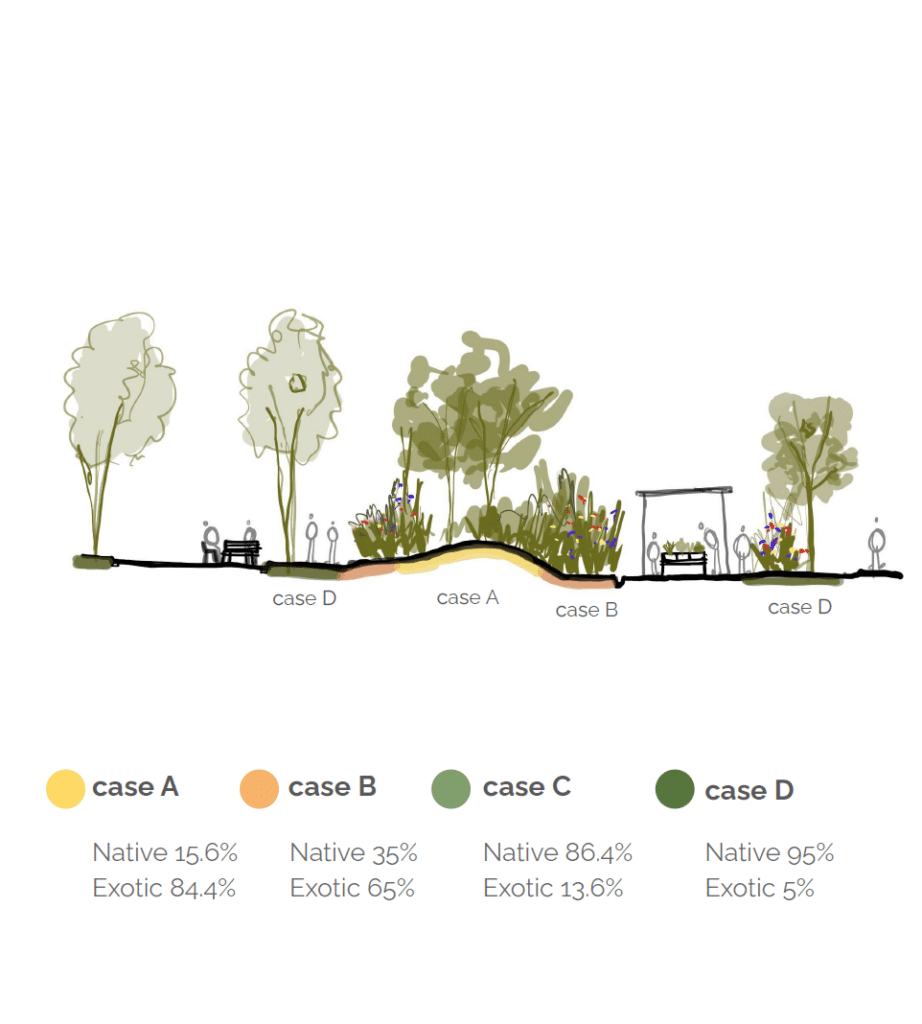
- Case A: 15.6% native and 84.4% exotic species.
- Case B: 35% native and 65% exotic species.
- Case C: 86.4% native and 13.6% exotic species.
- Case D: 95% native and 5% exotic species.
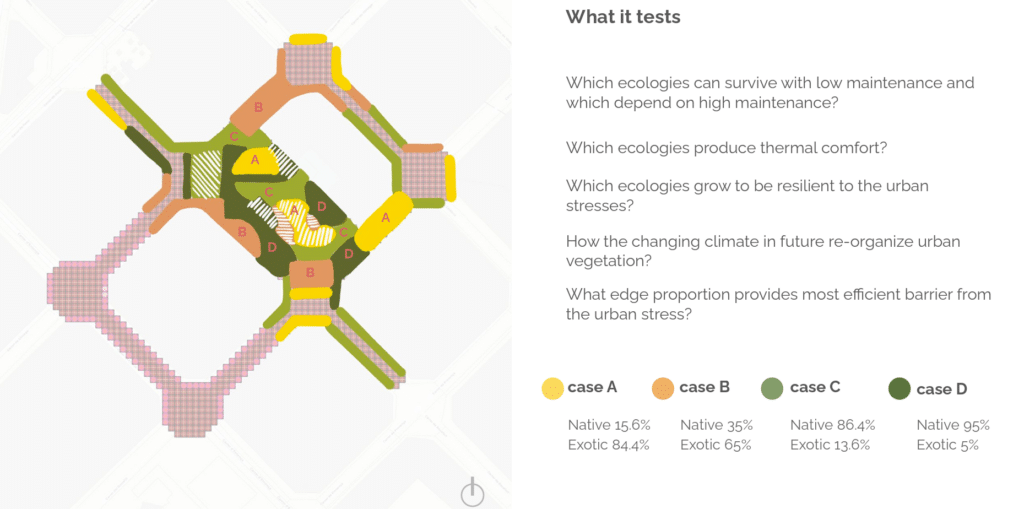
Each zone operates as an experimental environment that allows observation of ecological performance under different levels of urban stress. Here, human and non-human presence in different urban stress conditions are also separated and made sure that each of these conditions are met. These represent different levels of ecological autonomy and maintenance dependency.
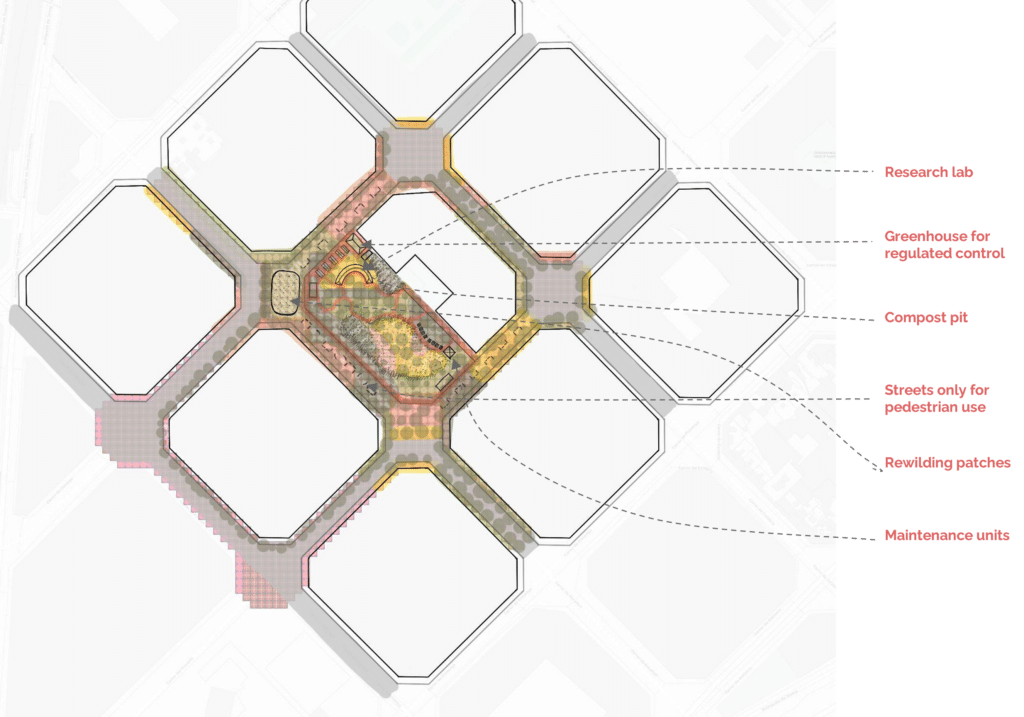
The design incorporates research infrastructure, including a greenhouse for controlled experimentation, a research laboratory, composting facilities, maintenance units, pedestrian-only streets, and rewilding patches.
Visualizing Future Ecologies
The proposed landscape introduces less rigid planting zones, spaces for rewilding, experimental ecological patches, wider permeable planting beds, and porous pathways.
As vegetation matures, the site is expected to provide:
- Increased biodiversity throughout the year.
- Greater thermal comfort.
- Improved acoustic buffering.
- Enhanced pollinator activity.
- Better soil health.
- Reduced maintenance costs.
At the same time, potential challenges such as invasive behavior, visibility concerns, and increased pollen production remain part of the monitoring process.
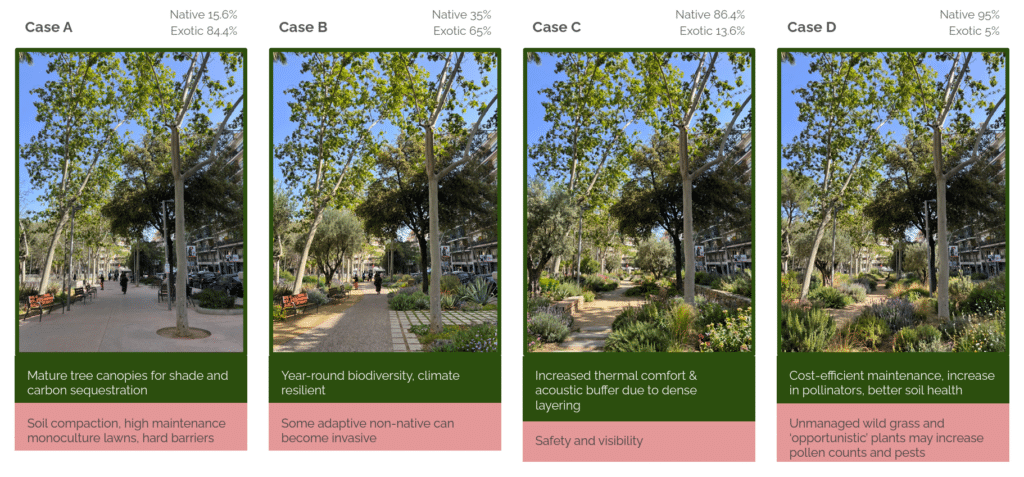
The same space put into different cases (A-D), we used AI visualization tools to simulate how these ecological scenarios might spatially and atmospherically transform the site. The project ultimately asks not which species are better, but how much ecological control and maintenance cities require to sustain different urban futures.
This allows us to speculate how ecological compositions may transition toward more autonomous and native-dominant systems in the future.
Design with Time : Biodiversity activity and Interaction timeline
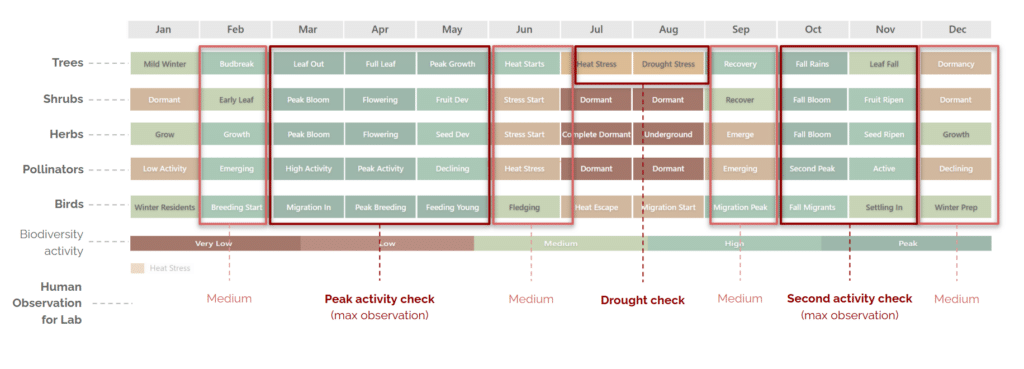
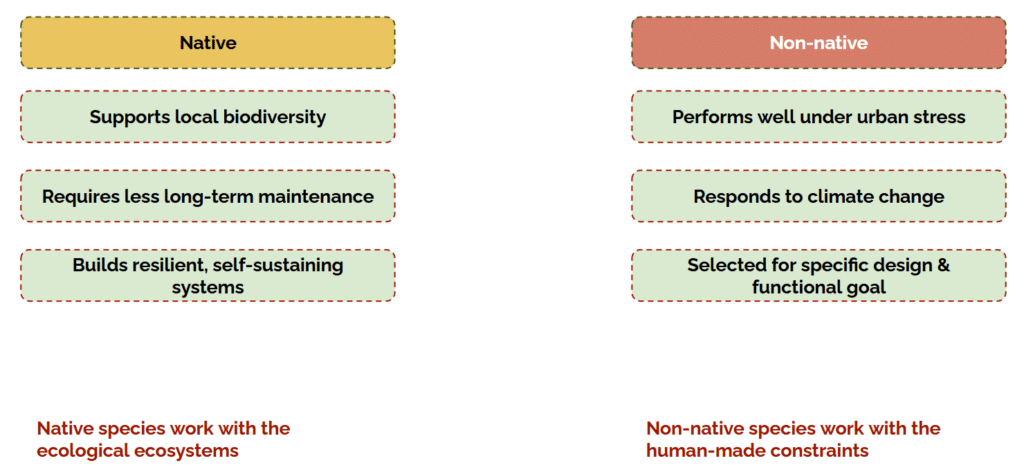
To native or non native?
Conclusion
Rather than classifying species as simply “good” or “bad” based on their origin, we recognize that both native and exotic trees can contribute positively to urban environments when carefully selected and responsibly managed.
The implementation of a LAB will allow continuous monitoring, experimentation, and learning about how different tree species interact within the local habitat over time.
By observing both native and exotic species in real urban conditions, it becomes possible to better understand their ecological performance.
