Within the current global context of rapid change, integrated with the potentials of digital technologies, IAAC’s Master in Advanced Architecture (MAA) is committed to the generation of new ideas and applications for Urban Design, Self Sufficiency, Digital Manufacturing Techniques and Advanced Interaction.

In this context IAAC works with a multidisciplinary approach, facing the challenges posed by our environment and the future development of cities, architecture and buildings, through a virtuous combination of technology, biology, computational design, digital and robotic fabrication, pushing innovation beyond the boundaries of a more traditional architectural approach.

Filters
Course

Urban Oasis Pavilion
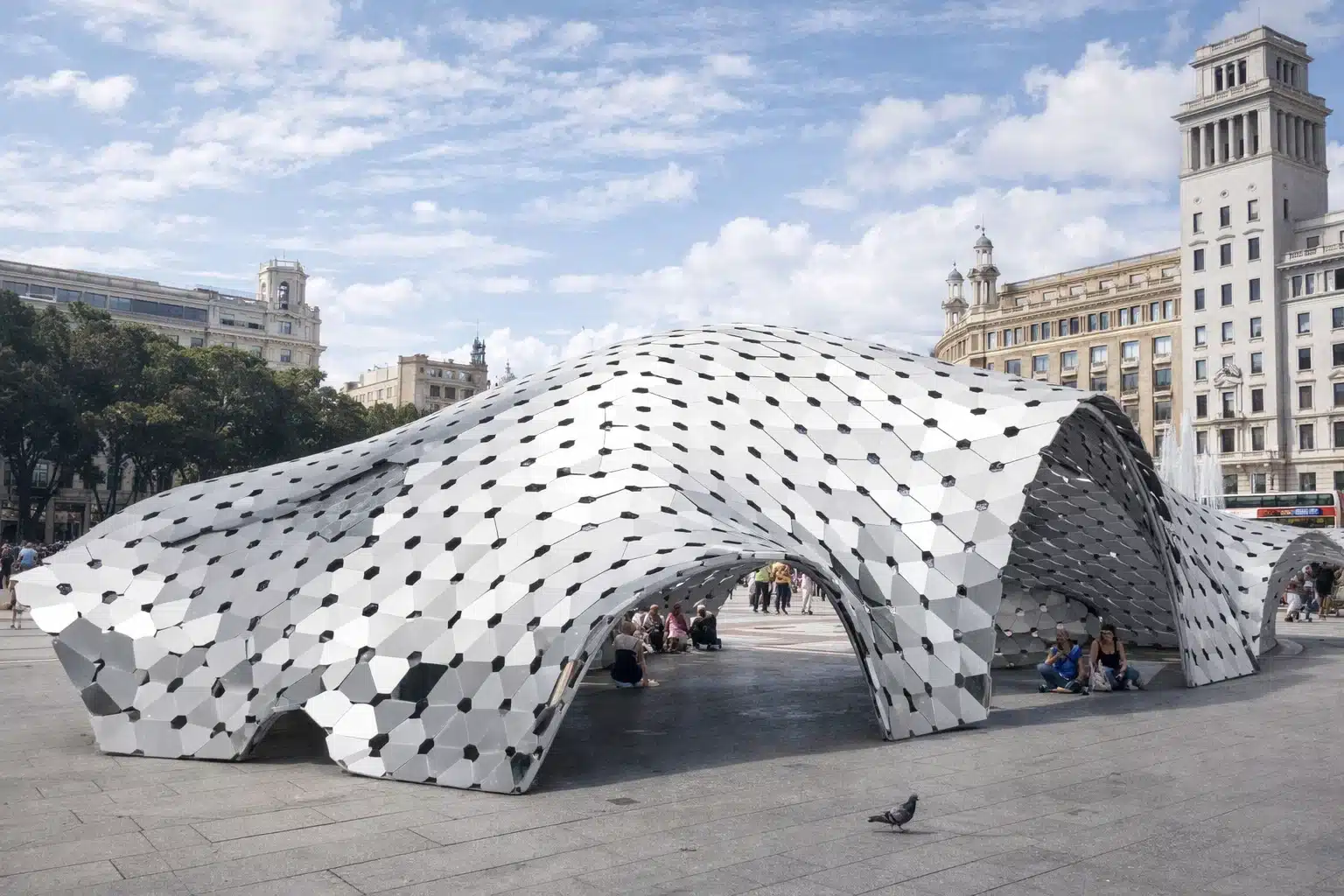
The Urban Oasis Pavilion is a temporary installation in Plaça Catalunya that transforms one of Barcelona’s busiest urban nodes into a space for shade, rest, and social encounter. Its porous, flowing surface filters light, noise, and heat to create a more comfortable microclimate within the dense city environment, offering a place for pause and relief … Read more
Computational Design Seminar II | Air-Cast Shell

Site analysis The architectural intervention is situated within Plaça de la Virreina, a prominent public square in the Gràcia district. The initial analysis involved a comprehensive mapping of existing urban conditions, specifically focusing on the primary access points to the square and the location of existing trees. These environmental constraints were not viewed as obstacles … Read more

El Xarxaire pabellon

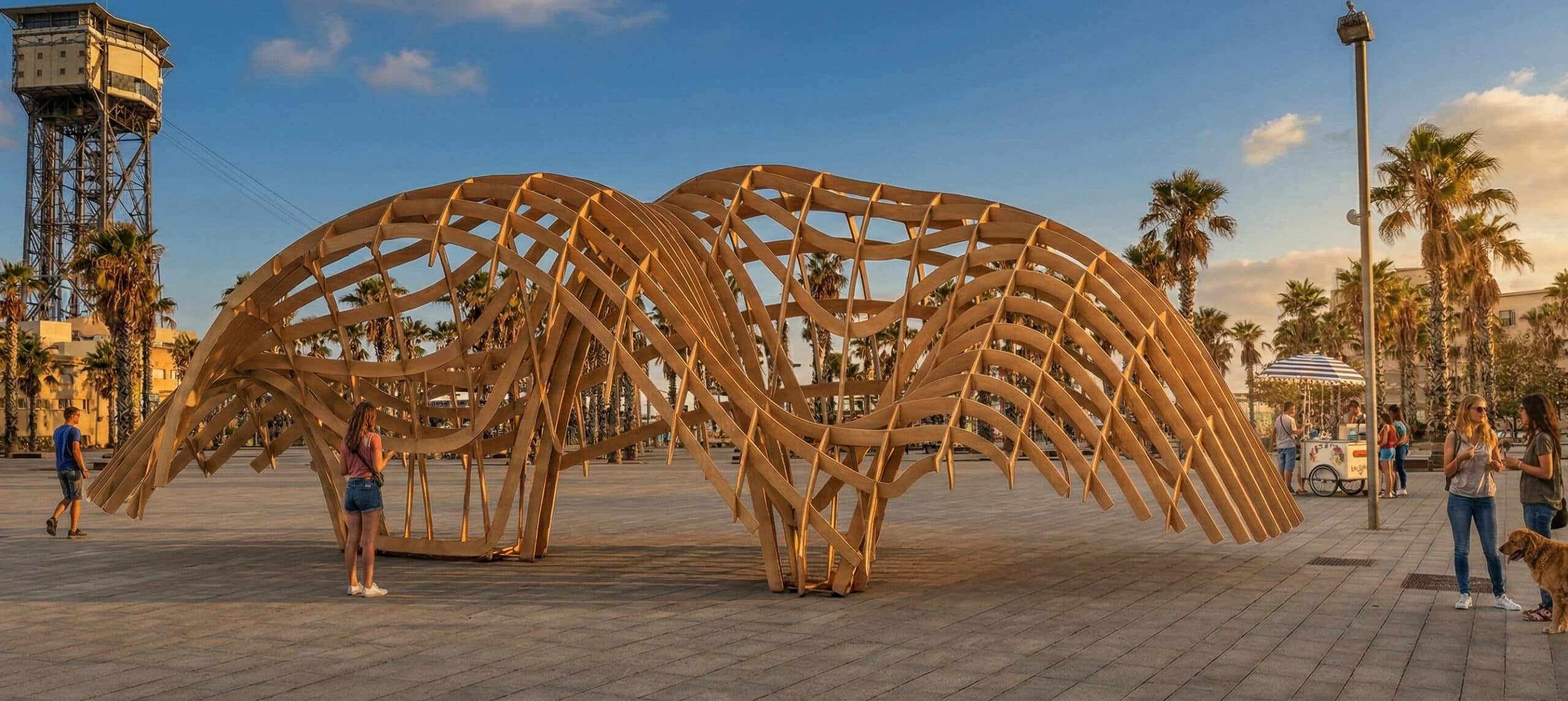
Site Specification The pavilion, located in Plaza del Mar, Barceloneta, features a design adaptable to coastal winds and connected to the sea, primarily constructed from polywood marine 3mm thickness fabricated in CNC machine to withstand its beach environment. Plaza del Mar is a vast, 17,000-square-meter urban “void” that serves as Barceloneta’s primary window to the … Read more

Arcada Viva

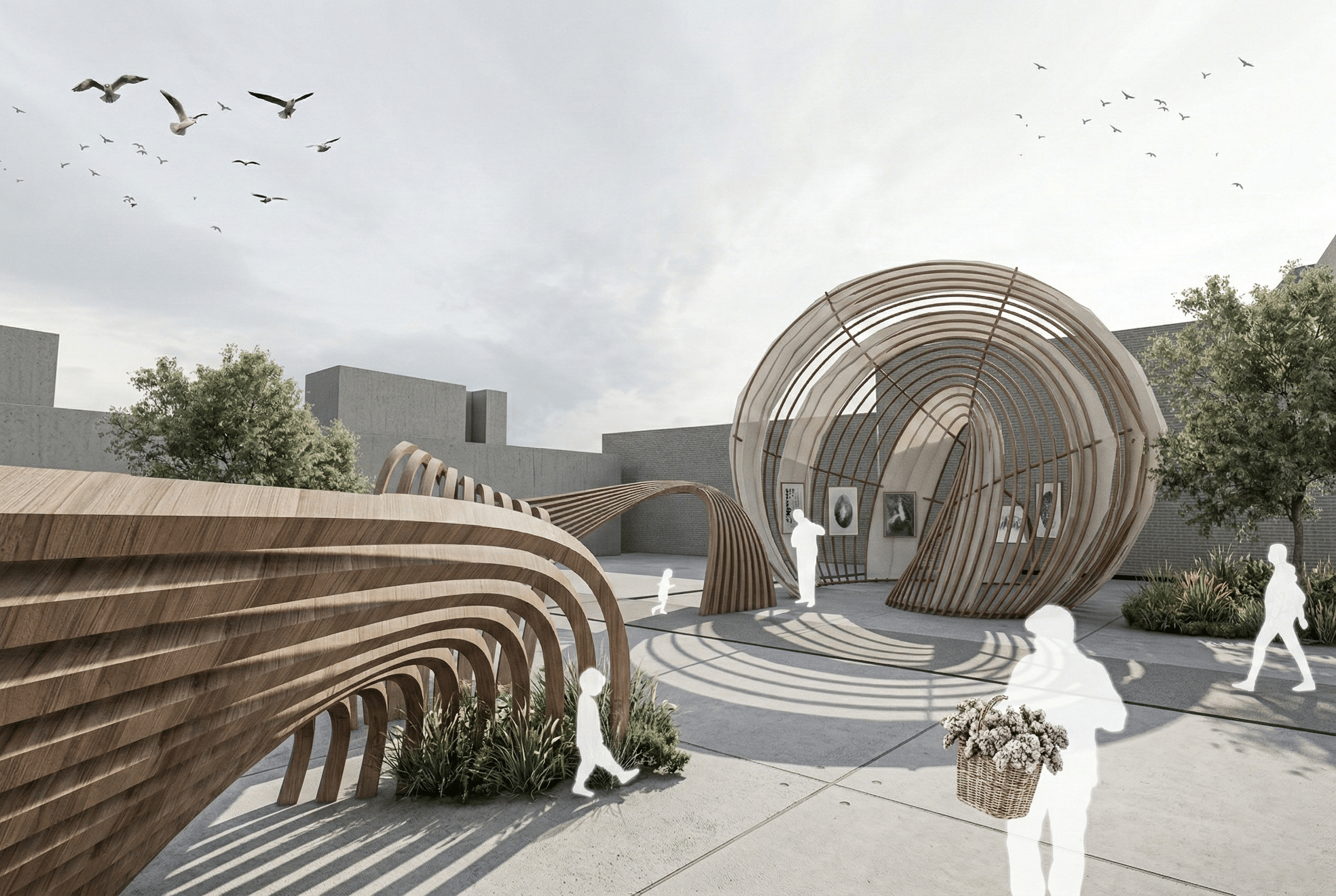
The project situates the pavilion within the urban fabric of Plaça Reial, accompanied by initial conceptual sketches that explore a shell-like structure emerging from the geometry and atmosphere of the square. SITE INSPIRATION WORKFLOW PSEUDO CODE RENDERS

Escates de Peix

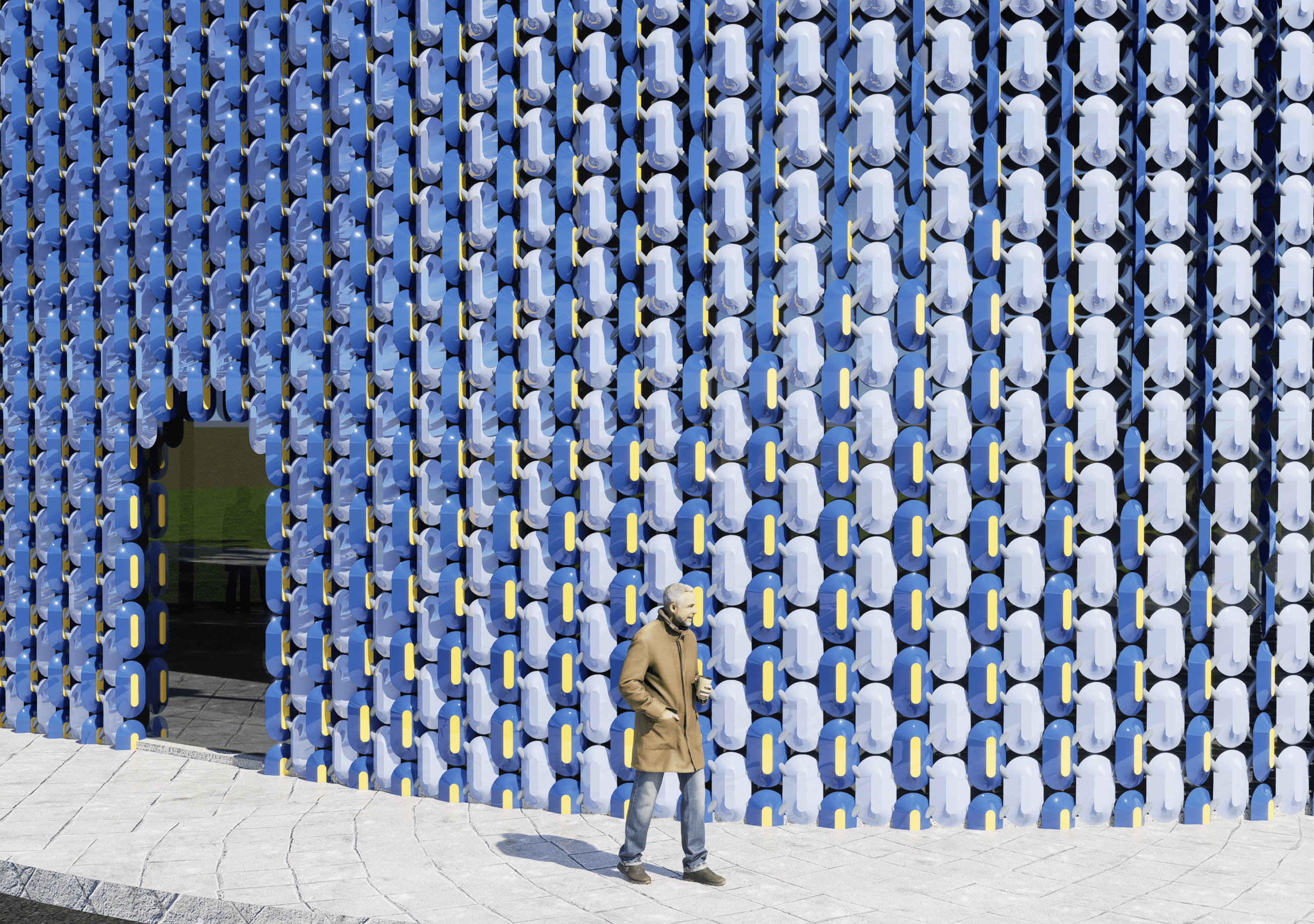
Concept Inspiration Creating a dynamic facade using can ran atelier’s three dimensional ‘kinetic tile’ approach. Rotation to be determined by controllable attractor curve Colourful tile/mosaic facades are often found in Barcelona design contexts. Early Iterations Pseudo Code High Quality Video: https://drive.google.com/file/d/1BpDajnOIM52dp8Mcx5DFvEiamOlLwxH_/view?usp=sharing

TriActive

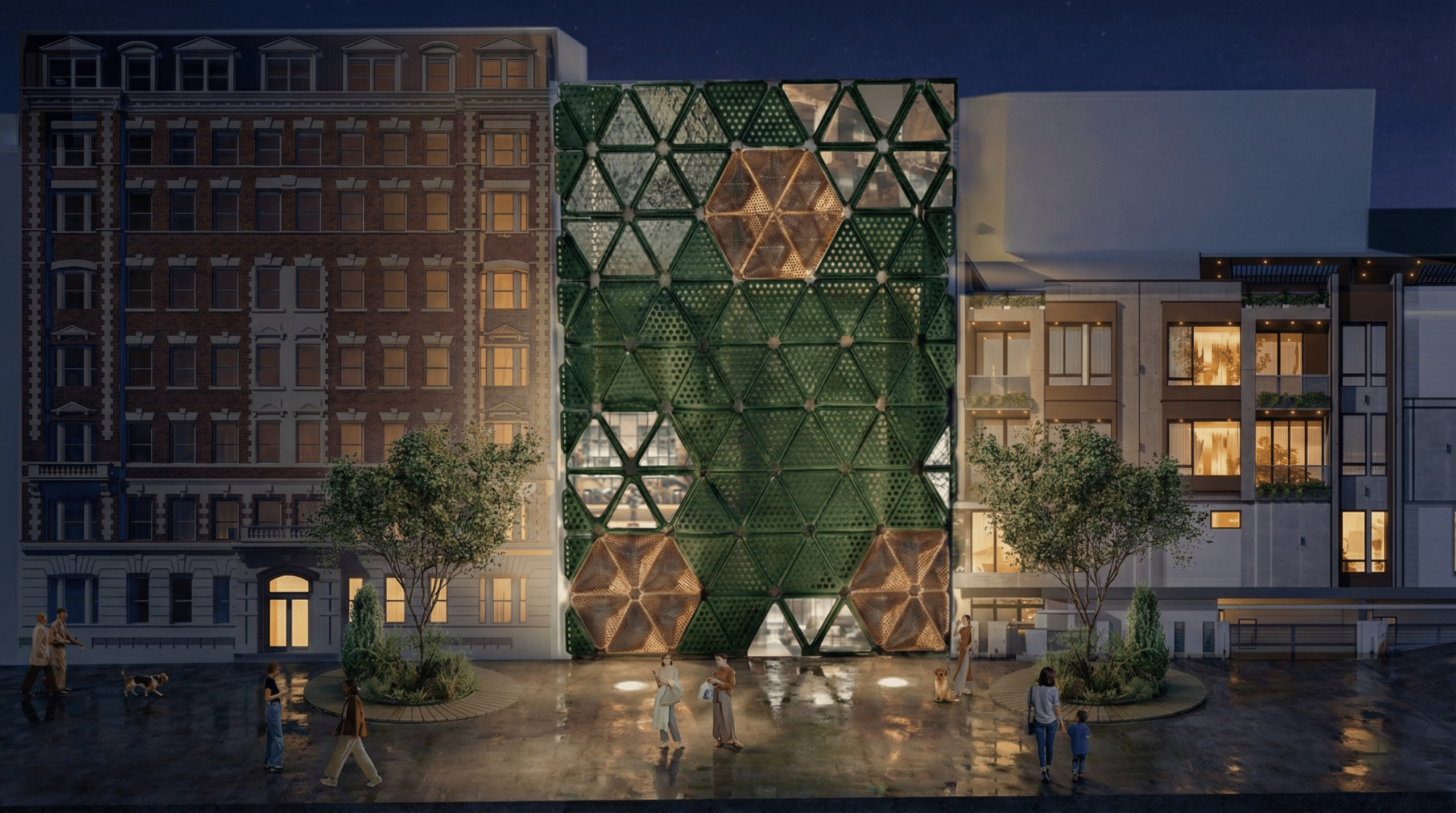
This Grasshopper based design reinterprets the kinetic panel system of the Media-TIC façade by Enric Ruiz Geli. Inspired by its triangulated geometry and responsive membrane logic, the proposed system explores a dynamic, articulated surface capable of adapting to light, shade, and visibility needs. The parametric model defines a modular kinetic unit, driven by user inputs … Read more

Crystalline Aperture

Computational Design Seminar Crystalline Aperture Project Description The Crystalline Aperture Concept: A parametric infill design that reimagines the flat curtain wall as a volumetric “deep skin.”  Logic: The form is generated through a vertex displacement algorithm, where a 2D grid is tessellated into 3D pyramidal modules.  Impact: This folded geometry functions as a structural double-skin system. … Read more

Computational Design Seminar I | The Kring Facade

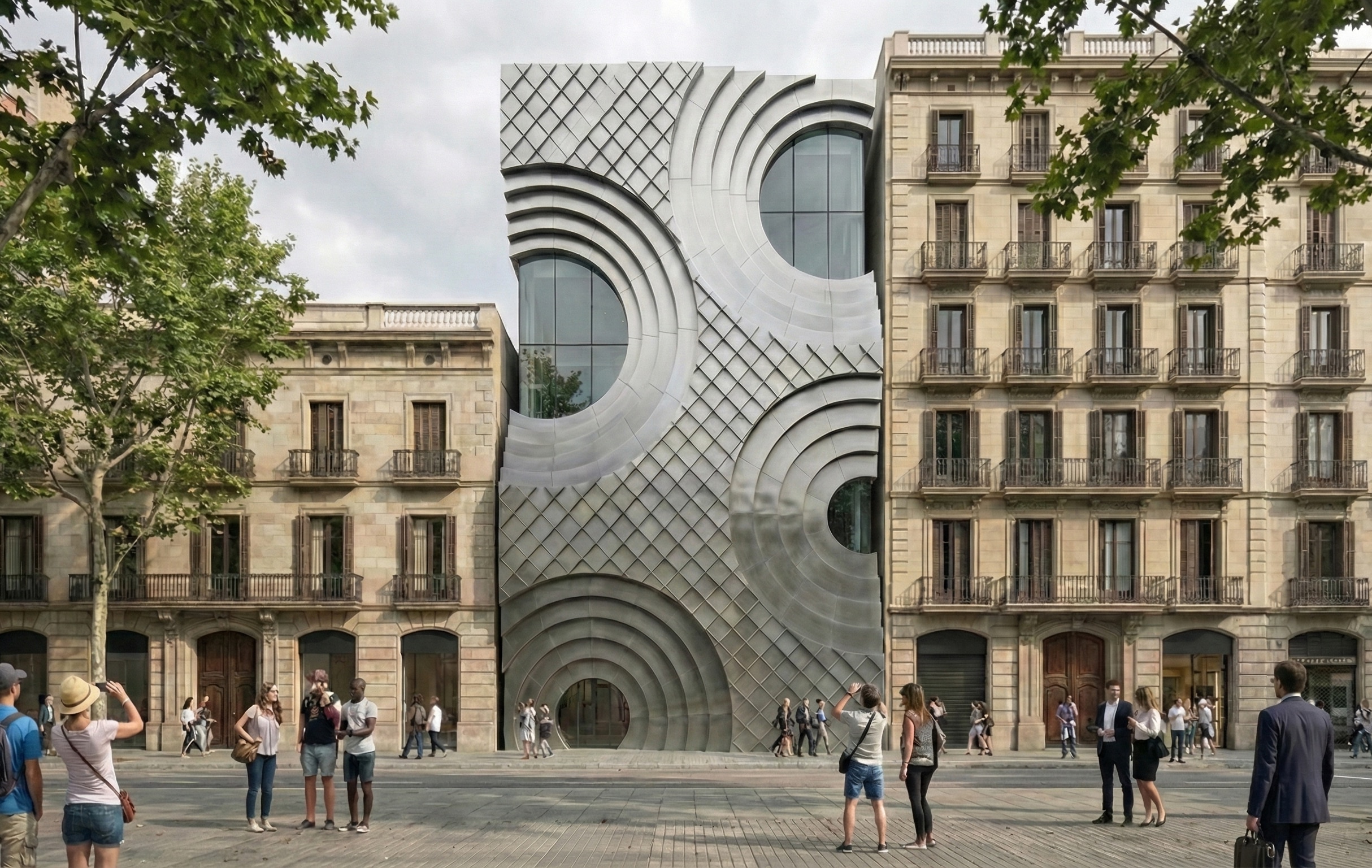
Referential work’s logics Our referential framework is the Kring Kumho Culture Complex in Seoul by Unsangdong Architects, a building defined by large circular recesses that function as urban windows. The design exploits these spaces to break the flat exterior, as ‘Kring’ means ‘Circle’ in Dutch. We developed a concentric propagation approach to translate this logic … Read more

Dynamic Facade

Computational Design Seminar Studio Ardete’s Headquarters Image credits: Studio Ardete’s Headquarters in Mohali, India by Parametric Architecture Facade Responds to Light, Wind, and Motion, with its ever-evolving appearance. At the heart of the design is MetaSequin, a modular, reflective parametric façade element. These circular sequins interact with natural forces like wind and light, creating a … Read more

The Gorgon

A Computationally Designed Kinetic Facade Kinetic Facade Iterations Iteration 01 — Unfolding Variation:This initial exploration focused on the gradual unfolding of façade panels, driven by parametric rotations and hinge-based transformations. The system emphasized linear motion and directional opening, establishing a foundational logic for movement and constructability. Iteration 02 — Warping Variation:The second iteration introduced surface … Read more

Cano(Pi)

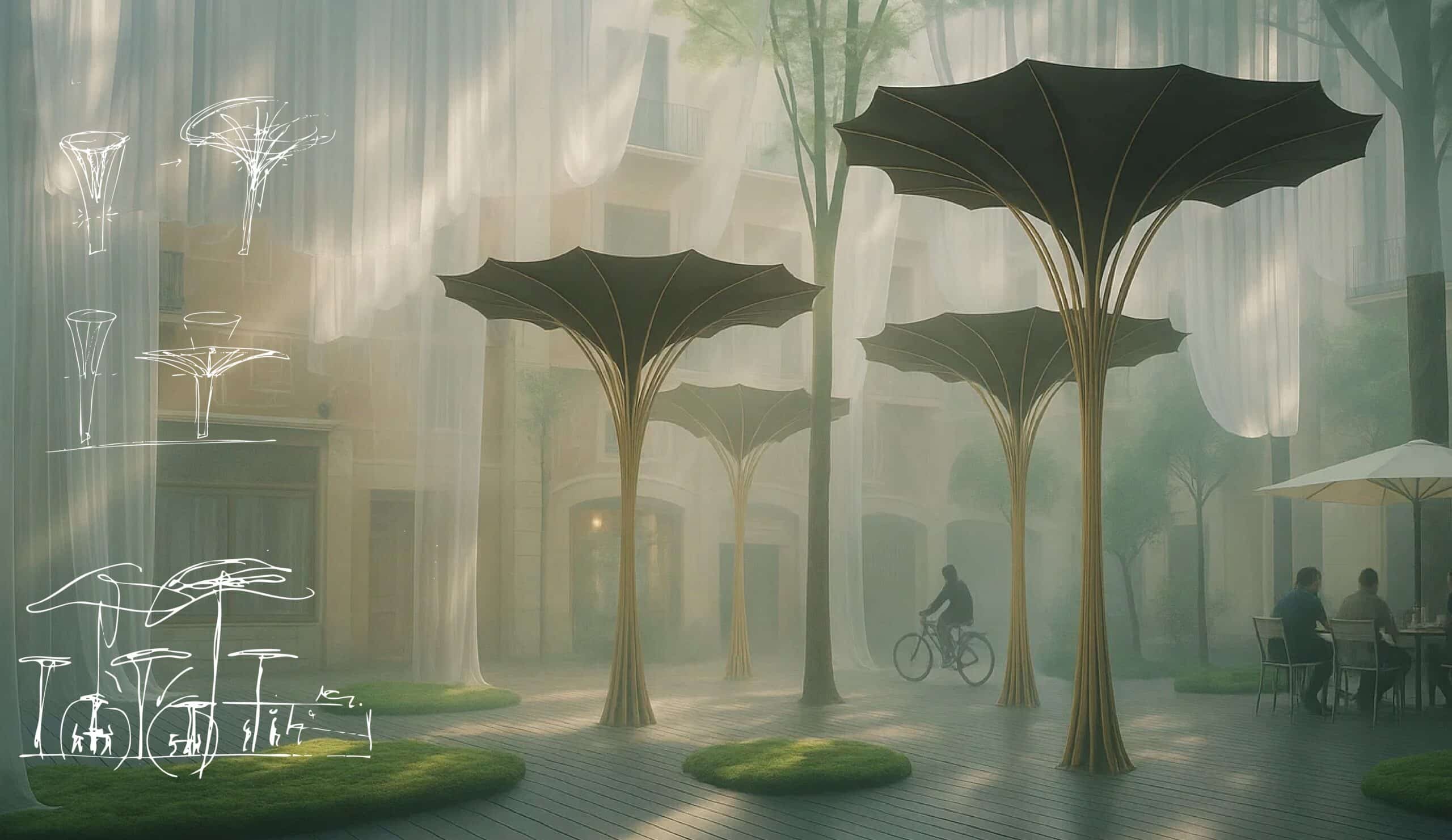
A dynamic forest pavilion. Plaça del Pi, Barcelona, Spain Design Concept Form Finding Psuedo Code The script relies on the organic undulation of sine and catenary curves to reflect the organic nature of our inspiration as well as provide a real-life simulation of the suspended fabric forming the canopy reacting to gravitational logic in both … Read more

MIU MIU BUILDING

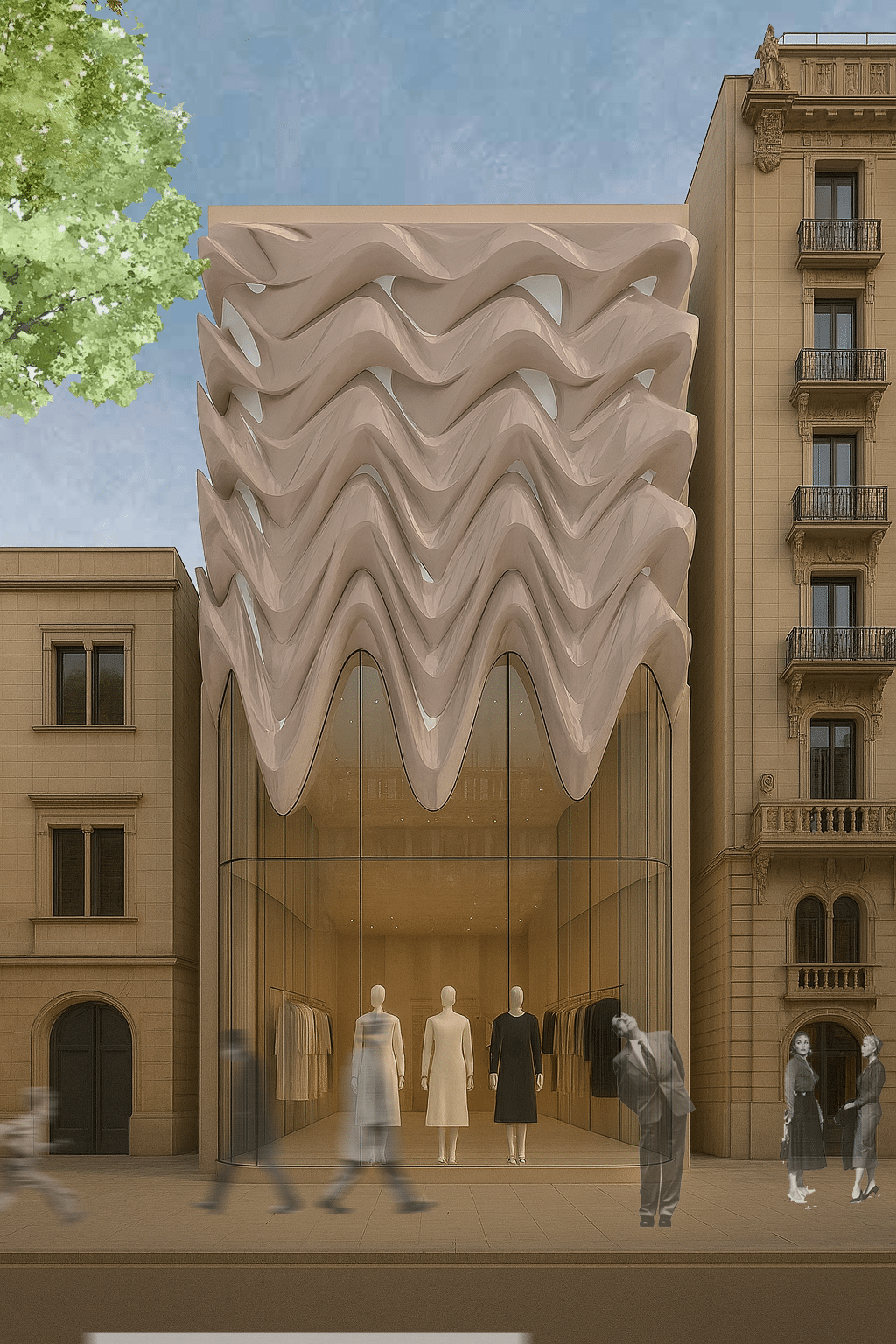
CREATIVE PROCESS The façade is conceived as a textile surface caught mid-movement, as if a piece of fabric were lifted by the wind and suspended in time. Waves, folds, and subtle curvature translate the softness of cloth into a controlled architectural geometry. This fluid motion becomes the organizing logic of the elevation, producing a rhythm … Read more