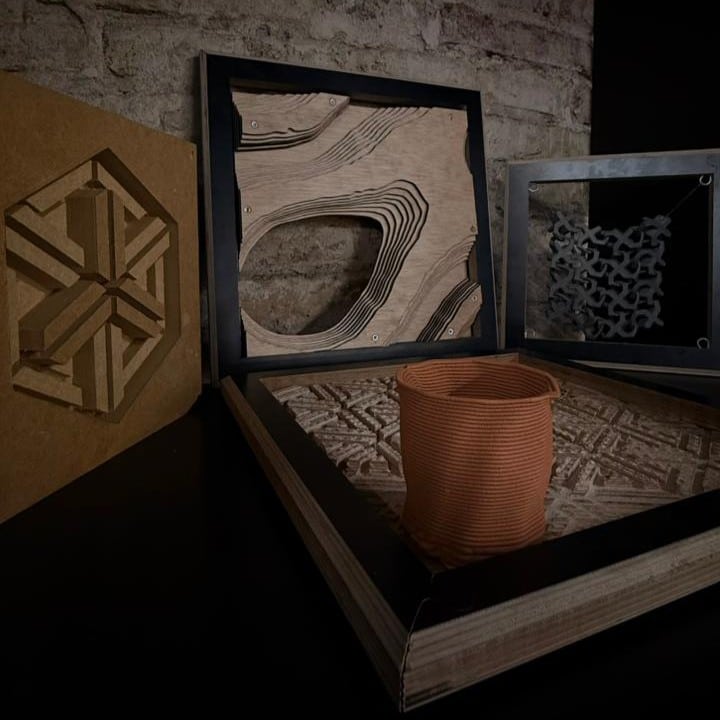
Within the current global context of rapid change, integrated with the potentials of digital technologies, IAAC’s Master in Advanced Architecture (MAA) is committed to the generation of new ideas and applications for Urban Design, Self Sufficiency, Digital Manufacturing Techniques and Advanced Interaction.

In this context IAAC works with a multidisciplinary approach, facing the challenges posed by our environment and the future development of cities, architecture and buildings, through a virtuous combination of technology, biology, computational design, digital and robotic fabrication, pushing innovation beyond the boundaries of a more traditional architectural approach.

Filters
Course

BANANA MATTERS

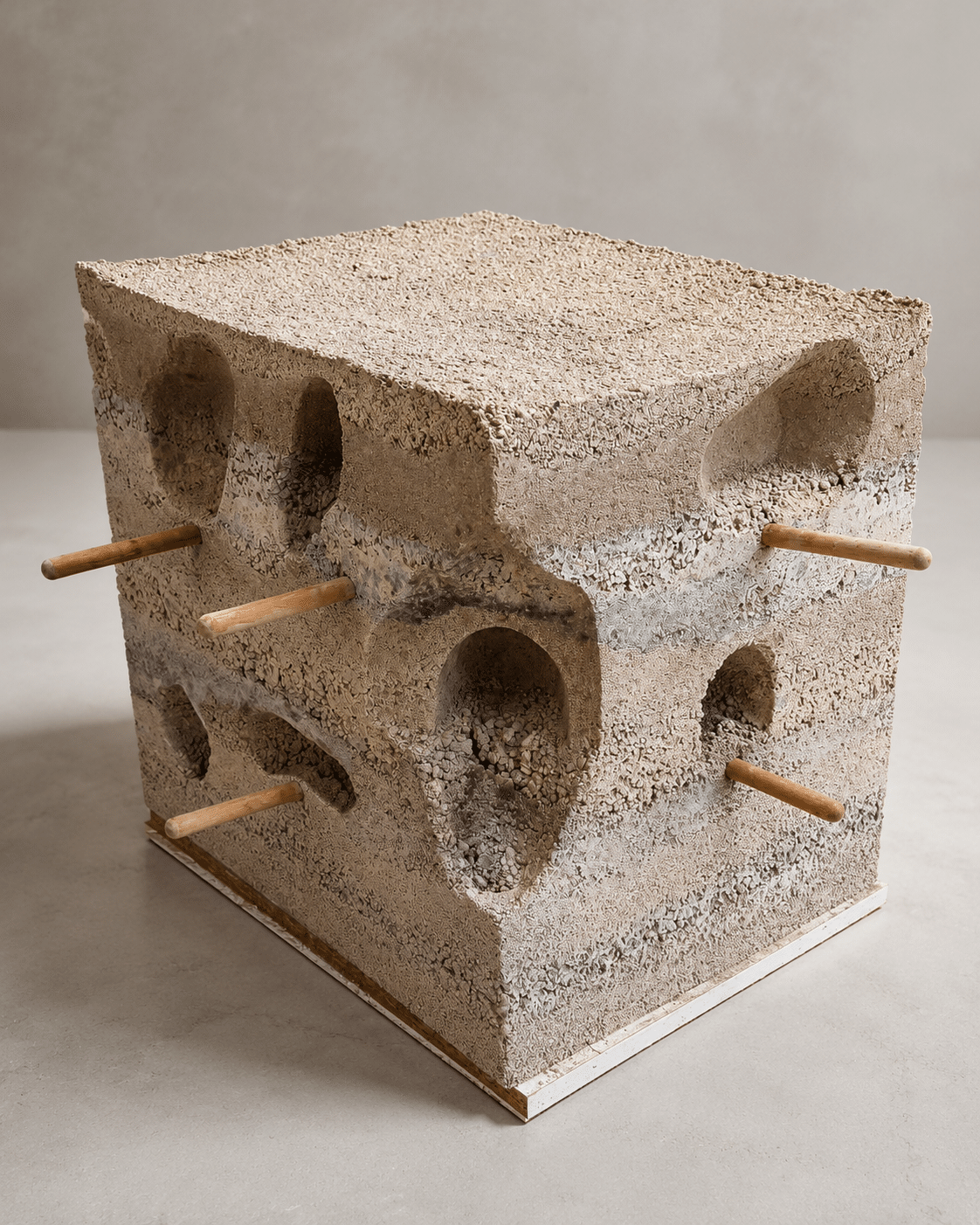
Abstract Banana Matters transforms discarded banana pseudostem biomass into carbon-sequestering architectural panels through material research, bio-based binders, and digital fabrication. The project addresses the untapped potential of nearly 525 million tonnes of annual banana waste by developing lightweight, low-carbon composites with acoustic and structural applications. Through iterative material experimentation, heat-press manufacturing, and mechanical and physical … Read more

Living Fibers: Robotic Needle Felting as an Architectural Construction System

MAA/MRAC Studio Term 3 — 2025/2026 | Robotics for Ecological Building When you think of wool, construction probably isn’t the first thing that comes to mind. But wool has a longer history as a building material than most people realize, and it carries inherent properties that make it genuinely compelling for architecture: moisture regulation, thermal … Read more

Facade Energy Optimization

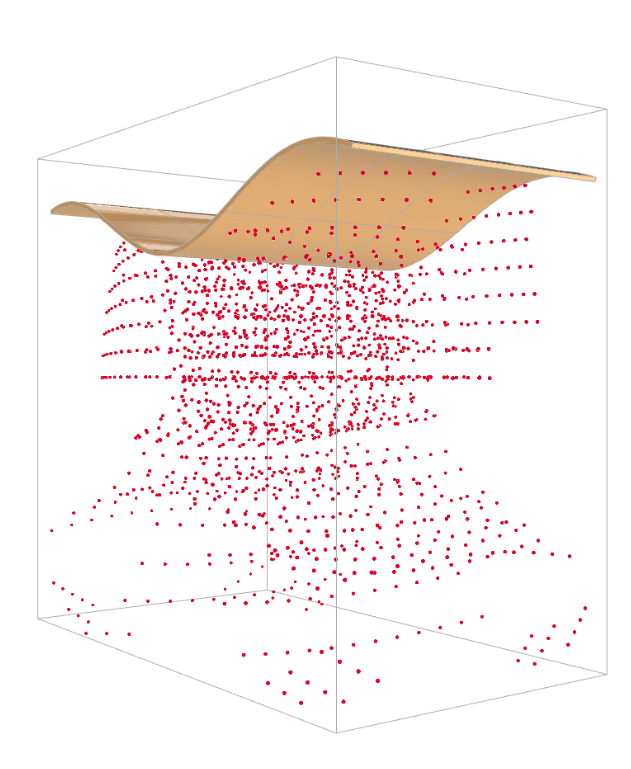
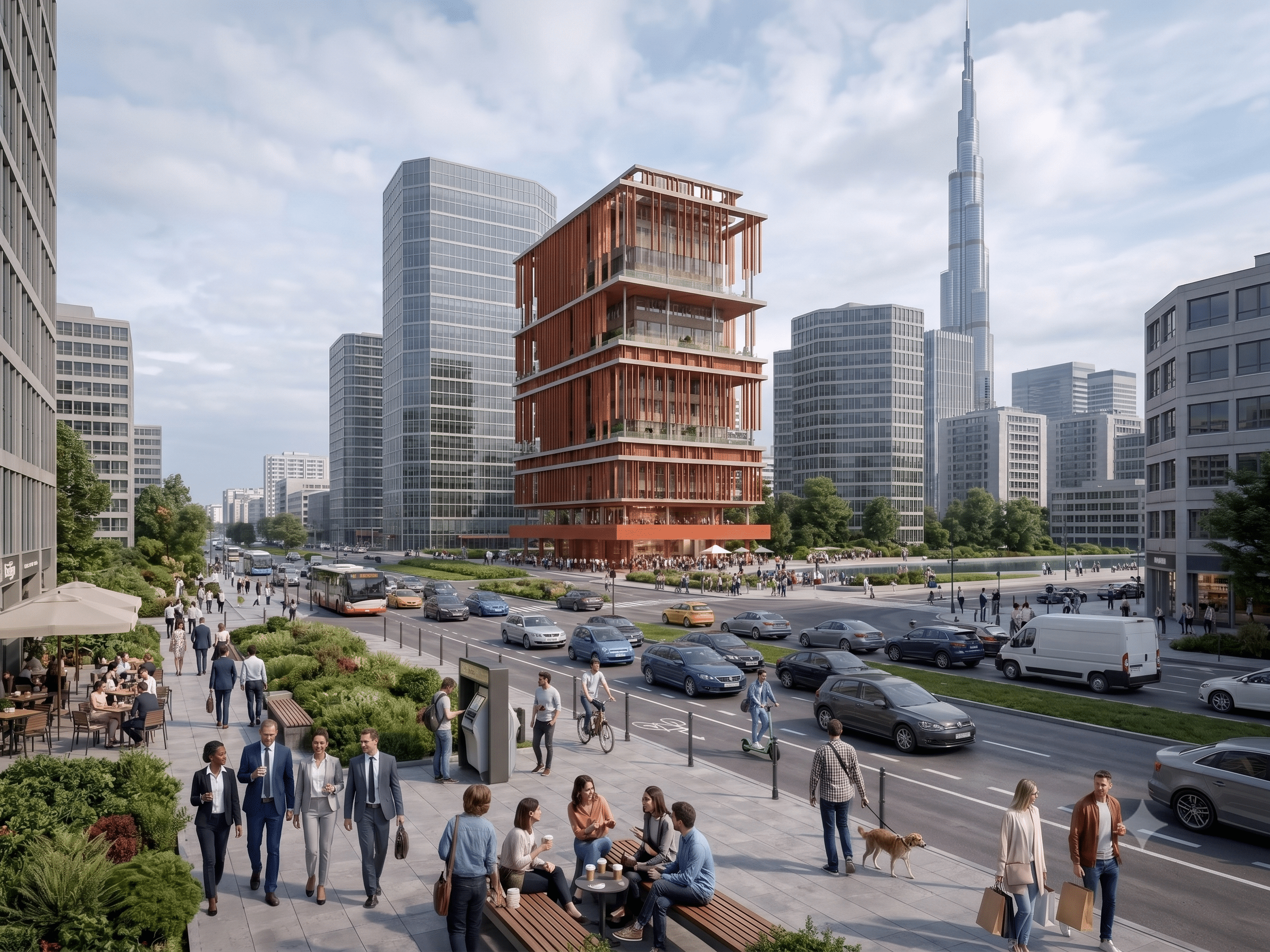
This research explores the use of Wallacei X to optimize a parametric facade for a site in Dubai, UAE. The study evaluates facade performance based on four objectives: maximizing sun hours, minimizing solar radiation, minimizing material consumption, and maximizing views. Through evolutionary optimization, hundreds of design variations were generated and assessed, revealing the trade-offs between … Read more

BIO FLOW

“ An AR-Driven Biomimetic Pavilion Generated Through Environmental Field Behavior “ Architectural pavilion design and fabrication often require complex digital workflows, technical expertise, and multiple visualization tools, making the process difficult for rapid concept development and real-world understanding. Designers also face challenges in translating organic, nature-inspired forms into fabrication-friendly structures.  BIOMIMICRY PAVILIONS Organic Geometry Biomimicry … Read more

Galapogos Mold Designer

We identified the main problems while producing the roof of our Digital Matter studio, where we are making a system of bendable cork panels with jute and caesin, for that we needed molds to bend the panel according to curvature, To optimise the mold and reduce waste we used galapogos to define the bounding box … Read more

Project Michigan

Using climate clustering, vernacular precedent research, and evolutionary optimisation to create climate-responsive design typologies when no established local precedent exists Overview Lovingly named after the very first test location, Project Michigan is a tool that provides climate-responsive design guidelines when no local vernacular precedent exists. Through scraping climate data and global vernacular information, it helps … Read more

PORTAL FRAME

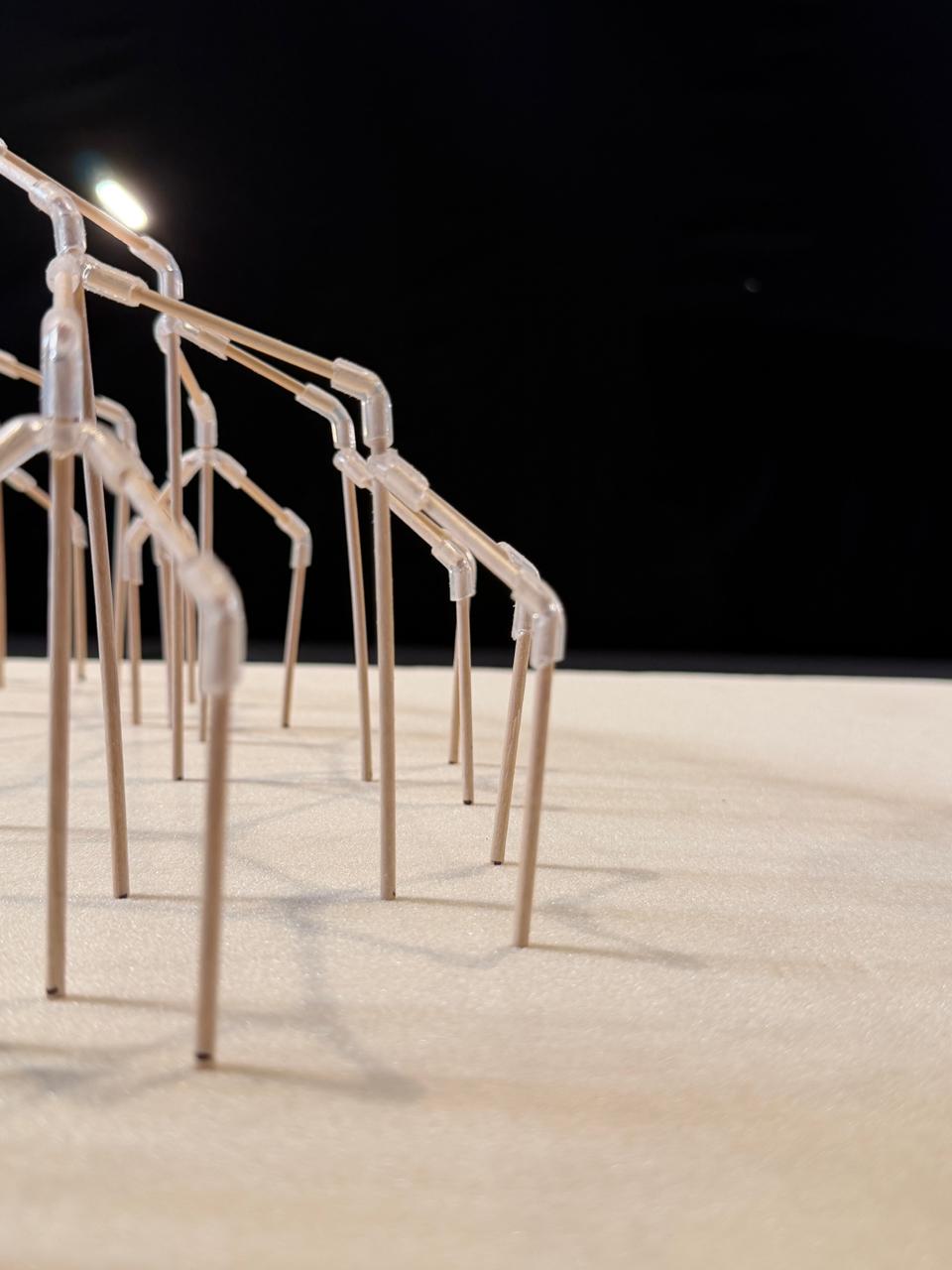
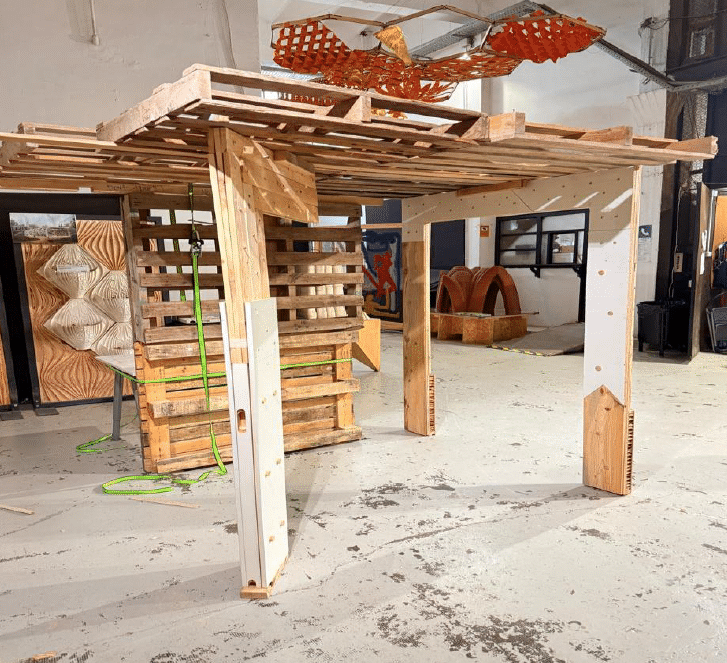
Introduction — Intent Building a portal frame from reclaimed timber, focusing on splicing and shuffling techniques to adapt irregular pieces into a stable, structurally working system. Material Intelligence — Understanding the Stock Structural Logic — Portal Frame System Methodology — Overlay & Splice Strategy FABRICATION — Digital vs Physical The workflow was driven by existing … Read more

After Gaudi – Facade ll

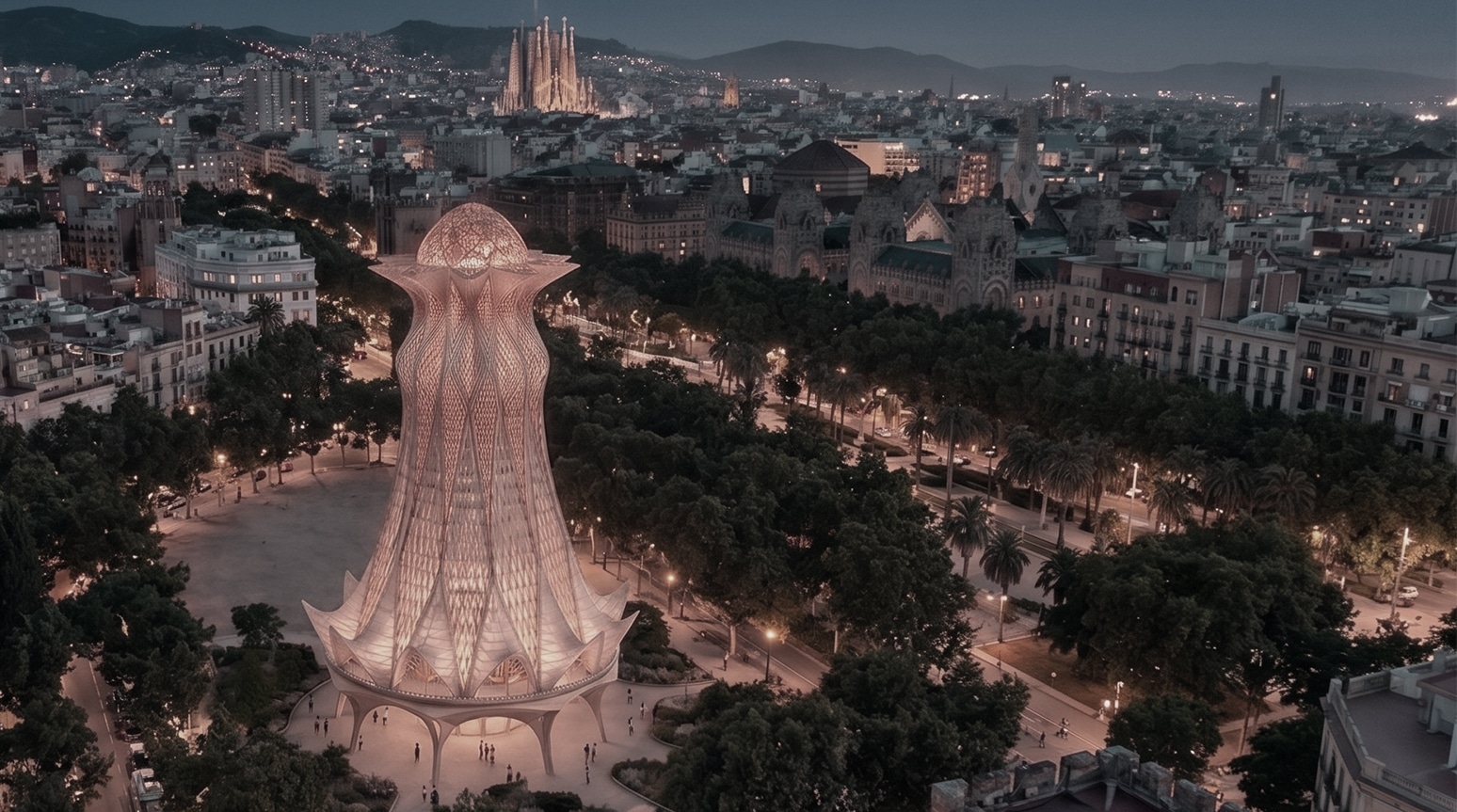
Site and Key Viewpoint Site and Key Viewpoint Core Project Keywords References FORM FINDING Final Form – Sketch Form Logic Variations and Catalog – Side Profile Form Finding Catalog Base Variation Catalog Convex concave Variation Catalogue Final Form – Levels OPENING & PLANTERS Opening’s Logic – Diamond Shape Opening’s Logics Catalog of Opening Opening Logic … Read more

Robotics for Ecological Buildings

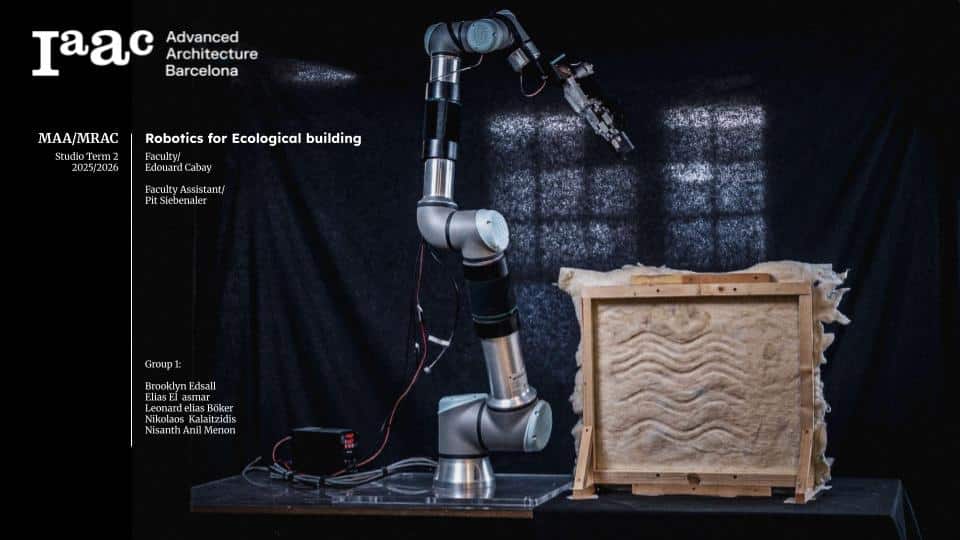
The Living Fibers MAA/MRAC, Studio Term 2, 2025/2026 Group 1: Brooklyn Edsall, Elias El  asmar, Leonard elias Böker, Nikolaos  Kalaitzidis, Nisanth Anil Menon Abstract:This project challenges the hyper-standardization of modern construction by investigating the architectural potential of raw, locally sourced Catalan wool. Our research elevates wool from a passive insulation material into an active, rigid, … Read more

Brick Flow

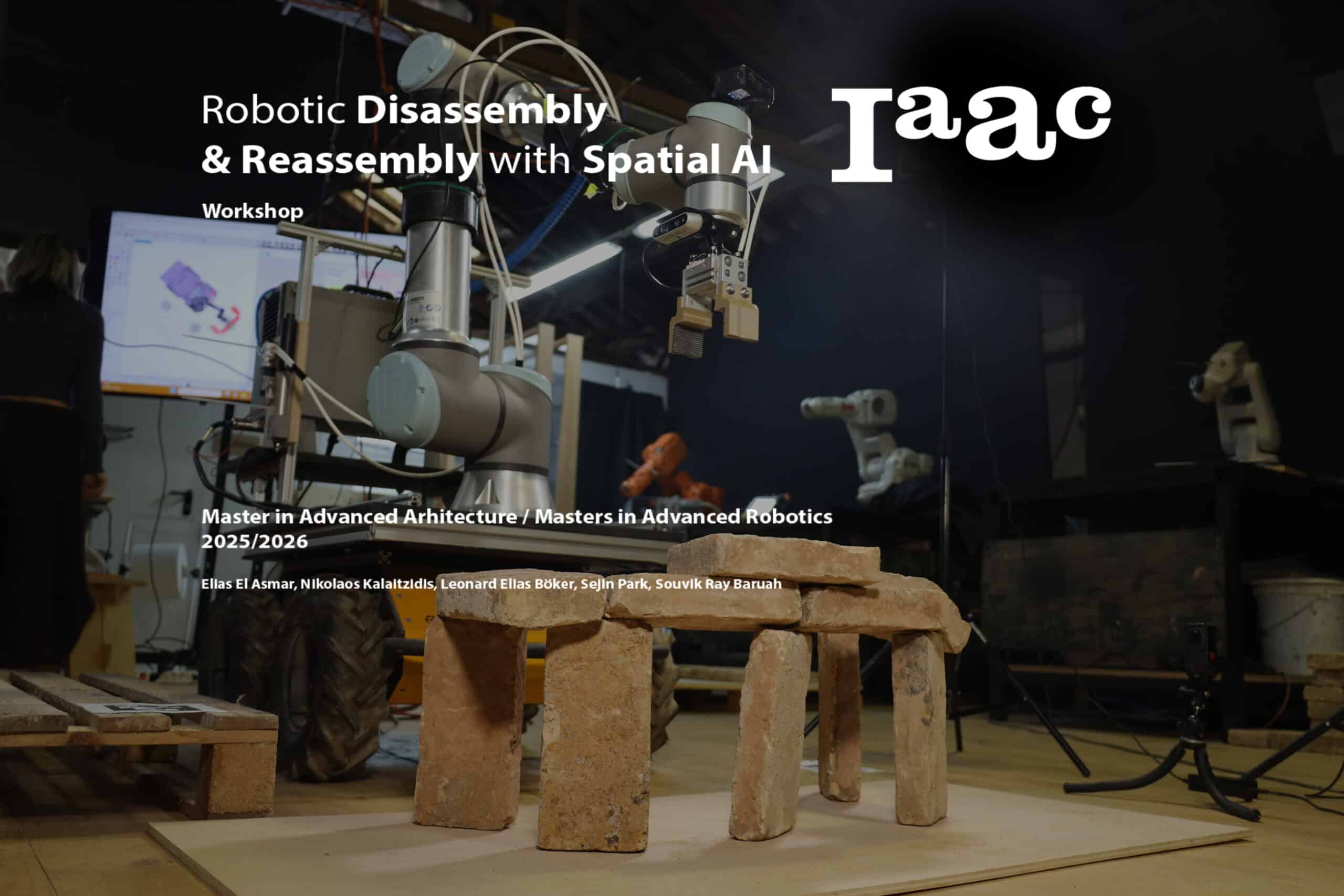
Robotic Disassembly & Reassembly with Spatial AI Abstract The project explores a circular construction workflow that integrates robotic systems with Spatial AI to automate the disassembly and reassembly of brick structures. Utilizing a Gemini Vision-Language Model (VLM) pipeline, the system performs autonomous material evaluation, identifying surface damages such as chipping, spalling, and staining, as well … Read more

The Cellular Dune

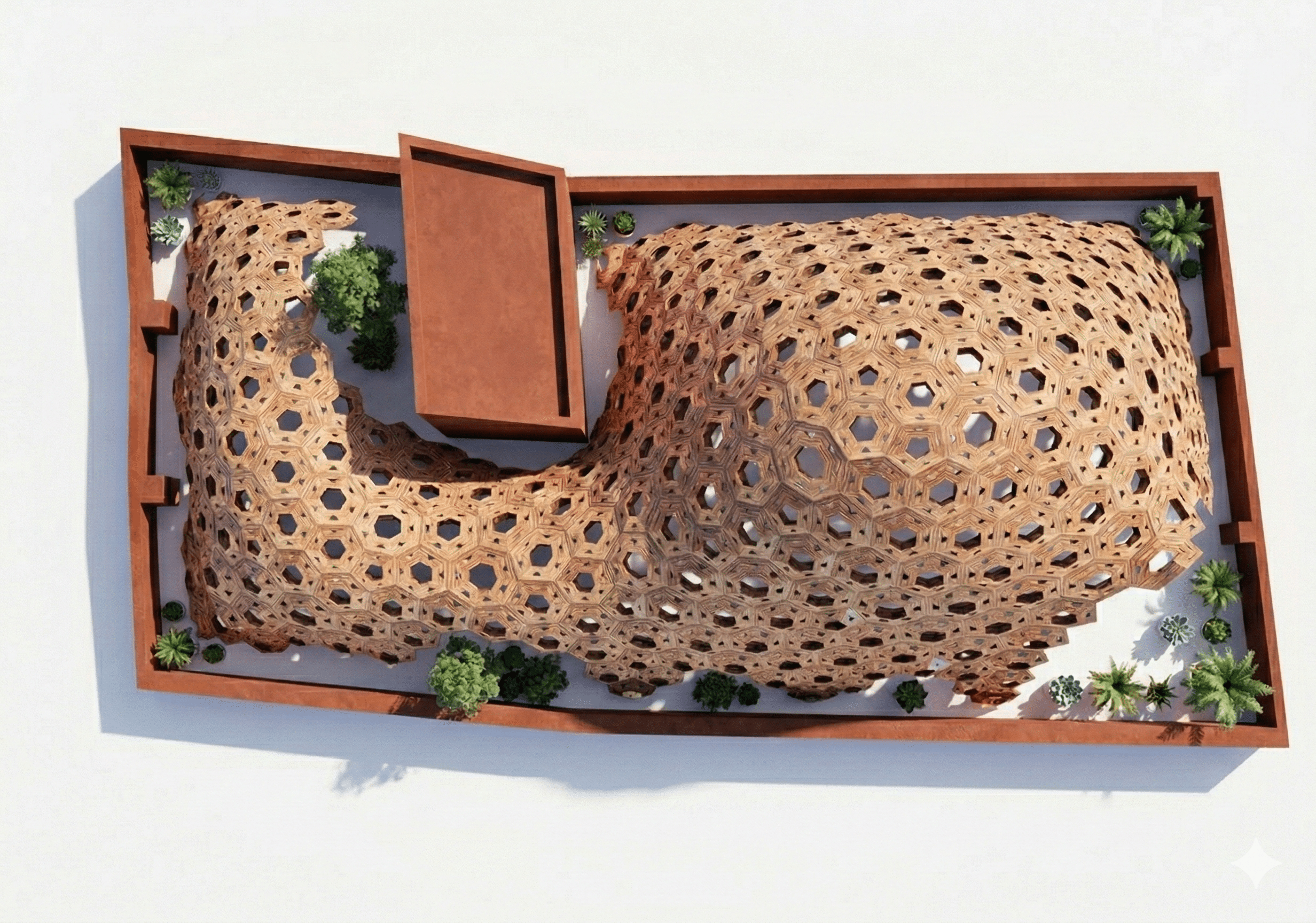
Project Brief Forces of Nature explores how architectural form can emerge from the interaction of natural forces rather than being predefined. Using computational simulations, the project allows tension, gravity, and equilibrium to shape spatial structures. The installation translates invisible physical behaviors into visible design, creating a form that is discovered through force-driven processes and realized … Read more

Reciprocal Canopy

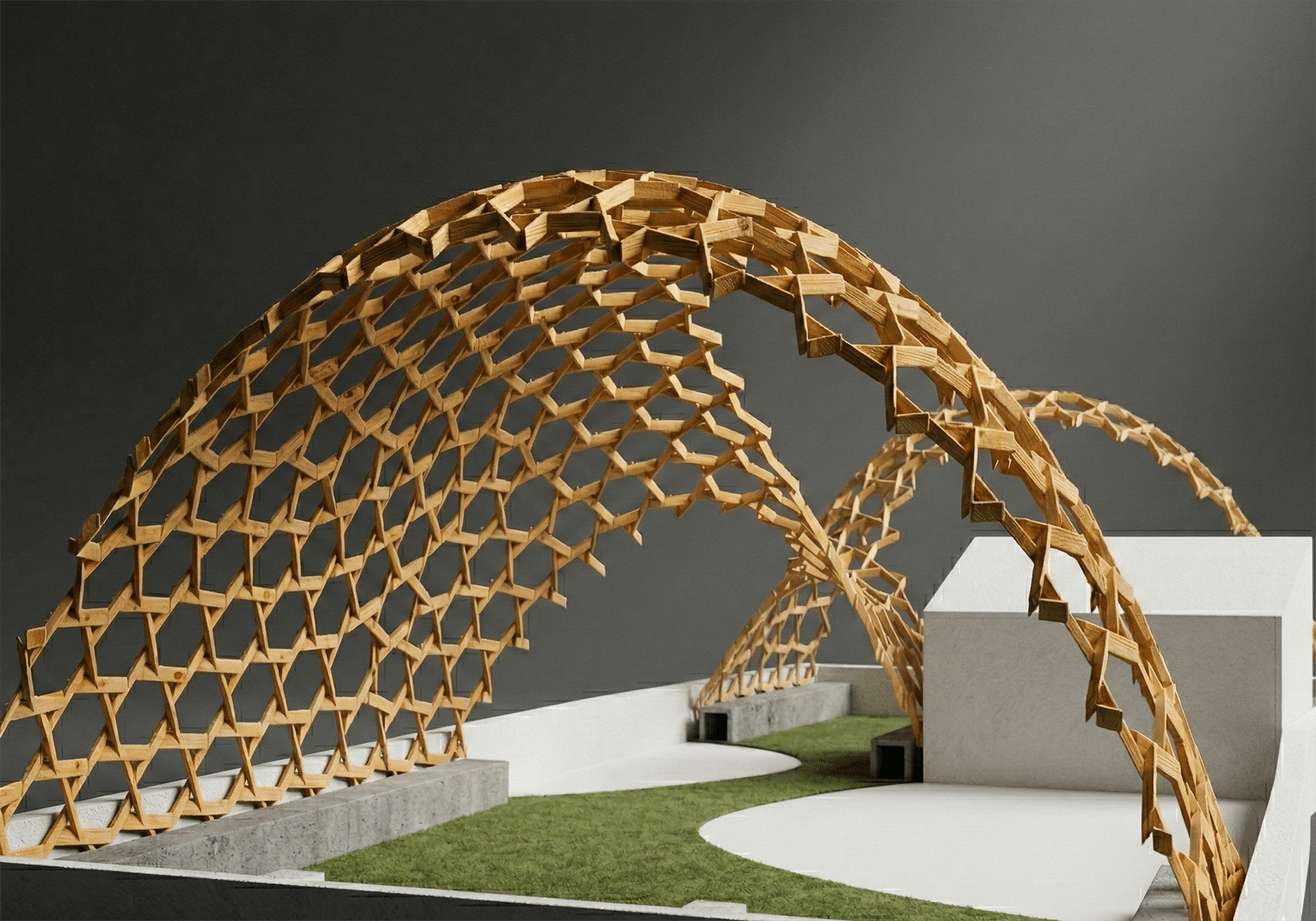
Designed for the IAAC rooftop, this pavilion merges computational design with advanced robotic fabrication. The geometry originates in Grasshopper, where a basic mesh is transformed into an optimized vault using Kangaroo’s physics-based dynamic relaxation. A reciprocal frame pattern is then applied, translating the continuous shell into short, mutually supporting timber pieces. Because every interlocking element … Read more

Relaxed tectonics

This research explores the intersection of physics-based form-finding and multi-objective evolutionary optimization to design a high-performance architectural pavilion. Utilizing Kangaroo2 for structural mesh relaxation and Wallacei for the genetic optimization of seating. The result is a topologically optimized structure where complex geometry is not merely aesthetic, but a direct manifestation of environmental data and structural … Read more

Digital Fabrication Library

In today’s architectural landscape, digital fabrication has significantly expanded the way we design and construct building elements—offering unprecedented accuracy, efficiency, and formal freedom. Techniques such as laser cutting, CNC milling, 3D printing, and robotic manufacturing each bring distinct advantages in terms of material behavior, geometric complexity, and performance potential. RE:CELL Concept The Re:Cell is a … Read more