Canya Columna
PSEUDOCODE Base Geometry Karamba Sole Fitness Objective: MINIMIZE Deformation output in cm Analysed IterationsTotal Iteration Count: 1036 ITERATION

Within the current global context of rapid change, integrated with the potentials of digital technologies, IAAC’s Master in Advanced Architecture (MAA) is committed to the generation of new ideas and applications for Urban Design, Self Sufficiency, Digital Manufacturing Techniques and Advanced Interaction.
In this context IAAC works with a multidisciplinary approach, facing the challenges posed by our environment and the future development of cities, architecture and buildings, through a virtuous combination of technology, biology, computational design, digital and robotic fabrication, pushing innovation beyond the boundaries of a more traditional architectural approach.
PSEUDOCODE Base Geometry Karamba Sole Fitness Objective: MINIMIZE Deformation output in cm Analysed IterationsTotal Iteration Count: 1036 ITERATION
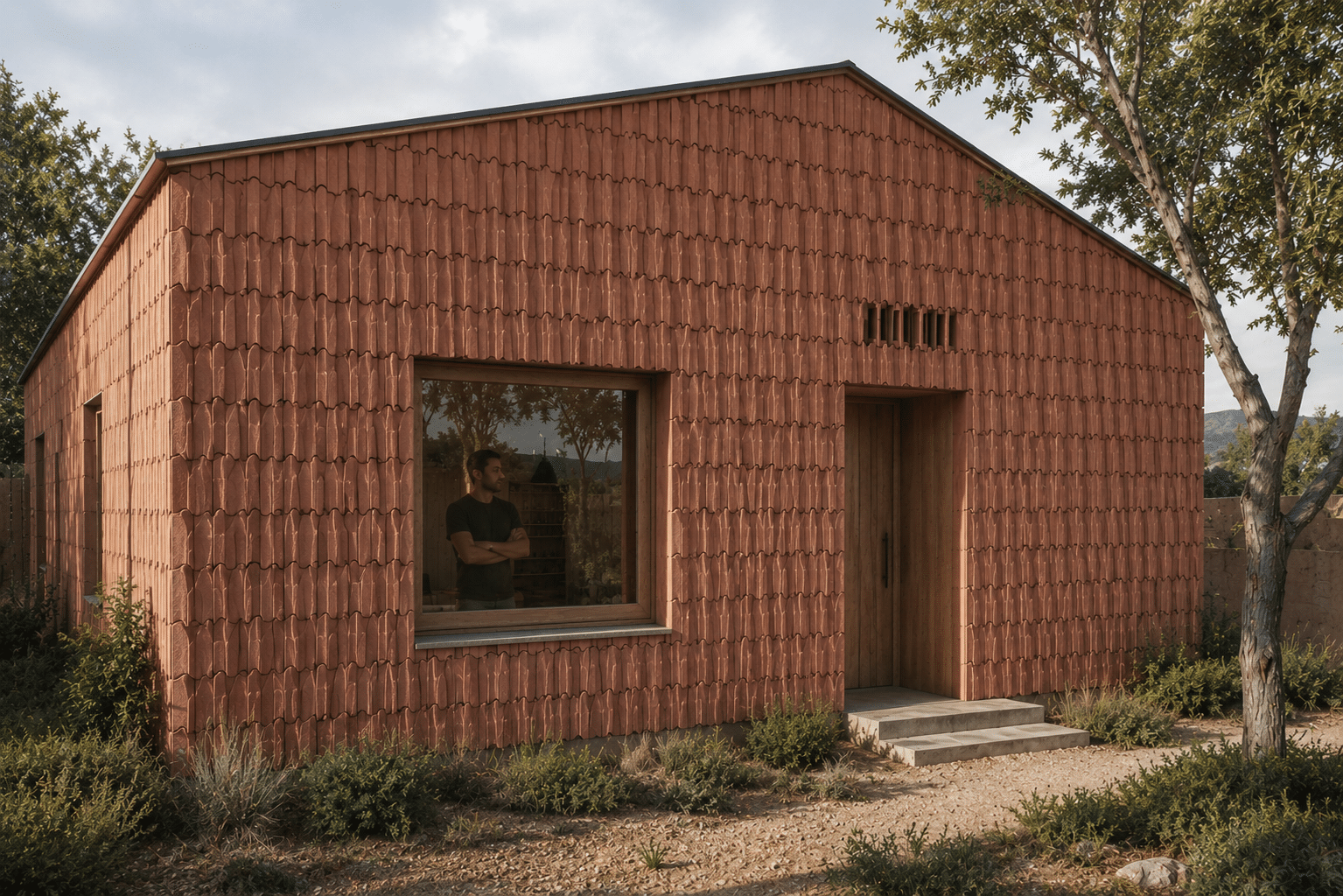
A TerraFormed production CONTEXT TerraFormed is an ongoing project developed within Digital Matter Studio 2026 that implements osteomorphic blocks as a standardizable and industry-compatible approach for producing a novel geopolymer material within a sustainable construction framework. DESIGN OBJECTIVES Osteomorphic blocks are primarily governed by the parameters of the sine curve that defines their geometry. This … Read more
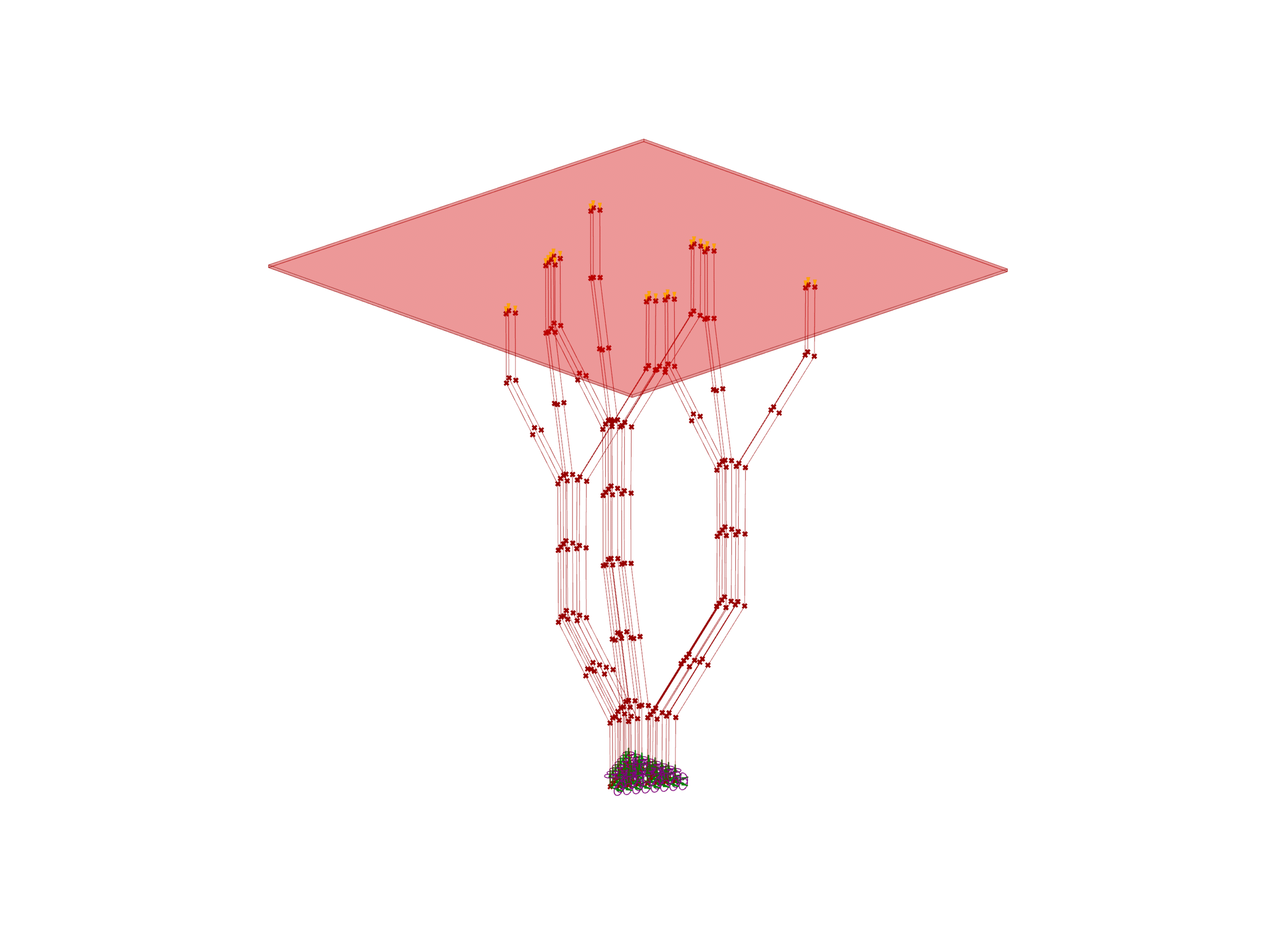
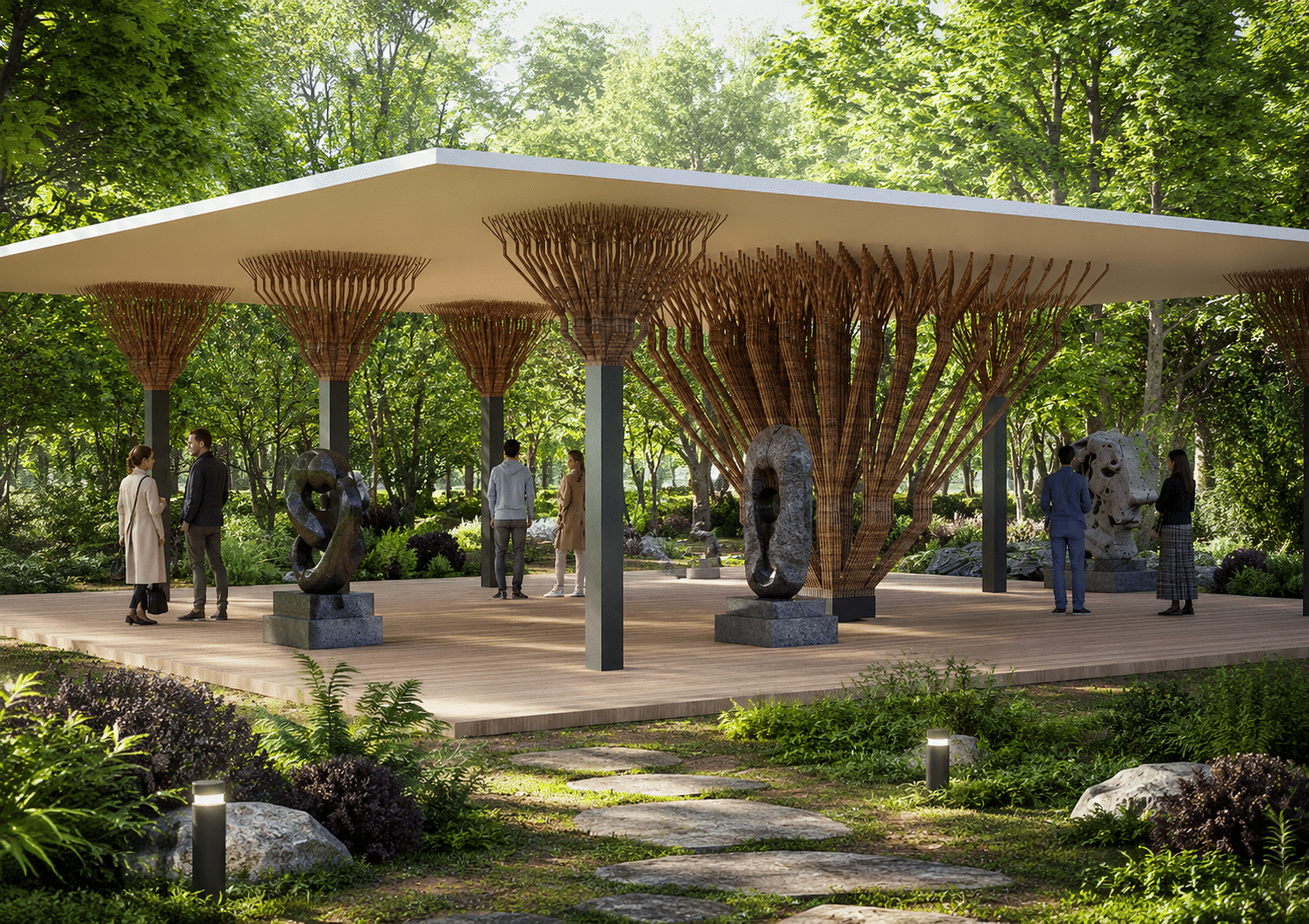
Understanding reed column systems (from robotics for ecological buildings studio) through Karamba structural analysis and drawing methods.
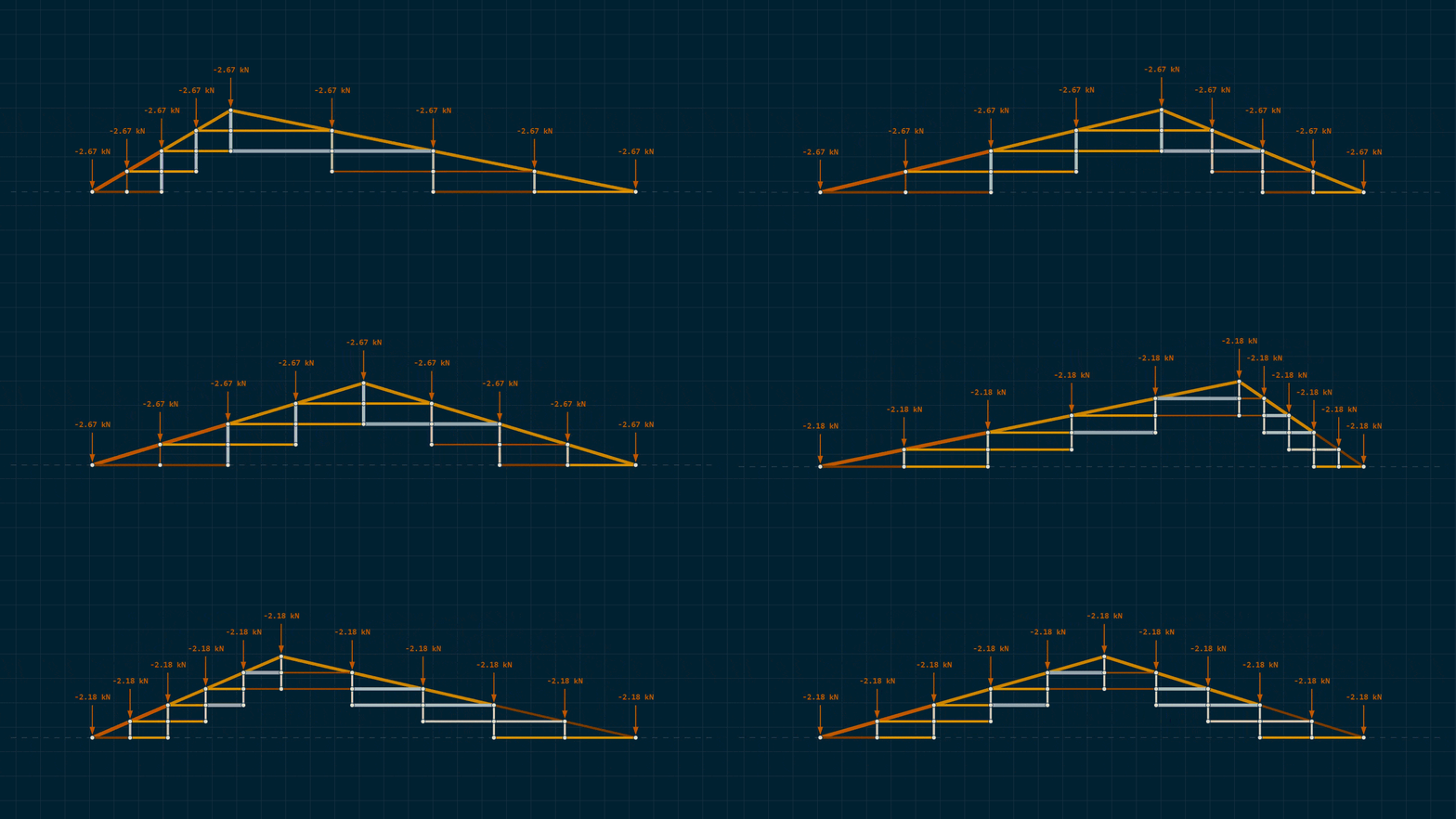
“How can a real-time parametric system effectively optimize architectural truss geometry when constrained by a limited, randomized inventory of salvaged timber? “ Geometry vs. Inventory Standard architectural forms assume infinite material. When constrained by random, reclaimed timber offcuts, the geometry itself must adapt to survive. “Shifting the structural burden from material continuity to joint frequency.” Standard … Read more
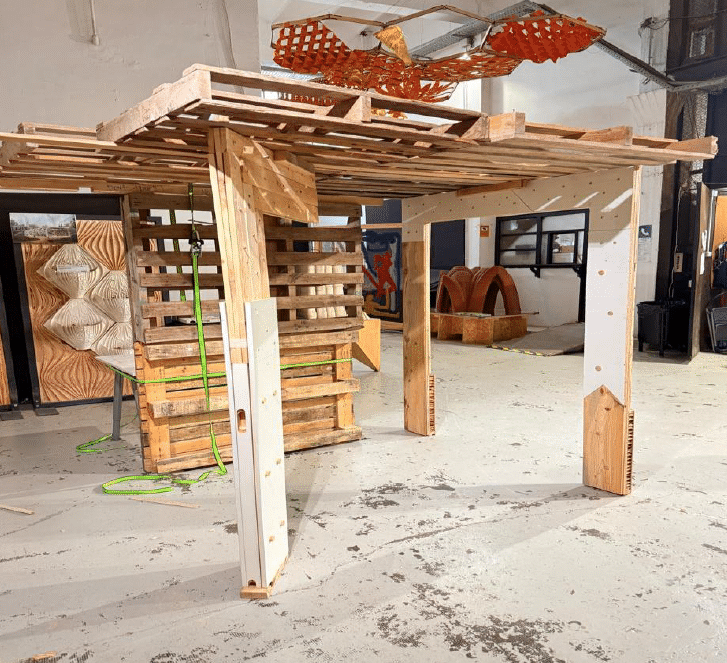
Introduction — Intent Building a portal frame from reclaimed timber, focusing on splicing and shuffling techniques to adapt irregular pieces into a stable, structurally working system. Material Intelligence — Understanding the Stock Structural Logic — Portal Frame System Methodology — Overlay & Splice Strategy FABRICATION — Digital vs Physical The workflow was driven by existing … Read more
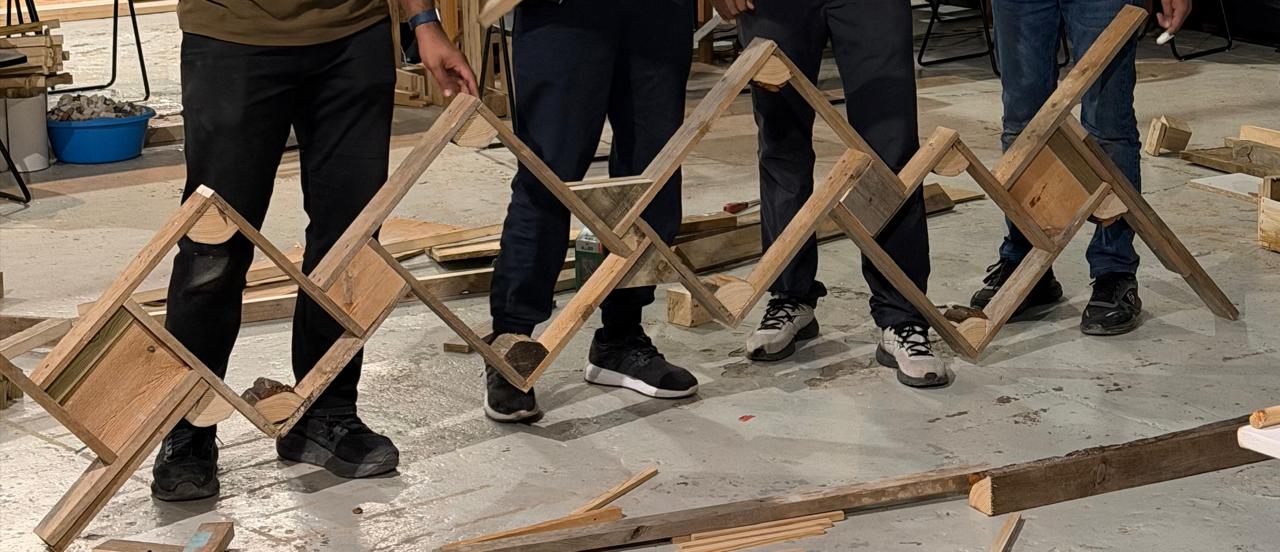
DIMENSIONS MATERIAL USED PROCESS OF MAKING BEAM TEST SETUP BEAM DEFORMATION The images document progressive deflection under incremental loading (0 kg to 76 kg) where it can be observed that the block is taking the load on which the beam is placed and it is under high compression whereas beam is held by strap to … Read more
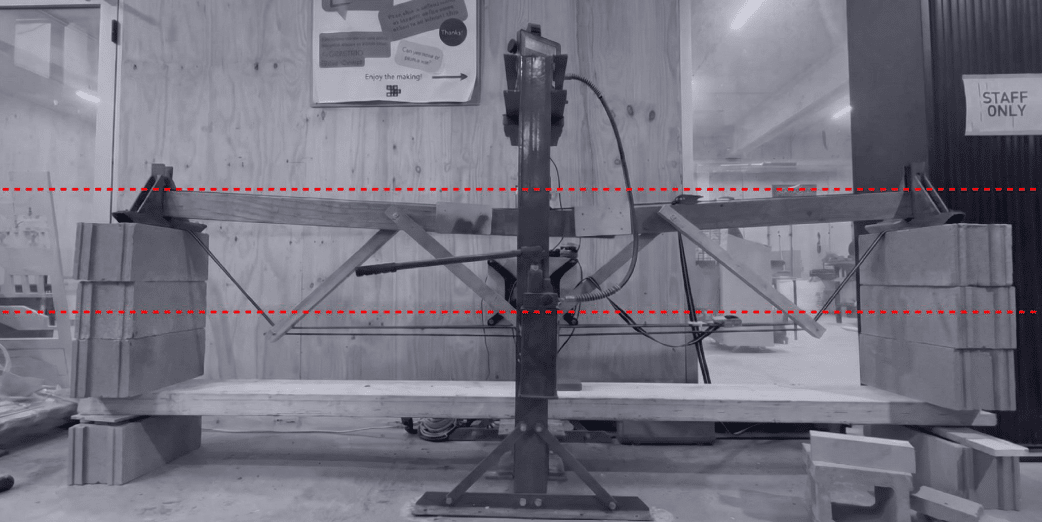
The project documents the iterative design and manual fabrication of a 3-meter span beam constructed exclusively from limited recycled wooden members. Iterations The beam was developed through a series of structural iterations evaluated using utilization ratio, deflection, bending moment, axial force, and shear force. With a fixed inventory of recycled wooden elements, optimization focused on … Read more
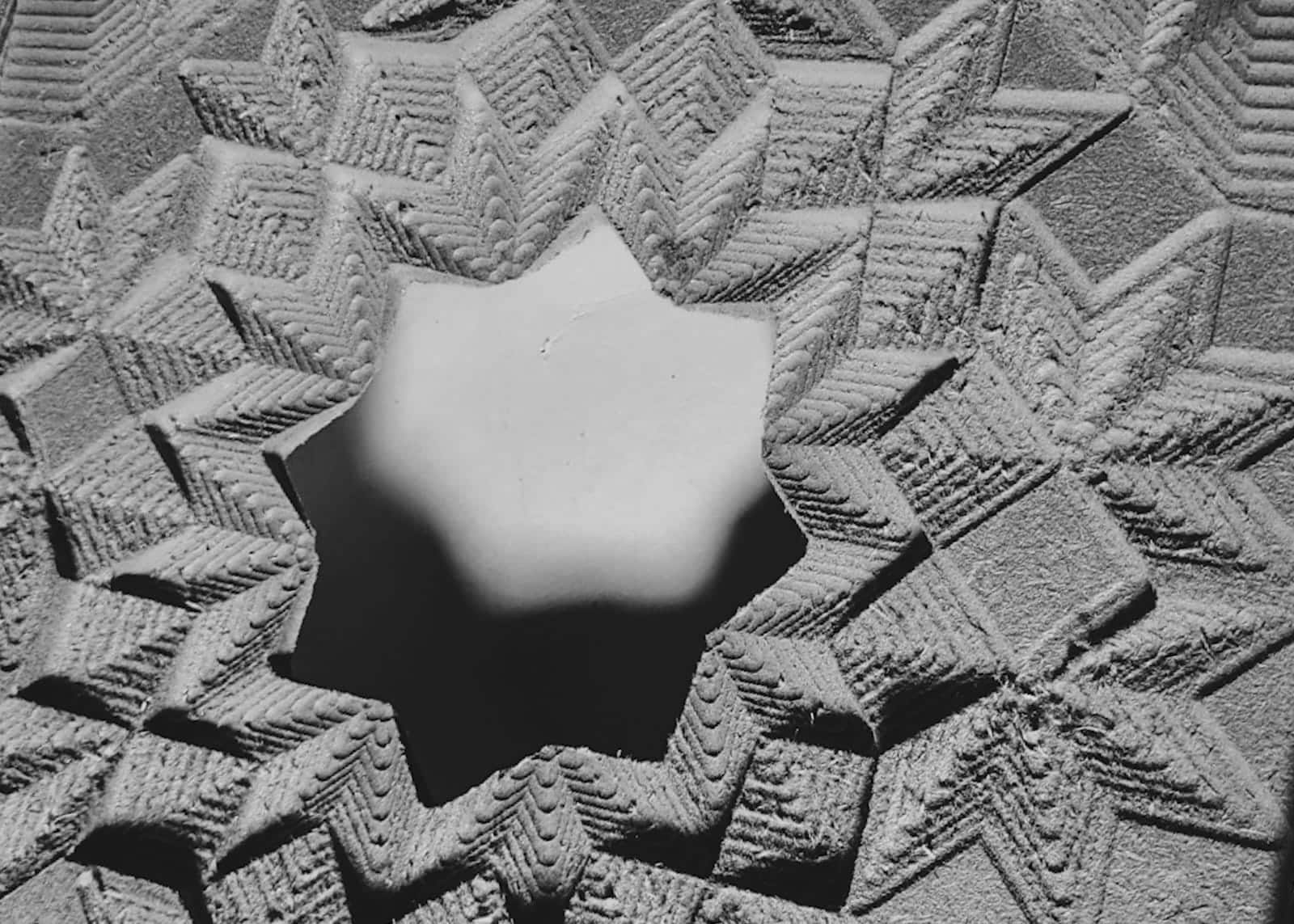
Our digital fabrication journey unfolds through four experiments that explore how material, geometry, and technology negotiate form. Each project challenges a different fabrication technique: laser cutting, CNC milling, 3D printing, and robotic manufacturing, while asking a deeper question: How does digital logic reshape the language of craft? Laser Cutting Tessellated Lightfield This project explores the … Read more
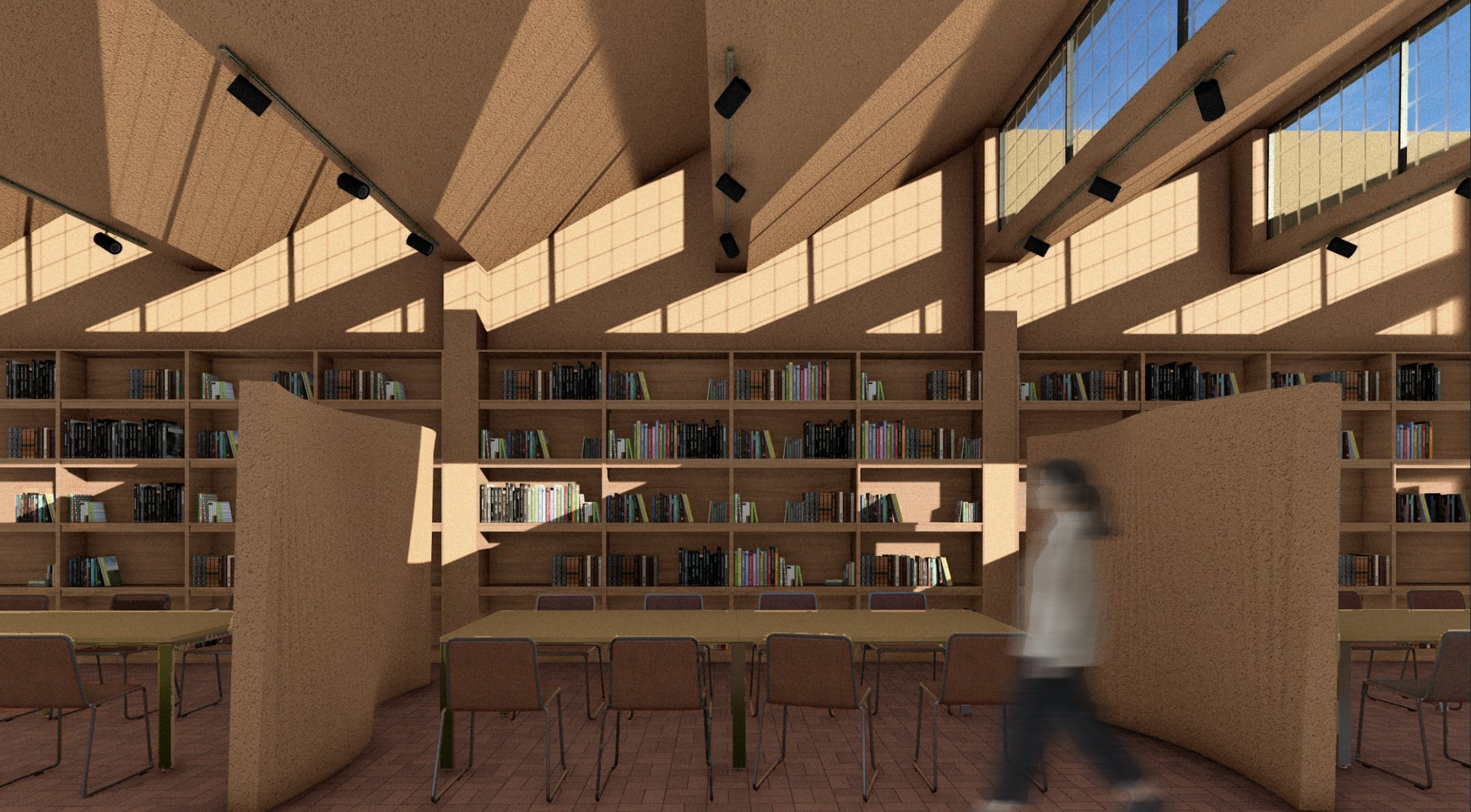
Vernacular architecture has steadily lost relevance in contemporary practice. Industrialized construction methods, aesthetic shifts, and the pursuit of perceived reliability in materials like concrete and steel have overshadowed traditional techniques. However, these modern materials often come at a high environmental cost. Among the overlooked methods is quincha, a construction technique common in Latin America. It … Read more

GENETIC OPTIMIZATION OF THE STRUCTURAL WARDROBE ELEMENTS Project Abstract The structural wardrobe is reimagined as the primary vertical load-bearing core in a compact architectural system ( From the Data Informed Structures 2024-2025). Acting as both a partition and a support, this wardrobe spans between floor and ceiling, bearing compressive and tensile loads while housing essential … Read more
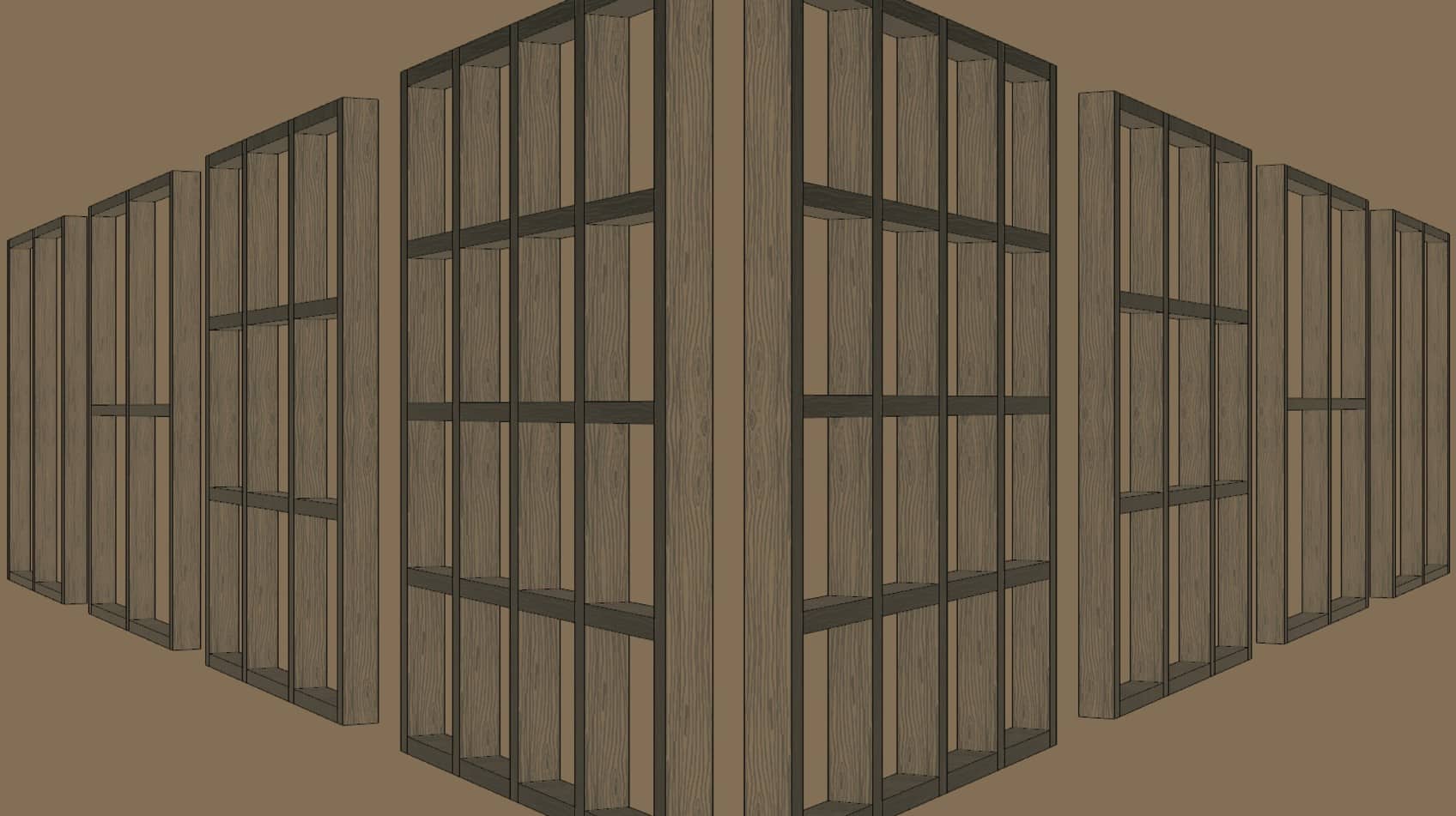
Our goal for this Computational Design assignment was using Karamba along with Wallacei to optimize the mass and deformation of the timber frames of our construction system called KINXA. It is a modernized version of the vernacular technique used in Latin America called “Quincha” which consists of the use of a wood or cane frame, … Read more
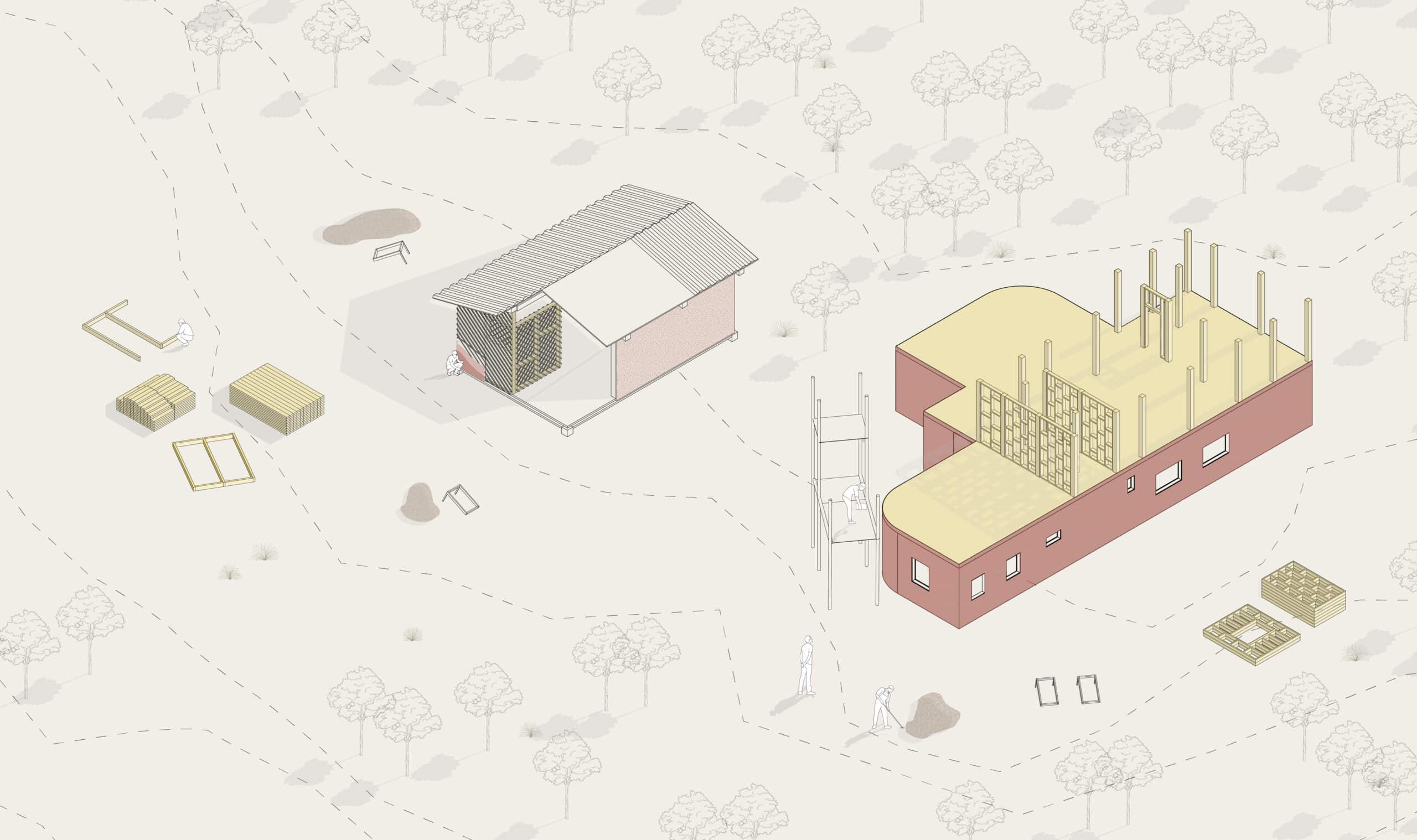
KINXA aims to bring vernacular construction back into contemporary architecture by systemizing traditional “quincha”. At the same time, through a redesigned material system, KINXA seeks to take advantage of local resources and lower even more its precedent carbon footprint. Quincha is a technique prevalent in Latin America which consists of the use of a wood … Read more
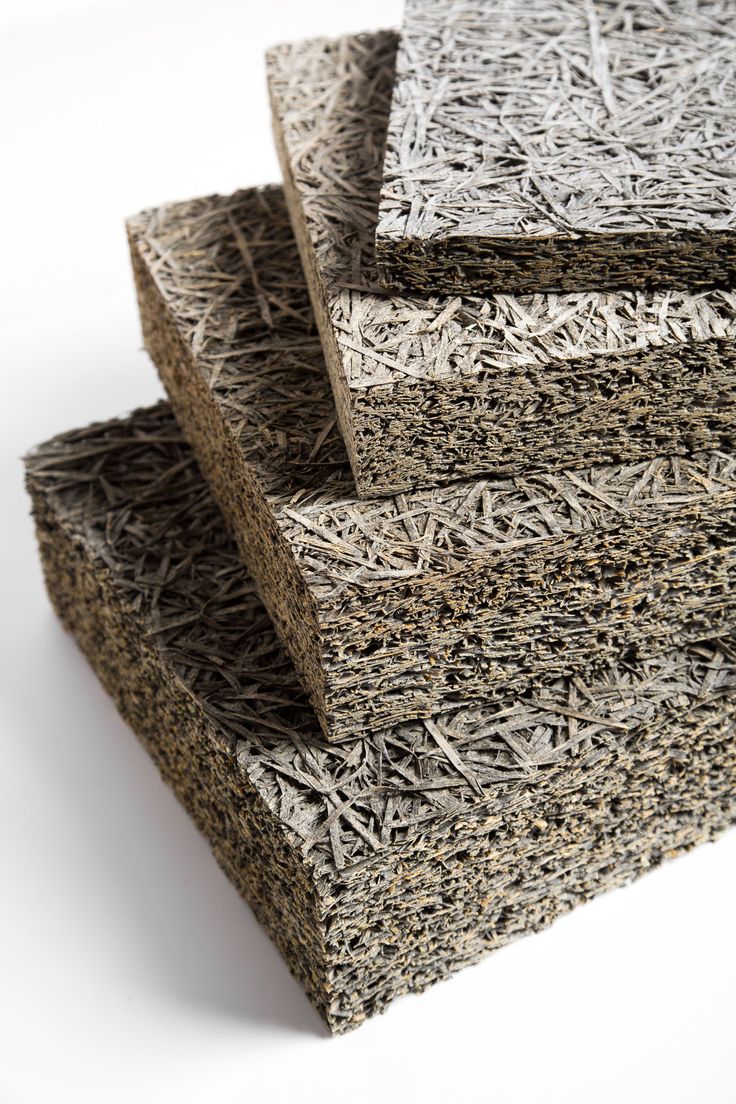
Bringing together structural design and thermal performance! Section 1 : Introduction to Hempcrete Hempcrete has excellent insulating properties, providing thermal regulation by allowing the building to breathe and reduce moisture build-up. The thermal conductivity of hempcrete is typically in the range of 0.06 to 0.07 W/mK, which is about half the thermal conductivity of concrete. … Read more
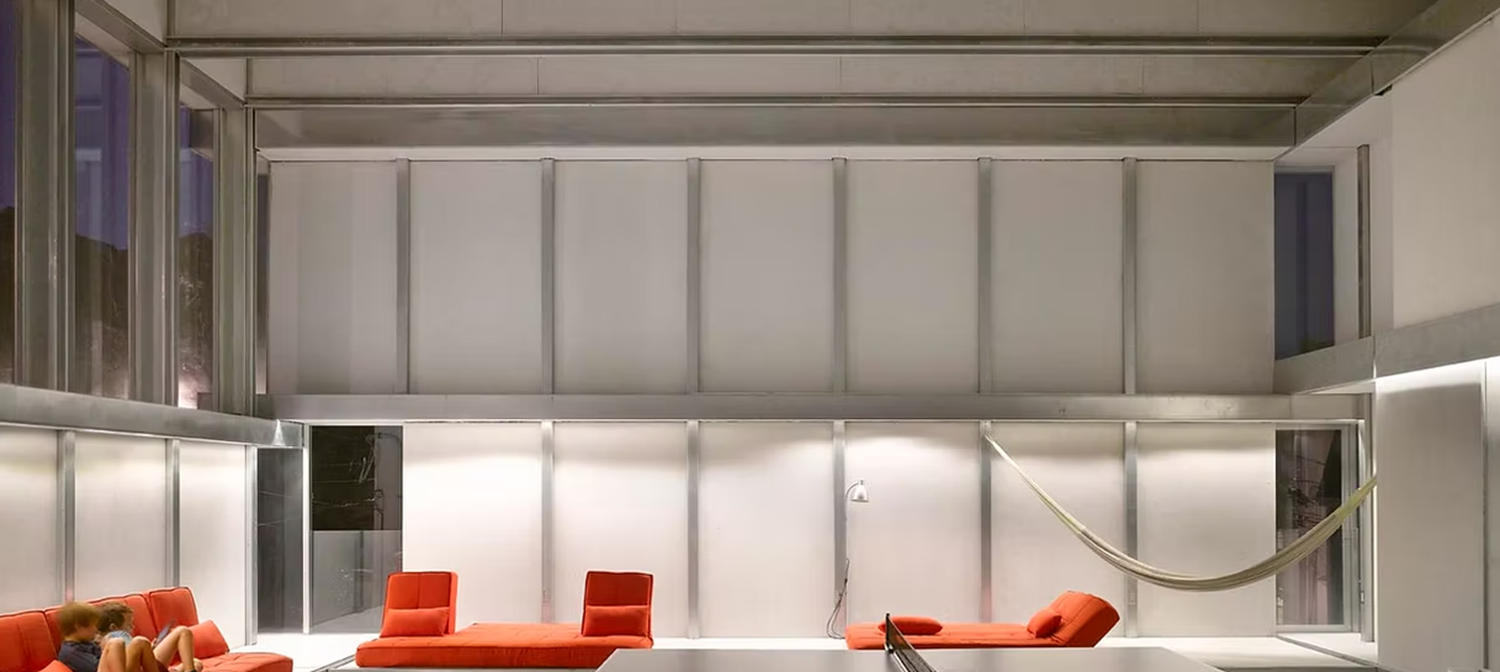
Case Study CYCLOPEAN HOUSE Constructed in 2015, this project was designed by Ensemble Studio and resides in Brookline, Massachusetts. “Cyclopean House is built, using the vigor of the builder, and the ingenuity of the engineer, to start a journey from the place of its manufacture –Madrid- to the place where it can definitely lie … Read more

Case Study People’s Pavilion – Overtraders Iterations Option 1 Option 2 Displacement Analysis Utilization Analysis Roof Load Analysis Scavenged Timber BEAM TEST DESIGN – BUILDING 3D-Exploration Fabrication Beam Test Load – Deflection Analysis Failure + Improvements Beam Test v/s Karamba Analysis Karamba Analysis Summary Grasshopper Script Embodied Carbon Detail

FABRICATION PROCESS BEAM TEST -Beam test with interlocking shear panels positions at splice in bottom and top flanges. -Failure is located in the shear panel where the bottom splice is located. -The physical beam test differs with the Karamba analysis due to the screws location and the wood quality. The karamba analysis does not have … Read more
