The MAA is a visionary master program with an innovative and open structure, mixing diverse disciplines, shaping professionals capable of producing theoretical & practical solutions towards responsive cities, architecture & technology.


Filters
Course

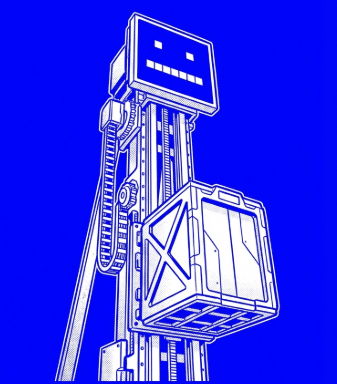
The Moody Elevator

CONCEPT IDEATION FLOW CHART SELECTED COMPONENTS Components Prototypes Forensic Report Agency Senior Forensic Team Case identifier MDEF-MAA-UTS-001 Members Alejandra Rivera Zamacona, Armin Gulbert, Ludovico Celli, Melissa Ingaruca Moreno,  Rishi Srinivasan, Swarna Manjari Chellapandi Date of Receipt 19 November 2025 Date of Report 21 November 2025 Website URL https://hackmd.io/@nmoHUr94RLOmMhWqUedElQ/B1AbeLjlbg Purpose of the Report The purpose of … Read more

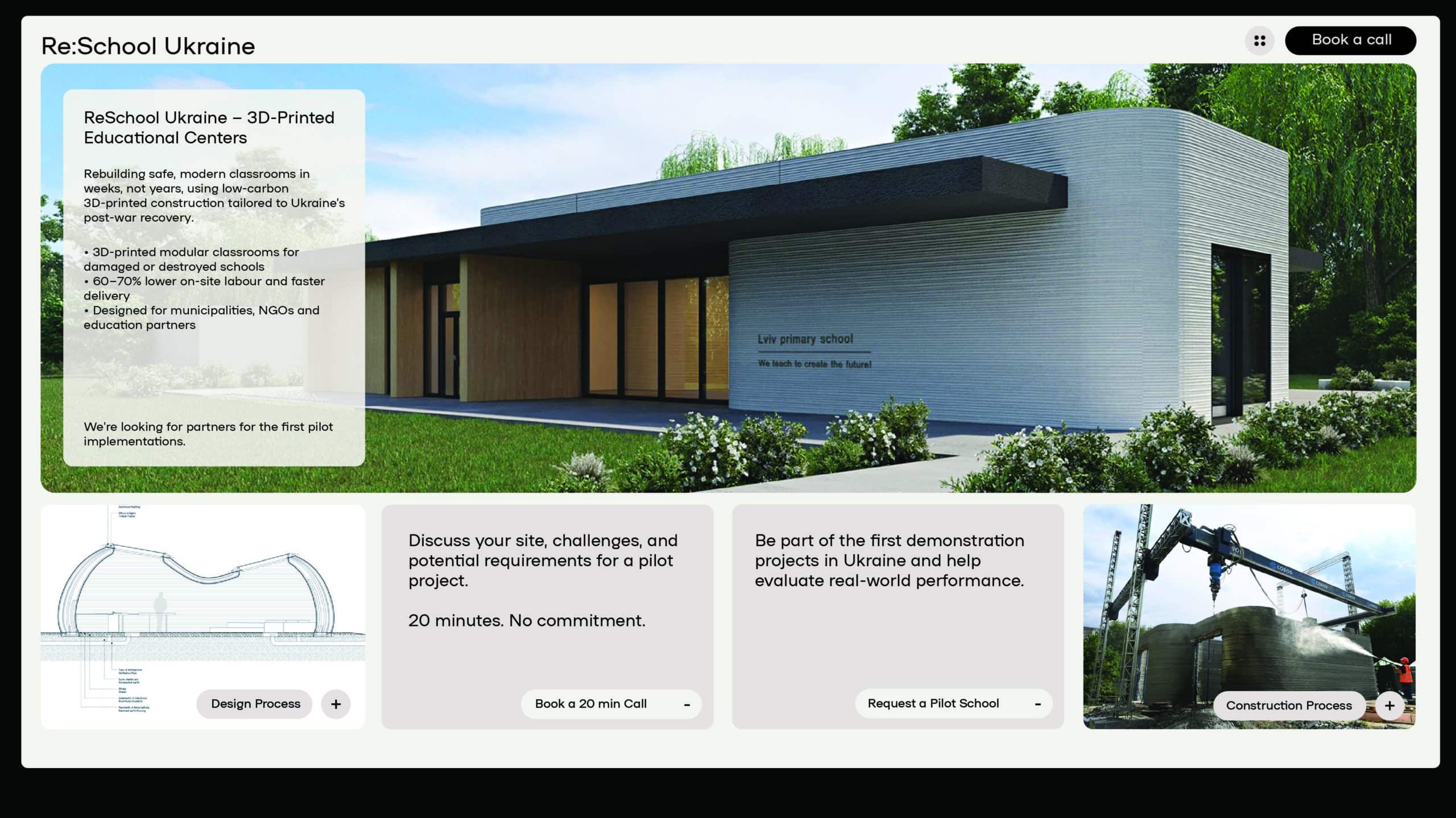
ReSchool Ukraine

ReSchool Ukraine develops fast-build 3D-printed educational centers to support reconstruction in war-affected regions. Traditional construction is too slow and labour-intensive to meet urgent educational needs. Our modular 3D-printed classrooms can be built in 3–4 weeks, using 60–70% less onsite labour and lower-carbon materials. In 2025, we aim to launch three pilot projects with municipalities and … Read more

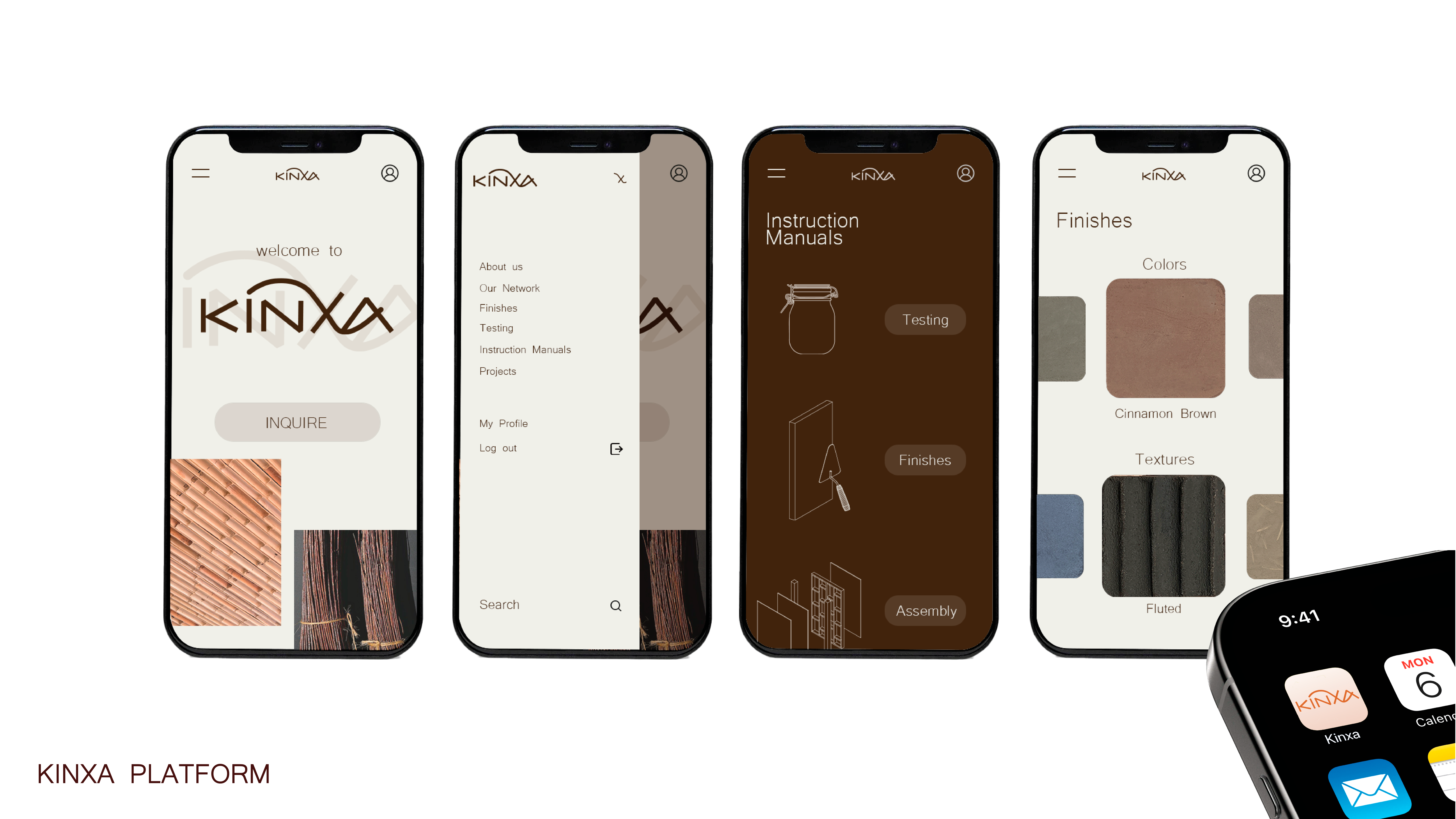
Business Innovation: Kinxa

What if innovation meant remembering instead of inventing? PROBLEM We live in a time where cities grow taller and denser, but also more disconnected from nature, from tradition, and from the wisdom of those who built before us. We believe that the answer to sustainable architecture doesn’t always lie in invention but in rediscovery. Vernacular … Read more

CoolStreets Lab

PROBLEM SOLUTION CoolStreets Lab provides scalable, practical micro-scale heat-risk maps that help cities identify where to cool, shade, and protect their most vulnerable areas. COMPETITION BUSINESS MODEL Target Customers Business Model Early Validation Expert Interviews Key Insight Municipality Feedback Unit Economics TEAM FUNDING NEED WHAT THIS COVERS WHY THIS AMOUNT This is the minimum budget … Read more

After the Feed

*** “Is there a perception of transparency in digital societies which masks a more intrusive form of control than disciplinary institutions ever achieved?” CHARACTERS Professor Bratton Peluza Lucia Vela Minister Mouffe Arin Reporter Nox – FIRST ACT – Scene 1: The Ambush at the Café Door Place de la République, early evening.A rally forms under … Read more

Ventilation for Printed Earth Wet State

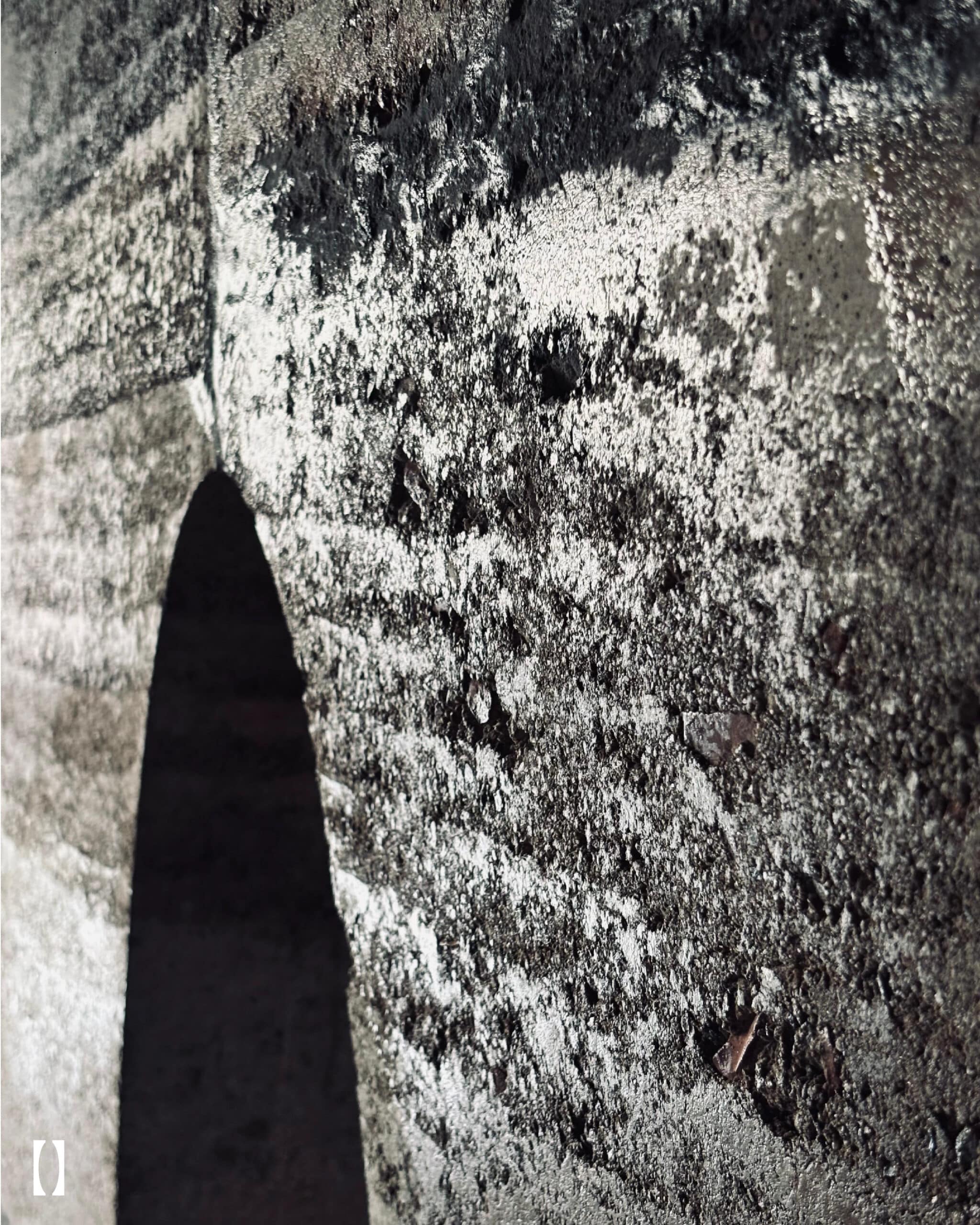
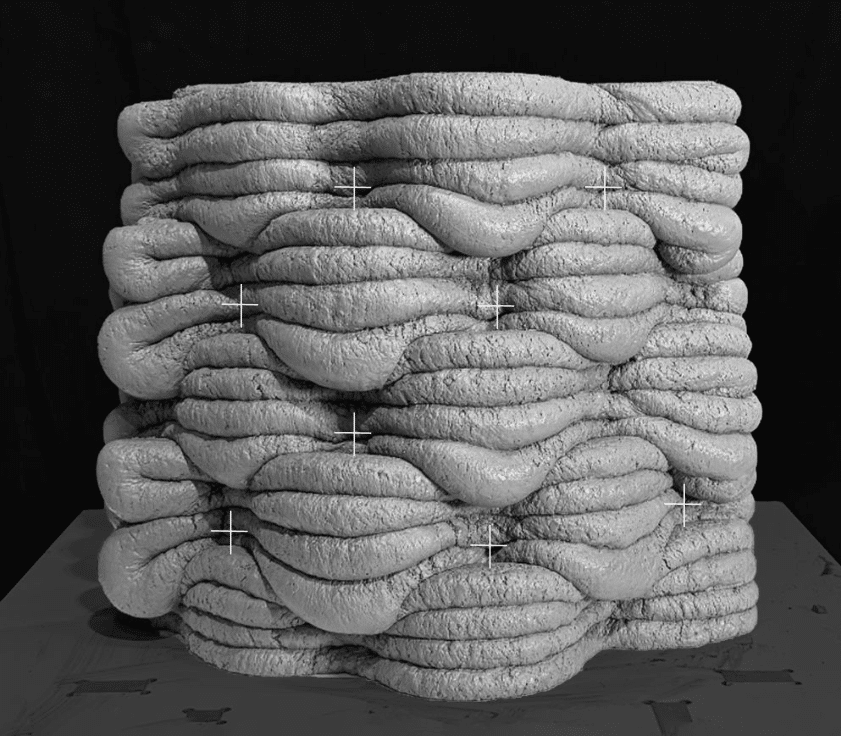
The drying process is a mass transfer, it removes water or another solvent from a material through evaporation, which is driven by simultaneous heat and mass transfer. Heat is transferred to the material, causing the liquid to evaporate at the surface, and a carrier gas or vacuum removes the vapor from the material’s vicinity. Common … Read more

Digital Fabrication Library

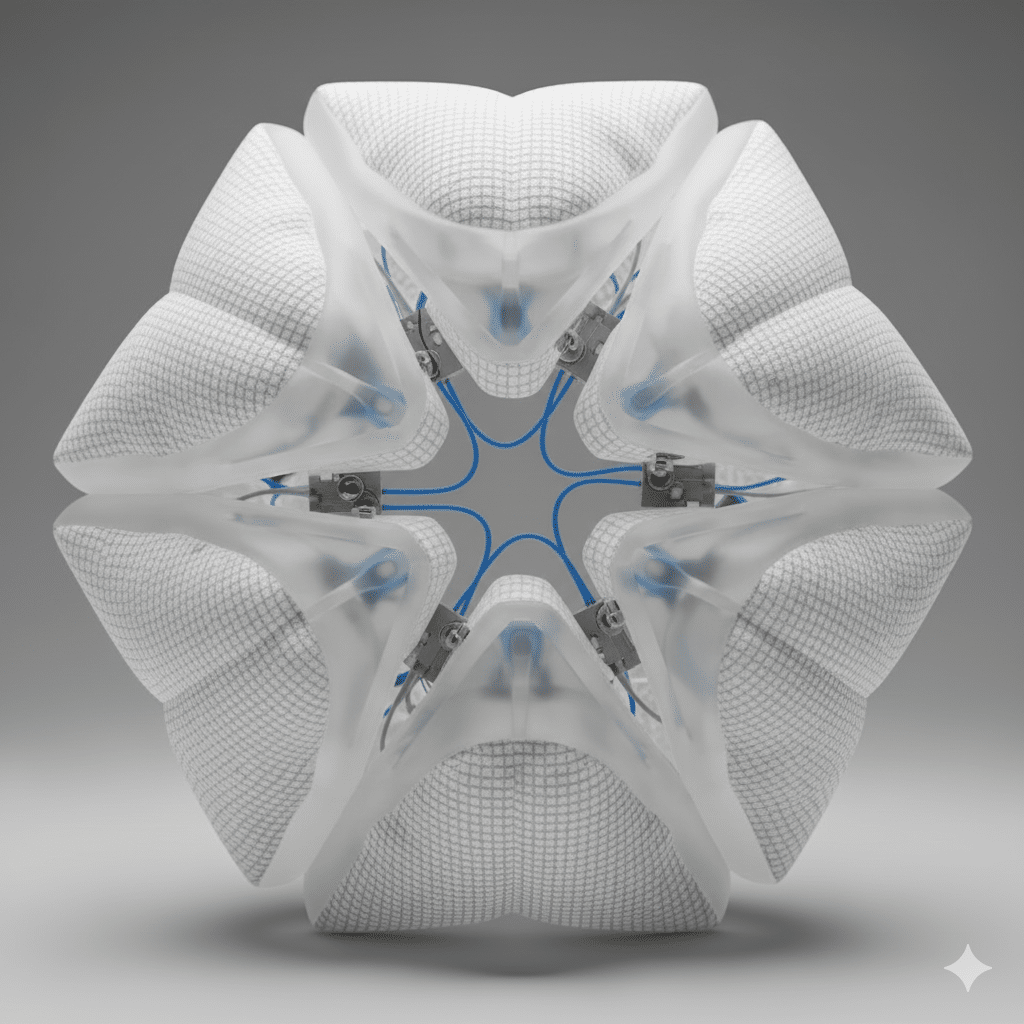
In today’s architectural landscape, digital fabrication has significantly expanded the way we design and construct building elements—offering unprecedented accuracy, efficiency, and formal freedom. Techniques such as laser cutting, CNC milling, 3D printing, and robotic manufacturing each bring distinct advantages in terms of material behavior, geometric complexity, and performance potential. RE:CELL Concept The Re:Cell is a … Read more

DIGITAL FABRICATION: Fabricating the Reef

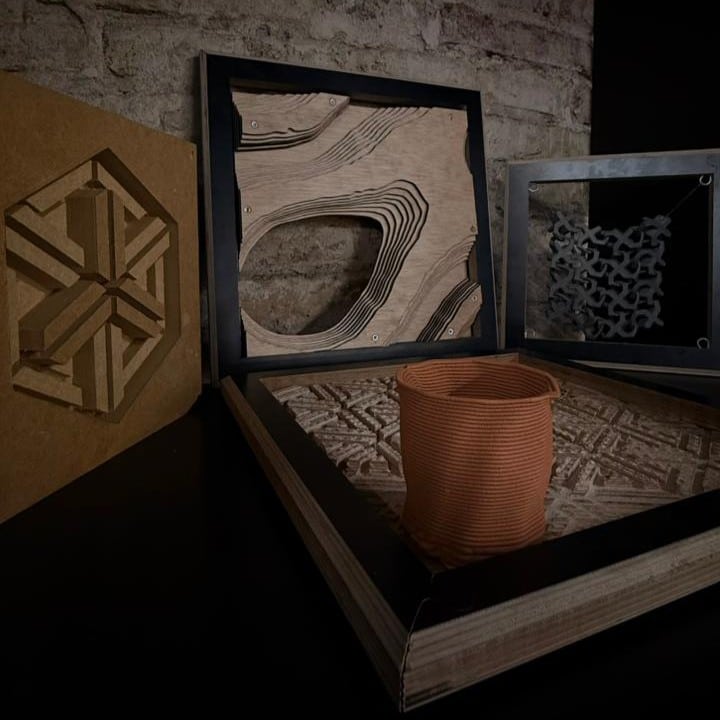
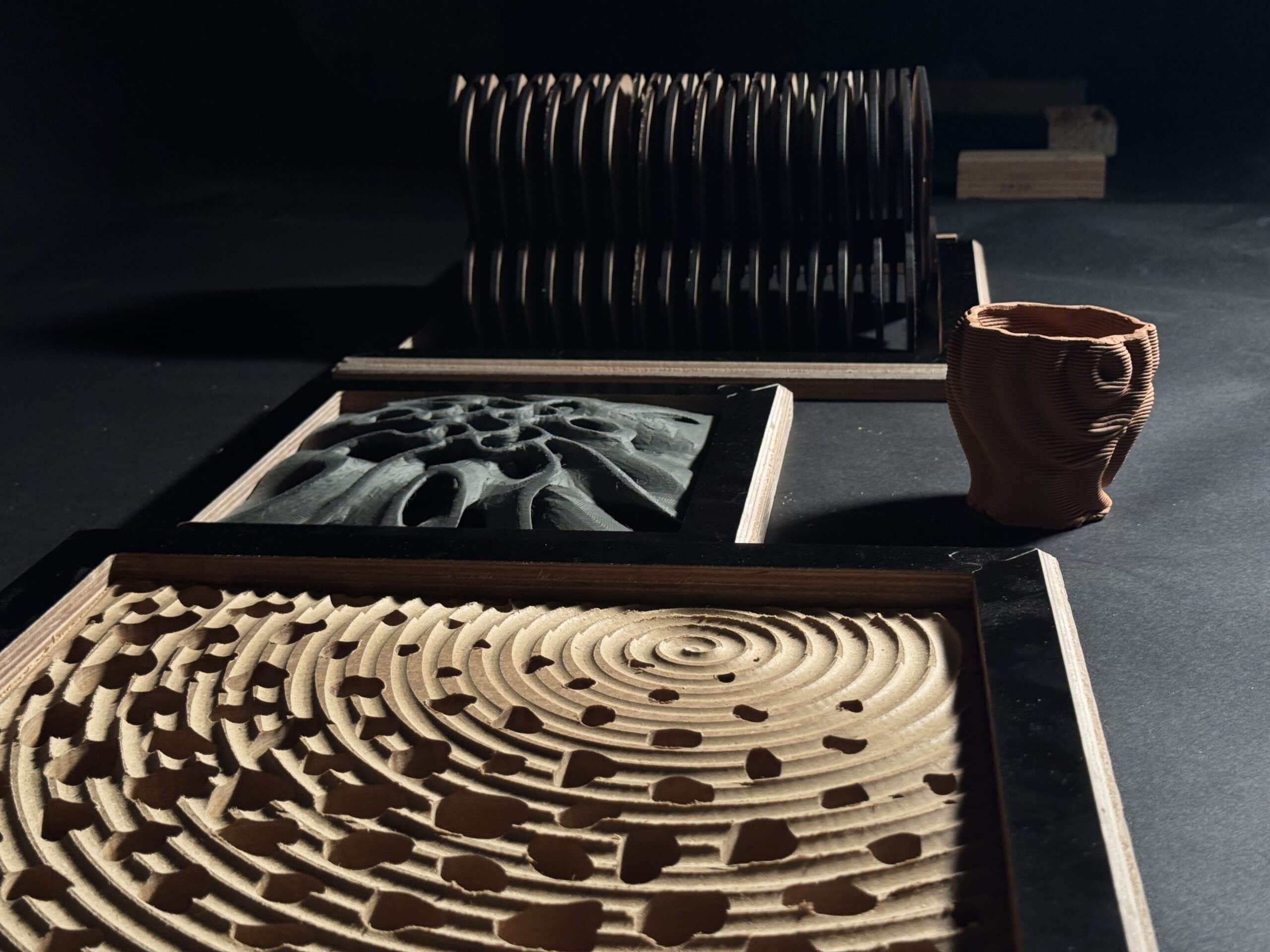
A series of four fabrication exercises completed over eight weeks, each using a different digital manufacturing method at IAAC: CNC milling, 3D printing, laser cutting and robotic clay extrusion. Although each piece explores a distinct workflow, we maintained a consistent design logic by referencing coral ecologies and seabed morphologies. CNC Milling – Coral Veil Coral … Read more

Morphologies of Making: Four Experiments in Digital Craft

Our digital fabrication journey unfolds through four experiments that explore how material, geometry, and technology negotiate form. Each project challenges a different fabrication technique: laser cutting, CNC milling, 3D printing, and robotic manufacturing, while asking a deeper question: How does digital logic reshape the language of craft? Laser Cutting Tessellated Lightfield This project explores the … Read more

Tectonics of Digital Craft

Digital fabrication enables designers to explore geometries that go beyond traditional construction constraints. The exercise focuses on translating complex geometries into constructible systems that integrate material behaviour, joinery logic, and mass customisation. Each technique allows experimentation with unique fabrication constraints, informing the evolution of the vertical element design. The outputs serve as material and geometric … Read more

Digital Fabrication

THE W-E SERIES WALL-E 3D PRINTING DESIGN INSPIRATION OBJECTIVE To create a modular vertical element that explores the capabilities of 3D printing and is simultaneously architecturally attractive, is structurally strong whilst using minimal material. DESIGN OPTIONS FINAL DESIGN CONCEPT By blending elements from previous prototypes, the final piece combines 2D and 3D forms to exploit … Read more