The MAA is a visionary master program with an innovative and open structure, mixing diverse disciplines, shaping professionals capable of producing theoretical & practical solutions towards responsive cities, architecture & technology.


Filters
Course

EMI: Engine for Morphological Integration Vol II

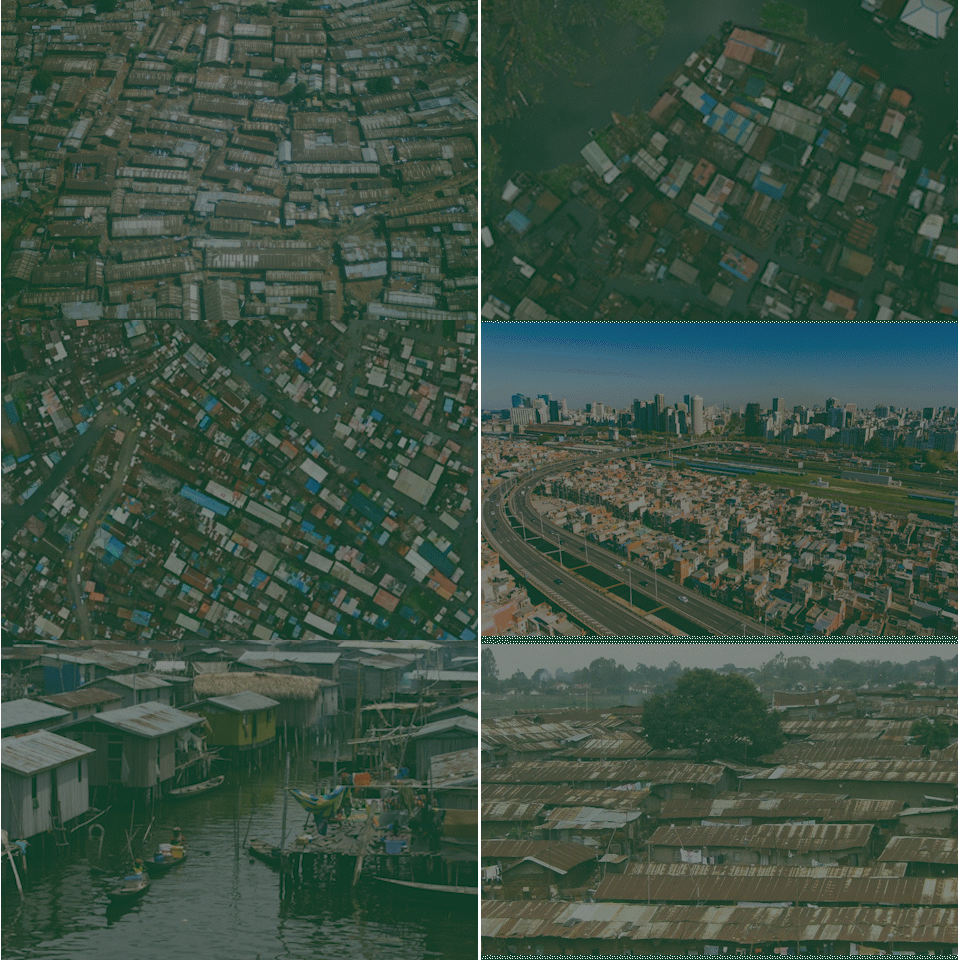
A Methodological Approach to Urban Morphology and Hybrid Energy Systems in the Global South Project Statement: “Even as we advance in Energy Innovation, our cities continueto grapple with deep inequalities. In this research, I proposerethinking Urban Morphology—not merely as the physicalform of our settlements, but as a strategic lever for equitableenergy solutions. The conceptual Energy-Morphology … Read more

Collaborative Workflow: Hyper B – Facade Team (carbon footprint library)

ROLE FINAL INPUTS AND OUTPUTS TEAM ROLES AND COMMUNICATION STREAMS COMMUNICATION COLLABORATION REFLECTIONS CARBON FOOTPRINT OBJECTS TRACKER APP We imagined a smarter way to design façades—one that doesn’t just generate new materials but maximizes the potential of what already exists. That’s why we developed a custom parametric tool that helps architects and designers track, organize, … Read more

SecondMatter

SecondMatter challenges architecture’s extractive processes and wasteful material cycles by upcycling Construction Demolition Renovation Waste (CDRW) into structural and non-structural applications. It blends ramming, which compacts granular materials into high-strength forms, with jamming-inspired interlocking of irregular aggregates. Large concrete waste pieces form a reinforced core, wrapped in a rammed mix of fine brick and concrete … Read more

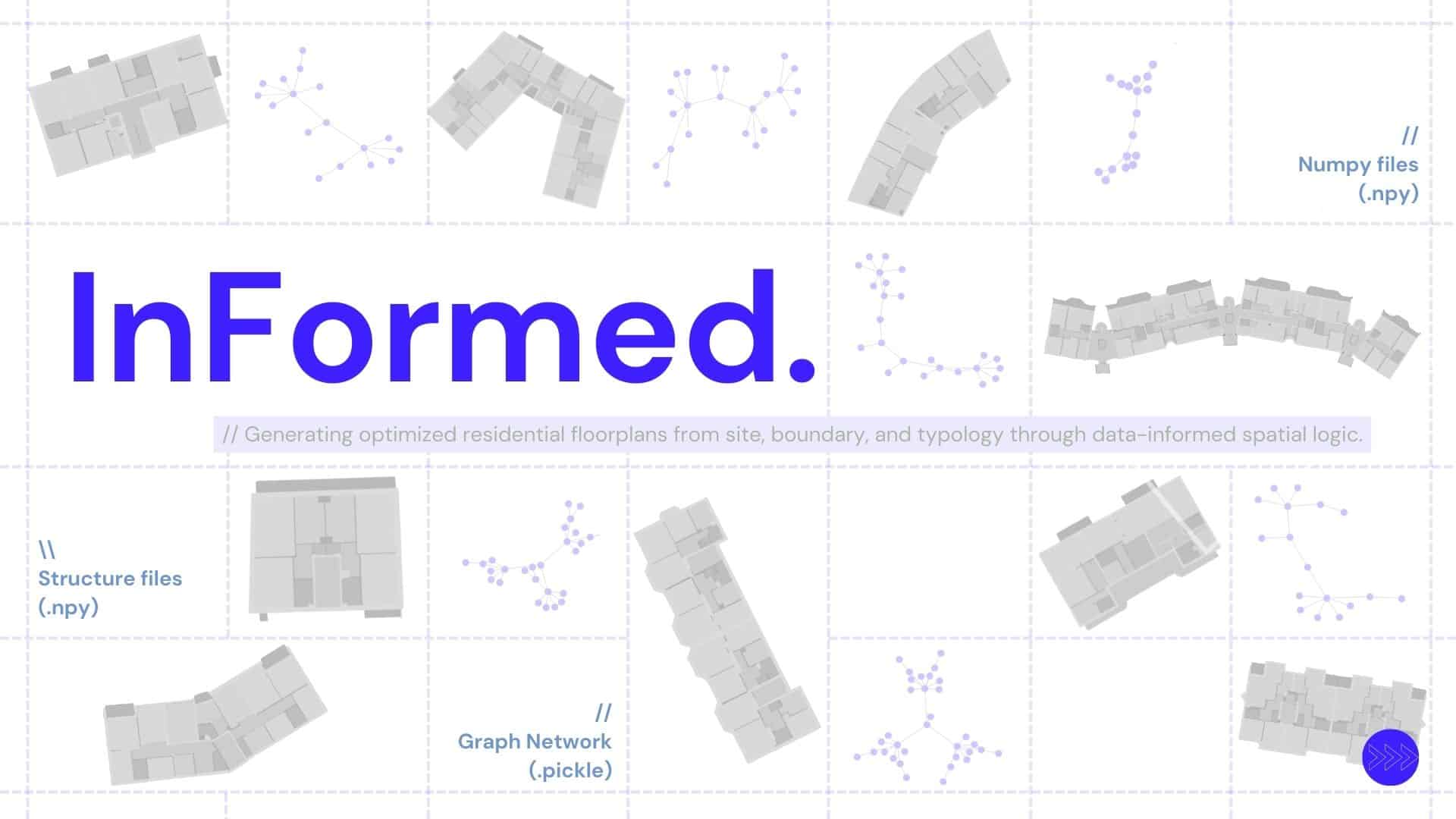
InFormed.

Manual floorplan generation for high-rise residential buildings is labor-intensive and often overlooks key environmental parameters, limiting the ability to quickly assess performance-based design alternatives.

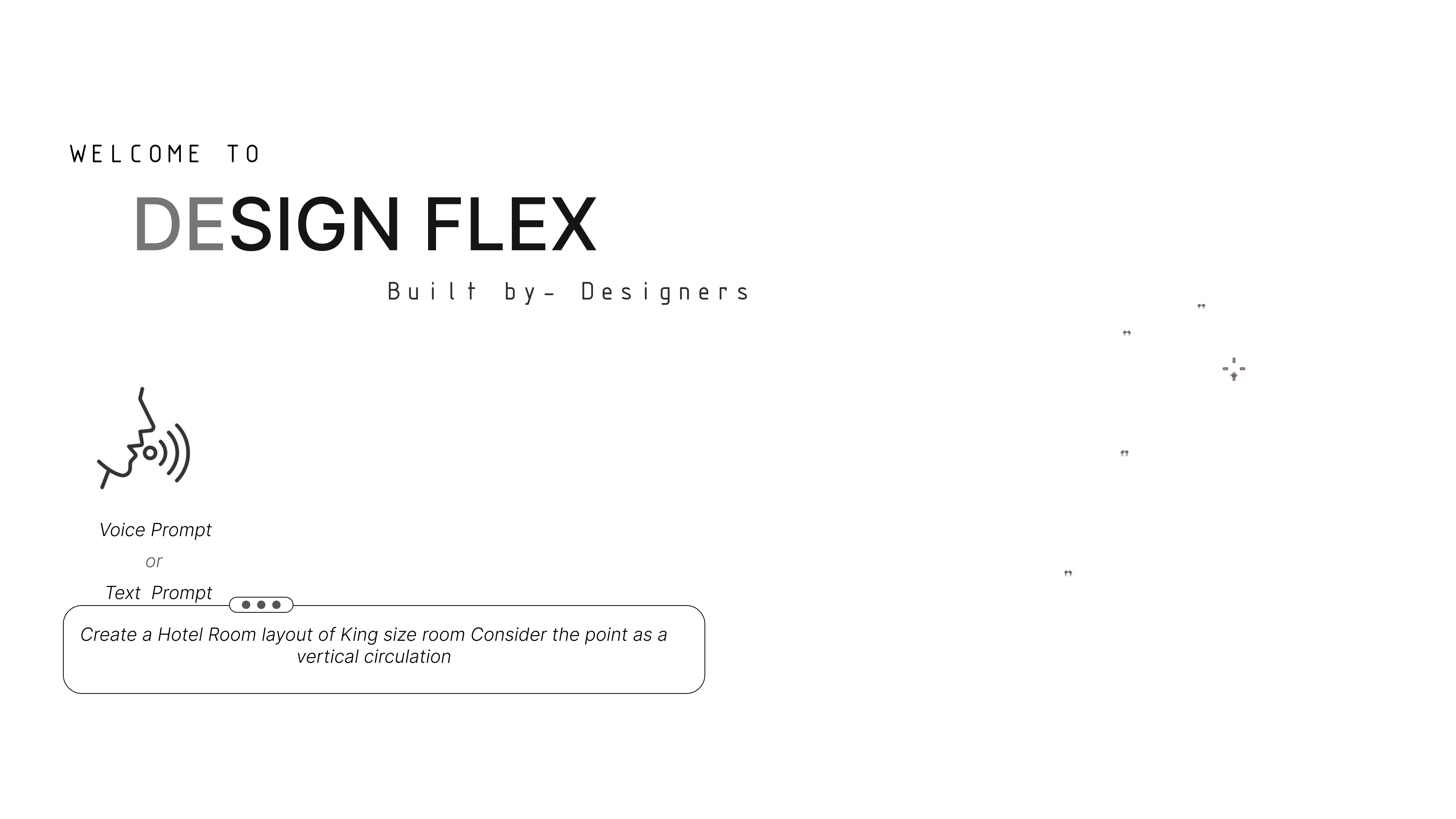
DESIGN FLEX- PHASE- II

Abstract Parametric design tools like Grasshopper empower architects to create adaptive and efficient spatial layouts, but their complexity presents a barrier for non-experts. This research proposes a community-driven design tool that leverages Graph Neural Networks (GNNs) and Large Language Models (LLMs) to learn from expert-authored Grasshopper scripts, enabling prompt-based parametric layout design. By encoding design … Read more

DECODING URBAN MOBILITY

ABSTRACT; Decoding Urban Mobility: This project evaluates the impact of AI-driven traffic management versus conventional fixed-timing methods on urban congestion. It analyzes real-time and historical data—including traffic patterns, weather, demographics, and incident reports—from cities like London, Barcelona, and Los Angeles and compares machine learning models (e.g., LSTM, GRU, XGBoost) with traditional techniques. The study identifies … Read more

BACK TO ZERO

NARRATIVE Back to Zero is a regenerative concept that targets oil refineries and other aging infrastructures that pollute our world. The narrative is inspired from the “skin in the game” concept, and calculates lifetime co2 emissions for high emitting “hosts”, which then becomes a target for that same “host” to sequester through the carbon sequestration … Read more

FLOOD RESILIENCE TOOLBOX

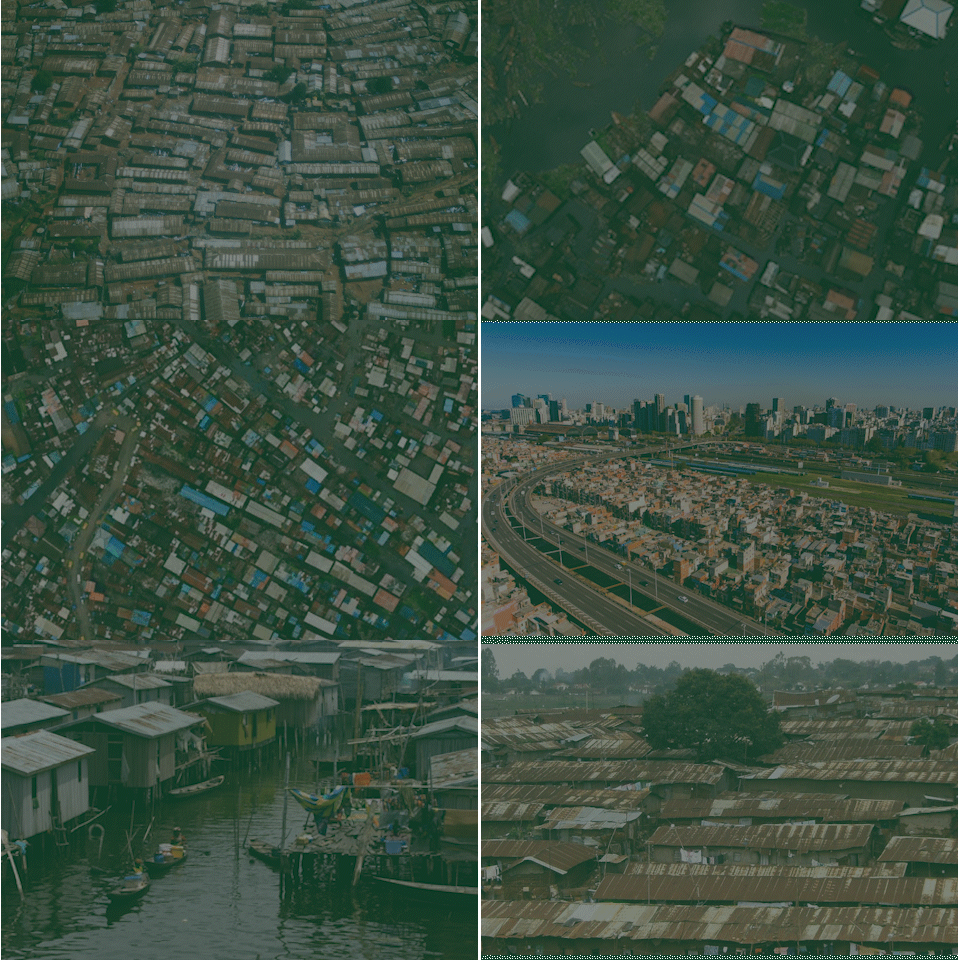
FLOOD RESILIENCE TOOLBOX FOR ADAPTIVE URBAN DESIGN IN COASTAL CITIES Flooding is the most frequent natural disaster worldwide. By the report from The OECD (Organization for Economic Co-operation and Development), floods cause more than 38 billion euro in damages worldwide per year. Due to climate change, floods are becoming more extreme and frequent. Coastal areas … Read more