During the second year of the Master in AI for Architecture & the Built Environment students have the opportunity of working hand in hand with a series of renowned experts and industry partners in various fields, to develop an in-depth individual research agenda. Students propose a thesis project, to be developed throughout the year, and are allocated with an Individual Thesis Advisor, Technical Advisor, Business Development and Industry Advisor. During the second year of the program, the curriculum of the program gives students the chance to either participate in an accelerator program or embark on a paid internship with renowned architectural and urban design offices around the world that collaborate with the programme. This experience enables students to apply their newfound expertise in real-world settings, contributing to impactful projects, establishing strong future career possibilities and expanding their professional networks.

Curbside Intensification
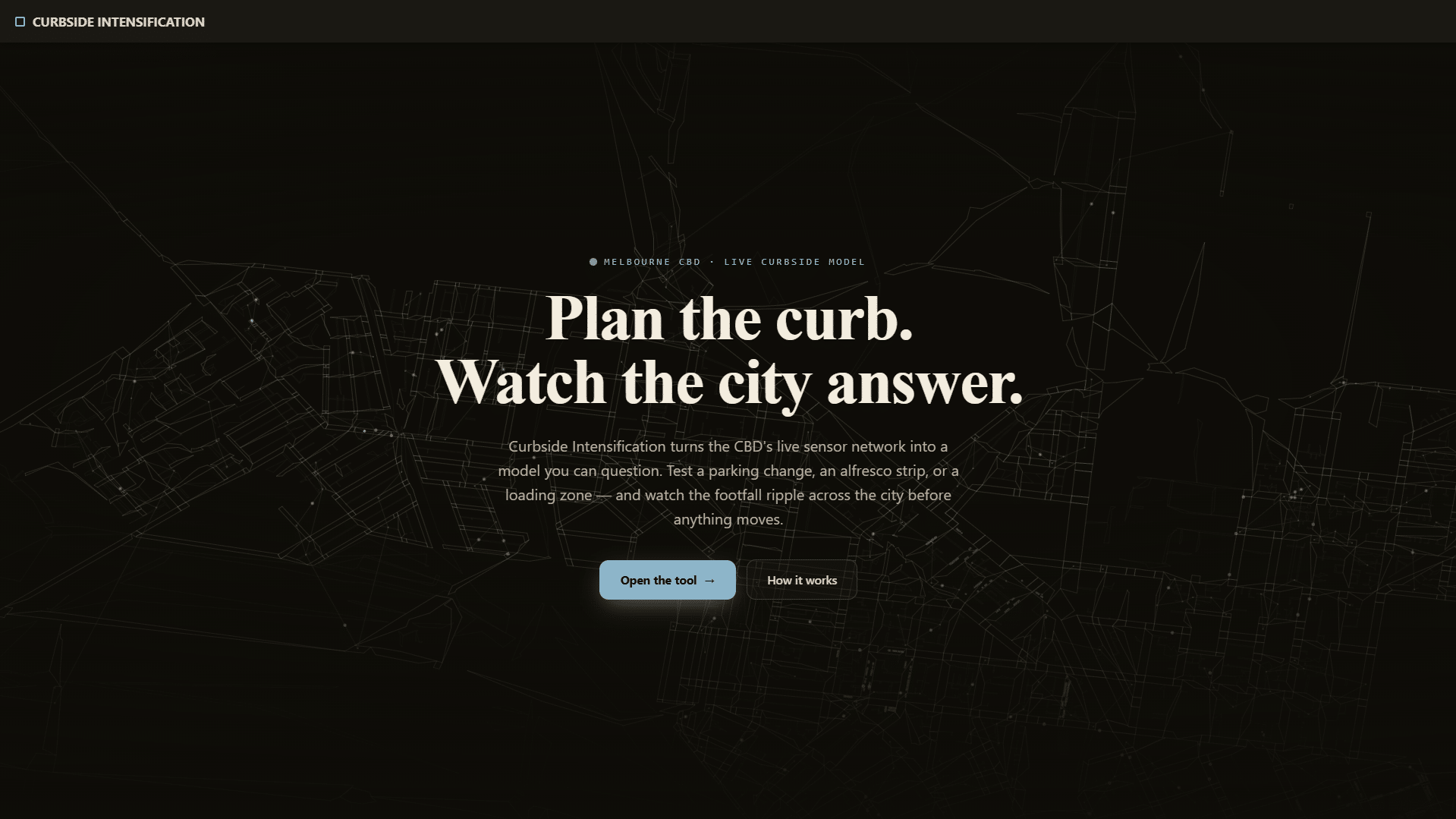
Ertuğrul Akdemir MAAI · Master in AI for Architecture and Business Innovation 25/26 Advisor: Shajay Bhooshan An AI tool that reads how streets behave through the day and tests where the curb could change use, then shows how that change spreads across the city before anything is built. Streets are designed once and rarely questioned. The … Read more

Invest Through Behavior

Invest Through Behaviour reframes how capital decisions are made in social housing impact investment. Today, investment decisions rely on high-level financial and ESG indicators that assume impact rather than demonstrate it, and that obscure the real trade-offs between competing priorities. This project proposes a decision-support approach that treats neighbourhoods across London as a landscape of … Read more

From Image to Typology

A Computational Framework for Inferring Architectural Spatial Organization from Visual Input. Abstract: This thesis investigates whether Artificial Intelligence can infer a building’s internal spatial organization from its exterior image, using architectural typology as the mediating framework. Typology is treated here not as a stylistic category but as a relational, topological structure: a set of rules … Read more