The MaCAD is a unique online programme training a new generation of architects, engineers and designers ready to develop skills into the latest softwares, computational tools, BIM technologies and AI towards innovation for the Architecture, Engineering and Construction (AEC) industry.

Filters
Course

BIM and The Rise of Automated Design Fabrication

BIM and the rise of automated design fabrication

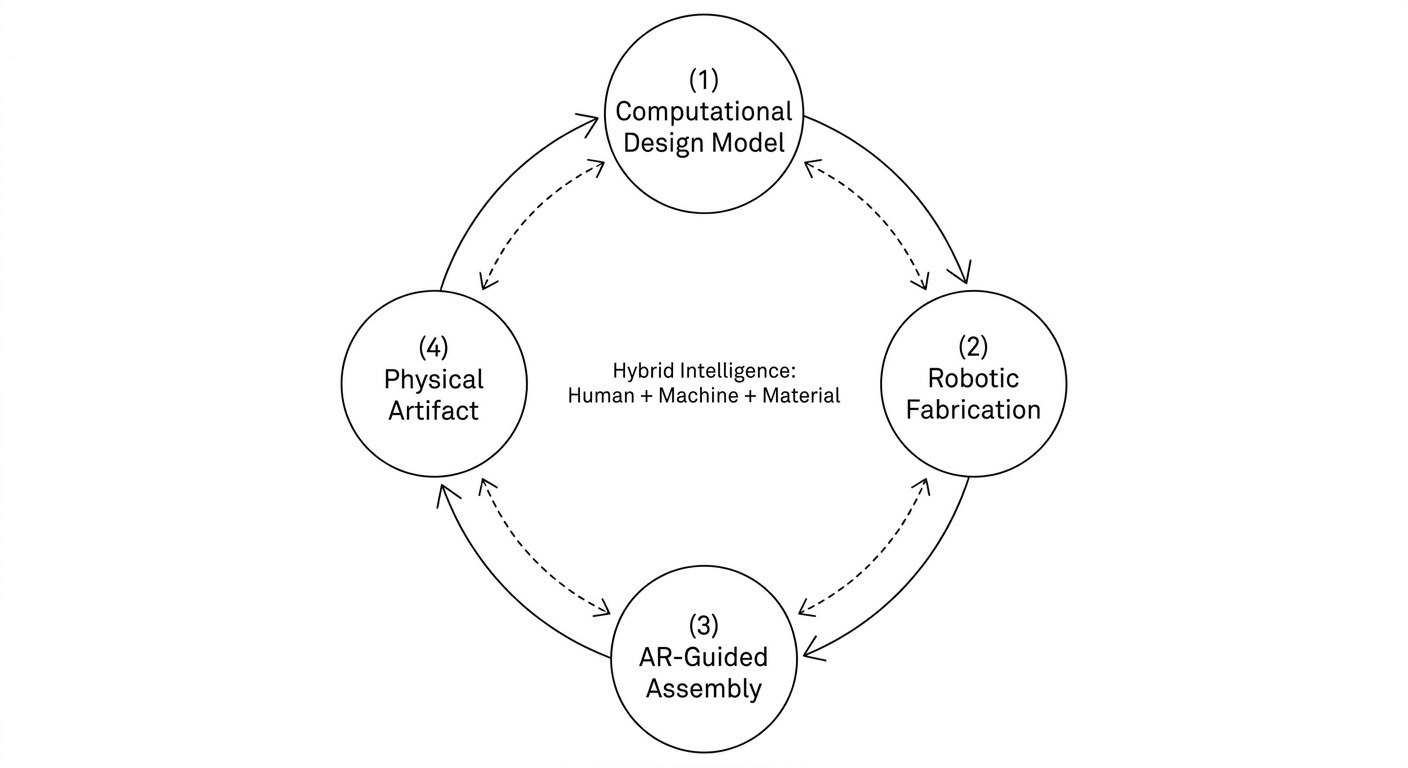
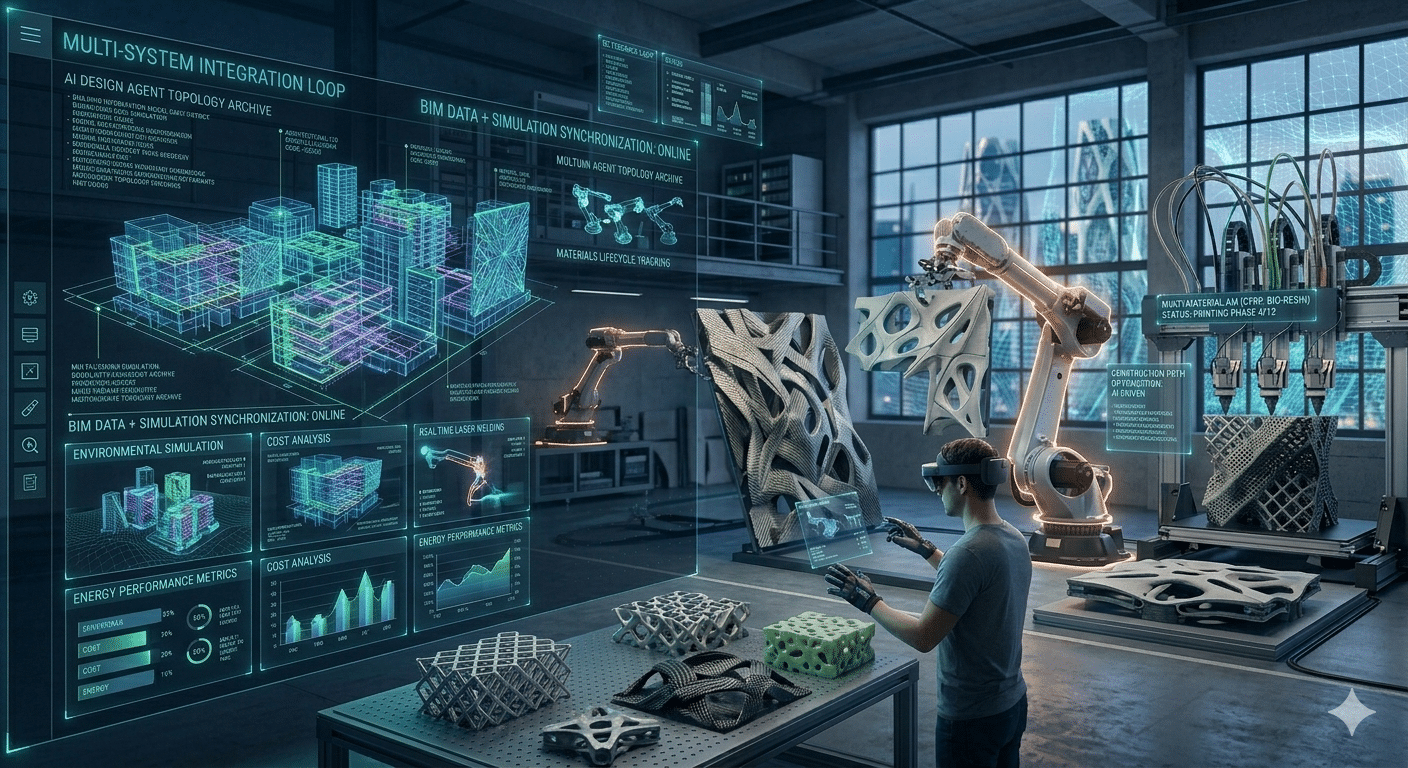
(BIM) is driving a major shift toward automated design and fabrication by providing precise, data-rich digital models that machines can directly interpret. Automated systems use BIM data to generate toolpaths, robotic motions, and fabrication instructions with minimal human input. This integration accelerates prefabrication, improves accuracy, reduces waste, and supports modular construction. As automation grows, BIM … Read more

A Browser-Based Custom G-code Slicer

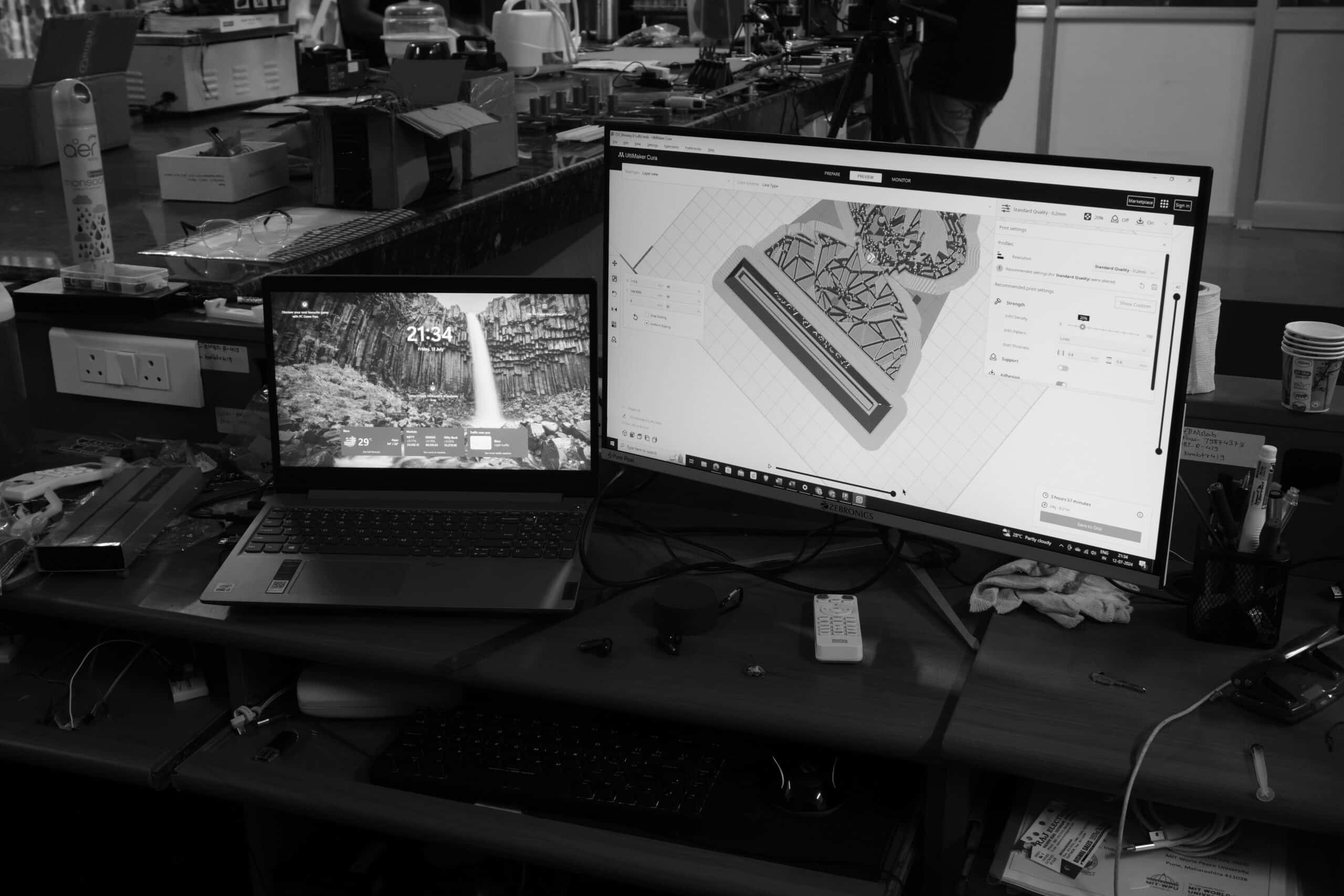
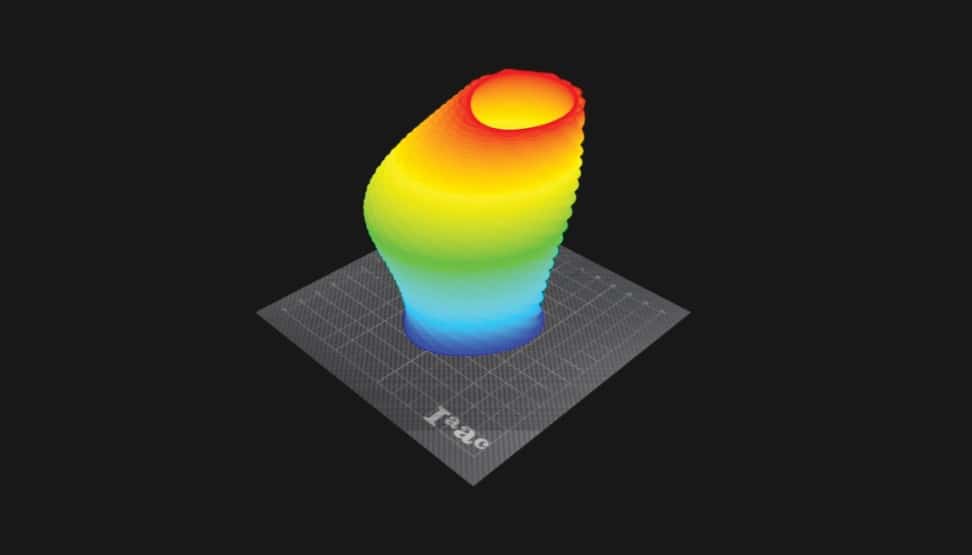
Built on Vue.js + Grasshopper + Rhino Compute This documentation presents the design, development, and technical implementation of a browser-based G-code slicer built as part of the Digital Tools for Cloud-based Data Management course at the IAAC Problem Statement Commercial 3D printing slicers, such as PrusaSlicer, Bambu Studio, and Ultimaker Cura, are designed as general-purpose … Read more

HB03: Data-Driven Towers for Human-Nature Coexistence

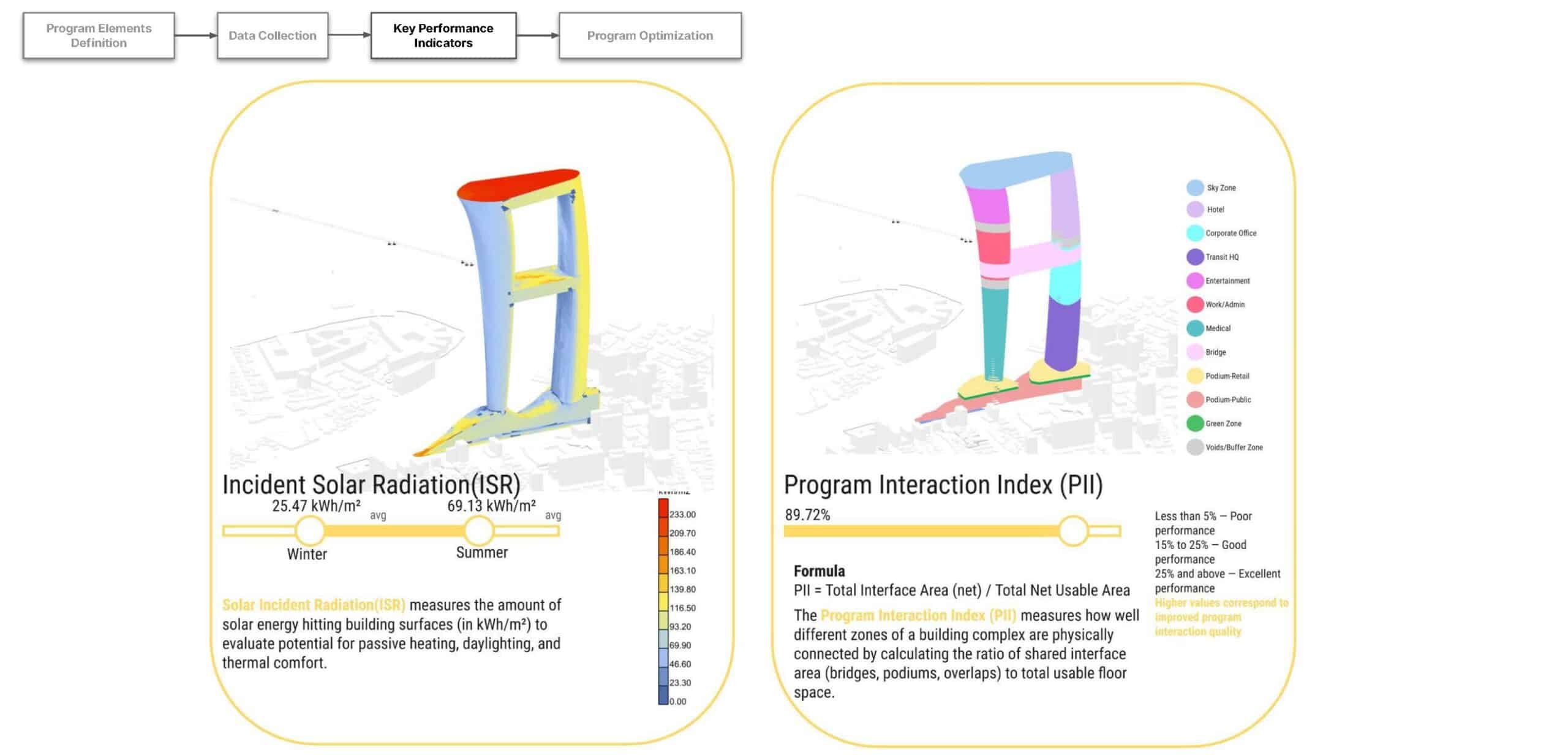
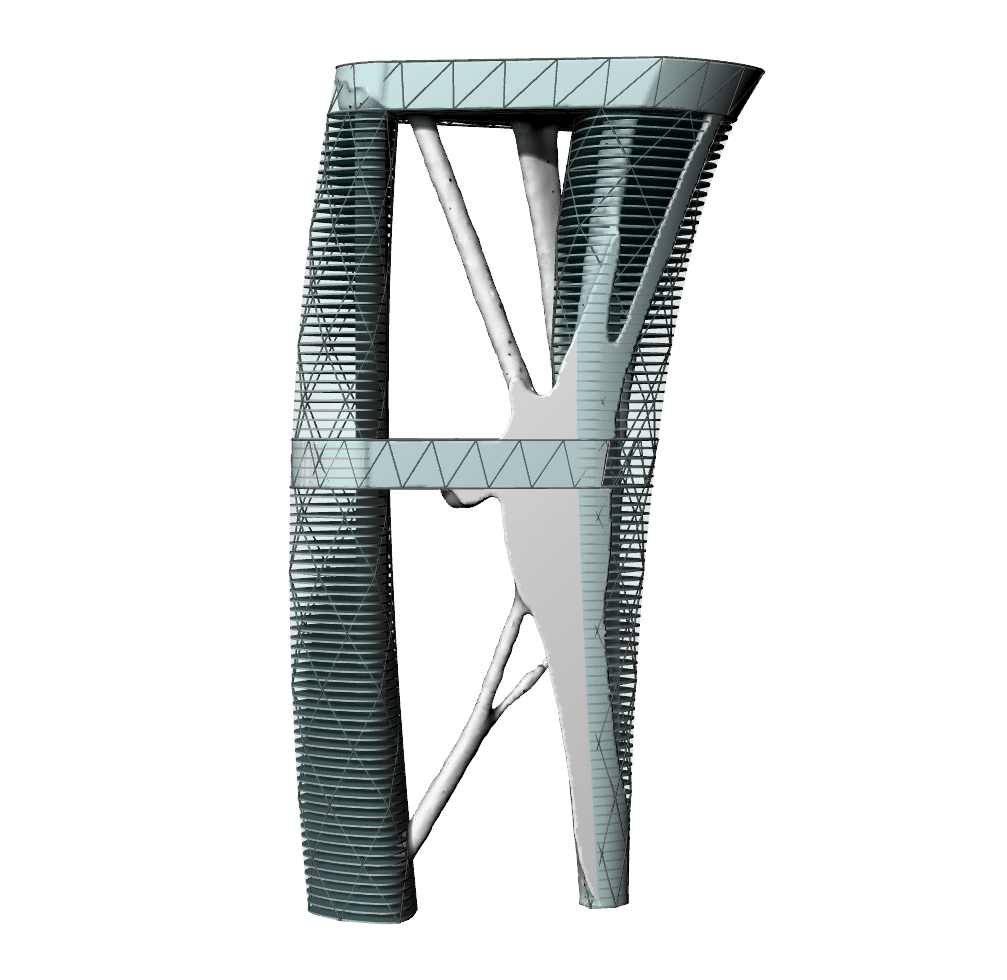
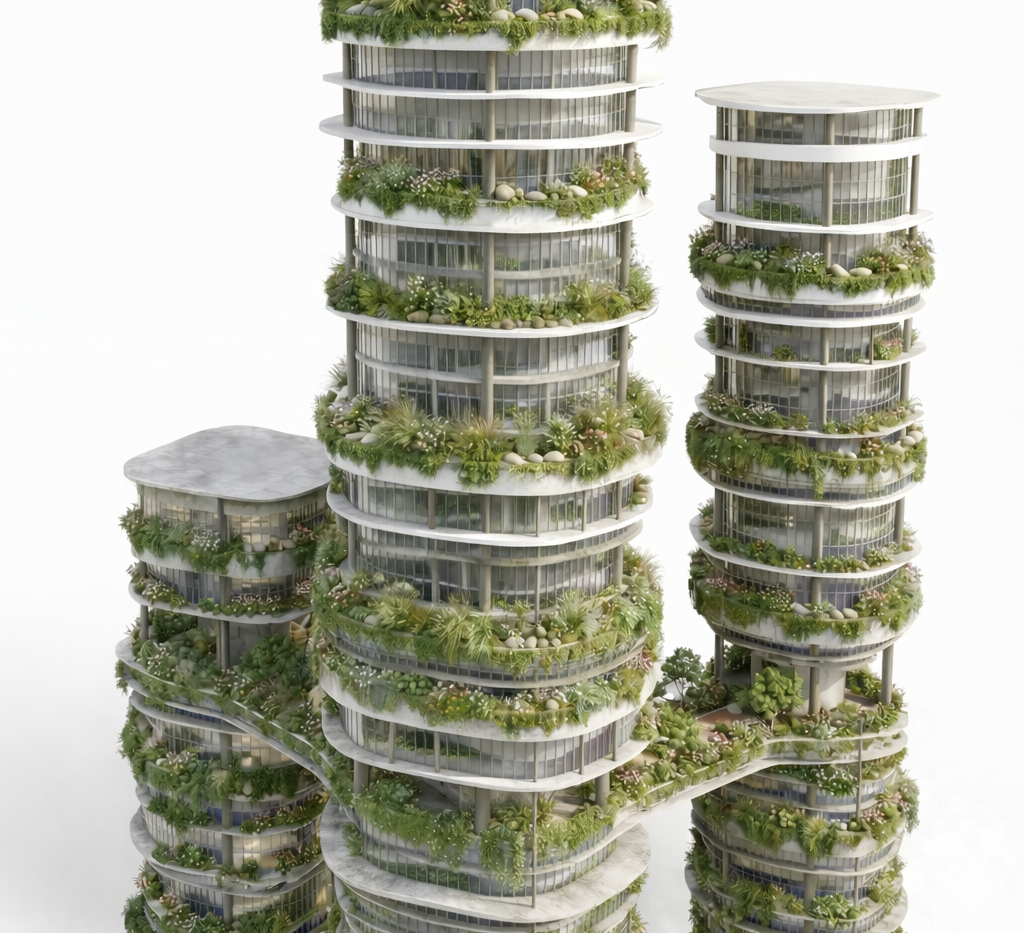
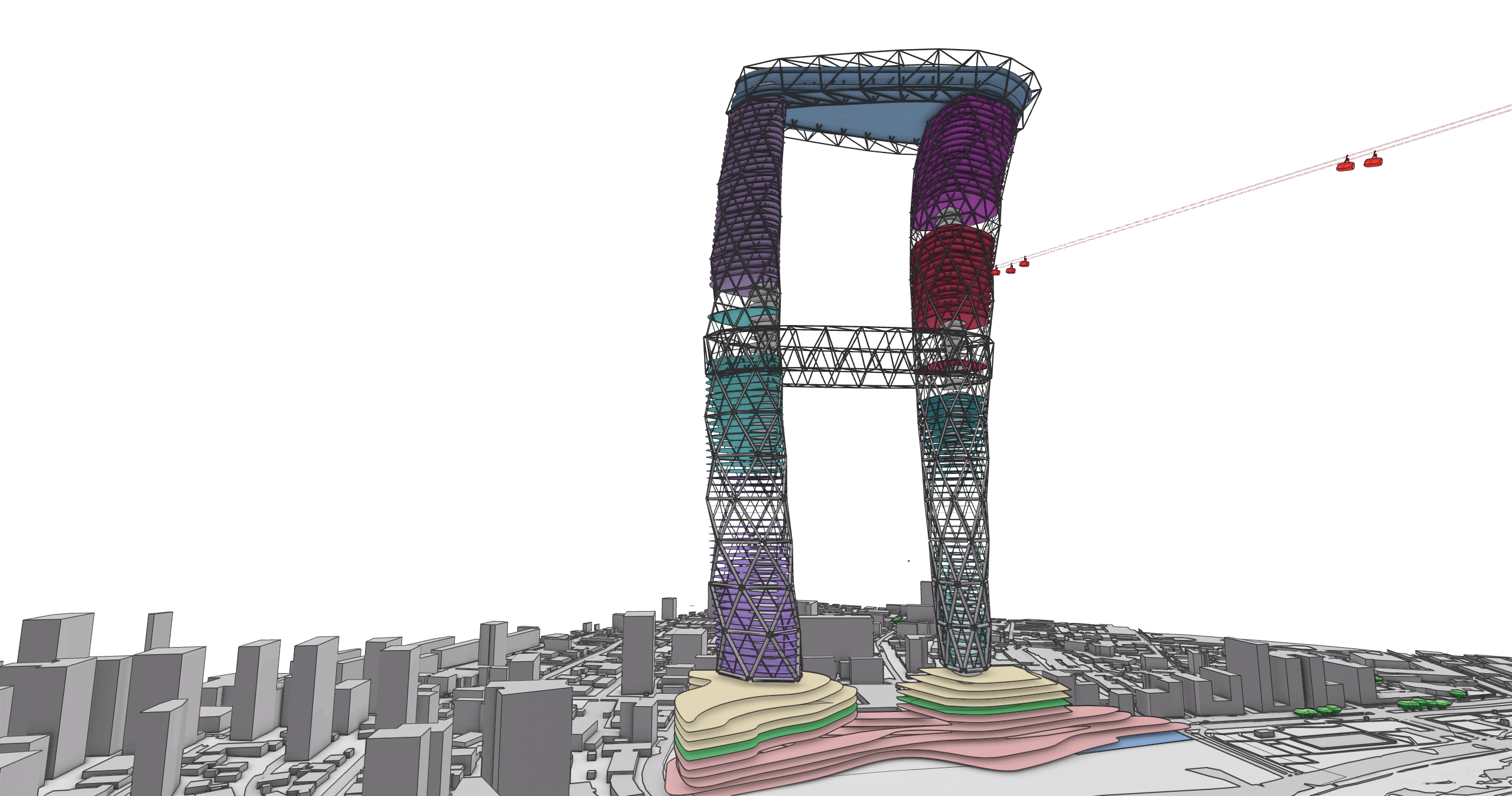
Explore HB03, a hyperbuilding developed through parametric design, structural engineering, and adaptive façade optimization. Discover a data-driven approach to sustainable vertical urbanism, daylight performance, and human-centric high-rise design. Introduction: Engineering the Skeleton of Vertical Urbanism In the Vertical Machine studio, architecture is treated as a dynamic urban organism rather than a static object. Within this … Read more

VenueAnalyst: Building a Cloud-Based SaaS for Stadium Sightline Diagnostics

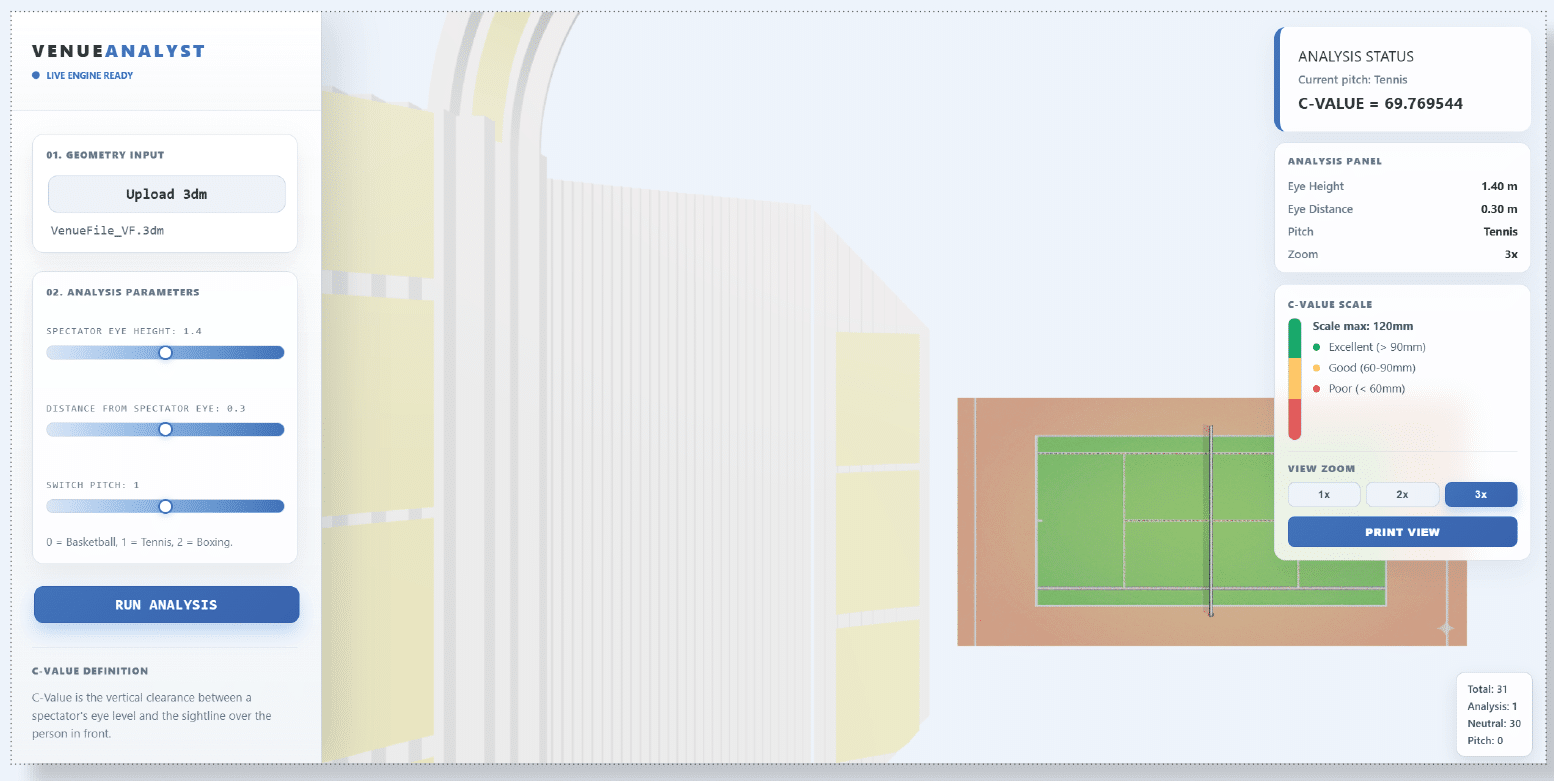
From Jakarta to Data: Automating the Perfect View with VenueAnalyst What started as a design studio project for a floating, flood-resistant stadium in Jakarta quickly evolved into a computational challenge: How do we prove a stadium actually works for the fans? While many architects focus on generating new forms from scratch, the reality of the … Read more

The Heart of the Vertical Machine – A Data-Driven Urban Organism

HB02: The Heart of the Vertical Machine 1. Project Overview 1.1 HB02 within the Vertical Machine In the pursuit of reimagining high-density urban living, our collaborative team developed Hyperbuilding 02 (HB02), also known as “The Heart”. As part of a larger 3-million-square-meter urban organism, HB02 serves as the vital circulatory engine, pumping life, data, and … Read more

The Geometry of Intelligence: How Hyper-building One Turns Geometry into Meta-data

Hyperbuilding One is a data-driven ecosystem that achieves seamless connectivity between Static and Kinetic spaces through an optimized large-scale integrated environment. Architecture is No Longer Static: How Hyper Building One Turns Geometry into Code The traditional architectural blueprint is a corpse. It is a static snapshot of an idea that begins to age the moment … Read more

Hyperbuilding 03 – Program team

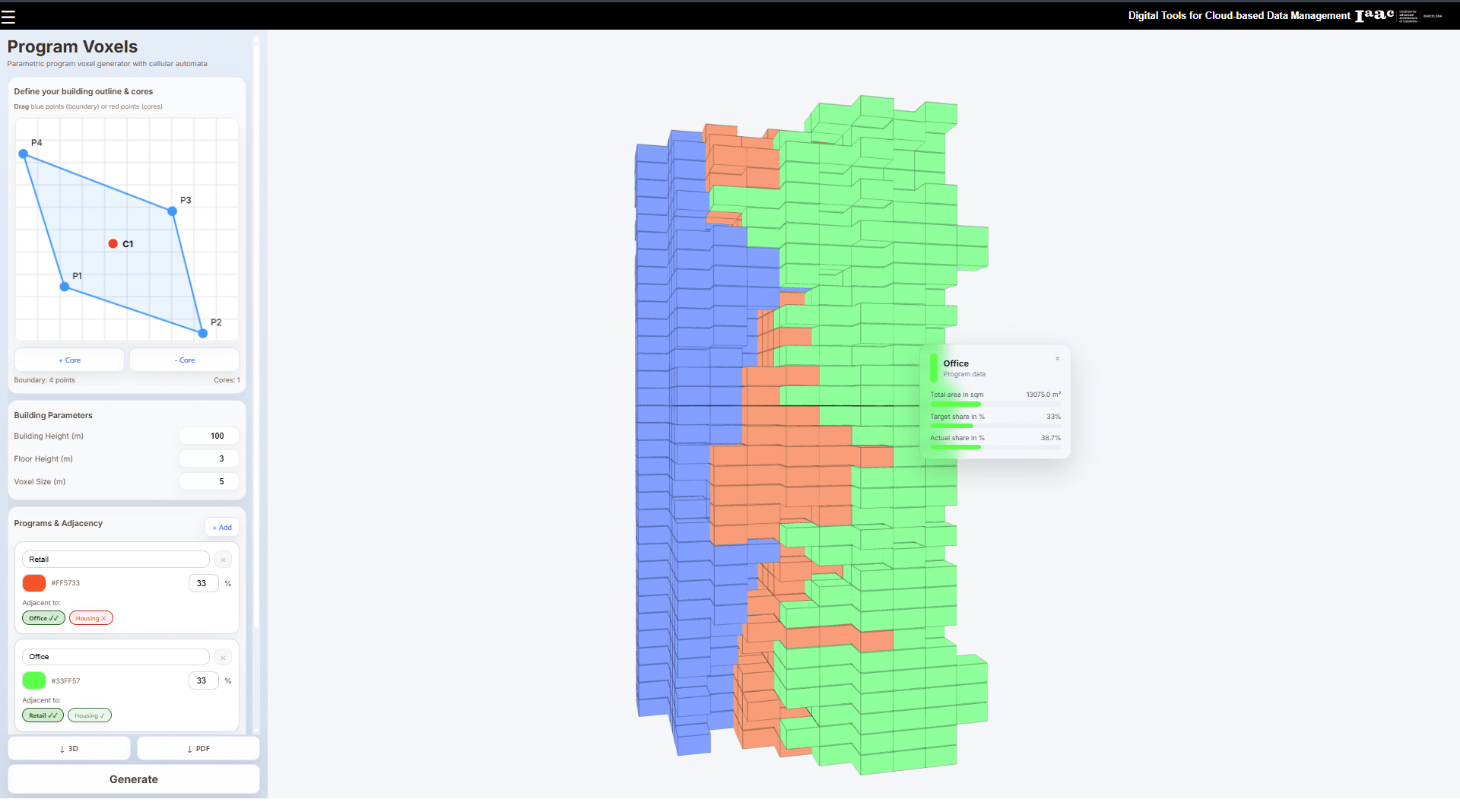
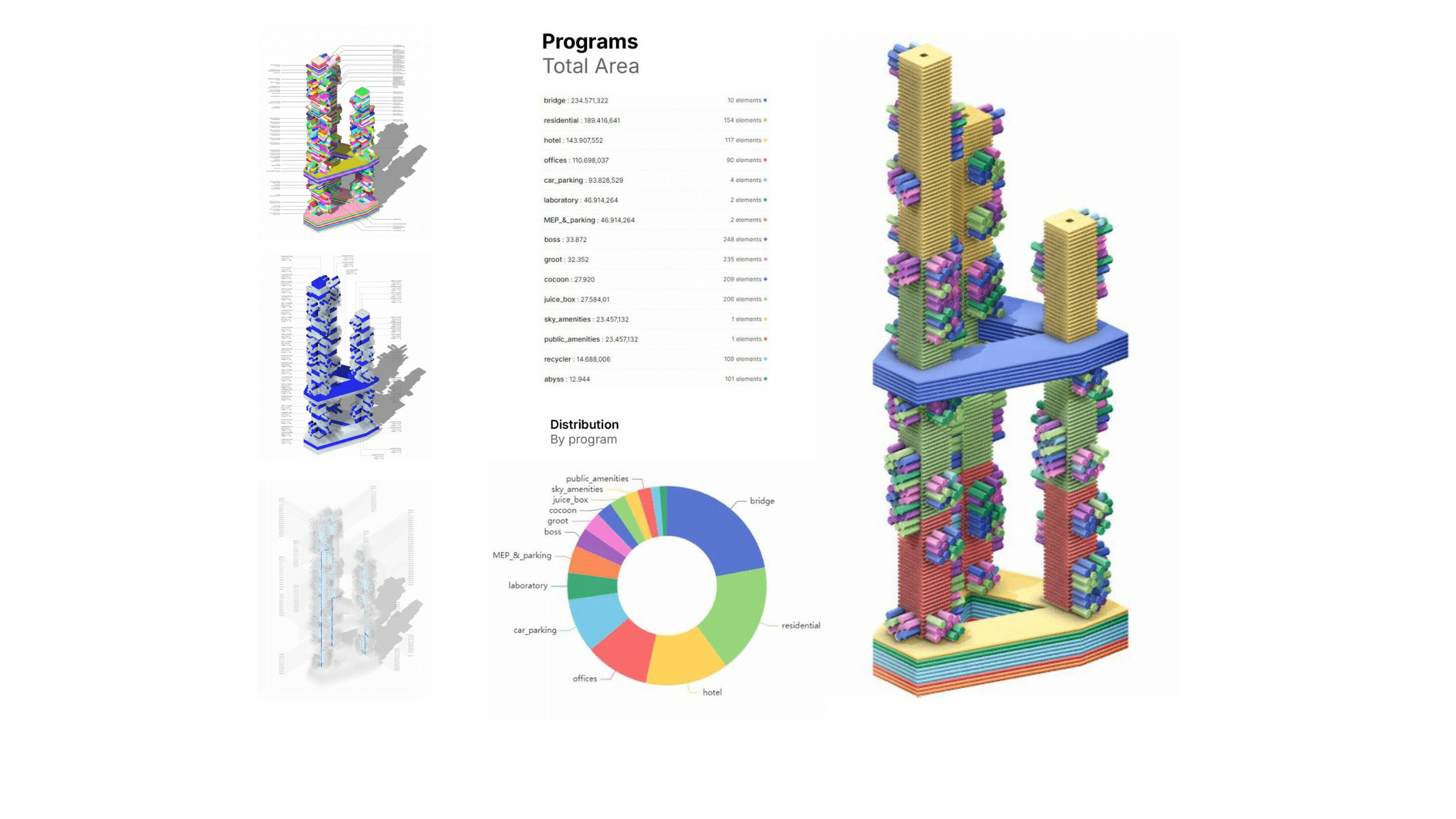
As the program team, we were responsible for defining how space is distributed and used across the building, translating regulations and density targets into a balanced mix of residential, public, and supporting functions. Within the hyperbuilding concept, we design the ‘functional cells’—the spaces where life happens—ensuring they are efficient, adaptable, and well-connected.. A Data-Driven, Human-Centric … Read more

Graph Driven Wall Assembly

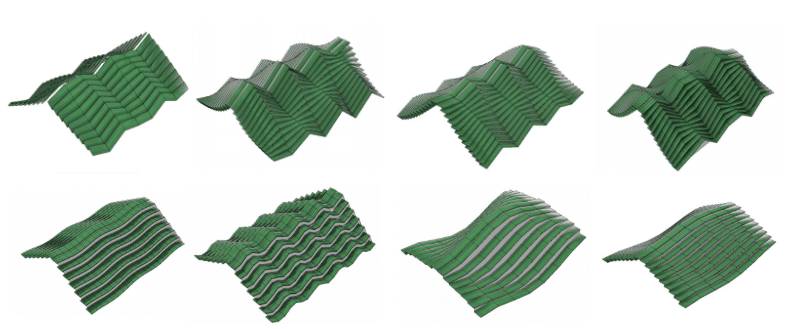
From Parametric Design to Web-Based Configurator: A Computational Design Workflow This project presents the development of a web-based parametric configurator for a graph-driven freeform wall assembly system. The project integrates Rhinoceros 3D, Grasshopper, and Rhino Compute with a Vue.js frontend to create an interactive design tool that allows users to explore, customize, and export fabrication-ready … Read more

COMMERCIAL PRODUCT: Interior Wall Configurator (Web-based)

This project presents a web-based parametric configurator for interior wall panel systems, developed as a stylized and cohesive branded interface connected to a working Grasshopper definition running through Rhino.Compute via Hops. The application includes a project title, a description of the tool, and all required inputs to interact with the Grasshopper logic directly from the … Read more

Digital to Physical: An Interview with Melike Altınışık on Bridging the Geometric Gap

In contemporary architecture, designing a visually stunning, non-standard building envelope is only half the battle. The true test lies in the translation: how do we ensure that the mathematical precision of a parametric model survives the chaotic reality of a construction site? This exact challenge is the driving force behind our ongoing research proposal at … Read more

Breaking the Desktop Barrier: A Real-Time Parametric Pavilion

In the traditional architectural workflow, parametric models are often “trapped” inside heavy desktop software like Rhino and Grasshopper. My latest project, the Parametric Brick Pavilion, aims to bridge this gap by moving high-level structural computation directly into a web-based interface. The Challenge: Accessibility in Complexity Parametric design is a powerful tool for iteration, but it … Read more

Ascend: Democratizing Parametric Staircase Design from Web to CAD

Designing a staircase is one of the most complex spatial and structural challenges in residential architecture. It requires a delicate balance between ergonomic constraints, safety regulations, and aesthetic fluidity. Traditionally, this process is confined to complex CAD software, demanding continuous intervention from the architect even for basic modifications. With Ascend, I set out to challenge … Read more

Project Description — BuildScape

BuildScape is a parametric building generator developed in Grasshopper, adapted from the “Shifted Floors” definition by Parametric House. The project restructures the original script into a modular system and deploys it through Hops, enabling real-time interaction via a web interface. The Grasshopper definition is organized into three computational stages: 1. Solid Generation (Base Geometry + … Read more