The MaCAD is a unique online programme training a new generation of architects, engineers and designers ready to develop skills into the latest softwares, computational tools, BIM technologies and AI towards innovation for the Architecture, Engineering and Construction (AEC) industry.

Filters
Course

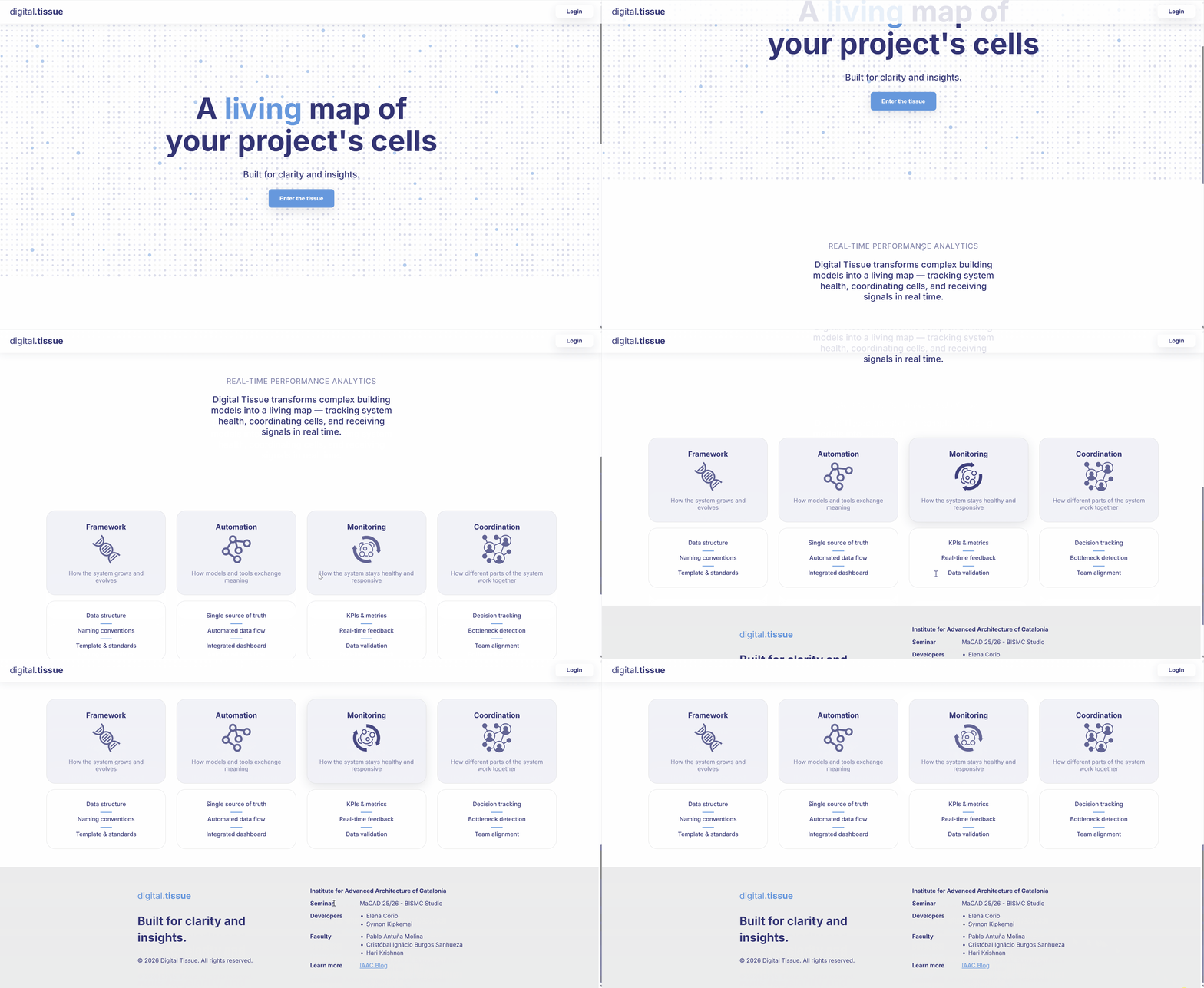
Digital Tissue: A Living Map of the Hyperbuilding Cells

Preliminary Study: Demography as Design Driver In Hyperbuilding 3, our focus was to understand how demographic data can actively inform architectural decisions. We started by analysing the Chilean census portal, which provides detailed information for the entire metropolitan region and specifically for the Providencia district. From this dataset, we looked at age distribution, household composition, … Read more

Ascend: Democratizing Parametric Staircase Design from Web to CAD

Designing a staircase is one of the most complex spatial and structural challenges in residential architecture. It requires a delicate balance between ergonomic constraints, safety regulations, and aesthetic fluidity. Traditionally, this process is confined to complex CAD software, demanding continuous intervention from the architect even for basic modifications. With Ascend, I set out to challenge … Read more

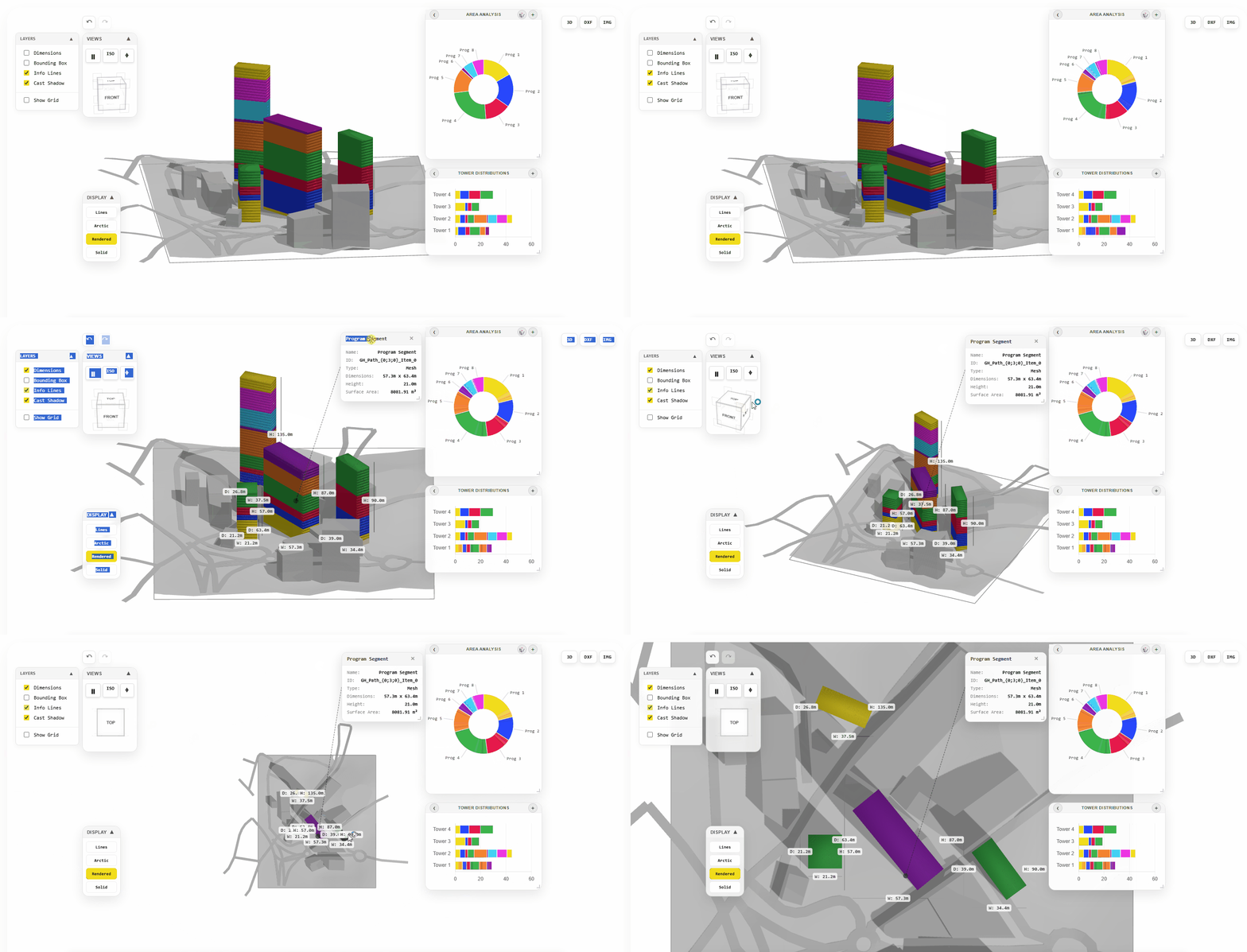
Hyper Builder: Vertical Community Generator

Hyperbuilder is a web-based parametric design app that transforms complex architectural modeling into a seamless, rapid-iteration process. Powered by a Grasshopper backend, it allows users to effortlessly generate, evaluate, and configure complex building massings and program distributions through a highly intuitive, simple interface. The Vision: Vertical Communities, Quantified The architectural industry is obsessed with “final” … Read more

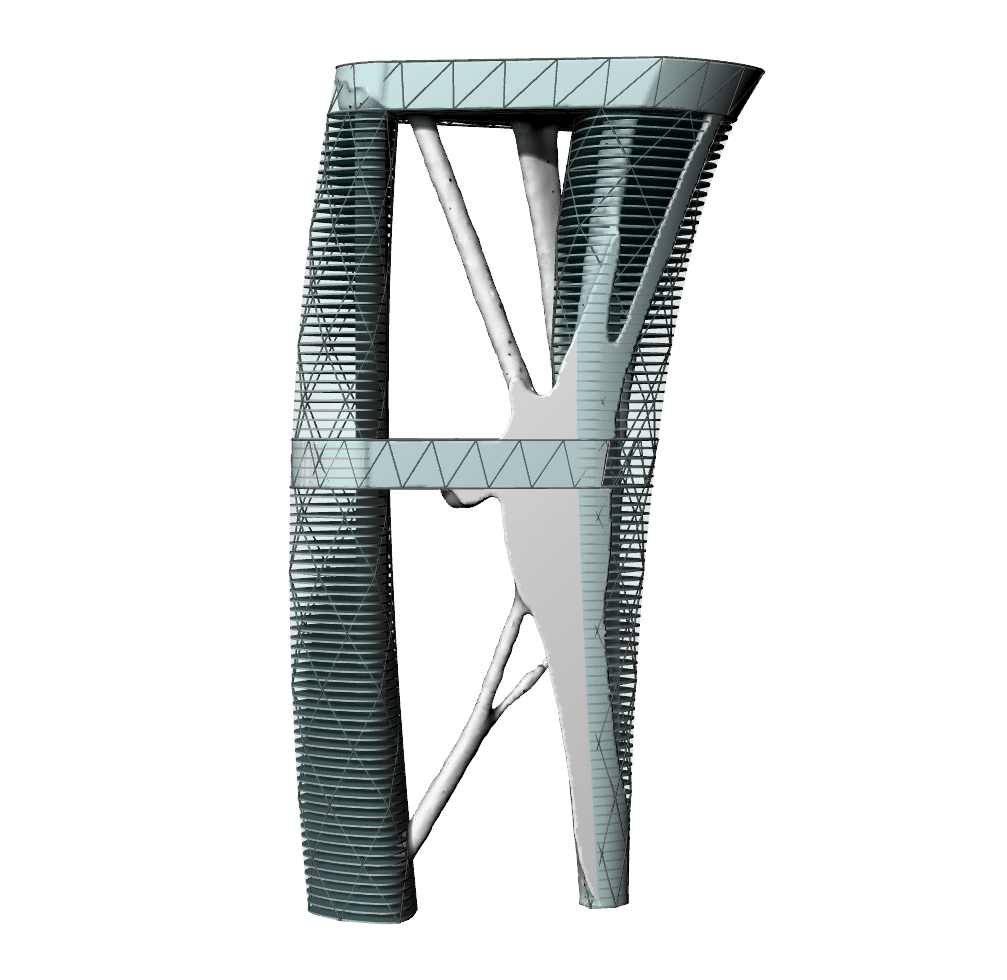
Architecture as Living Matter: Turning Data into Geometry

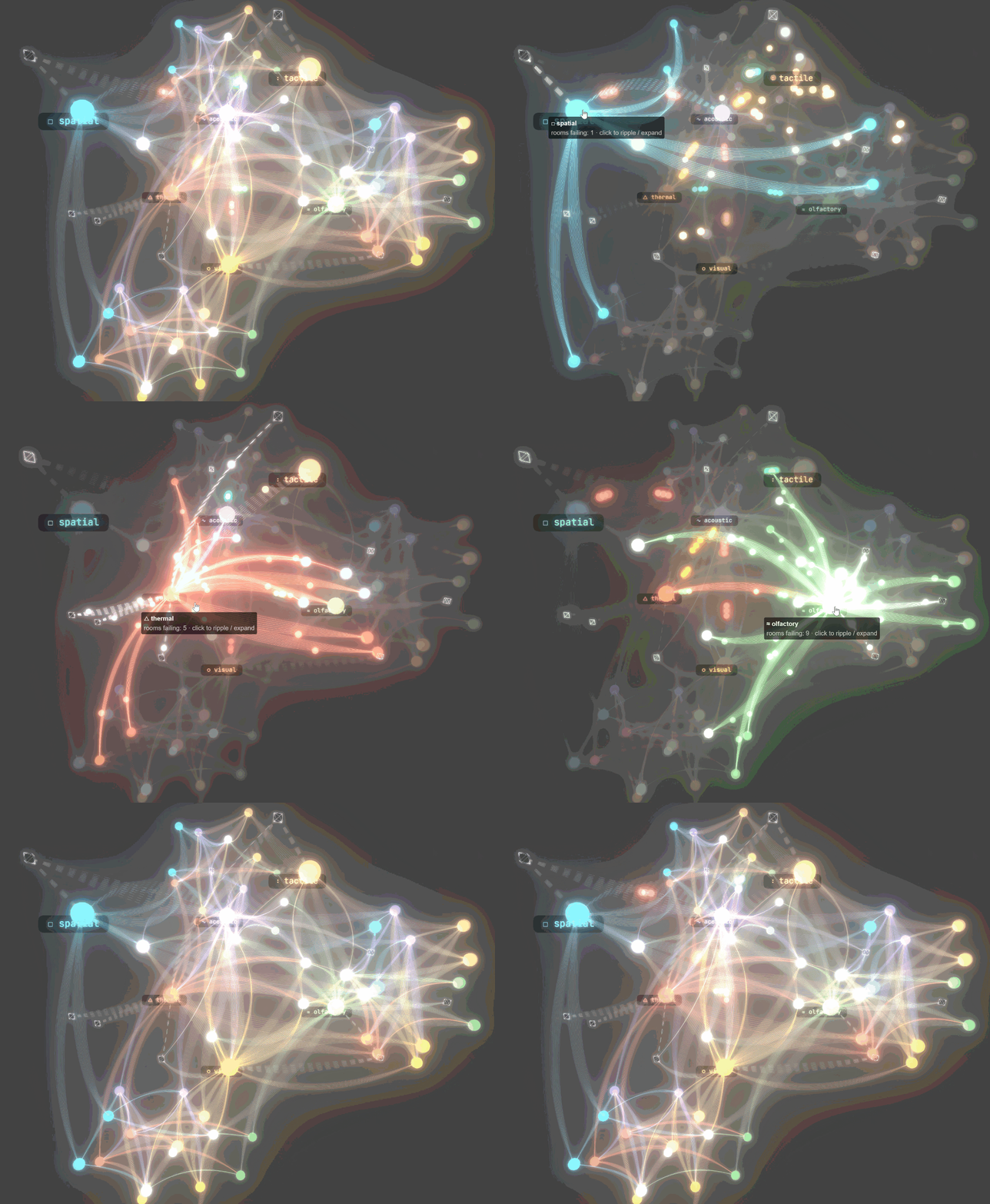
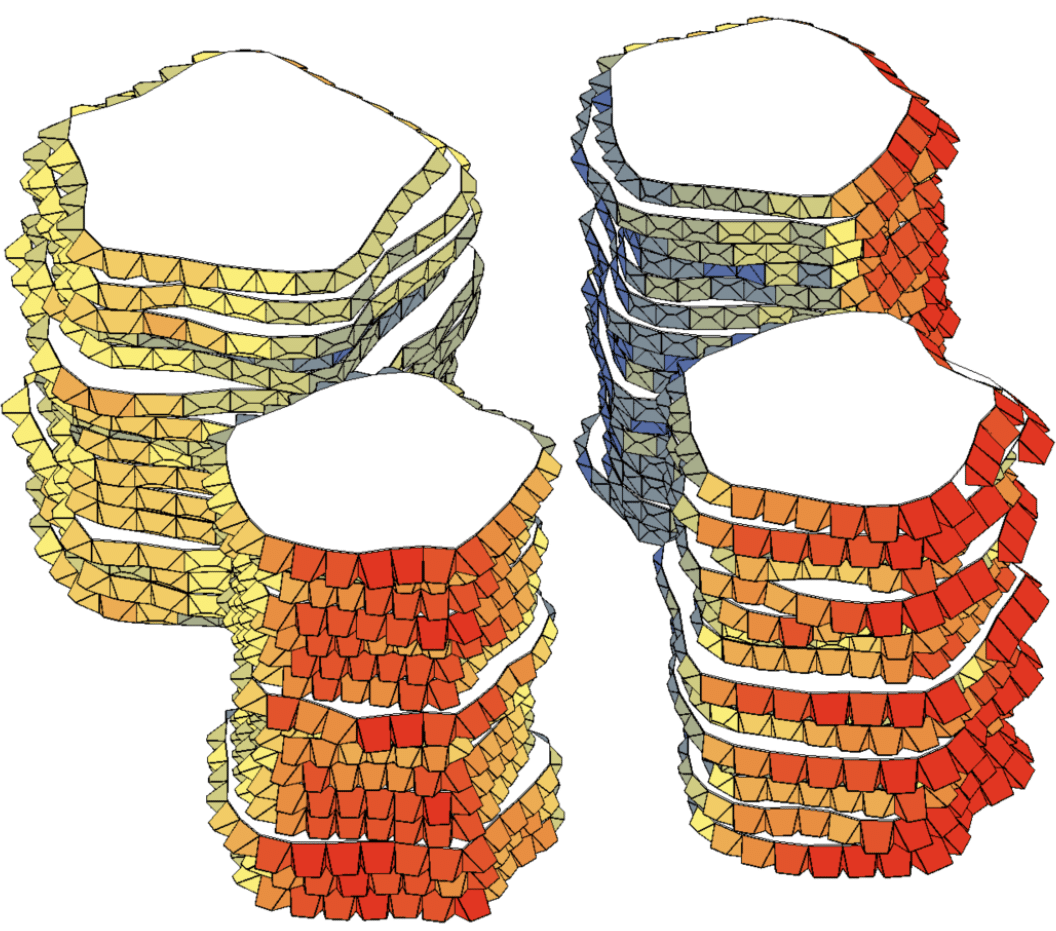
Introduction Hyperbuilding 03 In our project, the building is conceived not as an isolated object, but as a vertical living tissue within the broader human organism of the “Vertical Machine”. Much like a network of functional cells, it sustains life, maintains environmental balance, and coordinates with the system’s “lungs” and “heart.” This biological metaphor guided … Read more

Automated workflow to extract KPIs from versioned models in Speckle

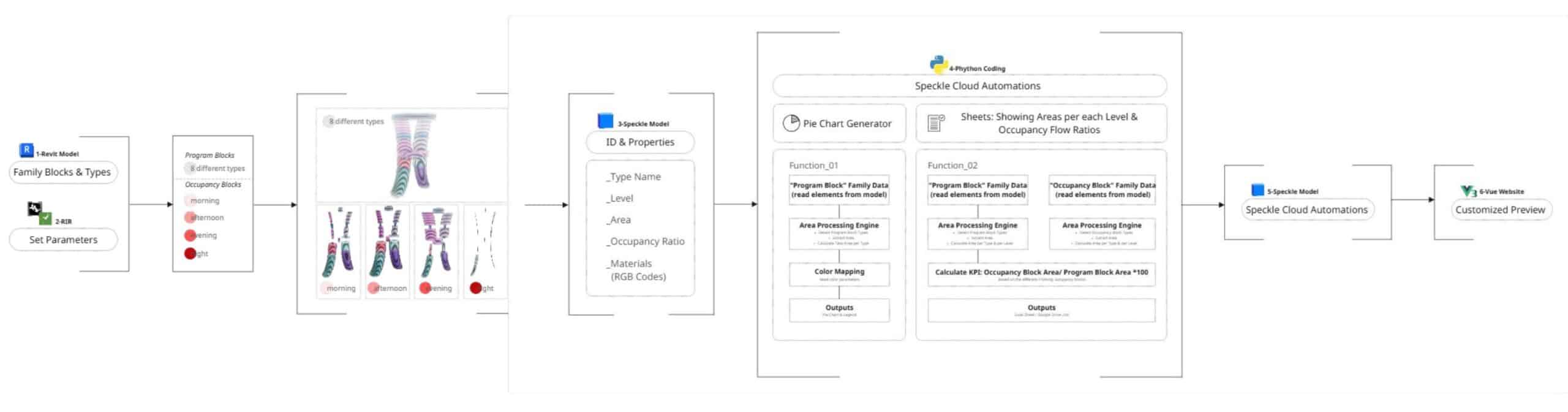
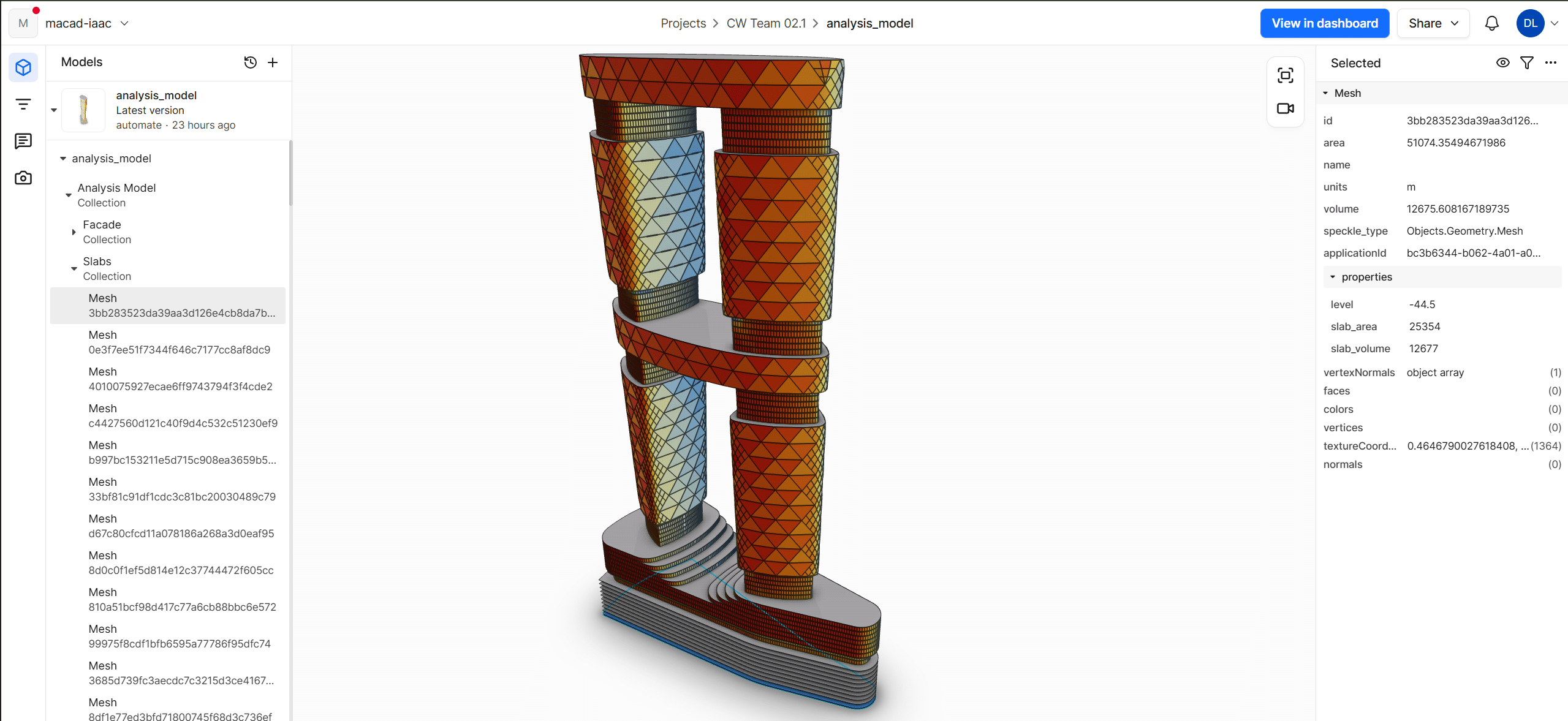
Automated Workflow for KPI Extraction from Versioned Models in Speckle Why KPI Tracking Breaks Down During Iterative Design In the current studio workflow, KPI extraction and performance evaluation depend on repeated manual operations across design iterations. This slows down feedback, introduces version mismatch risks, and disconnects analytical outputs from the model itself. This tool was … Read more

FluxFaçade

Our project is Flux Façade, a collaborative workflow for data-driven parametric façade design.The project was developed by Team 3.2 as part of the Collaborative Workflow Seminar in the Master in Advanced Computation for Architecture. Flux Façade focuses on improving how environmental analysis and façade geometry interact within the design workflow. Problem Statement In large architectural … Read more

Parametric Engineering: Collaborate with Structural Data on the Cloud

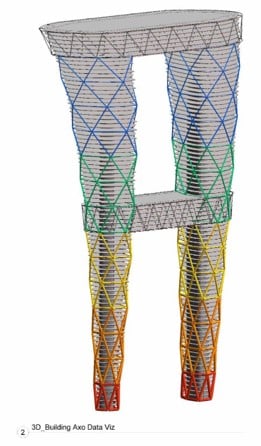
Topic brief In the AEC industry, building analysis workflows often operate in isolated software environments, causing structural data to lose meaning once it leaves its original authoring tool. This study argues that the value of structural analysis depends not only on computational accuracy, but on the ability of its outputs to remain consistent as they … Read more

Optimizing For The Mind: Integrating Generative AI and Game Engines into BIM

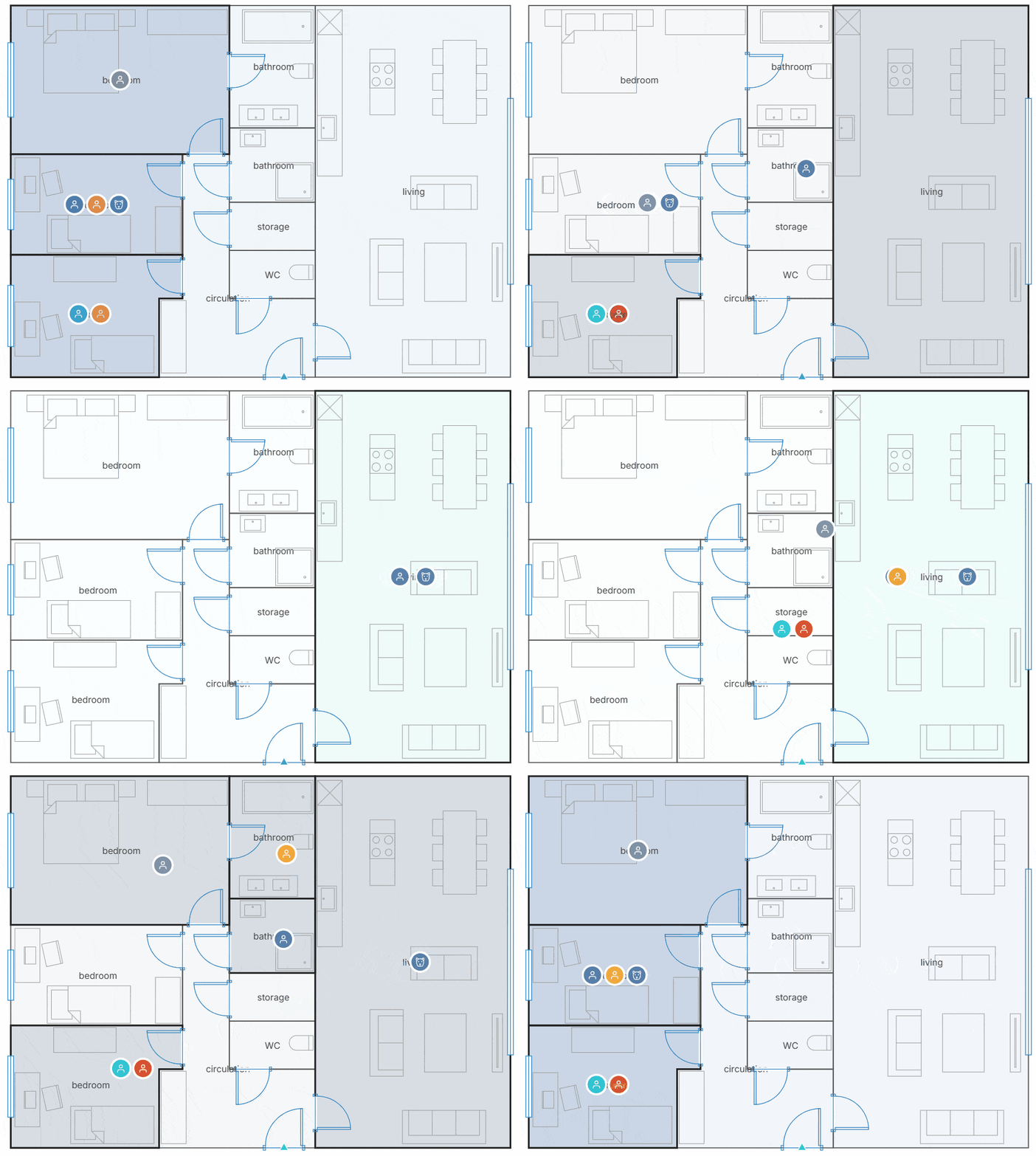
How architectural neuroimmunology is redefining the relationship between design and human health. The AEC industry optimizes for physical efficiency but neglects the neuro-physiological impact of built environments. This research investigates how Generative AI and Game Engine simulations, integrated into BIM workflows, can enable predictive cognitive performance analysis, transitioning the discipline from Building Information Modeling to … Read more

BIM in Ongoing Heritage Construction: The case of the Sagrada Família

Computational Workflows at the Sagrada Família The Sagrada Família in Barcelona is one of the most complex and long-running architectural projects in the world. Begun in 1882 and still under construction today, the basilica sits at the intersection of historical heritage, evolving design intent, and contemporary digital technology. To understand how digital tools support such … Read more

MERIHAUS – Sea Urban Escapes for Seasonal Living

The project explores a contemporary reinterpretation of Finnish cabins, combining seasonal water living, public wellness, and boating storage. The core idea is that small modular units — cabins, saunas and workspaces — can aggregate into larger urban and social systems. Helsinki has a harsh Nordic climate, with long winters ranging from –10°C to +25°C, high … Read more

Tectonic Hub: Climate-Adaptive Recipe for Cultural Hubs in Reykjavik

Ingredients Climate Reykjavík’s climate shapes the entire project. The site is exposed to strong, multi-directional winds reaching 27 m/s, with a prevailing direction around 135°. Daylight conditions are equally extreme, shifting from long summer days to very short winter ones. The system therefore needs to adapt, protect, and still create comfortable public spaces. Form Our formal … Read more