The Master Programme in Robotics and Advanced Construction is an innovative educational format that offers interdisciplinary skills and understanding through a series of class seminars that are put into practice through hands-on workshops. IAAC gives students the opportunity to create individual studio agendas and develop Pilot Thesis Projects based on the knowledge acquired during the seminars and workshops split into 3 Modules. In this way, IAAC puts together an experimental learning environment for the training of professionals with both theoretical and practical responses to the increasing complexity of the construction sector.

Filters
Course

Workshop 3.1_Human-Robot Collaboration (HRC) in metal fabrication

Introduction This workshop explores new modes of architectural production through active collaboration between humans and robots, shifting away from traditional models of automation toward hybrid systems of shared decision-making. Rather than understanding the robot as a fully autonomous tool, it is framed as an agent that cooperates with the human in real time, creating a … Read more

NEURON – Workshop 3.1

HRC

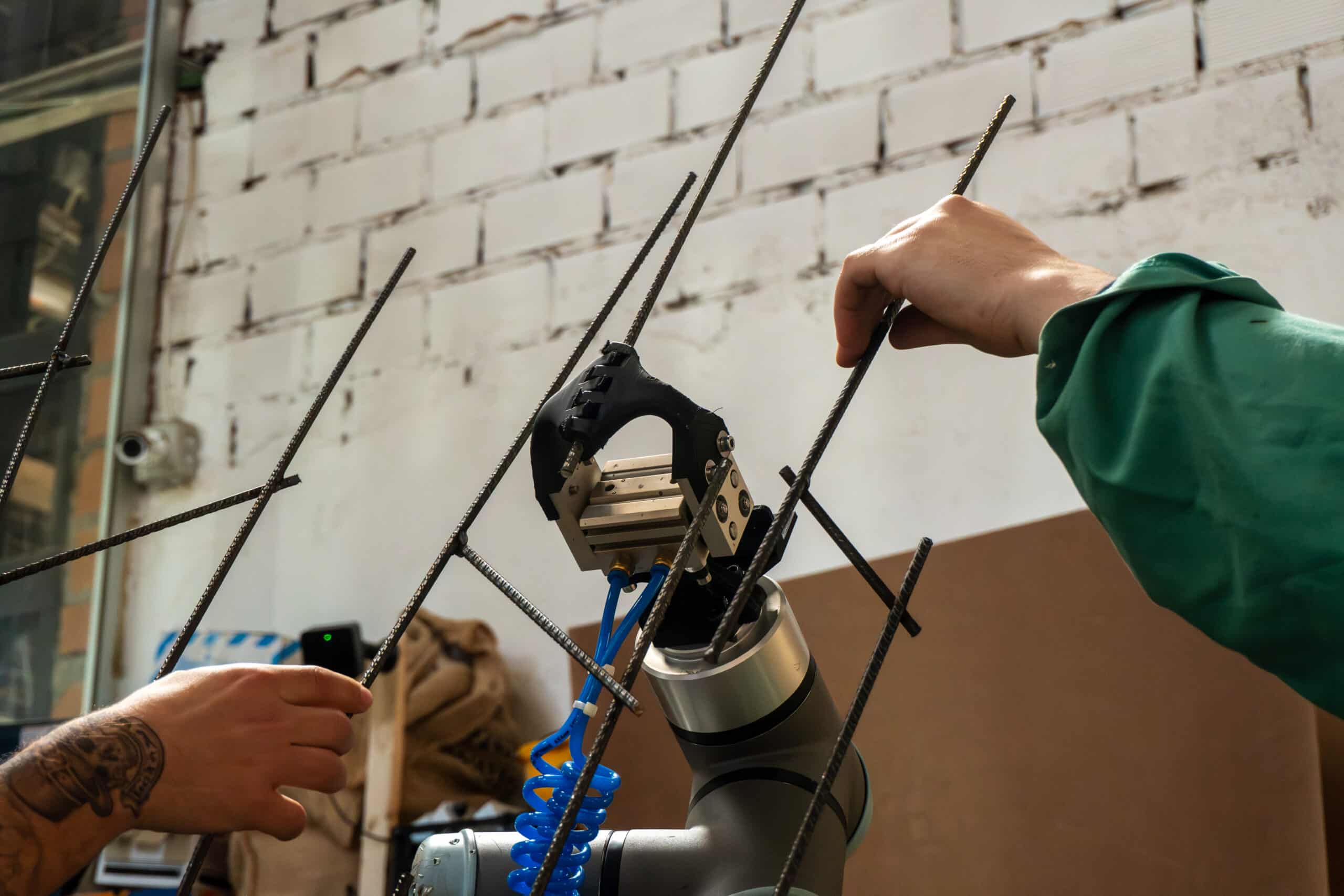
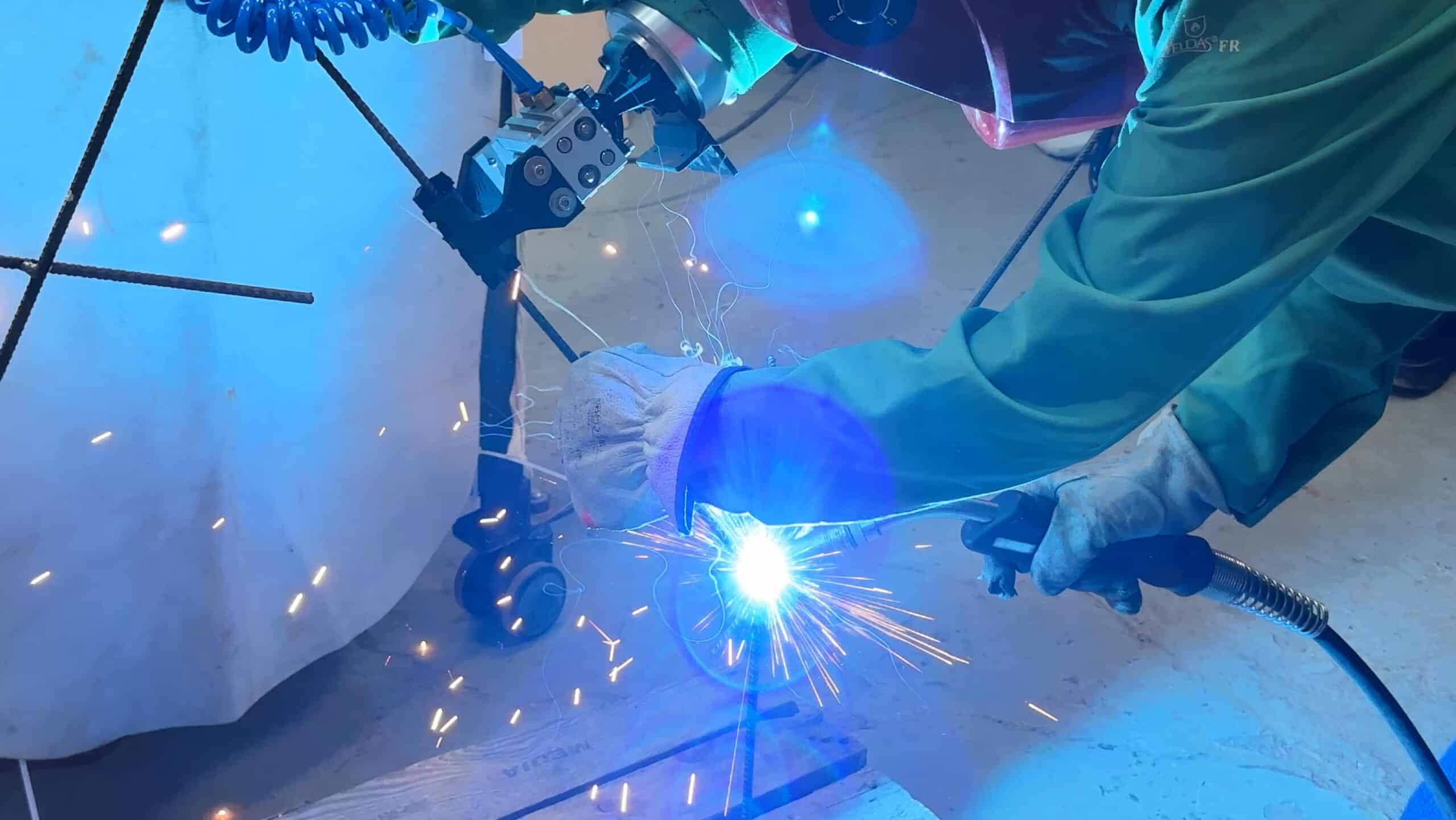
Neuron is a project developed during the IAAC MRAC 3.1 Welding Workshop that explores human–robot collaboration in the assembly of space-frame structures. The project focuses on the interaction between a Universal Robots UR10e robotic arm and a human welder, working together to assemble pre-cut steel bars through a continuous exchange between robotic precision and human … Read more

The Illusion of Life: A conversation with Madeline Gannon

Rethinking Robotics Through Experience Reflections on a lecture by Madeline Gannon Introduction “Somehow, someway, I have built a career out of misusing technology.” Madeline Gannon has spent over a decade working at the intersection of industrial robotics, art, and human interaction. This text presents a thematic synthesis of her lecture for the MRAC, followed by … Read more

Terraweave

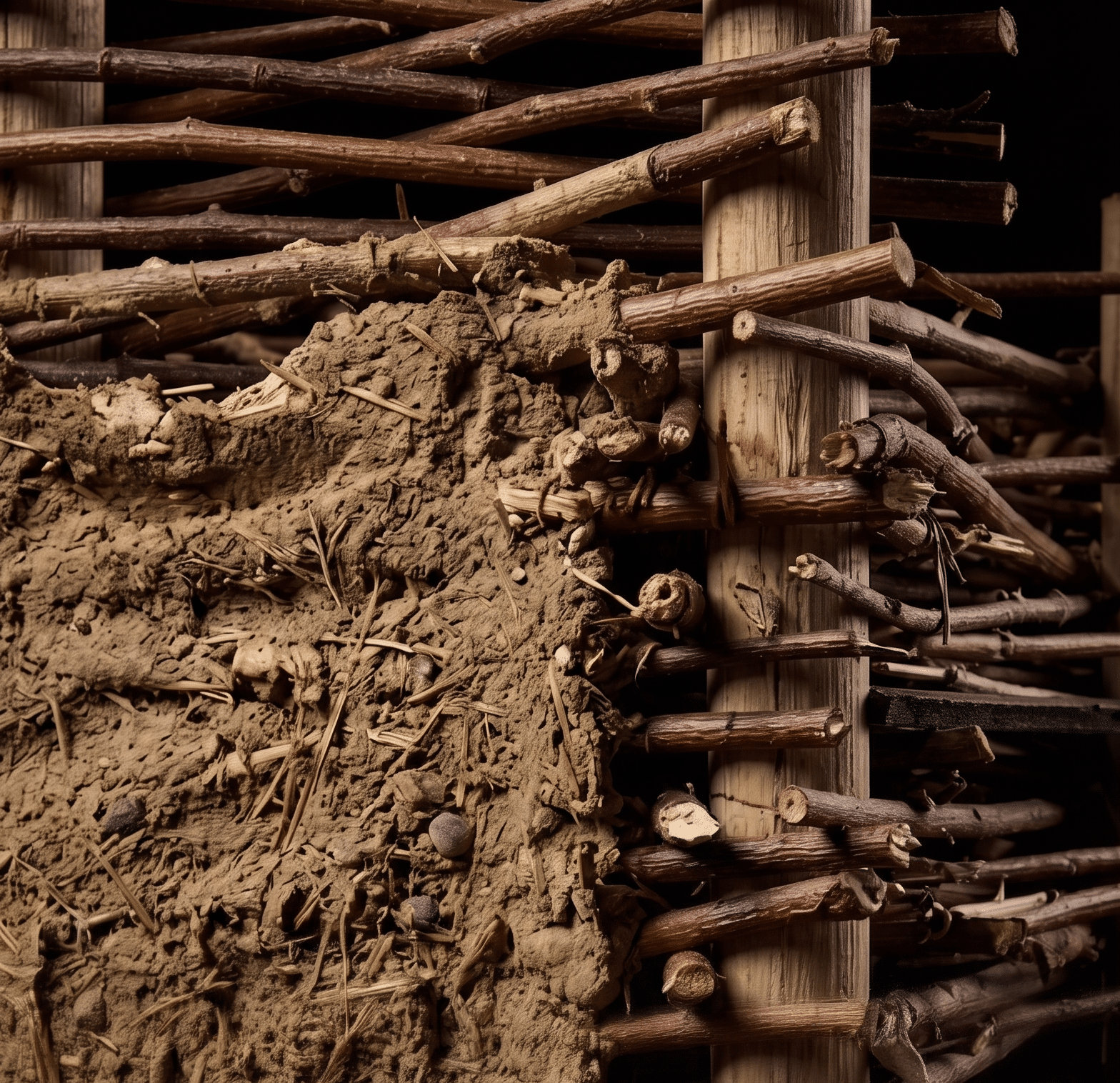
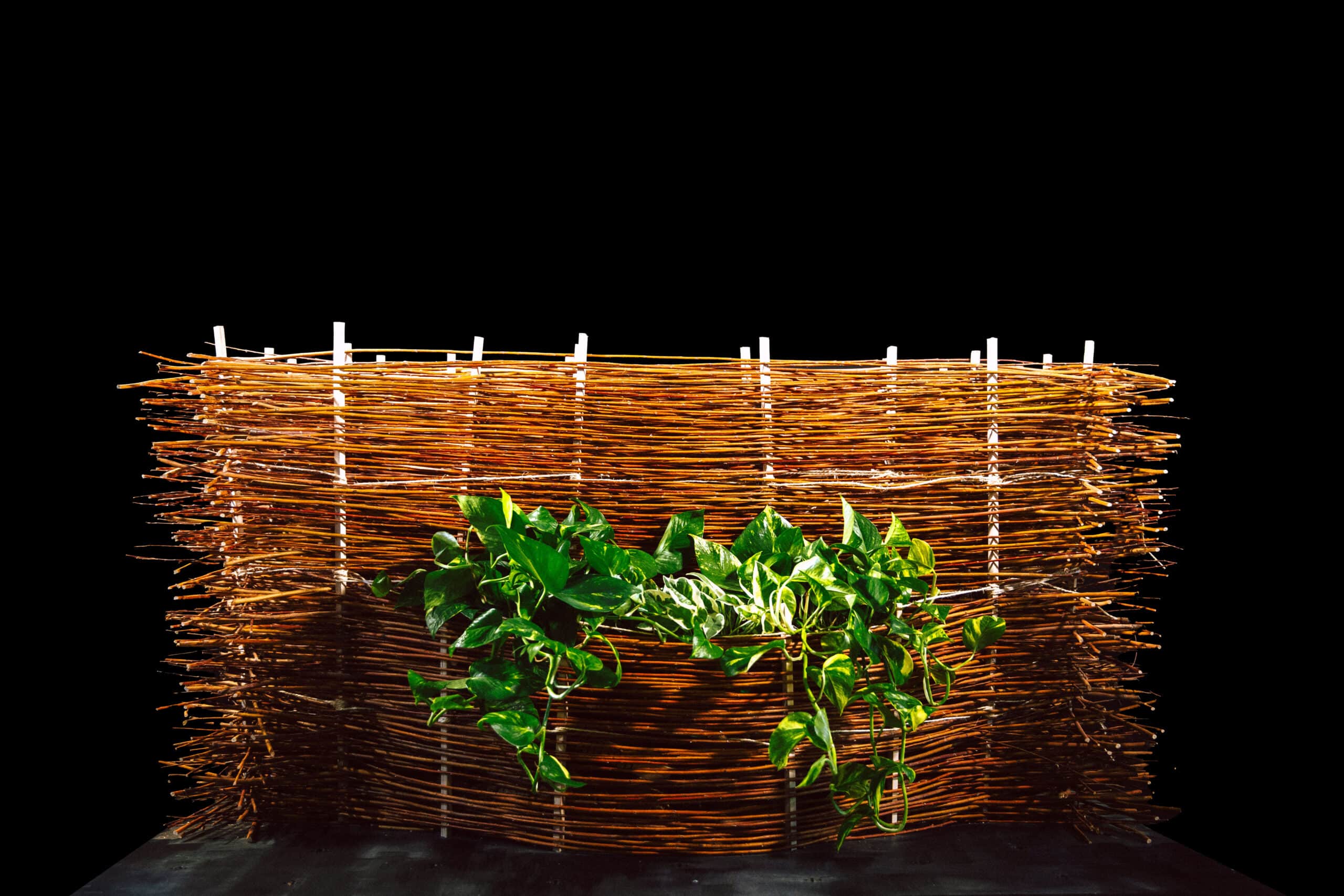
Crafting performative structures through robotic earth injection in dynamic fiber scaffolds Terraweave is an architectural research project that explores how robotic additive manufacturing can enhance the performance of natural building materials. Conducted as part of the Master in Robotics and Advanced Construction at IAAC, the project investigates the integration of willow scaffolds and earth injection … Read more

WORKSHOP 3.2 _ REFLECTION

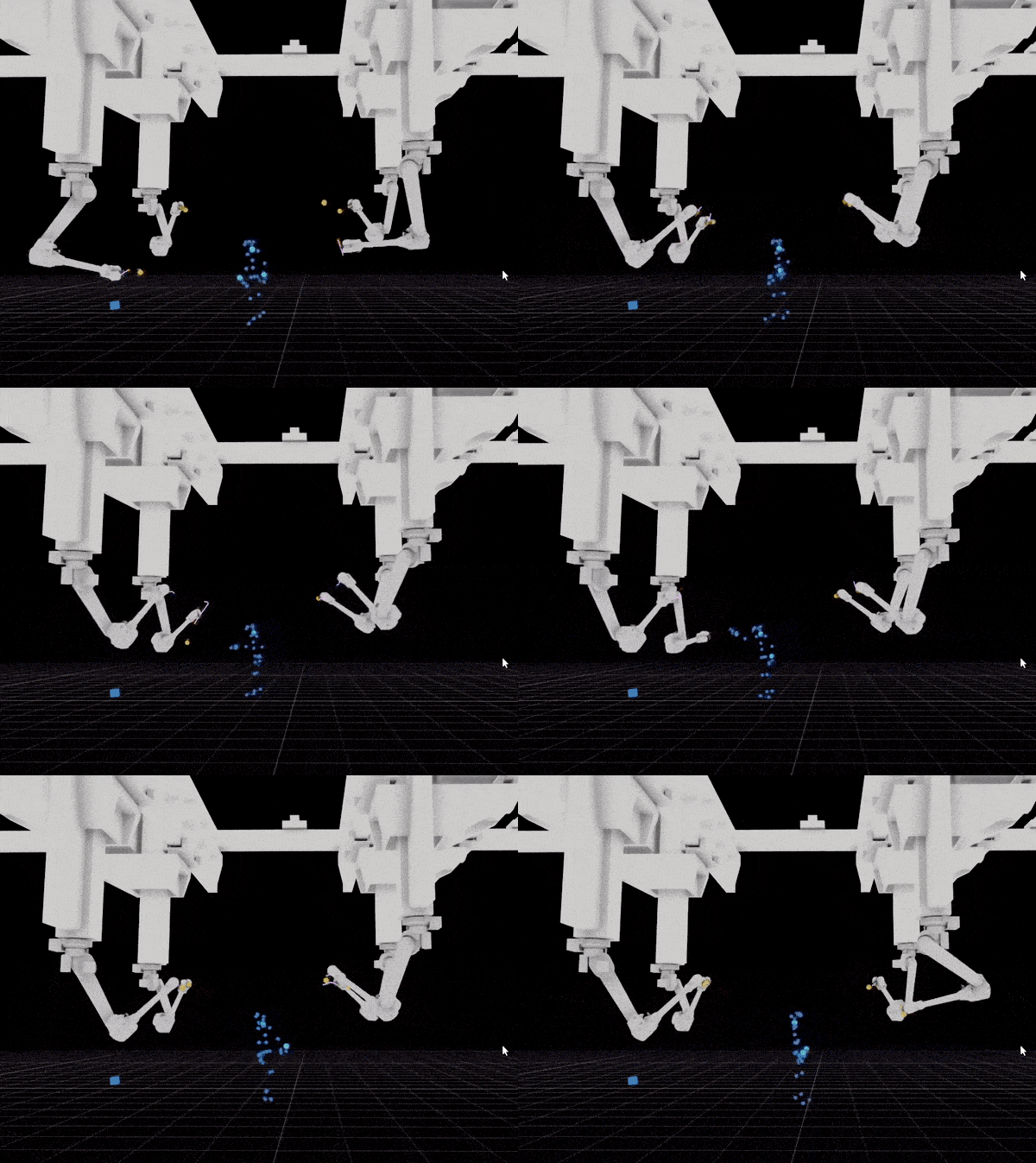
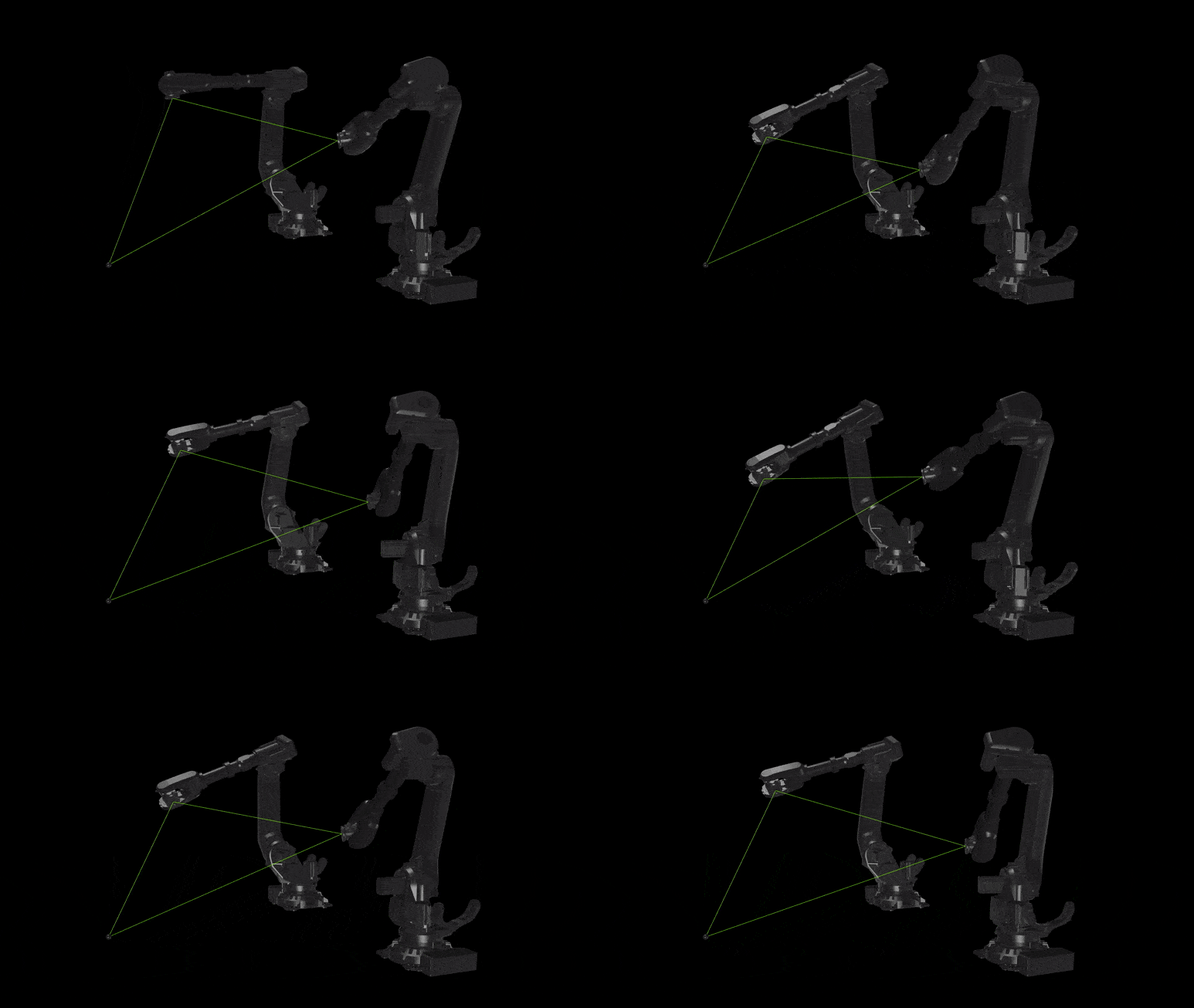
“Precision becomes poetry through reflection and sound.” Reflection is an immersive installation that explores the potential of precision and reflection between two robotic arms through synchronized movements. Equipped with mirrors, the robots become both instruments and performers. Concept: The law of reflection The law of reflection states that the angle of incidence is equal to … Read more

Applied Theory III _ Un_Log Factory

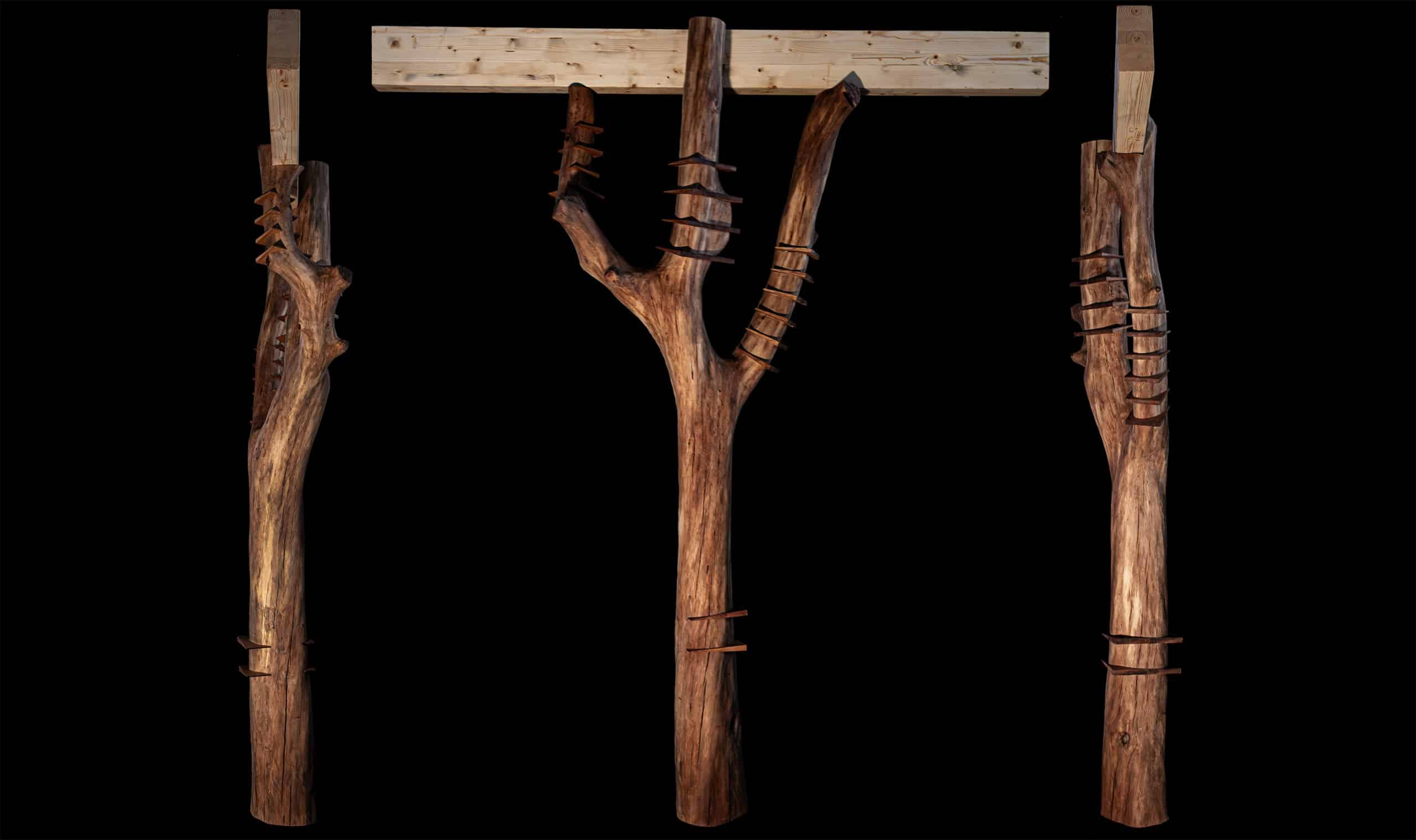
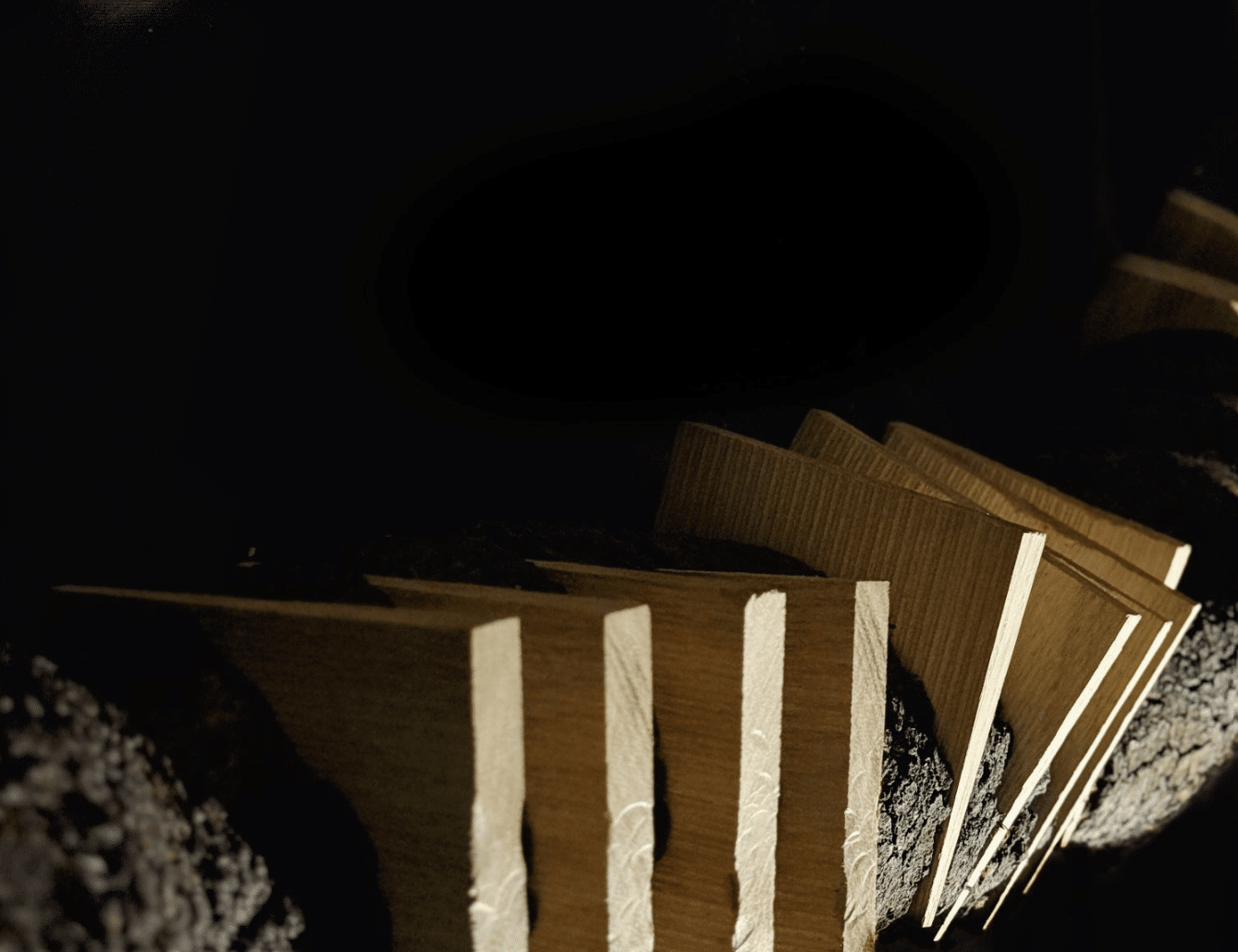
INTRODUCTION In today’s construction industry, a large portion of timber is discarded due to its non-standard shape, curvature, or internal defects. Un_Log Factory challenges this paradigm by proposing a digitally augmented fabrication system that embraces the natural irregularity of timber. Instead of seeing bent or cracked logs as waste, our process redefines them as raw … Read more

Interlock Tower

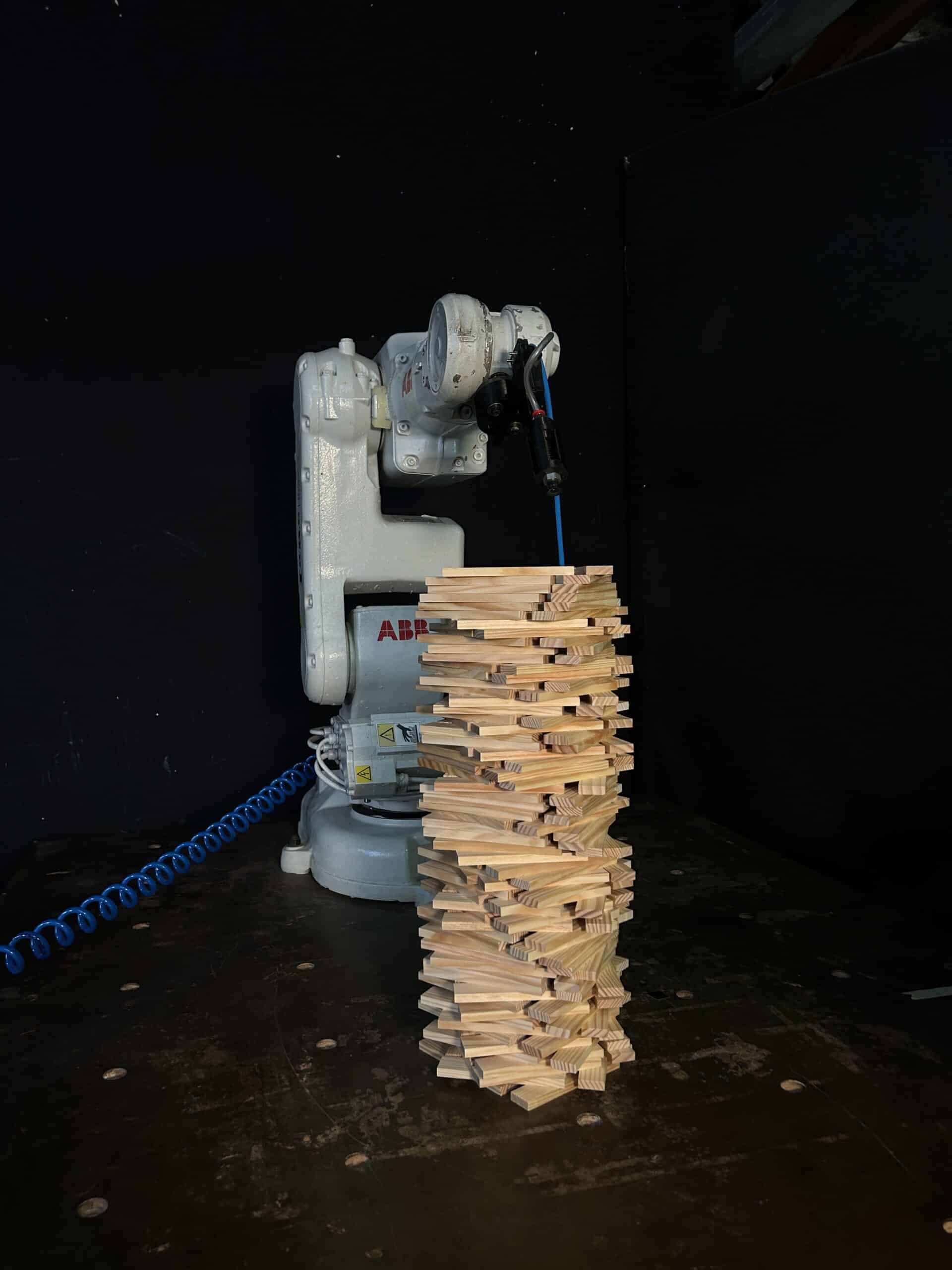
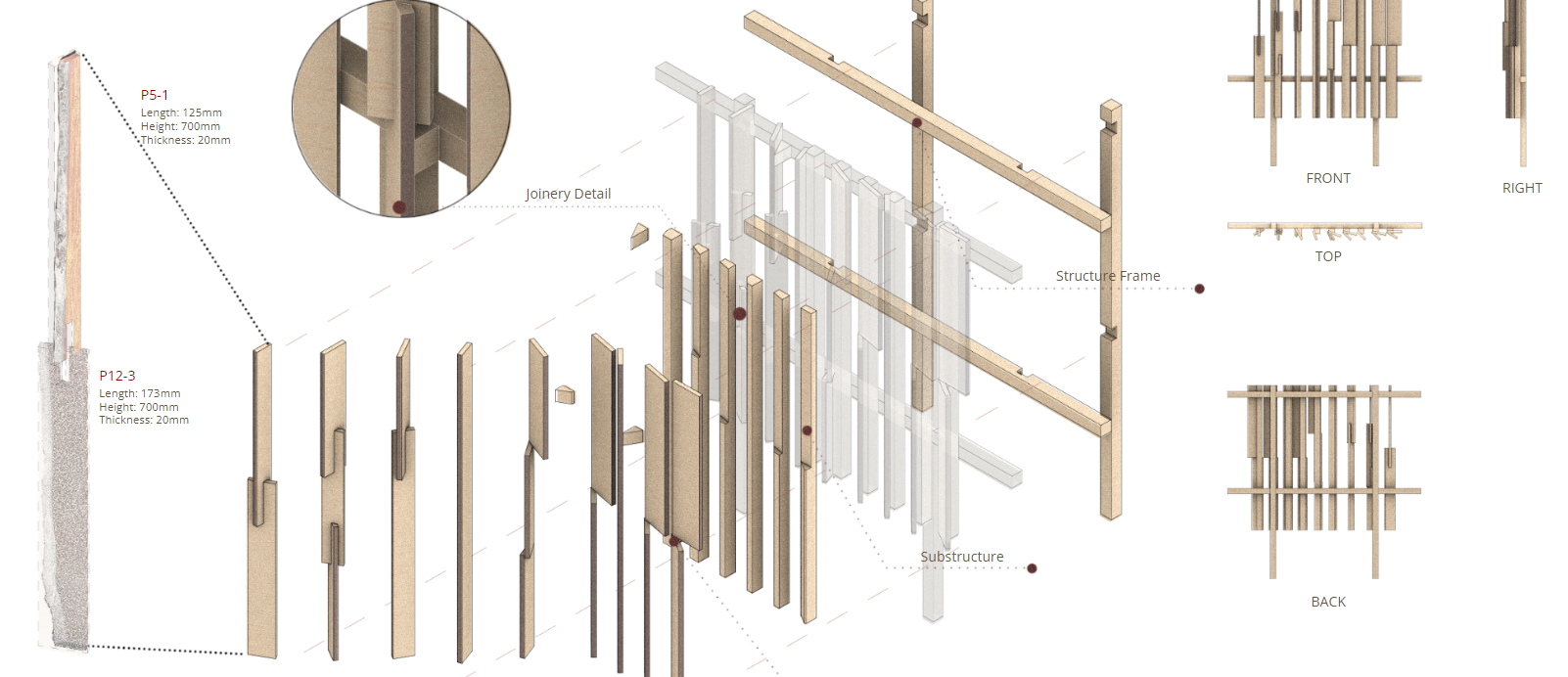
Rethinking Towe Typology with AI: This project explores the redesign of contemporary tower structures using machine learning (ML), challenging the repetitive, profit-driven design seen in cities like Hong Kong. The goal is to discover new typologies through AI and stacking rules, and tren translate them to a robotic fabrication system (pick and place). AI-generated towers … Read more

Workshop 3.1_KAPLA-Nest

| INTRODUCTION | Learning Structures: From Parametric Rules to Machine-Made Forms. In this project, we explored the interplay between parametric design, machine learning, and robotic fabrication. Starting from Kapla block assemblies controlled by simple deformation rules, we trained a GAN to reinterpret and generate new structural variations. The process concluded with robotic pick-and-place construction, closing … Read more

Software III _ UN_LOG FACTORY

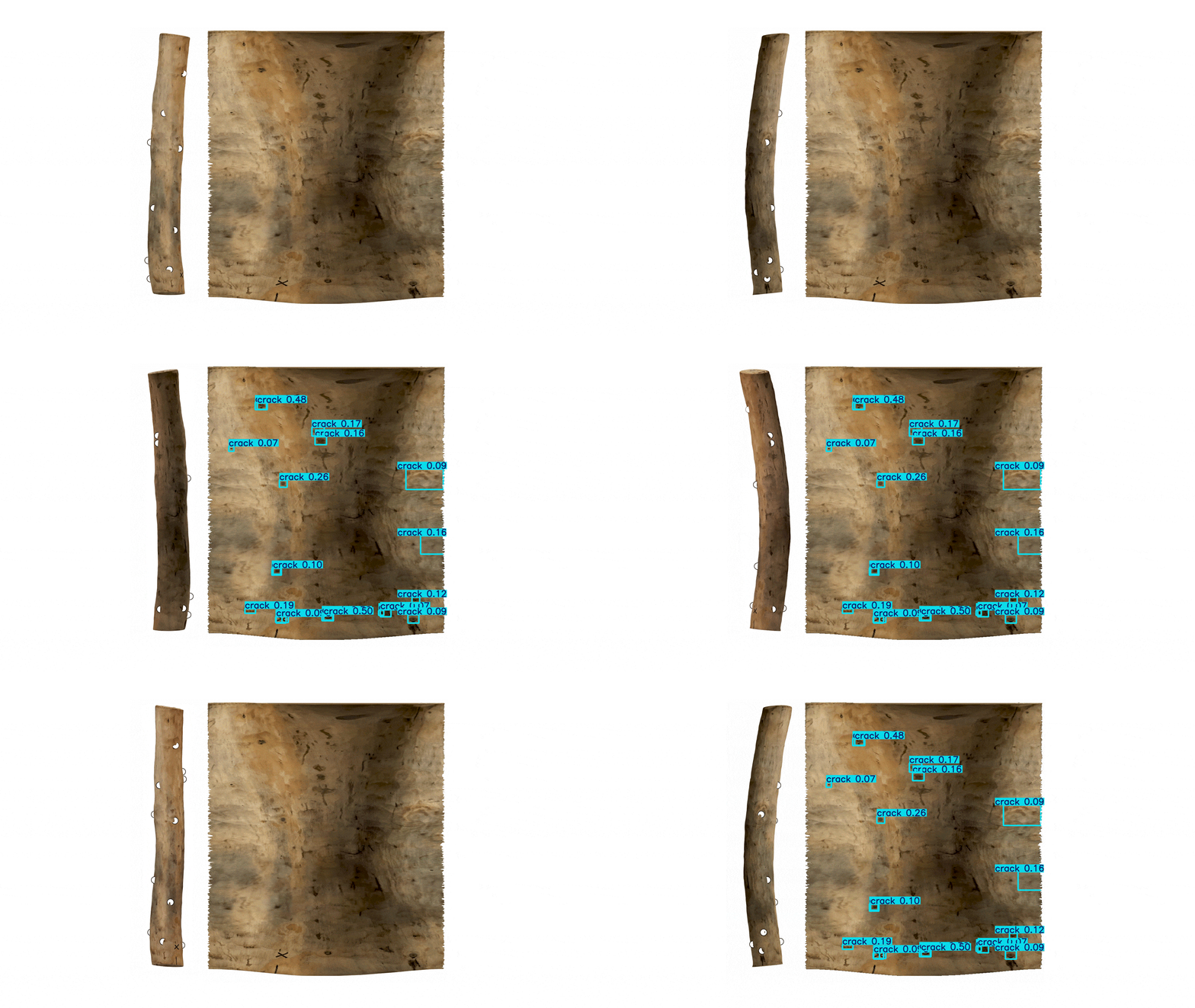
Github : https://github.com/Clarrainl/UN_LOG-Factory | INTRODUCTION | Detecting wood defects in 3D-scanned logs using Machine Learning In the timber industry, a significant portion of wood gets discarded due to irregularities or defects that make it unusable under standard practices. However, many of these logs can still be used creatively or structurally if properly understood and classified. This project … Read more

ReWeave_3.0

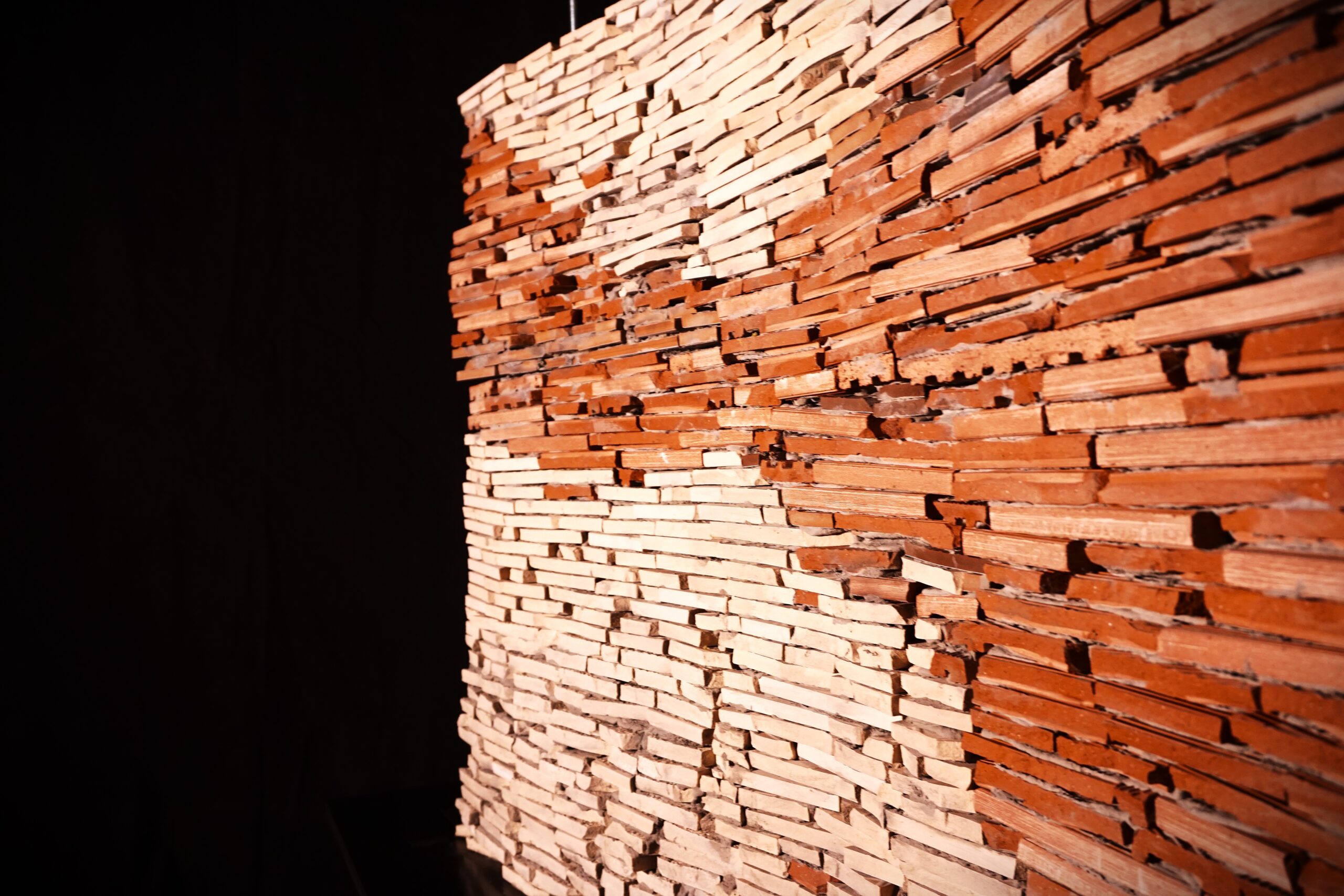
Abstract: The ReWeave project develops a robotic system to repurpose construction and demolition (C&D) waste into functional, attractive walls, enhancing human-robot collaboration. We created a database by scanning broken tiles to extract shape, size, and color information, then developed custom nesting algorithms to optimize tile arrangement. The workflow includes scanning tiles, exporting outlines via ROS, … Read more

RELIVING

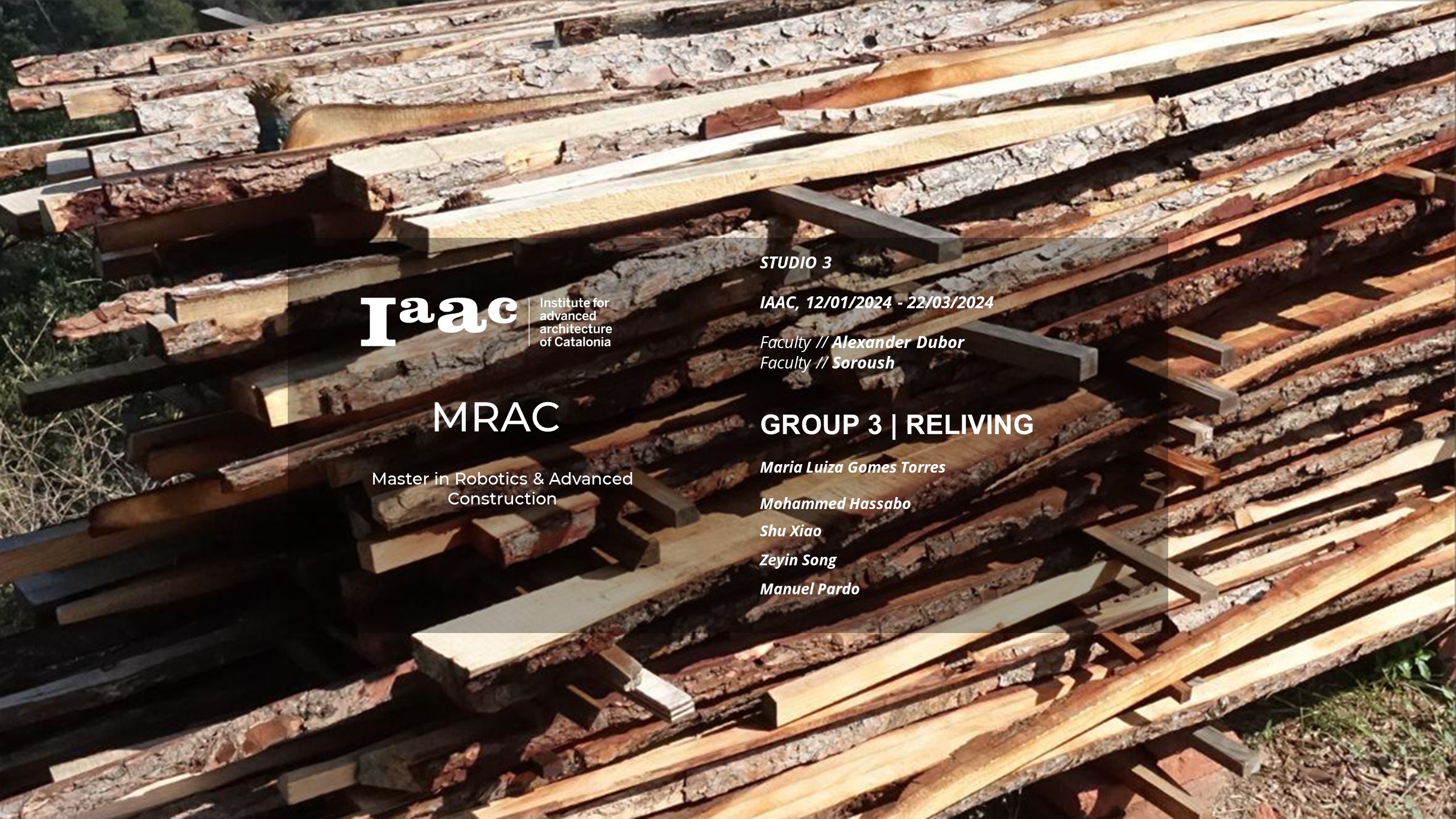
State of the Art and Minimum Value Proposition There is an overstocking of small to medium trees over Europe due to poor firing and soil cultivation conditions, most of this trees have the diameter of 10-25 cm and depending on the species and cultivation conditions some of then are crooked and can’t be used by … Read more

Robot of Babel

नमस्ते – مرحبًا – OLÁ – HOLÁ AIM Our aim is to make Human Robot Collaboration accessible to a variety of users via different languages by developing  a speech to toolpath interface. RELEVANCE METHOD Workflow As the participant enters the room, they are greeted by a robot with a friendly waving motion. The participant can … Read more

Hey Jarvis, let’s Collaborate!

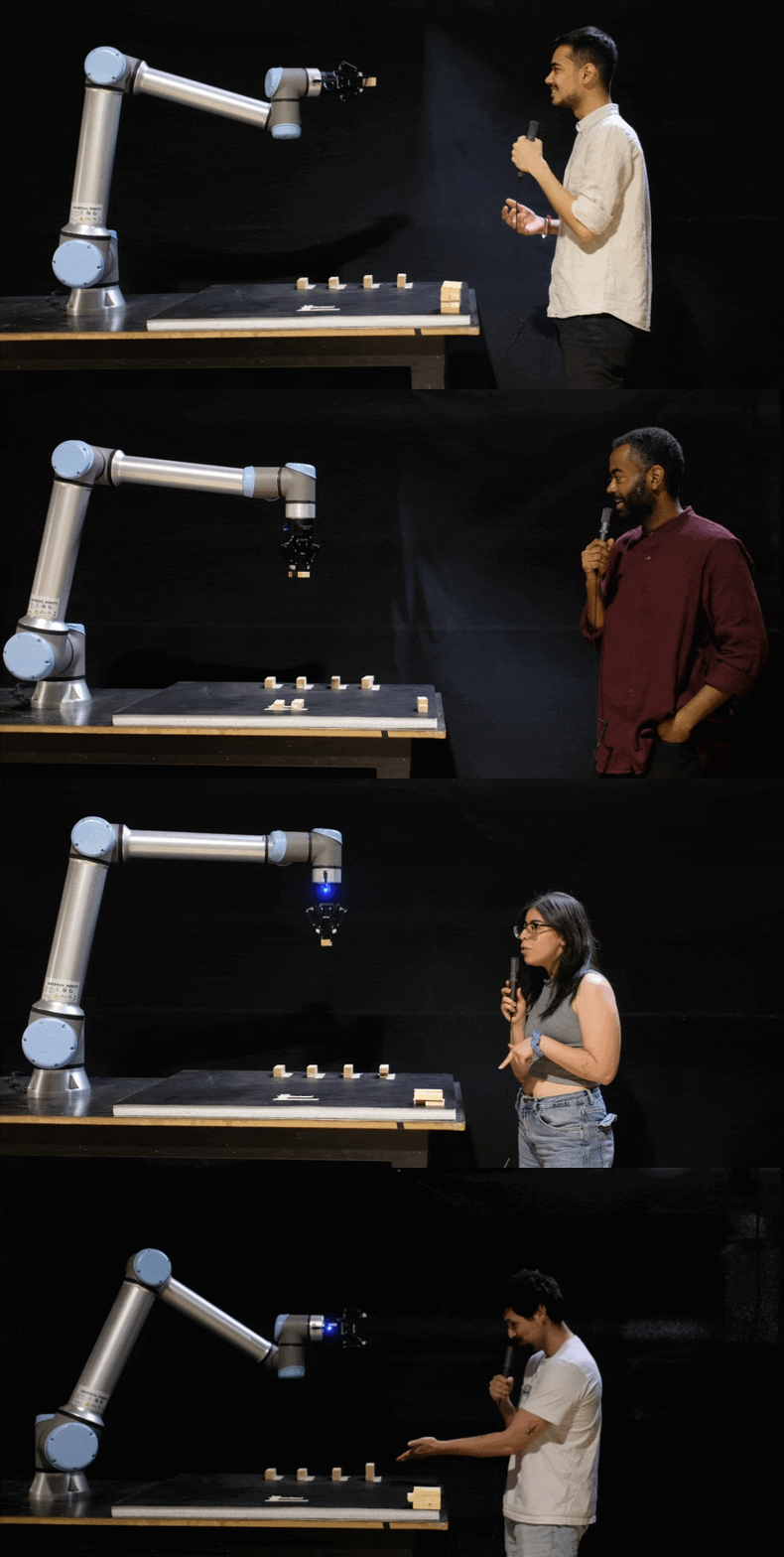
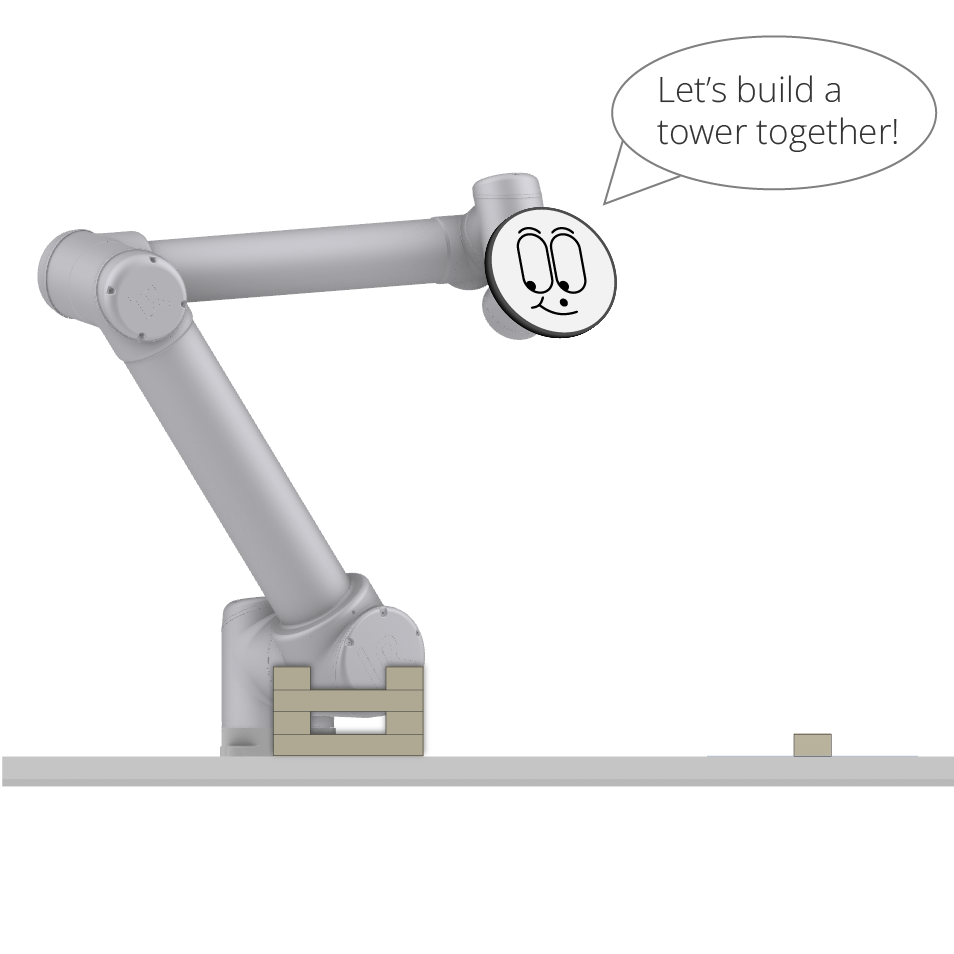
This project explores a framework for Human-Robot Collaboration (HRC) and behavioural fabrication, focusing on constructing a Jenga-like tower using small timber blocks. Using the Agent-Based Modeling system (ABxM) from the Institute for Computational Design and Construction (ICD), a communication network was established integrating a human participant, a computer vision system, and an interactive audio interface. … Read more

Shape it, feel it

Working in 3D CAD environments can be restrictive. While most CAD software provides tools for creating shapes and generating ideas, they often rely on a mouse and keyboard, or are very expensive. “Shape it, Feel it” investigates opportunities to generate shapes using a computer’s webcam and hand gestures. We utilize cheap and readily available hardware … Read more