The Master in Robotics and Advanced Construction (MRAC) seeks to train a new generation of interdisciplinary professionals who are capable of facing our growing need for a more sustainable and optimised construction ecosystem. The Master is focused on the emerging design and market opportunities arising from novel robotic and advanced manufacturing systems.

Through a mixture of seminars, workshops, and studio projects, the master programme challenges the traditional processes in the Construction Sector. It investigates how advances in robotics and digital fabrication tools change the way we build and develop processes and design tools for such new production methods.


Filters
Course

Manufacturing as a Service – A Conversation with Valentino Tagliaboschi

The lecture was conducted by Valentino Tagliaboschi, architect and building engineer whose career is situated at the intersection of computational design, digital fabrication, and robotics applied to architecture. Trained at the University of Pisa, his approach to the field is characterized by a methodology based on constant experimentation, iterative prototyping, and the intensive use of … Read more

Robotics for Ecological Buildings : CLAY

This work explores how clay can be used to introduce compression strength into flexible surfaces. By using robotics for controlled deposition, the process becomes parameterised, allowing a traditional material to be developed into a precise and predictable building system. Introduction This project proposes a system that transforms a flexible surface into a rigid, three-dimensional structure. … Read more

Mathilde Marengo from External References: Designing Experience through Technology

The lecture by Mathilde Marengo, Head of Studio Operations at External References, offered an in-depth overview of how contemporary architectural practice operates at the intersection of computation, fabrication, storytelling, and experiential design. Rather than presenting technology as an isolated tool, Mathilde framed it as an integral part of design thinking. Digital tools, parametric workflows, and … Read more

Workshop 1.2 Data to Motion – DRYING RIVERS

This article presents my Workshop 1.2 individual assignment, which focuses on analyzing data and translating it into robotic movements to control an ABB IRB 6700-150/3.20 industrial robot equipped with a plastic pellet extruder for additive manufacturing. The core concept of the project involved studying the drying and shrinkage of the Aral Sea over time, extracting … Read more

From Design to Construction: A Conversation With Oriol Carrasco

Oriol Carrasco – Anomaly.Build Oriol Carrasco is a PhD architect from Barcelona. He is a senior fabrication expert at IAAC with extensive expertise in composite manufacturing. Oriol currently teaches in MAA and 3DpA programs. He has been co-leading the Design with Nature research line since 2013, teaching now in the metabolic introductory studio.  He has … Read more

Workshop 1.2 Data to Motion – TSUNAMI

This article presents our Workshop 1.2 project, which focuses on analyzing data and translating it into robotic movements to control an ABB IRB 6700-150/3.20 industrial robot equipped with a plastic pellet extruder for additive manufacturing. The core concept of the project involved studying the tsunami-related terrain and displacement data, extracting spatial and intensity-based information to … Read more

Anatomy of a Machine: Shape

Context This exercise explores robotic fabrication processes through the direct manipulation of malleable materials. The assignment consisted of producing a 2.5D clay piece, measuring 40 × 40 cm with a maximum height of 5 cm, understood as a physical result of a robotically applied force on soft matter.Rather than designing a predefined form, the goal … Read more

Anatomy of a Machine: Spill

Introduction In Anatomy of a Machine: Spill, we designed and built our own paint-spilling tools and worked with large robotic arms to create expressive, A0-scale paintings. Over the weeks, we tested movements with our hands, translated them into robotic trajectories, and refined both the tools and the resulting spill patterns. Using Arduino and laser-cut acrylic … Read more

Anatomy Anatomy of a Machine: Shape “Blobs & Lines”

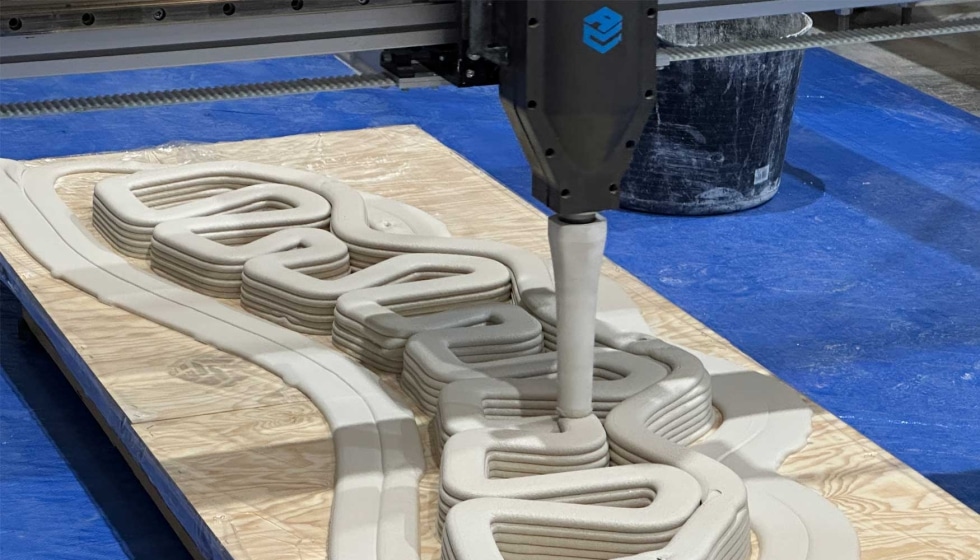
Exploring Clay 3D Printing Through Viscosity, Speed, and Time For the Shape exercise within Anatomy of the Machine, we worked with clay as a material, specifically focusing on robotic 3D printing using clay extrusion. The objective was to understand how material behavior, robotic parameters, and geometry interact, and how form emerges from the machine–material relationship. … Read more

Anatomy of a Machine: Stroke

INTRODUCTION The first assignment of Anatomy of a Machine investigates how a robotic system can produce a brushstroke, an action typically associated with human intuition, variability, and continuous motion. Rather than beginning with predefined toolpaths or digital control, the project starts by reframing the human hand as a machine. Through a series of analog drawing … Read more

Anatomy of a Machine – SPILL

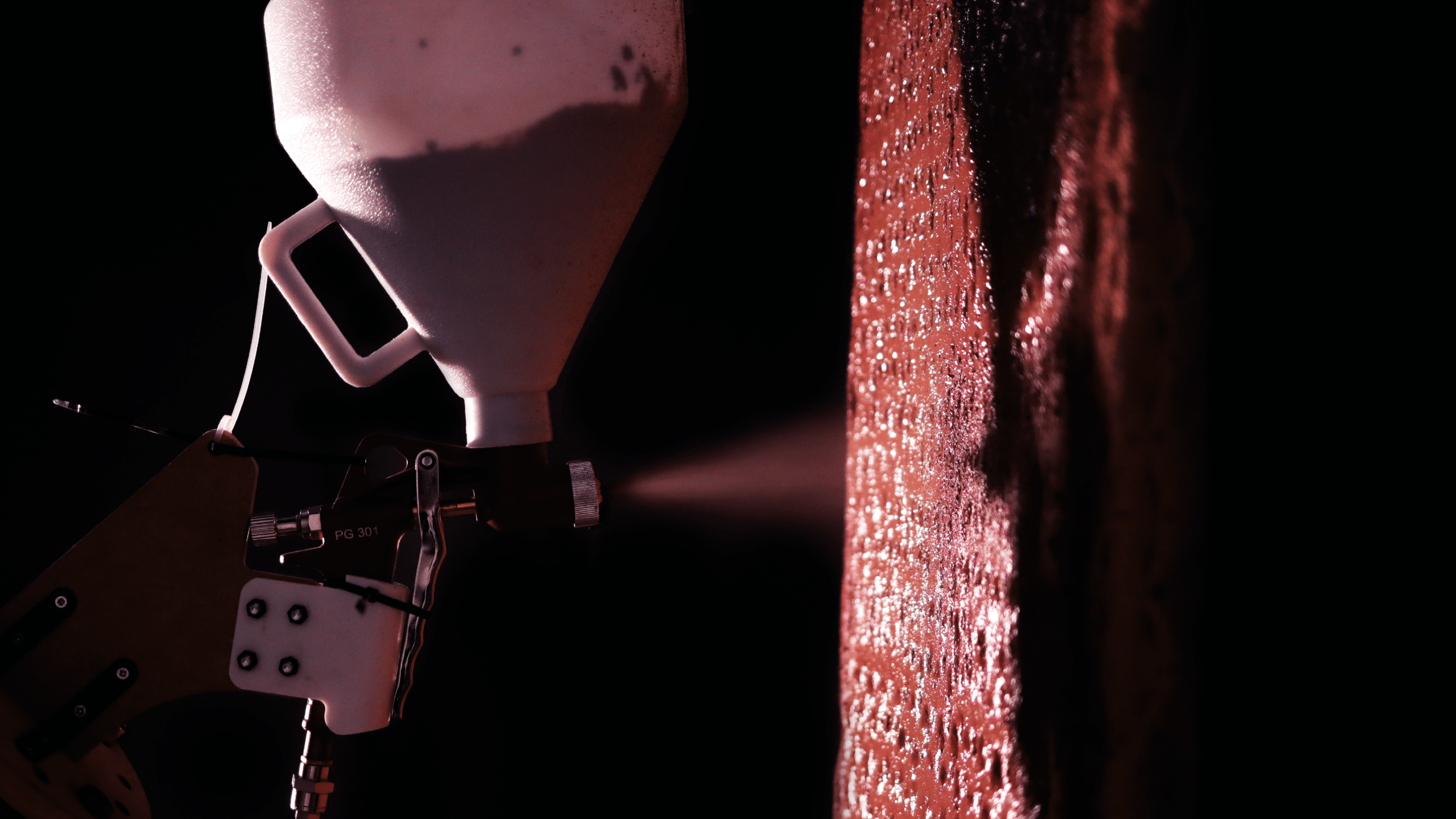
In the second exercise of Anatomy of a Machine, our goal was to understand how a robot expresses itself through material behavior. Instead of carving or shaping solids, we explored how liquid material behaves when actuated, accelerated, and released through a controlled spraying mechanism. “Spill” became a study of force, viscosity, height, angle, and timing … Read more

Software I non planar 3d printing

Advanced toolpath design for FDM process Students will design and simulate a toolpath for a small object intended for interior or product design. The focus is on exploring creative toolpath strategies, especially non-planar slicing, where the toolpath height changes across the object. Students must design a non-planar path and use attractors to locally deform the … Read more

Digital Design and Production of Complex Timber Structures

Evy Slabbinck – D2P – Design to Production How do you build a complex timber structure with zero errors in record time? Evy Slabbinck from Design-to-Production reveals the answer: merging computational precision with material intelligence. In this interview, we explored bending-active design, digital fabrication workflows, and the philosophy behind projects that push timber to new … Read more

SYNFORM – Pitch Deck

SYNFORM is a design-to-fabrication studio that fabricates luxury scenography and architectural surfaces that are parametric, modular and reconfigurable through large-scale 3D printing using recyclable plastics. Market Context According to Precedence Research, the global 3D printing market is estimated at around USD 29.29 billion in 2025 and is projected to grow to USD 134.58 billion by … Read more

Anatomy of a Machine: Stroke

Introduction This project investigates the dialogue between human gesture and robotic motion through painting. Over three weeks, students study brush behavior, paint flow, and stroke dynamics, beginning manually and progressively translating gestures into robotic trajectories. The final outcome is an A2 robot-made painting, accompanied by a vectorial drawing and a 60-second video, reflecting the anatomy … Read more