Reviving Bab Al-Luq is a project of IAAC, Institute for Advanced Architecture of Catalonia developed in the MACAD 2025/26 by Zeynep Sezen Dursun and Faculty: Hesham Shawqy and Angeliki Maragakis.
Inspiration & Design Decisions
This project aims to explore light and computational architectural design concerning the illumination, ventilation, and attraction in the design of the roofing of Bab Al-Luq. The design’s starting point was the structure’s historical content. The development of the packed circulation over the years and the initial design inspiration for the market were the two main drivers of the process.
The packed circulation reminded me of the Spice Bazaar in Istanbul, my hometown. This crowded bazaar is organized with the spaces formed by the vault structure and illuminated by the spaces between the buttresses.
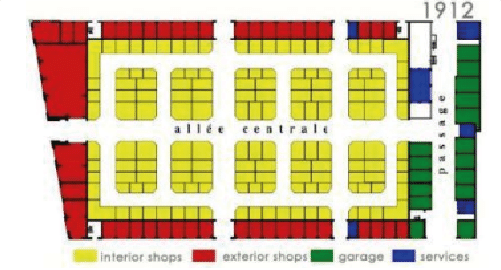
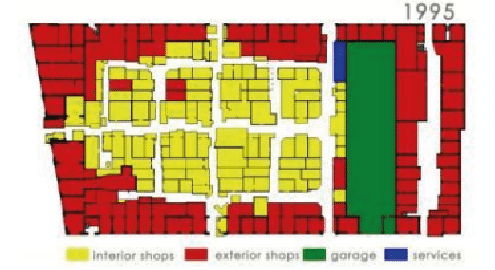
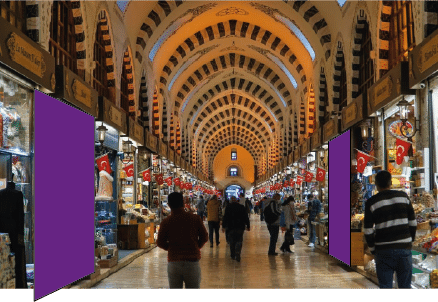
In addition, the design on the market was already inspired by Les Halles, which also has arches for the structure.
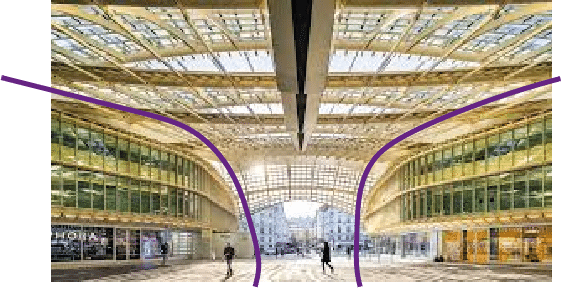
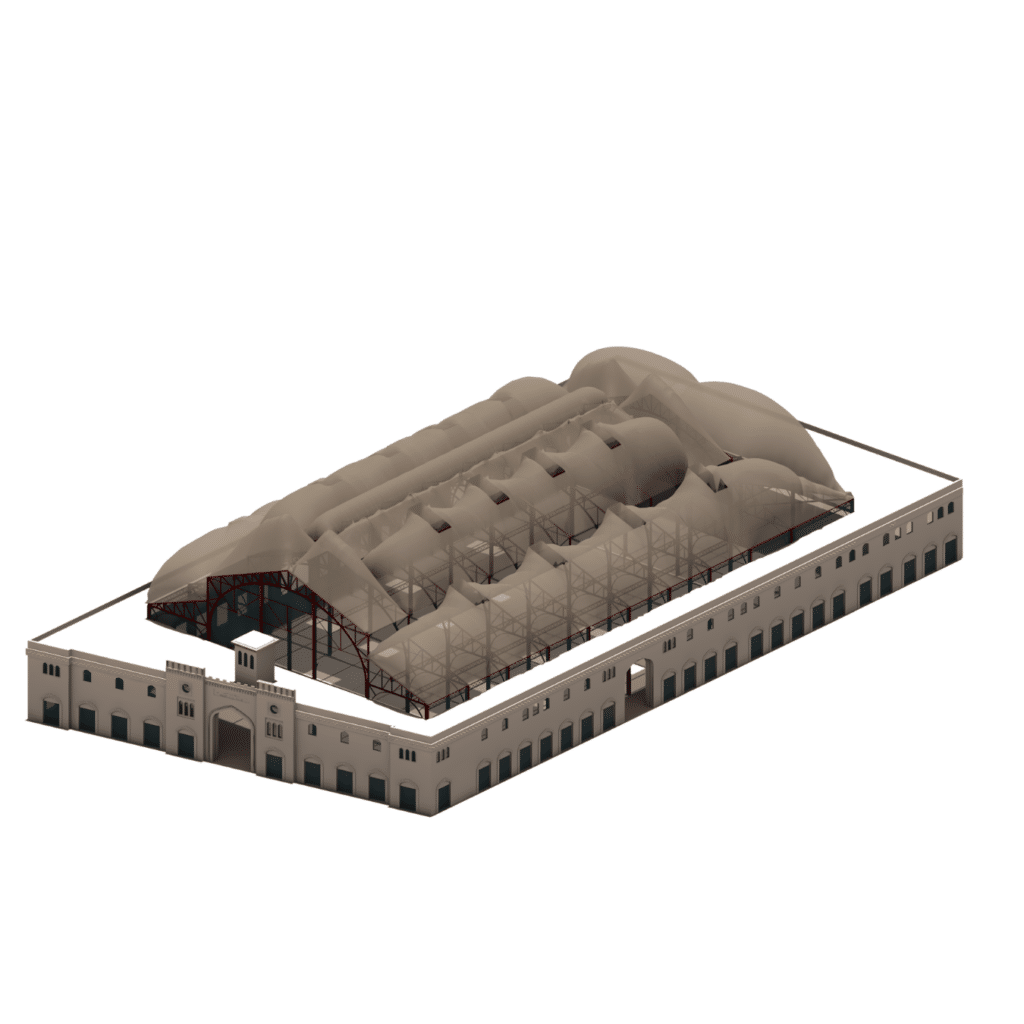
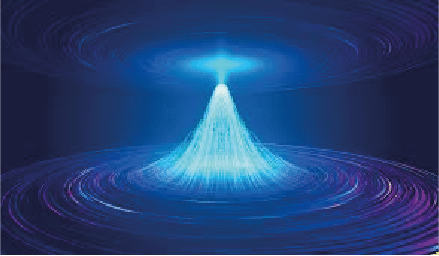
Acknowledging such design similarities, I elaborated on the design question I had in my hands from the point of arches. I have decided to elongate the arches from sky to the ground and form light vortexes for the illumination.
Digital Computation Process
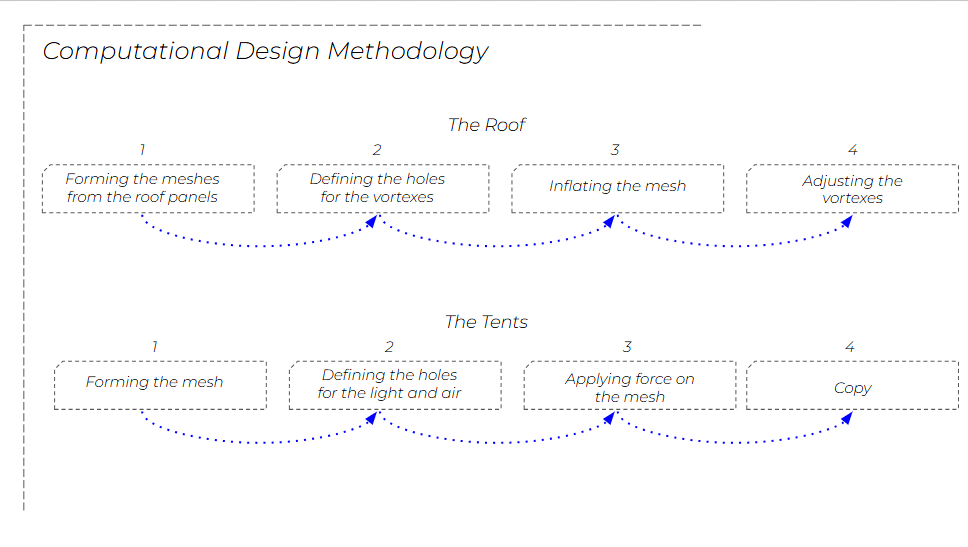
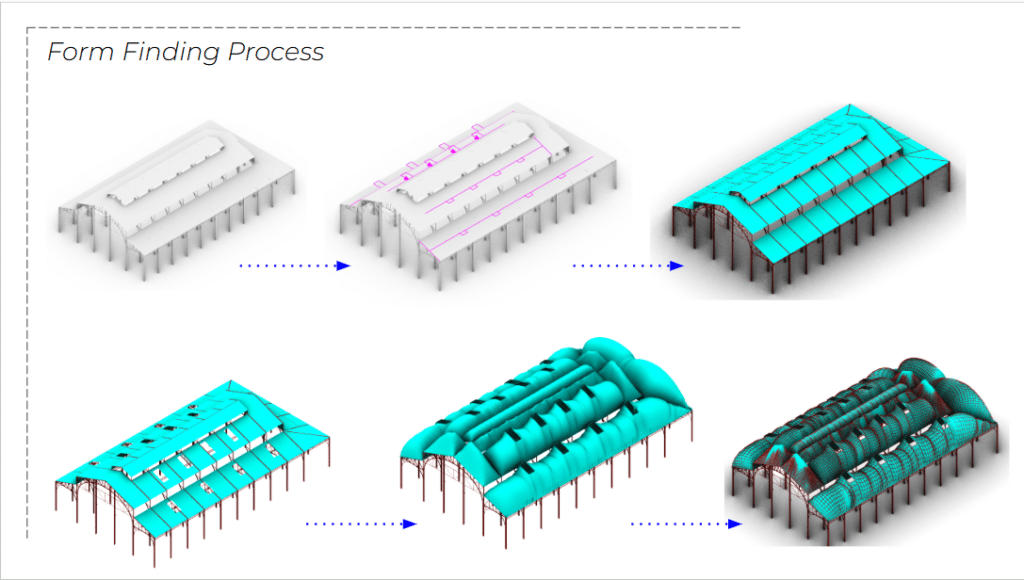
In order to realize my idea, I started to work on the ground floor to define the circulation pattern. First, I used the existing circulation to define the landings of the vortexes. Later, I formed a mesh covering the whole base and inflated the mesh towards the roof. Unfortunately, this approach was overly straightforward and was not welcomed by the structural norms. Hence, I changed my approach a 180 degrees.
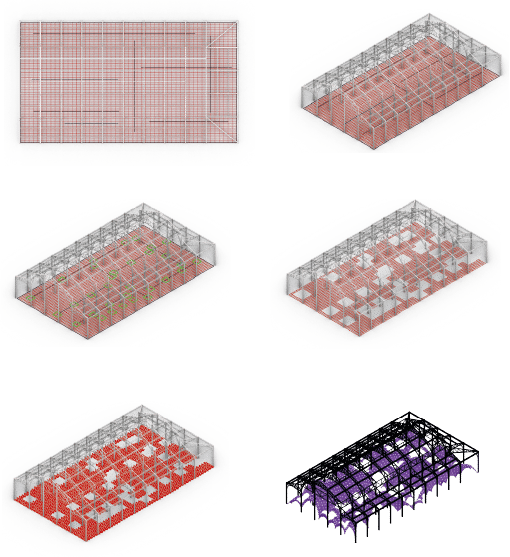
Instead of working from the ground to the roof, I started working from the roof to the ground. For that, I kept the mesh I defined on the ground level and elevated it, but kept the defined vortex landing points on the ground. Yet, still seeing that the whole roof-at-once approach did not work, I started to think in pieces.
Despite my initial doubts, I started to work on the original roof panels that were given to us in the model. To my surprise, this approach was working effectively. However, I had to change my vortex landings and make them more organized. For that, I defined polylines through the panels and divided them to form rectangles for the holes. I still wanted to anchor the inner edges towards the ground and inflate the mesh upwards, yet the already existing structural system of the market was disturbed more than it to be solved. Consequently, my light vortexes had to reach towards the sky instead of the ground.
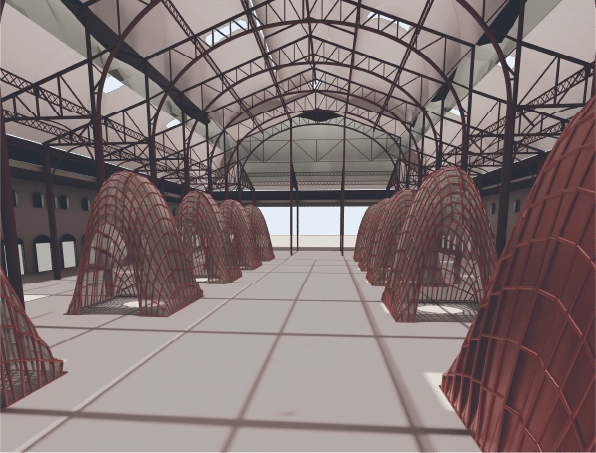
Later on, to improve the interior organization, tents for shopping were proposed. Likewise, they are designed with the same computational steps.