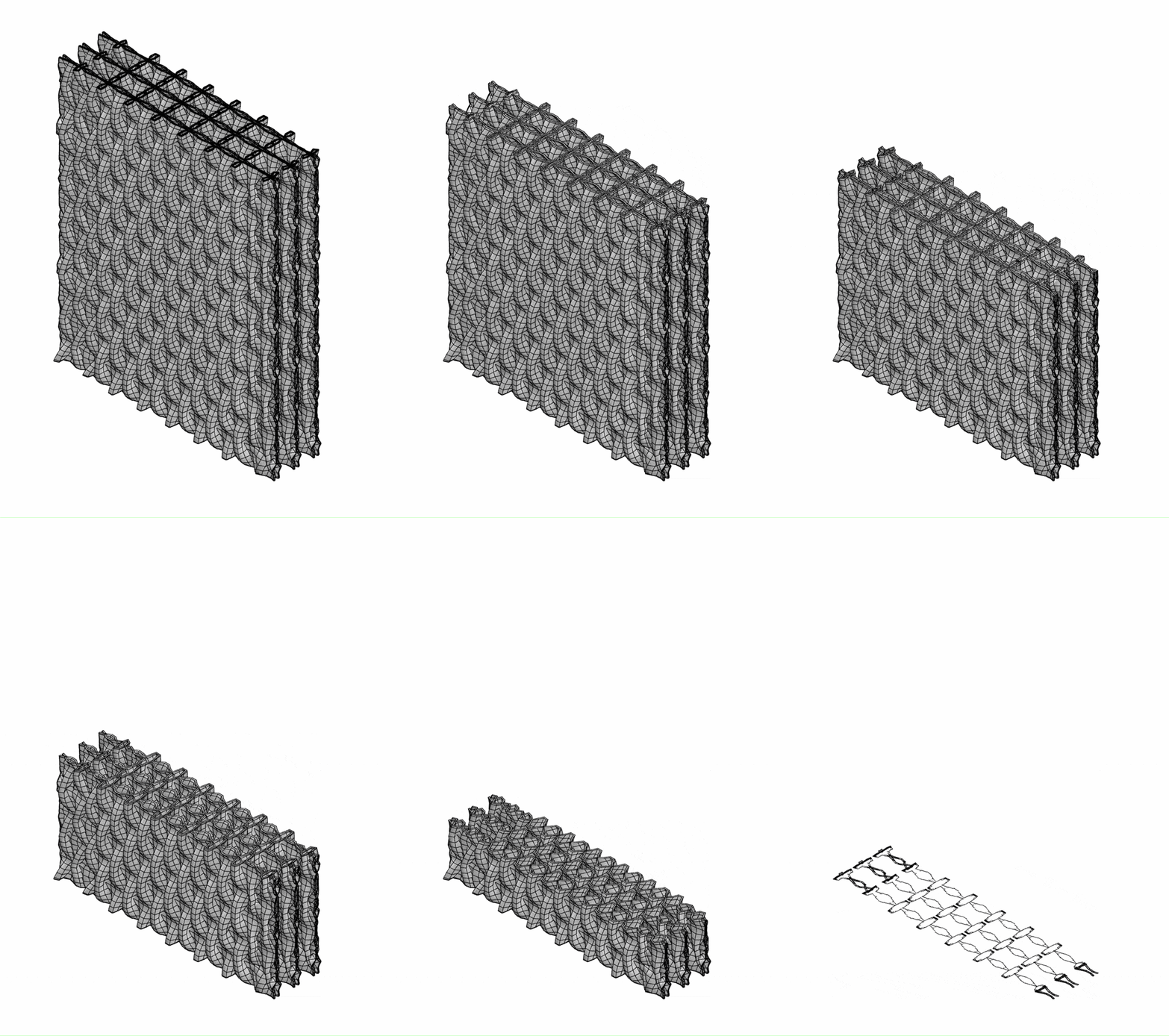
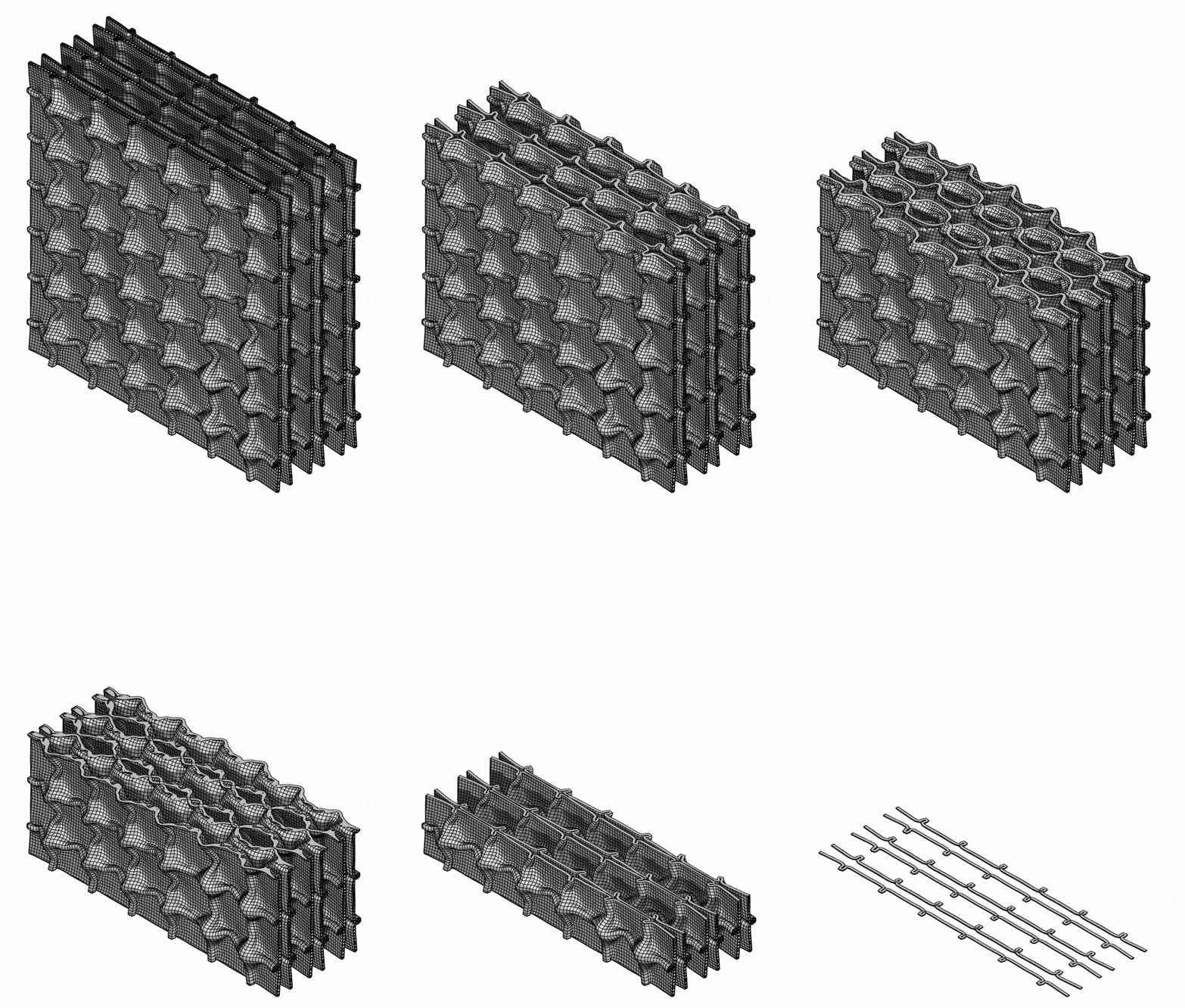
This work explores how clay can be used to introduce compression strength into flexible surfaces. By using robotics for controlled deposition, the process becomes parameterised, allowing a traditional material to be developed into a precise and predictable building system.
Introduction
This project proposes a system that transforms a flexible surface into a rigid, three-dimensional structure. Guided by geometric parameters, a robotic system deposits clay with precision, reinforcing specific areas where additional strength is required. Through this controlled layering process, the material gradually forms a self-supporting surface designed to achieve maximum structural integrity.
Context & Properties
Terracotta Clay as a Local Material
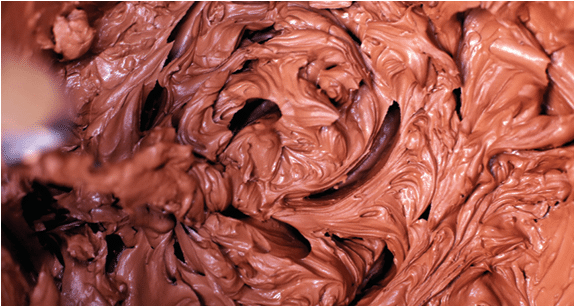
This work rethinks architectural design and production through the use of clay as a local material. In Barcelona, clay is widely accessible, sustainable, and deeply embedded in local construction practices. The project explores how traditional materials can be digitally re-imagined and integrated into contemporary fabrication processes.
Low processing energy and non-toxic,
Thermal mass and gyroscopic behavior,
Reversible material,
Reusable,
Circular Design.
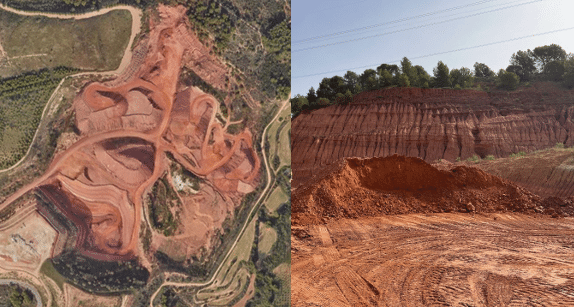
Abundant and site-specific availability: minimises transport emissions and cost
Material reflects local geology: enables context-driven design language
Support local resources cycles: strengthens regional self-sufficiency
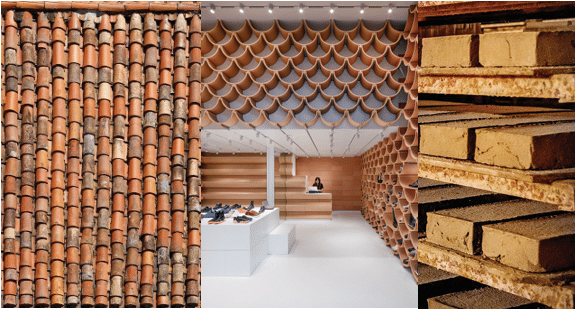
Proven vernacular performance: climate-adapted solutions refined over time
Local craftsmanship integration: preserve knowledge and support communities Passive design intelligence
Clay Reinforcement : From Ancient Technique to Controlled Deposition
Traditional techniques such as wattle and daub demonstrate how the application of clay onto a flexible framework can produce rigid and stable structures. Building on this principle, this project integrates computational design and robotic fabrication to develop a more precise system, where material deposition can be carefully controlled to enhance structural performance.
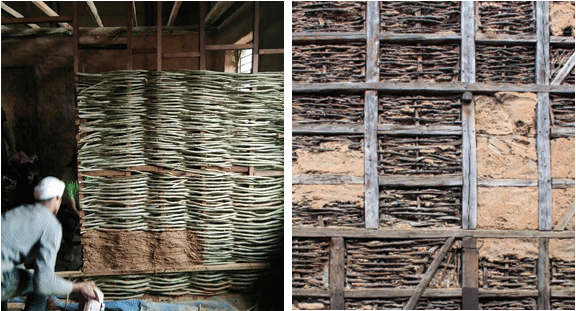
A woven lattice of branches is coated with a mix of clay, sand and straw. The flexible structure provides the form; the clay provides rigidity and mass. This
technique has been historically used to form walls in buildings, making use of local materials and providing good thermal insulation.
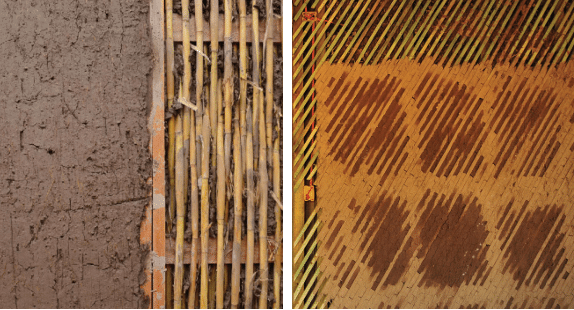
A vernacular technique from the Andes region of South America. Vertical cane or bamboo stakes define a structural grid, which is then packed and plastered with clay. The geometry of the cane determines where and how the clay is applied.
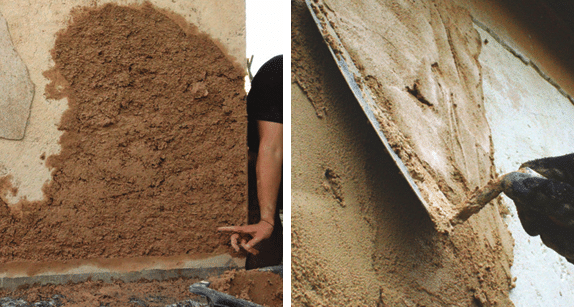
Applied in successive layers over walls and surfaces across cultures and climates, earthen plasters share a logic of gradual material accumulation. Each layer adds thickness, thermal mass, and surface performance.
Research Framework
Capture-Control-Scale
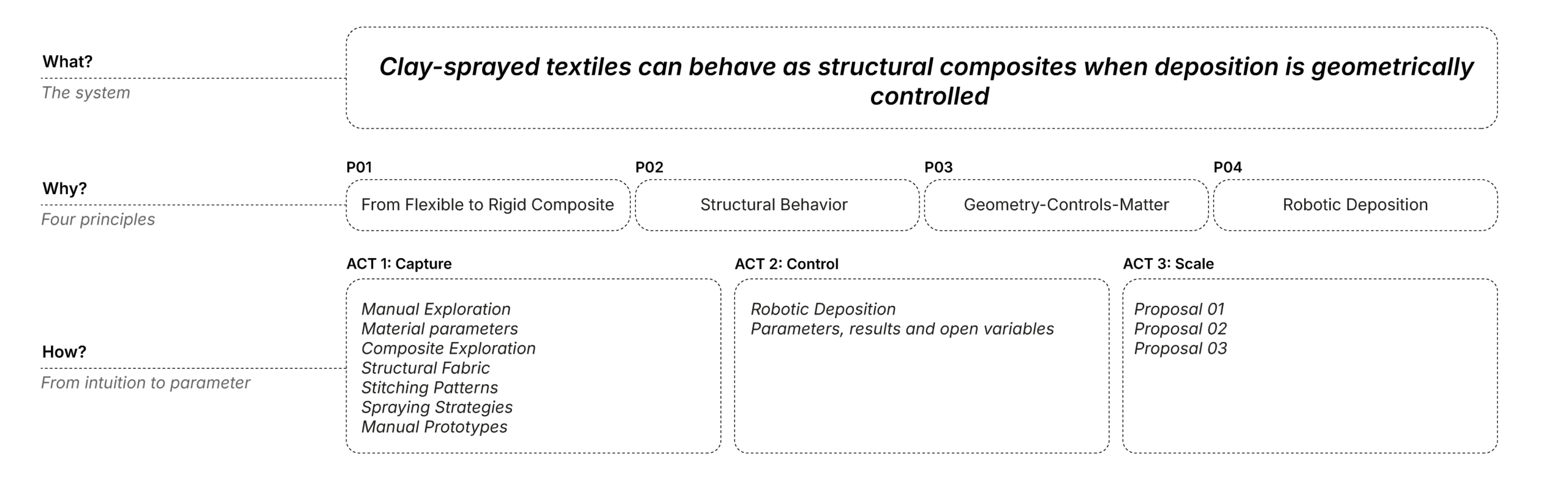
Our research developed from the idea that clay-sprayed textiles can behave as structural composites when the deposition process is guided by geometry. To investigate this concept, the project follows three main stages.
First, the inherent material logic is explored through hands-on experiments with stitching patterns and clay behaviour.
Second, the transformation is controlled by using robotic precision to convert flexible fabric into a rigid structural element.
Finally, the findings are scaled up, translating material parameters into architectural proposals.
Research Principles
Principle 01 : From Flexible to Rigid Composite
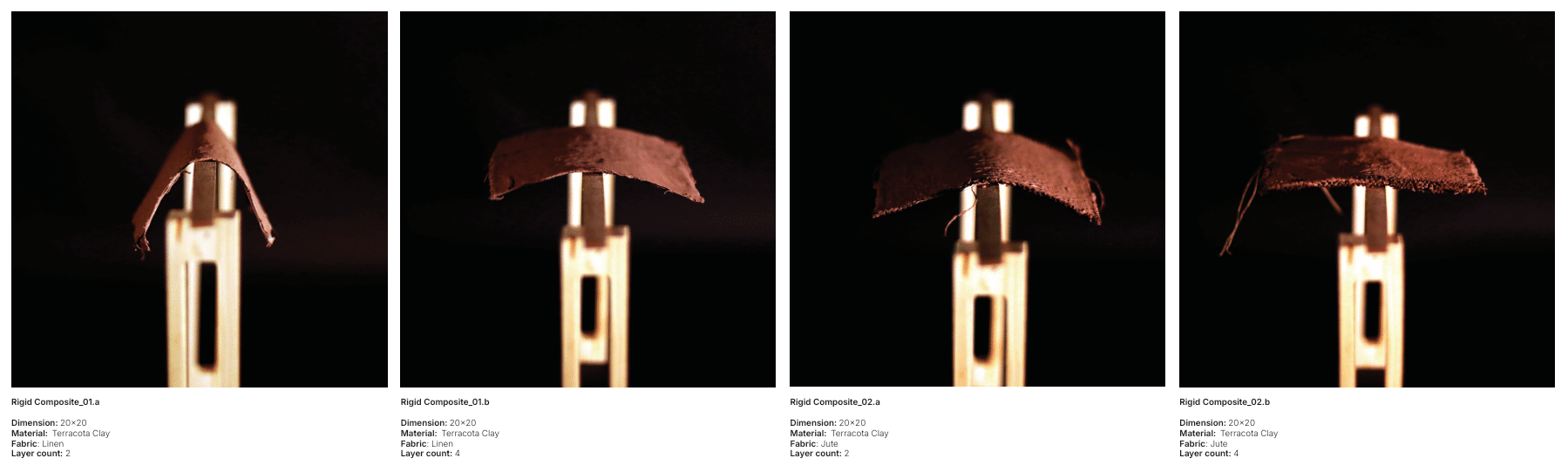
The research began with an intuitive exploration of the material, focusing on testing the physical limits and behaviour of clay applied to textile surfaces. As the process evolved, a clearer set of parameters was established. By experimenting with different textiles and composite mixtures, a key observation emerged: surfaces that were initially flexible began to transform into rigid structures.
This transformation forms the core principle of the system. Through iterative hands-on testing, it became possible to control structural performance by adjusting variables such as the number of layers, the type of fabric, and the composition of the clay mixture.
Principle 02 : Structural Behaviour
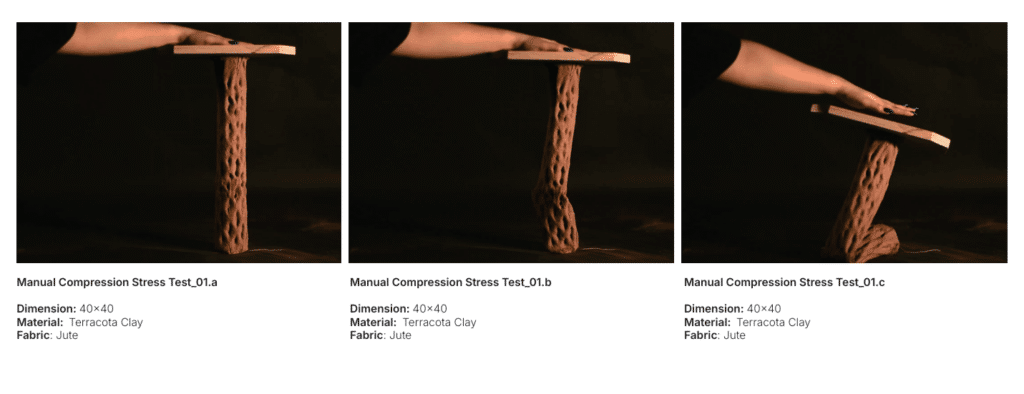
This system focuses on transformation. It begins with a flexible element, a simple textile – which is gradually converted into a rigid and structurally stable form through the controlled deposition of clay. As the material builds up, the textile and clay act together as a composite, forming an integrated structural system.
The resulting surface is capable of handling eccentric loading conditions, demonstrating how the combination of flexible substrates and deposited clay can perform in ways that meet architectural structural requirements.
Principle 03 : Geometry-Controls-Matter
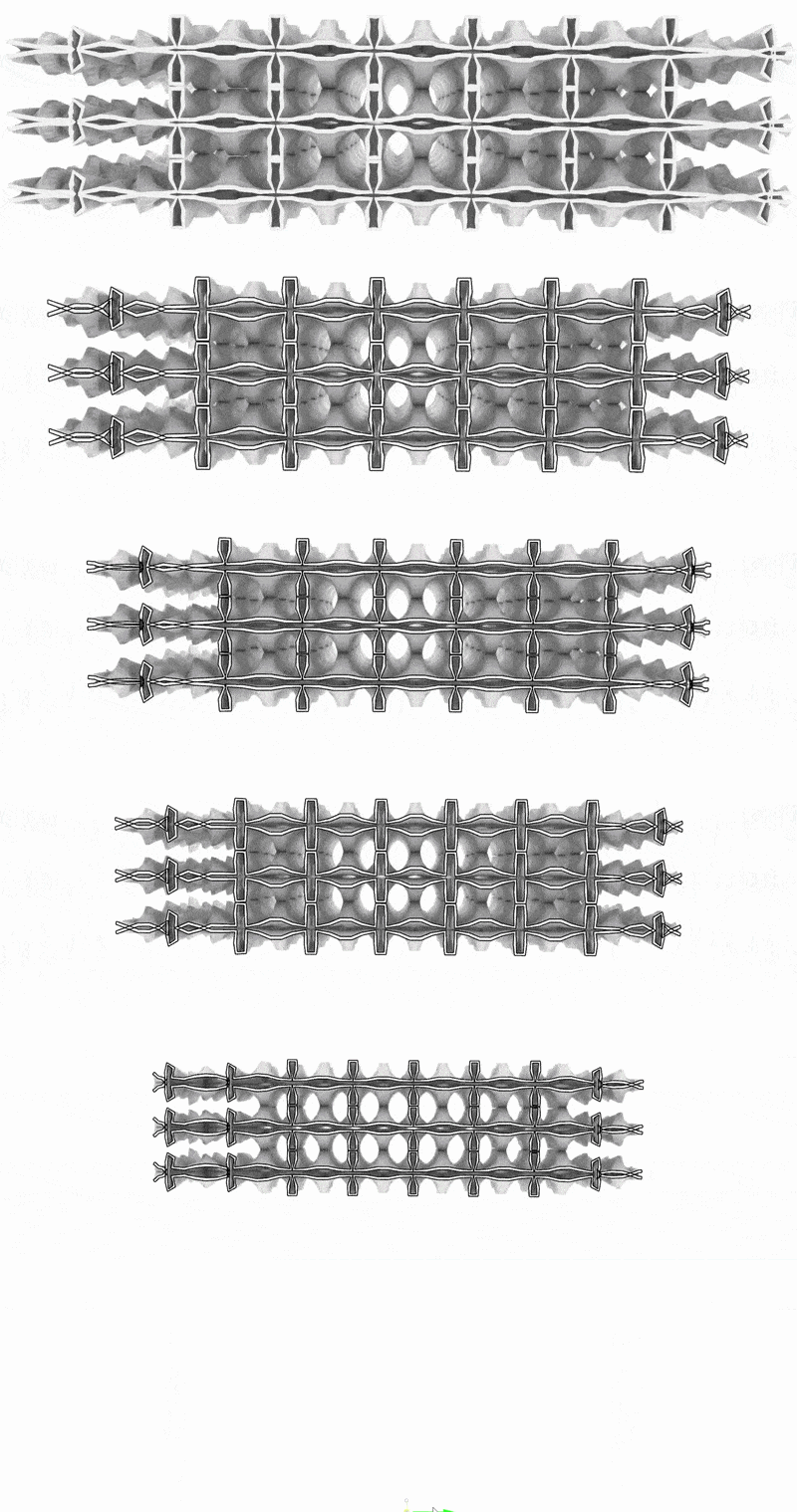
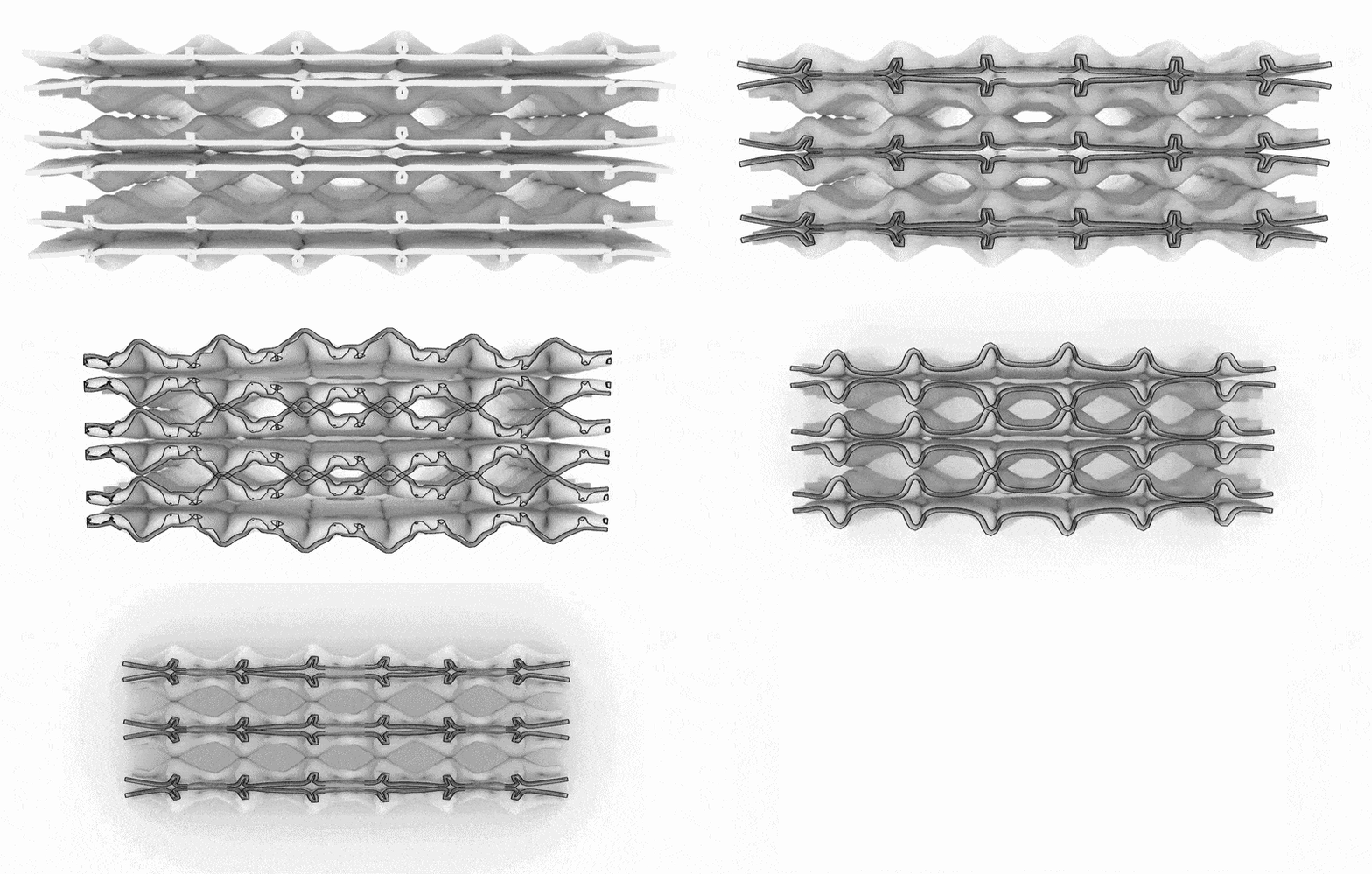
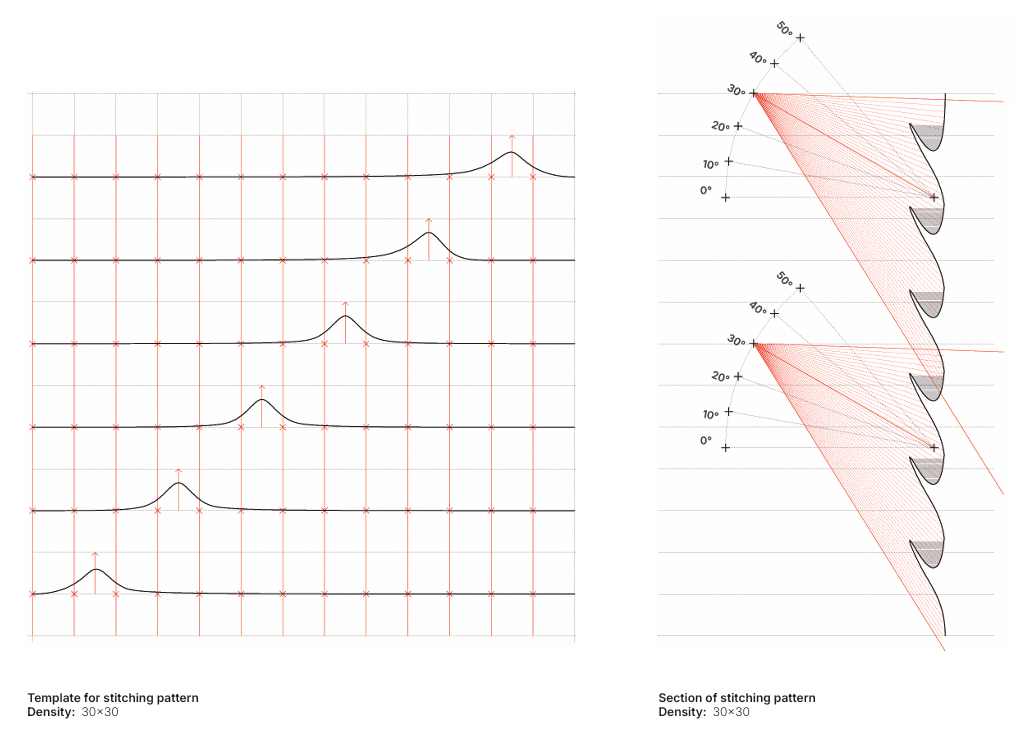
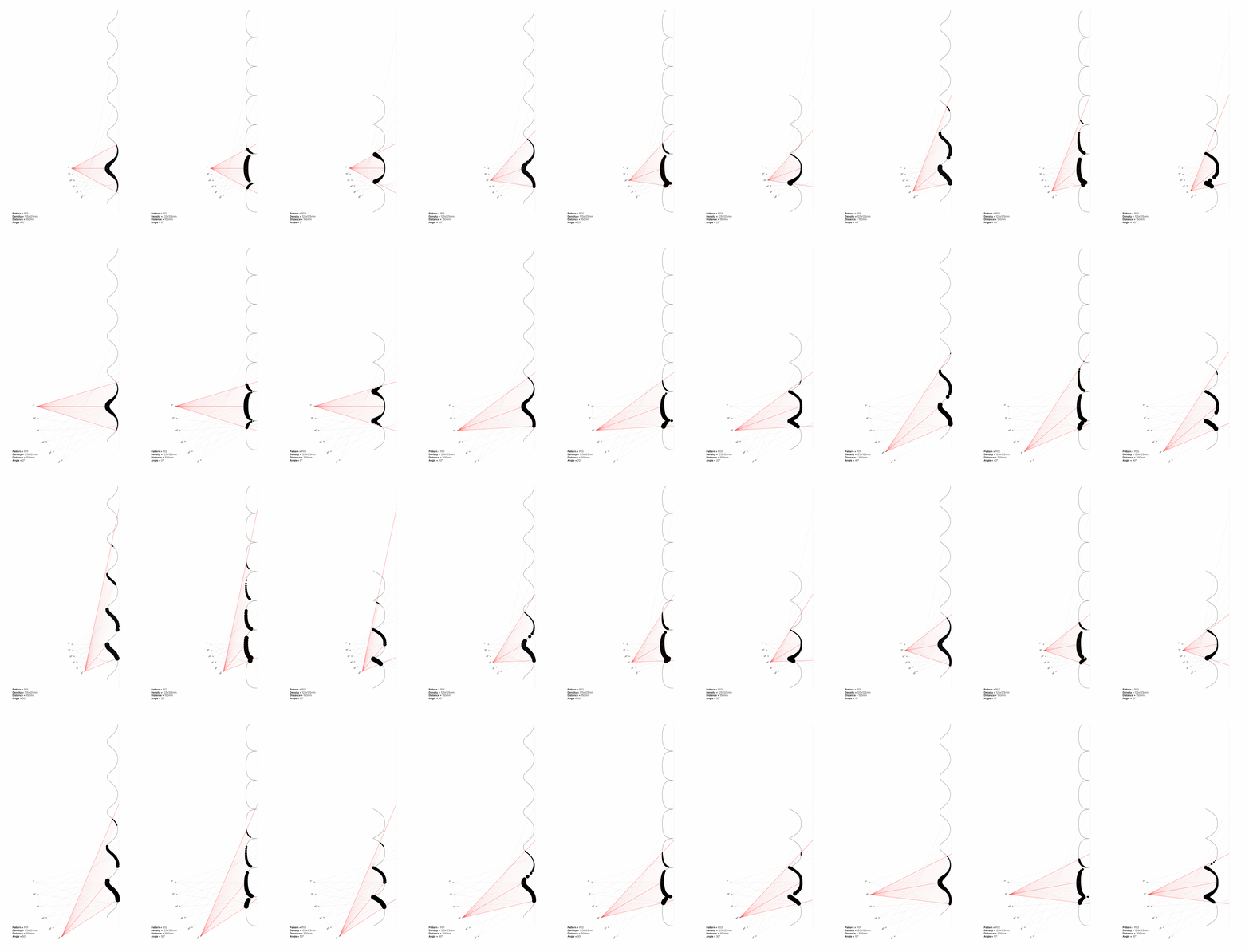
Geometry is used to control where material is accumulated and how forces are distributed across the surface. Sectional analysis reveals that by adjusting the spray angle, material can be strategically deposited into geometric pockets, generating selective variations in thickness. In this way, geometry becomes a direct tool for shaping structural performance.
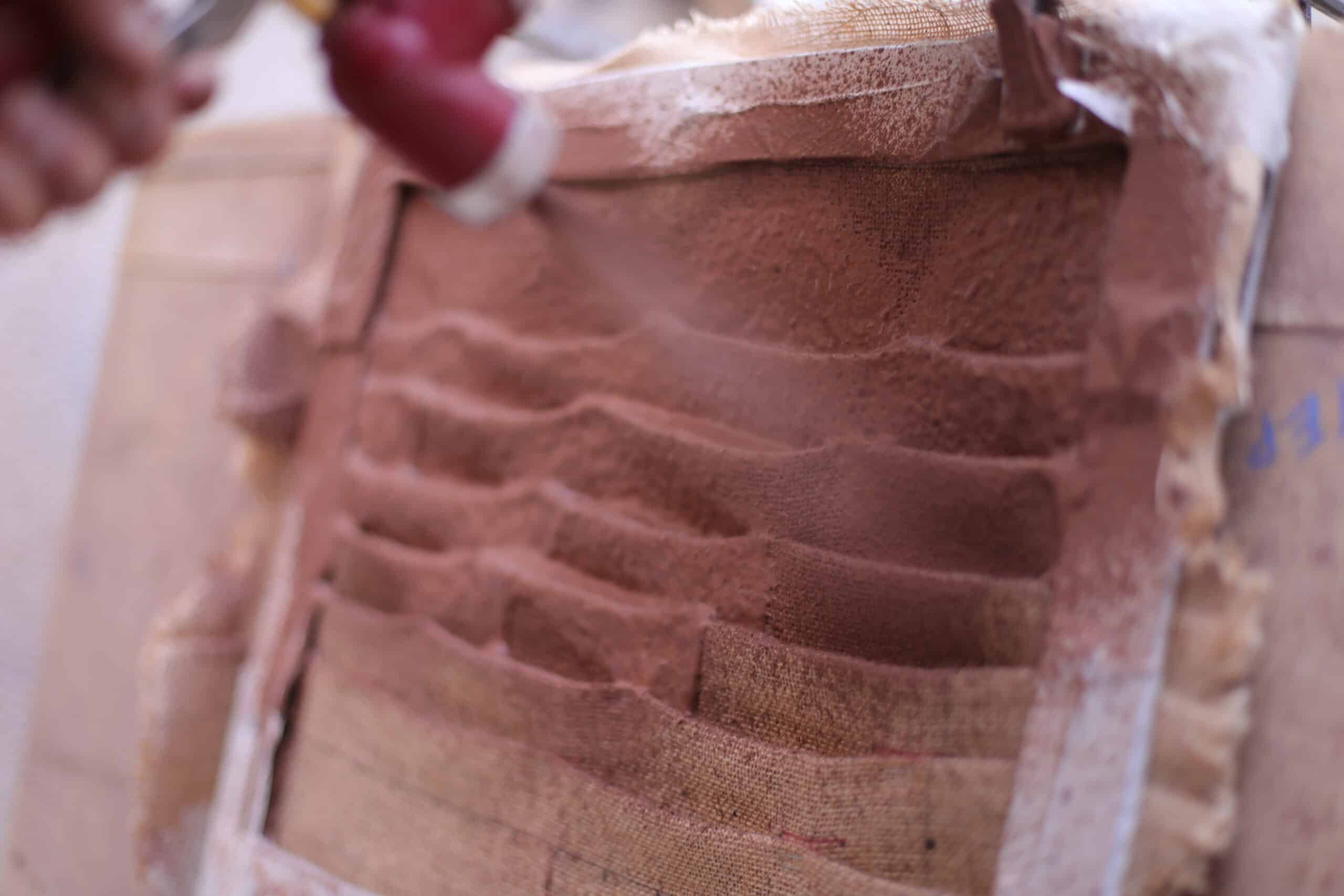
The geometry of the textile pattern determines where and how material accumulates. Geometry controls matter.
Principle 04 : Robotic Deposition
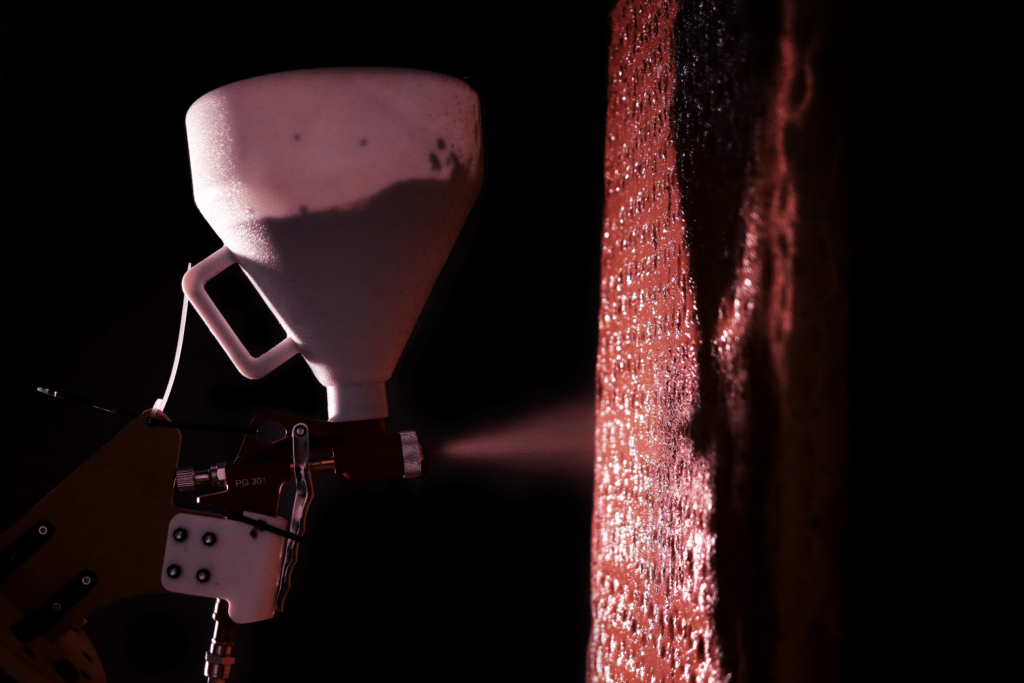
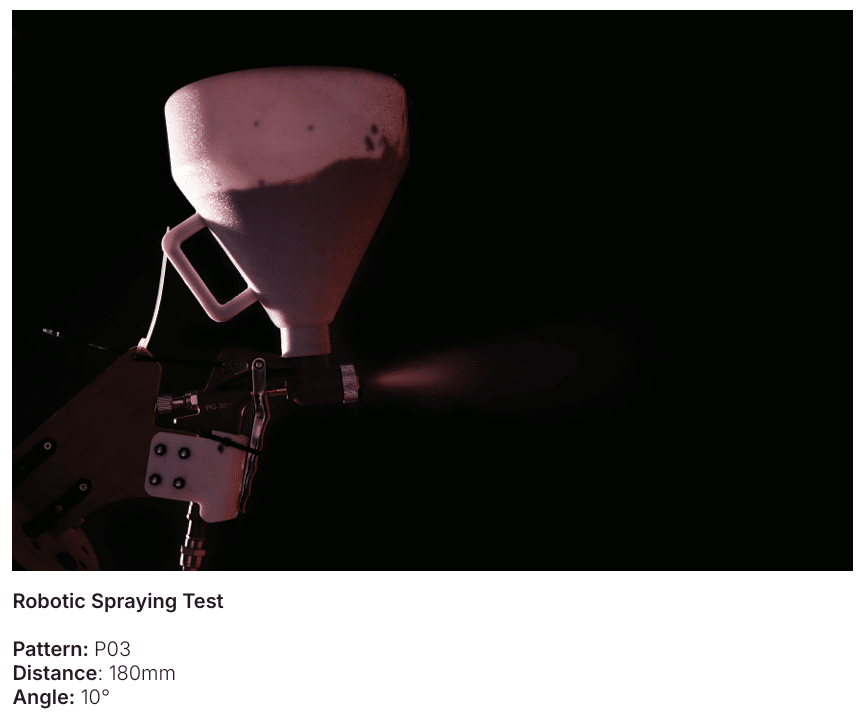
At this stage of the work, every decision is carefully considered. The stitched patterns function as physical guides, directing the robotic system on where material should accumulate. By controlling key parameters such as angle, distance, and layering, a level of consistency and precision is achieved that is only possible through robotic fabrication.
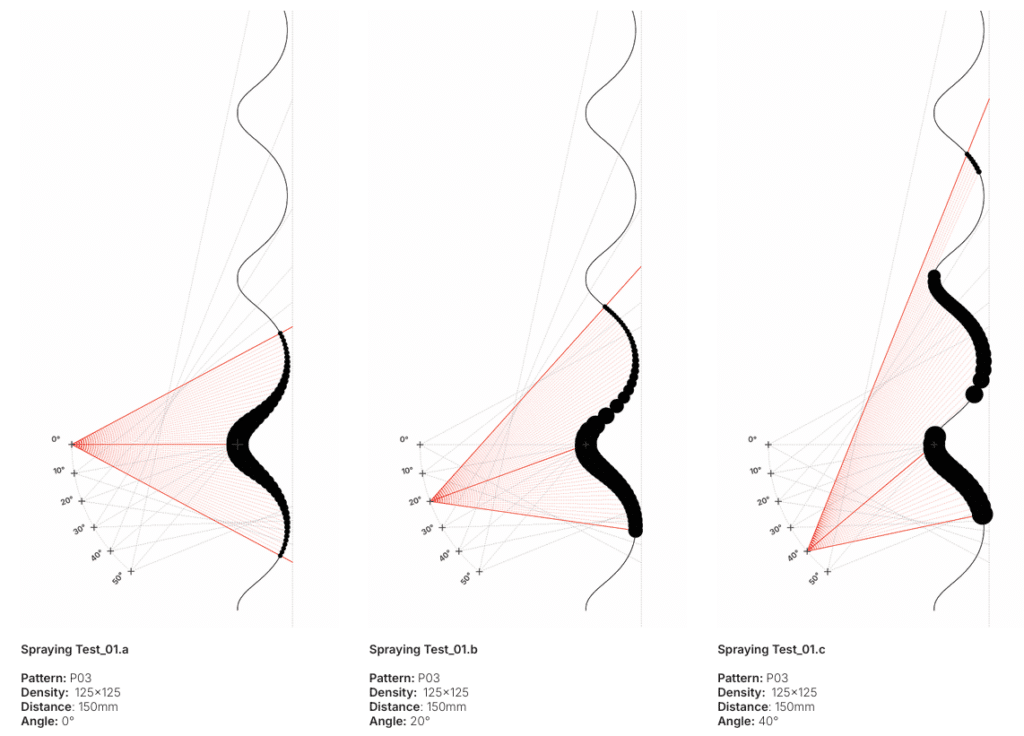
As demonstrated, the same pattern, when applied at different spray angles, produces significantly different material distributions, leading to distinct structural behaviours.
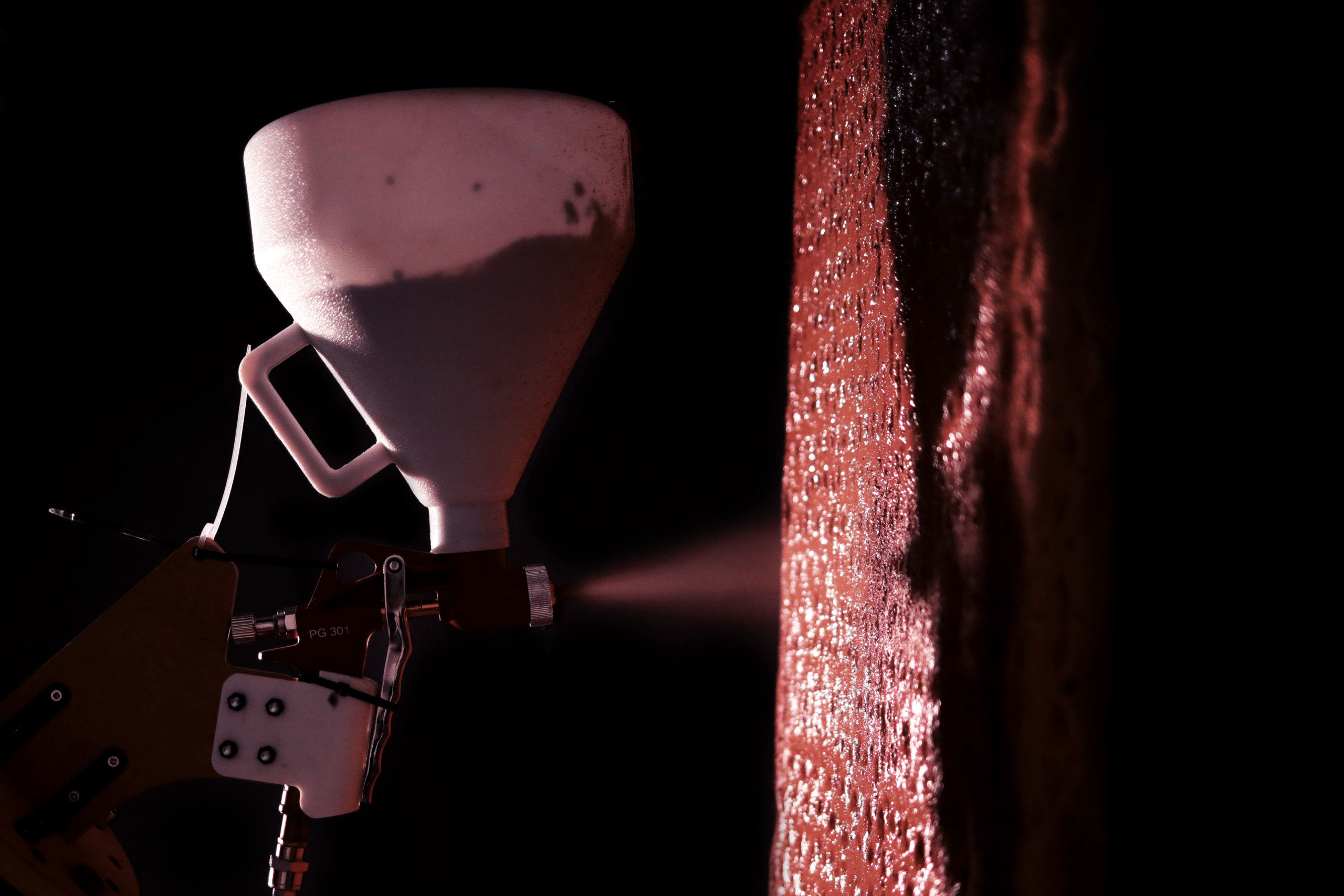
The robot controls angle, distance and layers. Variables the hand can approximate but never fully repeat.
System Overview
Manual Exploration : Revealing material agency
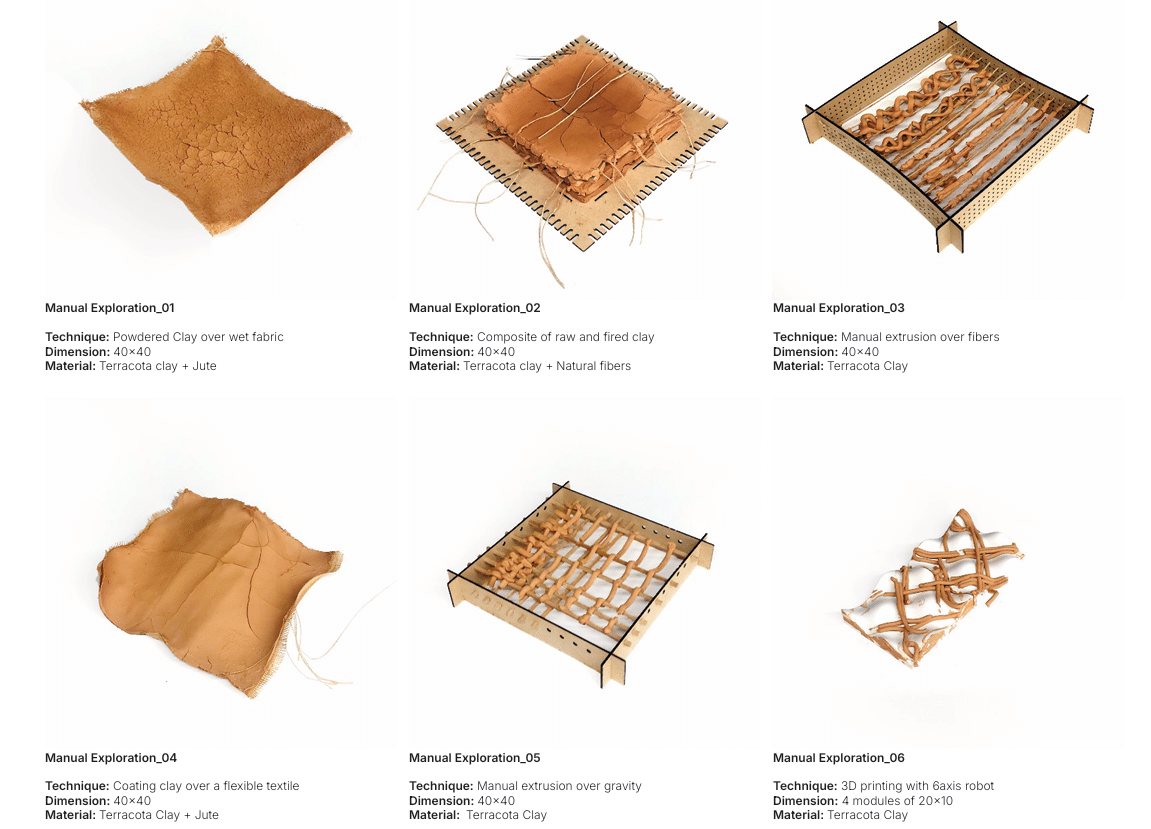
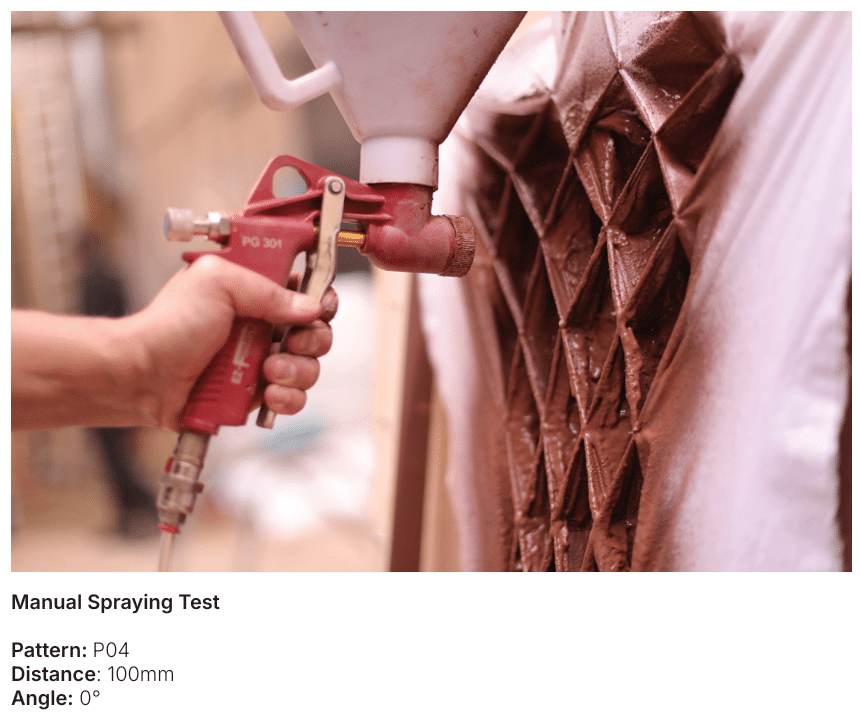
As shown in these prototypes, the first stage of the work focused on a close investigation of material behaviour. The process began manually, aiming to understand clay on its own terms by testing its interaction with different textiles and surfaces, as well as its adhesion to various substrates. By observing where the material performs well and where it reaches its limits, these physical findings were translated into a defined set of material parameters, forming the basis for subsequent robotic fabrication.
Material Parameters : Mix Ratio and Spray Calibration
This phase examined the underlying logic of the spraying process. By adjusting variables such as clay ratio and nozzle pressure, a clear hierarchy of influence emerged: at close range, the nozzle enables high precision, while at greater distances it ensures more uniform distribution. Mapping these relationships allows the robotic system to deposit material with accuracy, transforming an otherwise unpredictable process into a controlled and repeatable system.
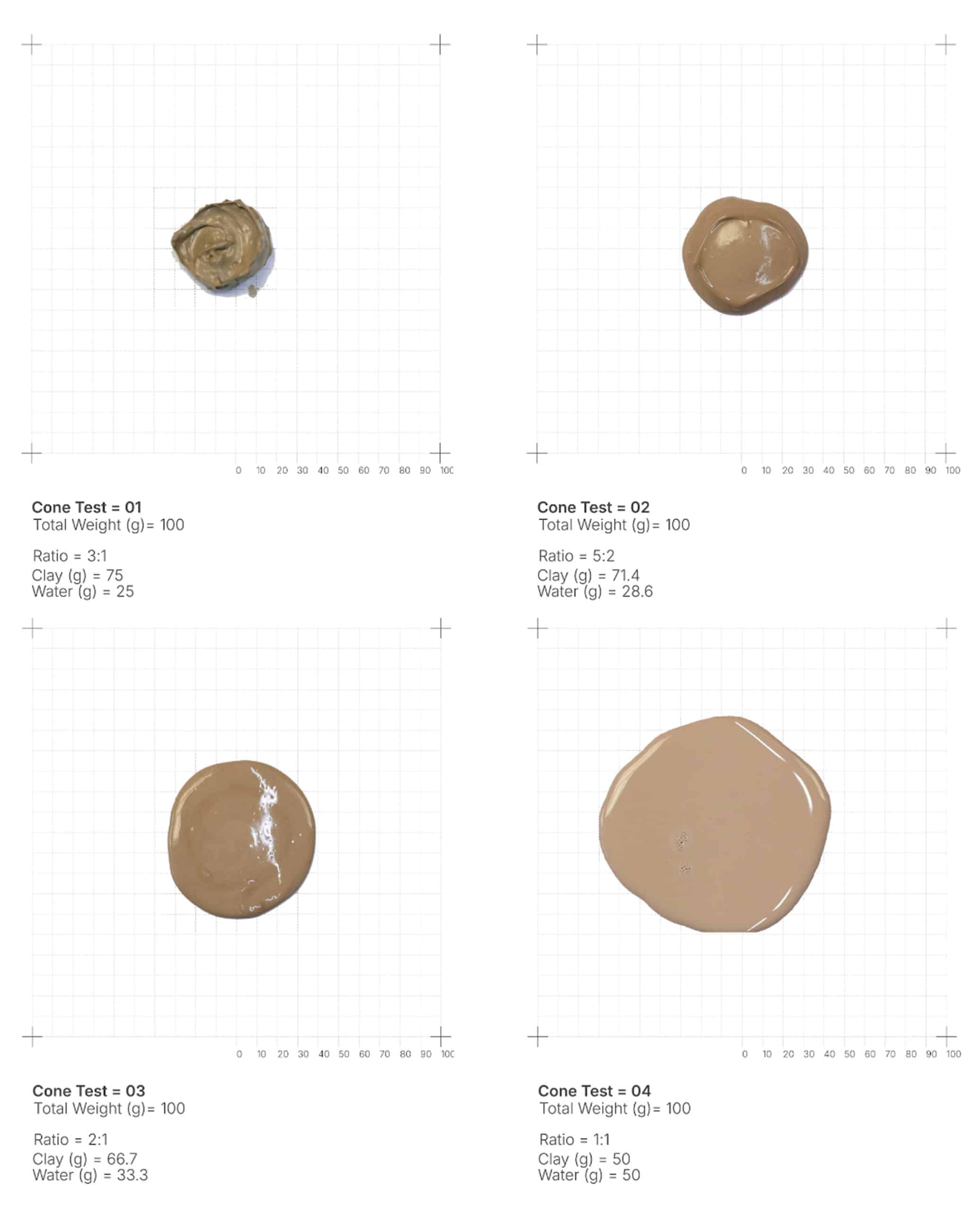
A 2:1 ratio (W:C) was identified as the optimal mix for spray application, balancing fluidity and material adhesion. With additives such as sawdust or sand, a 1:1 ratio proved most effective, producing a denser mix with improved structural retention after deposition.
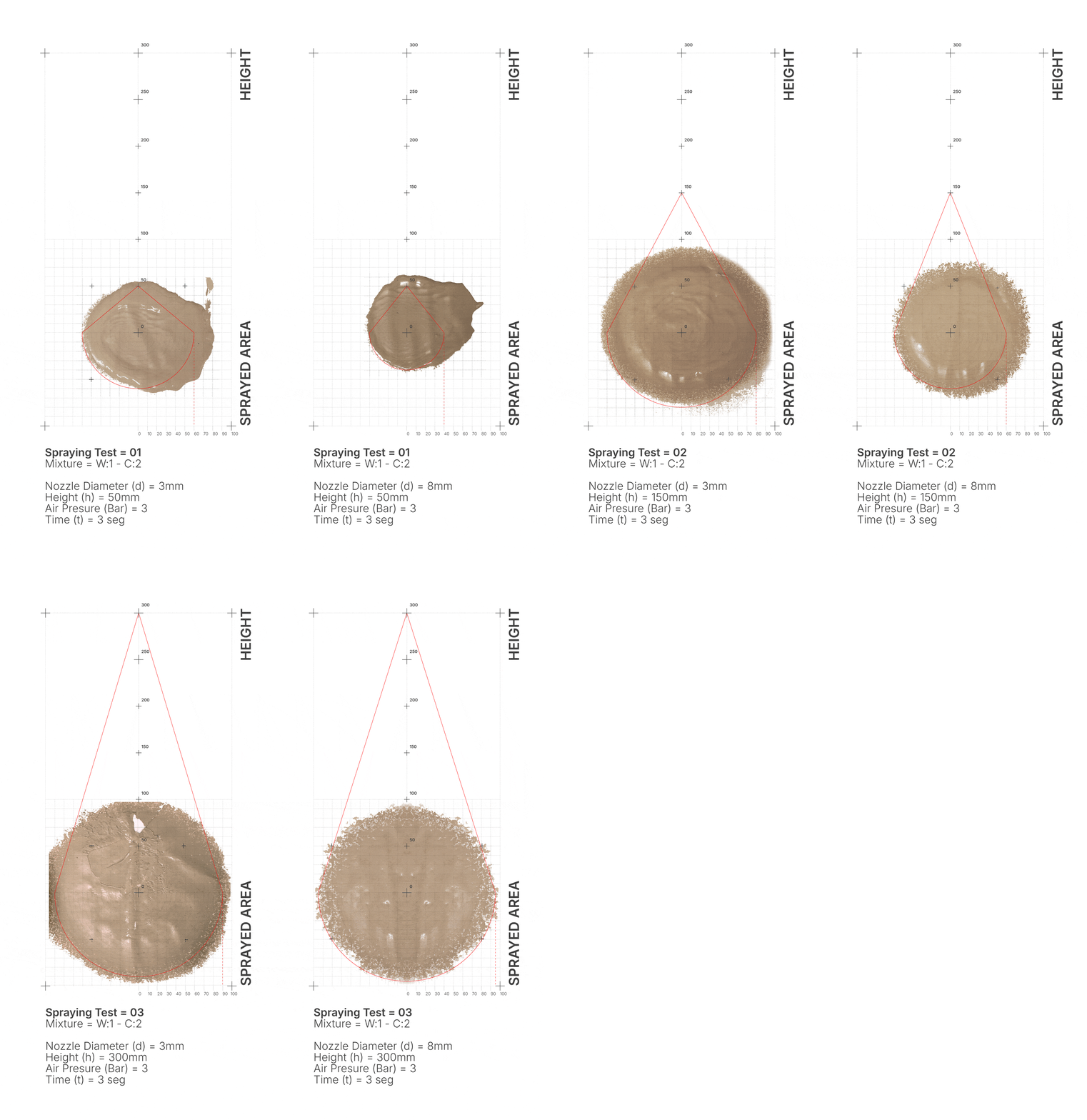
At short distances, nozzle diameter controls precision. At longer distances, height becomes the dominant parameter, both nozzles converge to the same spray area. This gives the robot two distinct modes of deposition control
Composite Exploration : Clay Mixtures and Textile Variables
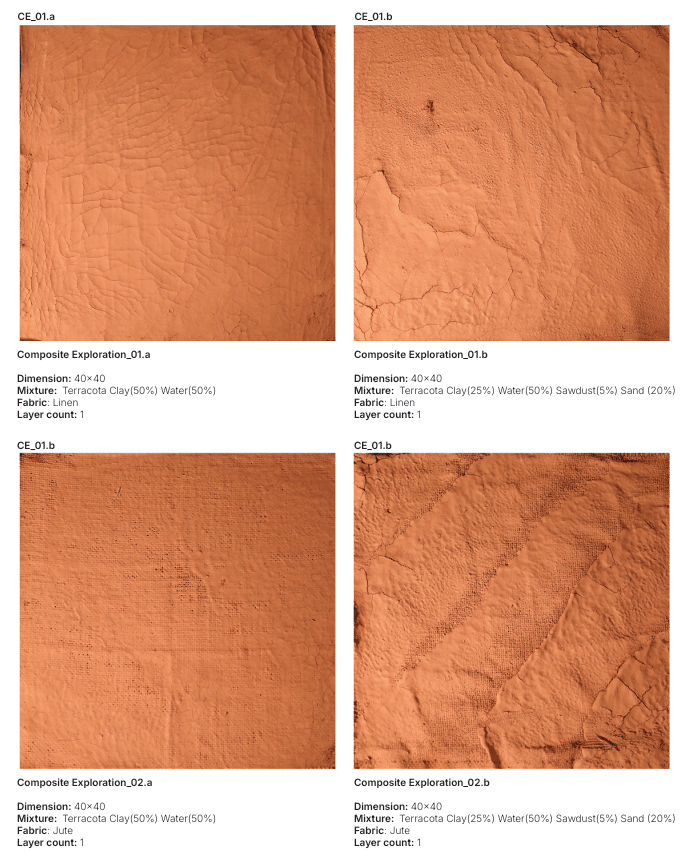
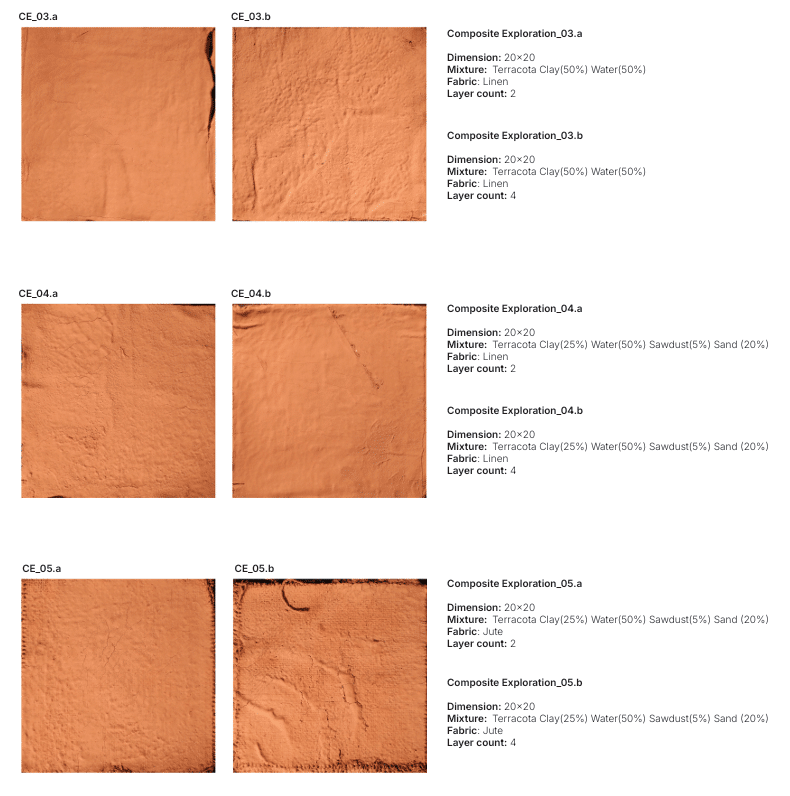
Different composite types were tested on two fabrics, linen and jute, across one, two, and four-layer configurations. By modifying the clay mixture through the addition of sawdust and sand, the primary influencing factors were identified. While fabric texture affects surface behavior and adhesion, layer count emerged as the most significant determinant of rigidity. These findings demonstrate how clay can actively contribute to shaping the structural performance of a surface.
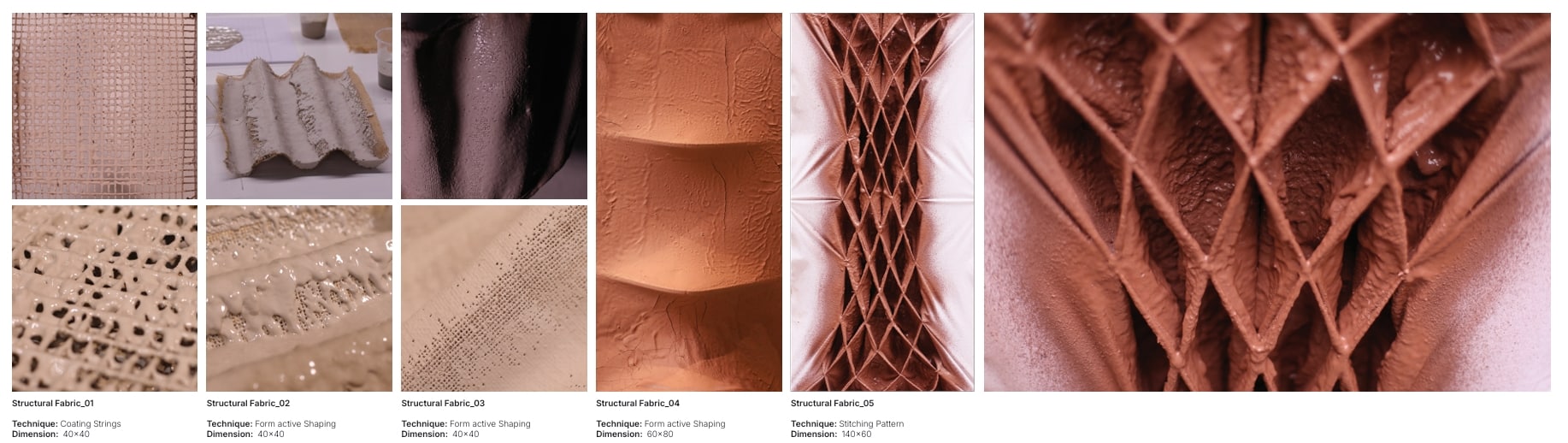
Structural Fabric : From Coating to Structural Surface
Once the material parameters were established, the focus shifted toward geometric activation. The central question became how a flat textile surface could be made self-supporting. Various strategies were explored, including the use of strings, form-active shaping, and ultimately, stitched patterns.
It was observed that stitching generates localized pockets within the fabric. These pockets function as retention zones, capturing sprayed clay during deposition. In this way, the pattern guides material accumulation with precision, transforming a flat textile into a rigid, load-bearing structure capable of supporting weight.
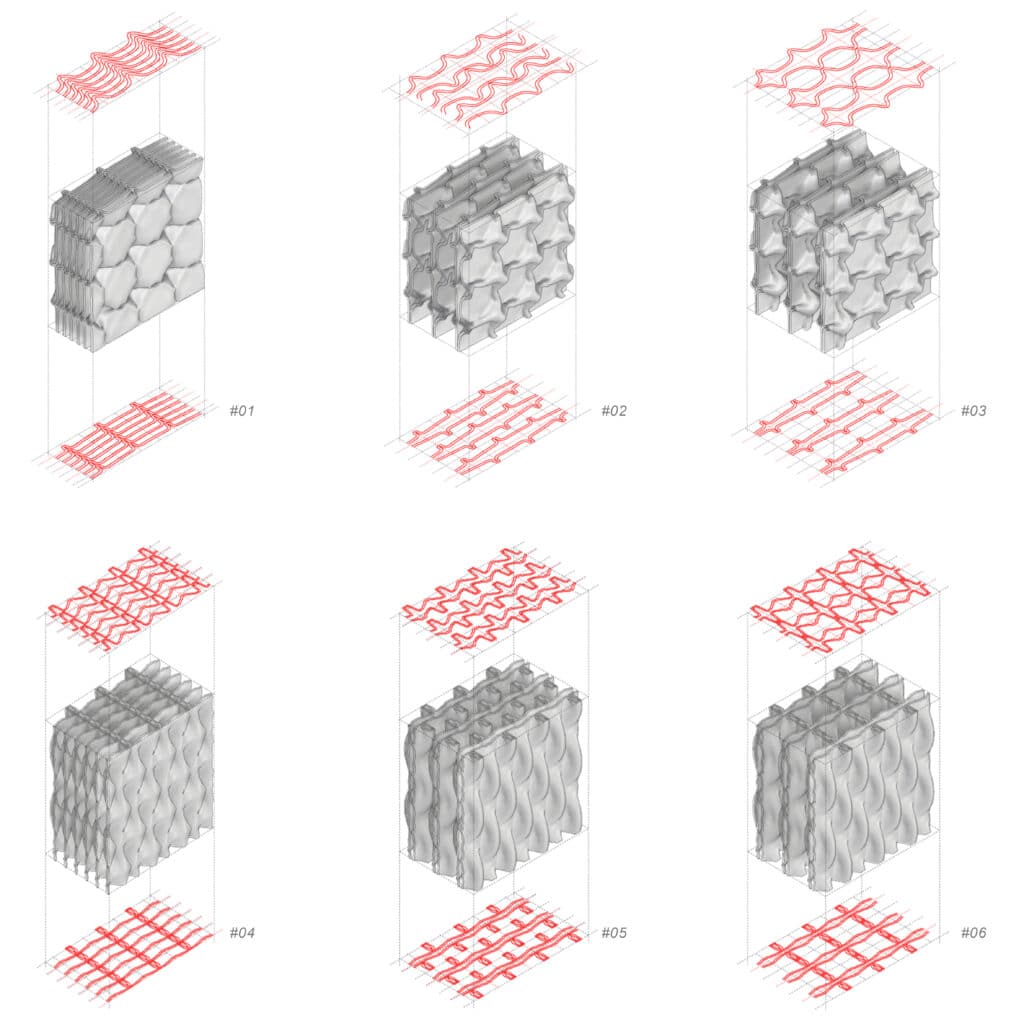
Stitching Patterns : Shrinkage, density and pocket geometry
These stitching patterns function as blueprints for the material system. Six different designs were tested across three parameter variations to evaluate how each configuration captures and retains clay.
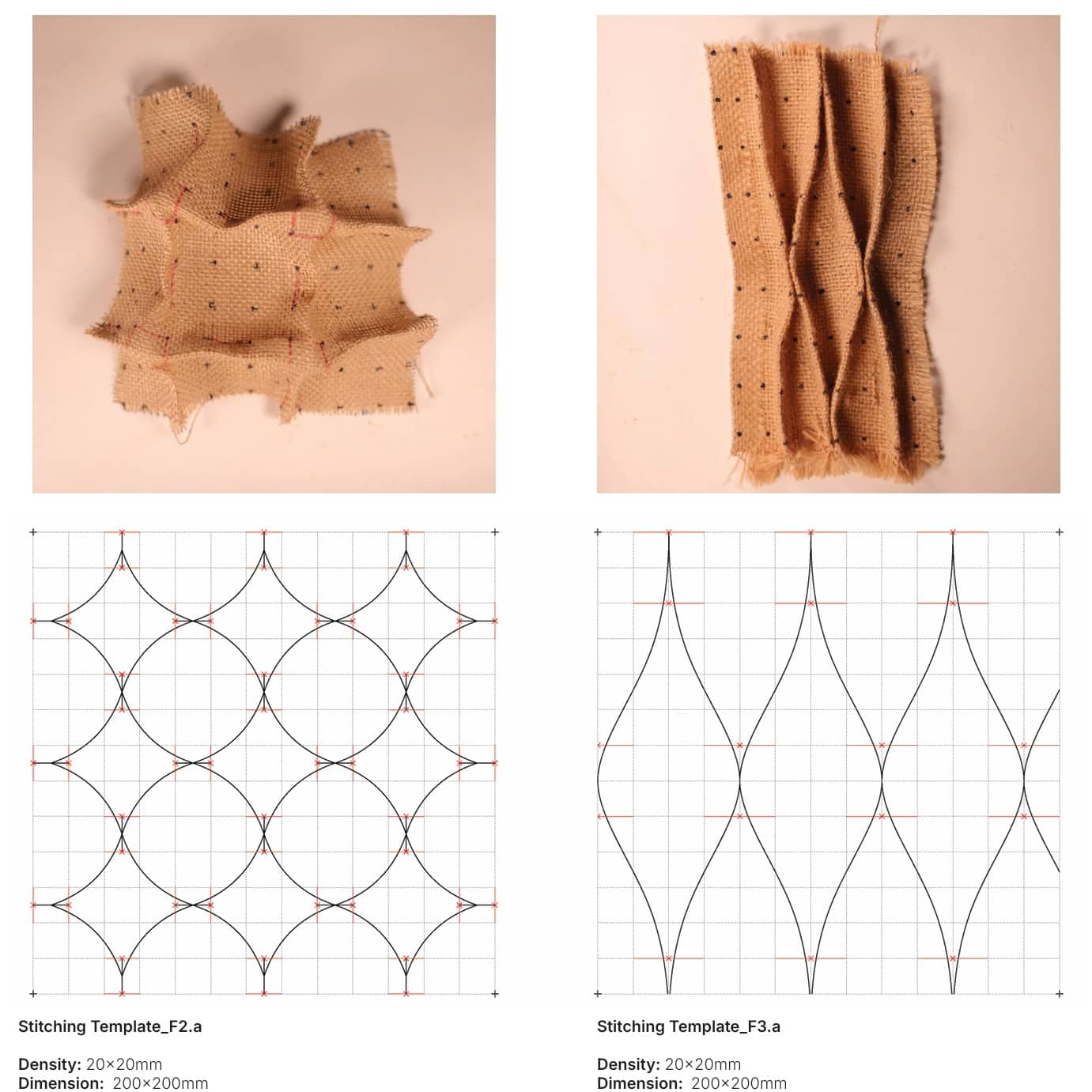
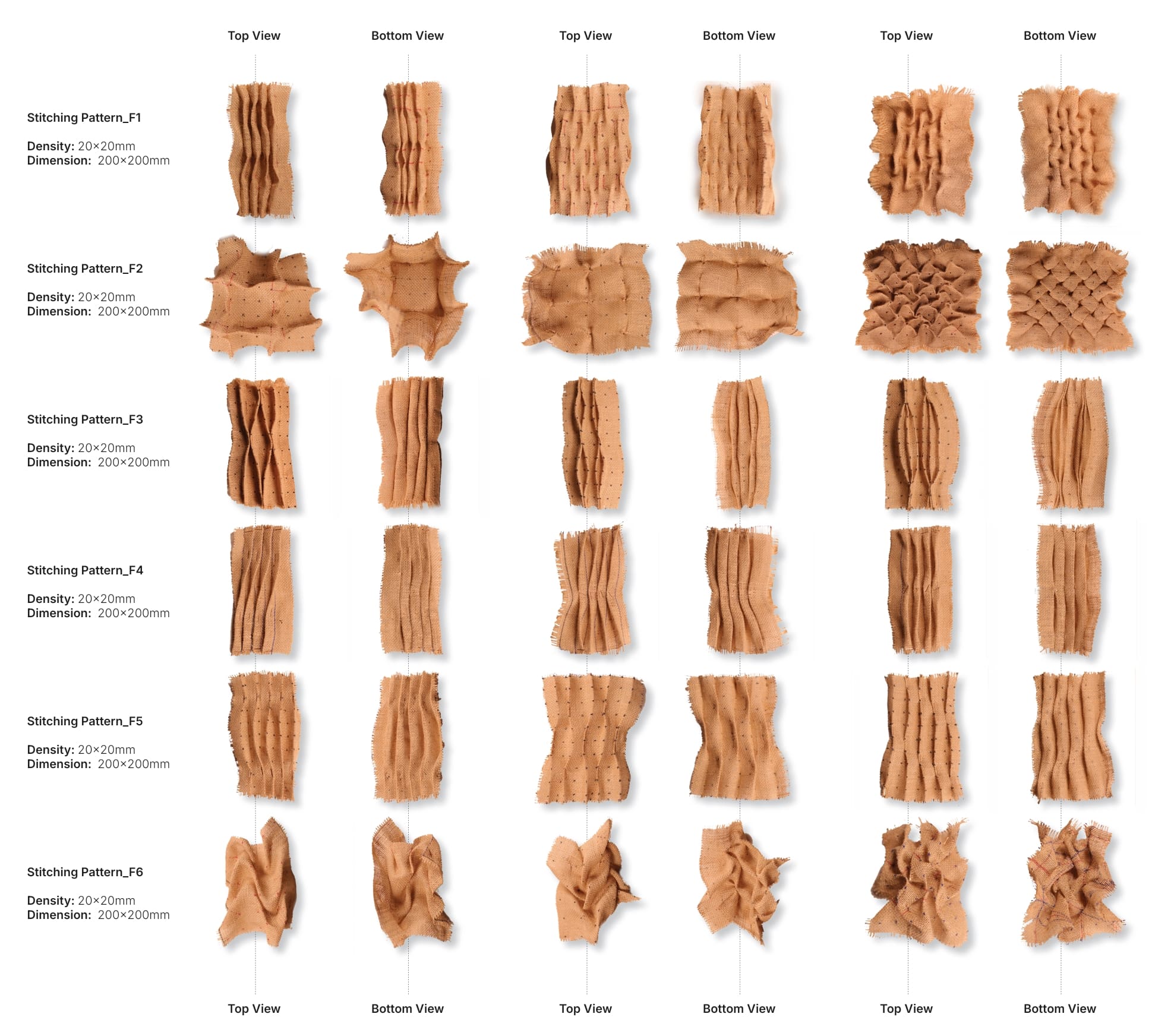
As illustrated in the top and bottom views, each geometry produces distinct three-dimensional behaviours. Some patterns induce shrinkage and tightening of the fabric, while others generate deeper, more open pockets that allow significant material accumulation. Through this approach, a simple surface is transformed into an engineered system. The pattern directs precisely where the clay is deposited and built up, enabling fine control over rigidity at every point of the surface.
Spraying Strategies : Angle, Distance and Layer Control
Each stitching pattern requires a specific spraying strategy to perform effectively. The relationship between geometry and deposition method proved to be essential. When these two factors work together, the material can accumulate precisely within the stitched pockets. However, if the spray angle is incorrect, the clay does not properly collect in these areas, and if the distance is not carefully controlled, the resulting surface loses durability.
By adjusting key parameters such as spray angle, distance, and the number of applied layers, the structural strength of the surface can be carefully tuned.
Manual Prototypes : Variables at System Scale
These manual prototypes represent the primary data-gathering phase at the system scale. The goal at this stage was to identify and understand the system’s key parameters. By manually testing different geometries, as shown in the video, observations were made on how the clay settles, adheres, and dries across a range of stitched patterns. Each variation provided valuable insights that were later translated into precise instructions for the robotic fabrication process.
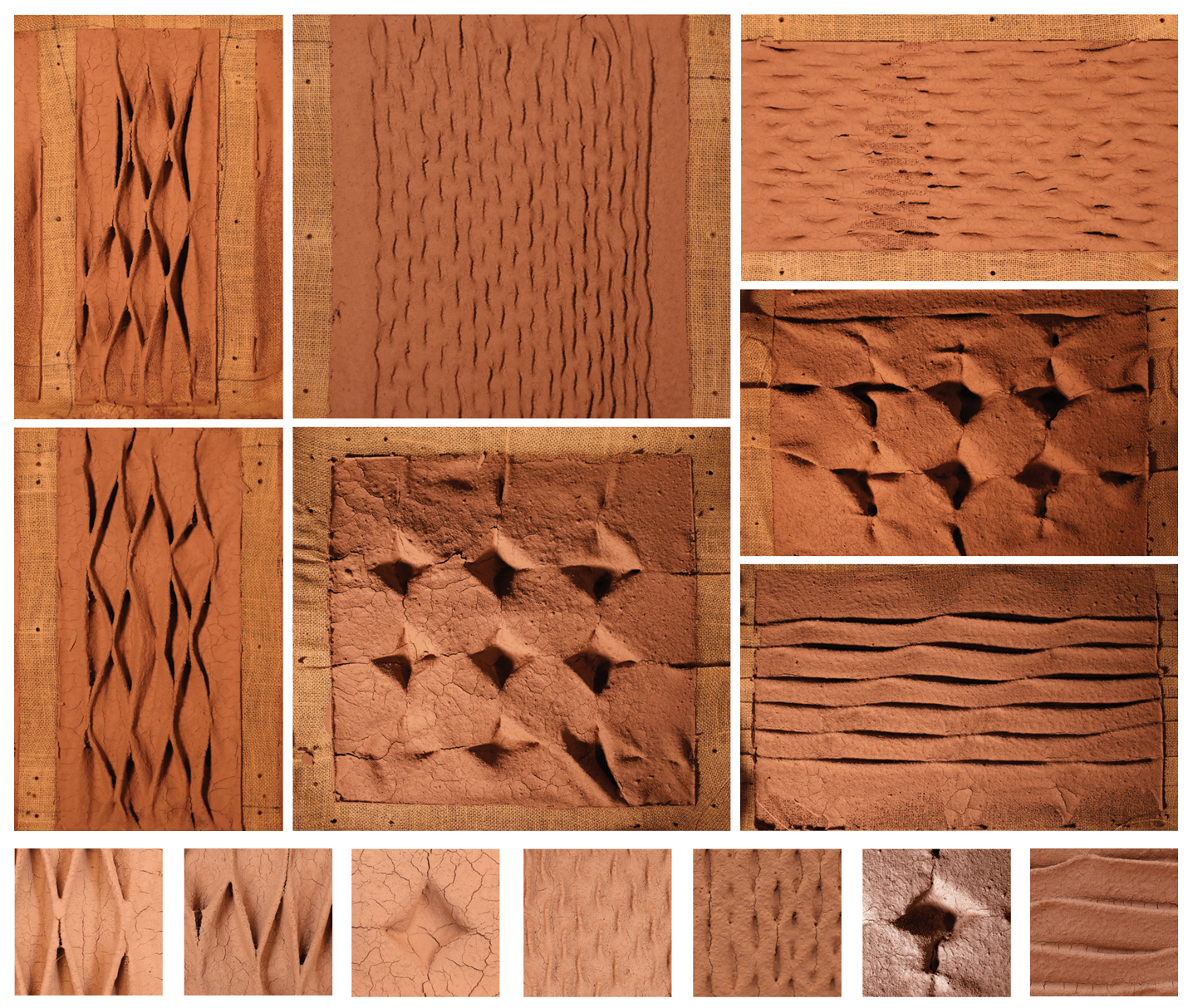
Robotic Prototype : Parameters, results and open variables
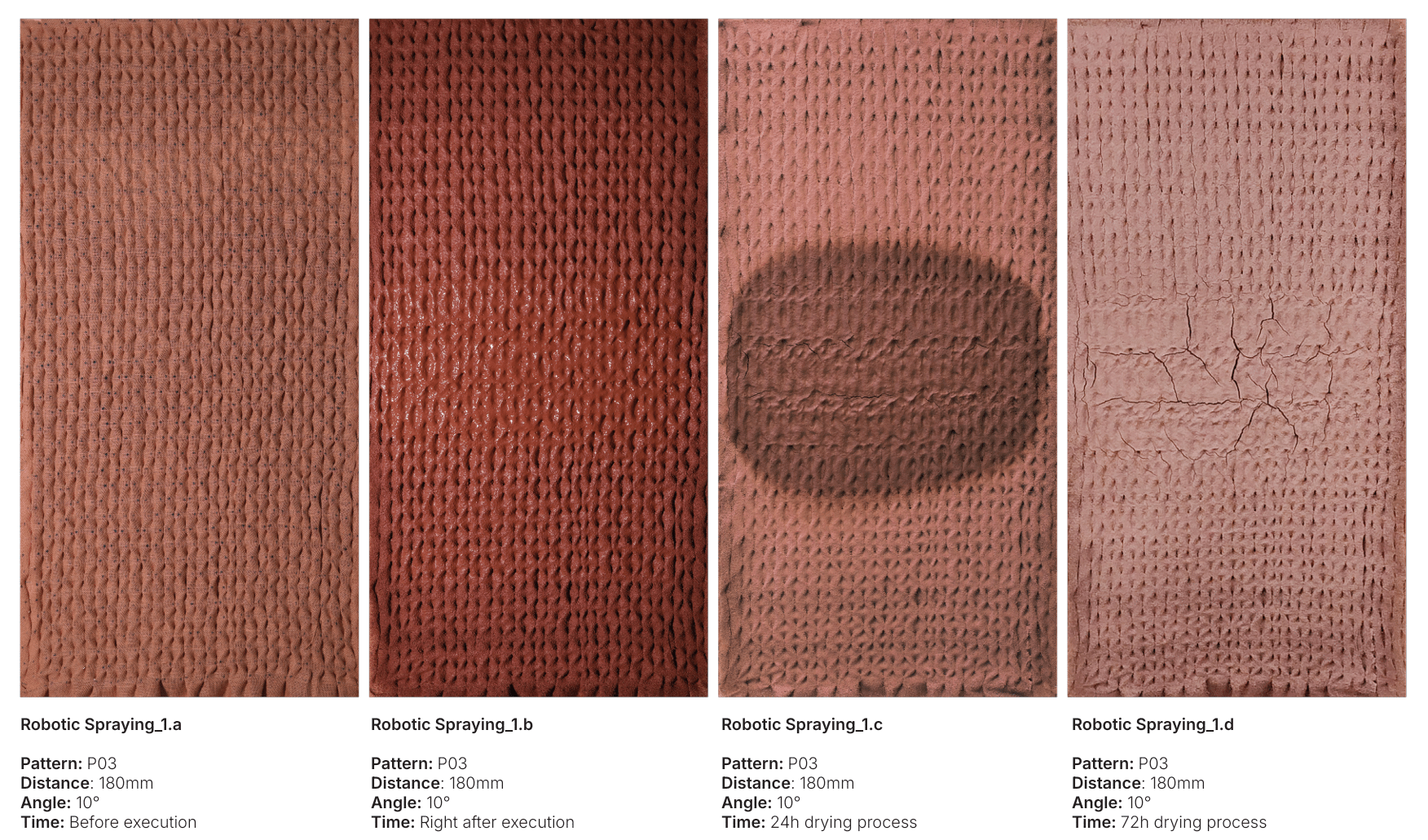
This stage marks the transition from manual data gathering to robotic precision. Through robotic spraying, the process achieved the level of accuracy and repeatability required for a viable construction system. Key parameters were established, including a spraying distance of 180 mm and a 10° angle, allowing precise control over how the clay interacts with the fabric and stitched patterns. These settings make the process predictable and consistent. By documenting the results from the initial spray through the full 72-hour drying period, the behaviour and performance of the material system could be systematically evaluated.
Scaling-up the system : Three Architectural Applications
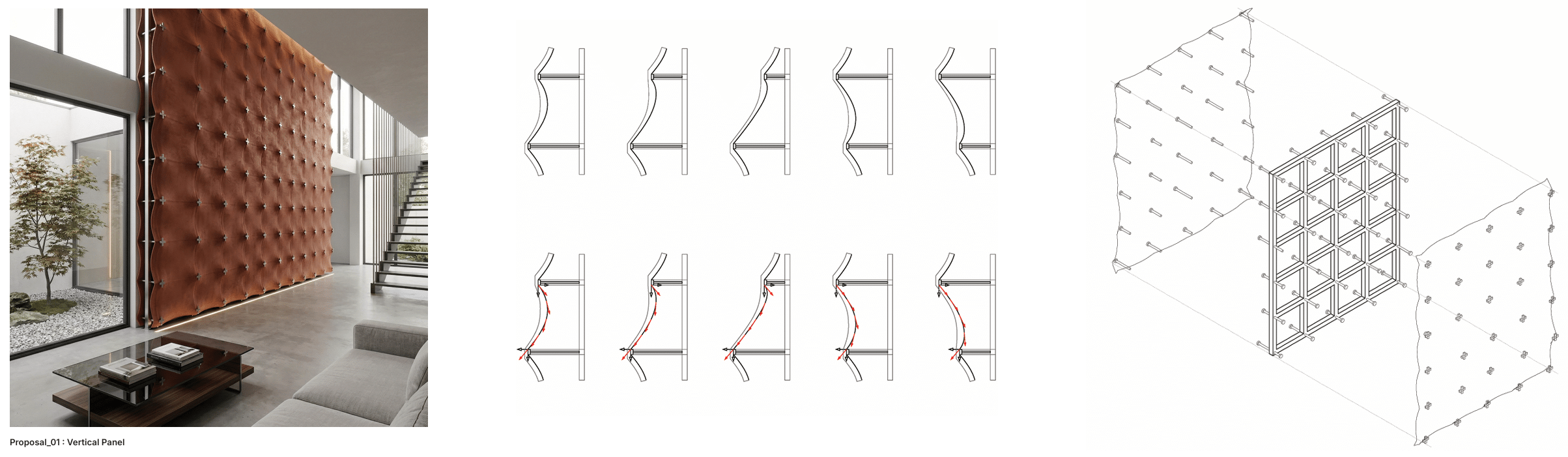
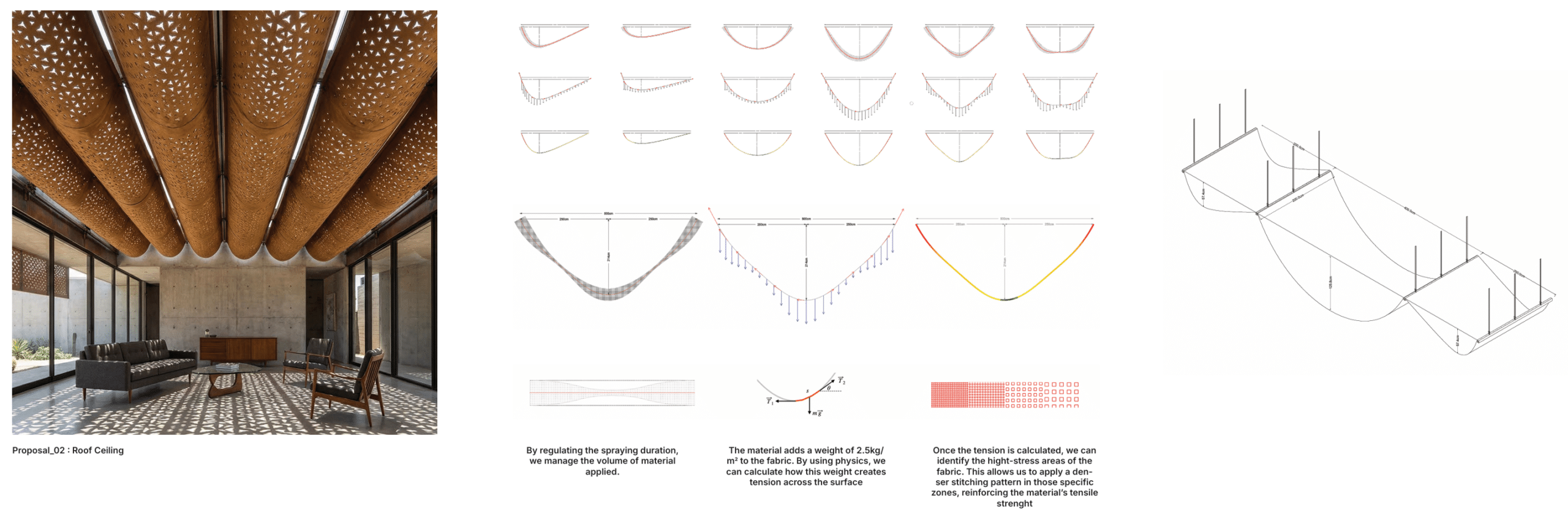
The research now moves toward exploring how the system can be scaled. This includes investigating a range of potential applications, different structural sizes, and broader architectural possibilities. The aim is to transition the system from experimental testing toward practical, real-world implementation.
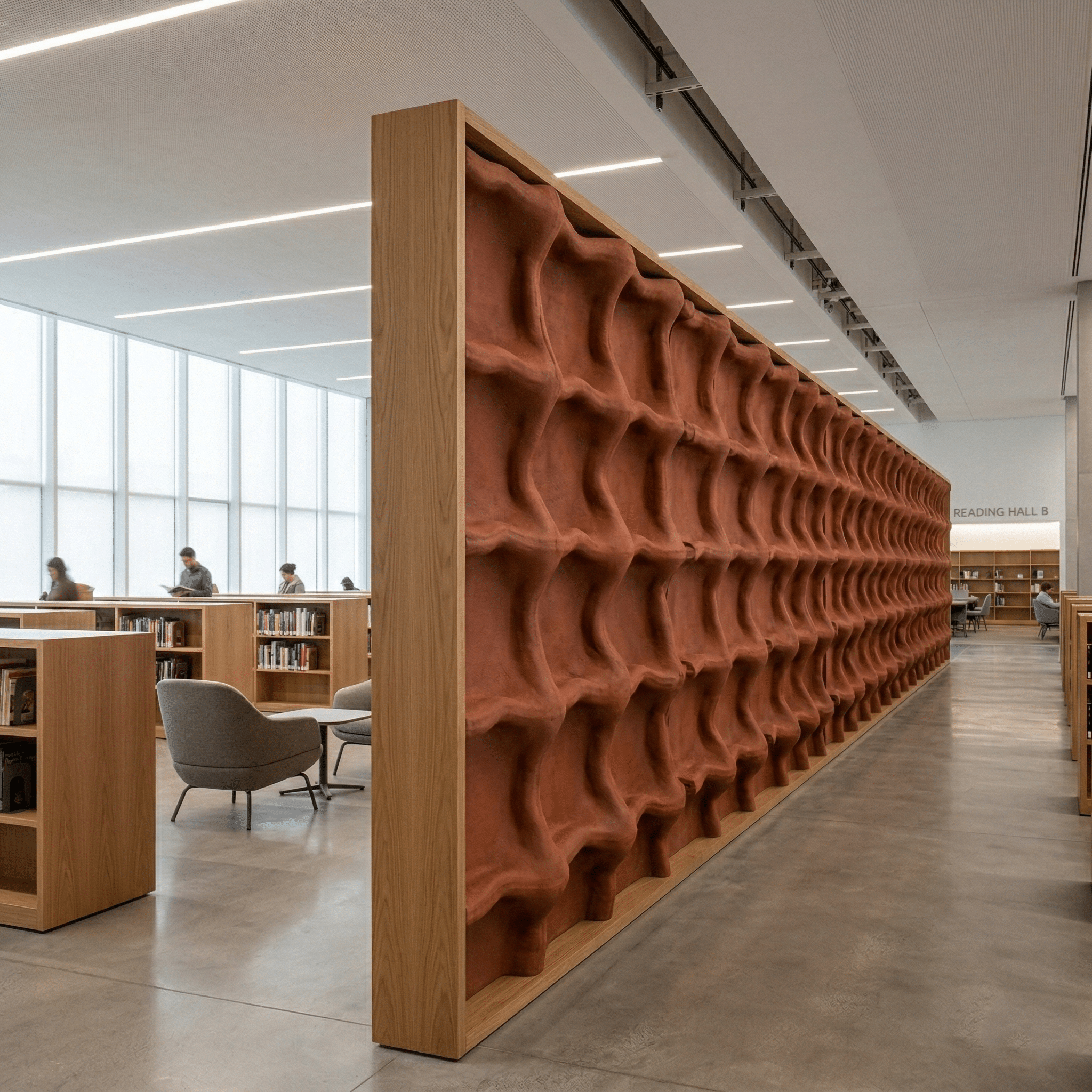
Proposal_01 : Vertical Panel
Proposal_02 : Roof Ceiling
Proposal_03 : Self-Structural Panel