This project focuses on the reviving of the Bab Al-Lug market in Cairo, through the topics of Light, Path and Structure.
Design idea:
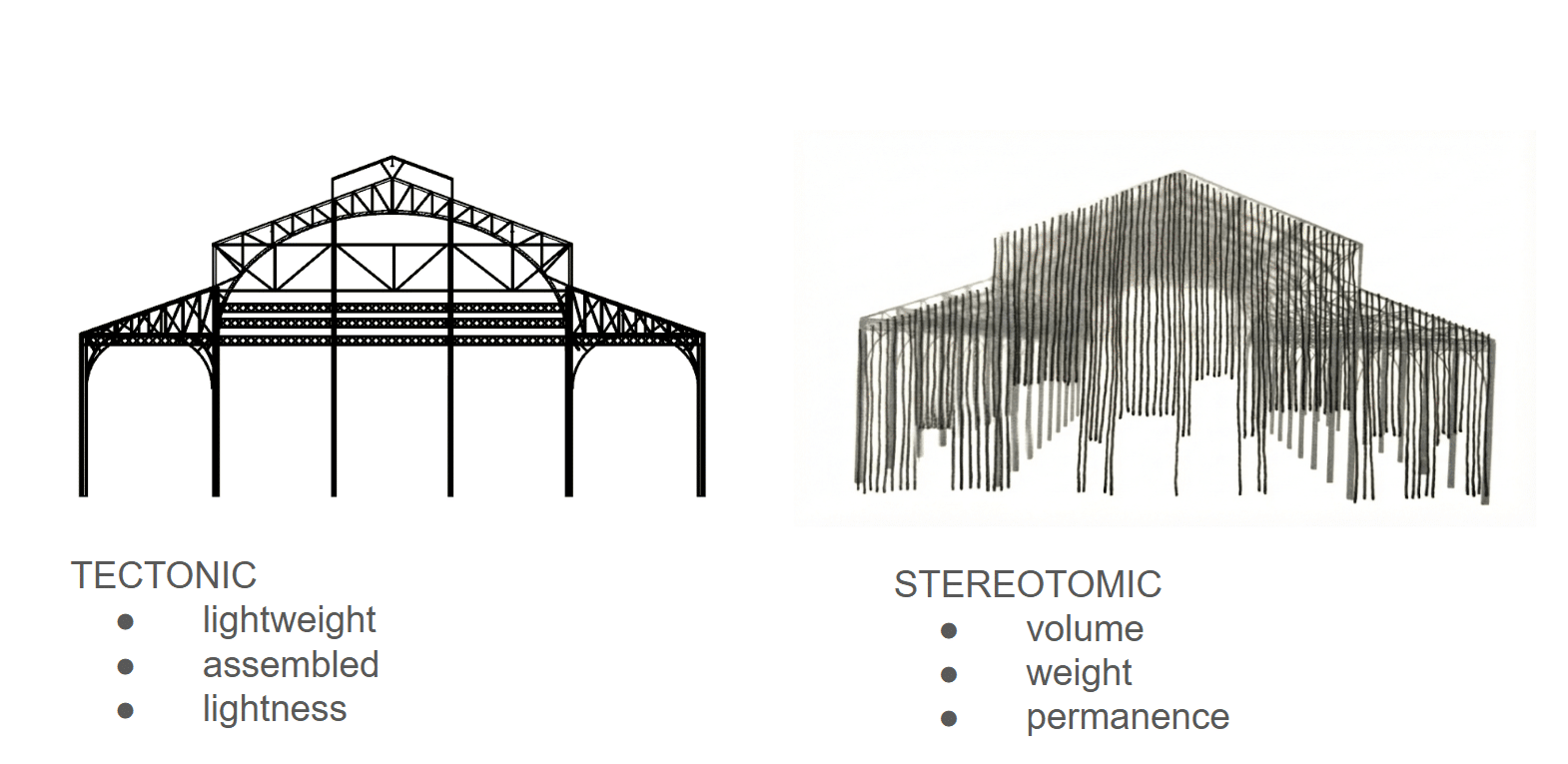
Established in 1912, the Bab Al-Lug market offered a state-of-the-art modern design inspired by the Halles in Paris The market’s metal structure is a typical example of tectonic architecture with its lightweight, thin elements assembled together. This project celebrates its structure by playing with its opposite, the stereotomic architecture. Stereotomic architecture is often full, heavy and deals with volume, mass and permanence. This project builds on the line between the two. It focuses on the empty volume, it saturates the space while filling it with light and movement in order to offer immersive spatial experience for its users.
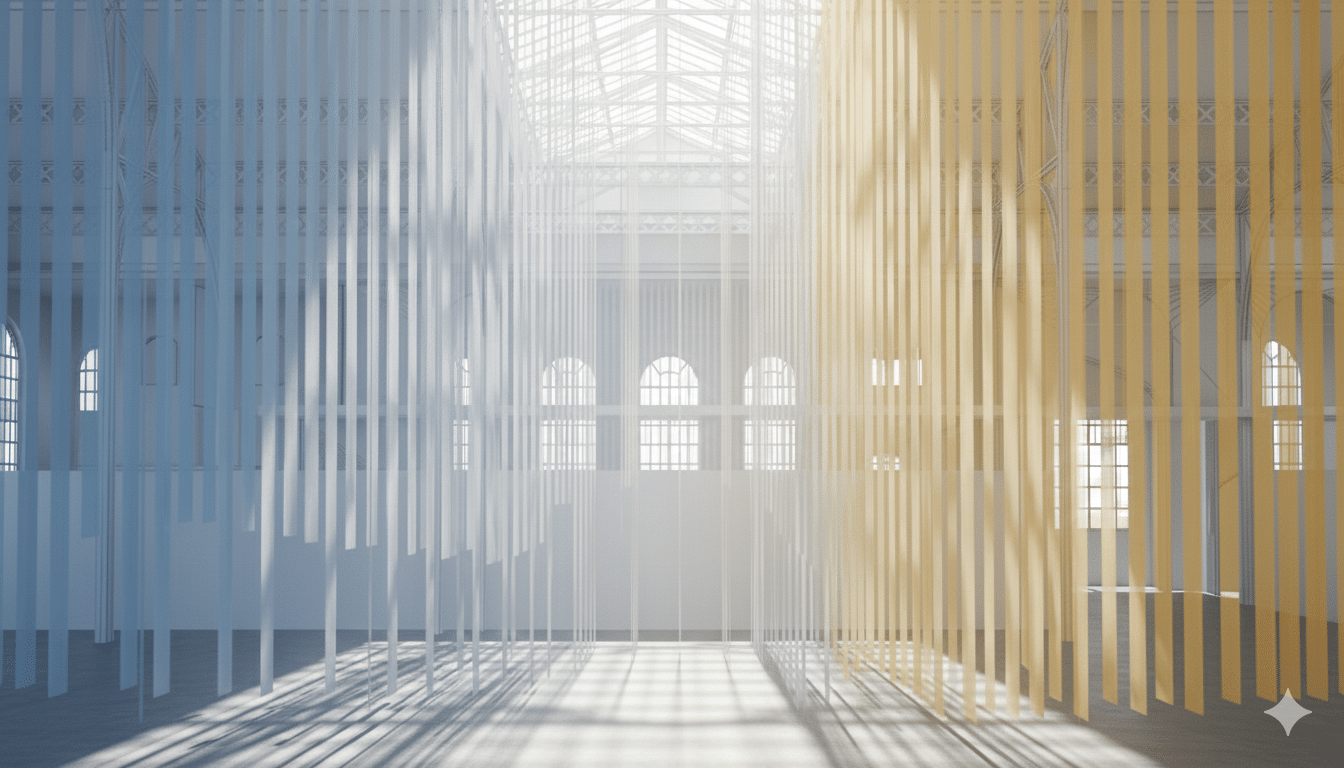
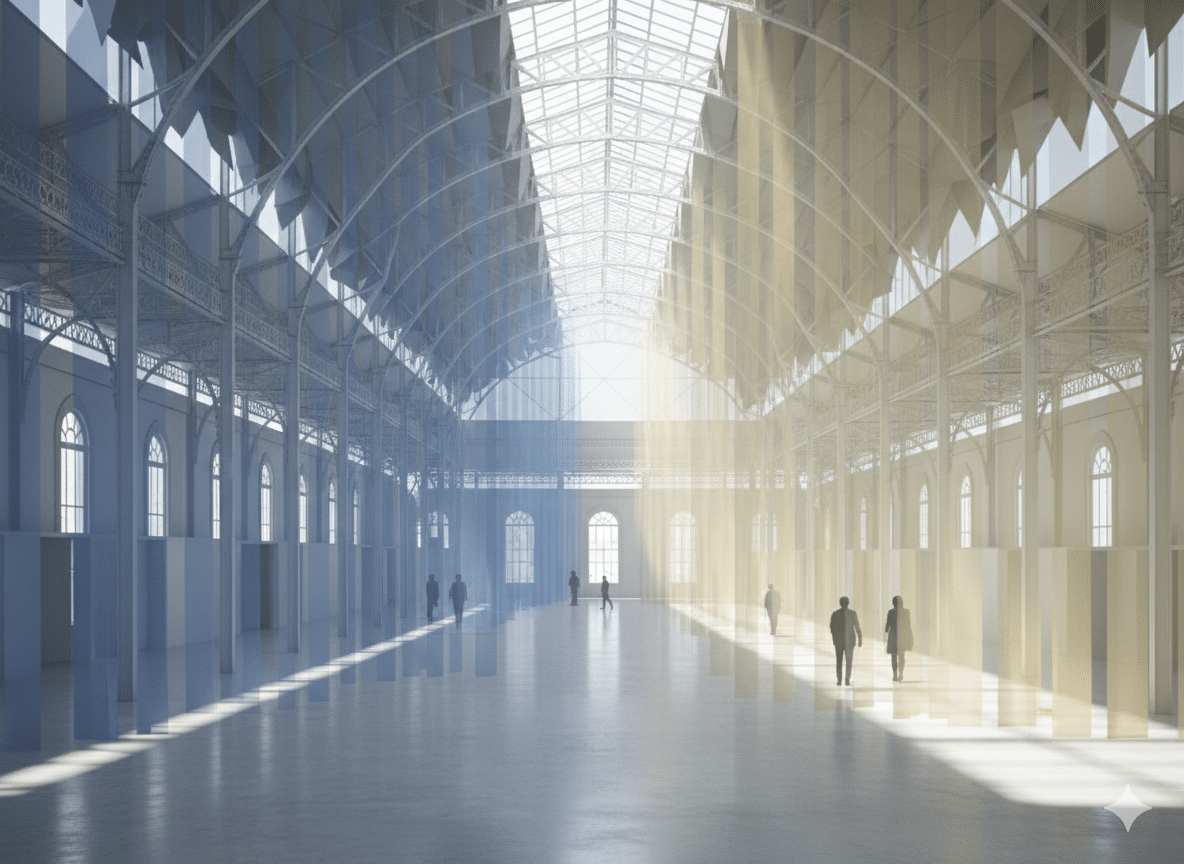
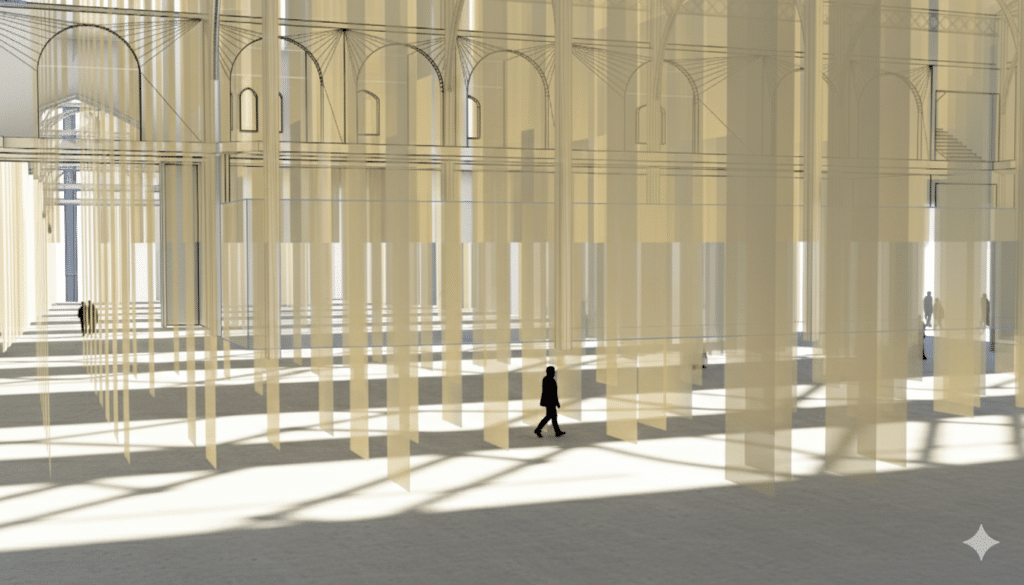
Soft fabric and curtainlike elements were used to bring in the light down from the roof. The roof uses a tessellation approach to filter out the sunrays. The fabric is translucent and transfers the light from above directly into the movement pattern of the everyday users. Since the fabric is susceptible to motion, the wind breeze pattern is reflected in its movement. By these means the light informs the path of the people in its everyday use and the design offers response to the topic of light, path and structure.
The computational workflow :
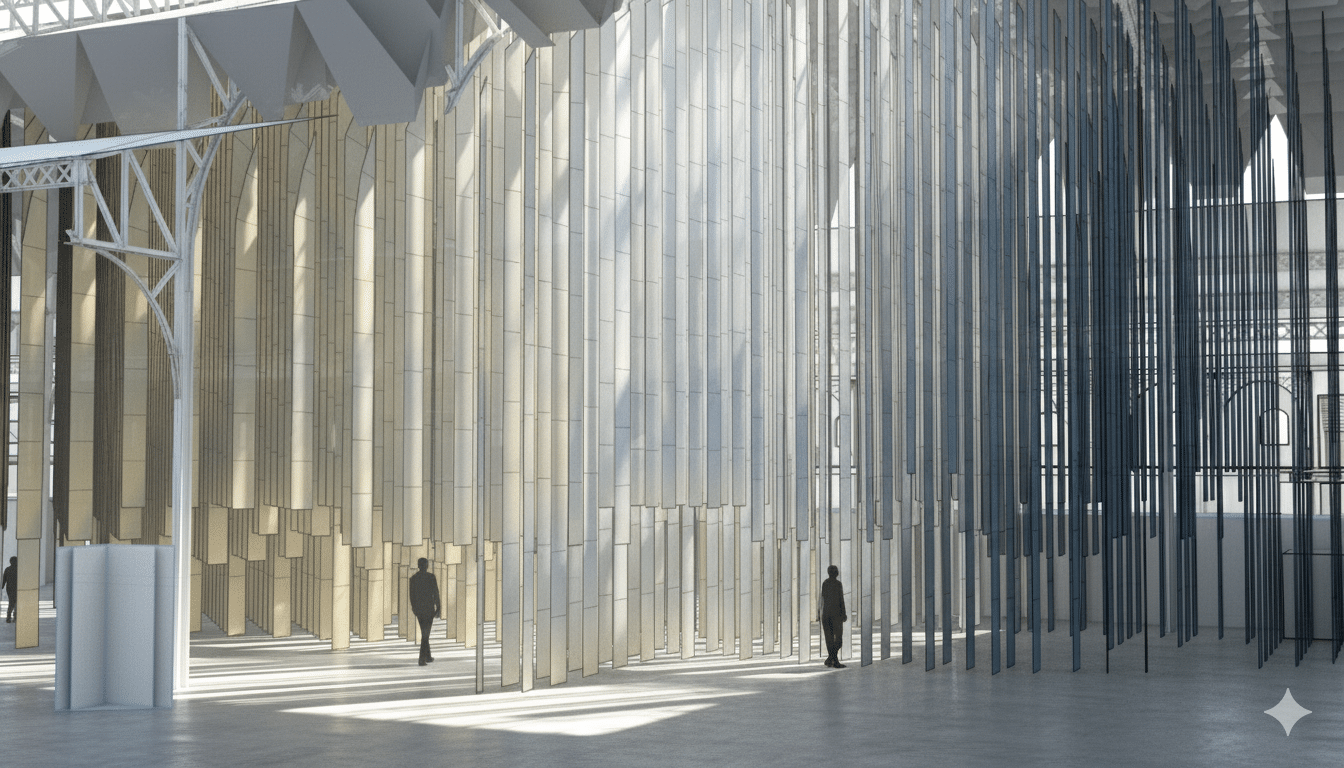
We first filled the center nave with voxels, tested them with the volumes of the existing shops, and then used that pattern to cull the voxels. As a result the voxels carried out the absence of the shops as a memory build in the market. Since the voxels dominated the center space, the primary movement was pushed towards the side wings. The design places the shops there. In this manner the center space was reserved as a public space for spatial exploration. Inverted truncated pyramids tessellated the roof and guided the light down the market. Furthermore a Perlin noise scaling factor then completed this tessellation, enhancing light filtration.
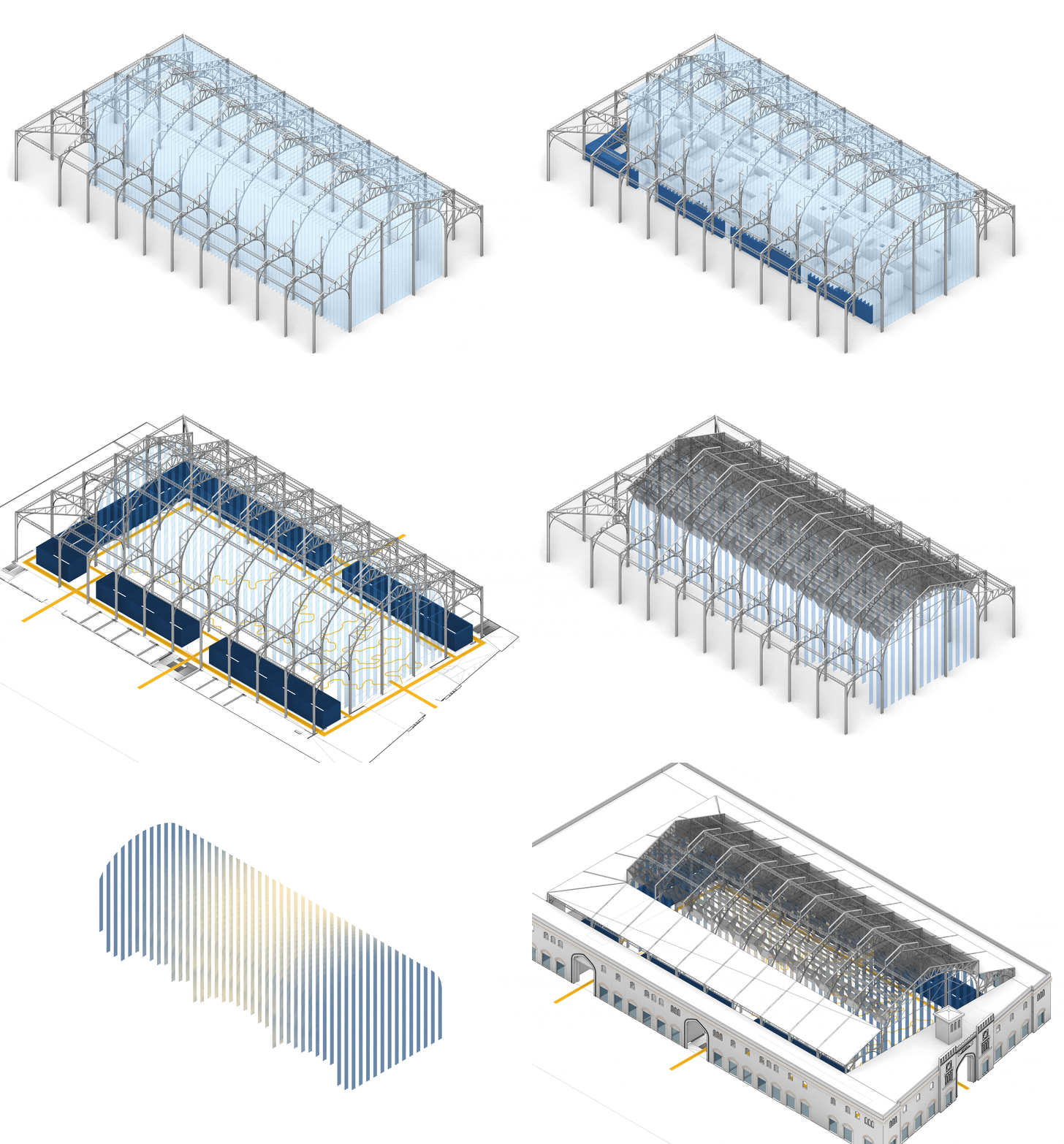
On the 22 of February and on the 22 of October Cairo celebrated the Abu Simbel Sun Festival at the temple of Ramses II. The temple’s design perfectly aligns the inner sanctums with the sun rays on these two dates of the year. At all other times the inner sanctuary of the temple sits in darkness. The sun rays from February 22nd colored the voxels. This was a way to reflect the Abu Simbel solar event.
Design iterations:
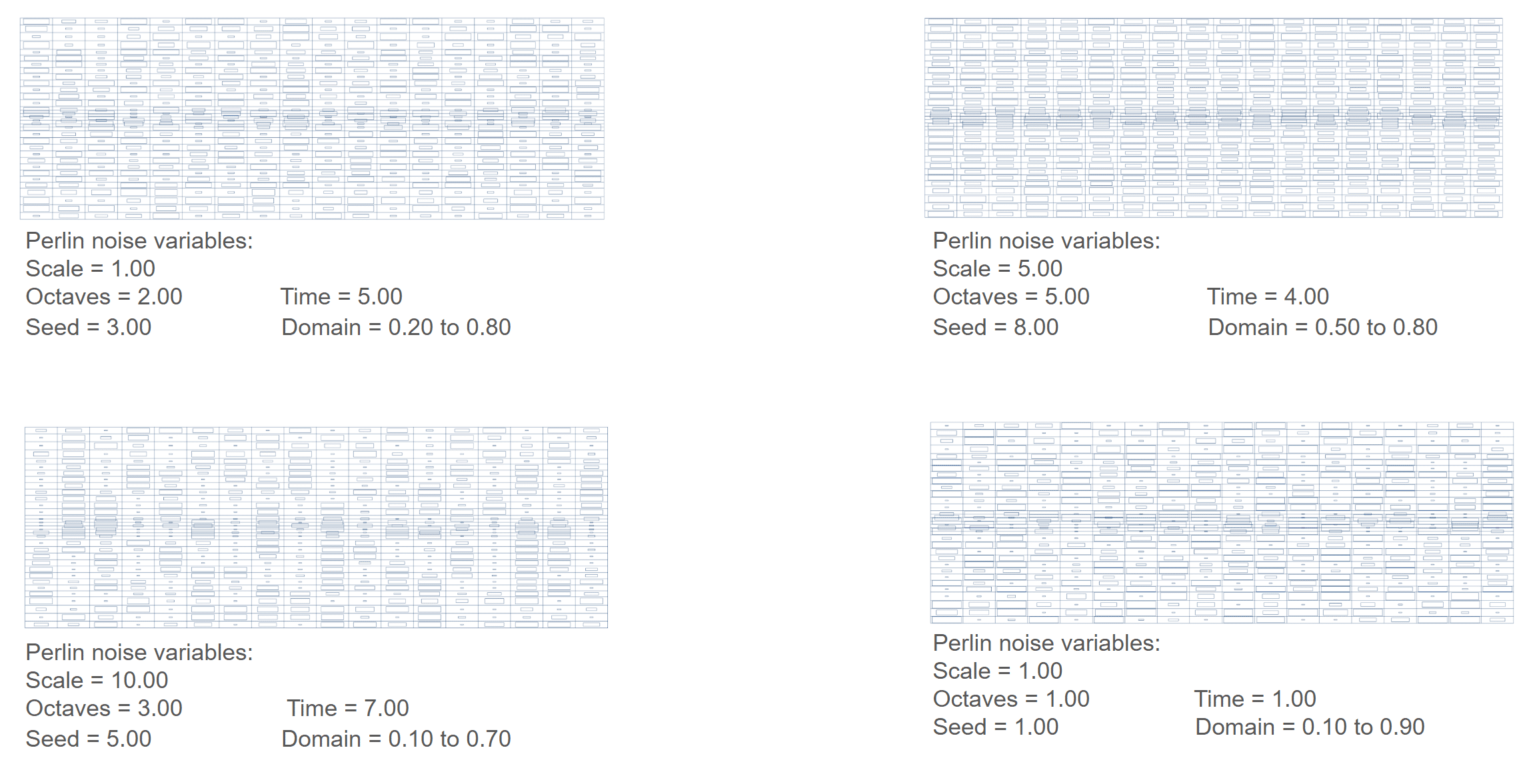
The design went through few iterations before settling on the final variable values. The research began by exploring roof tessellations, with a focus on the Perlin noise variables..
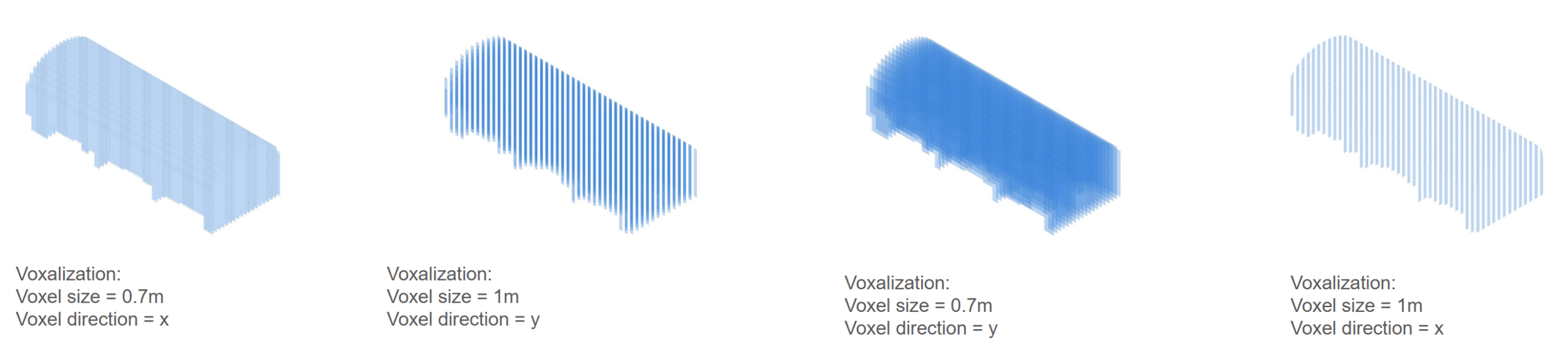
The other point of consideration was the voxelization dimensions and sizes. Afterward the design continued with the last iteration of 1m for voxel size and the x direction
The section and plan view studies show some of the design goals achieved. Voxels occupy the main space, leaving the side wings for shopping. At the same time visitors are encouraged to explore the voxelated space offering numerus movement patterns and new squares to be discovered. The design offers new public space with remembrance of the old market. It addresses the central void, creating a visually and kinetically rich interior by introducing a deliberate infusion of light and motion to ensure a deeply engaging user experience.
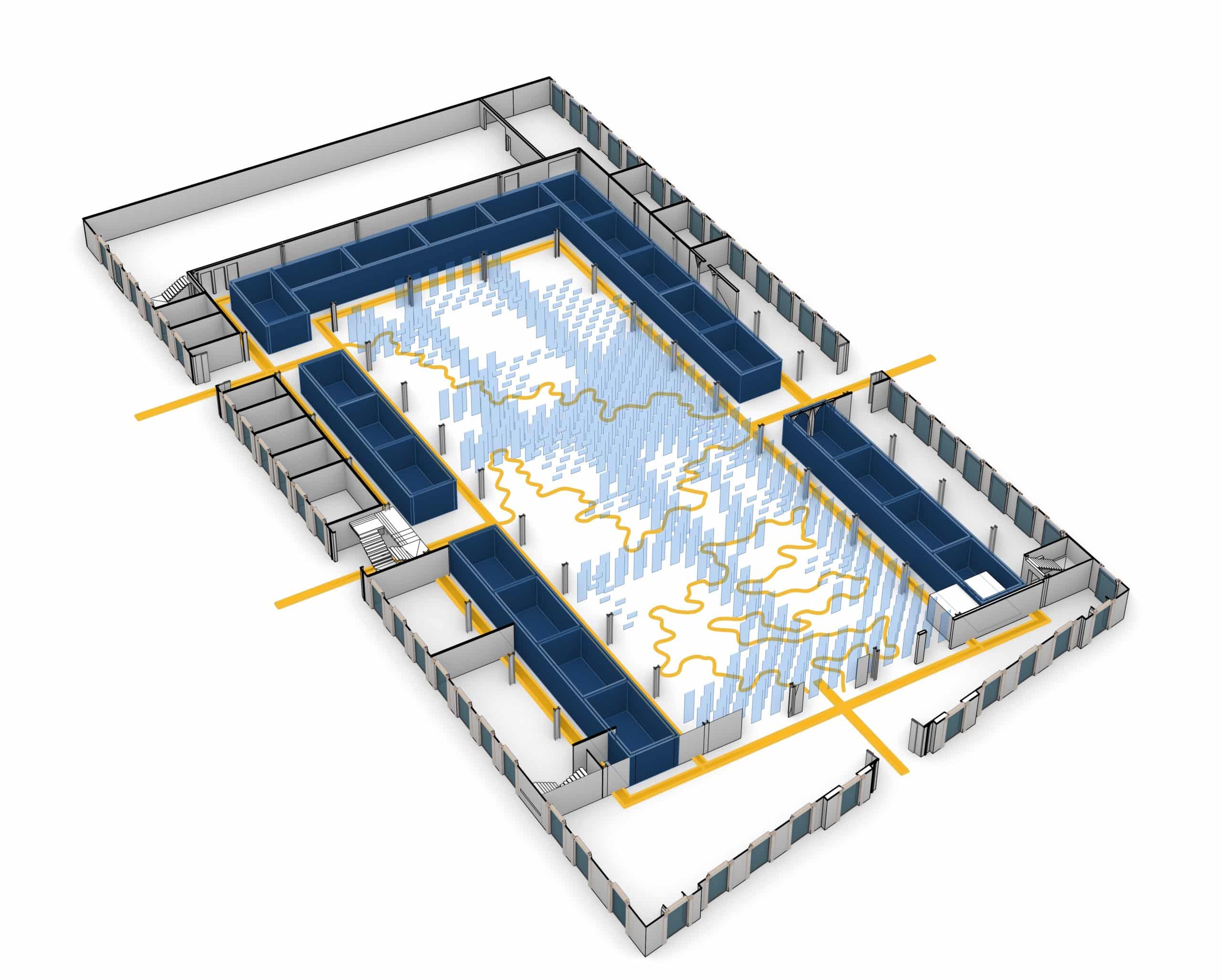
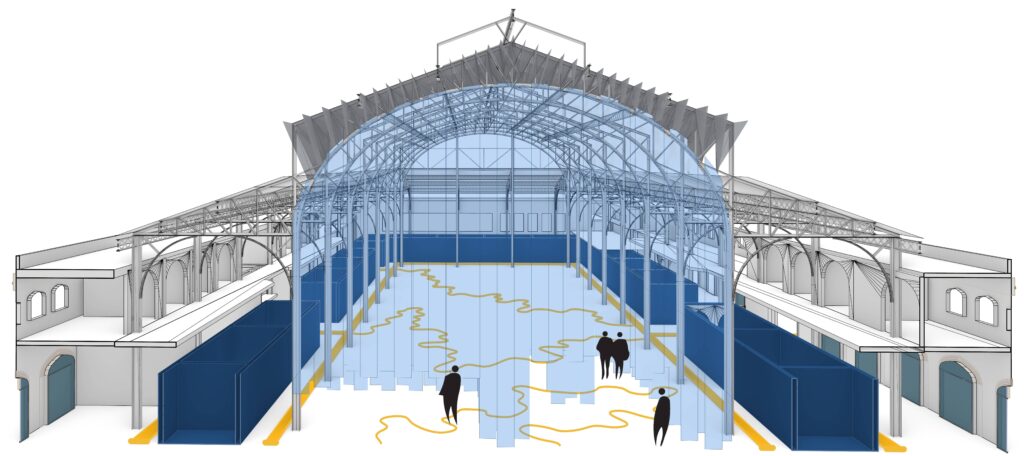
Above the voxelized space the roof employs a sophisticated tessellated system of inverted, truncated pyramids designed to optimally filter sunlight. To enhance this filtration, the tessellation incorporates a Perlin noise scaling factor. Below, translucent, drapery-style fabric elements capture and diffuse this light. Sensitive to air currents, the fabric’s resultant motion acts as a direct, dynamic reflection of both the everyday activities and the natural breeze, effectively linking structure, illumination, and circulation.
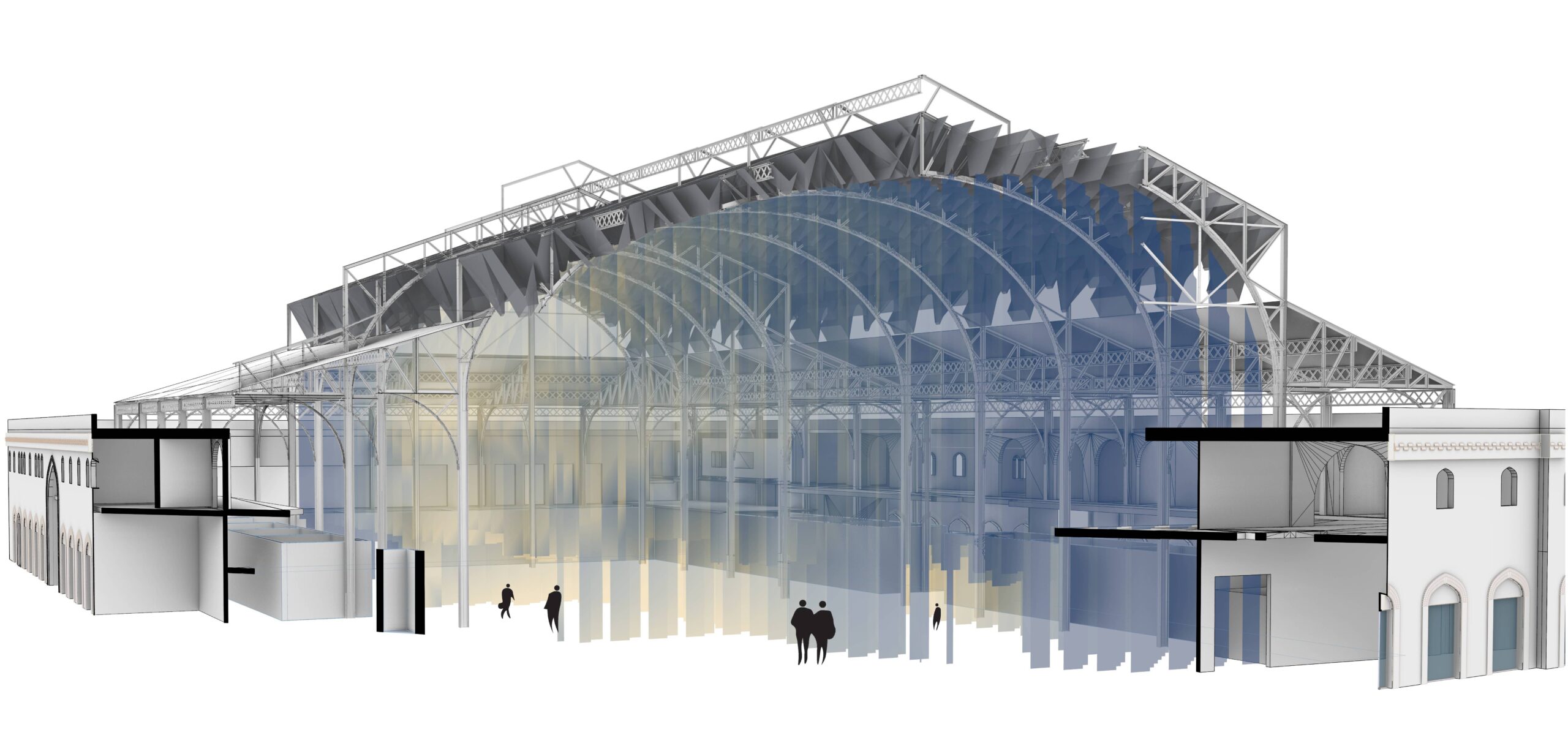
Some of the intended atmosphere emerges within the AI-enhanced renders: