SUNLIGHT IN MOTION: BAB EL-LOUK MARKET ROOF

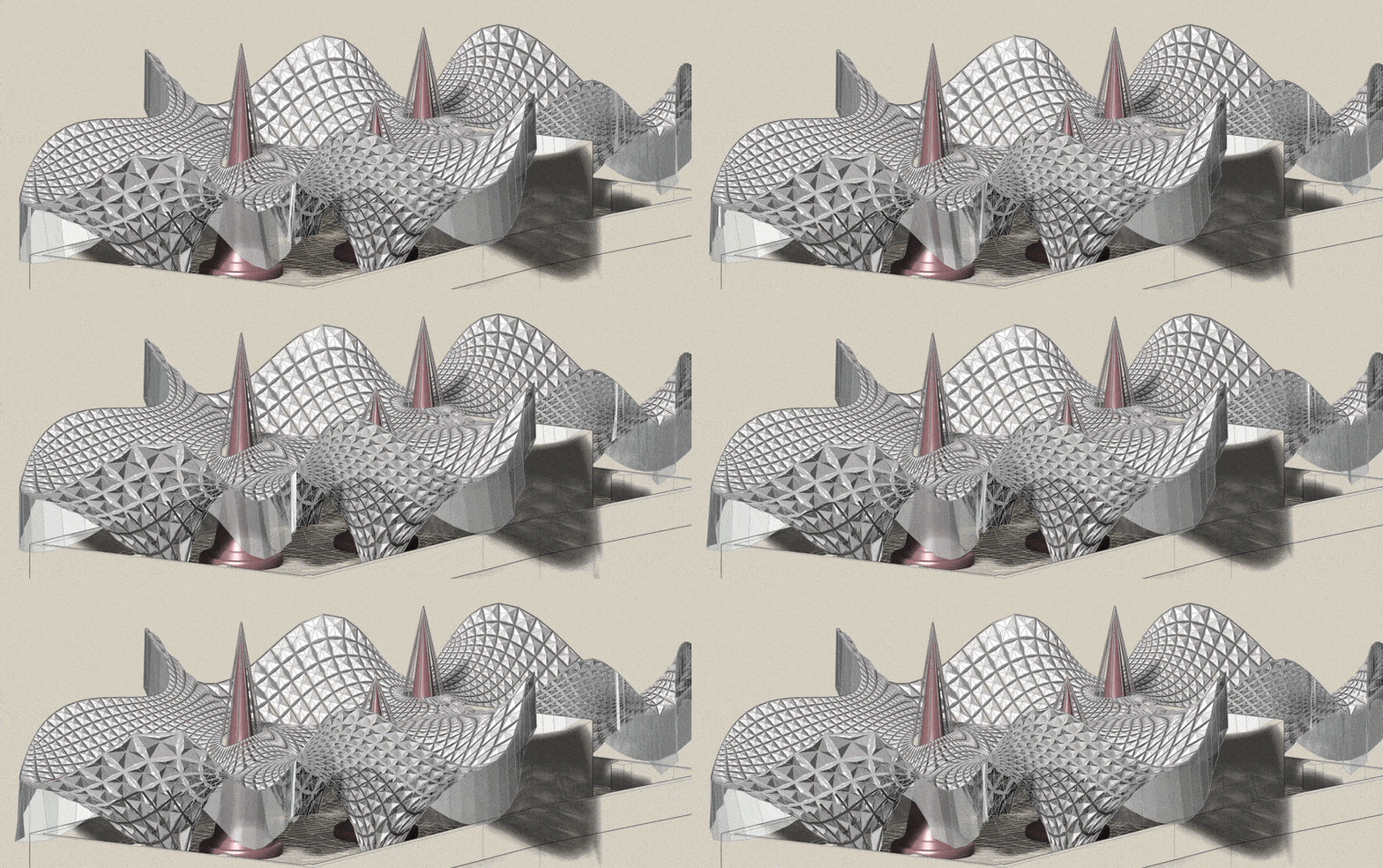
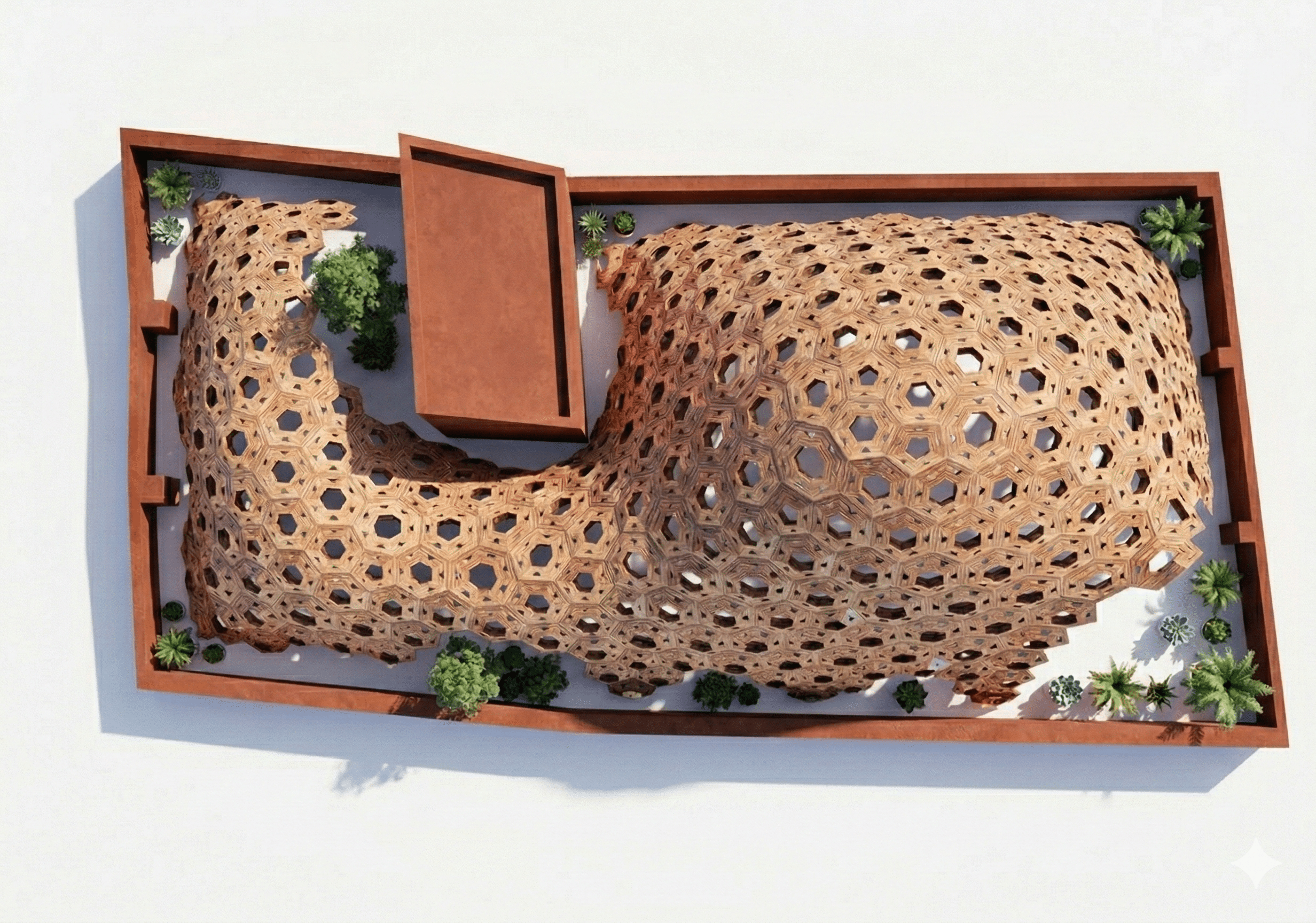
The objective was to transform the existing historic roof market of Bab El-Louk in Cairo through parametric roof design and optimized user circulation while maintaining the existing steel frames. DESIGN CONCEPT & EARLY EXPLORATIONS At the beginning, the goal was to find the roof form by using the existing roof surfaces shown in pink. Starting … Read more

Designing for Comfort: How Digital Tools Informed Our Proposal for Mani Witthaya School

Team members: Nguyen Vu Tue Minh (Chloe), Eduardo Martinez Toribio, Symon Kipkemei Modified by Nguyen Vu Tue Minh on December 12, 2025 //CONTEXT //SITE INFORMATION //CLIMATIC ANALYSIS //DESIGN PARAMETERS 1. Precedent Study & Early stage explorations 2. Form Study 3. Design Exploration To test our ideas effectively, we simplified our design proposal into clean, minimal … Read more

Bouncy Bamboo Pavilion Facade

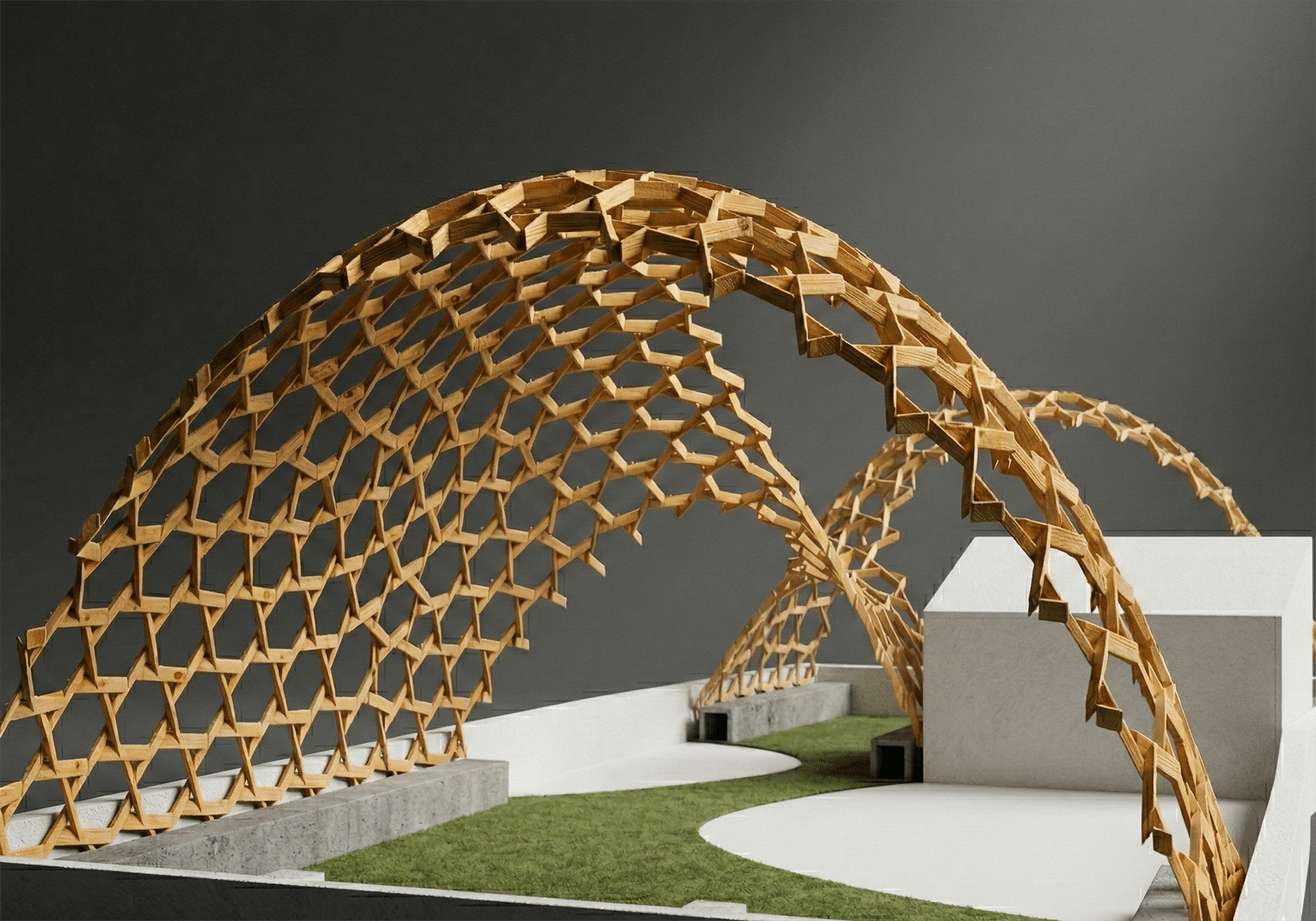
For our Advanced Digital Tools term one final project, we were tasked with designing a building facade based on inspiration from pavilion architecture or existing facades, using Grasshopper. Pavilion Inspiration – The Toledo Gridshell The inspiration for our facade is the Toledo Gridshell constructed in a courtyard in the Naples School of Architecture. When researching … Read more

St. Julian’s – Environmental Analysis Research

Saint Julian’s City in Malta Saint Julian’s is Malta’s nightlife and tourism epicenter (Paceville), causing extreme population density and infrastructure strain in summer. Its coastal development makes it highly vulnerable to climate change impacts like sea-level rise, while its energy-intensive industry contributes to Malta’s emissions. Environmental Analysis to Inform Design Environmental Analysis Workflow The workflow … Read more

THE PNEUMATICAL ⤰ INCRUSTATION

Solid vs. Soft How can an object low in inherent solidity still be structurally present and define architectural space? This question lies at the heart of The Pneumatical Incrustation. Developed for the Complex Forming Seminar, this project explores the fundamental contrast between the solid and the soft. The goal was to investigate how “soft” forms … Read more

Facade Facets

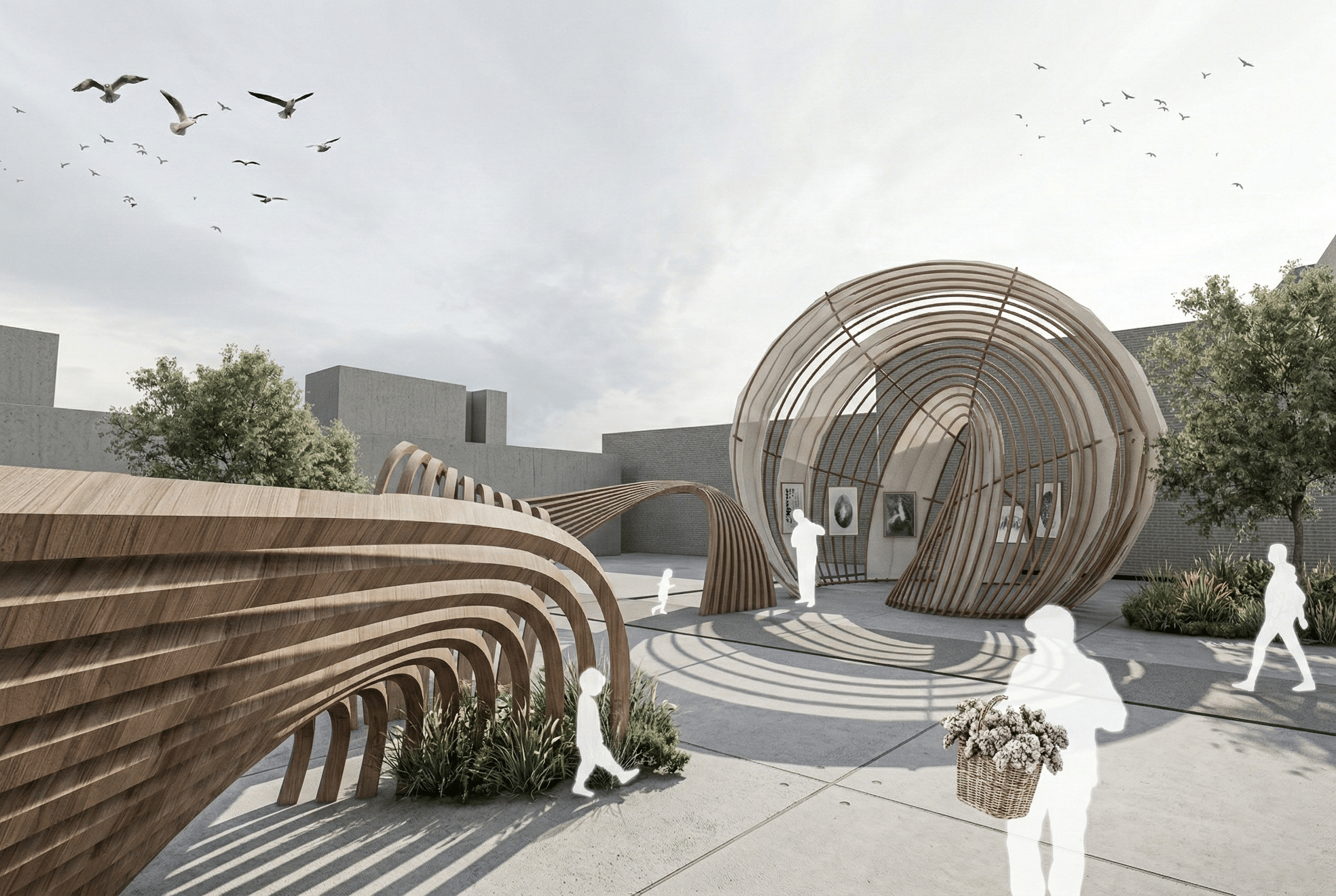
This project is in reference to the 2025 Serpentine Pavilion by Marina Tabassum “Inspired by summer park-going and arched garden canopies that filter soft daylight through green foliage, the structure is comprised of four wooden sculptural forms with a translucent façade that diffuses and dapples light when it enters the space. Integral to Tabassum’s design … Read more

Computational Design Seminar – Candela – Inspired Hypar Facade

Reference Geometry: Los Manantiales – by Felix Candela Decoding the Hypar Logic Félix Candela used hyperbolic paraboloids (hypars) made from straight lines.The restaurant roof is composed of 4 identical shells.The geometry is based on a square, diagonal supports, and straight-line grids. Hyperbolic Paraboloid Drawing by Candela Deriving the shape from Hypar Mirroring the derived element … Read more

Software I non planar 3d printing

Advanced toolpath design for FDM process Students will design and simulate a toolpath for a small object intended for interior or product design. The focus is on exploring creative toolpath strategies, especially non-planar slicing, where the toolpath height changes across the object. Students must design a non-planar path and use attractors to locally deform the … Read more

Computational Design Seminar: Digital logic through an elegant simple fold

  When one mentions an origami, images come to mind easily – that of animal-shaped paper, the kind that fits inside your palm. However, the geometrical aspects and advantages of folding structures have been explored on a larger scale for some time now, with impressively practical results. In architecture, an apparently complex yet harmonious facade … Read more

Computational Design Seminar: Castell Pavilion

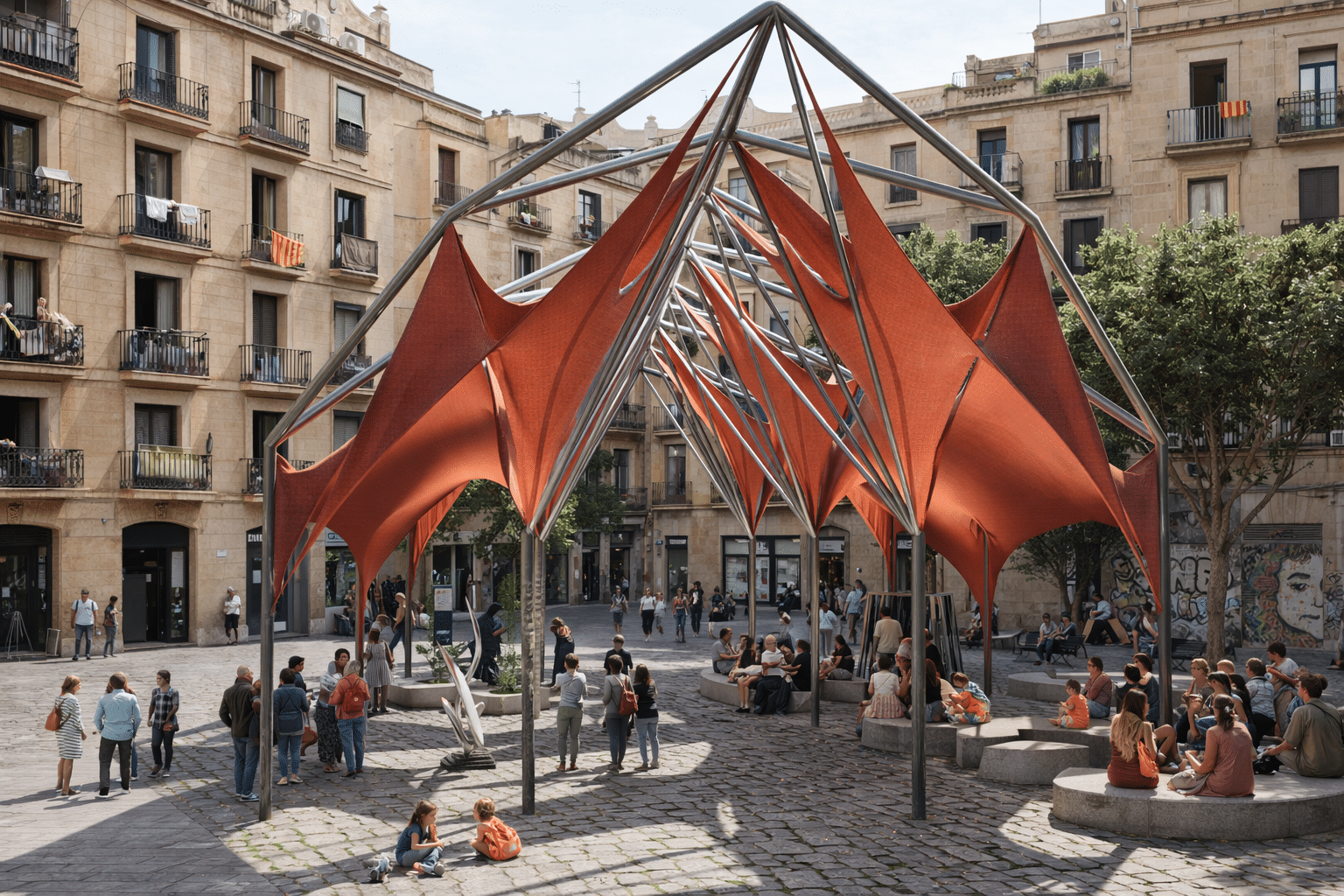
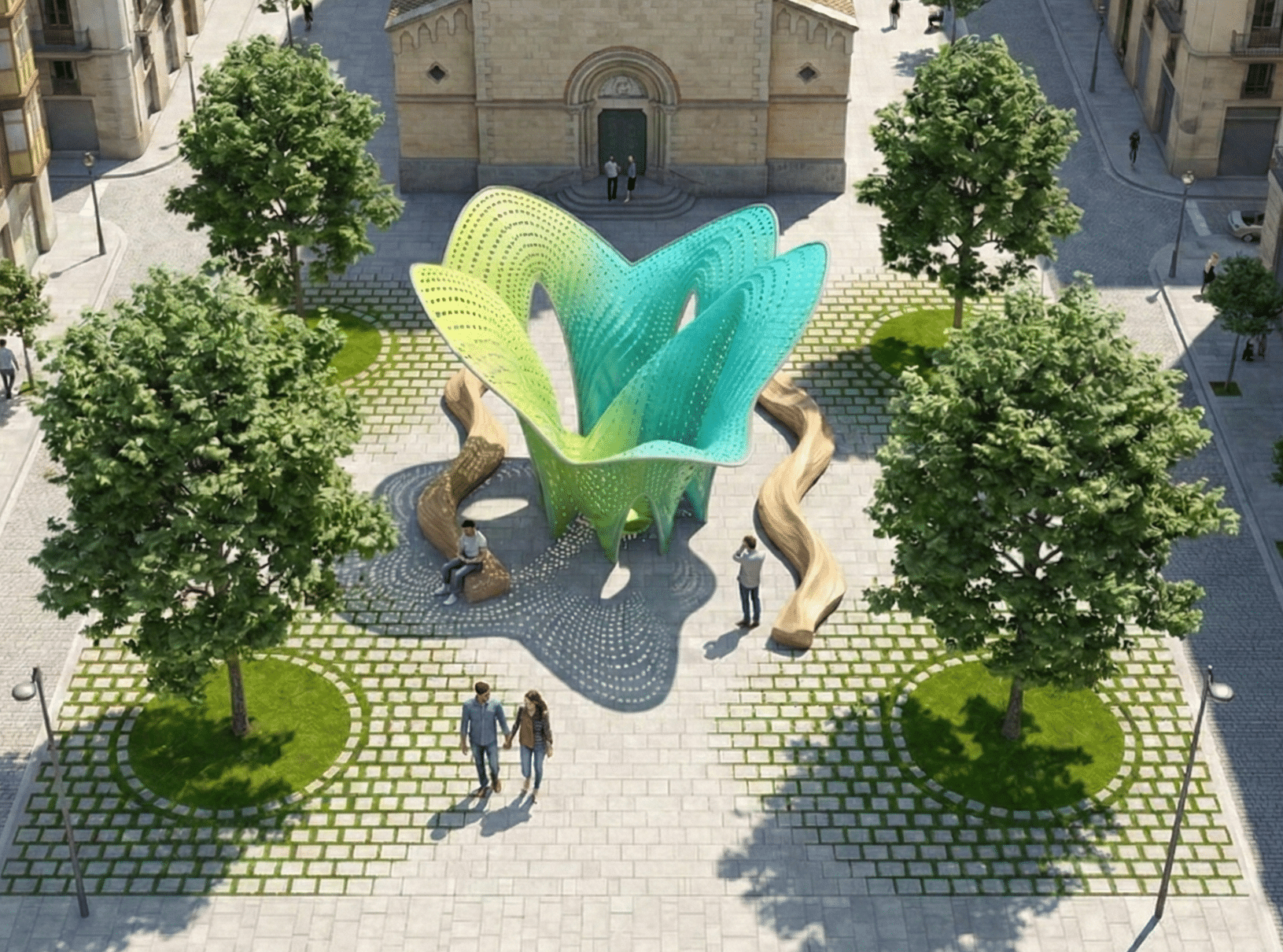
This project presents the design of a parametric pavilion for Plaça de Sant Jaume in Barcelona, inspired by the human towers of the castellers. A pattern of ellipses and circles was used as an allusion to the supportive hands and shoulders that form the tower. The pavilion’s base geometry responds to the plaça’s shape, entrances, … Read more

Escates de Peix

Concept Inspiration Creating a dynamic facade using can ran atelier’s three dimensional ‘kinetic tile’ approach. Rotation to be determined by controllable attractor curve Colourful tile/mosaic facades are often found in Barcelona design contexts. Early Iterations Pseudo Code High Quality Video: https://drive.google.com/file/d/1BpDajnOIM52dp8Mcx5DFvEiamOlLwxH_/view?usp=sharing

The Crown Loop

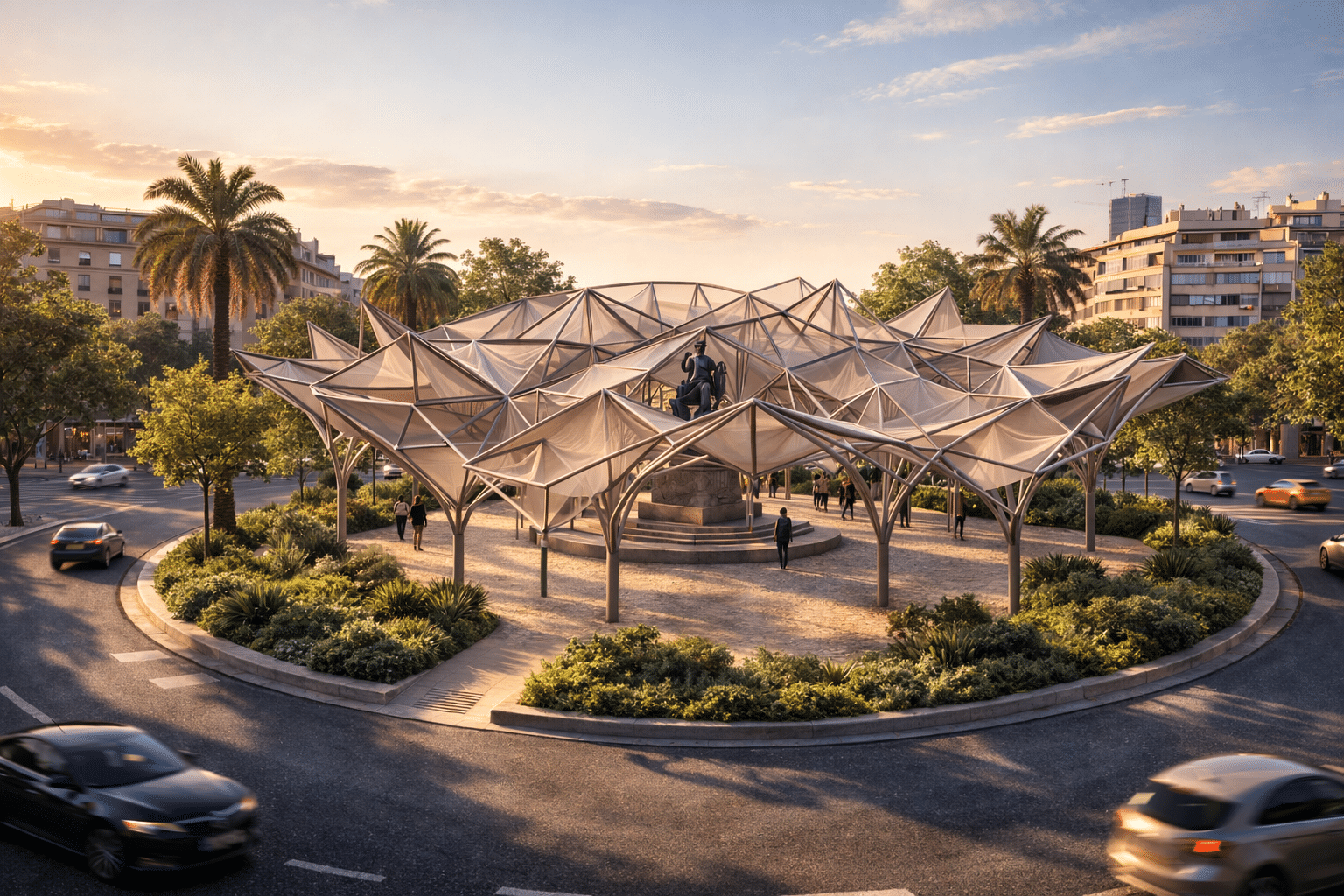
Abstract – This project introduces a crown-shaped stepped pavilion on the periphery of Plaça de Catalunya, serving as both an event gateway and an everyday public platform. Inspired by the geometry of a crown, the looping form rises in stepped layers to create vantage points, circulation, and sculptural presence. Developed through a parametric Grasshopper workflow, … Read more

Computational Design Seminar | The Kring Facade

Referential work’s logics Our referential framework is the Kring Kumho Culture Complex in Seoul by Unsangdong Architects, a building defined by large circular recesses that function as urban windows. The design exploits these spaces to break the flat exterior, as ‘Kring’ means ‘Circle’ in Dutch. We developed a concentric propagation approach to translate this logic … Read more

Liquid Masonry

Computational Design Seminar This façade explores the concept of ‘Digital Masonry.’ It takes the most traditional element of Catalan architecture—the ceramic brick—and reinterprets it through a digital algorithm. The ‘IAAC’ logo is not a sign painted on top; it is encoded into the rotation and position of the bricks themselves. It represents the institute’s mission: … Read more

The Woven Contrast

Cover page for the IAAC Computational Design I Seminar. The image features a parametric, twisted wooden structure in the foreground against a dark, point-cloud digital background. Text lists the Faculty as Akshay Madapura and Shrey Kapur, and Students as Kalaitzidis Nikolaos and Sejin Park.

COMPUTATIONAL DESIGN I SEMINAR25/26 MAA01 (Level2) Abstract: Computational Weaving. This project, developed for the Computational Design I Seminar, explores the algorithmic generation of complex, recursive geometries through the logic of “Digital Craft”. Inspired by the material constraints of steam-bent timber, the design creates a “volumetric weave” rather than a simple surface. The computational workflow is … Read more

Dynamic Facade

Computational Design Seminar Studio Ardete’s Headquarters Image credits: Studio Ardete’s Headquarters in Mohali, India by Parametric Architecture Facade Responds to Light, Wind, and Motion, with its ever-evolving appearance. At the heart of the design is MetaSequin, a modular, reflective parametric façade element. These circular sequins interact with natural forces like wind and light, creating a … Read more