PROJET TOKYO

Frist Research Mebolsim What is Metabolism? Building of Metabolsim Masterplan of Metabolism Comaprison, Masterplan Tokyo by Kenzo Tange vs Comptemporary Tokyo Comaprison1 Theory Comaprison2 City Plan Comparison3 Area plan Comparison4Building Comaprison Conclusion

Navigating AI Ethics and Regulation

https://github.com/ronmaccms/llm-chatbot.git Can AI Help Us Regulate Itself? AI is rapidly transforming the world. One critical question is whether AI can help regulate itself. By training a LLM on a comprehensive set of research papers, we can explore AI’s potential to provide insights into its own governance and ethical use. The research investigates how national policies … Read more

Humans or Humanoids 

Introduction The architectural profession is on the cusp of taking a revolutionary turn with the emergence of AI that is rapidly gaining momentum, but, in the midst of potentially great deviations that will come along not because of the involvement of AI in the architectural design, there exists certain downsides to it that must be … Read more

AI, Power, and Equality : A Satirical Exploration of technological emancipation

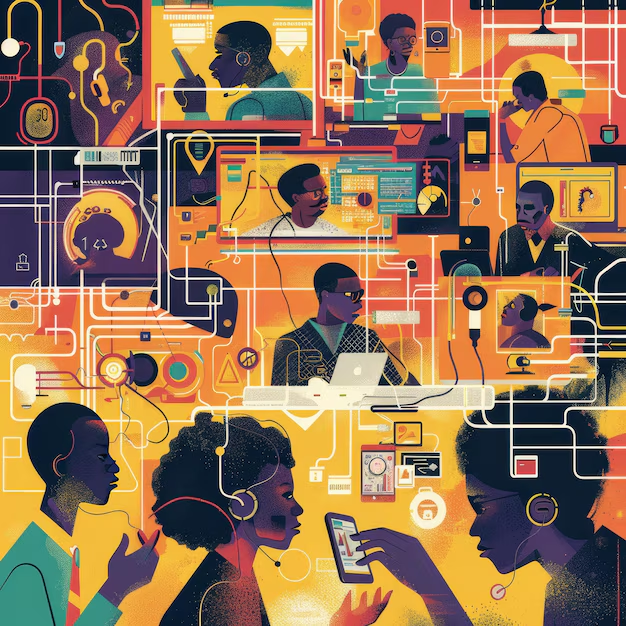
In our increasingly interconnected world, the relationship between humans and AI has often been characterized by a master-slave dynamic. This imbalance raises significant ethical and social implications, necessitating a shift towards mutual respect and collaboration. Our vision reimagines societal structures as rhizomatic connections: non-hierarchical, interconnected, and decentralized. We envision a coalition of all intelligences—biological, artificial, … Read more

Neurons two ways: the evolution of human-AI interactions and cyborgization of society

Our study aims to explore the history and impact of artificial intelligence on interactions of young people, examining how integrating AI technologies into everyday life influences self-perception and interpersonal interactions, ultimately transforming societal structures and relationships. The pervasive presence of AI in the lives of young people is reshaping social norms and identities, blurring the … Read more

Machine Perception and Imagination: The Intersection of AI and Creativity

Introduction In 1950, Alan Turing posed a fundamental question, “Can machines think?”. Our exploration aims to extend this quest by considering additional questions: can machines develop the higher-order thinking described, as described in Bloom’s taxonomy? Can they create, dream, or imagine? To understand imagination and machine creation, we first examine perception, i.e., the processes of … Read more

Blind Faith in A.I.

Setting the Scene In today’s digital landscape, our interactions are increasingly mediated by technology itself rather than as a medium for human communication. This shift creates an illusion of connectivity while fostering isolation, often trapping us in algorithm-driven echo chambers that reinforce our beliefs. Artificial intelligence now guides our lives, listening, learning, and providing information … Read more

Planetary Intelligence Manifesto

AI in the Anthropocene The architectural profession is currently at a critical juncture, faced with the dual challenges of advancing artificial intelligence (AI) and the escalating climate crisis. Many architects harbour fears of obsolescence as AI’s capabilities expand, potentially automating tasks that traditionally require human expertise. This concern is not unfounded, as AI-driven tools increasingly … Read more

Allegory of the Cybernetic City

Can speculative science fiction ground us in reality? In an age where technology and urbanization shape the contours of our reality, the role of theory as a form of critique becomes ever more crucial. The consequences of centuries of colonization, globalization, and exploitation are evident in our sprawling cities and degraded environments. The 2017 sci-fi … Read more

Dystopia of Digital Dominance

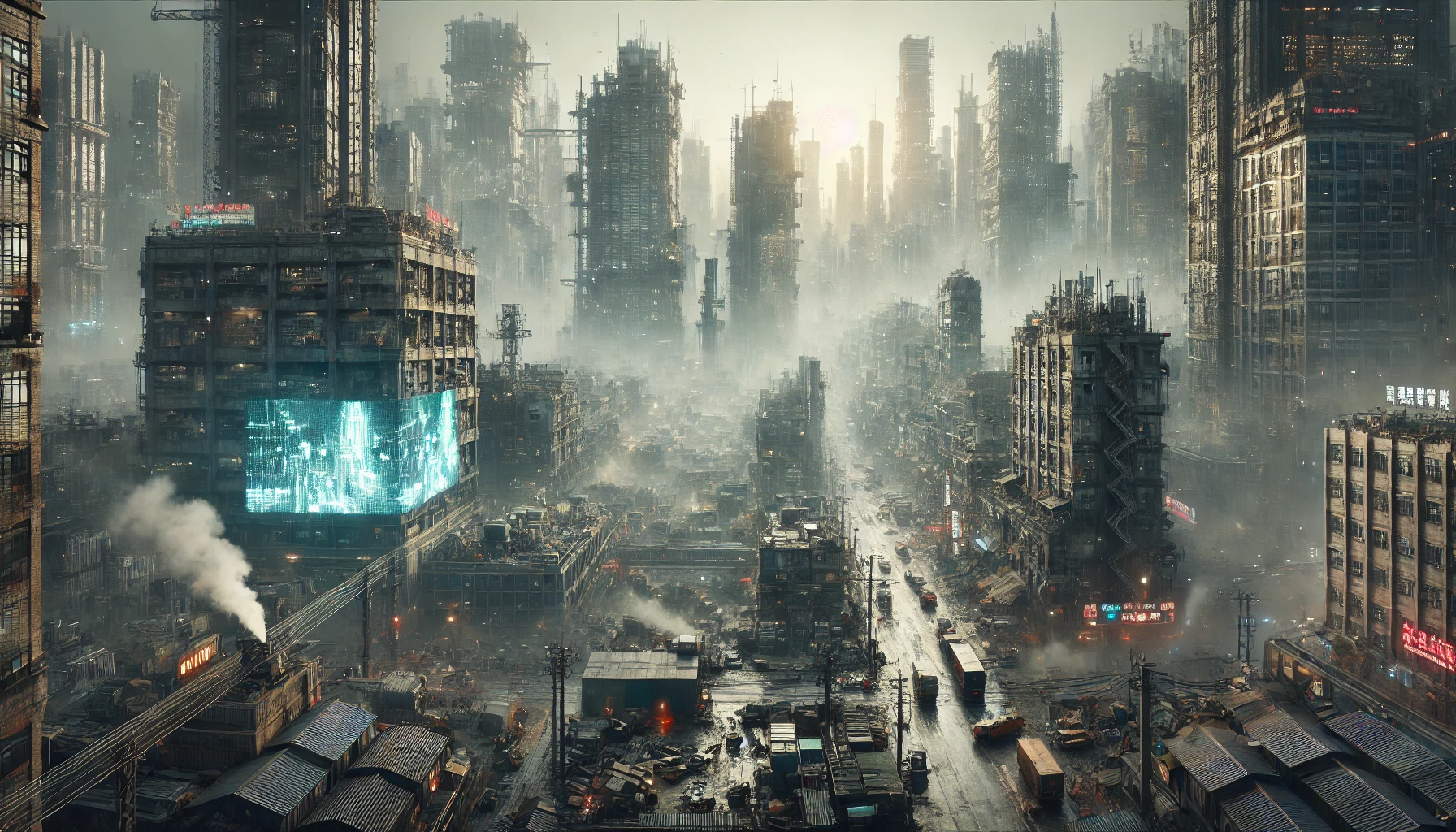
“Blade Runner” is a poignant illustration of how urban landscapes could be transformed in a post-industrial world, shaped by technological dominance and environmental decay. Created within a society grappling with the implications of synthetic life and corporate control, the film vividly portrays a version of Los Angeles. Re-envisioned through the context of speculative theories about … Read more

Initiating the Process for a Carless City

The idea of a ‘car-free’ city is not as easy as just banning cars but about reducing car reliance. The private car has undeniably revolutionized mobility in the 21st century. It has offered convenience, job creation and an increased freedom of movement. While a world without cars might seem unimaginable, cities globally are strategically transitioning … Read more

The Hazy Unconfined Titan

Science Fiction is a literary genre known for creating future worlds that emerge as the consequence of today’s cultural and technological realities. It is in this worldbuilding -where societies, their functioning, and the dynamics that govern them are imagined- where Sci-Fi shows similarities to the disciplines of design and architecture. To explore the design possibilities … Read more

‘Blurred Lines & Towered Stories’

Finding stories in an ‘altered’ normal of a digitally blended reality. IIn “Ready Player One,” directed by Steven Spielberg, the OASIS Corporation controls a vast virtual reality universe that serves as the film’s central setting. This digital utopia offers an escape from a dystopian reality predominated by the prevalence of the emergent over stacking of … Read more

Post-Industrial Digitized Monster

Sterling, B (2015) imagined four fictitious scenarios of how future skyscrapers might be, differentially equalizing the state of technology and the economic-political climate: Future skyscraper 1: Huge, lopsided pyramid Future skyscraper 2: No-nonsense, mil-spec fortress Future skyscraper 3: Colossal, awkward tower Future skyscraper 4: Postindustrial, digitized monster In our last scenario, the Smart City has … Read more

For the Good of Babel

Skyscrapers are human achievements that require innovation in the extraction of land to tower over its neighbors. The third skyscraper future reflects the past imaginary of Fritz Lang’s, Metropolis. This visualization aims to highlight the economic disparities and labor oppression depicted in the film, contrasting them with the modern logics of rentism as embodied by … Read more

Colossal Skyscrapers and Utopian Visions through the Lens of ‘Metropolis’

In the realm of speculative urban design, the fusion of cyborg skyscrapers and utopian visions offers a captivating journey into the convergence of reality and imagination. Inspired by Fritz Lang’s timeless sci-fi masterpiece ‘Metropolis,’ I embark on a deep dive into the intricate relationship between design, urbanization, and speculative fiction. Metropolis, Fritz Lang (1927) “Metropolis” … Read more