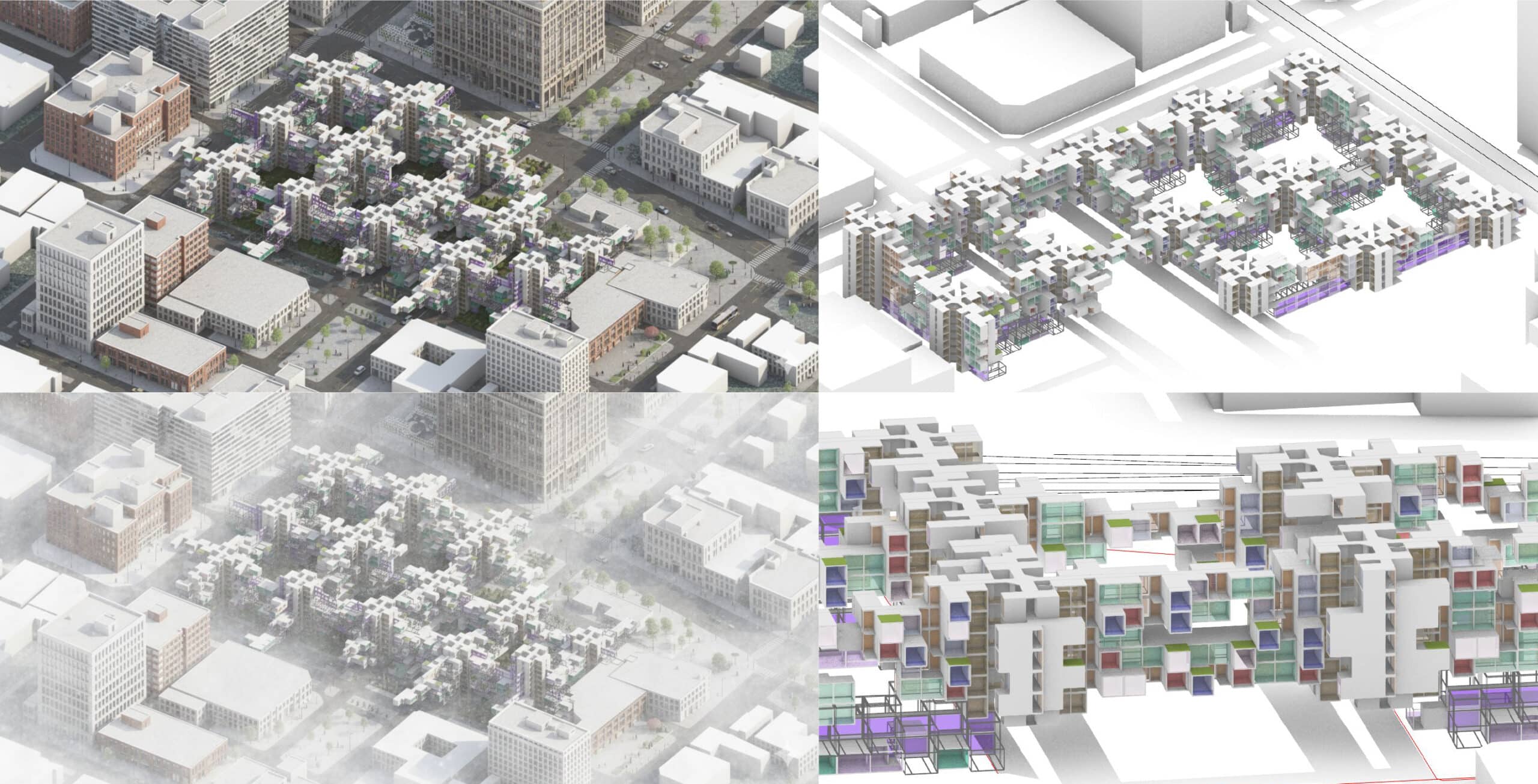
The project explores a contemporary reinterpretation of Finnish cabins, combining seasonal water living, public wellness, and boating storage.
The core idea is that small modular units — cabins, saunas and workspaces — can aggregate into larger urban and social systems.
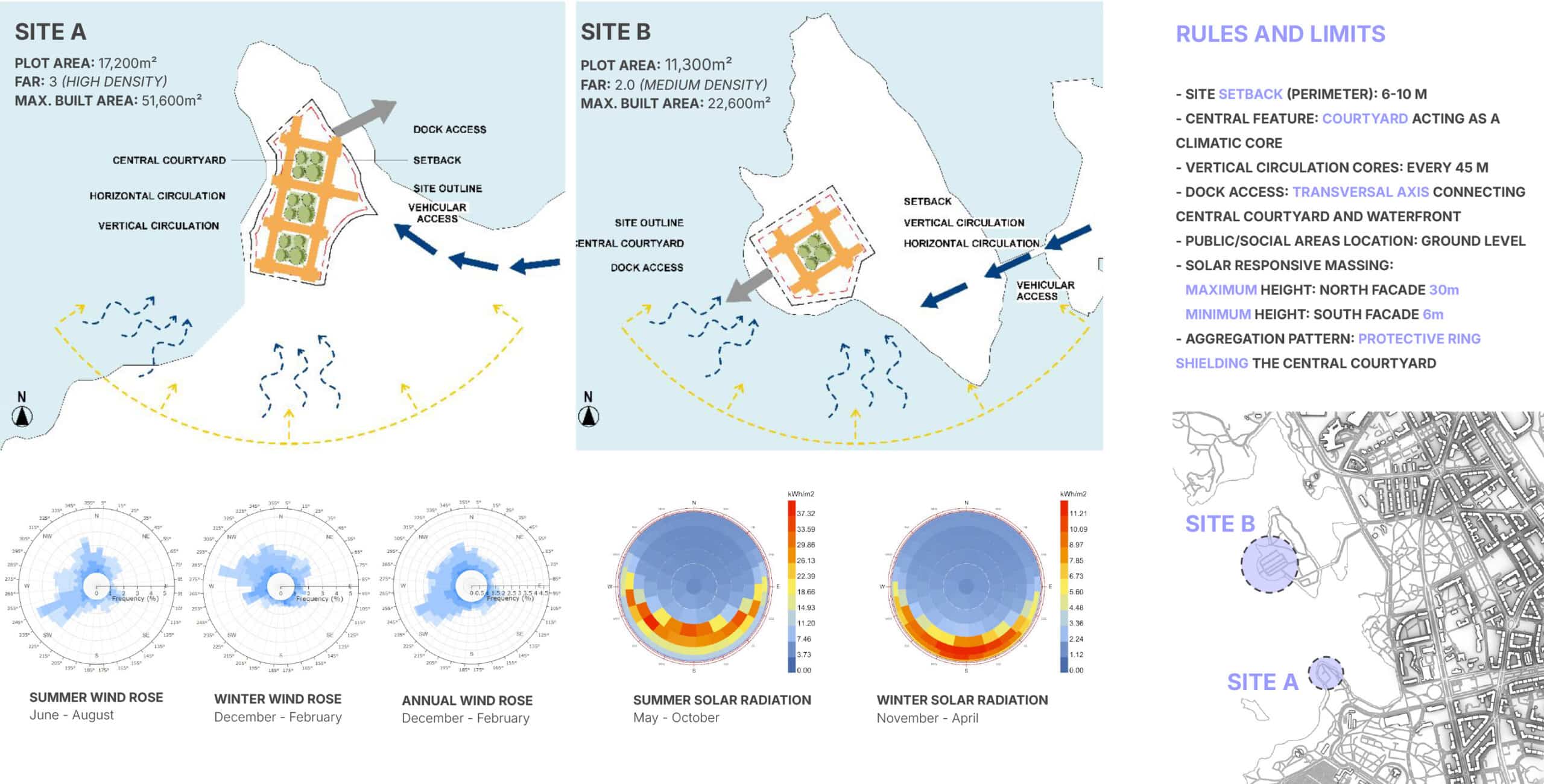
Helsinki has a harsh Nordic climate, with long winters ranging from –10°C to +25°C, high humidity, and prevailing south-west winds
TYPOLOGY
The climate strongly informed the design with studies on yearly temperature, humidity, wind roses, and seasonal solar radiation, distinguishing between winter and summer conditions.
To control complexity, we established clear rules and limits:
- Setbacks
- A central courtyard acting as a climatic core
- Vertical circulation cores every 45 meters
- A transversal dock axis connecting courtyard and waterfront
- Public and social functions placed at ground level
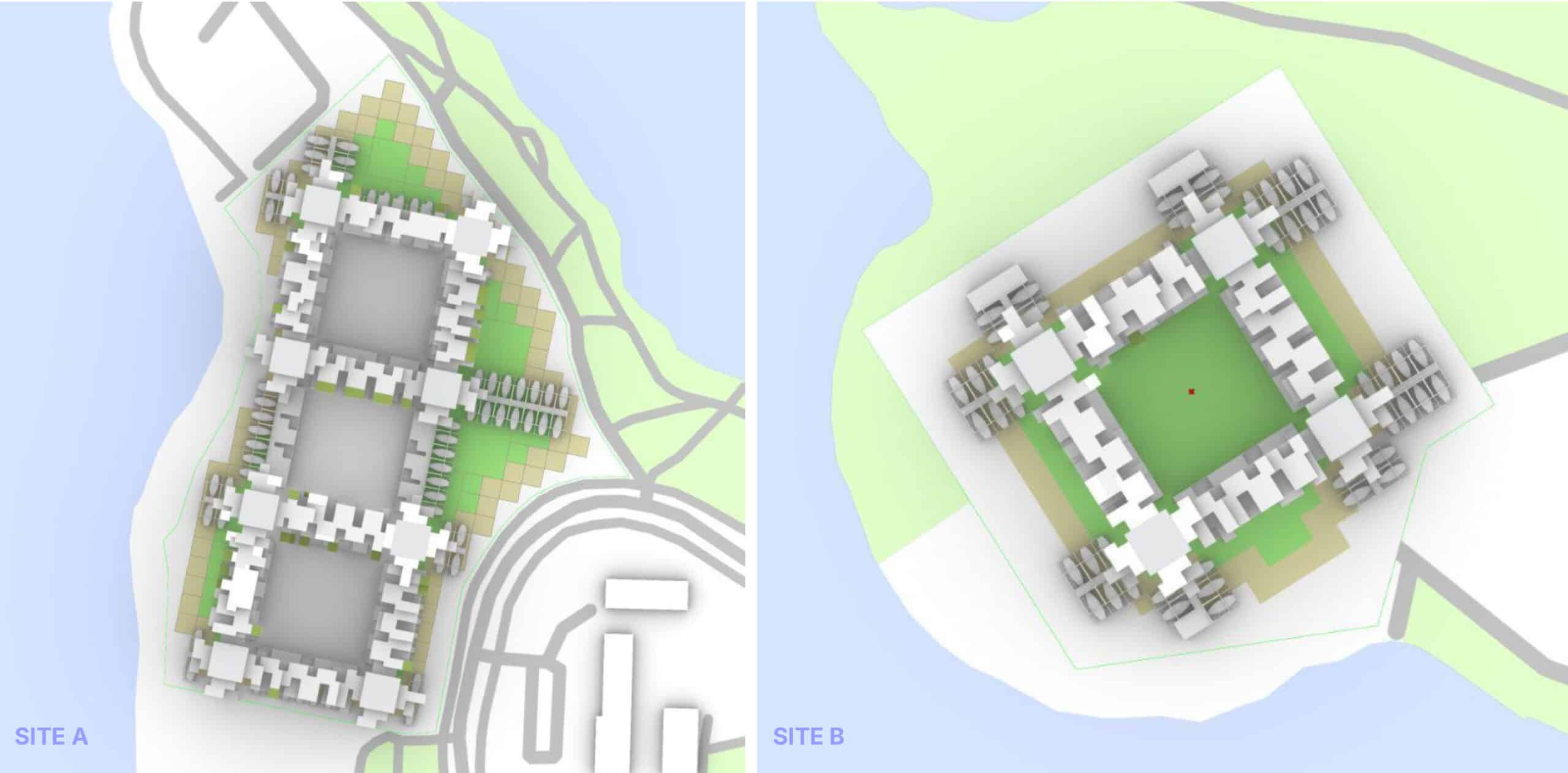
The project is developed across two sites in Helsinki, Site A and Site B, each with different plot sizes and FAR values, allowing to test medium- and high-density scenarios.
TOPOLOGICAL MAP
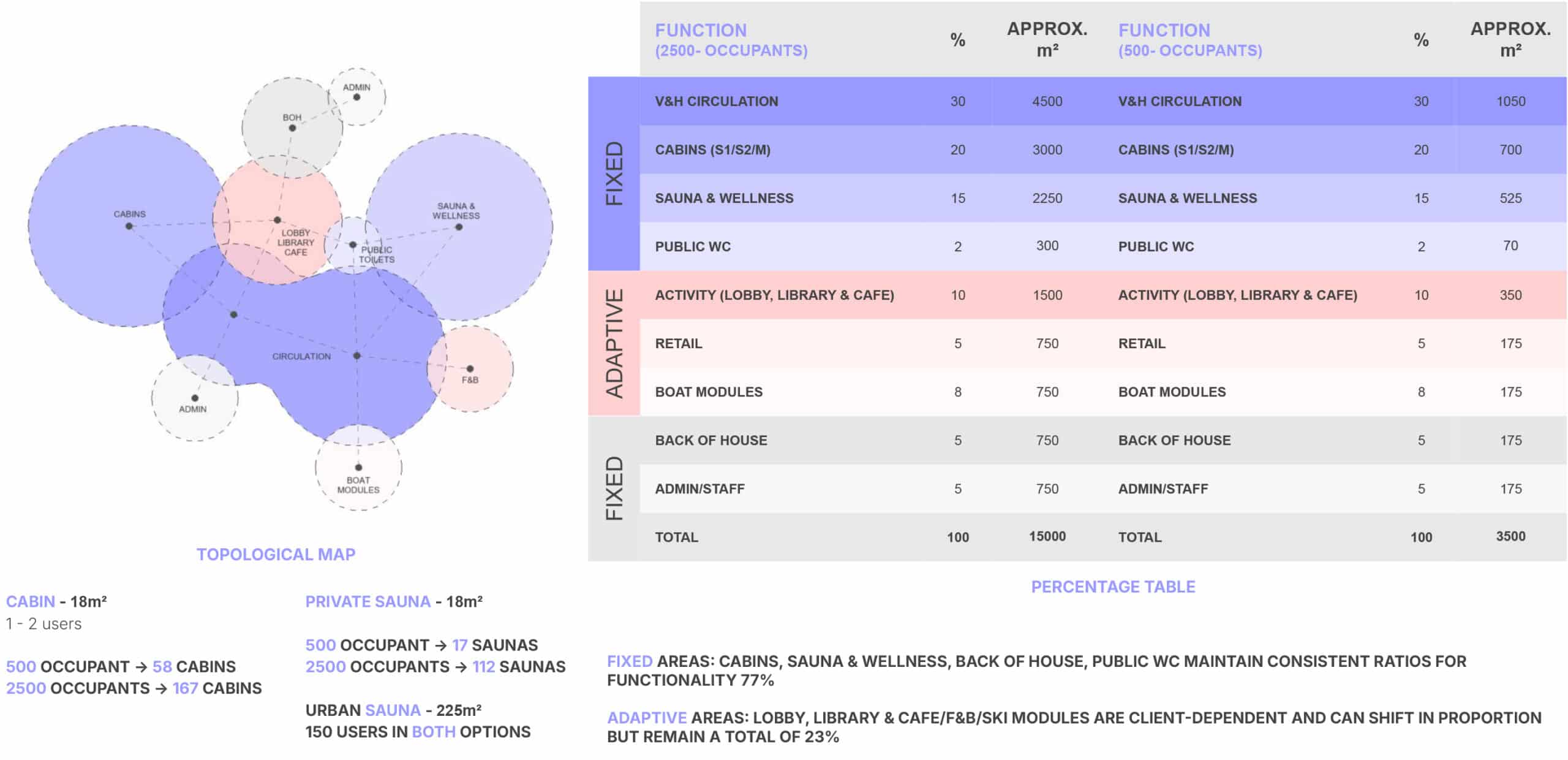
MERIHAUS combines public and private uses.
- Public functions include boat storage, activity spaces, retail, cafes, and urban saunas.
- Private functions include cabins and smaller saunas designed for short-term seasonal living.
The project is organized using a fixed vs adaptive space strategy:
This allows the architecture to remain structurally consistent while being programmatically flexible, adapting to client needs and seasonal demand.
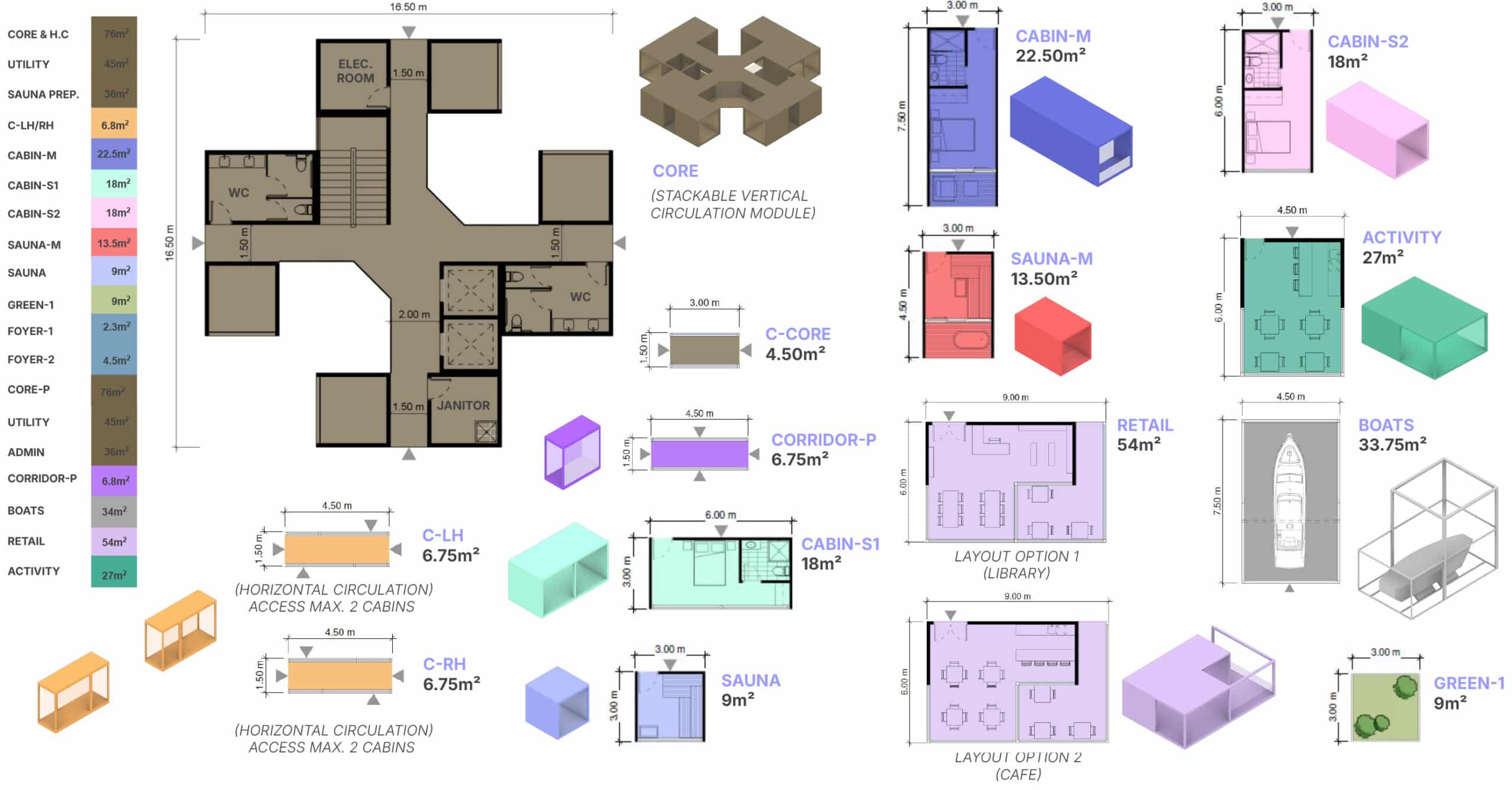
KIT OF PARTS
The entire system is built from our kit of parts:
- Multiple cabin types ranging from 18 to 22.5 m²
- Private and urban saunas
- Activity, retail, and boat storage modules
- Vertical and horizontal circulation cores
These modules are stackable, repeatable, and adaptable, forming the basis for aggregation at different densities and sites.
GRASSHOPPER/WASP DEFINITION
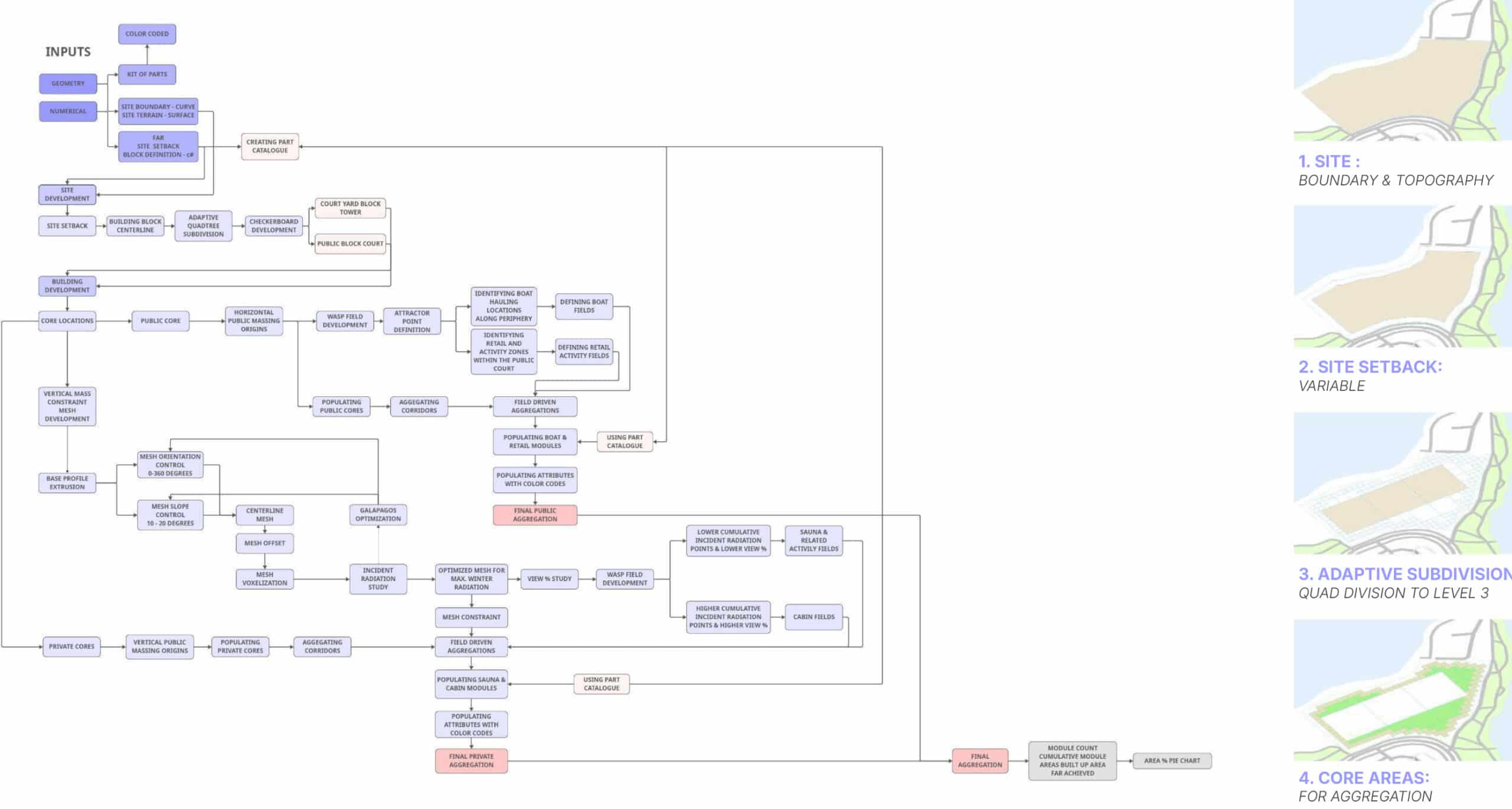
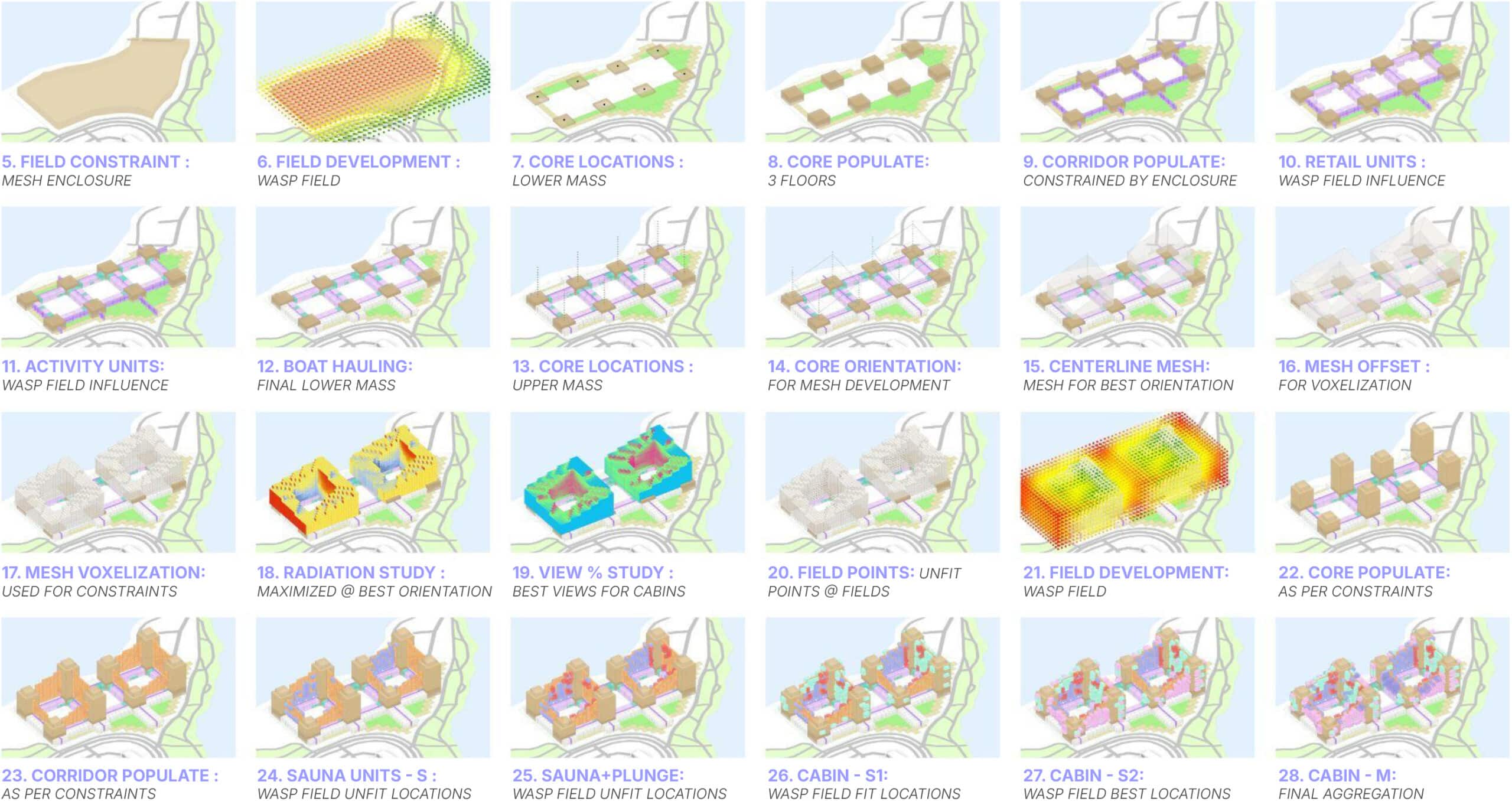
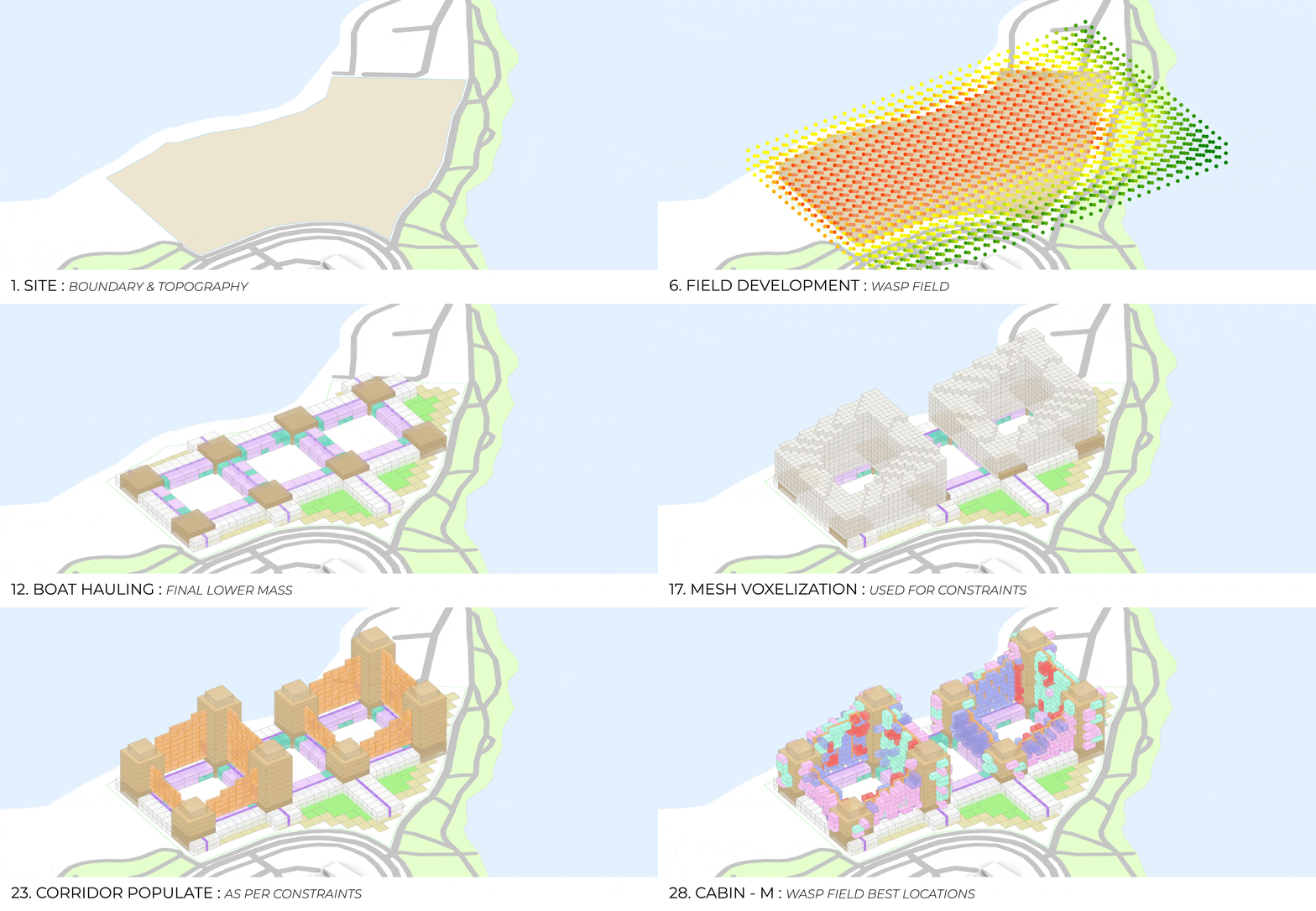
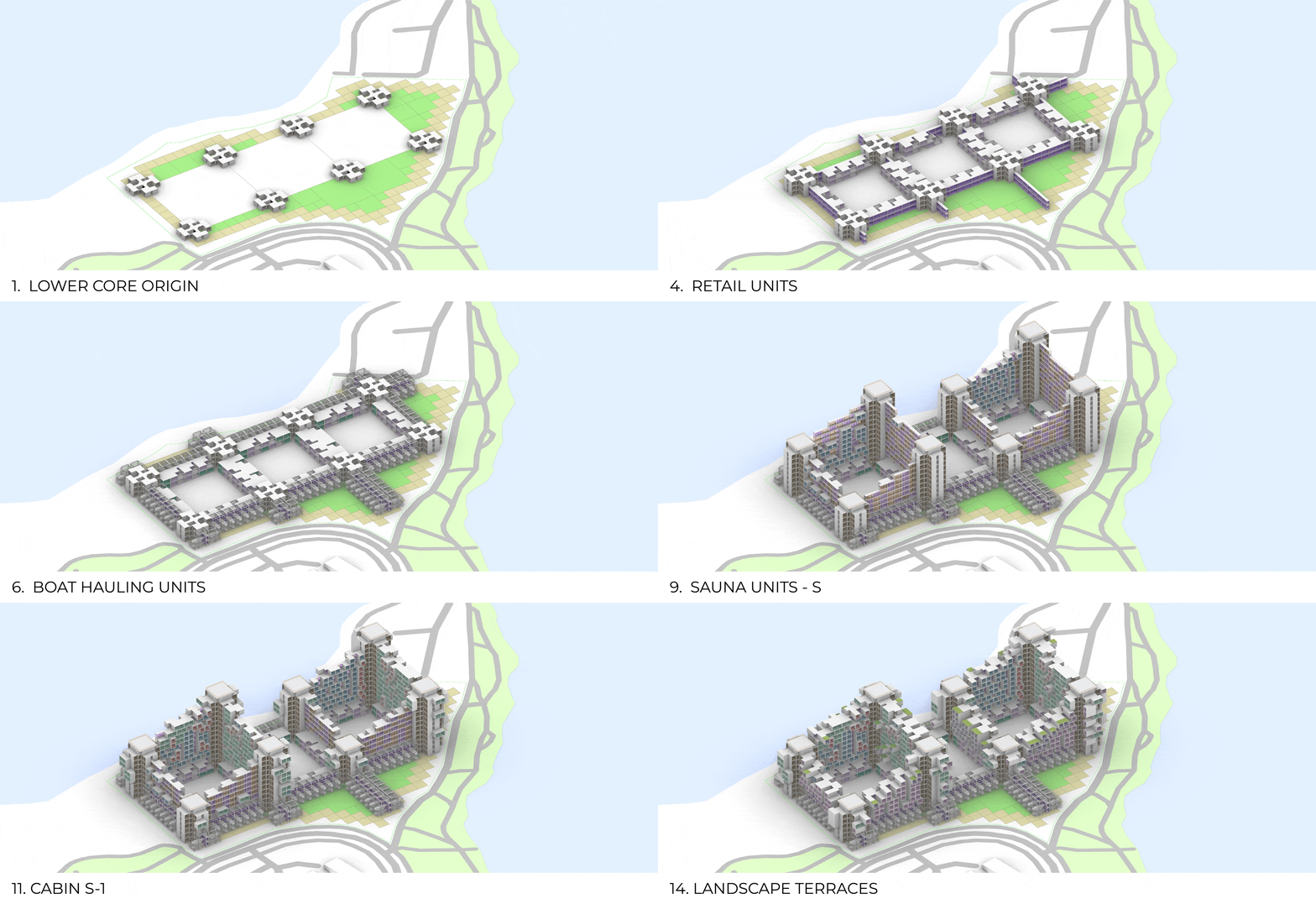
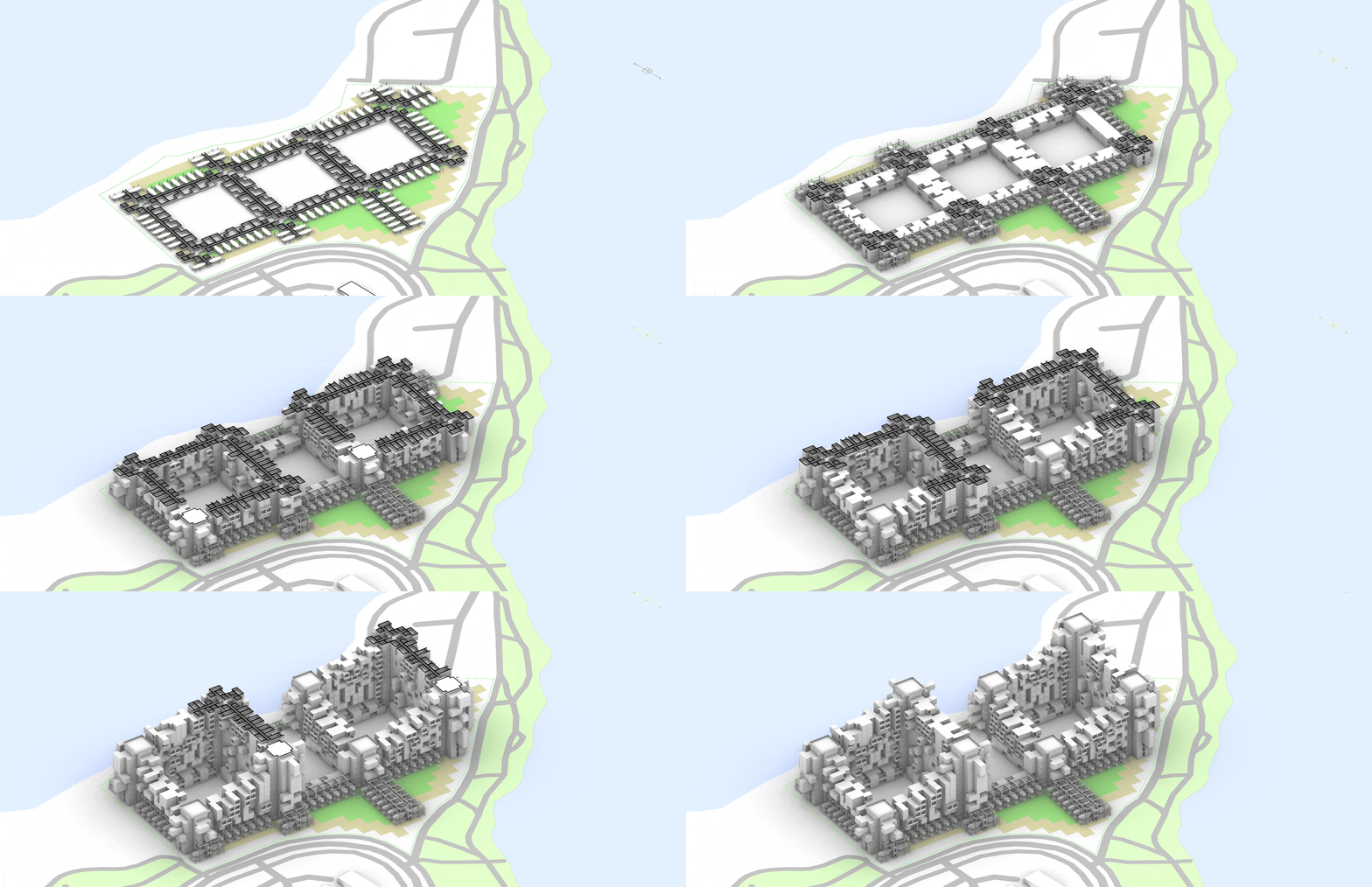
HELSINKI SITE A – GEOMETRICAL STEP BY STEP
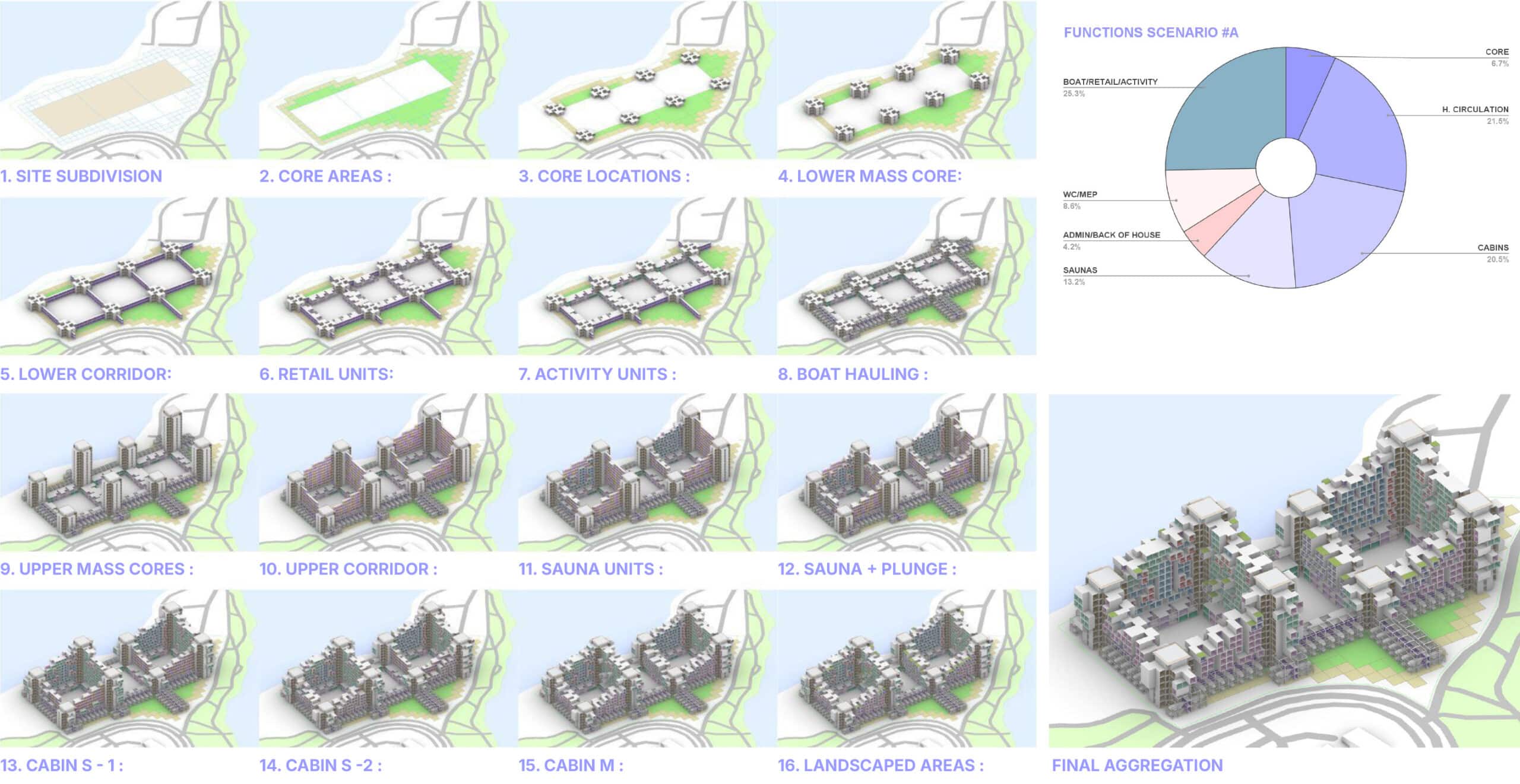
HELSINKI SITE A – AGGREGATION
HELSINKI SITE A – STRUCTURAL
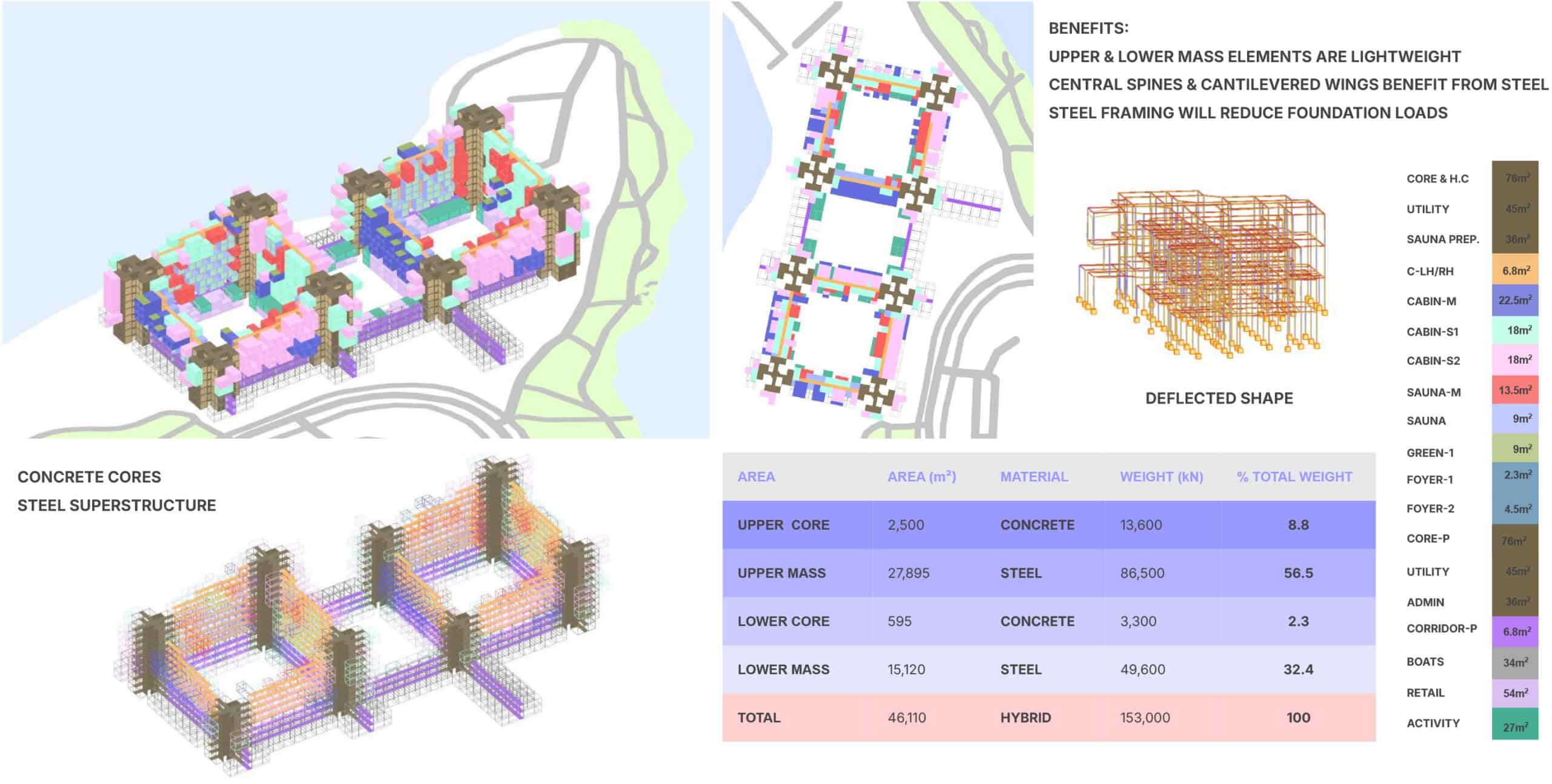
Structurally, the project uses:
- Concrete cores for stability
- Steel superstructures for lightweight upper and lower masses
The cantilevered wings and central spines reduce foundation loads and allow flexibility in aggregation. This strategy supports both waterfront conditions and future adaptability.
HELSINKI SITE A – ENVIRONMENTAL
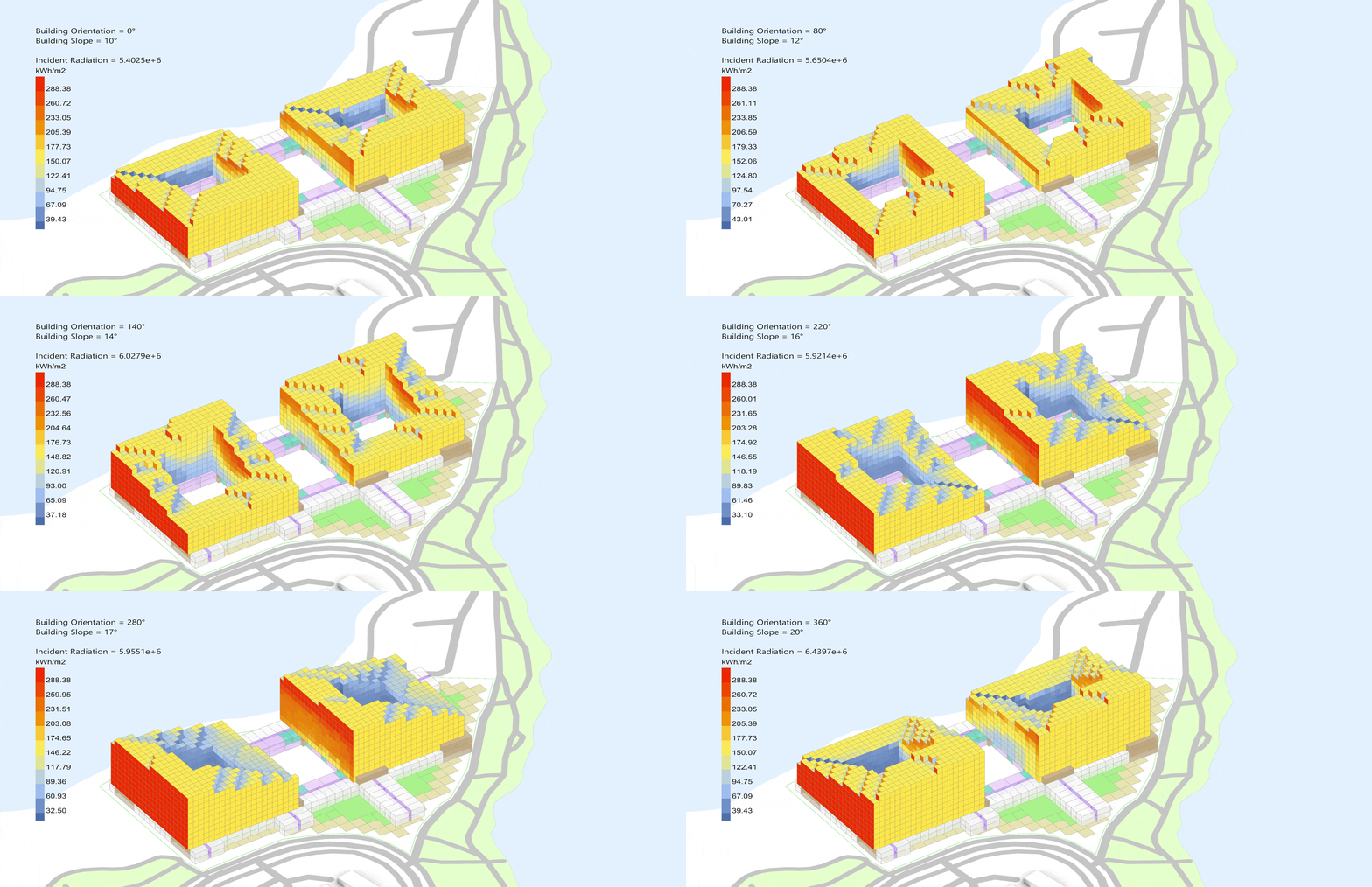
This solar radiation analysis guided the orientation, massing, and the placement of public and private functions, ensuring comfort and usability throughout the year.
Then a visibility analysis was followed to identify best/worst locations for the modules. That’s when wasp field aggregation was used to control the placement of the modules.

HELSINKI SITE A – PLANS
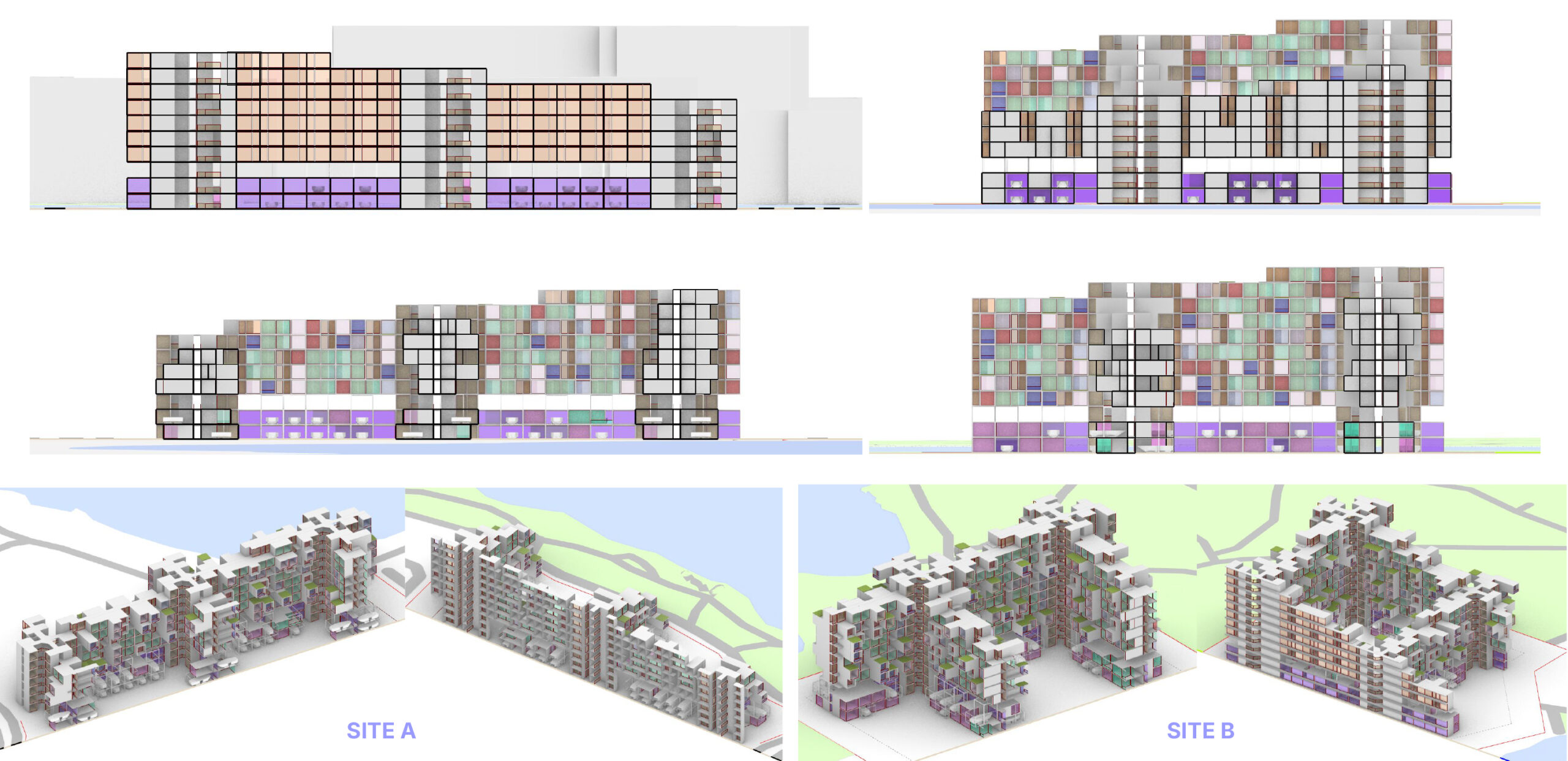
HELSINKI SITE A – SECTIONS & ELEVATIONS
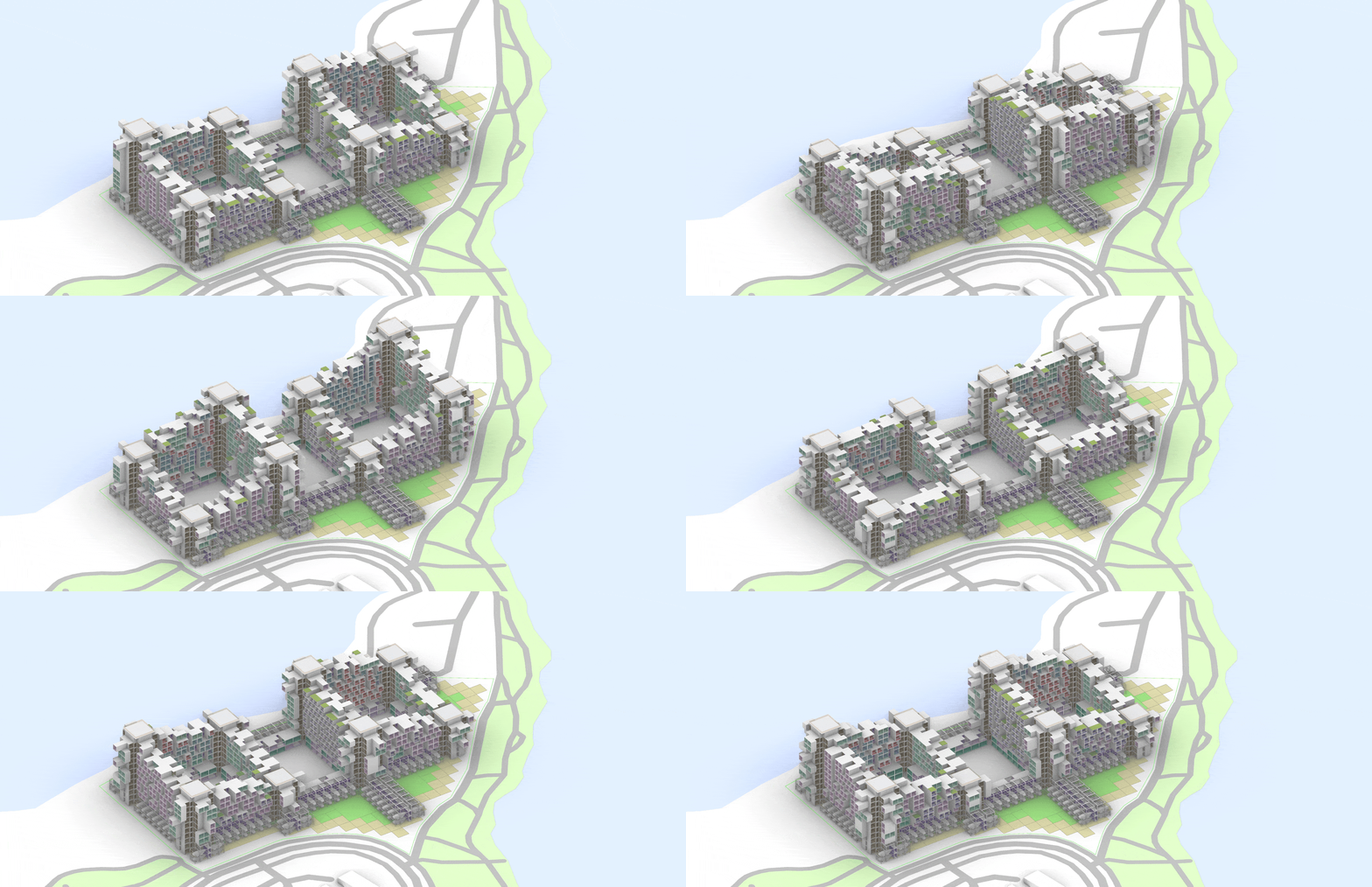
HELSINKI SITE VARIATIONS
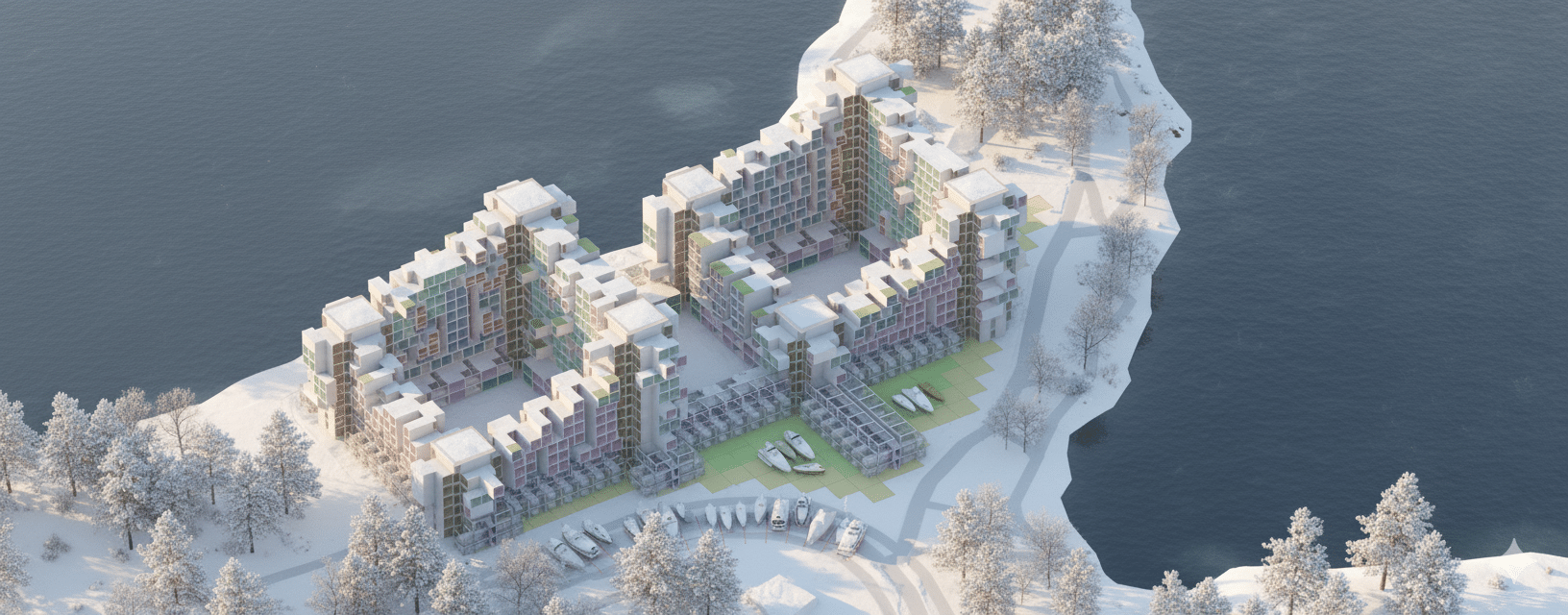
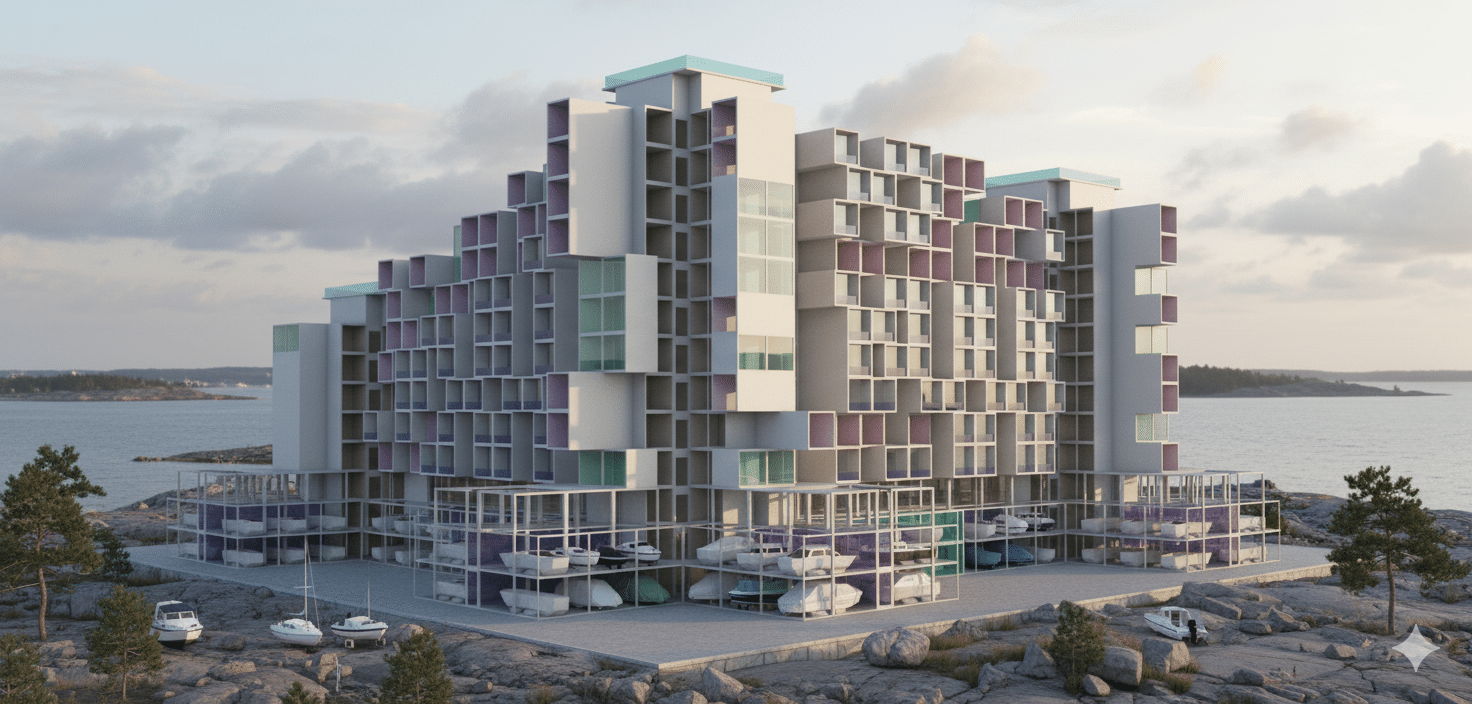
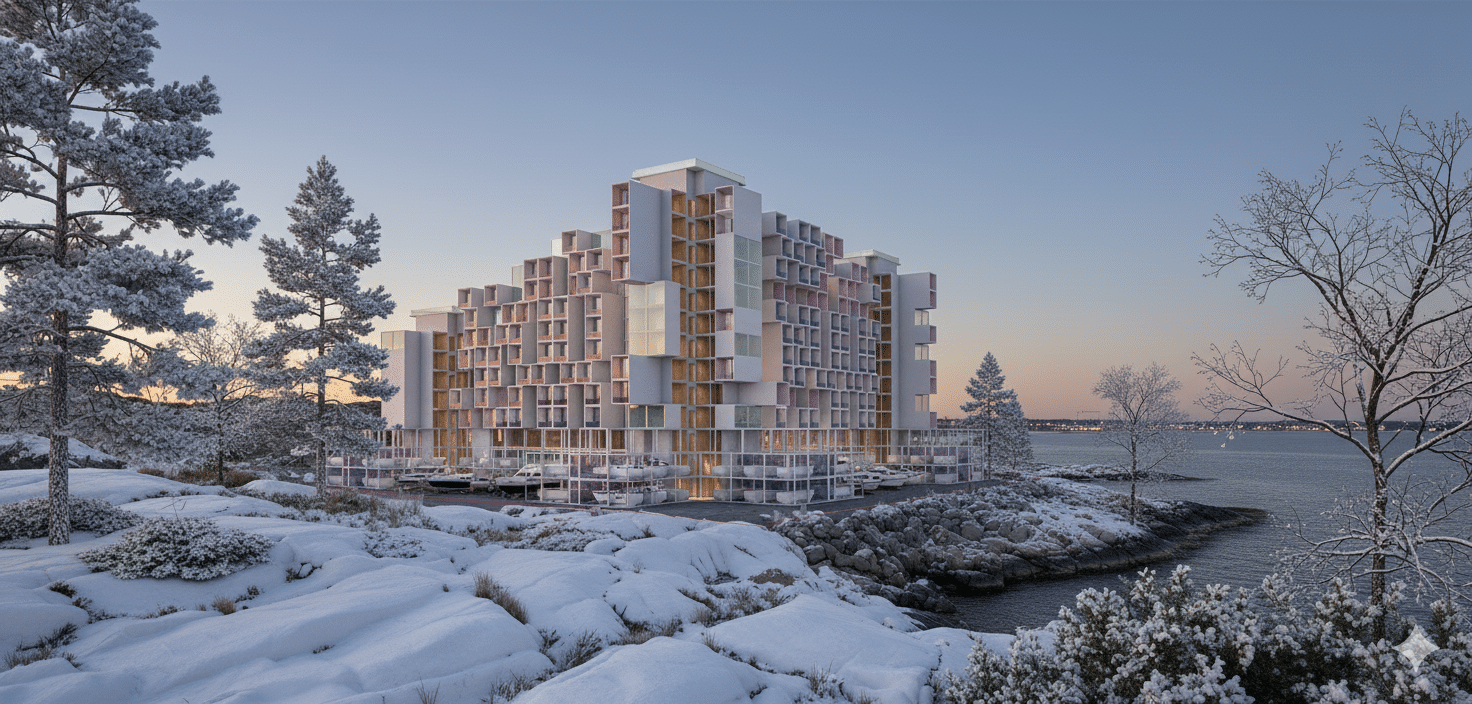
HELSINKI RENDERED VIEWS
Rendered in Twinmotion and refined in Nano-Banana
SITE ADAPTIBILITY – SAPPORO DOWNTOWN