
The lecture by Mathilde Marengo, Head of Studio Operations at External References, offered an in-depth overview of how contemporary architectural practice operates at the intersection of computation, fabrication, storytelling, and experiential design.
Rather than presenting technology as an isolated tool, Mathilde framed it as an integral part of design thinking. Digital tools, parametric workflows, and automation were presented as instruments enabling the development of multiple design options within limited timeframes and potential budget constraints, while maintaining spatial quality and conceptual clarity.
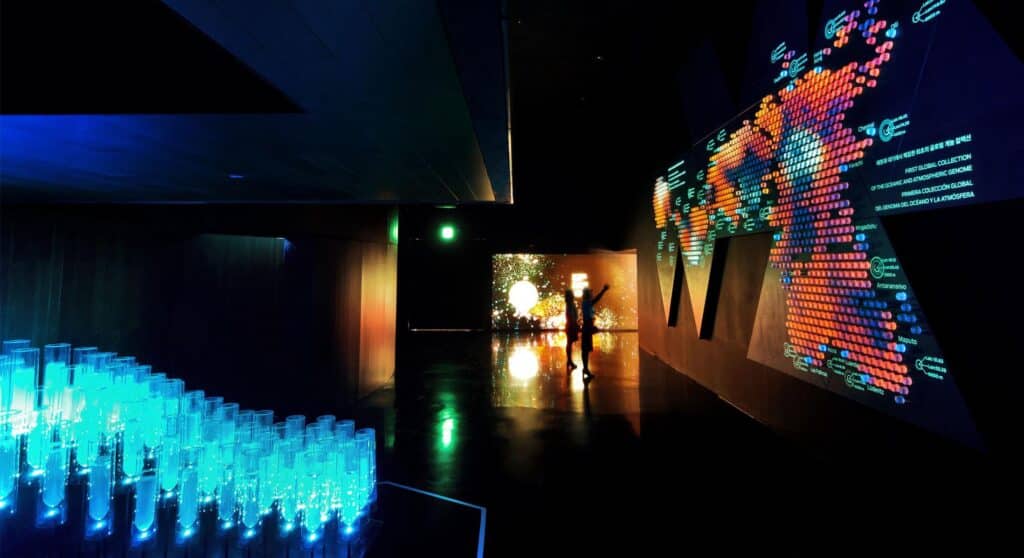
A key topic of the lecture was the role of technology in shaping spatial experience. Interactive and responsive environments allow users to engage with space in personal ways, making architectural experience individual rather than uniform. Feedback is gathered through long-term client relationships, internal evaluations, and post-project analysis, supporting continuous improvement in practice.
Mathilde emphasized that working with repeat clients does not lead to repetitive design. Instead, the studio develops flexible workflows that can be adapted to different contexts. Automation is used strategically, focusing on replicable processes rather than fixed forms, enabling customization and site-specific responses.
Experiential design was presented as an essential methodology of External References. Architecture is approached as a narrative system shaped by materiality, light, digital content, and sensory stimuli. Through this approach, spatial design becomes a medium for storytelling and brand identity, extending beyond traditional visual communication.
The lecture also addressed Barcelona’s urban history and the influence of Catalan modernisme. Urban constraints related to light, ventilation, and height have shaped architectural expression, particularly in façade design. Mathilde explained how these historical references are translated into contemporary interiors using digital modeling and fabrication techniques.
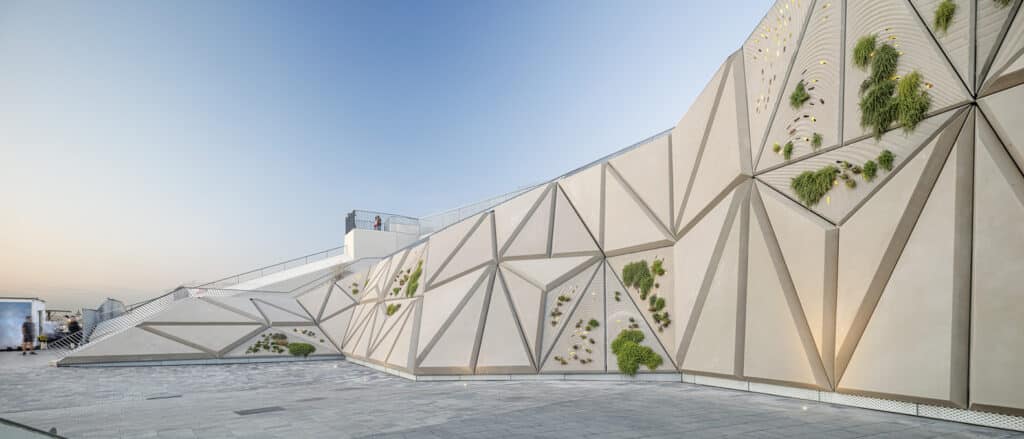
A central methodological question concerned the translation of external references into sculptural interior forms. This process involves contextual analysis, parametric modeling, and fabrication planning. Tools such as Rhino and Grasshopper support the conversion of abstract concepts into buildable systems, enabling a continuous dialogue between design intention and material constraints.
3D scanning was presented as a foundational tool for creating accurate digital contexts. Rather than serving as simple documentation, scans become the basis for design development. During the COVID-19 period, these workflows enabled remote collaboration and have since become standard professional practice.
Mathilde also discussed design processes that begin with image generation. In these workflows, strong visual concepts are produced early and later translated into physical systems through reverse engineering. Designers analyze images in terms of structure, materials, fabrication, and assembly, highlighting the importance of technical competence in bridging visual and material dimensions.
The integration of ecological strategies was illustrated through bio-receptive panels and living systems. These elements require careful coordination with safety, maintenance, and regulatory frameworks, demonstrating that sustainable design must be approached as a long-term technical system.
Several projects explored water as a spatial concept through physical elements, digital projections, and immersive environments. These layered approaches demonstrated how storytelling, technology, and spatial design can operate together to create meaningful user experiences.
Throughout the lecture, Mathilde acknowledged that architectural production is also shaped by economic, temporal, and regulatory constraints. Digital tools do not remove these limitations but transform how designers work within them. Adaptable construction systems and modular workflows allow for variation without sacrificing efficiency.
In conclusion, the lecture presented architecture as a practice situated between technological systems and human experience, automation and craftsmanship, and efficiency and cultural meaning. Technology was framed not as an end in itself but as a medium for critical and creative thinking, collaboration, and responsible design practice.
