
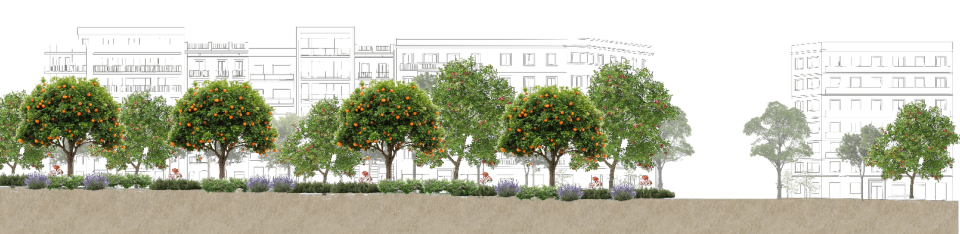
What would happen if our landscapes got inspired in Culture, tradition and seasonality reflecting the core and inner Catalan escence? How could our landscapes being changed? but most important how could we do this?
Introduction
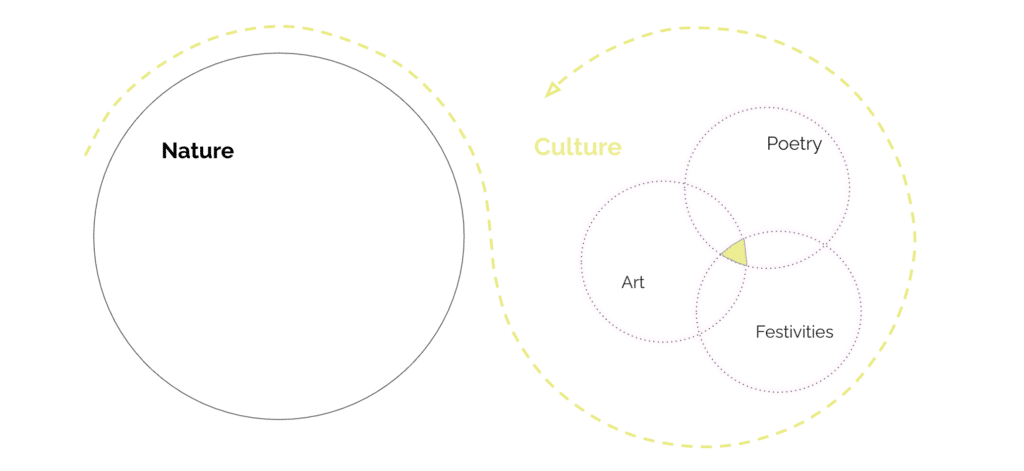
We began with a simple reframing: instead of adding nature on top of the streetscape, we asked how Catalan culture itself already encoded ecological knowledge. The result is a methodology that reads three canonical sources—paintings, poetry, and festivals—as instruction manuals for spatial and botanical design. The core insight: Catalan art encodes canopy structure. Catalan poetry encodes a planting palette. Catalan festivals encode a temporal rhythm of gathering, these are not decorative references. They become theguidelines of the design.
For this project the site assigned was in Barcelona, following the Superilles concept and working on 3 streets that intersection with Carrer de Rocafort: Carrer de Corsega as Node 3, Carrer del Rosselló as node 4 and Carrer de Provença as node 2, includingCarrer de Rocafort itself and the park Jardins de Montserrat.
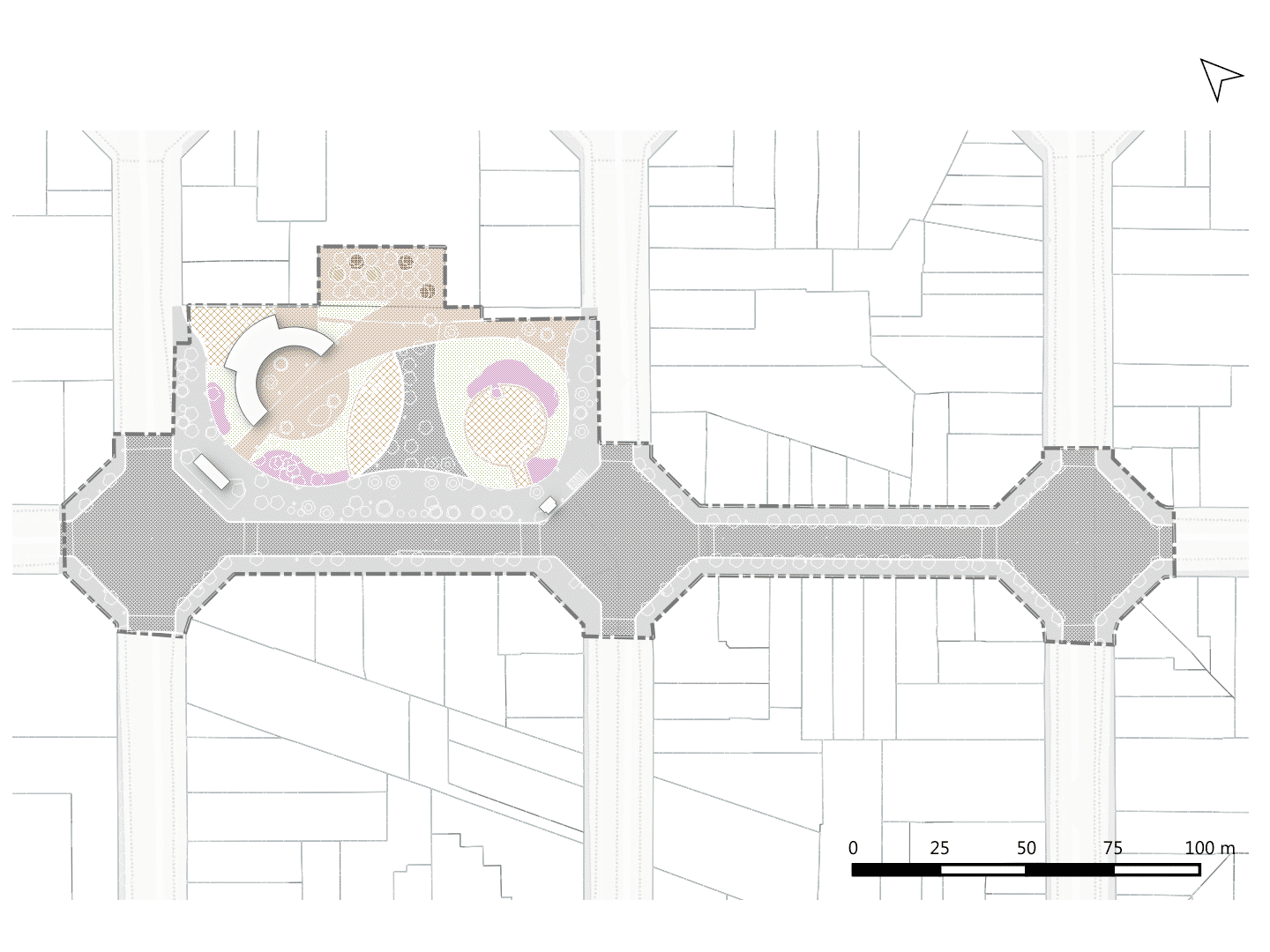
Our Scope of Design
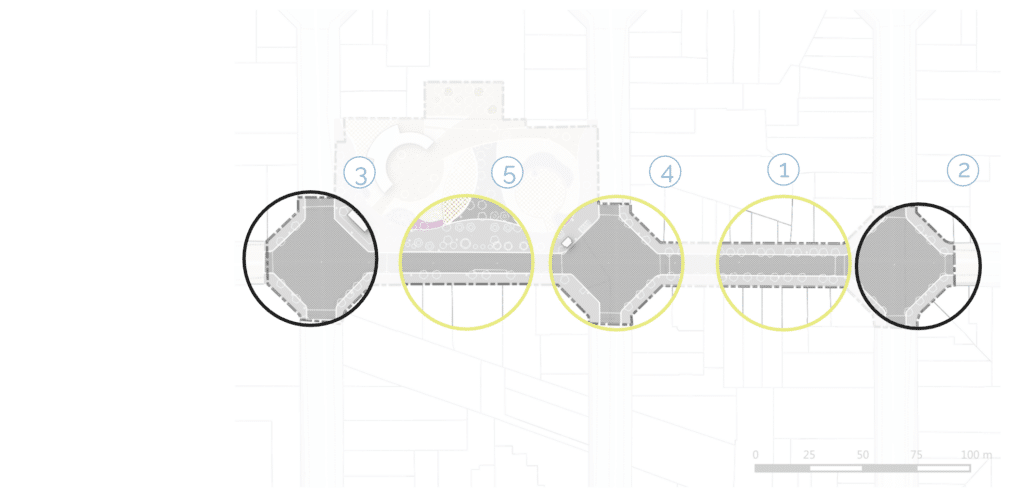
We decided to focus on 5 main areas in the site:
1. High canopy street corridor, enclosed, continues stretch
2. Eastern Superilla – Seasonal gathering and activation
3.Western Superilla – civic gathering space mirroring the street
4. Open civic node – human occupancy hinge between street and park
5.Park adjacenet zone – a dense ecological zone, where planting where planting continuity with existing park can create an unbroken green interface.
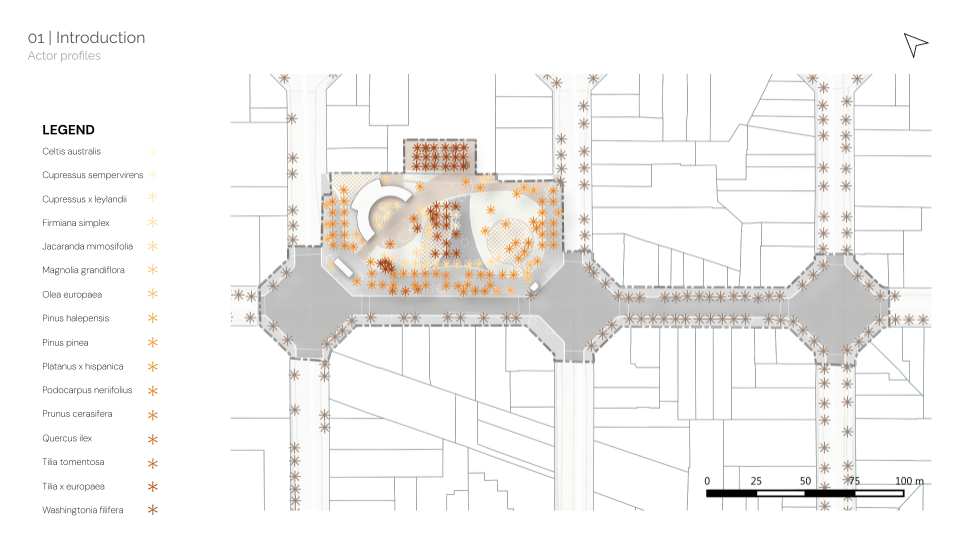
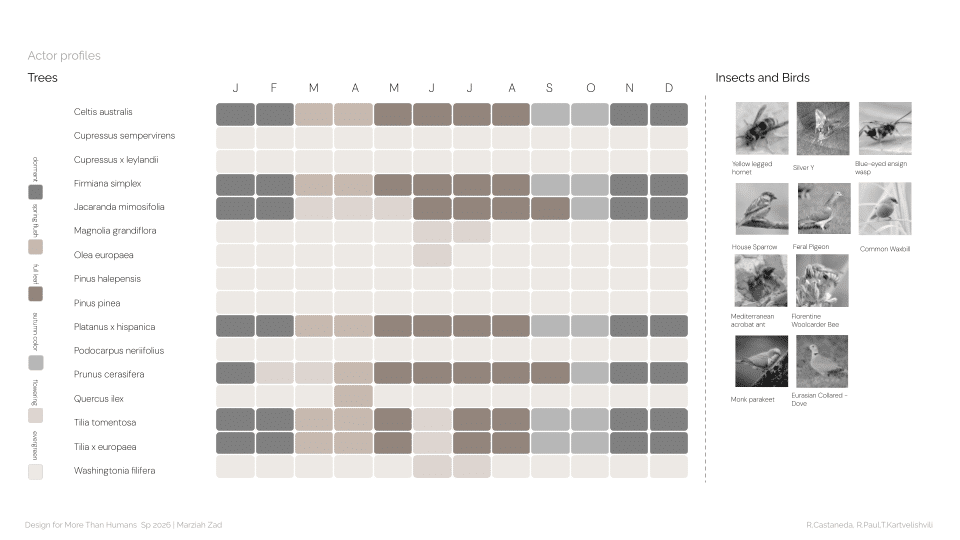
We Started by ideantifying all the existing trees on the site and mapping them in our streets and park as we also iddentifyied the different species that are inhabiting the site currently noting the seasonalities of each. Also we worked in iddentifying the birds an insects of the site.
Phase 1: Compositional Analysis of Paintings as Spatial Archetypes
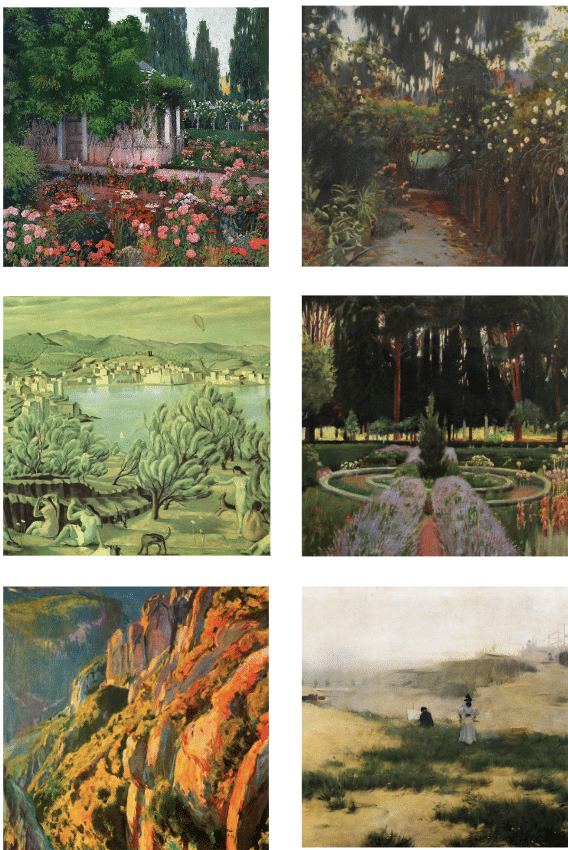
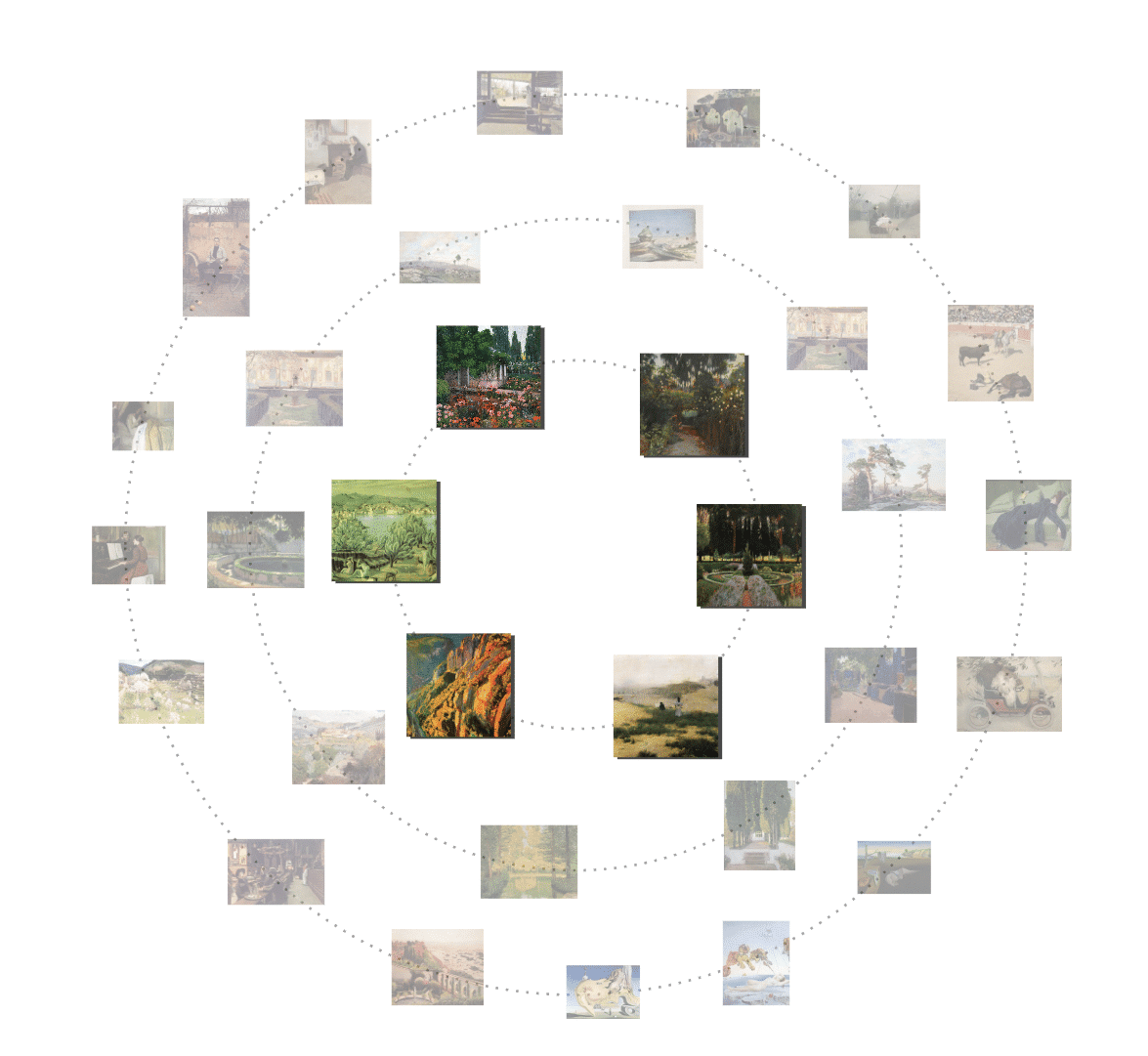
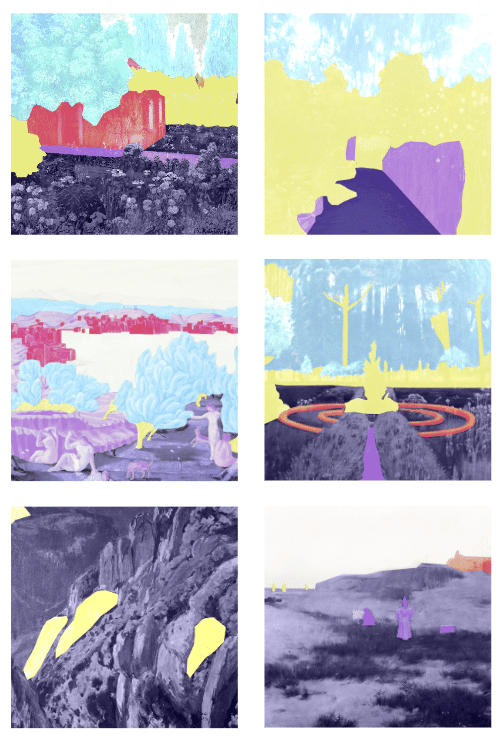
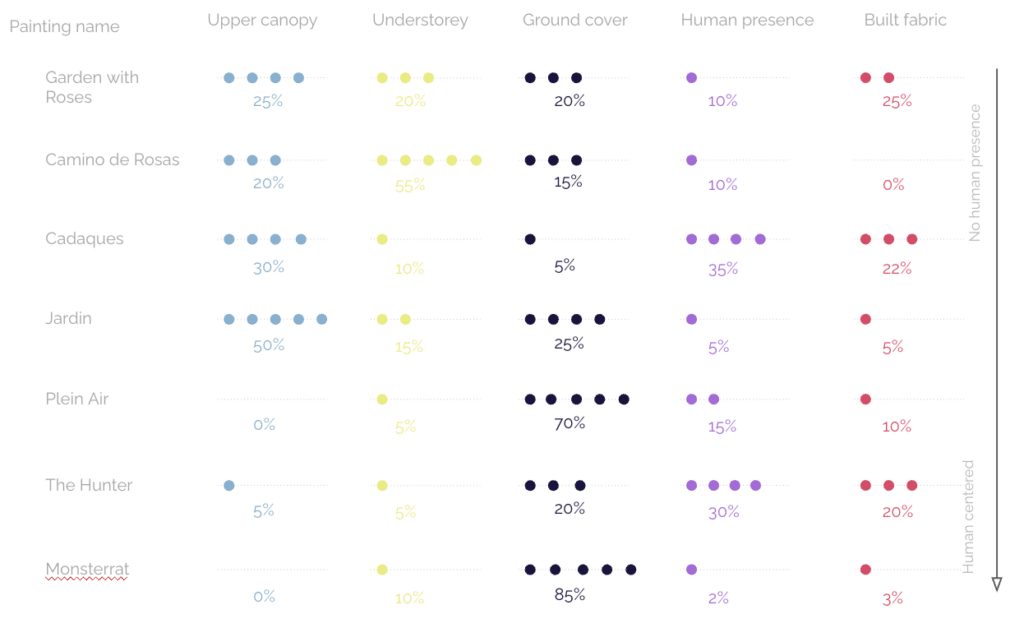
Rather than treat paintings as aesthetic inspiration, we analyzed them as spatial instructions. Four canonical works by Catalan artists—Santiago Rusiñol’s Camino de rosas, Rusiñol’s Jardín de rosas, Salvador Dalí’s Cadaqués series, and Ramon Casas’ Landscape with Figures—were deconstructed across five compositional categories:
Built fabric % — architectural or structural elements
Upper canopy % — vertical enclosure from tree layers
Understorey % — mid-level visual field (1–4m height)
Ground cover % — base layer visibility
Human presence % — proportion of figures or gathering space
The Matrix Analysis
Each painting was scored quantitatively. This quantification was crucial. It transformed subjective aesthetic judgment into design parameters: if Jardín de rosas has 50% upper canopy and 15% understorey, then a zone inspired by that painting needs to achieve those exact ratios to feel like the painting while remaining functionally coherent as a streetscape.
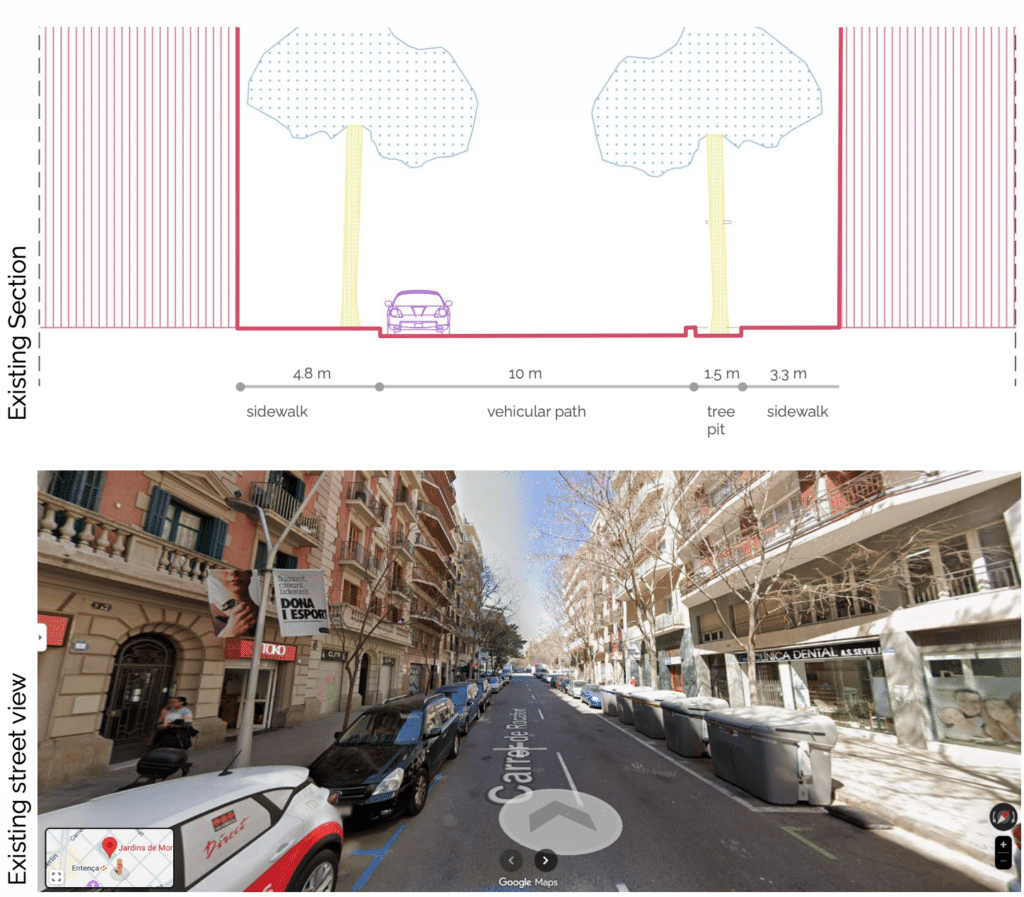
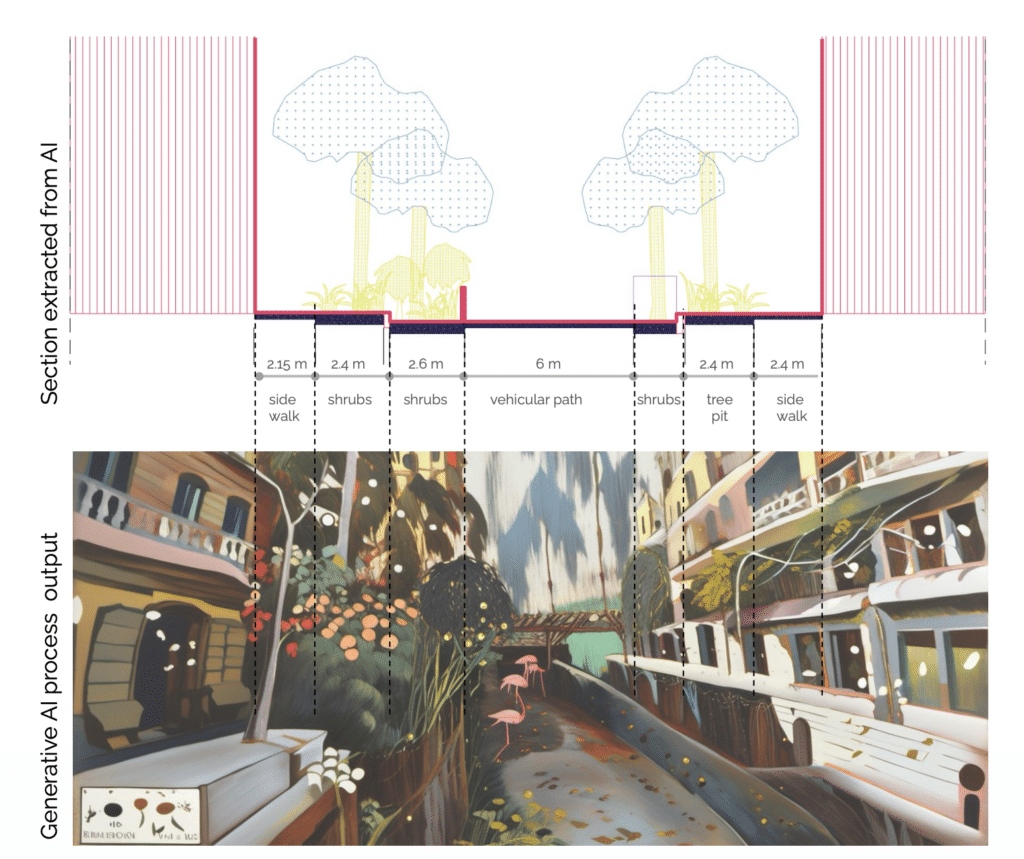
Using a ComfyUI workflow, we have generated AI images that reimagine the streets of our site. We then extracted the sections from these images to study the canopy %, enclosure ratio, sight lines, etc.
Phase 2: Botanical Extraction Through Poetry Analysis
Why Poetry?
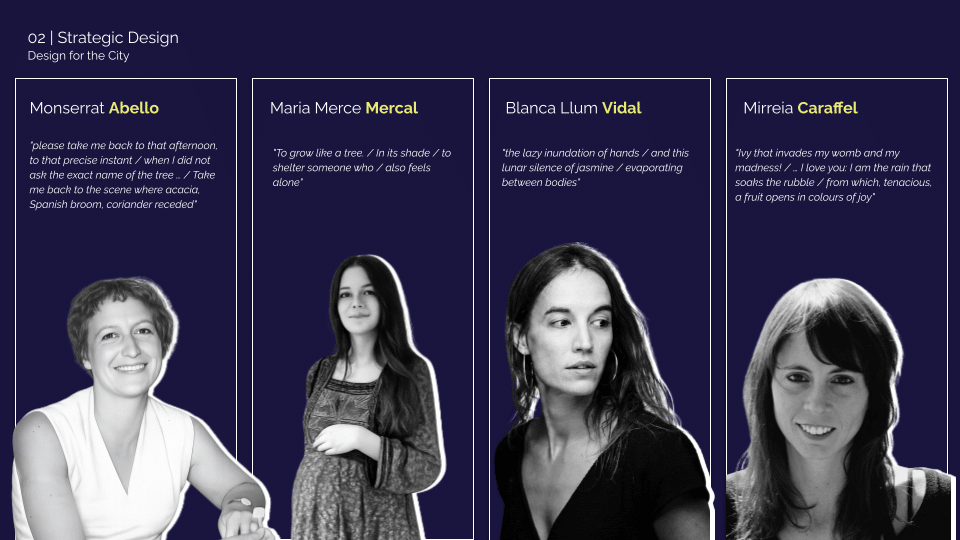
Four contemporary Catalan poets were chosen as botanical vocabulary sources:
Maria-Mercè Marçal, Monserrat Abello, Blanca Llum Vidal, and Mireia Carafell.
Unlike a typical plant list, poetry grounds species in cultural memory and sensory experience. When a plant appears in a poem, it carries metaphorical weight: it signals something about landscape character, feelings, an emotion.
The Extraction Process
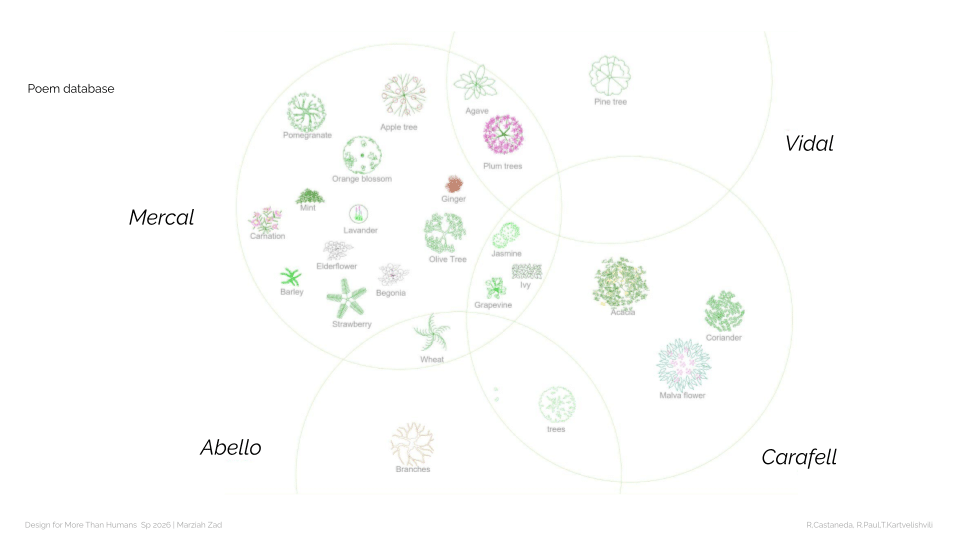
Using LLM-assisted analysis, we extracted botanical references from poems by these four authors. Species were clustered not by ecological guild but by cultural association.
The full biodiversity palette—64 species across trees, shrubs, groundcover, and herbaceous plants—was constructed by:
Phase 3: Phenological Mapping and Seasonal Orchestration
The Bloom Calendar
A full 12-month phenological matrix was built showing:
- Dormancy periods (brown)
- Spring flush (light green)
- Full leaf (mid-green)
- Autumn color (gold/red)
- Flowering (highlighted by color)
- Evergreen persistence (full-year green)
The phenological staggering wasn’t random. A continuous bloom sequence from spring through autumn ensures that bee, wasp, and butterfly populations have unbroken food sources. Gap analysis showed no months with fewer than 3–4 flowering species in any zone and when putting all elements together we can see, as this section, how all elements interacct with each other.
Rule Extraction from AI-Generated Reimaginings
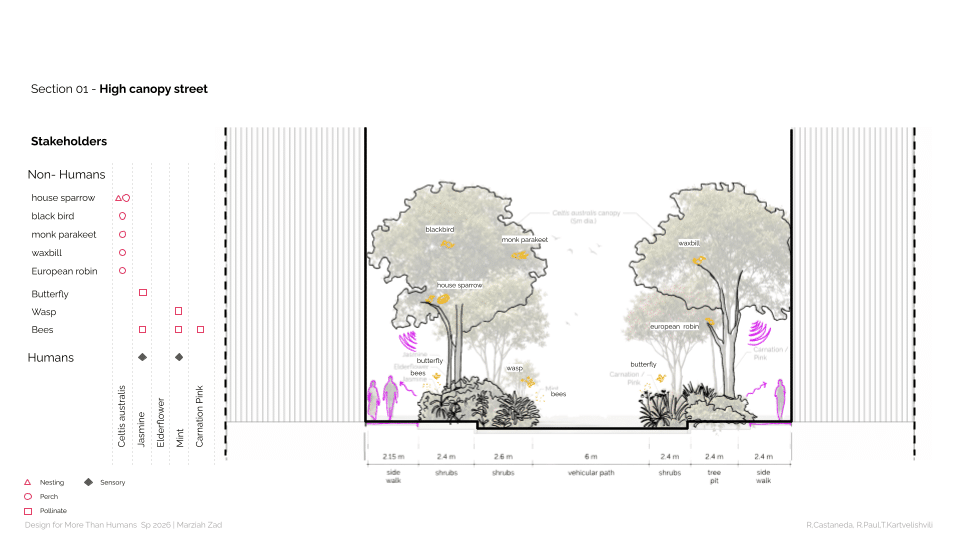
To translate painterly composition into buildable street sections, we used generative AI (ComfyUI workflow) to reimagine the streets as if they were the paintings. From these generated images, we extracted three design rules per section:
Section 1: High Canopy Street (Camino de rosas typology)
- Rule 01 — Trees form a legible ceiling: Minimum 20% sky occlusion from street center. Two trees per 10m stretch, each with ≥5m canopy radius. Canopy bilateral on both sidewalks.
- Rule 02 — Mid-level vegetation dominant: 55% of the mid-level visual field (1–4m) must be vegetation. On a 4.7m sidewalk, at least 2.6m horizontal width carries shrubs/climbers continuously.
- Rule 03 — Zero visible built fabric in mid-field: Signage, shutters, awnings capped at 10% of any 10m frontage. Planting takes visual priority.
Section 2: Adjacent to Park (Jardín typology)
- Rule 01 — Trees selected for pollinator value, not shade: 50% canopy maintained (lighter than Section 1). Native/naturalized species with known pollinator value. Canopy on building side; park side stays open for low-flight pollinator movement.
- Rule 02 — Continuous ground-level planting band: Minimum 4.5m wide native wildflower/shrub corridor, unbroken for 300m. Species sequenced for sequential bloom (spring → autumn).
- Rule 03 — No sealed surfaces in ecology zone: Vehicular path entirely planted or permeable substrate. Porous paving for bike lanes. Soil moisture continuity between street and park water table.
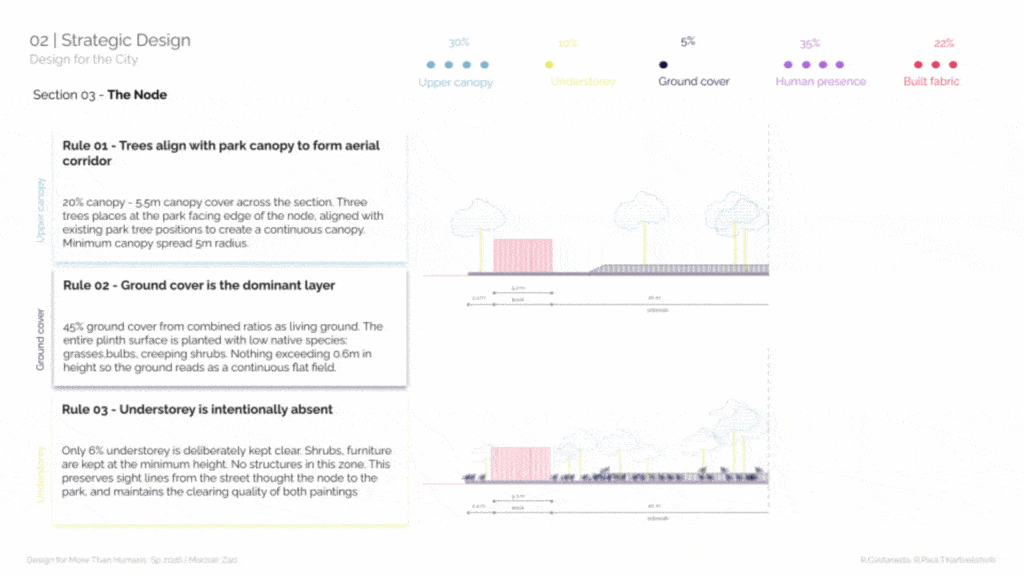
Section 3: The Node (Cadaqués typology)
- Rule 01 — Trees align with park canopy: 20% canopy (5.5m spread). Three trees at park-facing edge, aligned with existing park positions, forming continuous aerial corridor.
- Rule 02 — Ground cover is dominant layer: 45% as living ground. Entire plinth planted with low natives (grasses, bulbs, creeping shrubs). Nothing exceeding 0.6m height.
- Rule 03 — Understorey intentionally absent: Only 6% understorey deliberately kept clear. Preserves sight lines from street through node to park. Maintains clearing quality of both paintings.
Each rule has a rationale rooted in painting analysis. The high canopy street’s “zero built fabric” rule exists because Camino de rosas shows 0% built fabric in its composition—walls are occluded by vegetation. The node’s understorey restriction exists because Cadaqués reads as a threshold—neither fully enclosed nor fully open—and visual clarity across that threshold is essential.
Phase 4: Design Integration—Translating Culture into Sensory Experience
Catalan celebrations were then mapped to seasons and analyzed for their spatial and sensory requirements:
Sant Jordi (23 April, Spring) — requires linear processional movement, intimate scale, red chromatic intensity, the scent of fresh blooms. This demanded Zone 4’s enclosed rose corridor.
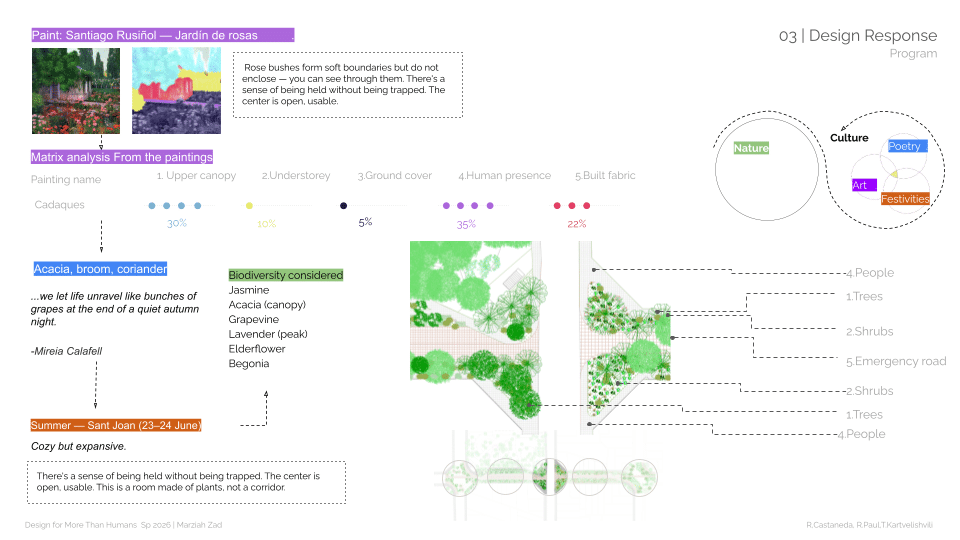
Sant Joan (23–24 June, Summer) — requires open gathering space, shade canopy for heat, nighttime fragrance (jasmine blooms intensely after dark), peripheral containment. This became Zone 2’s semi-open node.
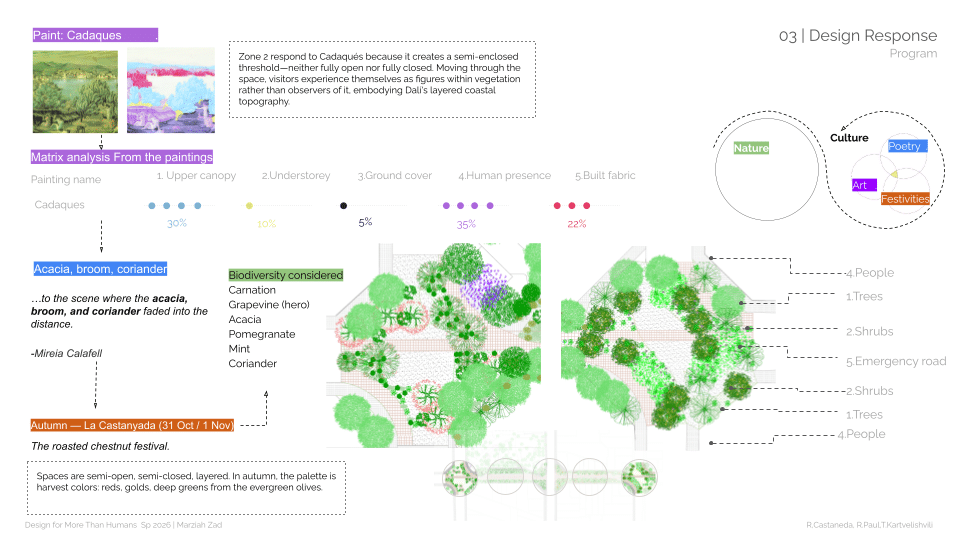
La Castanyada (31 October–1 November, Autumn) — requires threshold conditions (neither fully indoor nor outdoor), dramatic color (harvest reds and golds), the scent of roasted nuts and herbs. Zone 3’s layered enclosure provided this liminal spatial condition.
Winter Civic Rituals (December–January) — human towers (castellers), circle dances (sardanas), markets — require completely open ground, perimeter definition without center infill, and winter color from evergreen structure and winter-blooming rosemary. Zone 1 was designed accordingly.
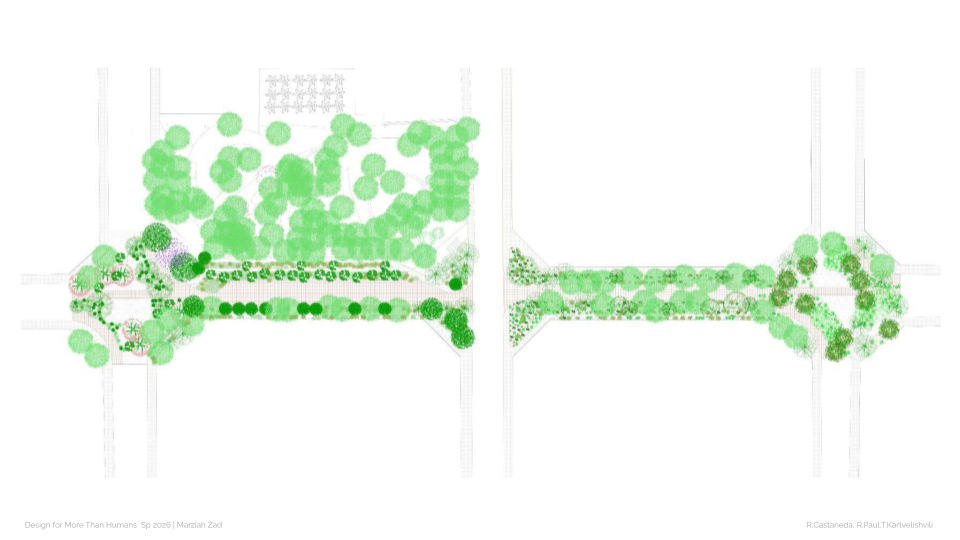
The final phase synthesized all three inputs into a single plan:
- Spatial logic from paintings determined zone typologies (corridor, node, threshold, field)
- Botanical vocabulary from poetry provided the species palette
- Phenological cycles ensured seasonal performance aligned with celebration timing
- Festivities became the organizing framework that made all previous decisions coherent
The result: a design where color, fragrance, spatial enclosure, and cultural celebration are not separate attributes but expressions of the same orchestrated intervention. In spring, you move through a red-scented rose tunnel for Sant Jordi. In summer, you gather in a shaded fragrant node under jasmine for Sant Joan. In autumn, you navigate layered vegetation changing red and gold for the harvest celebration. In winter, you assemble on open ground bordered by evergreens and winter-flowering rosemary for civic rituals.
The methodology is transferable: any city with a strong cultural calendar and literary tradition could apply this protocol—analyzing canonical artworks, extracting botanical vocabularies from poetry, mapping phenological cycles to local celebrations, and designing landscapes that literally perform cultural identity across the seasons.
Phase 5: Festivals as Ecological Triggers
The final layer: seasonal festivities as design triggers that activate both cultural gathering and ecological function.
The insight: Human cultural moments are not separate from ecological moments. They are synchronized. When humans gather, microclimate changes, soil disturbance increases, pollinator activity shifts. Rather than fight this, the design uses these moments as ecological interventions.
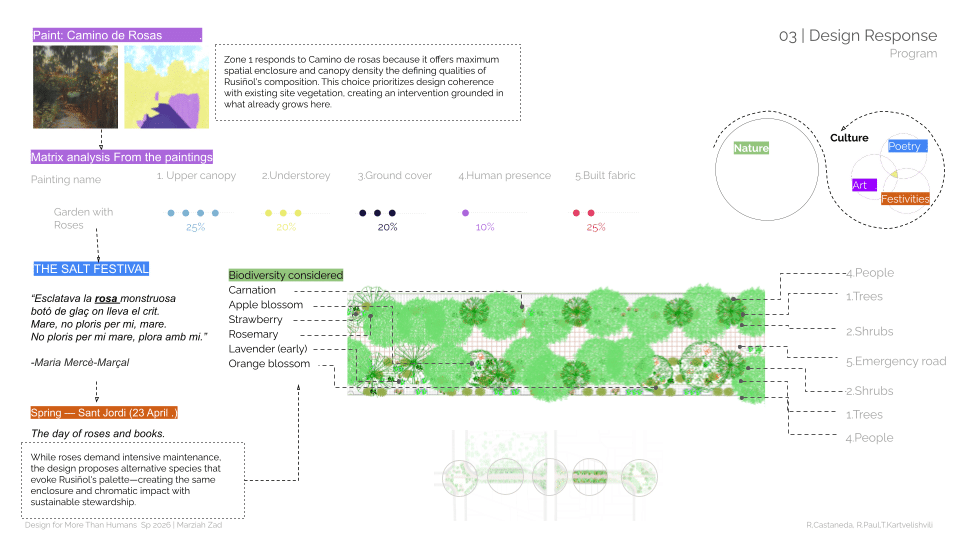
Spring (Sant Jordi):
Carnation blooms; red/pink palette matches Rusiñol’s roses. The corridor fills with human movement (processional, book-buying). This foot traffic aerates soil, disperses seed, prevents stagnant microclimates.
Summer (Sant Joan):
Jasmine at peak nocturnal fragrance. Festival involves bonfires, gathering, collective celebration. Open nodes become performance grounds. Pollinators are active under moonlight.
Autumn (La Castanyada):
Grapevine and Pomegranate at harvest color; Coriander and Mint at peak aromatic presence. The liminal threshold quality of Cadaqués mirrors the festival’s position between summer abundance and winter dormancy. Seed dispersal peaks.
Winter (Castellers & Nadal):
Open ground becomes assembly space for human towers and circle dances. Evergreen structure (Olive, Pine, Holm oak) frames but doesn’t enclose. Pollinators dormant; ground birds forage. The openness that Casas painted in Landscape with Figures becomes functionally necessary.
Impact & Measurable Outcomes
The result is quantifiable:
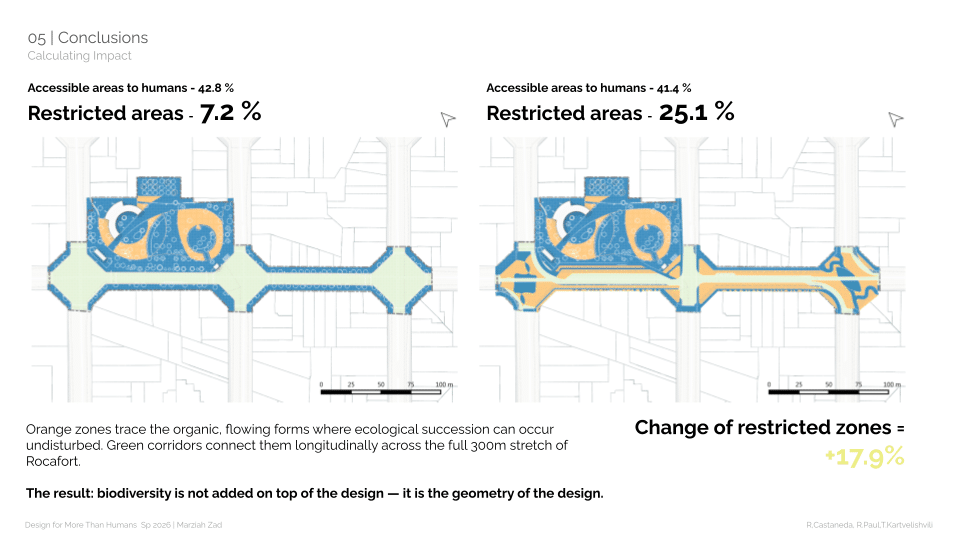
- +17.9% restricted (ecological) areas — Orange zones trace organic, flowing forms where succession can occur undisturbed
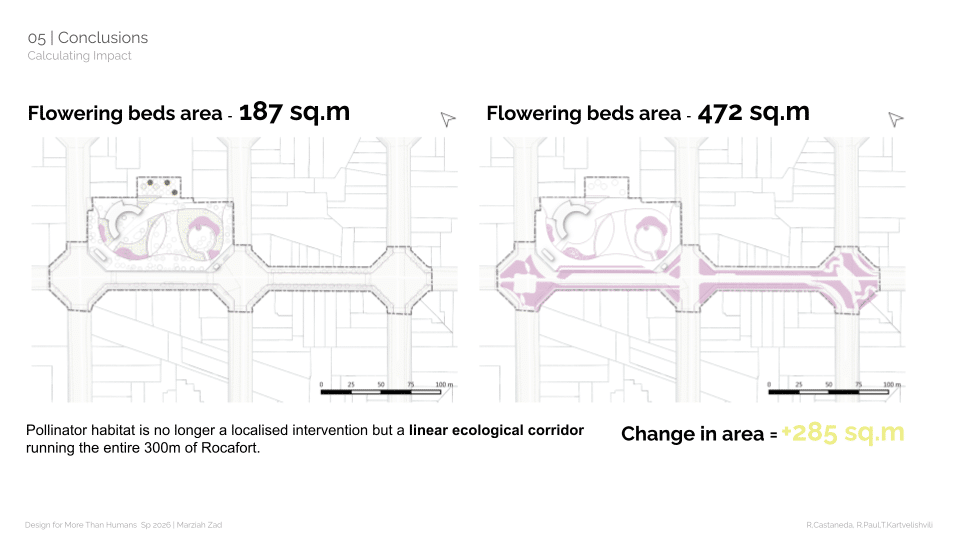
- +285 sq.m pollinator habitat — Linear ecological corridor (not isolated patches) running entire 300m of Carrer de Rocafort
- Zero biodiversity compromise to human access — Accessible human areas remain 41.4% (only 1.4% decrease); restricted areas quadruple
Conclusion: When Culture Becomes Ecology
This methodology works because culture and ecology are not opposed forces. Catalan paintings encode centuries of observation about how humans live comfortably in vegetated space. Poetry encodes which plants carry emotional resonance—and emotional resonance drives care, which drives maintenance and long-term survival.
By reading art and poetry as ecological documents—not just aesthetic references—we designed a landscape where cultural meaning and ecological function become inseparable. The seasons align with celebrations. The hero species bloom exactly when festivals occur. The spatial enclosure ratios match both painterly composition and human comfort thresholds.
The park doesn’t just add biodiversity. It speaks in a language Barcelona already understands: the language of Rusiñol’s roses, Marçal’s shelter, Vidal’s lunar jasmine, Casas’ vast horizons.
That is the power of designing not for culture or for nature, but through culture, toward nature.
