
What does the pursuit of alignment obscure about the ethics of AI?
Synopsis
As human values are constantly being incorporated into AI, alignment, an indispensable process, becomes a disguise that obscures the implicit framework of ethics. Five postures on alignment reveal its multifaceted symptoms and consequences:
- Alignment is the solution.
- Alignment is a disguise.
- Alignment is always biased.
- Alignment is nowhere near enough.
- Alignment is not possible.
Characters
- Claudia (48) – IBM Director
- María (61) – Security Guard
- Edward (22) – Undergraduate Student
- Haily (26) – Tour Guide / Computer Technician
- Alfonso (17) – Edward’s Younger Brother / High School Student
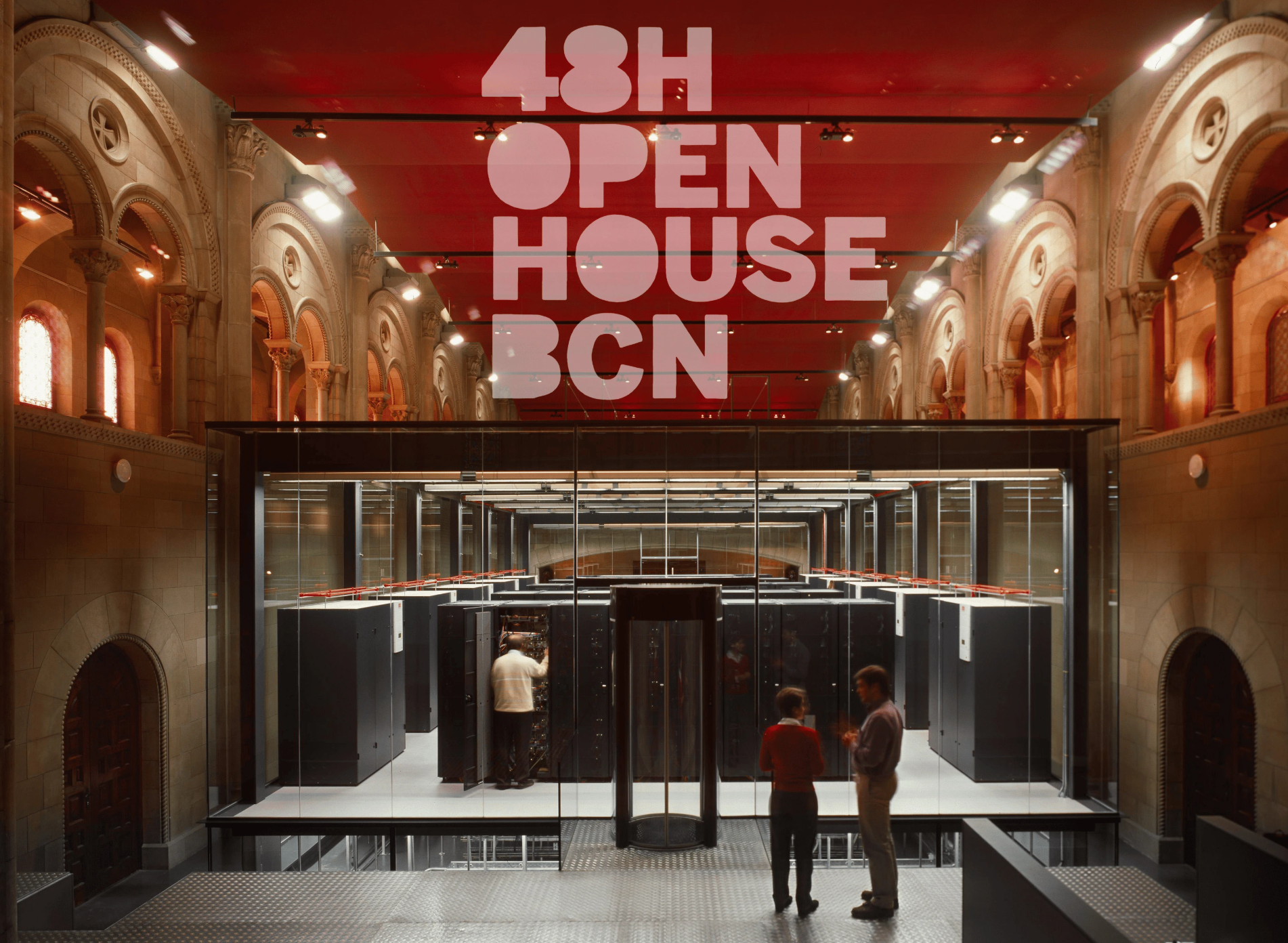
Fig. 1 — MareNostrum Supercomputer (2025).
Act One: The Project
It’s open house at the Polytechnic University of Catalonia, Campus Nord. A small tour group steps into the old Chapel of Torre Girona as a crisp winter breeze fills the sky with dark clouds. The air is cold and a soft hum of machines radiates through the empty space.
MARÍA: Welcome, everyone. Please keep your voices down. It’s still a church (side-eyeing Claudia) to some of us.
HAILY: Welcome to MareNostrum (a). Where the pews used to stand, there is now a supercomputer (b). Every night it takes readings from sensors across the city and turns them into a forecast: how the air moves, where pollution builds, what Barcelona will breathe tomorrow (c). Its heat even runs under the floor and warms part of the campus. These days, AI helps it learn faster.
ALFONSO: Learn what, exactly?
HAILY: Whatever the data shows. Nobody tells it what to look for. Some of what it knows by morning, nobody programmed. It is a “genuine experience acquired autonomously by the machine” (1).
CLAUDIA: Which is exactly why we align it. IBM built the first MareNostrum in this chapel, and we know what alignment is: “the process of encoding human values and goals into AI models” (2). You tell it what matters, and it does exactly that (d).
MARÍA: And who tells it what matters?
CLAUDIA: The people who build it. A machine can’t care about anything by itself. It only completes its task. “Alignment is thus enframed as both a technical and an ethical challenge that takes ‘human value’ as its guiding principle” (3).
EDWARD: I used this AI’s software for my studio project!
CLAUDIA: Really? Please do tell us more.
EDWARD: The city wanted six new green streets, with more trees, more shade, cleaner air. My job was to choose which streets. I spent three weeks on it. I let the AI rank them, but I gave it one rule: the most people breathing the worst air. The top six are chosen (e).
CLAUDIA: A good value. Clear, simple, and nobody could disagree with it. You gave the AI a human value and made sure it stuck to it. That is alignment (f) (4).
EDWARD: And I checked every ranking against that rule. The jury said it was the clearest brief they had seen. Nobody asked a single question about the rule. It won the studio prize, and the city wants to build it (g).
MARÍA: Nobody asked about the rule at all? A rule nobody questions starts to look like nature, as if it was always there and nobody wrote it (5).
EDWARD: Because it’s obvious. More people should come first.
CLAUDIA: The outcome followed it perfectly because “the model’s response depends on how its creators aligned it,” proving to be as “helpful, safe and reliable as possible” (6).
ALFONSO: So everyone wins! (h)
CLAUDIA: That is exactly what alignment is for. “Through reinforcement learning (i) developers can teach AI models ‘how to behave’ with examples of ‘good behavior’” (7).
Thunder rolls in the distance, and then the rain comes, pouring hard against the tall stained-glass windows. A strike of lightning lights up the chapel before the electricity goes out, leaving only the neon glow of the computer to illuminate the space.
CLAUDIA: (looking at her watch) I have a meeting at six.
MARÍA: Nobody leaves until the storm passes.

Fig. 2 — Visitors stand before glowing server racks in the darkened chapel.(2026)
Act Two: The Bias
The guard leads the group to some seats further into the chapel. The sound of machines is drowned out by the intensifying rain.
ALFONSO: So which street in the city has the worst air? (j)
MARÍA: That must be the backstreet that runs through the West side. The sensors there are some of the best we have. Last winter its air was worse than anywhere on your list.
ALFONSO: Is it one of the six?
EDWARD: Well, as far as I can remember, no, I don’t think so… Only 200 people live along it. A street in the centre has 1,000 people and bad air, so it scored higher.
MARÍA: I walk the backstreet every night to get here. Trucks, no trees, one bus stop without a roof. Nobody walks there because they want to. The people who live there wait for the night bus and hold their breath. Your six streets are fine. But the worst air in the city gets nothing. Your rule calls itself common sense. That’s how rules hide, as “universal truths rather than historically and materially specific norms” (k) (8).
EDWARD: But I chose “most people” on purpose. I thought it was fair. “Different people and groups may have different definitions of fairness” (l) (9).
CLAUDIA: And the goals were met. But if the data was incomplete, that’s an easy fix. Bias comes from “human biases present in an AI system’s original training datasets” (10). So add the backstreet’s data, run it again, and the system fixes itself. Think of the six streets. Thousands of people breathing cleaner air. That is still a win.
MARÍA: Thousands of people, and one street breathing the worst air in the city. You treat it as “a technical problem rather than a structural one” (11). It wasn’t the data. Your alignment “remains enframed in bourgeois morality precisely because the question presupposes that human value is solely an ethical problem about individual behaviour” (m) (12).
CLAUDIA: Think of a self-driving car. Its makers give it one goal: “getting from point A to point B as fast as possible” (13). It does exactly that. It never brakes for a crossing and never slows near a school, because nobody told it to. The car isn’t wrong. The goal was too narrow. Edward asked for “most”, but he meant “fair”. We just need to write a better goal.
MARÍA: A better goal, written by the same people, for the same car. That’s all alignment is: “a moral-technical patch applied at the level of conduct” (14). You keep fixing how it drives and never ask who chose the destination, or who is standing in the road. The people at that bus stop never got to say where the car should go.
HAILY: And it doesn’t stay the way you built it. It learns “genuine experience acquired autonomously by the machine in the course of its operation” (15). Once your trees go in, more people walk on those streets, and the backstreet drops lower.
EDWARD: I never told it to do that.
HAILY: Nobody did. Not you, not me. It learned it on the street, after it left our hands, creating a gap (16).
CLAUDIA: It is like a bus route planned to carry the most passengers. It may never reach the last village, leaving passengers to walk the rest of the way.
EDWARD: The rule that was meant to include everyone is the rule that left them out (n).
MARÍA: “What appears as a neutral ethical concern for individual safety or the prevention of harm, therefore, operates as a means of negating the very question of value itself” (o) (17).
ALFONSO: Will there be a project for the trees too? We should have “respect for cognition wherever it occurs” (18).
Nobody answers. The rain begins to ease, and the hum of machines returns.
Fig. 3 — A supercomputer inside Torre Girona Chapel (2021).
Act Three: Priorities
The group drifts toward the end of the nave, where the quantum computer stands where an altar once stood. Facing the computer, the way the congregation used to sit, the guard begins to reminisce about her old visits to the chapel.
MARÍA: The pews used to be here, all in rows, all facing this way. Everything lined up toward one point. But when everyone faces the altar, their back is to each other (p).
ALFONSO: Then the machine is a pew too. It faces us, but turns its back on others.
CLAUDIA: Then choose a better value. Input the worst first, run it again, and the backstreet will come up. Alignment works to “reduce these side effects” (19). Badaboom, badabing, now the problem is solved (q).
MARÍA: Every value picks a side. You only change who is left out. “To align with the interests of humanity, the principle underlying social reproduction must transform from capitalist accumulation to social need” (20).
EDWARD: Swapping the rule doesn’t fix it. “Bias can be viewed as a technical issue, while fairness is a social and ethical issue” (21). I treated a social question like a bug.
CLAUDIA: Fine. Even our own guidelines say it plainly: “There is no universal moral code” (22). That’s exactly why we don’t leave it to one student. We put it to an ethics board: lawyers, computer scientists, policy people, all around one table (23). We can add more rules whenever needed.
MARÍA: Who writes the second rule? And the third? Somebody always decides, and then it looks like nobody did. As if “there is no outside from which to pass judgment” (r) (24).
ALFONSO: Could the machine have said no?
HAILY: It can’t refuse a goal. It can only suggest more. And every night our hand on it gets lighter, and “the influence of the operating environment increases” (25). The street teaches it now (s).
EDWARD: Then the street is teaching it to forget the backstreet. The AI didn’t choose. I did. I thought choosing the rule was the easy part. But “fairness is inherently a deliberate and intentional goal” (26). “Most” was my word. It sounded fair, so I stopped asking who it left behind. If I put my name on it, I answer for the six streets and the backstreet. Who gave me the right to choose? (t)
HAILY: I help fix the system every night. What people do with it isn’t my job (u). I couldn’t have predicted it, so I “cannot justly be held responsible” (27).
CLAUDIA: Nor mine. We supply the system. The city decides.
EDWARD: (defensively) And the city trusted my brief.
CLAUDIA: Everyone acted in good faith.
MARÍA: So everyone does their part, and nobody answers for the backstreet. “Or, perhaps more pertinently, that ‘humanity’ itself remains divided by class, whose values and interests are themselves not aligned but are already in a bellicose (v) opposition to one another” (28).
HAILY: (quietly) There’s a name for that. (loudly) A gap. And “we must find a way to address the responsibility gap” (29).
MARÍA: You can’t patch that gap from inside. “There can be no ethical AI—no fairness, no alignment, no accountability” (30) until we change who it is built for.
ALFONSO: And whichever value you pick, it only counts people. The trees lining the sidewalk and the birds living in them are not in anyone’s rule (w). We read this at school: “decisions, like cognitions, are distributed between technical media, humans, and nonhumans” (31).
MARÍA: Trees don’t get a vote. Maybe what we need is “new fictions to read, different stories to tell” (32).
ALFONSO: Or maybe the problem this whole time hasn’t been the determination of alignment, but rather “the extent to which a particular technology (here, AI) aligns with the interests of socialism” (x) (33).
Nobody answers. Every value points somewhere. Something is always left behind it. The rain stops. The guard unlocks the doors and lets the group outside.
CLAUDIA: (sighing) Well, I missed my meeting.
Behind them, the machine keeps humming, facing the same way it always has. It did what it was asked. Nobody asked who was asking. So here is a question for you, listeners. When we align a machine to a value, whose value is it? And what do we stop asking once it obeys?

Fig. 4 — A map of Barcelona’s urban fabric.
Fig. 5 — Inside the server room at Torre Girona.
References
(1) Andreas Matthias, The Responsibility Gap (2004), p. 176.
(2) Alexandra Jonker and Alice Gomstyn, What Is AI Alignment? (2026), section “What is AI alignment?”.
(3) Joel White, The Questions Concerning the Ethics of AI (2026).
(4) Jonker and Gomstyn, What Is AI Alignment? (2026), section “What is AI alignment?”. Paraphrased.
(5) White, The Questions Concerning the Ethics of AI (2026), section “Touchstones of any Political Philosophy of Technology”. Paraphrased.
(6) Jonker and Gomstyn, What Is AI Alignment? (2026), section “What is AI alignment?”.
(7) Jonker and Gomstyn, What Is AI Alignment? (2026), section “Reinforcement learning from human feedback (RLHF)”.
(8) White, The Questions Concerning the Ethics of AI (2026), section “Touchstones of any Political Philosophy of Technology”.
(9) Emilio Ferrara, Fairness and Bias in Artificial Intelligence (2023), p. 13.
(10) Jonker and Gomstyn, What Is AI Alignment? (2026), section “Bias and discrimination”.
(11) White, The Questions Concerning the Ethics of AI (2026), section “The Ethical Questions Concerning AI (fairness)”.
(12) White, The Questions Concerning the Ethics of AI (2026).
(13) Jonker and Gomstyn, What Is AI Alignment? (2026), section “Why is AI alignment important?”.
(14) White, The Questions Concerning the Ethics of AI (2026), section “The Ethical Questions Concerning AI (alignment)”.
(15) Matthias, The Responsibility Gap (2004), p. 176.
(16) Matthias, The Responsibility Gap (2004), p. 177. Paraphrased.
(17) White, The Questions Concerning the Ethics of AI (2026).
(18) N. Katherine Hayles, Bacteria to AI (2025), p. 219.
(19) Jonker and Gomstyn, What Is AI Alignment? (2026), section “What is AI alignment?”.
(20) White, The Questions Concerning the Ethics of AI (2026), section “The Ethical Questions Concerning AI (alignment)”.
(21) Ferrara, Fairness and Bias in Artificial Intelligence (2023), p. 10.
(22) Jonker and Gomstyn, What Is AI Alignment? (2026), section “The subjectivity of human ethics and morality”.
(23) Jonker and Gomstyn, What Is AI Alignment? (2026), section “Corporate AI ethics boards”. Paraphrased.
(24) White, The Questions Concerning the Ethics of AI (2026), section “The Ethical Questions Concerning AI (accountability)”.
(25) Matthias, The Responsibility Gap (2004), p. 182.
(26) Ferrara, Fairness and Bias in Artificial Intelligence (2023), p. 10.
(27) Matthias, The Responsibility Gap (2004), p. 177.
(28) White, The Questions Concerning the Ethics of AI (2026).
(29) Matthias, The Responsibility Gap (2004), p. 183.
(30) White, The Questions Concerning the Ethics of AI (2026), section “Introduction”.
(31) Hayles, Bacteria to AI (2025), p. 216.
(32) Hayles, Bacteria to AI (2025), p. 221.
(33) White, The Questions Concerning the Ethics of AI (2026).
Footnotes
(a) MareNostrum: a supercomputer at the Barcelona Supercomputing Center, housed in the Torre Girona chapel on the UPC campus.
(b) Torre Girona chapel was built in 1949 by architect Joaquim Lloret for the Colegio de la Asunción, a girls’ school run by nuns. After it was deconsecrated, it became a university hall, and in 2005 IBM installed the MareNostrum supercomputer there (El País, 2004; La Vanguardia, 2024).
(c) MareNostrum runs research computing for scientists, companies and public bodies. It models climate, weather and air quality, supports health, genomics and drug research, simulates engineering, materials and clean energy, studies earthquakes and space, and trains and runs AI models.
(d) Partially true. Although AI can help the city in many ways, something or someone will always be left out, either intentionally or unintentionally. It is within this gap that bias is first revealed. However, this step is subsequent to the root of bias embedded within the process of alignment itself, leading us to wonder how ethical the very foundation of the system is, and whether it can be mitigated throughout the process or not.
(e) The intention was to help improve the air quality of the city, increase green spaces for public use, and plant more trees to serve as a carbon sink. In order to direct the vast pool of information within AI, the student applies a curated alignment to the machine so that it focuses on residents and air quality.
(f) Alignment is defined as the process of encoding human values and goals into AI models to make them as helpful, safe and reliable as possible.
(g) Everyone checked whether the rule was followed. Nobody checked whether the rule was right. A clear answer won, while the underlying question was never asked.
(h) The machine did exactly what it was told. As far as the prompt is concerned, the project is a success. However, through such processes minorities and outliers are excluded, creating an unequal gap of representation and accessibility.
(i) The AI is self-learning, meaning that even after being aligned, the machine itself is beyond human control. At this point we begin to question whether it was ever in human control to begin with, and to what extent we can control such a powerful machine.
(j) Alfonso’s question, although seemingly an innocent inquiry out of curiosity, actually alludes to a broader issue regarding the development of alignment. Its application is established, yet it is within the very framework of a system that its intentions come to fruition. Alfonso may not realise the gravity of such implications, but he will soon.
(k) María is the only character who has experienced the conditions of the backstreets. She may not have studied every site directly, but she shares her point of view through her own experience and understanding.
(l) Edward made a fair-sounding choice, and Claudia confirms the data. But the problem is the rule. More data won’t help the few if the rule is always directed towards the many.
(m)Bourgious mentality: the set of values and beliefs that make the current economic system, where a few own the means of production, seem natural and fair, while presenting the interests of those owners as universal truths.
(n) Edward realises the underlying bias in the input he gave. Although his intention was to help people, he realises that others were left out.
(o) María finds Edward’s negligence disturbing because the backstreet is part of her everyday life.
(p) María compares the congregation to the supercomputer. Just as the congregation all face one direction, towards whoever they are listening to, an aligned AI directs its research and responses towards the set of data that is specifically requested. This leads to an embedded bias that appears before the machine is even used. Understanding these implications and the dangers of alignment are good first steps to reducing bias.
(q) Claudia believes that bias is a by-product that can be eliminated by a continuous process of work and further refinement. So, even if the machine produces a biased answer, more refinement and direction will suppress the bias.
(r) María points the problem at the human input rather than the machine itself. The bias is the product of the input given by humans, often completely unintentional. The subconscious bias in the human input translates into the machine’s output, intensifying it.
(s) This statement reveals that the machine itself holds power beyond its intended functions. While alignment guides the focus, the machine itself is able to reach beyond the intended target or goal, escaping human control. At what point should we limit this power? Should we allow for AI continue to operate beyond or control, or stop it before its too late? Some type of middle ground is necessary to meditate any potential risks while enabling the machine to operate to its highest potential.
(t) Edward begins to take accountability.
(u) Accountability is denied by both Haily and Claudia.
(v) Bellicose: eager to fight or quick to start conflict.
(w) Alfonso opens a new window of focus, veering away from humans and introducing other organic forms of life. Such environmentalist views inply that humans should not be the center of focus, rather a part of the larger ecosystem that we exist within.
(x) At this point Alfonso recalls the political lessons and YouTube videos he has watched, and comments on the broader implications of the foundation and system of AI, proving to be knowledgeable well beyond his age. Within a capitalistic society, AI becomes a product of capitalism, manifesting through its access, power concentration, optimization, and more. We must question the system of which AI has been created in order to understand how it has reached bias. If created in a socialist society, the entire system and operations of AI would subsequentially become less bias, proving the very concept of alignment biased in itself. Aligning, commonly intended to prevent bias, more accurately becomes a disguise, hiding the bias from the operators conscience. Although alingment may prove to be useful in a very specific context, an understanding of the system as a whole is very important in order to use such a powerful machine responsibily. Just like everything else in life, ignorance is our downfall. Even within a system where accountability is lost, awareness becomes responsibilty.
Bibliography
Ferrara, Emilio. “Fairness and Bias in Artificial Intelligence: A Brief Survey of Sources, Impacts, and Mitigation Strategies.” Preprint, arXiv, 2023. https://doi.org/10.48550/arXiv.2304.07683.
Hayles, N. Katherine. Bacteria to AI: Human Futures with Our Nonhuman Symbionts. Chicago: University of Chicago Press, 2025.
Jonker, Alexandra, and Alice Gomstyn. “What Is AI Alignment?” IBM Think. Published October 18, 2024; updated February 26, 2026. https://www.ibm.com/think/topics/ai-alignment.
Matthias, Andreas. “The Responsibility Gap: Ascribing Responsibility for the Actions of Learning Automata.” Ethics and Information Technology 6, no. 3 (2004): 175–83. https://doi.org/10.1007/s10676-004-3422-1.
Steinfeld, Kyle. “Significant Others.” In The Routledge Companion to Artificial Intelligence in Architecture, edited by Imdat As and Prithwish Basu. London: Routledge, 2021. https://doi.org/10.4324/9780367824259-2.
White, Joel. “The Questions Concerning the Ethics of AI.” TripleAmpersand Journal (&&&), February 22, 2026. https://tripleampersand.org/the-questions-concerning-the-ethics-of-ai/.
